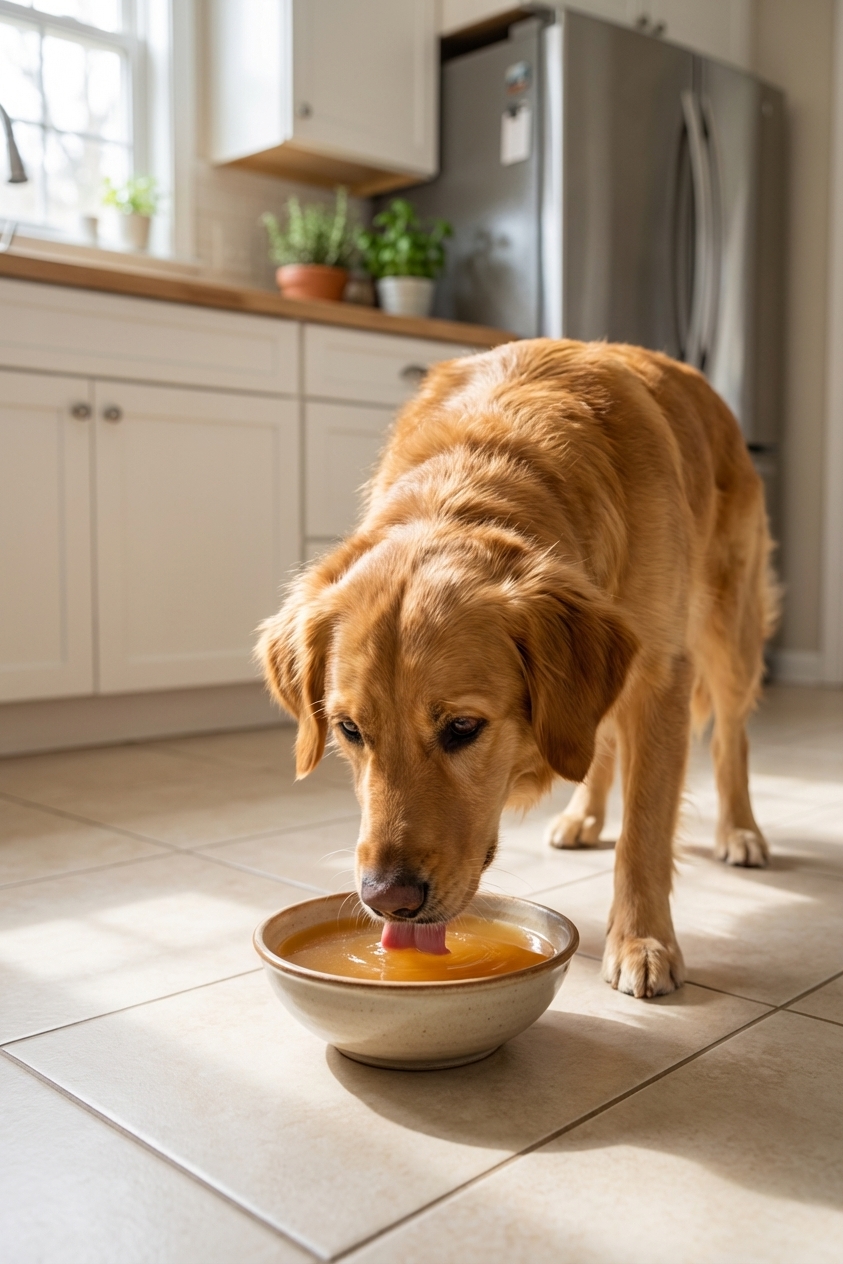
Bone broth can support hydration, appetite, and comfort for picky, senior, or recovering dogs. Get a plain, dog-safe recipe, serving amounts, storage tips, a...
Article
•
Designer Mixes
How to Know When to Let Your Dog Go

Shari Shidate
Designer Mixes contributor

Saying goodbye to a beloved dog is one of the hardest decisions you will ever make. As a veterinary assistant in Frisco, Texas, I have sat with families through this moment many times, and I want you to know something important: there is no such thing as a perfect decision, only a loving one made with the best information you have.
This guide will help you recognize the signs that your dog may be suffering, use a simple quality-of-life framework, and prepare for a gentle, peaceful passing with your veterinarian’s support.
When in doubt, focus on one question: “Is my dog having more good days than bad days, and can we keep them comfortable without causing more distress?”
Start with the goal: comfort, dignity, and relief
In end-of-life care, we are not trying to “give up.” We are trying to prevent suffering. Dogs do not fear death the way humans do. They fear pain, breathlessness, nausea, confusion, and being unable to do normal dog things like eat, rest, and move without distress.
Euthanasia, when chosen at the right time, is considered a humane medical procedure. It allows a pet to pass peacefully when their body is no longer supporting a comfortable life.
Common signs your dog may be nearing the end
Some dogs decline slowly over weeks or months. Others change quickly in a matter of days. These signs do not automatically mean “it’s time today,” but they are strong indicators you should talk to your veterinarian promptly.
Comfort and pain
- Persistent pain that is not controlled with medication (restlessness, trembling, panting at rest, guarding, vocalizing).
- Difficulty getting comfortable, frequent repositioning, or inability to sleep well.
- Signs of distress when being touched or lifted.
Breathing and circulation
- Labored breathing, open-mouth breathing at rest, or belly effort to breathe.
- Coughing that worsens, repeated gagging, or episodes that look like panic.
- Weakness, collapse, fainting, or pale/gray gums (urgent).
Eating, drinking, and digestion
- Not eating for more than 24 to 48 hours, or eating only a bite or two despite tempting options.
- Ongoing vomiting, frequent diarrhea, or inability to keep water down.
- Rapid weight loss, muscle wasting, or dehydration (sticky gums, sunken eyes).
Mobility and daily function
- Unable to stand, walk to go potty, or repeatedly falling.
- Soiling themselves because they cannot get up in time, followed by anxiety or shame.
- Pressure sores, urine scald, or chronic skin infections from being down too much.
Mental and emotional changes
- Confusion, getting stuck in corners, staring into space, pacing, or nighttime agitation.
- Withdrawing from family, no longer greeting you, or seeming “not present.”
- New aggression or fearfulness that appears connected to pain or cognitive decline.

A simple quality-of-life checklist you can use today
Many veterinarians use quality-of-life scales because they make an emotional decision clearer. Try scoring each category from 0 to 10, where 10 is excellent and 0 is very poor. Write it down and repeat daily for a week.
- Hurt: Is pain controlled? Is breathing comfortable?
- Hunger: Can your dog eat enough to maintain strength?
- Hydration: Can they drink and stay hydrated?
- Hygiene: Can they stay clean and dry, or can you keep them comfortable?
- Happiness: Do they still enjoy affection, sunshine, short outings, or favorite people?
- Mobility: Can they get up and move with reasonable support?
- More good days than bad: Are the good days still clearly winning?
If the total is consistently low, or the “good days” are disappearing, it is time to schedule a candid conversation with your veterinarian. If you are seeing sudden severe breathing trouble, collapse, uncontrolled bleeding, or nonstop pain, treat that as an emergency.
When “waiting” can unintentionally increase suffering
Families often tell me, “I’m afraid it’s too soon.” That is such a normal fear. But it can also help to consider the other side: sometimes waiting for a natural death can mean a pet experiences crises that are frightening and painful.
Situations where waiting can become risky include:
- Advanced heart failure: fluid in or around the lungs can cause air hunger and panic.
- Uncontrolled cancer pain: even with medication, tumors can cause severe discomfort, bleeding, or fracture risk.
- Neurologic decline: seizures, severe confusion, or inability to swallow safely.
- Kidney or liver failure: nausea, toxin buildup, weakness, and dehydration can progress quickly.
Choosing euthanasia before a major crisis is not “giving up.” It is often a way of preventing a traumatic final day.
Questions to ask your veterinarian (and yourself)
Medical questions
- What is my dog’s prognosis, and what changes should I expect in the next days to weeks?
- Which symptoms mean suffering, and which are manageable?
- Are we treating discomfort effectively, or are we chasing side effects?
- What would an emergency look like for my dog’s condition?
Heart questions
- What does my dog still truly enjoy?
- Is my dog resting peacefully, or are they enduring the day?
- If my dog could speak, would they choose another week like this?
What a peaceful euthanasia typically looks like
While each clinic has its own approach, most follow a gentle, step-by-step process designed to reduce stress for both you and your dog.
- Comfort first: Your dog is placed on soft bedding with you nearby. Many clinics offer a quiet room.
- Sedation: A sedative is commonly given first so your dog becomes deeply relaxed and sleepy.
- The final medication: Once your dog is fully comfortable, a medication is administered that allows the heart and breathing to stop peacefully.
- Time to say goodbye: You can usually stay as long as you need afterward.
Ask your veterinarian about options like in-home euthanasia, paw prints, a lock of fur, or private cremation. Planning these details ahead of time helps you stay present in the moment with your dog.

Making the last day gentle
If you have time to plan, you can make the day simple and loving. Keep expectations low and comfort high.
- Choose favorite comforts: a sunny spot, a cozy bed, soft music, familiar people.
- Offer special treats if safe: small bites of favorite foods can be a gift, unless your vet has warned about choking, pancreatitis risk, or severe nausea.
- Manage pain and anxiety: give medications exactly as prescribed and ask if adjustments are needed.
- Keep routines easy: short potty breaks with support, avoid long outings if breathing or mobility is limited.
- Take a few keepsakes: a photo in natural light, a paw print, or a collar tag to save.
Helping children and other pets
Children
Kids usually do best with honest, simple language. Avoid phrases like “went to sleep” if your child could associate sleep with not waking up.
- Use clear wording: “Her body is very sick, and the veterinarian will help her die peacefully so she doesn’t hurt.”
- Give choices: whether they want to say goodbye, draw a picture, or pick a flower for the dog.
- Normalize grief: tears, anger, and quiet moments are all okay.
Other pets
Dogs and cats often notice when a companion is gone. Keeping routines steady, offering extra enrichment, and giving them time near familiar blankets and scents can help. If you are using in-home euthanasia, some families choose to let other pets sniff afterward. Ask your veterinarian what they recommend for your situation.
Aftercare and grief support
Grief after pet loss is real. It can feel heavy, disorienting, and even physical. Be gentle with yourself.
- Reach out to your veterinarian’s office for local pet loss support resources.
- Consider a pet loss hotline or a counselor if the grief is overwhelming.
- Create a small ritual: a memory box, planting a tree, or donating to a rescue in your dog’s honor.
You are not “taking their life.” You are taking their pain.
Quick “call the vet today” and “go now” list
Call your veterinarian today if:
- Your dog has more bad days than good days for a week.
- Pain, nausea, diarrhea, or anxiety is persistent despite treatment.
- Your dog stops eating or drinking, or cannot stay clean and comfortable.
Go to an emergency clinic now if:
- Severe trouble breathing, blue or pale gums, collapse, or repeated fainting.
- Uncontrolled bleeding, suspected bloat, nonstop vomiting, or seizures that do not stop.
- Sudden inability to stand with signs of distress or intense pain.
Important: This guide is educational and cannot replace medical advice. Always consult your veterinarian for decisions about euthanasia, pain control, and end-of-life planning.