Discover 7 dog-approved ways to show affection—consent-based petting, calm greetings, play, sniff walks, reward training, and protecting rest—plus signs ...
Article
•
Designer Mixes
How to Know If Your Puppy Loves You

Shari Shidate
Designer Mixes contributor
Puppy love is real, and it is also wonderfully easy to miss. A lot of what people read as “stubborn” or “independent” is often just a baby dog learning the world, learning your routines, and learning how to feel safe. As a veterinary assistant in Frisco, Texas, I see this every week: the strongest bond often looks like trust first, then affection.
This quick guide will help you spot the most reliable, behavior-informed signs your puppy is attached to you, plus a few common “love signals” that are often misunderstood.
Quick signs your puppy loves you
These behaviors are strongly tied to healthy attachment and comfort. Look for patterns over time, not perfection on a single day.
1) They choose to be near you
One of the clearest signs of puppy affection is proximity. If your puppy regularly settles at your feet, follows you room to room, or checks in with you during play, that is social bonding in action.
- Green flag: They can explore, then return to you.
- What it means: You are their “secure base,” similar to attachment behaviors studied in dogs and humans.
2) Soft eyes and relaxed body language
Love in dogs is often quiet. A loose body, gently wagging tail, relaxed ears, and soft eyes usually indicate comfort and a positive emotional state.
- Green flag: Wiggles, loose hips, open mouth, relaxed face.
- Watch-outs: Stiff posture, hard staring, lip licking, whale eye (white of eye showing) can indicate stress, not affection.
3) They greet you with clear excitement
Many puppies act like you are the most interesting thing in the world when you return, even if you were gone for two minutes. The intensity varies by breed and personality, but a happy greeting is a common sign of social bonding.
Tip: reward calm greetings by waiting for four paws on the floor, then giving attention. This keeps affection from turning into a jumping habit later.
4) They seek your attention and tune in to your voice
If your puppy perks up when you talk, looks toward you when you say their name, or comes over when you call, they are learning that you are a source of safety and good things. A head tilt can happen here too, but it is usually more about curiosity and listening than a direct “love signal.”
- Try this: say their name once in a cheerful tone. If they look at you, mark it with “yes” and offer a tiny treat.
5) They bring you “treasures”
A toy drop at your feet, a sock delivery, or a chew carried over to your side often means your puppy wants to share space and interaction. It is less “gift giving” and more “I want to be with you.”
Safety note: if your puppy stiffens, freezes, growls, or snatches items away when you reach for them, do not chase or grab. Trade for treats and talk with your veterinarian or a qualified trainer, since that can be early resource guarding.
6) They sleep better near you
Sleep is a vulnerable time. If your puppy naps close by, settles more easily when you are in the room, or chooses to rest in the room you are in, that is trust.
If your puppy is crate training, choosing the crate willingly and settling after a short, mild protest can also be a sign that your training is building security. Prolonged distress is not the goal. If crying escalates, lasts a long time, or comes with panic behaviors, it is a sign to adjust your plan and get help.
7) They accept gentle handling from you
Puppies do not automatically love nail trims, ear checks, or brushing. But if they tolerate your handling more than a stranger’s, or relax quickly when you go slowly with treats, that is a strong sign of trust and bonding.
- Quick routine: touch paw, treat. Touch ear, treat. Light brush stroke, treat. Ten seconds is plenty.
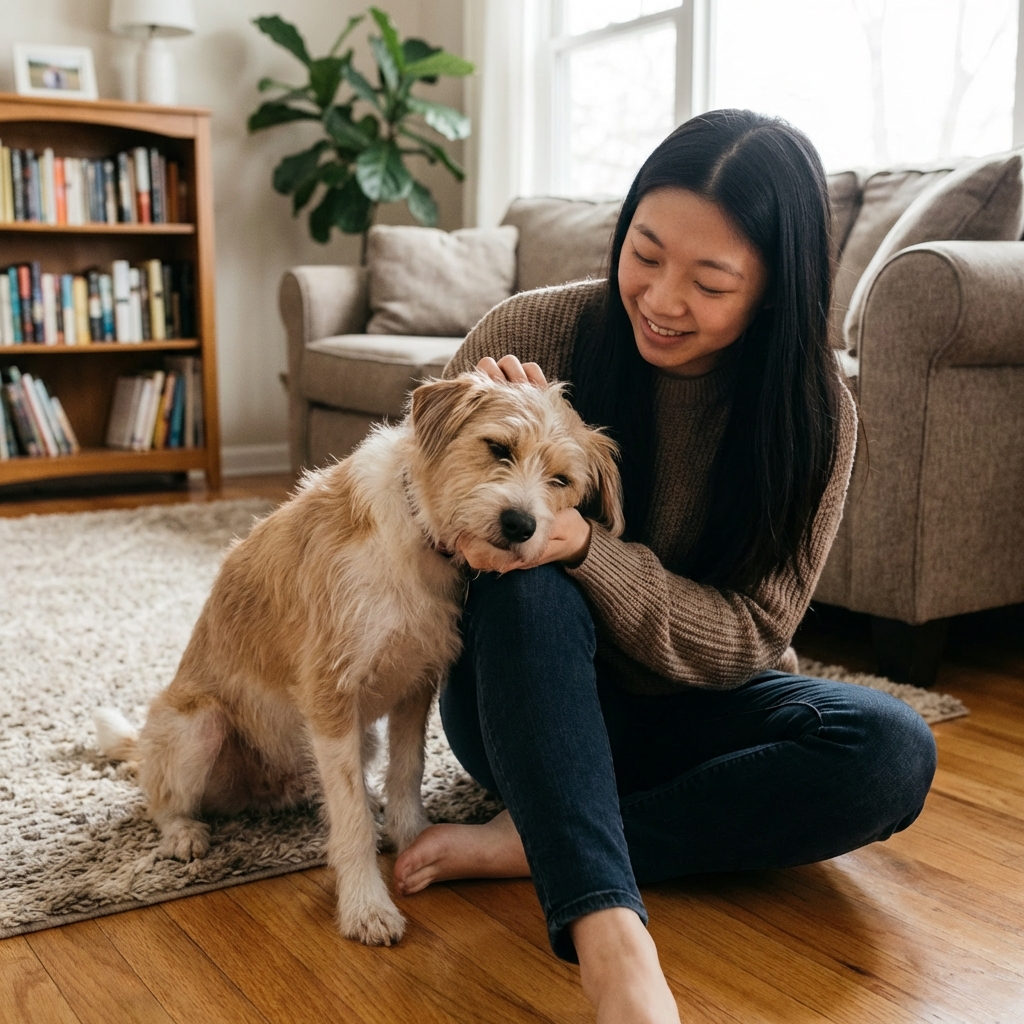
- Consent matters: if your puppy turns away, tucks their tail, holds their breath, or tries to leave, pause and make it easier. Cooperative care should feel safe, not like a wrestling match.
8) They lean in or give quick licks
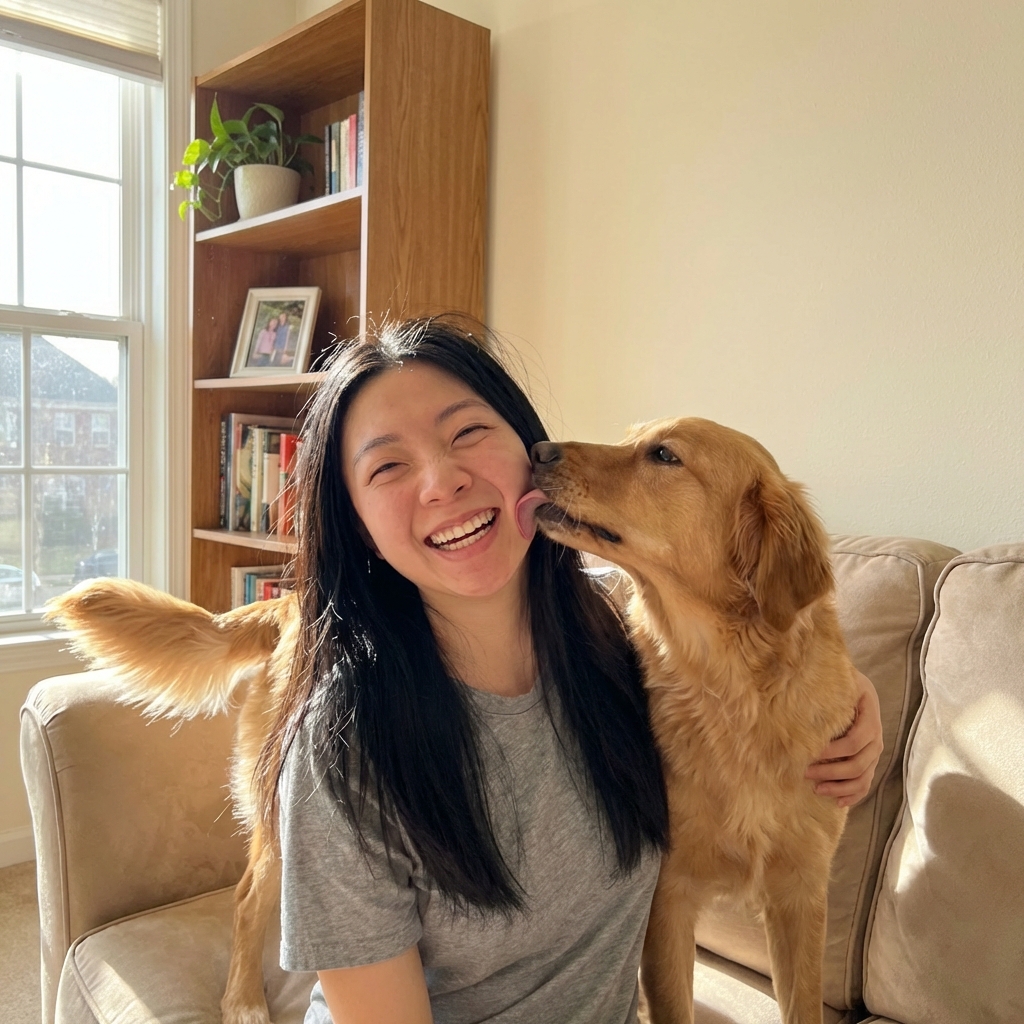
Some puppies show affection by leaning into your leg, resting a shoulder against you, or giving a few quick licks. Just keep the context in mind. Licking can also be appeasement or stress, especially if paired with a tucked tail, whale eye, or frantic energy.
Love vs anxiety
Following you everywhere can be attachment, but it can also be uncertainty. The difference is whether your puppy can handle short, age-appropriate independence and recover easily.
Signs it is healthy attachment
- They follow you, but can settle with a chew or toy nearby.
- They recover quickly after mild surprises (a sound, a new object).
- They can nap without being in physical contact every time.
Signs your puppy may be struggling
- Panic when you leave the room, especially paired with drooling, intense vocalizing, or frantic scratching.
- Inability to eat or play when alone, even briefly.
- Clinginess that seems driven by fear (crouching, tail tucked, trembling).
Separation-related struggles are common, and early support can make a huge difference. If you are seeing the second list, talk with your veterinarian or a qualified trainer sooner rather than later.
Common myths
Myth 1: “They don’t cuddle, so they’re not bonded.”
Some puppies are not big snugglers, especially when they are warm, teething, or easily overstimulated. Bonding can show up as choosing the same room, checking in, and wanting to train with you.
Myth 2: “They bite me, so they don’t like me.”
Puppy mouthing is normal development, especially during teething. It is not a character flaw and it is not a rejection. Redirect to a toy, keep sessions short, and teach gentle play.
Myth 3: “They listen to my partner more.”
Puppies respond to whoever is clearest and most consistent in reinforcement. You can absolutely become the go-to person by building predictable routines and rewarding the behaviors you want.
Quick bonding routine
Healthy love grows from repeated tiny moments. Here is a simple, behavior-informed routine that works well for most puppies:
- 3 minutes of training (sit, touch, name game) with tiny treats.
- 3 minutes of play (tug, fetch, or flirt pole) and end while they still want more.
- 3 minutes of calm (scatter feed in a snuffle mat, lick mat, or chew).
Do this once or twice a day and many owners notice faster “check-ins,” better responsiveness, and more relaxed affection within a couple of weeks. Individual timelines vary with age, breed, and past experiences. Puppies can also go through normal developmental phases, like fear periods or heavy teething weeks, where behavior temporarily looks more clingy or more mouthy.
When to check in with your vet
Sometimes “not affectionate” is actually “not feeling great.” Consider a veterinary check if you notice:
- Sudden change in behavior, hiding, or reduced interest in play
- Yelping when picked up or touched
- Loss of appetite, vomiting, diarrhea, or coughing
- Persistent lethargy or unusual aggression
Puppies grow fast and change fast, so trusting your gut is never a bad idea.
Bottom line
If your puppy seeks you out, relaxes around you, checks in with you, and recovers quickly when life gets a little exciting, you are looking at attachment and trust. Keep building that bond with gentle routines, clear rewards, and lots of safe, positive experiences. The affection often gets deeper and more obvious as your puppy matures.
Sources and helpful references
- American Veterinary Society of Animal Behavior (AVSAB): position statements and owner handouts on training and socialization
- Research on the dog-human “secure base effect” and attachment (for example, studies by Topál and colleagues)
- Cooperative care guidance (for example, Deb Jones’ cooperative care framework)