Cats can be picky drinkers. Learn normal water needs, warning signs, and step-by-step ways to boost hydration with bowls, fountains, clean water, and wet food.
Article
•
Designer Mixes
How to Know If Your Cat Is Dehydrated

Shari Shidate
Designer Mixes contributor
As a veterinary assistant in Frisco, Texas, I can tell you this with a full heart and a practical hat on: dehydration in cats is common, and it can get serious faster than many people realize. Cats often have a low thirst drive (though every cat is a little different), especially if they eat mostly dry food. The good news is that you can spot many early warning signs at home, and small changes can make a big difference.
What dehydration looks like in cats
Dehydration means your cat is losing more fluid than they are taking in. Water is essential for circulation, temperature regulation, digestion, and kidney function. Even mild dehydration can make a cat feel sluggish and nauseated. More severe dehydration can become an emergency.
Cats often hide discomfort, so dehydration signs can be subtle at first. Paying attention to small changes in behavior, litter box habits, and appetite is key.
Quick at-home checks
These checks are simple, but they are not a replacement for veterinary care if your cat seems truly unwell. Think of them as a way to decide how urgent the situation is.
Safety note: If your cat is stressed, painful, or fractious, do not push it. Handling stress can make some cats worse. Stop and call your vet for guidance.
1) Gum moisture (one of the best quick clues)
Gently lift your cat’s lip and touch the gums with a clean finger.
- Normal: gums feel slick and moist.
- Concerning: gums feel tacky or dry, or saliva seems thick and stringy.
2) Capillary refill time
Press your finger on the gum until it briefly turns pale, then release.
- Normal: color returns in about 1 to 2 seconds.
- Concerning: it takes longer than 2 seconds, especially with other symptoms.
3) Skin tent test (helpful, but not perfect in cats)
Gently lift a small “tent” of skin over the shoulders and let go.
- Normal: skin snaps back quickly.
- Concerning: skin returns slowly or stays tented.
Important note: This test can be misleading in older cats or very thin cats because skin elasticity changes with age and body condition. Use it alongside other signs.
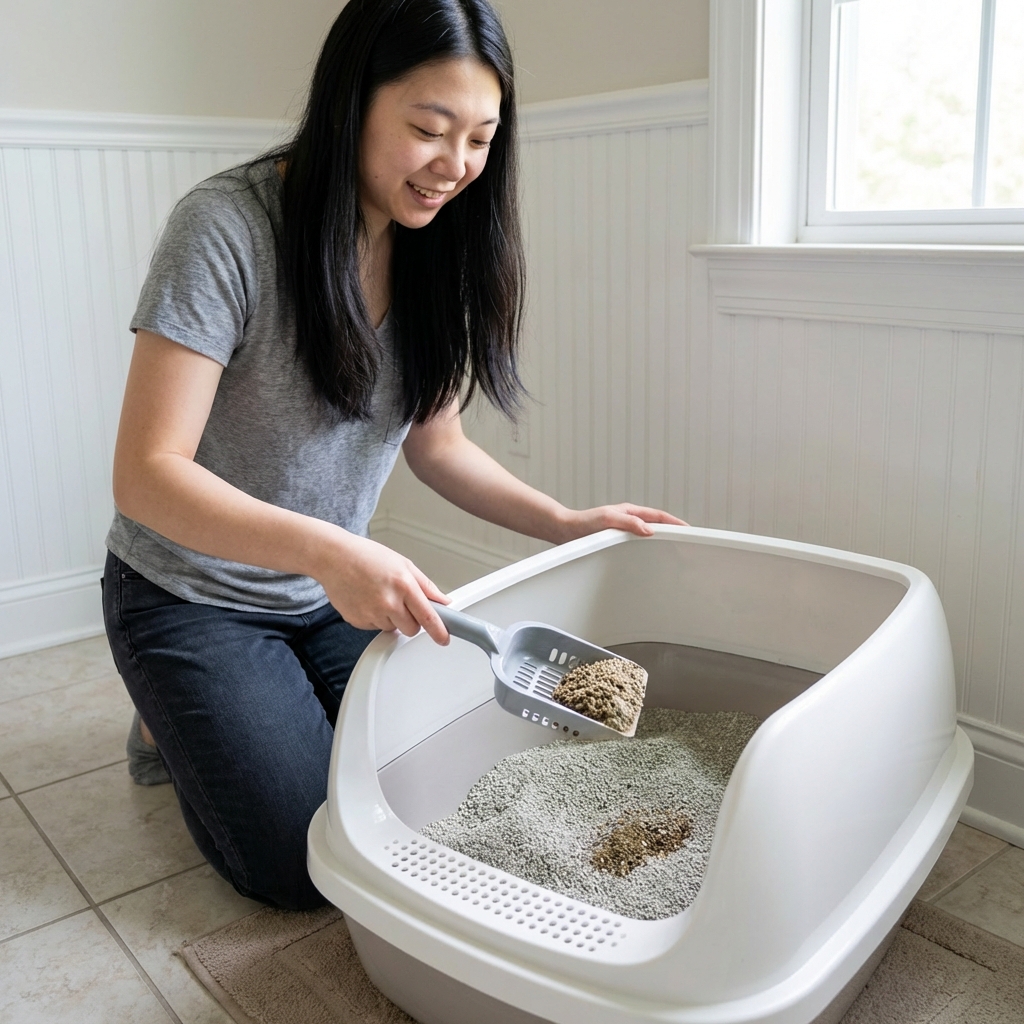
4) Hydration clues in the litter box
Your cat’s pee can tell you a lot.
- Concerning signs: smaller urine clumps than usual, fewer trips to the box, or very dark urine.
- About odor: strong-smelling urine can happen with concentrated urine, but smell can also be affected by diet, infection, and even how clean the box is. Use odor as a clue, not a diagnosis.
- Also concerning (different problem): straining to urinate or going frequently with tiny amounts can signal a urinary blockage or urinary disease, not just dehydration.
Common signs of dehydration in cats
Any one sign may be mild. Several together deserve closer attention.
- Low energy or hiding more than usual
- Reduced appetite or skipping meals
- Dry, tacky gums or thick drool
- Sunken-looking eyes
- Constipation or smaller, harder stools
- Vomiting or diarrhea (these can cause dehydration quickly)
- Panting or rapid breathing (cats do not usually pant, so this is a red flag)
- Poor coat quality or less grooming
What “mild” can look like
Mild dehydration is not a perfect at-home label, but in practical terms it often looks like this: your cat is still bright and responsive, breathing normally, and maybe eating some, but you notice slightly tacky gums, a small dip in appetite, or smaller urine clumps than usual.
If your cat seems weak, won’t eat at all, is vomiting repeatedly, has diarrhea, or is breathing oddly, treat it as more urgent.
Why cats get dehydrated
Dehydration is usually a symptom, not the whole story. Here are some frequent causes I see in clinics:
- Not drinking enough: low thirst drive, stress, or not liking bowl location or water taste
- Diet: dry kibble provides far less moisture than canned food
- Vomiting or diarrhea: from diet change, hairballs, parasites, toxins, pancreatitis, and more
- Kidney disease: very common in older cats and often linked with increased urination
- Diabetes: can cause increased thirst and urination, leading to dehydration if not controlled
- Heat stress: especially in hot homes, garages, or during travel
- Pain or illness: dental disease, fever, urinary problems, and many others can reduce drinking
One important twist: some cats with kidney disease or diabetes may drink more and still be dehydrated, because they are losing more water through urination. Increased thirst is not always “all good.” It can be a reason to check in with your vet.
When dehydration is an emergency
Please seek urgent veterinary care (same day, and often immediately) if you notice any of the following:
- Repeated vomiting or vomiting plus lethargy
- Diarrhea lasting more than 24 hours or any diarrhea with blood (go sooner if it is profuse or watery, or if your cat is a kitten, senior, or has other medical issues)
- Refusal to eat for 24 hours (sooner for kittens). If your cat is not eating at all, contact your vet earlier. Cats can get into trouble with prolonged appetite loss, including a serious liver condition called hepatic lipidosis, especially if they are overweight.
- Weakness, collapse, or severe lethargy
- Pale gums, very slow capillary refill, or cold paws
- Straining to urinate, crying in the litter box, or producing little to no urine (possible urinary obstruction, especially in male cats)
- Open-mouth breathing or persistent panting
- Kittens, seniors, or cats with kidney disease who seem “off” and are not drinking
Safety note: Do not try to force water with a bottle tipped into the mouth. Cats can aspirate fluid into the lungs. If your cat will not drink and seems unwell, it is time for a vet visit.
How to help a mildly dehydrated cat at home
If your cat is bright, alert, and only mildly dehydrated, you can often improve hydration with a few cat-friendly strategies. Choose one or two and build from there. Small wins matter.
Switch some meals to wet food
Canned food is one of the easiest ways to increase water intake because it naturally contains a lot more moisture than dry food.
- Start slow if your cat is kibble-focused.
- Try mixing a spoonful of wet food into the usual meal and gradually increase.
Add water or broth to food
Many cats will accept a “soupy” meal.
- Add a tablespoon or two of warm water to canned food.
- Use cat-safe broth with no onion or garlic, and ideally low sodium.
Upgrade the water setup
Cats can be surprisingly picky about water.
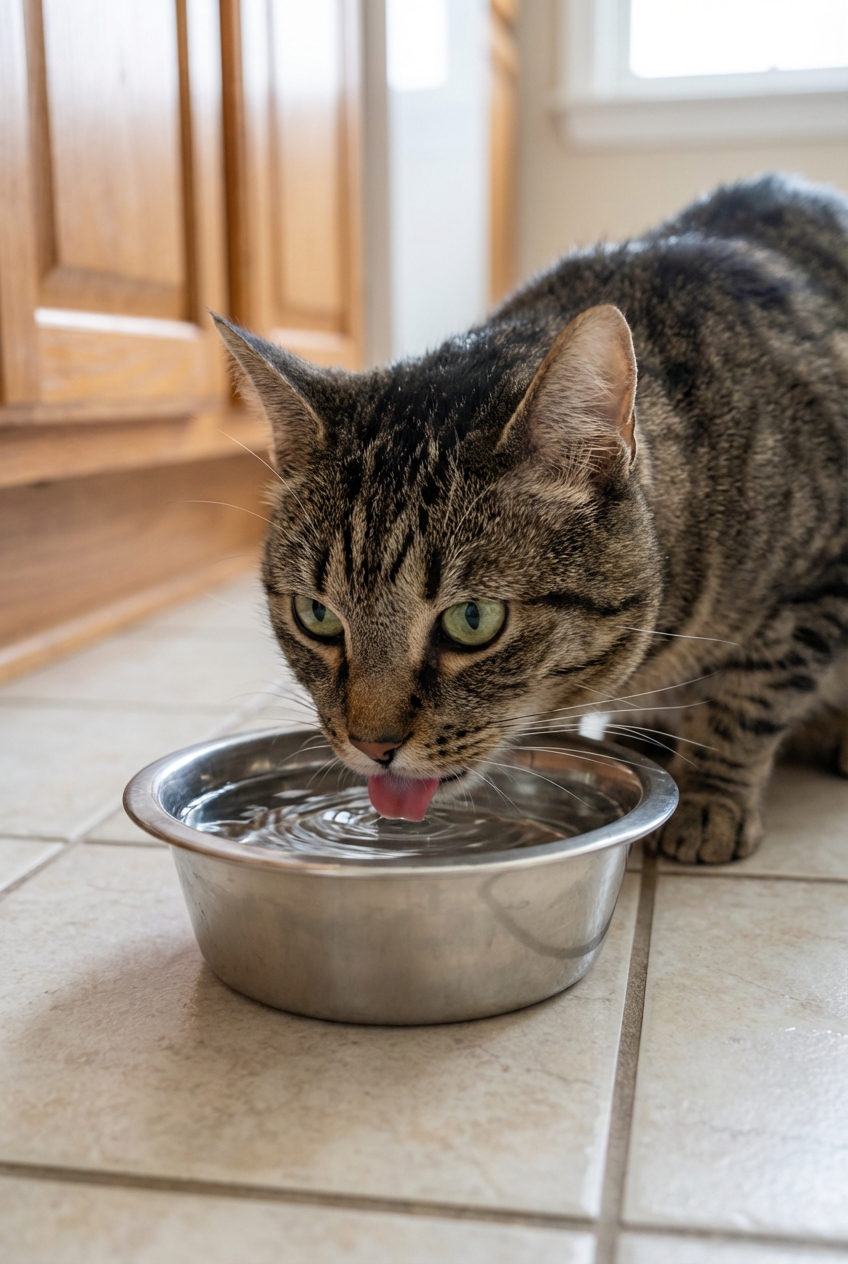
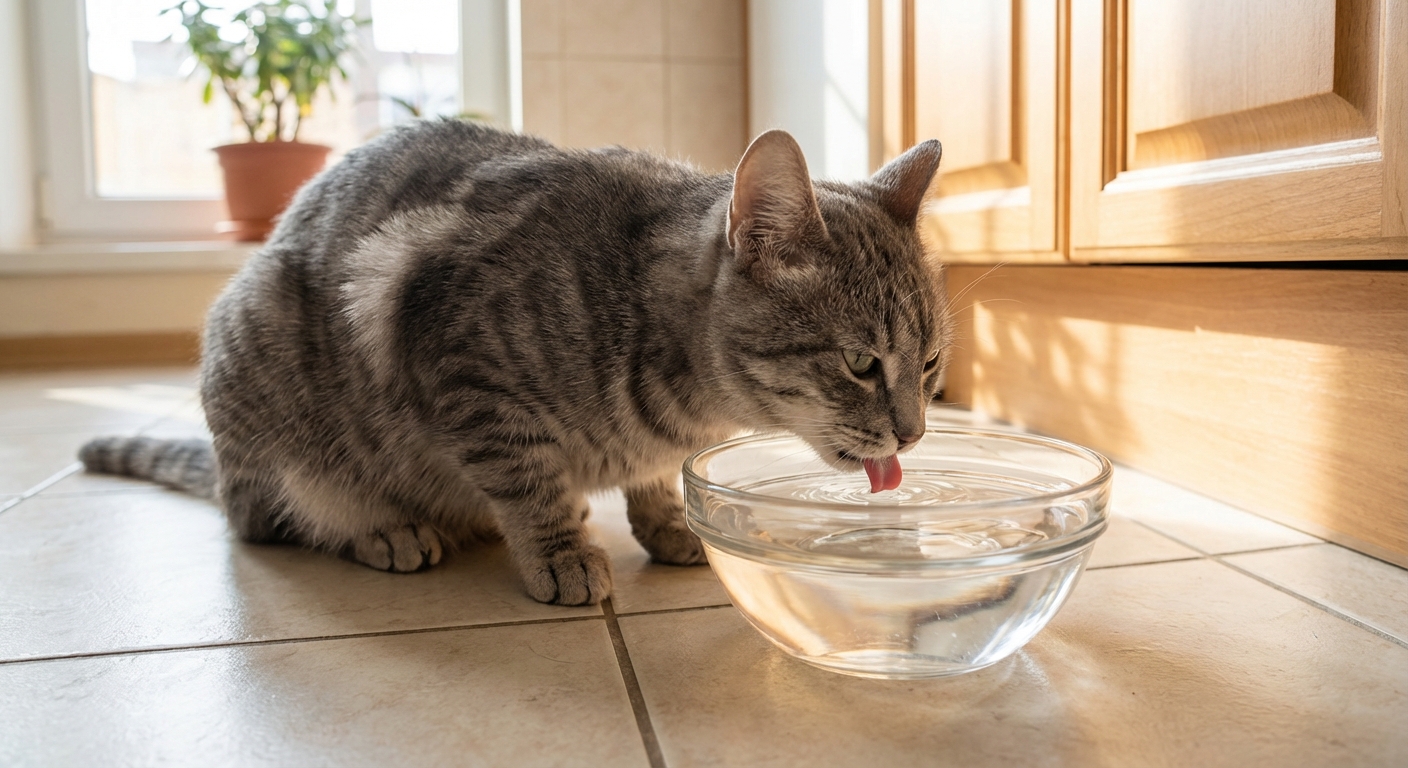
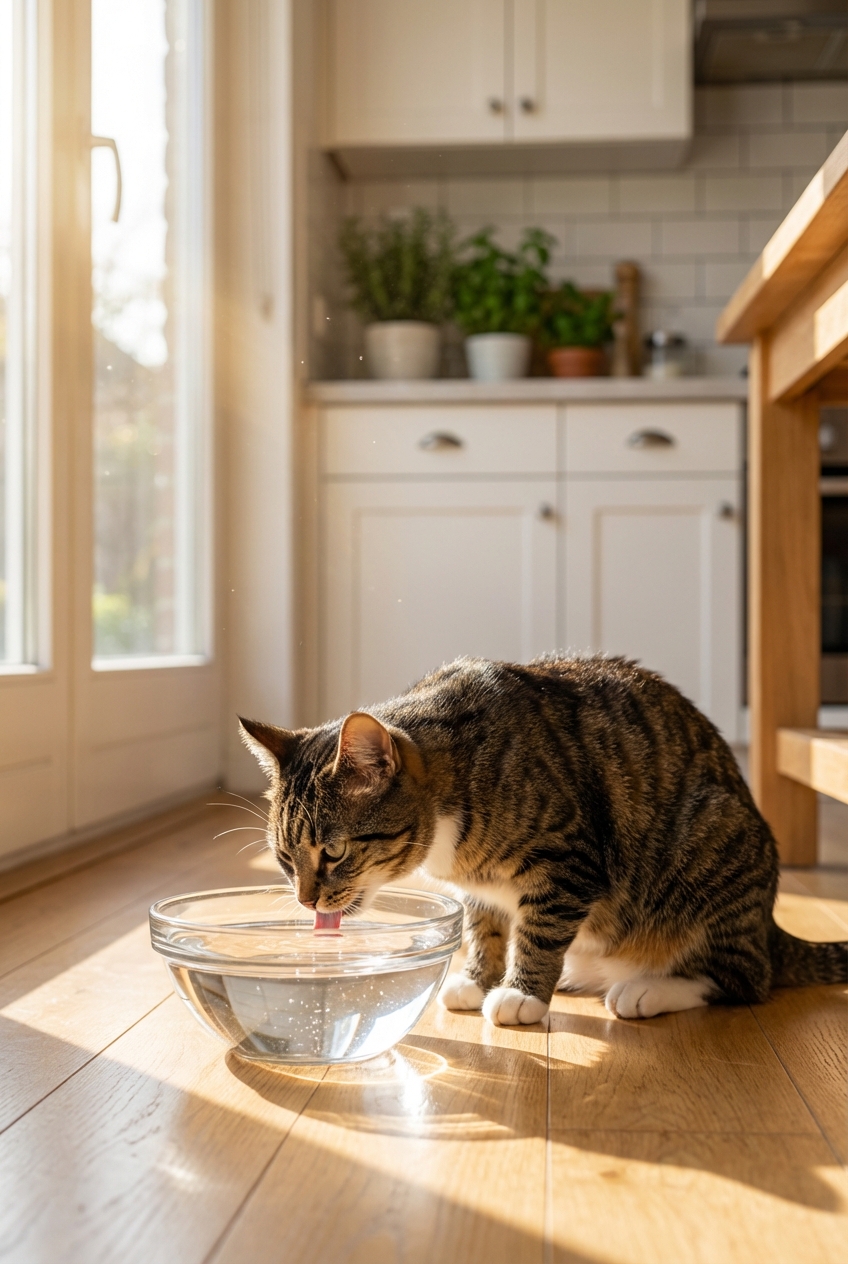
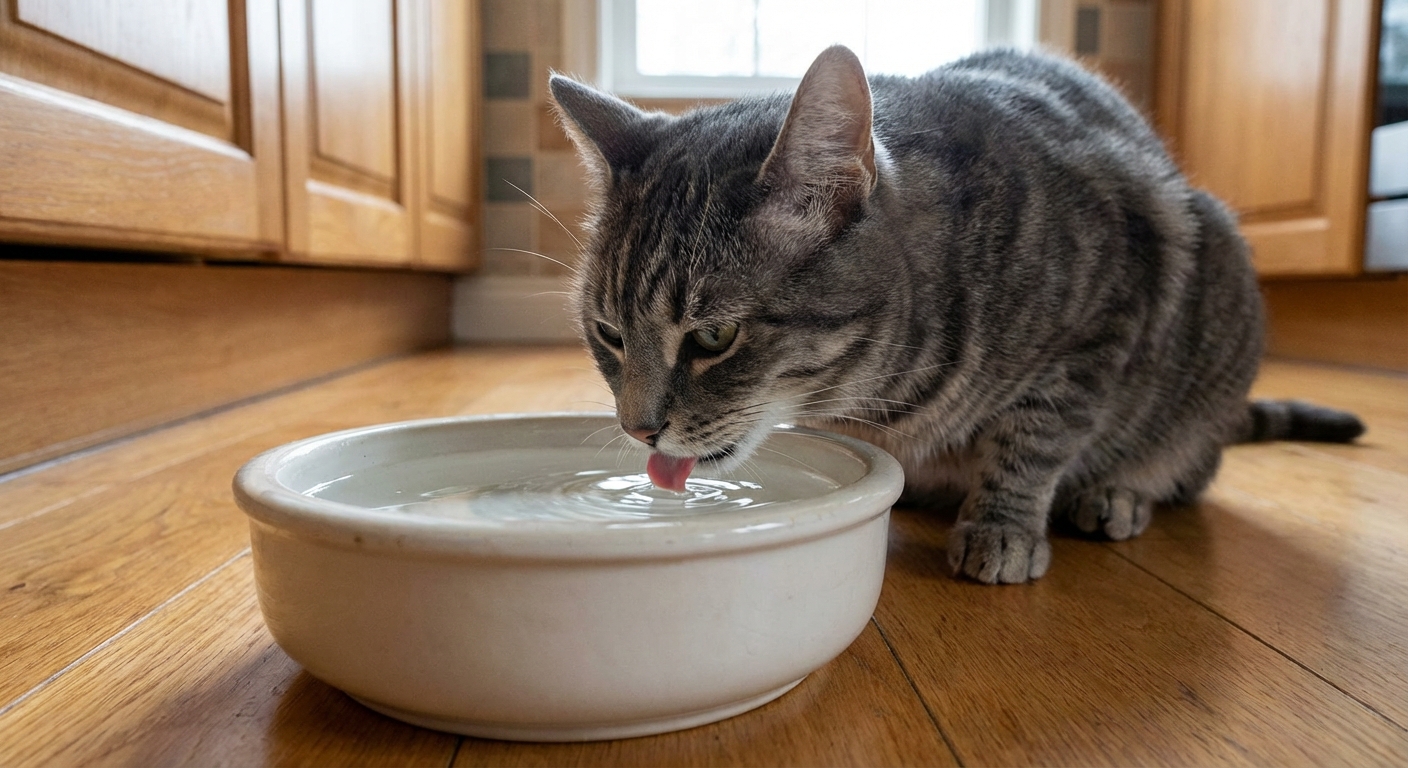
- Use wide bowls so whiskers do not rub the sides.
- Offer multiple stations, especially in multi-story homes.
- Keep water away from the litter box and away from loud appliances.
- Try a pet fountain if your cat likes moving water.
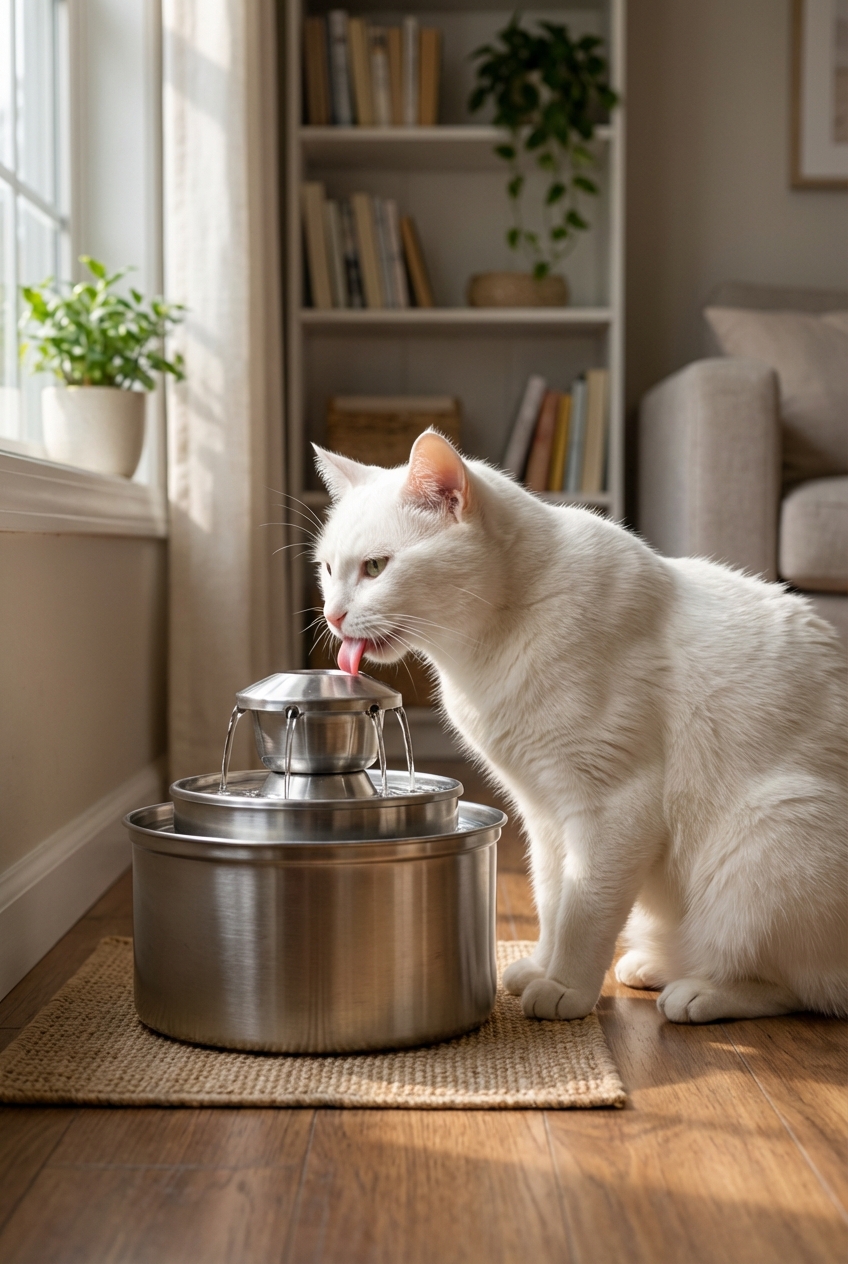
Make water more appealing
- Offer fresh water at least once daily, more often in hot weather.
- Try a few ice cubes in the bowl, if your cat finds it interesting.
- Consider a second bowl with a different material like ceramic or stainless steel.
What not to do
- Do not give sports drinks unless your veterinarian specifically directs you. The sugar and electrolyte balance is not designed for cats.
- Do not give human electrolyte products without guidance.
- Do not syringe water forcefully into an uncooperative cat’s mouth. Aspiration can be life-threatening. If a vet instructs you to syringe small amounts (and shows you how), follow their exact directions.
- Do not delay care if vomiting, diarrhea, refusal to eat, or urinary straining is present.
Hydration checklist you can save
If you want a simple way to track what is “normal” for your cat, here is a quick checklist. Changes are often more important than the exact number.
- Energy level: normal or lower?
- Appetite: eating the usual amount?
- Gums: moist or tacky?
- Water bowl: drinking more, less, or the same?
- Litter box: urine clumps bigger, smaller, or absent?
- Vomiting or diarrhea: yes or no?
- Weight trend: stable or dropping?
Note on water intake: It is hard to measure exactly how much a cat drinks, especially in multi-pet homes. If you are worried, focus on trends (drinking more or less than usual) and how your cat looks and acts.
Vet care and what to expect
If you bring your cat in for suspected dehydration, the veterinary team may:
- Check hydration status, gums, heart rate, and temperature
- Discuss vomiting, diarrhea, urination, and appetite changes
- Recommend bloodwork and urinalysis to look for kidney disease, diabetes, infection, and electrolyte changes
- Give fluids under the skin or via IV depending on severity
Fluids are not just “water.” They help restore circulation and correct electrolyte imbalances. Many cats feel noticeably better once dehydration is addressed, but the long-term goal is finding and treating the underlying cause.
Bottom line
Dehydration in cats is sneaky, and it is also very fixable when caught early. Check the gums, watch the litter box, and trust your instincts if your cat is acting “not quite right.” If you are ever on the fence, call your vet. It is always okay to ask, and it can prevent a small issue from becoming a big one.