A dog bowel blockage can turn serious fast. Learn early symptoms, red flags, home do’s and don’ts, how vets diagnose obstructions, treatment options, rec...
Article
•
Designer Mixes
How to Know If My Dog Has a Blockage

Shari Shidate
Designer Mixes contributor
If your dog suddenly starts vomiting, stops eating, or seems painful, one of the big “do not wait” concerns is an intestinal blockage. As a veterinary assistant, I can tell you that many blockages start with something totally ordinary: a sock, a corn cob, a squeaker, a chunk of rawhide, even a peach pit. The good news is that when you know what to watch for, you can act quickly and give your dog the best chance at a smooth recovery.
This guide will walk you through key warning signs, simple at-home observations, practical insights you can use to prevent trouble, and when to head straight to the vet.
What “blockage” means in dogs
A blockage happens when something prevents food, liquid, and gas from moving normally through the stomach or intestines. Vets may call this a gastrointestinal obstruction. It can be:
- Complete: nothing can pass, which can become life-threatening quickly.
- Partial: some material passes, so signs can come and go, which can be misleading.
- Linear: a string-like object (string, ribbon, rope toy) can bunch the intestines up and cut into the intestinal wall as the gut tries to move it along.
Blockages are not just “tummy aches.” Pressure builds, the intestine can lose blood supply, and the tissue can be damaged. That is why symptoms that seem mild at first deserve attention.
Common causes
Dogs explore the world with their mouths. Puppies, “mouthy” adolescents, retrievers, and high-energy dogs are especially known for grabbing household items, gulping chews, and sneaking trash when no one is looking.
Things dogs commonly swallow
- Socks, underwear, washcloths, dish towels
- Chunks of toys, squeakers, tennis ball fuzz
- Bones and bone fragments
- Corn cobs, fruit pits, large chunks of carrot or sweet potato
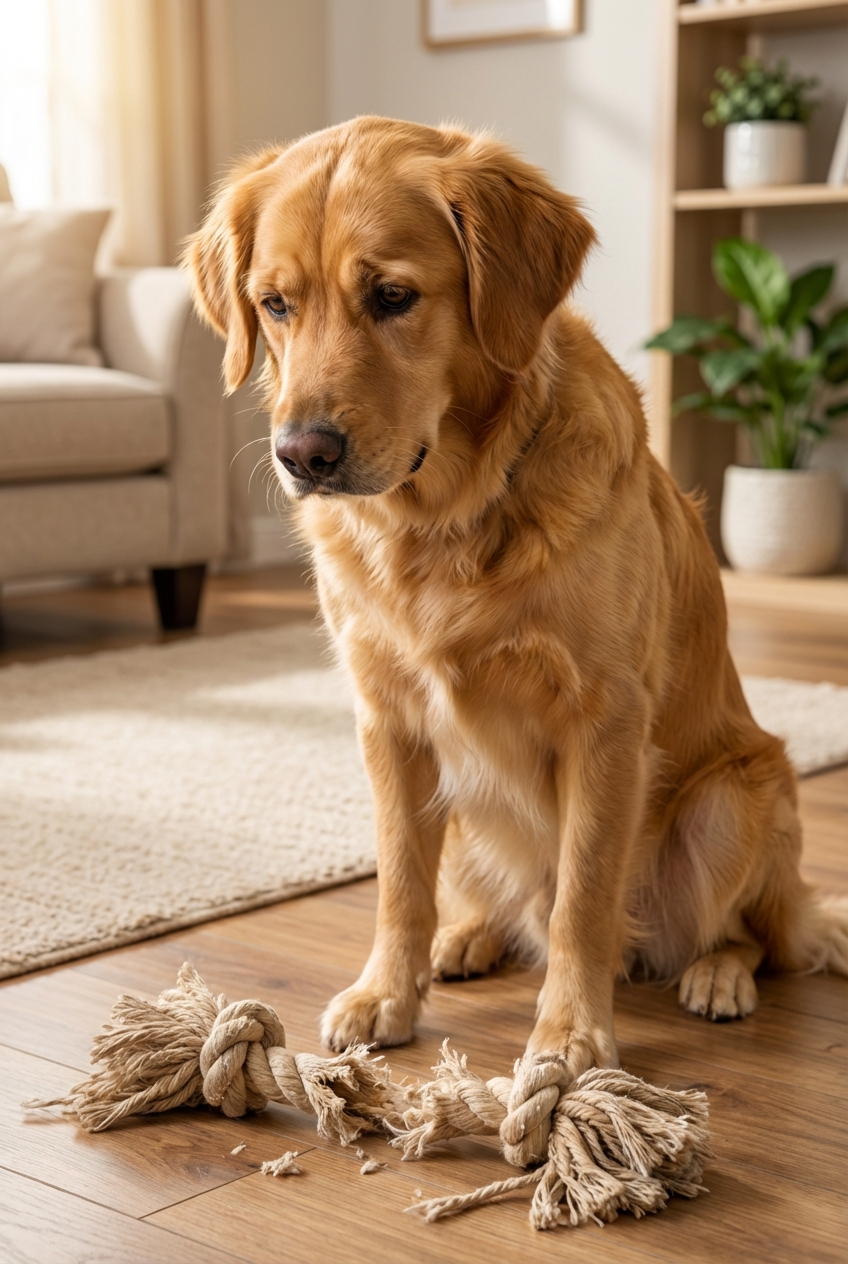
- Rope toys and string
- Rawhide or chew pieces that break off
- Trash (foil, plastic wrap)
Which dogs are at higher risk?
- Puppies and adolescents (they chew and test boundaries)
- Fast eaters who gulp toys and chews
- Dogs with pica (they seek non-food items)
- Highly anxious or bored dogs who shred and swallow
Key warning signs
No single symptom proves a blockage, but these are the most common patterns we see in clinic. Trust your gut if something feels “off,” especially if symptoms stack up.
Most common symptoms
- Vomiting, especially repeated vomiting or vomiting after drinking water
- Loss of appetite or sudden picky behavior
- Lethargy, weakness, hiding, or not wanting to play
- Abdominal pain: tense belly, “prayer position” (front down, rear up), whining when picked up
- Diarrhea or straining to poop
- Little to no stool, or very small amounts
- Excess drooling or lip-smacking (nausea)
- Bloating or a distended belly
Important note: a blockage is not the only urgent problem that can look like this. Pancreatitis, parvovirus (especially in puppies), and bloat (GDV) can also cause vomiting, pain, and weakness. If your dog looks sick, it is still a vet visit, even if you are not sure what the cause is.
Red flags that mean “go now”
- Repeated vomiting plus inability to keep water down
- Swollen, painful abdomen
- Pale gums, collapse, severe weakness
- Suspected string, ribbon, or tinsel ingestion
- Known ingestion of a sharp object (bones, skewers)
- Signs in a puppy, senior, or dog with other health conditions
If your dog may have eaten a string or rope, do not pull anything hanging from the mouth or rectum. Pulling can cause serious internal damage. Keep your dog calm and head to a veterinarian or emergency clinic.
How fast symptoms show
It depends on what was swallowed, where it is, and whether the blockage is partial or complete. Timelines vary widely. Some dogs show signs immediately, while others take a day or more, especially with partial obstructions.
- Minutes to hours: choking, gagging, immediate vomiting, restlessness.
- Within 12 to 24 hours: appetite drops, vomiting increases, belly becomes tender.
- Over several days: partial blockages may cause on-and-off vomiting, inconsistent stools, and gradual fatigue.
One tricky part is that dogs can seem “fine” between vomiting episodes. A dog who plays for 10 minutes can still have a serious obstruction.
Safe at-home checks
These are not a replacement for veterinary care, but they can help you decide how urgently to go in and what information to share.
1) Take a quick symptom timeline
- When did vomiting start?
- How many times in the last 6 to 12 hours?
- Any diarrhea or straining?
- Did you see your dog swallow something?
2) Look at hydration and gums
- Gums should be pink and moist.
- Tacky gums or sunken eyes can suggest dehydration.
3) Check poop and potty behavior
- Is your dog producing normal stool?
- Is there straining with little output?
- Any blood or black, tarry stool?
4) Observe belly comfort
Watch for a tight posture, guarding the belly, or discomfort when lying down. Avoid pressing hard on the abdomen.
What not to do
Skip home remedies like oil, bread, hydrogen peroxide, or laxatives unless your veterinarian specifically instructs you. Inducing vomiting is only appropriate for certain ingestions and time windows, and hydrogen peroxide can cause painful stomach irritation and can be inhaled into the lungs if a dog vomits and aspirates.
Also avoid giving food “to push it through,” forcing water, waiting for string to pass, or giving human pain medications. These can worsen the situation or delay proper treatment.
What the vet will do
Many owners worry the vet visit will automatically mean surgery. In reality, the goal is to locate the problem quickly and choose the safest option.
Common diagnostics
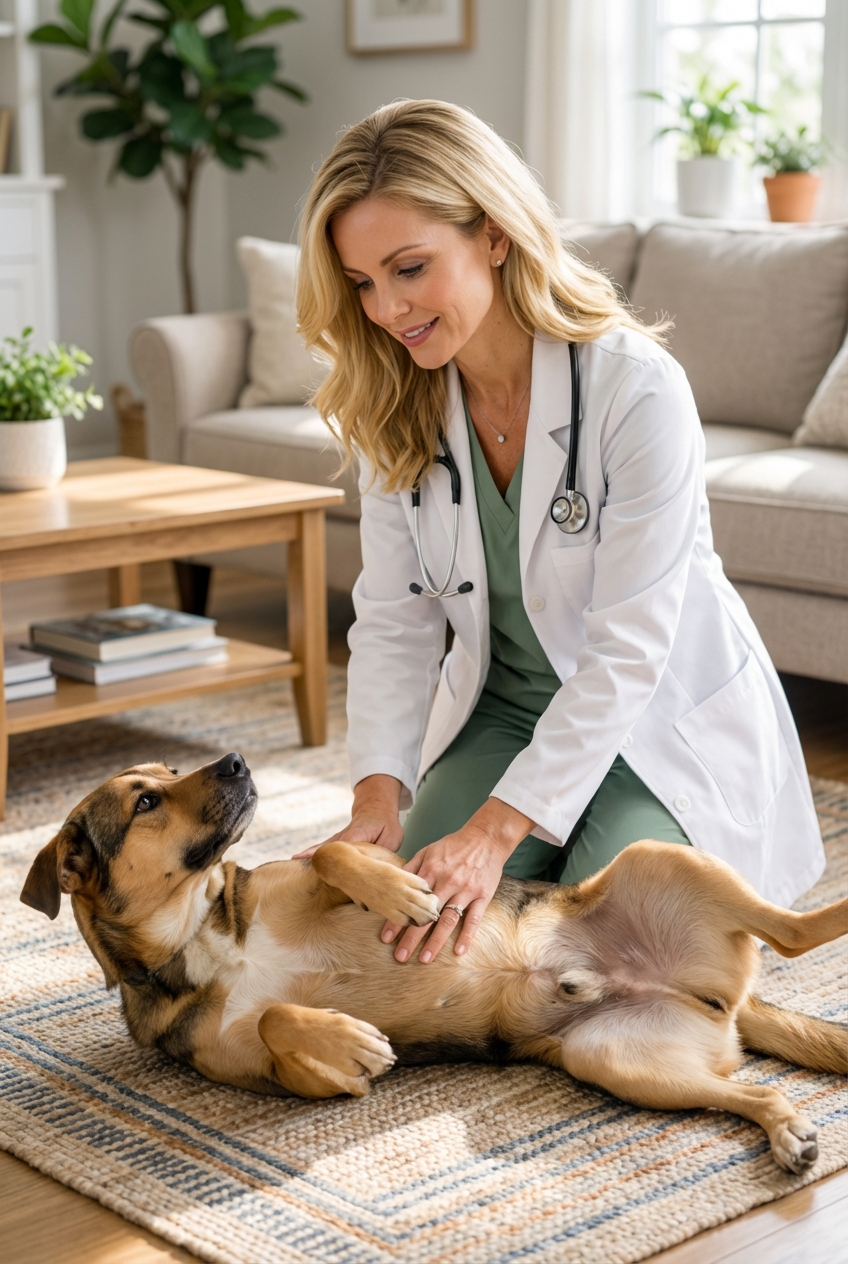
- Physical exam: belly palpation, gum color, hydration, pain score
- X-rays: can show gas patterns, some foreign objects, or intestinal “stacking”
- Ultrasound: useful for soft objects like fabric, for partial obstructions, or when x-rays are unclear
- Bloodwork: checks dehydration, electrolytes, infection, organ function
Not all foreign bodies show up on x-ray (for example, some fabric and plastics). If suspicion remains high, your vet may recommend ultrasound, repeat x-rays, or other imaging to get answers.

Treatment options
- Supportive care and monitoring: fluids, anti-nausea meds, pain control, and observation, but only after a veterinary exam and imaging when a true obstruction is not confirmed or when a mild GI upset is more likely.
- Endoscopy: a camera tool used to remove some objects from the stomach without surgery (time-sensitive).
- Surgery: needed if the object cannot pass, is causing damage, or is in the intestines.
Earlier care often means more options. Waiting can allow swelling, dehydration, and intestinal injury to progress.
Key insights for prevention
Dogs do not chew the way you think
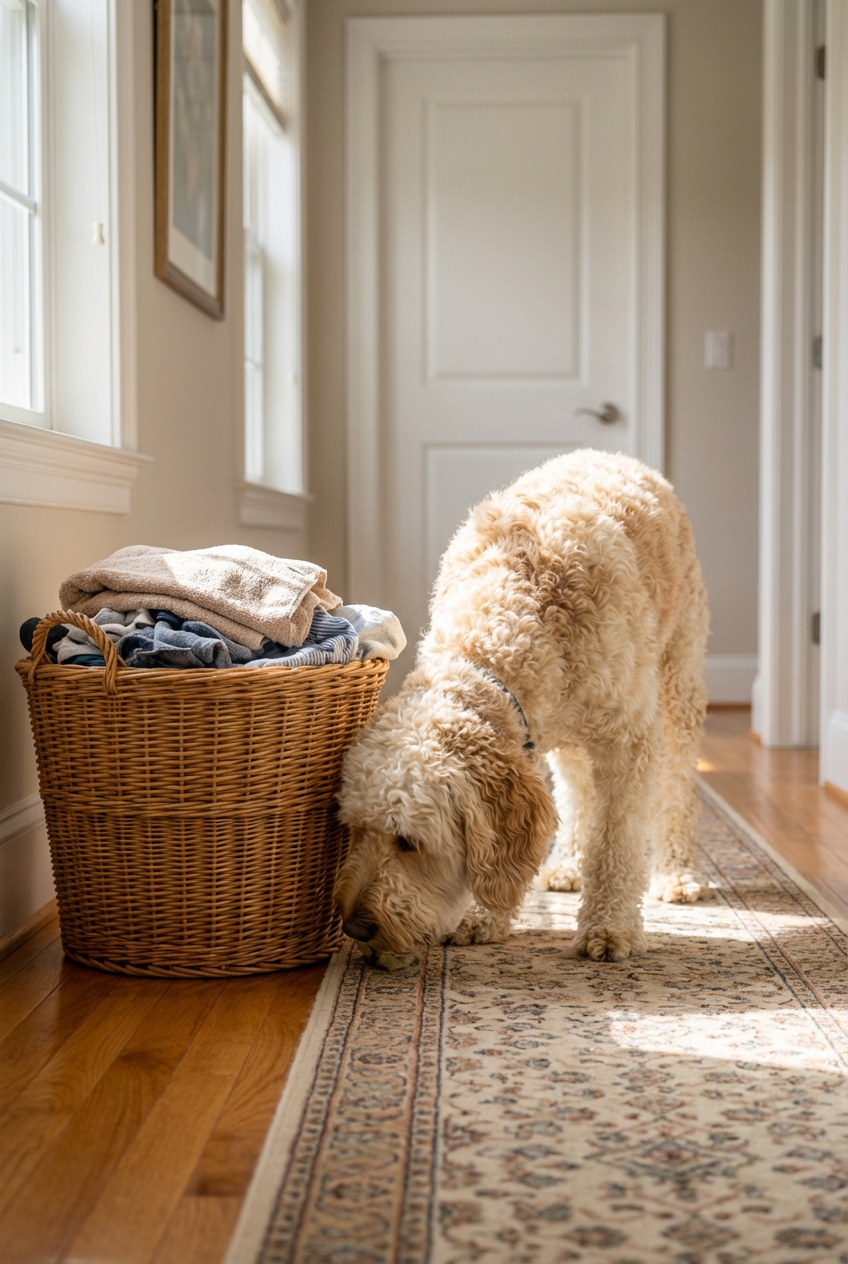
Many dogs “test chew” a few times and then swallow. Soft items like socks can ball up and slip down fast. Prevention tip: keep laundry contained and pick up small cloth items quickly.
Cooked bones can splinter
Cooked bones can break into sharp pieces that irritate or perforate the GI tract. This is why many clinics recommend avoiding them, especially if your dog is a gulper.
String is especially risky
Linear foreign bodies can anchor in one spot and cause the intestine to bunch up. This can lead to severe injury quickly, which is why suspected string ingestion is an emergency.
Big dogs are not immune
Large breeds can swallow large objects, and those objects can still get stuck. Size does not equal safety. Prevention tip: choose chews larger than your dog’s mouth and remove small end-pieces.
Practical safety tips
Home habits that work
- Laundry lockdown: keep hampers closed and socks off the floor.
- Trash security: use a lidded can or keep it behind a door.
- Toy checks: retire toys that are cracking, shredding, or losing pieces.
- Chew sizing: choose chews larger than your dog’s mouth and remove small end-pieces.
- Supervise high-value chews: especially if your dog is a gulper.
Feeding and enrichment tips
- Slow feeders can reduce gulping and frantic eating.
- Appropriate chew outlets plus exercise can reduce destructive, swallow-prone behavior.
- Teach “drop it” and practice it calmly. It is one of the most protective cues you can build.
When to call the vet
If your dog has repeated vomiting, abdominal pain, bloating, lethargy, or you suspect they swallowed something, call your veterinarian or the nearest emergency clinic. If it is after hours, most clinics have a recorded message with emergency options.
What to tell them
- Dog’s age, breed mix, weight, and any medical conditions
- Symptoms and timing (vomiting count matters)
- Last normal poop and last time eating normally
- Possible object swallowed and approximate size
- Any medications or supplements your dog takes
And please do not feel embarrassed. We see this every day, and your quick action is the best gift you can give your dog.