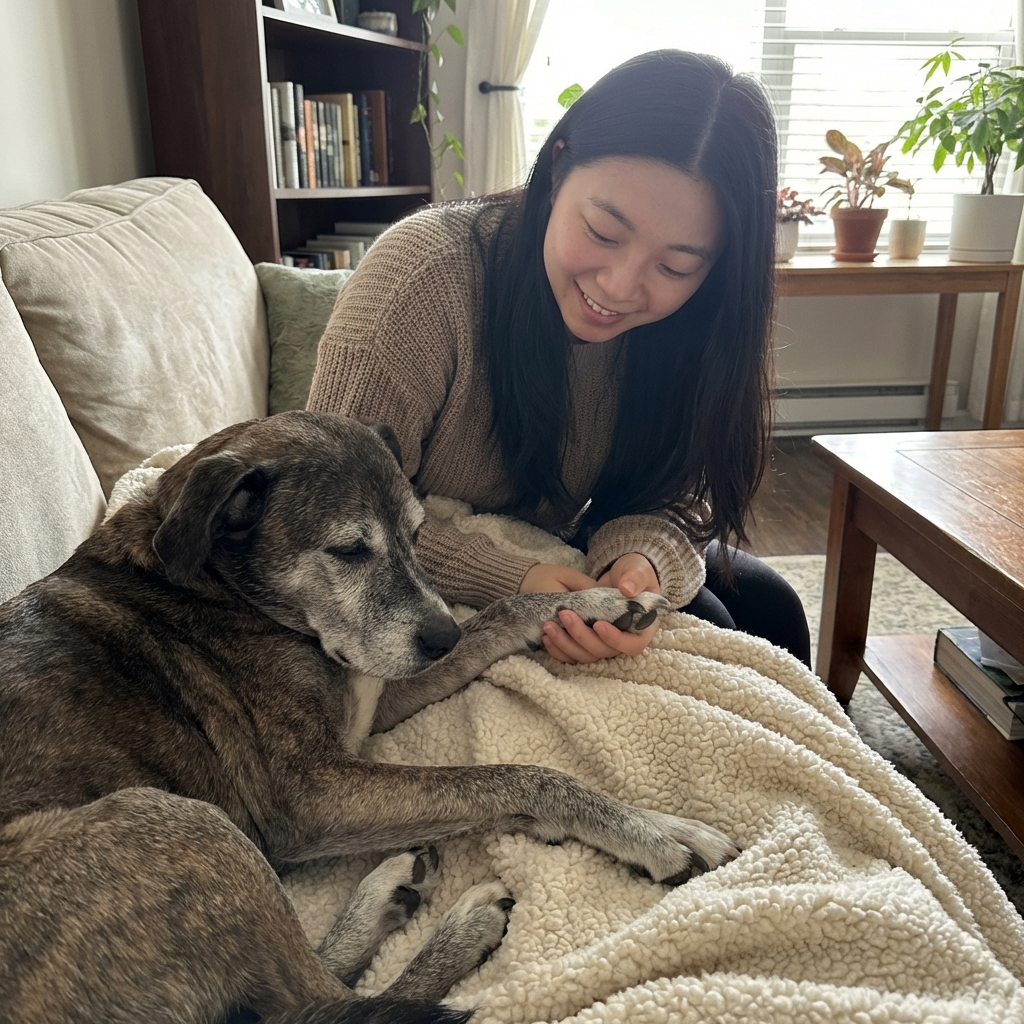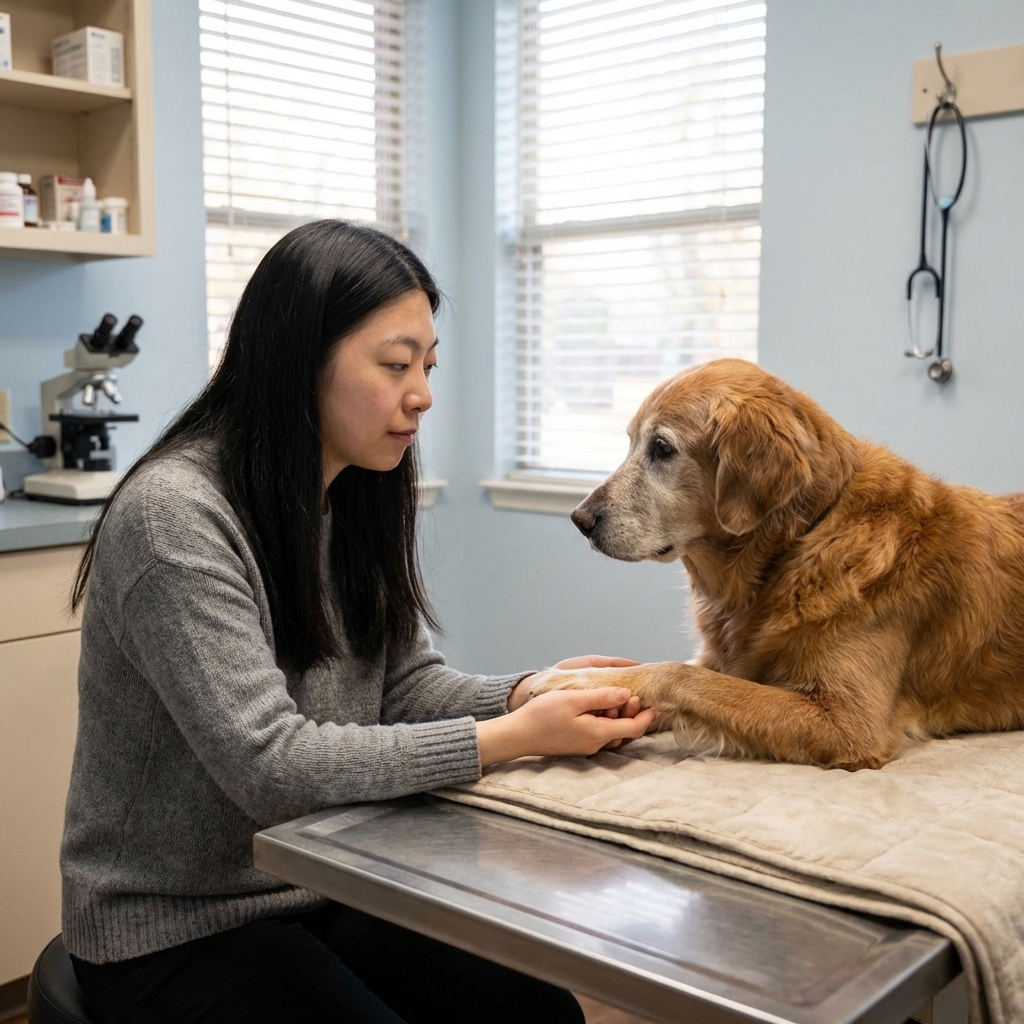
A compassionate, vet-informed checklist of end-of-life pain signs in dogs—breathing, mobility, appetite, behavior, and bathroom changes—plus red flags an...
Article
•
Designer Mixes
How to Know a Dog Is in Pain at the End

Shari Shidate
Designer Mixes contributor
When a dog is nearing the end of life, pain can be present even if your dog is not crying or showing obvious signs of discomfort. In fact, many dogs hide pain as an instinct. As a veterinary assistant in Frisco, Texas, I’ve seen how subtle those final changes can be. The most helpful thing you can do is watch for patterns, trust your gut, and partner closely with your veterinarian.

This article will walk you through the most common signs of end-of-life pain and discomfort, what can mimic pain, what you can do at home today, and when it’s time to seek urgent help.
What pain can look like at the end
Pain at the end of life is not always obvious. It may be linked to cancer, arthritis, dental disease, neurologic changes, or inflammation. Other conditions common in older or terminally ill dogs, like organ disease or fluid buildup, can cause profound discomfort and distress (nausea, weakness, air hunger) that can look like pain and often overlaps with it.
A helpful approach is to compare your dog to their baseline from a few weeks ago, or even earlier if things are changing quickly. End-of-life changes can creep in gradually, but some dogs decline fast.
Common signs your dog may be in pain
1) Changes in breathing
- Rapid breathing at rest (even when the room is cool and your dog is not active)
- Shallow breaths or “guarded” breathing, as if taking a deep breath hurts
- Increased abdominal effort (more belly movement or a visible “push” with each breath)
- Panting that does not match activity
Pain and distress can both cause panting. Rapid breathing can also be caused by heart or lung disease, anemia, fever, heat, anxiety, or certain medications (including steroids). If breathing changes are new, suddenly worse, or persistent, it’s worth a same-day call to your veterinarian.
2) Restlessness and trouble settling
- Pacing, circling, repeatedly standing up then lying down
- Sleeping much less, startling awake, or seeming unable to relax
- Seeking unusual sleeping spots, such as tile floors, closets, or corners
In some dogs near the end, sudden agitation can also be related to cognitive changes or terminal delirium. Your veterinarian may be able to help with hospice medications for anxiety, agitation, and sleep in addition to pain control.
3) Posture and movement changes
- Hunched back, tucked abdomen, head held low
- Reluctance to climb stairs, jump, or go for walks they used to enjoy
- Limping, stiffness, trembling, or shaking
- Guarding an area of the body, flinching when touched, or turning to look when you pet a spot

4) Appetite, drinking, and nausea signs
- Refusing food, eating less, or walking away after a few bites
- Drooling, lip licking, swallowing repeatedly
- Vomiting or dry heaving
- Seeming hungry but not able to eat comfortably
At the end, appetite changes can be due to pain, nausea, breathing difficulty, or organ disease. The difference matters because nausea medications and pain medications can help in different ways.
5) Behavior changes
- Becoming withdrawn, “not themselves,” hiding, or avoiding family interaction
- Clinginess that is new, following you closely, difficulty being alone
- Irritability, growling, or snapping when normally tolerant
- Confusion, staring, or getting “stuck” in corners (can also be cognitive decline)
6) Facial and touch clues
- Squinting, tense “worried” eyes, or a furrowed brow
- Tight muzzle, lips pulled back, or a strained expression
- Pulling away from touch, avoiding being picked up, or suddenly disliking petting in a specific spot
- Less self-grooming, a messy coat, or urine or stool on the fur because it hurts to move
7) Vocalizing, but not always
- Whimpering, crying, groaning when lying down or standing up
- Barking at night or howling unexpectedly
Some dogs vocalize with pain, but many do not. Silence does not mean comfort.
Urgent pain and distress signs
Please consider this an “act now” list. If you see any of these, contact your veterinarian, urgent care, or emergency clinic promptly:
- Labored breathing, open-mouth breathing when not hot or stressed, or pale or blue gums
- Collapse, inability to stand, or sudden extreme weakness
- Uncontrolled pain or distress despite medications (panting, trembling, cannot settle)
- Repeated vomiting or vomiting with blood
- Bloated abdomen, unproductive retching, or signs of abdominal distress
- Seizures (new or increasing)
- Uncontrolled bleeding or black, tarry stool
If you are unsure, call. A quick conversation can prevent hours of suffering.
What can mimic pain
These issues can look like pain but may need different support:
- Anxiety (panting, pacing, clinginess), especially at night
- Nausea (drooling, lip licking, food refusal)
- Breathing distress from heart disease, lung disease, or fluid buildup
- Cognitive dysfunction in seniors (confusion, restlessness, sleep changes)
- Weakness from anemia or organ disease
This is why I encourage families to focus on the full picture and talk through symptoms with a veterinarian instead of guessing which medication to try at home.
How vets assess pain
Veterinary teams often use structured pain scoring tools and your observations. You don’t need fancy equipment, just consistency.
Track these daily (even for 3 days)
- Breathing rate at rest: count breaths for 30 seconds and multiply by 2. A typical resting rate for many dogs is often under 30 breaths per minute. If your dog is persistently above about 30 to 40 breaths per minute at rest, or the number is rising compared to their normal, call your veterinarian for guidance.
- Appetite: ate normal, ate some, refused
- Hydration: drinking normally, drinking less, not drinking (or vomiting water)
- Mobility: can stand, walk, and potty with minimal struggle
- Sleep and comfort: settles easily or restless
- Interest: responds to you, enjoys gentle touch, wants to be near you
Bring a short log to your appointment or share it over the phone. Clear notes help your veterinarian adjust comfort care faster.
Comfort steps at home
Home support will not replace medical pain control, but it can make a meaningful difference in your dog’s comfort.
Create an easy comfort zone
- Use a thick, supportive bed or memory foam mattress topper
- Keep water nearby and avoid slippery floors with rugs or yoga mats
- Offer a warm, quiet area away from household bustle
- Help with gentle repositioning as needed and as tolerated, especially if your dog struggles to move
Support mobility and toileting
- Use a harness or towel sling for back-end support
- Take shorter, more frequent potty breaks
- Keep nails trimmed for traction
Be cautious with pain meds
Only give medications your veterinarian has prescribed for your dog. Many human medications are dangerous for dogs. Do not give over-the-counter pain relievers like ibuprofen (Advil, Motrin), naproxen (Aleve), or acetaminophen (Tylenol) unless your veterinarian specifically instructs you to.
Also, do not combine a veterinary NSAID (like carprofen, meloxicam, deracoxib, or firocoxib) with steroids (like prednisone) unless your veterinarian directs it, since this can cause serious side effects.
If pain or distress seems uncontrolled, ask your veterinarian about options commonly used in hospice care such as anti-inflammatories (when appropriate), opioid pain relief, nerve pain medications, and anti-nausea or anti-anxiety support.
Quality of life
One of the hardest truths is that end-of-life pain is not always fixable. Sometimes our job becomes preventing suffering rather than chasing a cure.
A simple way to think about quality of life is to ask:
- Are they comfortable most of the day?
- Can they rest without distress?
- Are they eating or drinking enough to feel okay?
- Can they get to the bathroom with dignity and minimal struggle?
- Do they still have moments of connection?
Some families find it helpful to use a simple checklist like the HHHHHMM scale (Hurt, Hunger, Hydration, Hygiene, Happiness, Mobility, More good days than bad) to put feelings into words and spot trends over time.
Love is also making sure pain does not become their final chapter.
If you’re at the point where good days are rare, or your dog cannot get comfortable even with help, it may be time to discuss hospice adjustments or humane euthanasia with your veterinarian.
What to ask your vet
If you’re preparing for an appointment or a phone call, these questions can keep things practical and focused:
- Based on my dog’s condition, what are the most likely sources of pain or distress right now?
- What signs would tell us pain is not controlled?
- What medications can we add or adjust, and what side effects should I watch for?
- Should we treat nausea, breathing distress, or anxiety alongside pain?
- Do you offer hospice support or can you refer me to a mobile hospice vet?
- If euthanasia becomes the kindest option, what does that process look like?

A gentle reminder
If you’re reading this with a lump in your throat, you’re not alone. Loving a dog means eventually facing decisions we never wanted to make. The goal is not perfection. The goal is comfort, dignity, and listening closely to what your dog is telling you with their body and behavior.
If you’re seeing signs of pain or distress, please reach out to your veterinarian today. Comfort can often be improved quickly, and when it can’t, you deserve clear guidance on the kindest next step.