Tired of counter surfing? Learn why cats jump up and follow a fast 3-part plan: make counters boring, create a better “yes” perch, and use safe, consiste...
Article
•
Designer Mixes
How to Keep Cats Off Counters

Shari Shidate
Designer Mixes contributor
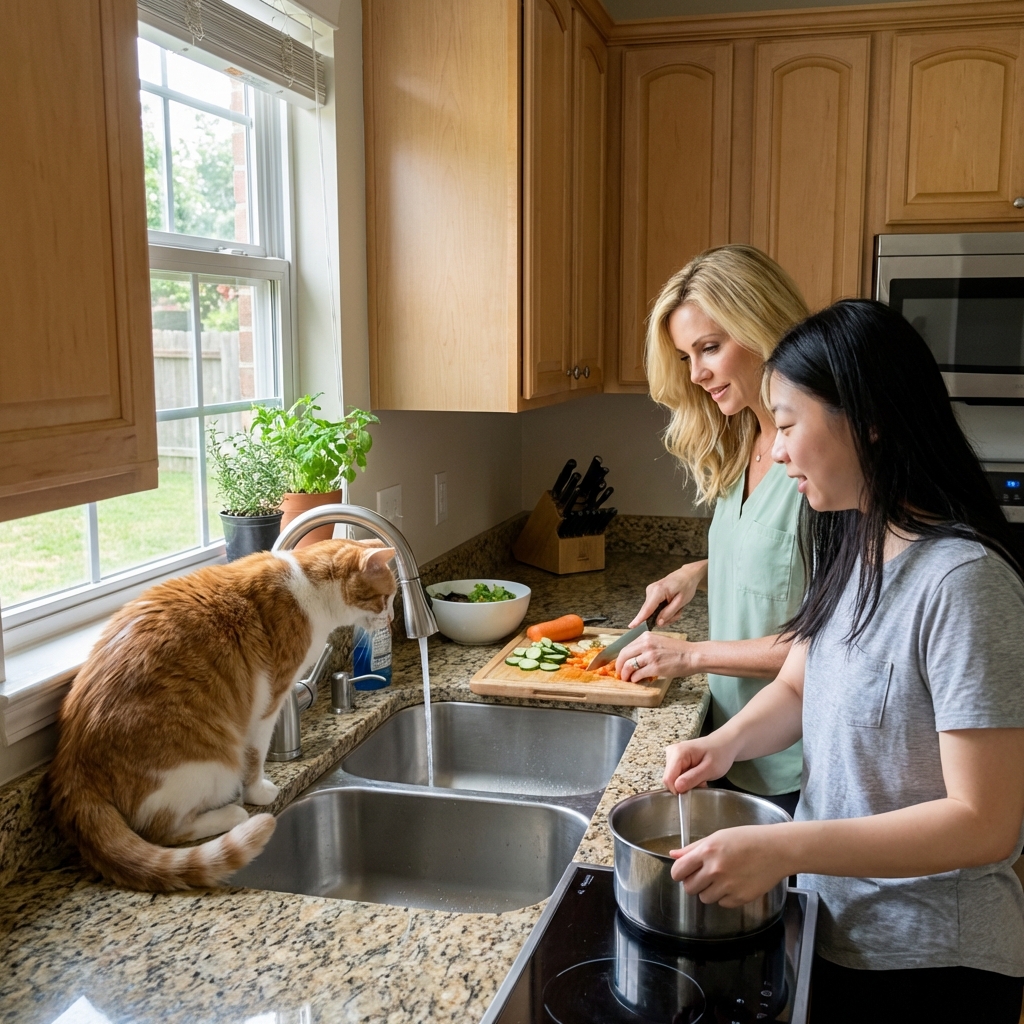
Many cats are drawn to counters for the same reasons we are. They are high up, full of interesting smells, and often right where their people hang out. The challenge is that counters can also be unsafe and unsanitary, especially around hot stoves, sharp knives, and human food.
As a veterinary assistant here in Frisco, Texas, I tell cat parents this: the most effective approach for many cats is not punishment. It is a mix of management, making counters boring, and giving your cat a better “yes” option nearby. Let’s walk through what tends to work, and why.
Quick note: This is general behavior advice. If your cat’s counter surfing is sudden, intense, or paired with weight loss, vomiting, or big appetite changes, call your veterinarian.
Why cats get on counters
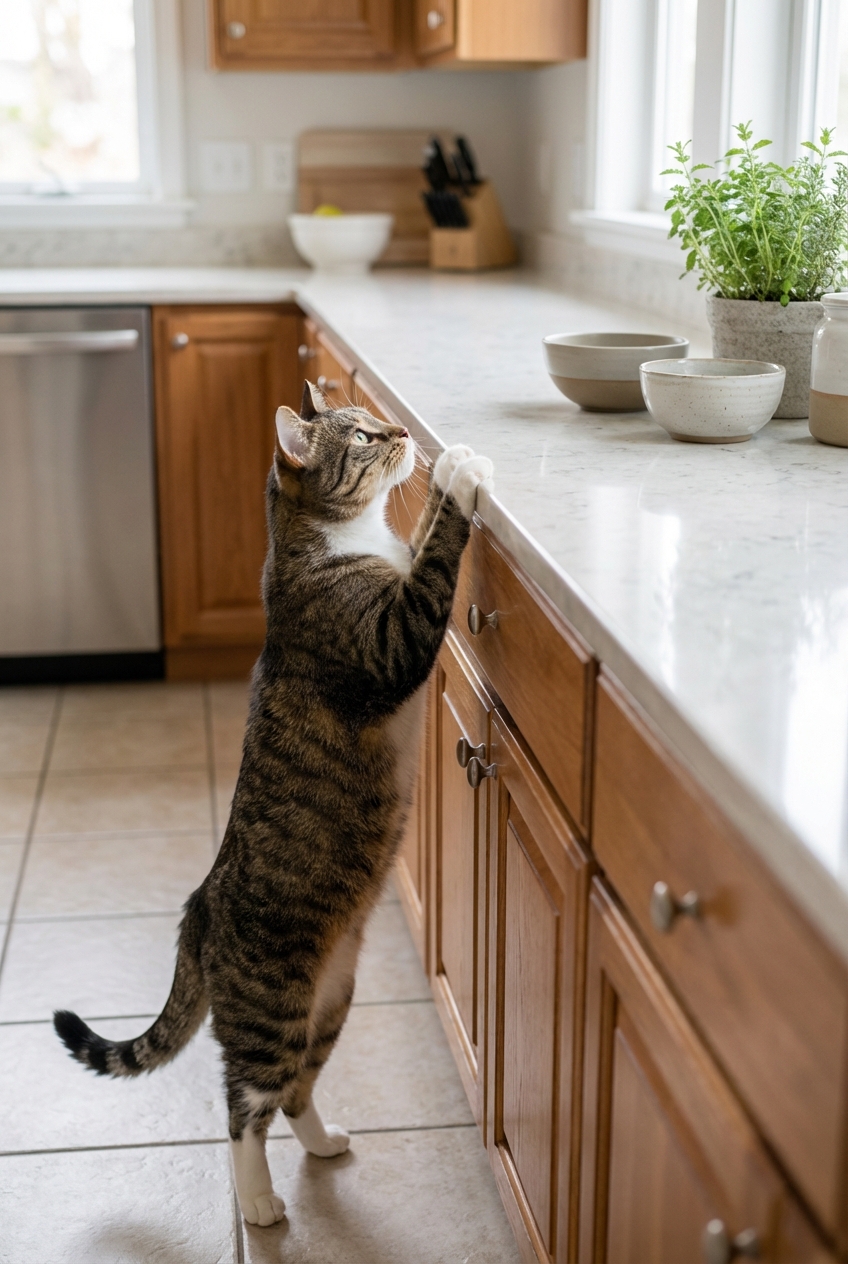
If you understand the motivation, you can solve the behavior. Most counter surfing is normal cat behavior, not “spite” or “dominance.”
- Height equals safety: Cats are hardwired to seek elevated vantage points to watch their environment.
- Smell is a magnet: Food residue, crumbs, and even a faint scent from yesterday’s chicken can be rewarding.
- Attention can reinforce it: If your cat jumps up and you rush over, talk, or chase, that can still be “worth it” to some cats.
- It meets a need: Many indoor cats are under-enriched. Counters provide novelty, views, and stimulation.
Keeping cats off counters is easiest when you meet those needs in a safer, more appropriate way.
Golden rule: no payoff
The behavior you are trying to stop is often self-reinforcing. Your cat jumps up, finds crumbs or a butter wrapper, and learns, “This place is amazing.” The good news is that accidental reinforcement is very common. It is not a failure, it is just part of living with a clever animal.
Counter hygiene that can help
- Wipe counters after every meal prep, including corners and backsplash edges.
- Put food away immediately, including bread, fruit bowls, and cooled pans.
- Do not leave dirty dishes overnight if your cat scavenges.
- Use a secured trash can. Many counter surfers are really trash hunters.
If there is no payoff, the habit typically weakens faster. This is basic learning theory: behaviors that stop being reinforced tend to decrease over time.
Food safety tip: Even if you keep your cat off the counter most of the time, it is still smart to sanitize surfaces before cooking. Cats can track litter residue and bacteria onto surfaces.

Humane deterrents
You are aiming for a counter that feels uninteresting or mildly annoying, without scaring your cat or damaging trust. For best results, pair deterrents with a great alternative perch.
Surface options to try
- Double-sided tape: Many cats dislike sticky paws. Place strips along common landing zones for 1 to 2 weeks, or until attempts drop. Then fade it out gradually.
- Aluminum foil (quick test): Some cats avoid the sound and feel, but not all. If it works, transition to a more practical option.
- Motion-activated air puff devices: These can be very effective because the consequence happens even when you are not there. Place them so they cannot blow directly into your cat’s face at close range. If your cat seems fearful, startles hard, avoids the kitchen, or shows stress signs, discontinue and switch to a gentler strategy.
- Plastic carpet runner (nubs up): Cut to size and place when you are not using the counter. Make sure it lies flat, does not slip, and stays clean. Skip this option if your cat chews plastic.
What to avoid
- Spraying your cat with water: It often increases anxiety and can harm your relationship, and many cats just learn to wait until you are gone.
- Yelling or chasing: This can become attention, and it can create fear around the kitchen or around you.
- Anything that can injure paws: Never use tack strips or painful devices.
- Declawing: This is not a behavior solution and is not recommended. It can create lasting pain and behavior fallout.
Think “consistent and gentle,” not “intense and scary.” Cats learn best in a calm home.
What to do in the moment
When you catch your cat on the counter, the goal is to interrupt without turning it into a game or a scary moment.
- Stay calm and boring. Avoid yelling, clapping, or running at your cat.
- Lure to the “yes” spot. Use a treat, a tossed piece of kibble, or a wand toy to guide them to their perch.
- Reward on the perch. The reward happens only after four paws are on the approved spot.
- Avoid forced handling if they hate it. Picking up a cat who dislikes being picked up can escalate stress and make the kitchen a conflict zone.
Over time, you want your cat thinking, “When I want to be near my human, I go to my perch.”
Give a better alternative
If the counter is the only high, interesting place in the kitchen, your cat will keep trying. Your goal is to create a legal spot that meets the same needs.
Set up a kitchen “yes” spot
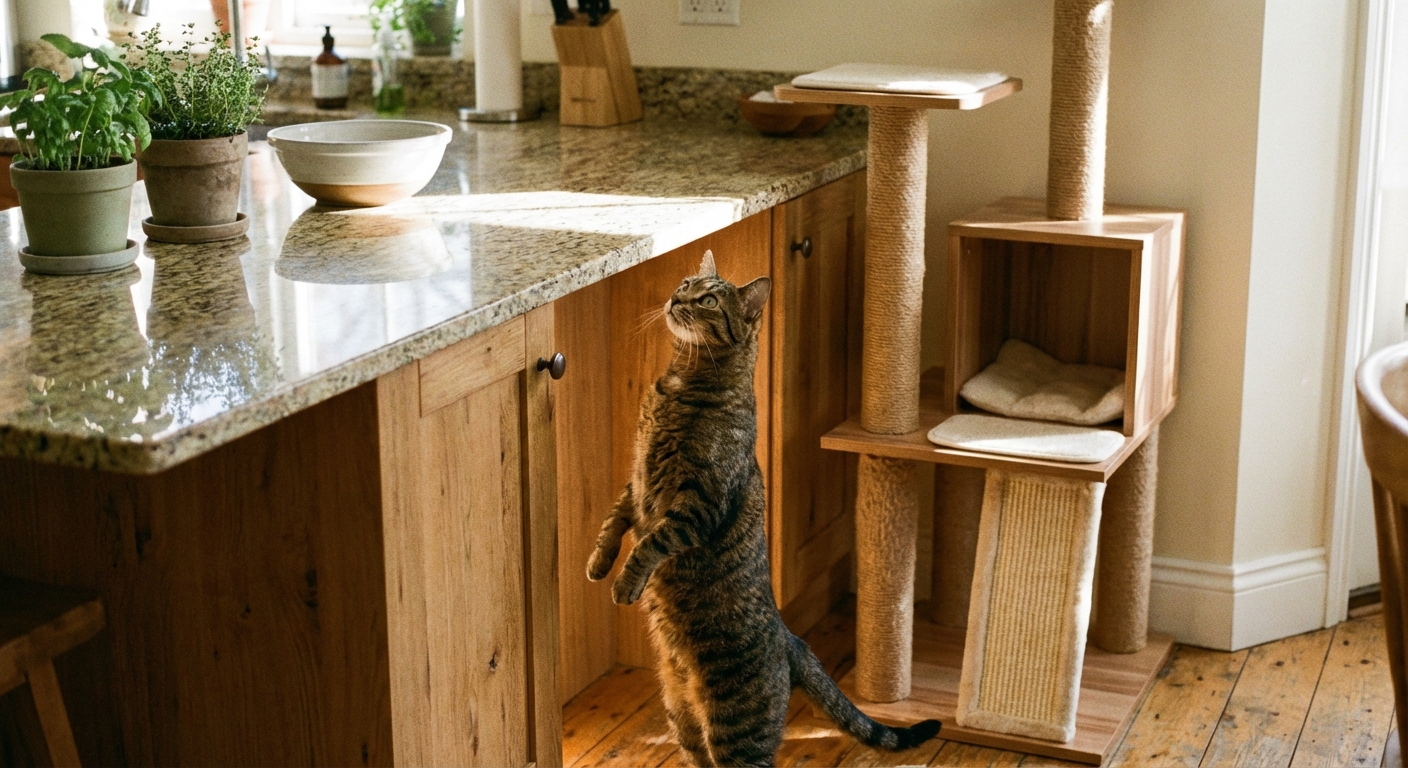
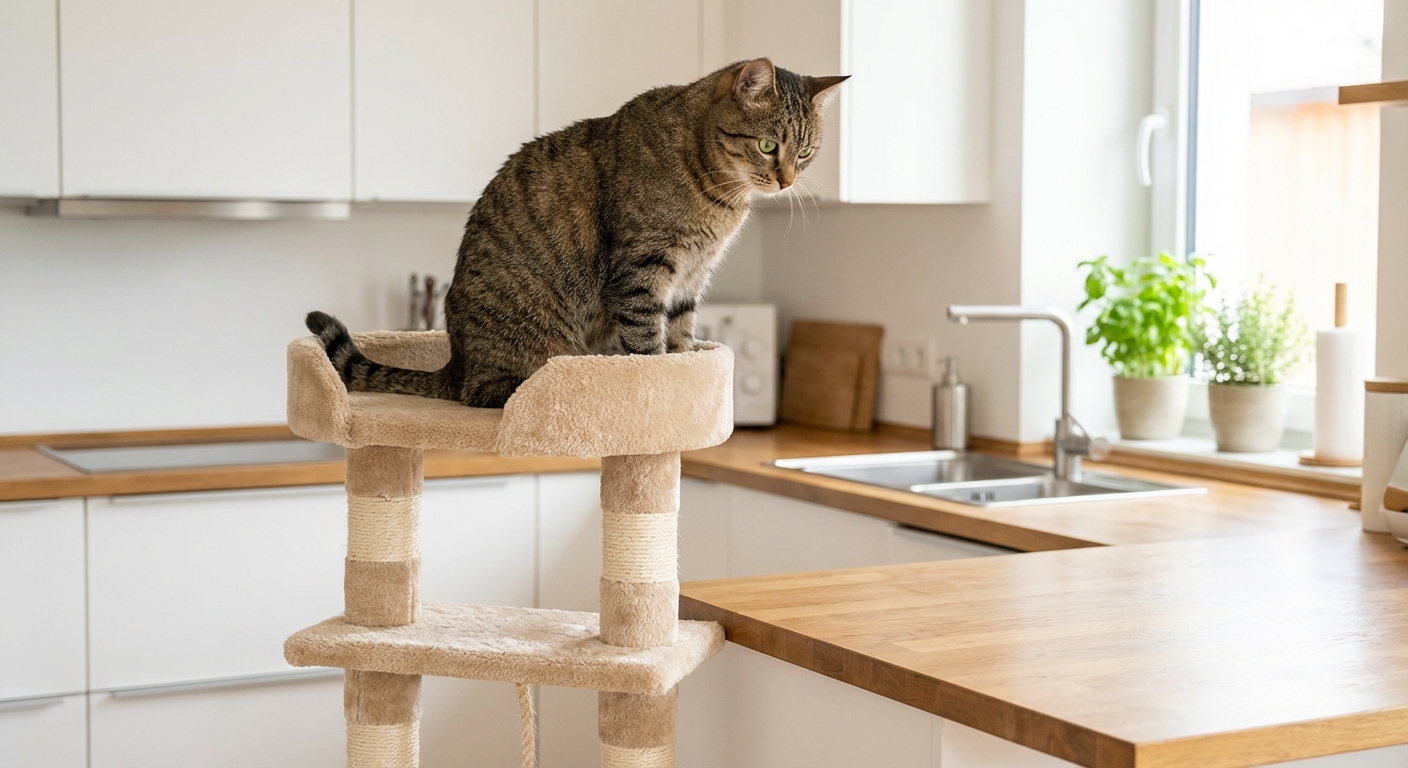
- A cat tree or tall perch placed nearby, close enough that your cat can supervise you.
- A window perch if your kitchen has a good view.
- A sturdy stool or shelf that is only for the cat, not food prep.
Train the alternative
- Sprinkle a few treats or a pinch of kibble on the perch several times daily for the first week.
- Use a wand toy on the perch to make it exciting.
- Reward with calm praise when your cat chooses the perch instead of the counter.
This is not bribery. This is positive reinforcement, and it works because you are teaching a replacement behavior, not just saying “no.”
Make it easier to succeed
Many cats counter surf most when they are bored, hungry, or anticipating meals.
Simple upgrades
- Food puzzles: Offer part of meals in a puzzle feeder so your cat has to work for it.
- Hunt-style feeding: Hide small portions of food in safe locations around the home.
- Two short play sessions daily: Even 5 to 10 minutes with a wand toy can reduce “problem solving” in the kitchen.
- Predictable meal schedule: Cats do well when meals happen at consistent times, and many do better with smaller, more frequent meals.
Get everyone on the same plan
- Guests and kids: Ask them not to feed table scraps or leave food unattended on counters.
- Consistency matters: If the cat gets “lucky” once in a while, the habit can stay strong.
When your cat’s day is enriched and the kitchen is consistent, counters lose some of their sparkle.
When it is a safety issue
Some counter behavior is more than curiosity. Here are situations where I recommend extra caution and possibly a vet check.
Sudden intense food seeking
Increased food seeking can be linked to medical issues like hyperthyroidism, diabetes, intestinal parasites, gastrointestinal disease, malabsorption, or medication side effects. If your cat is ravenous, losing weight, vomiting more, or drinking and peeing more, call your veterinarian.
Jumping changes
Older cats may counter surf because they want a warmer spot near appliances, but arthritis can make jumping painful. Consider adding ramps or lower perches and talk to your vet about mobility support if your cat seems stiff or reluctant to jump.
Kitchen hazards
Counters are where many hazards live: onions, garlic, grapes, raisins, alcohol, xylitol sweeteners, medications, essential oils, and hot cookware. Management matters here. It is not just about manners, it is about preventing emergencies.
A realistic 2-week plan
You do not have to do everything at once. Start small and stay consistent.
Days 1 to 3
- Deep clean counters and remove all food temptations.
- Set up a kitchen perch.
- Begin rewarding the perch.
Days 4 to 7
- Add a surface deterrent on common landing areas when you are not using the counter.
- Increase play sessions to twice daily.
Days 8 to 14
- Keep rewards coming for the perch, but begin spacing them out.
- Continue strict counter hygiene.
- Use deterrents consistently, especially when you cannot supervise.
Most families see meaningful improvement in this window. For persistent jumpers, extend the plan another two weeks and tighten up consistency.
Bottom line
A reliable approach is a three-part combo: remove the reward (clean counters), make the behavior inconvenient (humane deterrents), and teach a replacement (a kitchen perch with rewards). Your cat is not being “bad.” They are being a cat. With the right setup, you can protect your kitchen and still keep your cat feeling safe, stimulated, and loved.
If you want one step to start today, start with the perch. Give your cat a better place to be, and the counter becomes a lot less tempting.