Puppy biting is normal—but you can fix it fast. Learn why it happens and use 10 gentle methods: redirecting to chews, brief time-outs, bite inhibition, cal...
Article
•
Designer Mixes
How to Keep a Puppy From Biting

Shari Shidate
Designer Mixes contributor
Puppy biting is one of the most common reasons families feel overwhelmed in the first few months. If you are dealing with tiny teeth on hands, ankles, sleeves, and even faces, you are not alone. The good news is that puppy mouthing is normal, and with the right plan you can teach gentle behavior without fear or harsh corrections.
As a veterinary assistant, I like to frame puppy biting as a mix of development, teething discomfort, and a puppy learning self-control. Your job is to coach that self-control by setting up the environment, rewarding the behavior you want, and calmly removing the payoff for biting.
Quick note: This article is general education and not individualized veterinary advice. If something feels off or unsafe, your veterinarian or a qualified reward-based trainer can help you tailor a plan.
Why puppies bite
Before we fix it, it helps to understand it. Puppies use their mouths the way toddlers use their hands. Mouthing is exploration, play, and communication.
- Teething and sore gums: Most puppies typically start losing baby teeth around 3 to 4 months, with adult teeth coming in through about 6 months. Timelines can vary by breed and individual.
- Play behavior: Puppies bite each other during play. They learn bite inhibition from littermates, and now you are part of that lesson.
- Overtired and overstimulated: A puppy who is wound up often bites more, not less.
- Attention seeking: If biting reliably makes you squeal, wave your hands, or chase, your puppy may think they found the best game ever.
- Herding instincts: Some mixes are more prone to ankle nipping and “moving” people with their mouth.
What not to do
Some old school advice can make biting worse or create fear. Avoid these if you can.
- No hand slaps, alpha rolls, or holding the mouth shut: This can increase arousal or teach your puppy that hands are scary.
- No yelling or rough play: Big reactions often reward the behavior.
- Avoid “wrestling” games: They teach puppies that human skin and clothing are fair targets.
- Do not punish growling: Growling is communication. Punishing it can remove a warning signal and increase risk of a bite later.
A simple evidence-informed approach
If you remember one thing, let it be this simple pattern:
- Replace skin with an appropriate chew or toy.
- Reward calm play and gentle mouth.
- Remove access to you when biting continues.
This is how puppies learn: behaviors that work get repeated. Behaviors that do not work fade.
What to do when your puppy bites
1) Freeze and get boring
When teeth touch skin, stop moving. Movement excites many puppies and triggers chase and bite. Keep your face neutral and your voice calm.
If your puppy grabs clothing, stay still and avoid pulling back (that can turn it into a tug game). Once they loosen up, redirect to a toy.
2) Redirect within 1 to 2 seconds
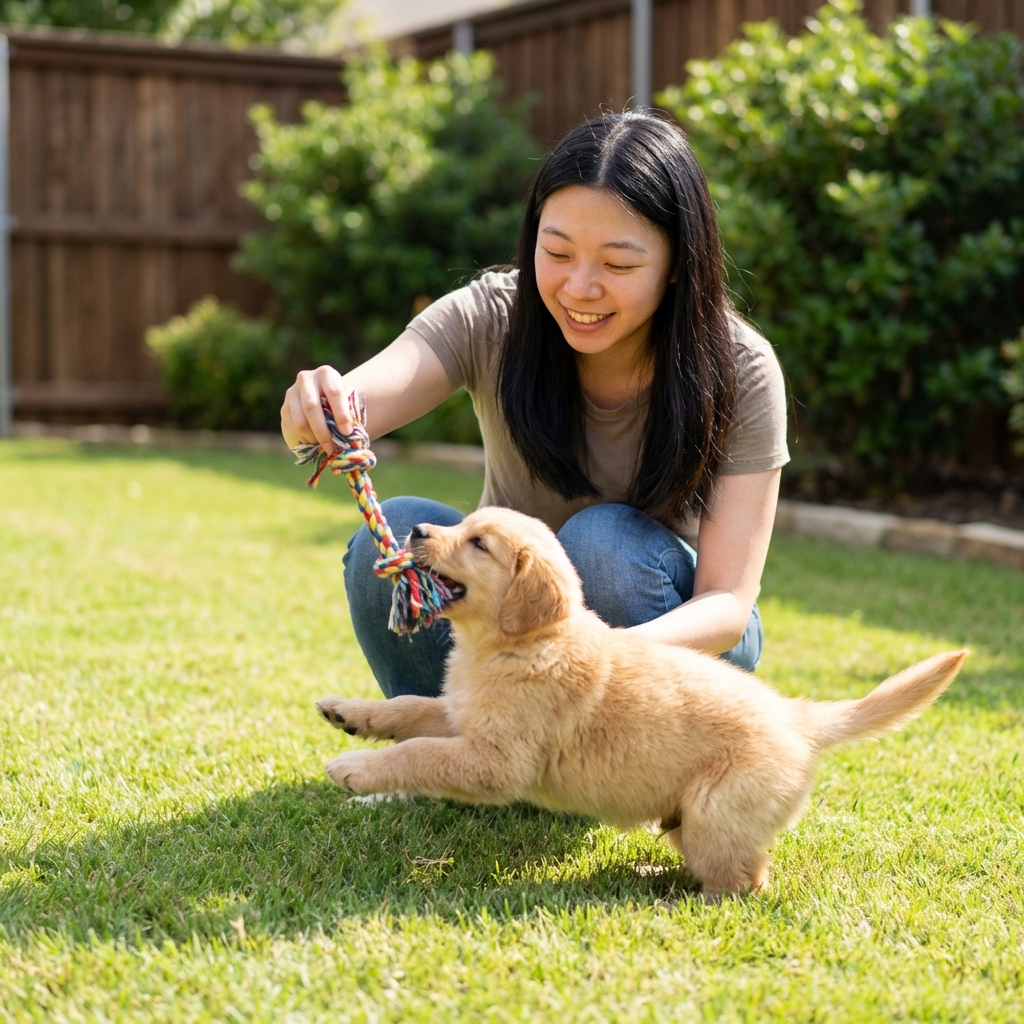
Have toys staged around your home so you can redirect quickly. Offer the toy right where the bite happened and praise when your puppy grabs it.
3) Reinforce the choice you want
When your puppy chews the toy, calmly say “yes” or “good,” then add a small treat or a gentle game of tug. You are paying for the correct behavior.
4) If biting continues, do a brief time-out
Time-out does not mean punishment. It means removing the fun for a moment. Keep it calm and short.
- Option A, reverse time-out: Step behind a baby gate or close a door for 10 to 20 seconds.
- Option B, puppy time-out: Place your puppy in a safe pen with a stuffed rubber toy for 20 to 60 seconds.
Then resume play and try again. Consistency is where the progress happens.
Important: Avoid using the crate as a “penalty box.” The crate should stay a positive, restful place.
Teach bite inhibition
Bite inhibition means your puppy learns to control the pressure of their mouth. This is a safety skill. Even adult dogs may use their mouth in play or when startled, so we want that mouth to be gentle.
A simple bite inhibition game
- Play calmly with a toy.
- If teeth touch skin, pause play instantly.
- Redirect to the toy and reward gentle play.
- Over time, your puppy learns that gentle equals play continues.
Should you say “ouch”?
Some puppies respond well to a calm “ouch” or “too bad” as a marker that play stops. Other puppies get more excited by yelping or loud sounds.
- Keep it quiet and neutral (not a high-pitched squeal).
- If it escalates biting, skip it and stick with freeze, redirect, and brief time-outs.
Meet the need to chew
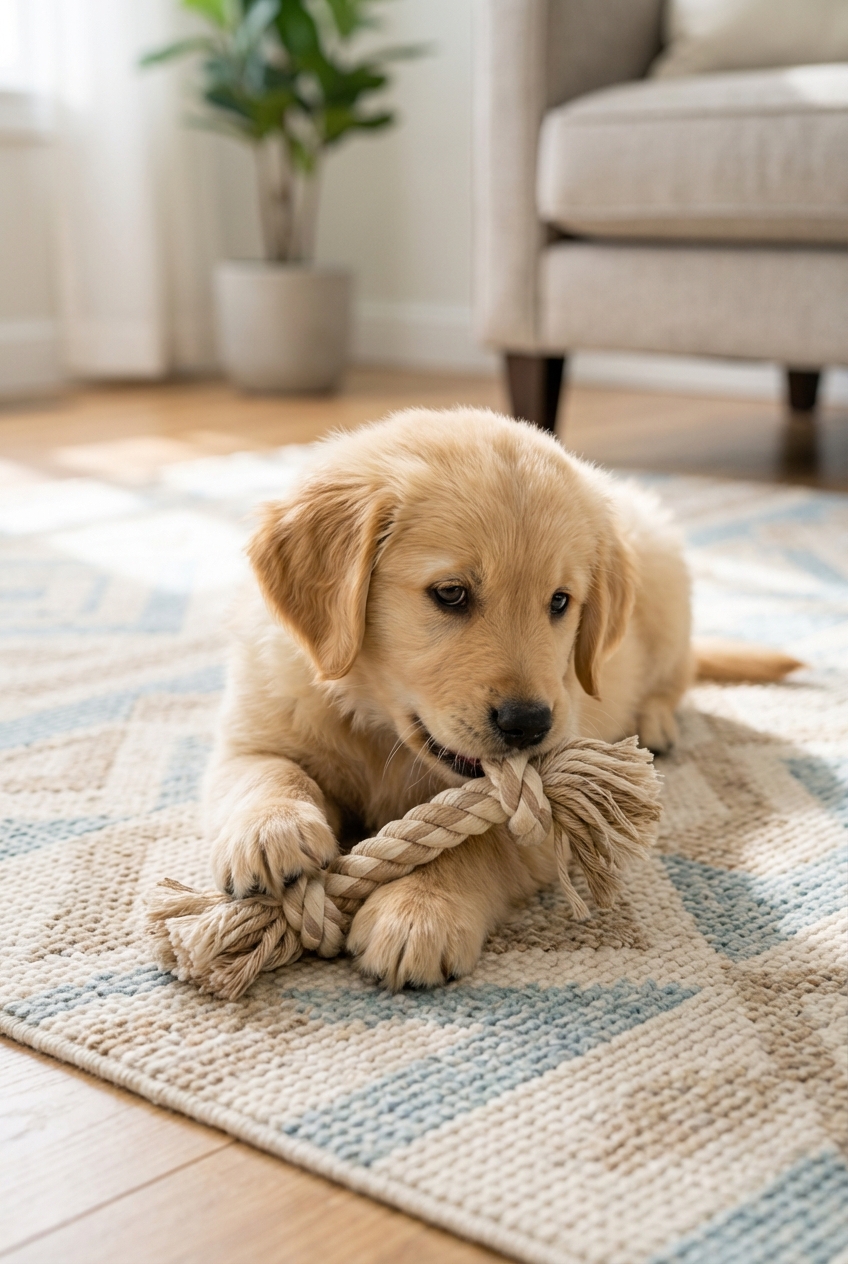
Chewing is not a bad habit. It is a biological need, especially during teething. The goal is to make it easy to chew the right thing.
Chew options most puppies love
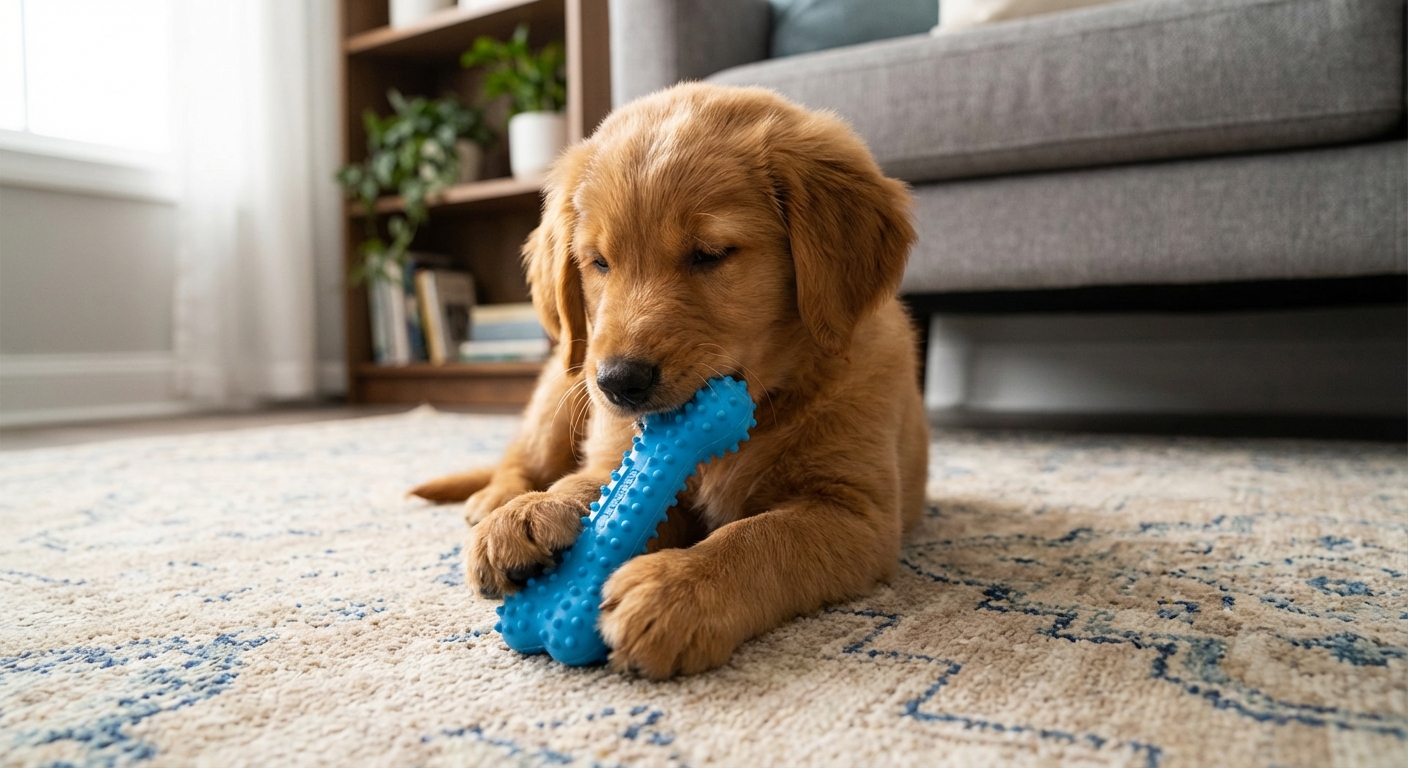
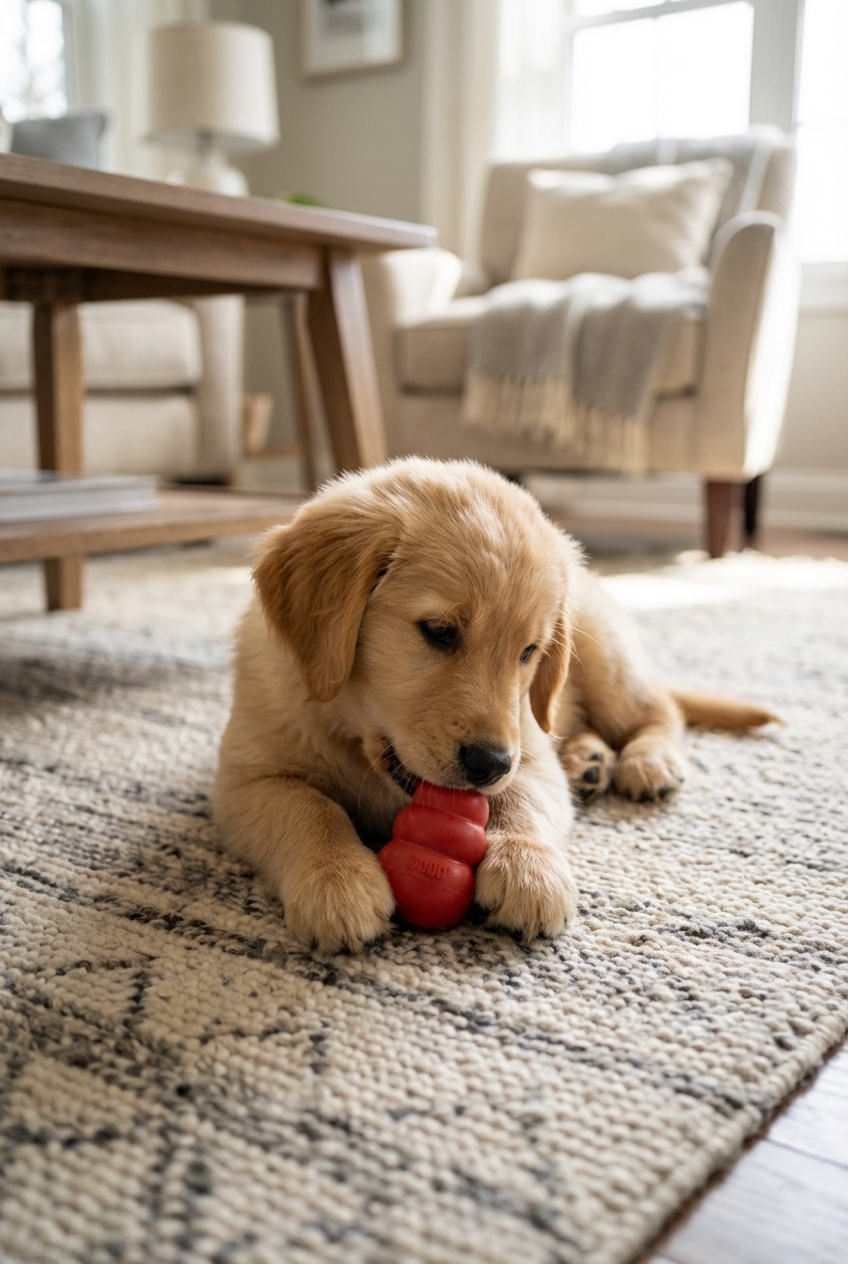
- Rubber toys that can be stuffed with food
- Frozen options like a damp washcloth twisted and chilled, or a puppy-safe frozen chew. Always supervise closely to ensure they do not ingest the fabric.
- Edible chews chosen for your puppy’s size and chewing style
Safety note: Skip cooked bones, as they can splinter. For any chew, supervise until you know how your puppy uses it, and ask your veterinarian what is safest for your specific pup.
Prevent biting early
Use naps
Overtired puppies get mouthy. Many young puppies do well with a nap after about 1 to 2 hours of awake time, but needs vary by age and individual. If biting ramps up suddenly, try a calm potty break, then a nap in a crate or pen with a stuffed rubber toy that is appropriate for unsupervised use.
Exercise plus brain work
Puppies need age-appropriate movement and mental enrichment. A short sniff walk, food puzzles, and simple training sessions often reduce biting more than endless backyard zoomies.
- Scatter feeding in grass
- Snuffle mat meals
- Five-minute training sessions: sit, touch, down, leave it
Manage the environment
Management is not failure. It is smart.
- Use baby gates to create puppy-safe zones
- Keep a basket of toys in every main room
- Wear long sleeves and closed-toe shoes during the “land shark” stage
Reinforce calm
One of the fastest ways to reduce mouthiness long-term is to reward calm behavior before the biting starts. You can do this without a big training session.
- Capture calm: When your puppy is lying down quietly, drop a treat between their paws.
- Teach a settle spot: Toss a treat onto a mat or bed, praise when they step on it, and build up to short relax breaks.
- Reward four paws on the floor: Calm greetings reduce jumping, grabbing, and nipping.
Common scenarios
Biting during petting
Often this is excitement or sensitivity. Pet for 1 to 2 seconds, then stop. If your puppy stays calm, pet again. If they mouth, redirect to a chew and reduce the intensity of touching.
Ankle biting on walks
This can be overstimulation, frustration, or herding instincts. Try these steps:
- Bring a tug toy and use it as a moving target. Keep tug structured and calm, and stop if it amps your puppy up.
- Practice “find it” by tossing a treat on the ground to reset the brain
- Shorten the walk and increase sniff time
Biting kids
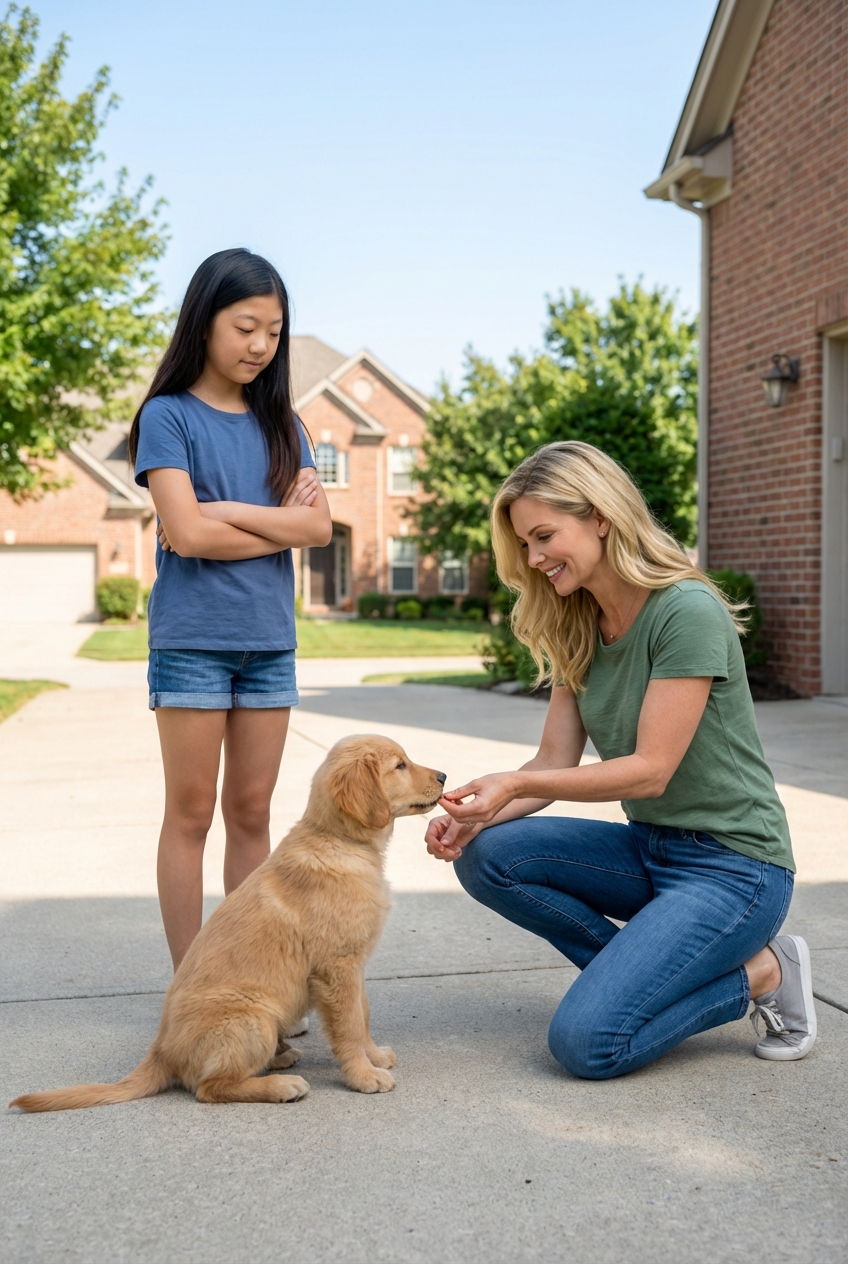
Supervision is non-negotiable. Puppies move fast and kids squeal and run, which is very exciting to a puppy.
- Teach kids to be “tree”: stand still, arms folded, look away
- Use gates and pens so kids and puppy can be together safely
- Keep interactions adult-led: treat toss games, simple cues, calm play
- Extra kid safety: No face-to-face play, no hugging, and no picking up the puppy unless an adult is actively helping
How long the biting lasts
Most families see big improvement by 16 to 20 weeks with consistent training and good nap routines. Teething can cause flare-ups until adult teeth finish coming in around 6 months. Some adolescent pups also get mouthy again when they are overstimulated or under-exercised.
Progress is usually not a straight line. Look for small wins like softer mouth, quicker recovery, and choosing toys more often.
When to get help
Please reach out for professional help if you notice any of the following:
- Growling, stiff body posture, or guarding items combined with biting
- Bites that break skin repeatedly
- Biting that seems fearful, not playful
- Sudden biting paired with signs of pain, limping, or changes in appetite
- Biting that stays intense past teething or is getting worse despite consistent management
A reward-based trainer or a veterinary behavior professional can tailor a plan to your puppy’s temperament and your household setup.
A simple daily plan
If you want something practical, here is a beginner-friendly routine:
- Morning: Potty, short sniff walk, breakfast in a puzzle toy, 5 minutes of training
- Mid-morning: Play with toy only, then nap
- Afternoon: Potty, chew time with a safe chew (supervised), gentle handling practice, then nap
- Evening: Calm play, treat toss games, last potty, bedtime
Keep it simple and repeatable. Puppies thrive on predictable routines, and so do humans.
Bottom line: Puppy biting is normal, but it is not something you have to “wait out.” With consistent redirection, calm time-outs, and plenty of appropriate chewing outlets, most puppies learn gentle mouths faster than you think.