Tired of counter surfing? Learn why cats jump up and follow a fast 3-part plan: make counters boring, create a better “yes” perch, and use safe, consiste...
Article
•
Designer Mixes
How to Keep a Cat Off Counters

Shari Shidate
Designer Mixes contributor
Why cats love counters (and why it matters)
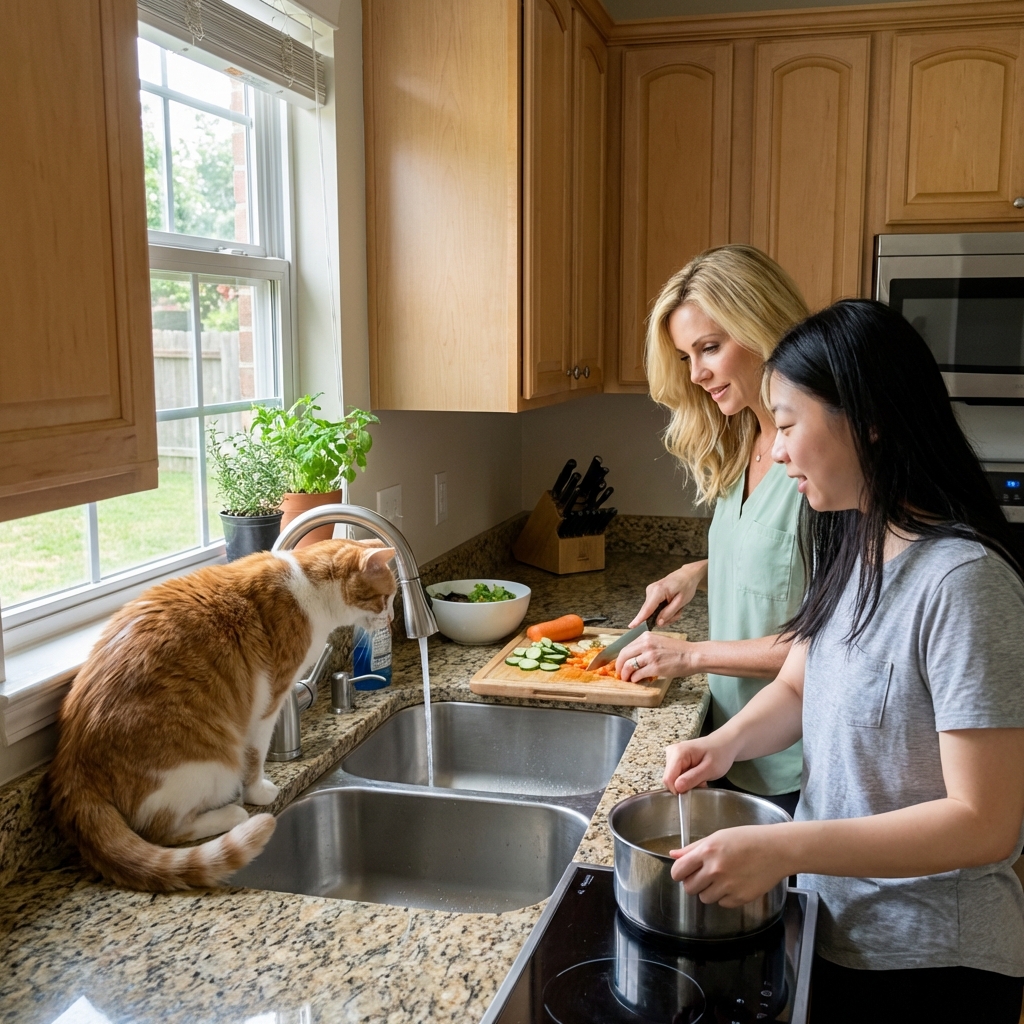
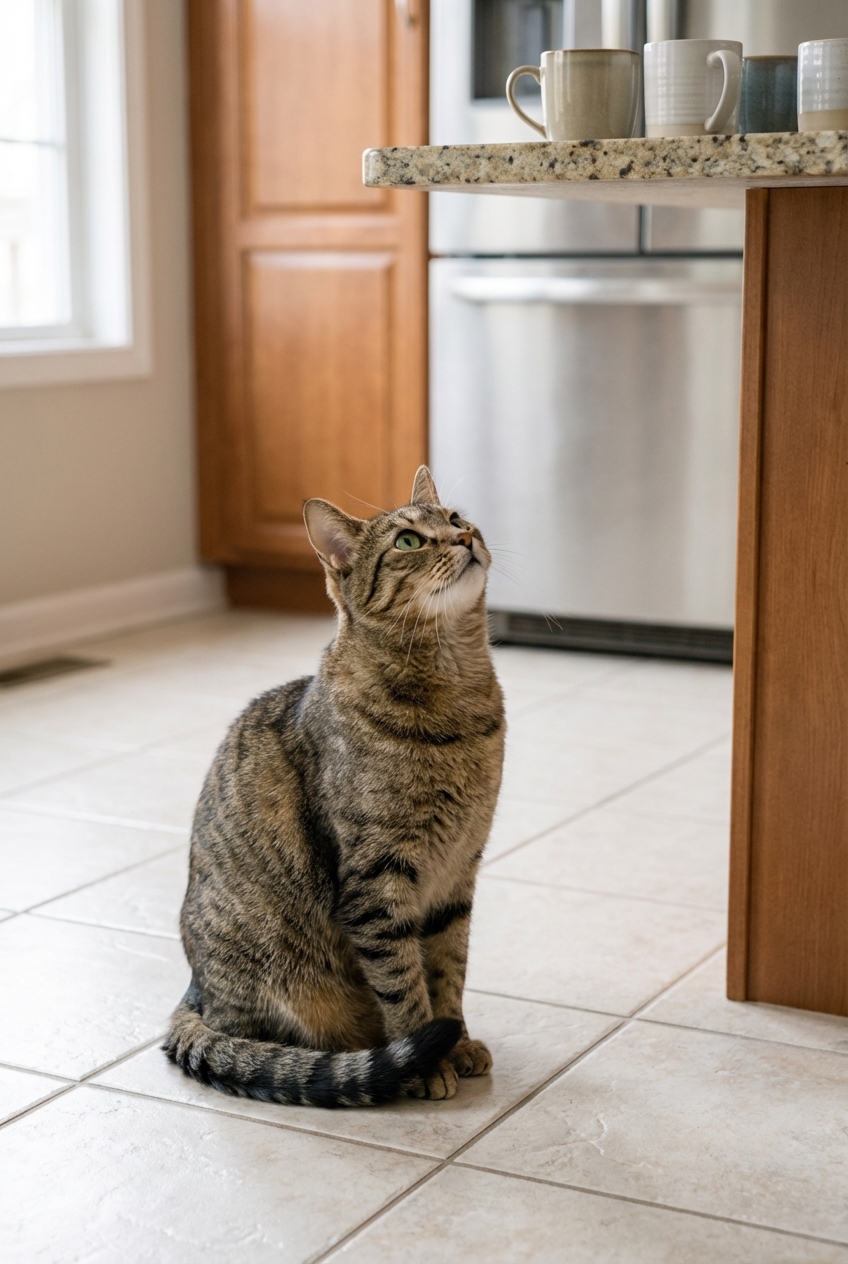
Cats are not being “bad” when they jump on counters. They are being cats. Counters are warm, elevated, and full of interesting smells. From a cat’s point of view, the kitchen is a high-value observation deck and sometimes a snack bar.
Still, keeping cats off counters is a smart hygiene and safety decision. Kitchen surfaces are where we prepare food, and cat paws can carry litter dust, fecal bacteria, and outdoor contaminants. For cats, counters can also be dangerous due to hot burners, sharp knives, toxic foods, and cleaning chemicals.
Think of this as a win-win goal: a safer cat and a cleaner kitchen, without relying on punishment.
Quick health risks to know
For people
- Germs on paws and fur: Litter box use can transfer bacteria and parasites to surfaces where food is prepared.
- Cross-contamination: Even tiny amounts of debris can spread to cutting boards, dish towels, and utensils.
- Allergens: Dander and saliva can build up where you cook and eat.
For cats
- Burns: Glass-top stoves and recently used burners can stay hot.
- Toxic exposure: Onions, garlic, alcohol, and some essential oils (especially concentrated oils and diffusers) can harm cats.
- Injury: Knives, broken glass, and falls are more likely in busy kitchens.
Start with the real reason
Before you choose a strategy, take 2 to 3 days to observe the pattern. Most counter-jumping is driven by one of these needs:
- Food: crumbs, dishes in the sink, butter on the counter, or treats stored within reach.
- Water: dripping faucets and interesting cups.
- Warmth: sunlight, appliances, or cozy spots near cooking.
- Attention: humans gather in the kitchen, and cats notice.
- Height and control: many cats feel safer and calmer when elevated.
Once you know the “why,” you can meet the need in a safer place and make counters boring.
The humane approach that works
In behavior terms, you will get the best results by combining management, environment changes, and reinforcement of an alternative. Translation: block the habit, remove the reward, and teach your cat what to do instead. These are behavior-science-informed principles commonly recommended in modern cat behavior guidance.
Step 1: Remove the rewards
- Keep food put away, including bread, fruit, and treats.
- Rinse dishes and load the dishwasher promptly, or soak them safely out of reach. Avoid leaving lickable plates in the sink.
- Keep the sink rinsed and empty when possible, especially if your cat likes to hop in.
- Wipe counters nightly and after cooking. Even a few crumbs can keep the habit going.
- Use a lidded trash can and do not leave grease or meat packaging accessible.
Step 2: Give a better “yes” spot nearby
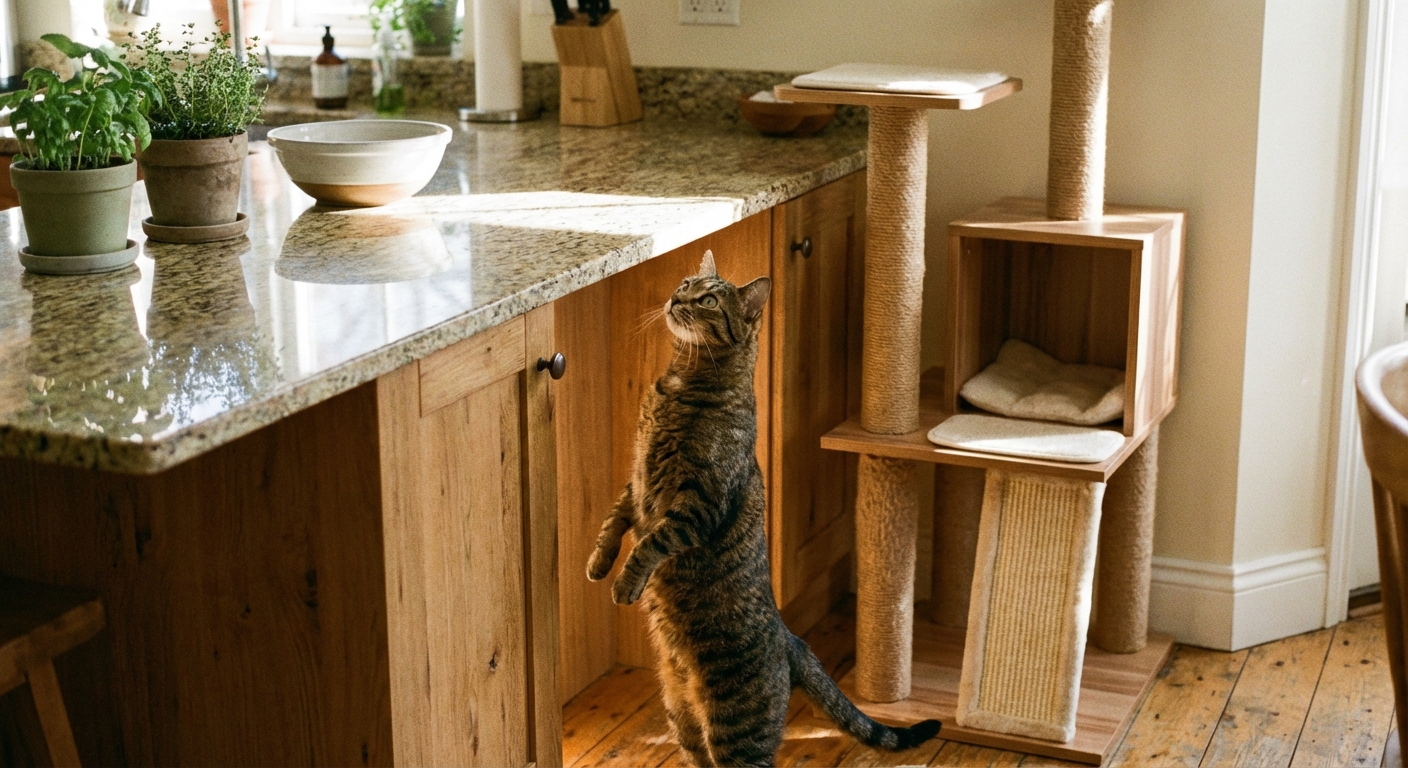
Cats need vertical territory. If you only say “no counters” without offering a “yes” alternative, your cat will keep testing you.
- Place a cat tree, sturdy shelf, or perch near but not on the kitchen work area.
- Add a soft bed or a towel that smells like home.
- Reward your cat for using it with treats, praise, or a favorite toy.
- If your cat loves to supervise cooking, make that perch the “kitchen seat.”
Multi-cat note: If you have more than one cat, provide more than one “kitchen seat” to reduce crowding and tension.
Step 3: Reinforce the behavior you want
Reward your cat when all four paws are on the floor or on the approved perch. For safety, give “floor rewards” away from the stove, oven, and knife zone so your cat is not underfoot while you cook. You can do this in short sessions, 1 to 3 minutes at a time.
- Keep treats in a sealed container away from the counter area.
- Mark and reward: when your cat jumps to the perch, offer a treat immediately.
- Practice a simple cue like “Perch” or “Mat”.
With consistency, your cat learns: counters do not pay, but the perch often does.
What to do in the moment
When you catch your cat on the counter, aim for calm and boring. The goal is to interrupt the behavior without accidentally turning it into a game or a routine that leads to treats.
- Do not chase or yell: that can add attention, stress, or excitement.
- Interrupt and reset: use a neutral sound or gently guide your cat off the counter.
- Use a neutral zone first: if you need to pick your cat up, place them on the floor first (no treat), then cue “Perch” and reward only when they go to the perch or settle there.
- Reward the choice: treats are for choosing the perch, responding to the cue, or staying calmly in the approved spot, not as an automatic follow-up to being removed from the counter.
Safe counter deterrents
Deterrents that can help
- Double-sided tape or sticky mats: cats dislike the texture on paws. Place on the counter edge where they land.
- Aluminum foil runners: some cats avoid the sound and feel. Not all, but it is an easy test.
- Motion-activated air puff devices: a brief burst of air that many cats dislike can interrupt the habit without you being the “bad guy.” Stop using it if your cat shows fear, increased anxiety, hiding, or aggression.
Deterrents to skip
- Essential oils or strong scents (tea tree, citrus oils, peppermint): many are irritating or toxic to cats, especially in concentrated forms and diffusers.
- Spray bottles: can increase stress and teach your cat to jump up when you are not around.
- Shock scat mats: not recommended. Risk of fear and anxiety is not worth it.
- Hot sauce, pepper, or irritants: can cause oral and eye irritation and do not address the underlying need.
If any method makes your cat more stressed, pause and switch to management plus training, or talk with your veterinarian.
A simple 10-day plan
If you want a clear starting point, try this gentle, structured approach:
Days 1 to 3: Reset the environment
- Deep clean counters and remove all food cues.
- Add a cat tree or perch near the kitchen.
- Set up your deterrent of choice (sticky mat, foil, or motion air), and discontinue if it increases fear.
Days 4 to 7: Train the alternative
- Do 2 to 3 short reward sessions daily: cue “Perch,” treat on perch, calm praise, repeat.
- If your cat jumps on the counter, calmly interrupt and guide them down to the floor first. Then cue “Perch.” Reward only after they go to the perch or settle there, so you do not accidentally teach a chain like “jump up to get carried to treats.”
Days 8 to 10: Reduce prompts, keep rewards
- Keep counters clean and keep rewarding perch use.
- If the habit returns, bring back deterrents for another week while continuing training.
Most cats improve quickly when the kitchen stops being rewarding and an approved perch becomes the best seat in the house.
Counter surfing and nutrition
As a veterinary assistant, I have seen a lot of “counter cats” who are simply highly food-motivated. If your cat acts ravenous, steals food, or begs nonstop, it is worth checking a few basics.
- Feeding schedule: some cats do better with smaller, more frequent meals.
- Make meals last: try puzzle feeders, slow feeders, or food scatters in safe areas to turn “hunting” into enrichment.
- Food quality and satiety: talk with your veterinarian about a diet that supports healthy weight and fullness.
- Medical causes: increased appetite can be linked to conditions like hyperthyroidism, diabetes, or intestinal parasites. If appetite changes suddenly, schedule a checkup.
Kitchen hygiene tips
Even with training, assume your cat may still hop up occasionally when you are asleep or away. Good hygiene and standard food-safety habits keep your household safer.
- Clean and sanitize food-prep surfaces before cooking, especially in the morning. Use a food-safe product and follow label directions for contact time.
- Keep cutting boards stored vertically or in a cabinet.
- Do not leave sponges and dishcloths on the counter. Wash them frequently.
- Cover cooling food, and store leftovers promptly.
When to get extra help
If your cat’s counter jumping is paired with aggression, extreme anxiety, or sudden behavior changes, it is a good idea to talk with your veterinarian first. Pain, stress, or medical conditions can change a cat’s behavior quickly.
If medical issues are ruled out and you are still stuck, a credentialed cat behavior professional can help you build a plan tailored to your home setup, your cat’s motivations, and any multi-cat dynamics.
Bottom line
You do not have to “fight” your cat to keep counters clean. Focus on three things: remove food rewards, provide a better elevated perch, and reward the behavior you want. With consistency, most cats choose the option that works for them, and you can keep your kitchen both cat-friendly and truly food-safe.