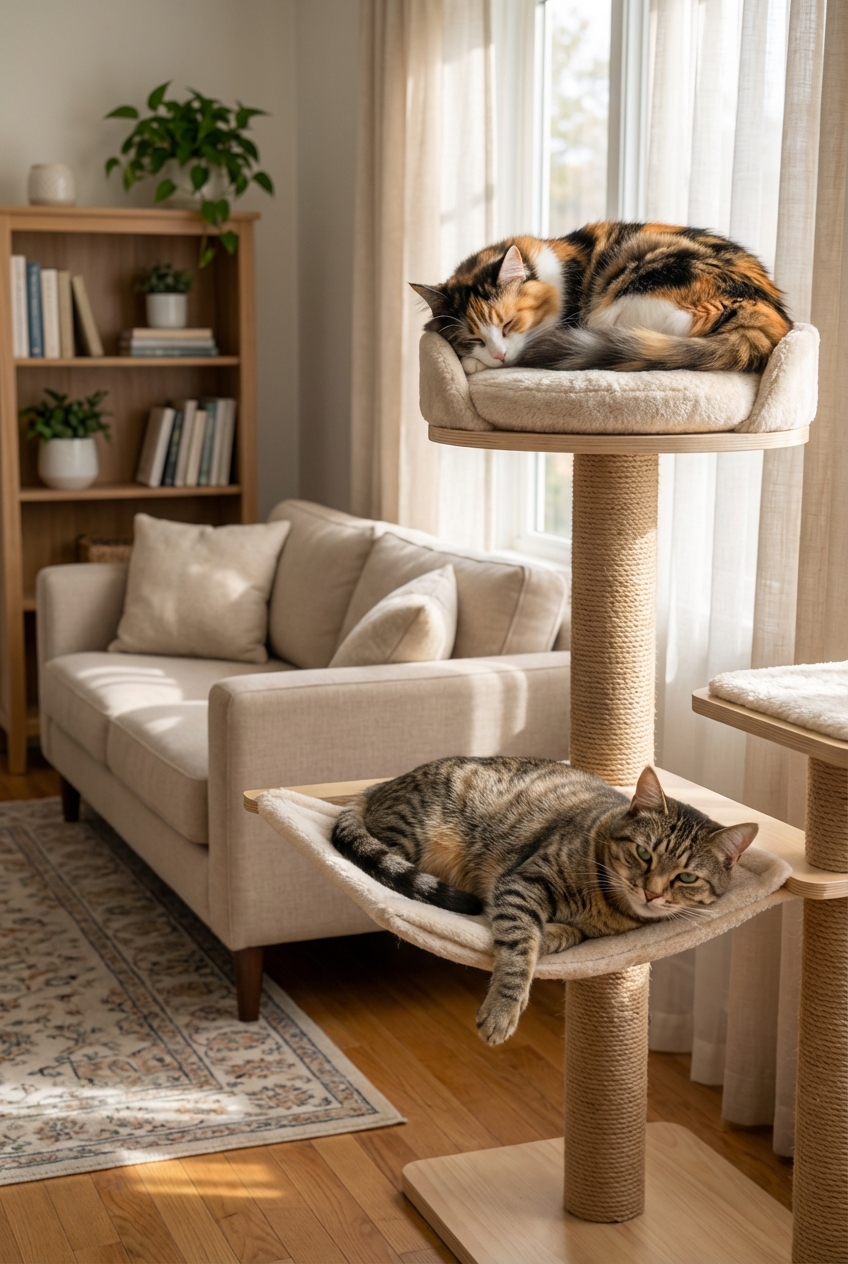
A health-first, low-stress plan for introducing a new cat: safe room setup, separation, scent swapping, visual sessions, supervised meetings, body language, ...
Article
•
Designer Mixes
How to Introduce Your Cat to a New Cat

Shari Shidate
Designer Mixes contributor
Bringing a new cat home can feel exciting and a little nerve-wracking, especially if your resident cat has ruled the house for years. The good news is that most cat-to-cat introductions go well when we slow down and let their nervous systems set the pace.
As a veterinary assistant, I have seen the same pattern over and over: the “best” introduction is not the fastest one. It is the one that protects confidence, prevents big fights, and builds positive associations from day one.
Before the new cat arrives
Set up a safe room
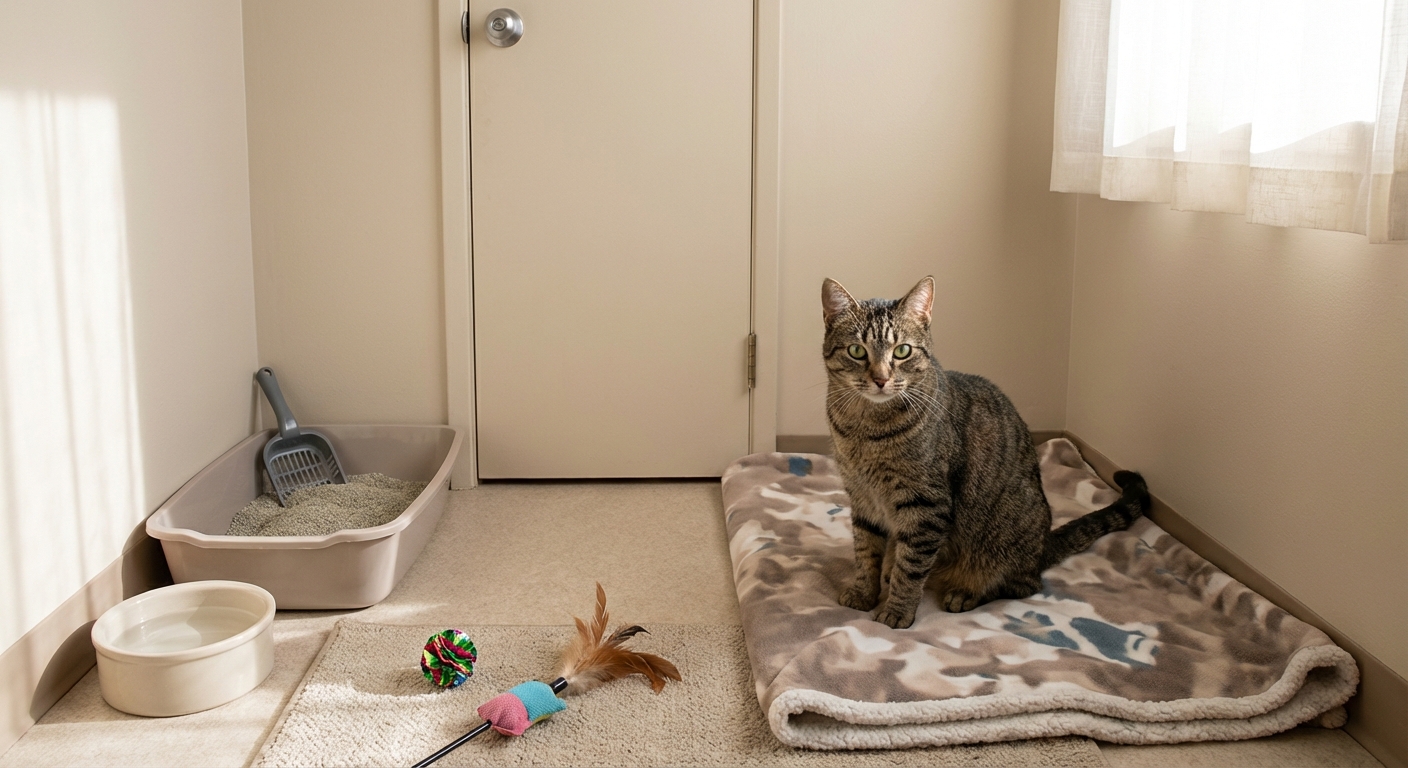
Your new cat needs a private “home base” for at least several days. Choose a quiet bedroom or office with a door that closes.
- Litter box: unscented litter, placed far from food and water
- Food and water: separate bowls, easy to access
- Hiding spots: a covered bed, a carrier left open, or a box on its side
- Vertical space: a cat tree, shelf, or sturdy dresser top
- Scratch options: one vertical and one horizontal scratcher
For your resident cat, keep their routine stable. Same feeding times, same play windows, same favorite resting spots. Routine is calming.
Plan your litter box math
A commonly recommended guideline is one litter box per cat, plus one extra. So for two cats, aim for three boxes in different locations. This reduces competition and helps prevent stress-related litter issues.
Schedule a vet check
If either cat is not up to date, make sure you have a plan for:
- Vaccines appropriate for lifestyle
- Parasite prevention and a fecal check
- Testing recommendations based on age and history (your vet may discuss FeLV and FIV testing)
Medical problems and pain can make cats less tolerant, so it is worth starting with everyone feeling their best.
The introduction timeline (step by step)
Think of this as a ladder. Do not climb to the next rung until both cats are relaxed on the one you are on now. Many households need 1 to 3 weeks. Some need longer, and that is completely normal.
Step 1: Total separation (Day 1 and beyond)
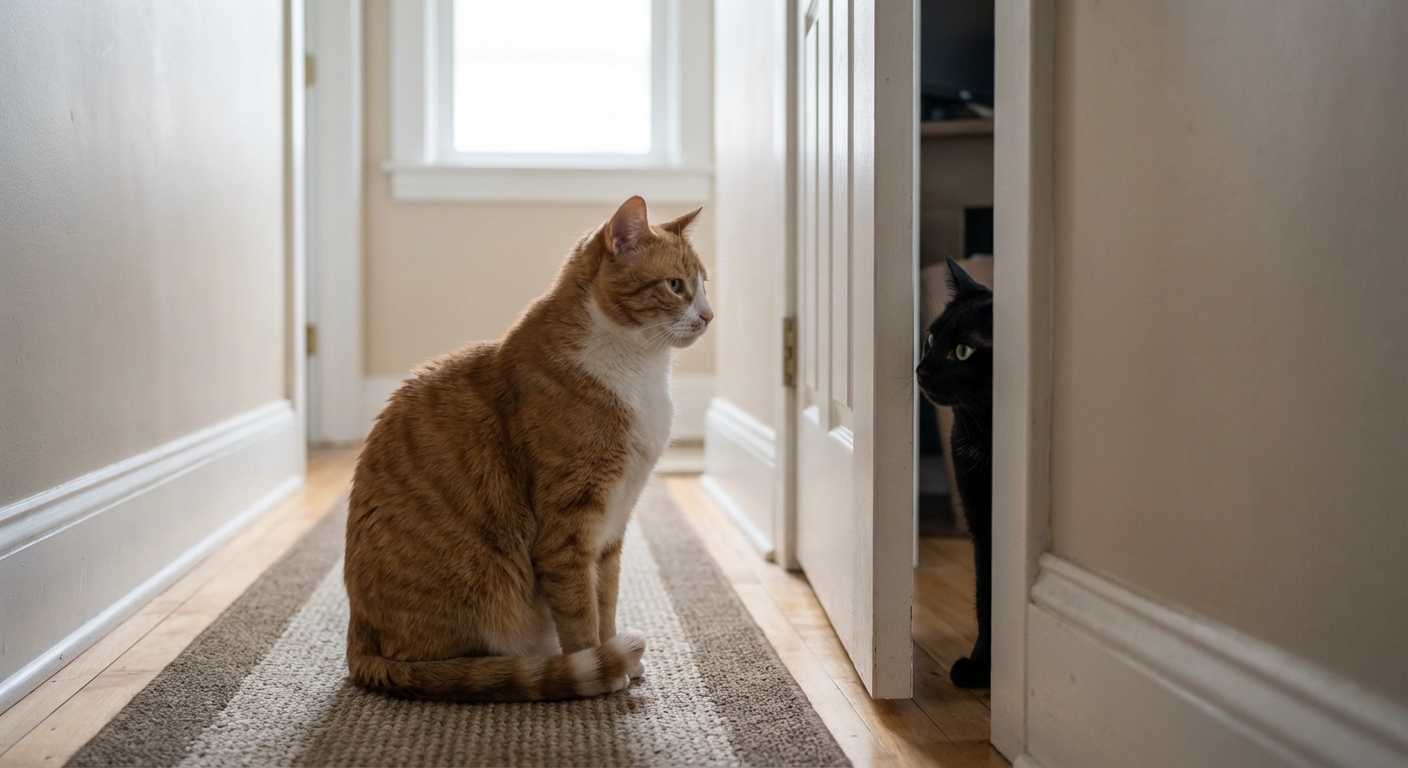
Keep the new cat in the safe room with the door closed. Let the resident cat sniff under the door and investigate without being forced into contact.
What you want to see: curiosity, normal eating, normal grooming, relaxed body language.
What means “slow down”: persistent growling at the door, swatting under the door, hiding, not eating, or spraying.
Step 2: Scent swapping (Start early, do daily)
Cats communicate heavily through scent. Your goal is to make “that new smell” become part of the normal home smell.
- Rub a soft cloth on one cat’s cheeks and forehead, then place it near the other cat’s sleeping area.
- Swap bedding for short periods.
- Rotate rooms if safe: confine the resident cat briefly while the new cat explores the main area, then switch back. This spreads scent without contact.

Controlled contact without conflict
Step 3: Feeding on opposite sides of a door
Food is one of the best tools for building positive associations.
- Place each cat’s bowl several feet from the closed door.
- Over multiple meals, gradually move bowls closer if both cats stay relaxed.
- If either cat stops eating or becomes tense, move bowls farther away again.
This is simple behavior science: the other cat’s presence predicts good things.
Step 4: Visual access with a barrier
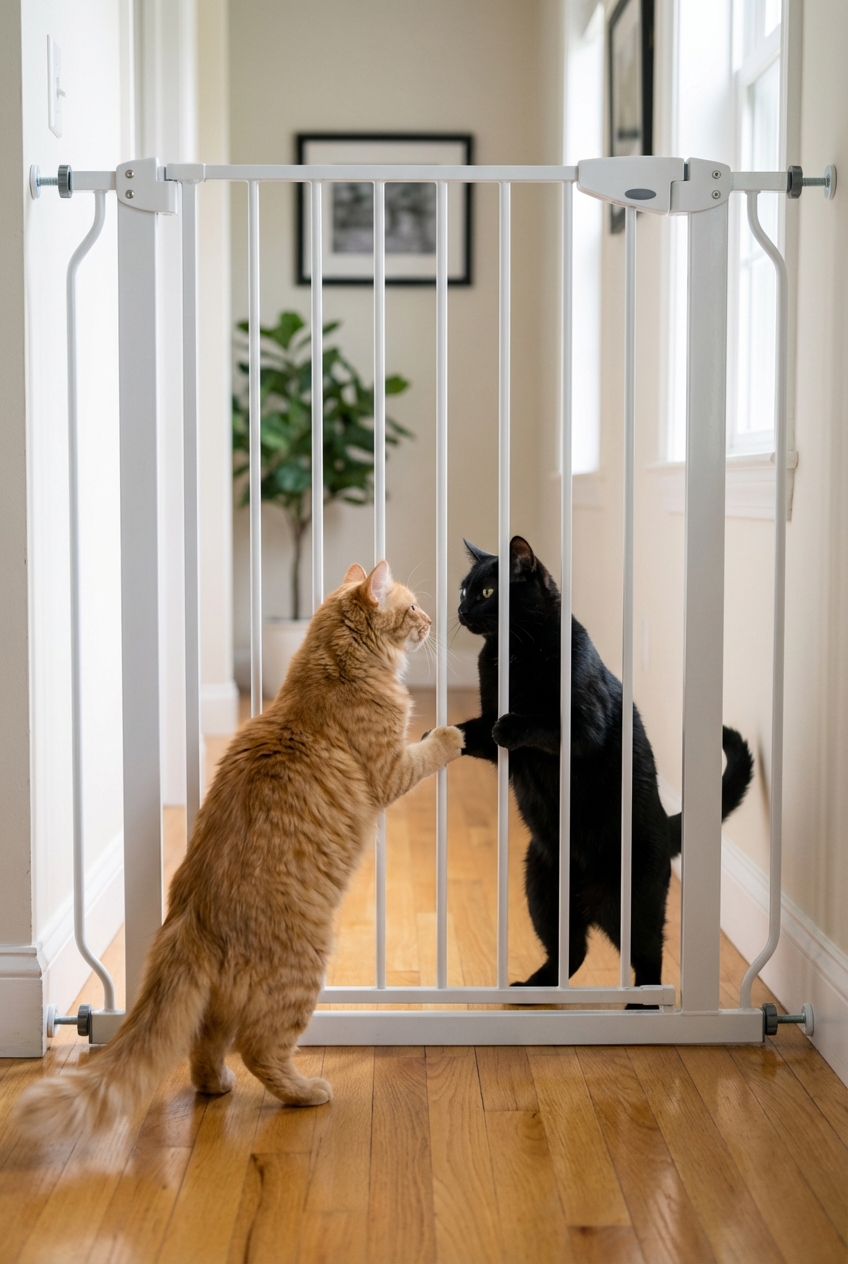
Once both cats can eat calmly near the door, allow brief visual contact using a barrier:
- A tall baby gate
- A screen door
- A cracked door secured with a doorstop so no one can push through
Keep sessions short, and pair them with treats, meals, or play. End on a good note.
Tip: If either cat gets fixated, pupils dilate, body goes low, or tail starts lashing, calmly end the session. We want “I see you and I am okay,” not “I see you and I must chase.”
First face-to-face meetings
Step 5: Short, supervised time together
When barrier sessions are calm, try letting them share space for a few minutes. Choose a larger room with escape routes and vertical options.
- Start with 2 to 5 minutes.
- Use interactive play (like a wand toy) to keep arousal low and redirect energy.
- Toss treats on the floor, away from each other, so there is no resource pressure.
Do not force closeness. Avoid holding either cat and “making them meet.” Cats need control over distance to feel safe.
What is normal and what is not
Often normal early on: hissing, brief growls, staring, cautious sniffing, a quick swat without contact. These are communication, not instant failure.
Not okay: chasing that does not stop, cornering, biting, repeated attacks, fur flying. If you see escalation, separate immediately and go back a step.
How to safely break up a fight
Never put your hands between fighting cats. Instead:
- Make a sudden noise (clap once, shake keys, drop a light object nearby)
- Use a pillow, piece of cardboard, or a laundry basket to create a visual barrier
- Gently herd one cat into another room and close the door
After a fight, pause introductions for at least 24 to 48 hours and rebuild positive experiences at an easier step.
Make the home feel fair
Many cat conflicts come down to competition. You can prevent that by making key resources easy to access and spread out.
Space and resources
- Multiple resting spots: especially elevated ones
- Separate feeding stations: avoid one narrow kitchen corner that forces passing
- Multiple water sources: many cats drink more when water is in more than one location
- Scratchers in more than one room: scratching is comfort and communication
Enrichment and play
Daily interactive play helps reduce stress and prevents “stalking” from turning into a habit. Two short play sessions a day often works better than one long session.

Common mistakes (and what to do instead)
- Rushing the process: Go back to scent work and barrier sessions until calm returns.
- Letting them “work it out”: Cats do not usually negotiate like dogs. Prevent big fights so fear does not set in.
- One litter box in a single spot: Add boxes and spread them out.
- Punishing hissing or growling: That can increase anxiety. Instead, increase distance and build positive associations.
- No safe zones: Give each cat places to retreat without being followed, including vertical escapes.
When to ask for professional help
Reach out to your veterinarian or a qualified cat behavior professional if you notice:
- Any injuries, even small punctures
- One cat stops eating, hides constantly, or develops litter box issues
- Escalating aggression, repeated chasing, or blocking access to resources
- Introductions stalled for weeks with ongoing high stress
Your vet can also rule out pain or illness, which can completely change how a cat responds to a newcomer.
The goal is not instant friendship. The goal is peaceful co-existence, where both cats feel safe, have access to resources, and can relax in their own home.
A simple daily plan you can follow
Week 1 (or longer): calm and confidence
- New cat in safe room
- Scent swapping daily
- Meal times near the closed door
Week 2: brief visuals
- Barrier sessions once or twice daily
- Treats and play during every session
- Short breaks if either cat shows tension
Week 3: supervised visits
- Short, calm time together
- Increase minutes slowly
- Keep resources spread out as they integrate
If you move slower than this, you are not failing. You are protecting the relationship.