Learn how to introduce a new dog to your resident or senior dog safely. Use neutral territory, parallel walks, clear body-language cues, and smart home manag...
Article
•
Designer Mixes
How to Introduce Dogs to Each Other

Shari Shidate
Designer Mixes contributor
Introducing two dogs is one of those moments that looks simple from the outside and feels very big from the inside. I see it all the time as a veterinary assistant here in Frisco, Texas: loving families want the dogs to “just meet,” but a rushed greeting can create stress, scuffles, and long-term tension.
The good news is that most dog-to-dog introductions go well when we set them up thoughtfully. Think slow, structured, and safe. Below are pet-friendly, trainer- and veterinary-informed tips you can use whether you are bringing home a new dog, fostering, or introducing a friend’s pup for a playdate.
Safety note: If either dog has a bite history, has injured another dog, or is consistently reactive or panicked around dogs, skip DIY introductions and work with your veterinarian and a qualified behavior professional (for example, a DACVB veterinary behaviorist or a reward-based trainer through IAABC or CCPDT).
Before the introduction
Pick the right spot
Choose a neutral space that neither dog considers “theirs.” A quiet sidewalk, an empty park corner, or a friend’s front yard can work well. Avoid tight spaces like doorways, small rooms, or crowded dog parks.
- Best: open area, low distractions, easy to create distance
- Avoid: inside your home at first, high-traffic areas, places with lots of dogs running up
Use simple, safe gear
Keep it secure and predictable:
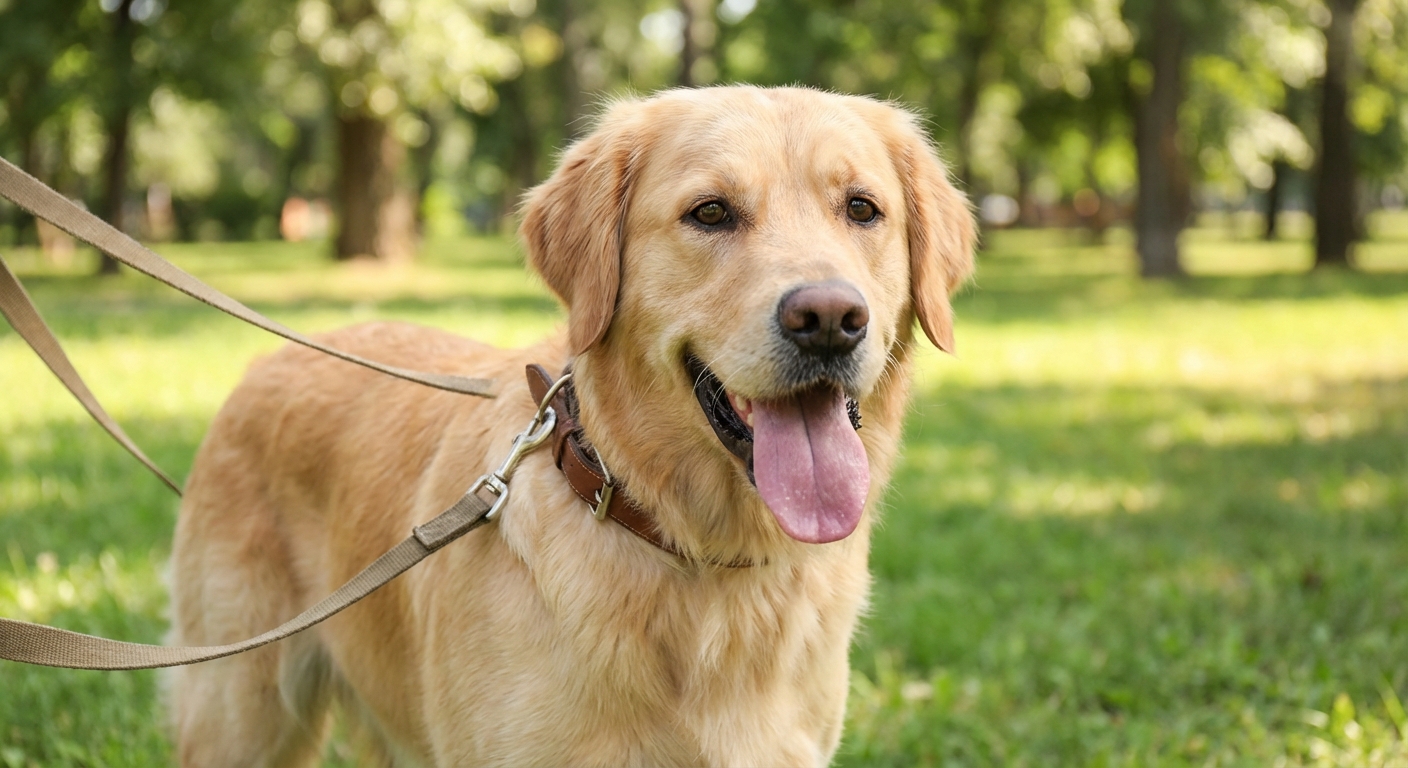
- Well-fitted flat collar or harness (many dogs do best in a harness for comfort and control)
- Standard 4 to 6 ft leash (skip retractables)
- High-value, pea-sized treats for each dog
- Poop bags and a calm, “no big deal” attitude
Do a quick health check
If a dog is in pain, sick, or itchy, they are more likely to react defensively. If either dog has a history of dog-to-dog aggression, talk with your veterinarian and consider working with a qualified trainer who uses reward-based methods.
Consider a muzzle for extra safety
For higher-risk situations, a properly fitted basket muzzle can be a helpful safety tool, but only if the dog has been gradually conditioned to wear it comfortably. A muzzle is not a substitute for training, distance, and supervision.
Dog body language
Dogs communicate constantly. Knowing what you are looking at helps you intervene early, before anyone feels the need to escalate.
Good signs
- Loose body, soft face
- Curvy approaches instead of straight lines
- Brief sniffing, then disengaging naturally
- Play bows, bouncy movement, taking turns chasing
Slow down
- Stiff posture, weight forward, tail held high and tight
- Hard staring, closed mouth, “statue still” pauses
- Hackles raised (this can show excitement, uncertainty, or fear; it is a sign arousal is higher, not a reliable aggression predictor)
- Lip licking, yawning, turning head away repeatedly (stress signals)
Red flags: end it
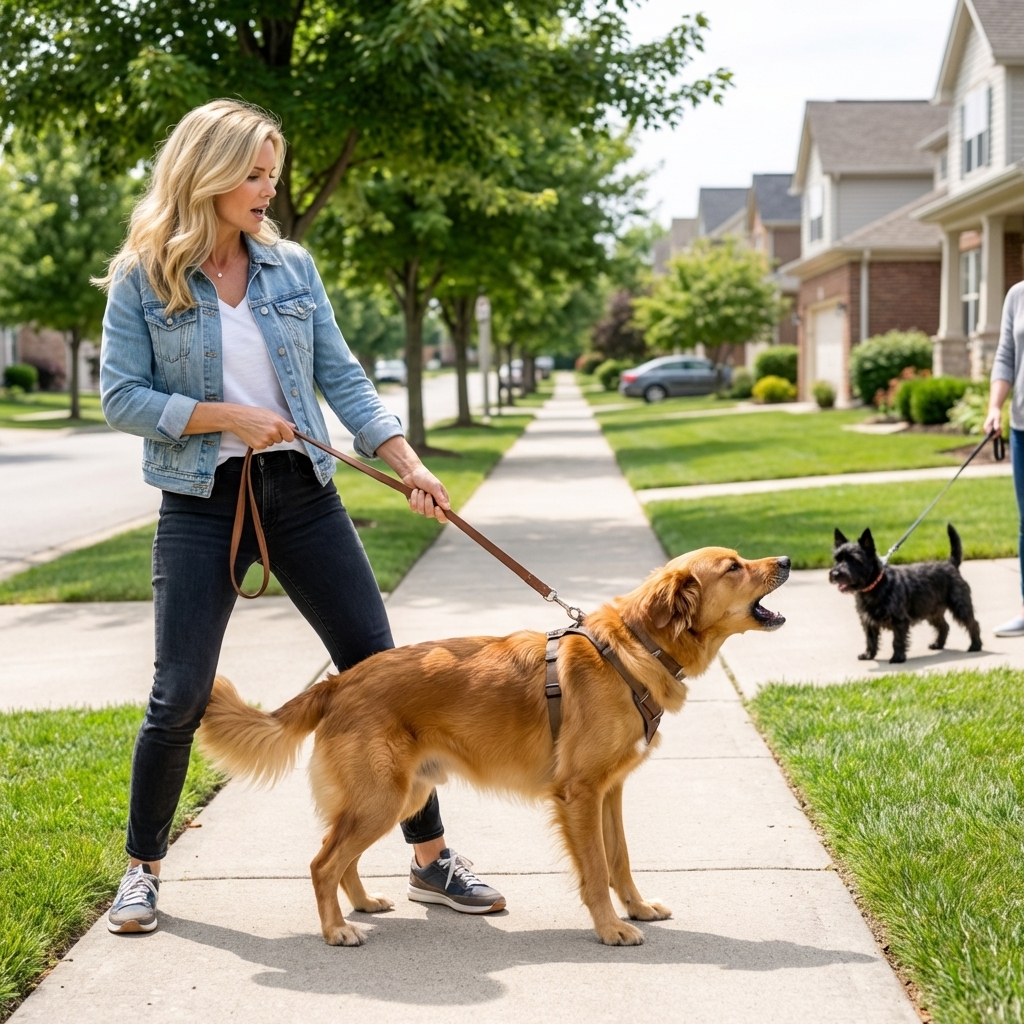
- Growling that intensifies, snarling, snapping
- Lunging at the end of the leash
- Repeated mounting despite redirection
- One dog relentlessly pursuing while the other is trying to escape
Step-by-step walk intro
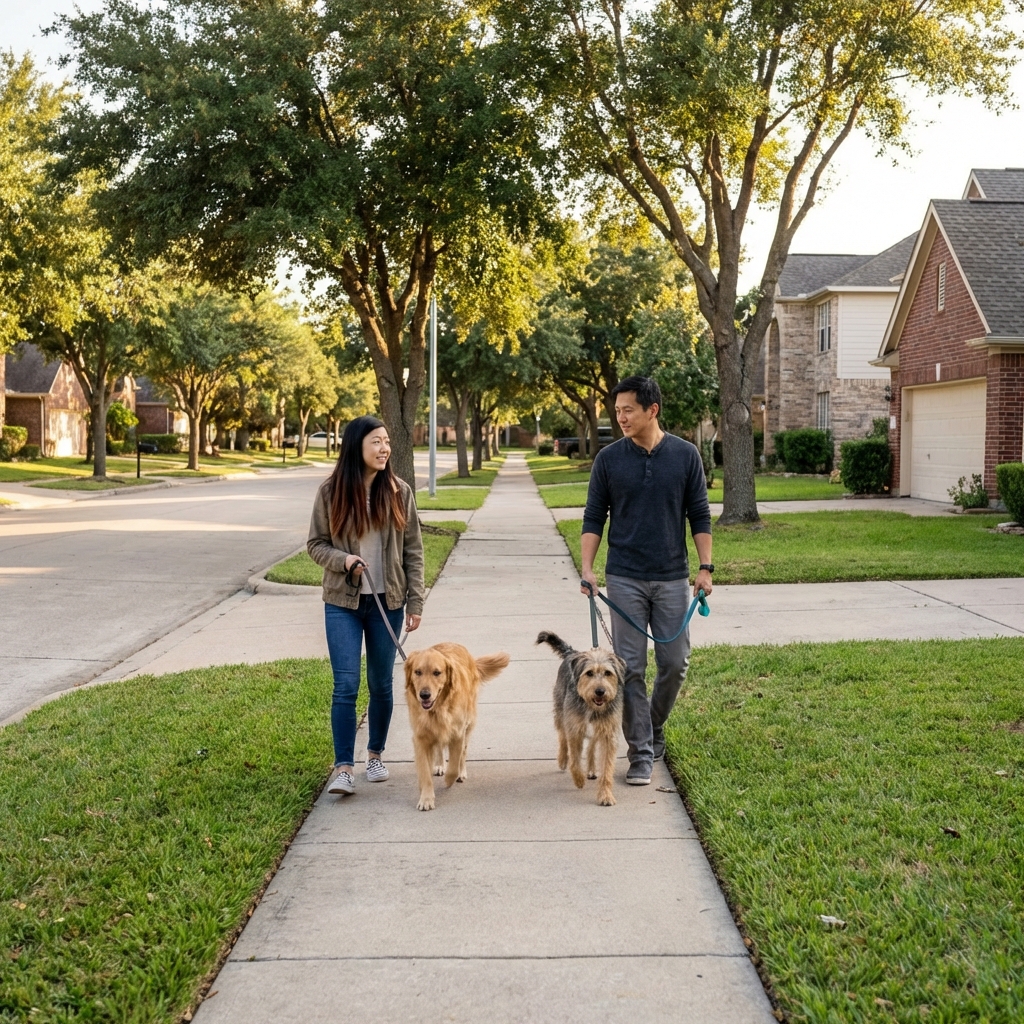
My favorite method is the parallel walk because it lets dogs gather information without pressure. It also channels energy into movement, which is naturally regulating for many dogs.
- Start with distance. Begin far enough apart that both dogs can notice each other and still take treats and respond to their handler.
- Walk the same way. Side-by-side, but with space between you. Keep leashes loose and avoid letting them tangle.
- Reward calm behavior. “Mark and treat” means you calmly say “yes” (or use a clicker) the moment you see the behavior you like, then give a treat. Mark and treat for checking in, sniffing the ground, or calmly glancing at the other dog.
- Close the gap gradually. Over several minutes, arc a bit closer if both dogs remain loose and comfortable.
- Do a quick sniff. If the body language is friendly, allow a second or two of sniffing, then cheerfully call the dogs away and continue walking. End the greeting while things still look relaxed.
- Repeat short hellos. Multiple tiny greetings are safer than one long, intense face-to-face meetup.
That call-away part is key. It prevents dogs from feeling trapped and helps keep arousal from climbing too high.
Timing note: Some dogs are ready in one session, others need several short sessions over days or weeks. It is normal to see progress, then a little backslide. Keep it paced and low-pressure.
Common mistakes
- Do not force nose-to-nose greetings. Many dogs find direct face contact rude or threatening.
- Do not tighten the leash and hold your breath. A tight leash can increase tension and remove normal dog movement.
- Avoid picking up small dogs. It can trigger jumping, frustration, and redirected behavior in the other dog. If you must lift a small dog for immediate safety, do it early, stay calm, and create distance right away.
- Do not use dog parks for the first meeting. Too many unknown variables.
- Do not punish growling. Growling is communication. We want to listen and create space, not remove the warning system.
Bringing a new dog home
Start outside, enter calmly
If the first meeting goes well, walk the dogs together to your home. Let the resident dog enter first or second based on who seems calmer, but avoid tight doorway congestion. Consider bringing the new dog into a separate area initially.
Manage the first weeks
Even friendly dogs can argue over resources when they are still figuring things out. For the first few days to weeks:
- Feed separately
- Pick up high-value chews and toys unless you are actively supervising
- Provide multiple resting spots and water bowls
- Give each dog one-on-one attention every day
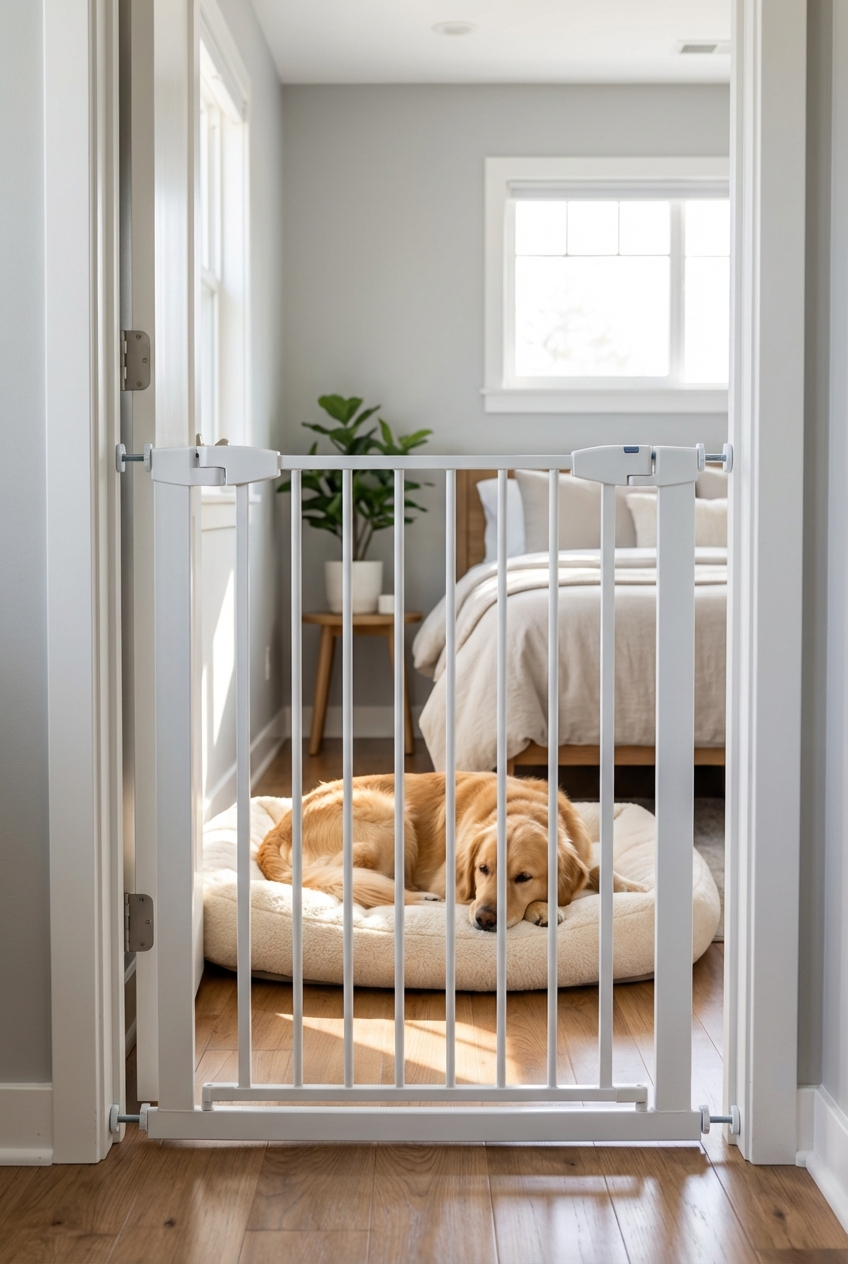
- Use baby gates or crates for calm separation and decompression
Special situations
Puppy and adult
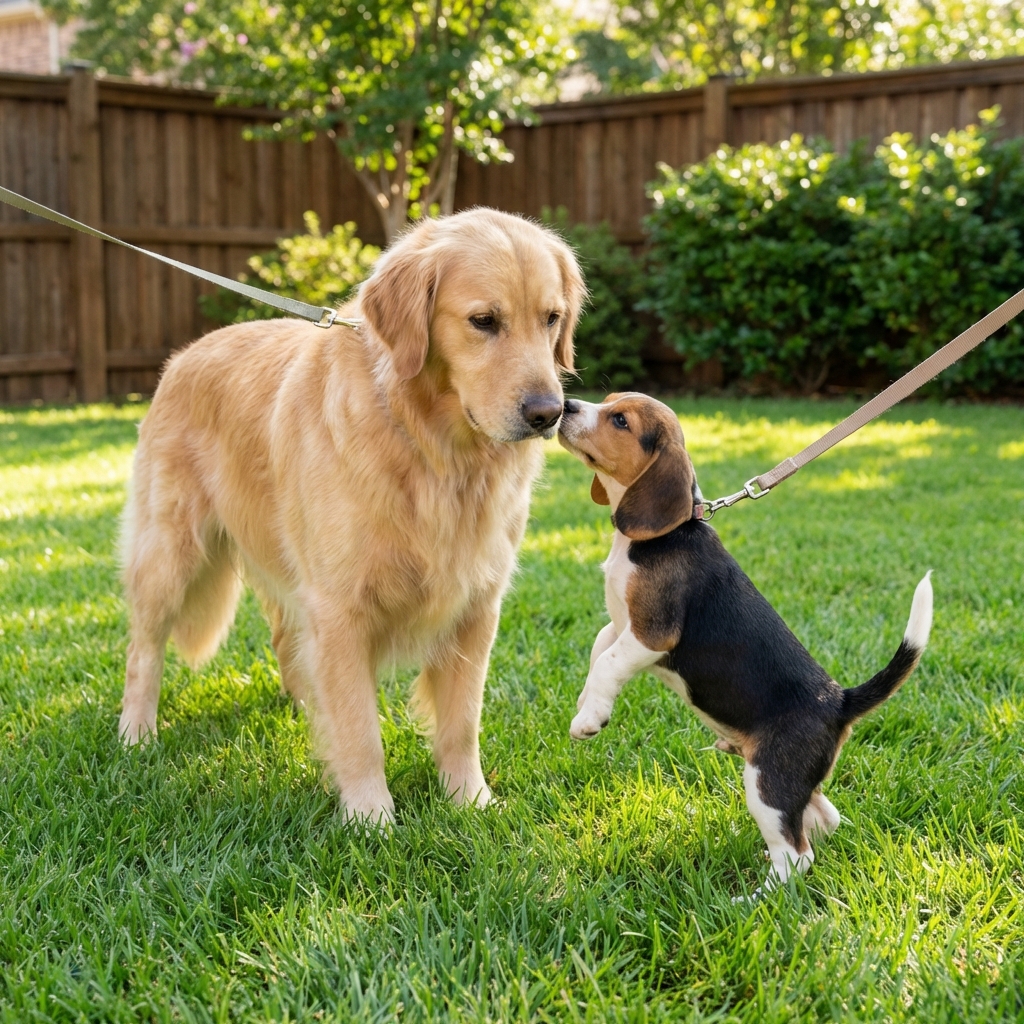
Puppies can be overwhelming because they do not read social cues well yet. Keep sessions short, interrupt puppy pestering, and make sure the adult dog has an easy escape route.
Two adult dogs
Go slower. Multiple parallel walks on different days can be a great “get acquainted” plan. If either dog seems consistently tense, stop and get professional support.
Fearful dog
Distance is your friend. A fearful dog needs to feel safe enough to choose curiosity. Reward any calm observation and do not rush contact.
If a scuffle happens
Breaking up a dog fight can be dangerous. If dogs tangle, prioritize human safety first.
- Do not grab collars with bare hands. Bites often happen when people reach in.
- Use barriers if you can. A chair, baby gate, board, laundry basket, or anything that safely splits their line of sight can help.
- If you must pull dogs apart, do it only if it is safe. The “wheelbarrow” method works best with two adults (one per dog). Each person grabs their dog by the hind legs, lifts, and backs away in a smooth motion. If you are alone, the dogs are locked on, or you feel unsafe, do not attempt this.
- Get help. If you cannot safely separate them, call for assistance. Contact animal control or emergency services if needed.
- Separate and decompress. Put dogs in different rooms for at least 30 to 60 minutes.
- Call your veterinarian. Puncture wounds can hide under fur and can become infected quickly.
After any fight, it is wise to talk with your veterinarian and a qualified trainer before attempting another introduction.
Success checklist
- They can walk parallel with loose bodies and loose leashes
- They can sniff briefly and disengage
- They can take treats and respond to their handlers
- No stiff staring, repeated mounting, or relentless chasing
- Everyone ends the session calm, not amped up
Slow is not a setback. Slow is how you build a safe, relaxed relationship.
If you take one thing from this: introductions are a process, not a single moment. With neutral territory, short greetings, and smart management at home, you give both dogs the best chance to feel safe and choose friendship.
Helpful references: The American Veterinary Society of Animal Behavior (AVSAB) position statements and resources from board-certified veterinary behaviorists (DACVB) align well with the low-stress, reward-based approach described here.