
A vet-assistant guide to introducing cats and dogs using slow decompression, scent swapping, barrier sessions, and reward-based training. Includes safety che...
Article
•
Designer Mixes
How to Introduce Dogs to Cats

Shari Shidate
Designer Mixes contributor
Bringing a dog and a cat together can be one of the sweetest relationships in your home, but it is also one of the most commonly rushed. As a veterinary assistant, I have seen “first meetings” go beautifully when families slow down, set the environment up for success, and read body language early. The goal is not instant friendship. The goal is calm, safe coexistence that has room to grow.
Before you start: safety and setup
Know what you are working with
Some dogs have a high prey drive and some cats are easily stressed. You can still succeed, but your plan needs to be more structured. If your dog has a history of chasing or harming small animals, or your cat has severe anxiety, talk with your veterinarian and consider a certified trainer who uses positive reinforcement.
If you are dealing with a high-risk situation, ask about professional support early. In some cases, muzzle conditioning (done slowly and positively, and ideally with guidance) can add a safety layer while you train and manage.
Create a cat zone the dog cannot access
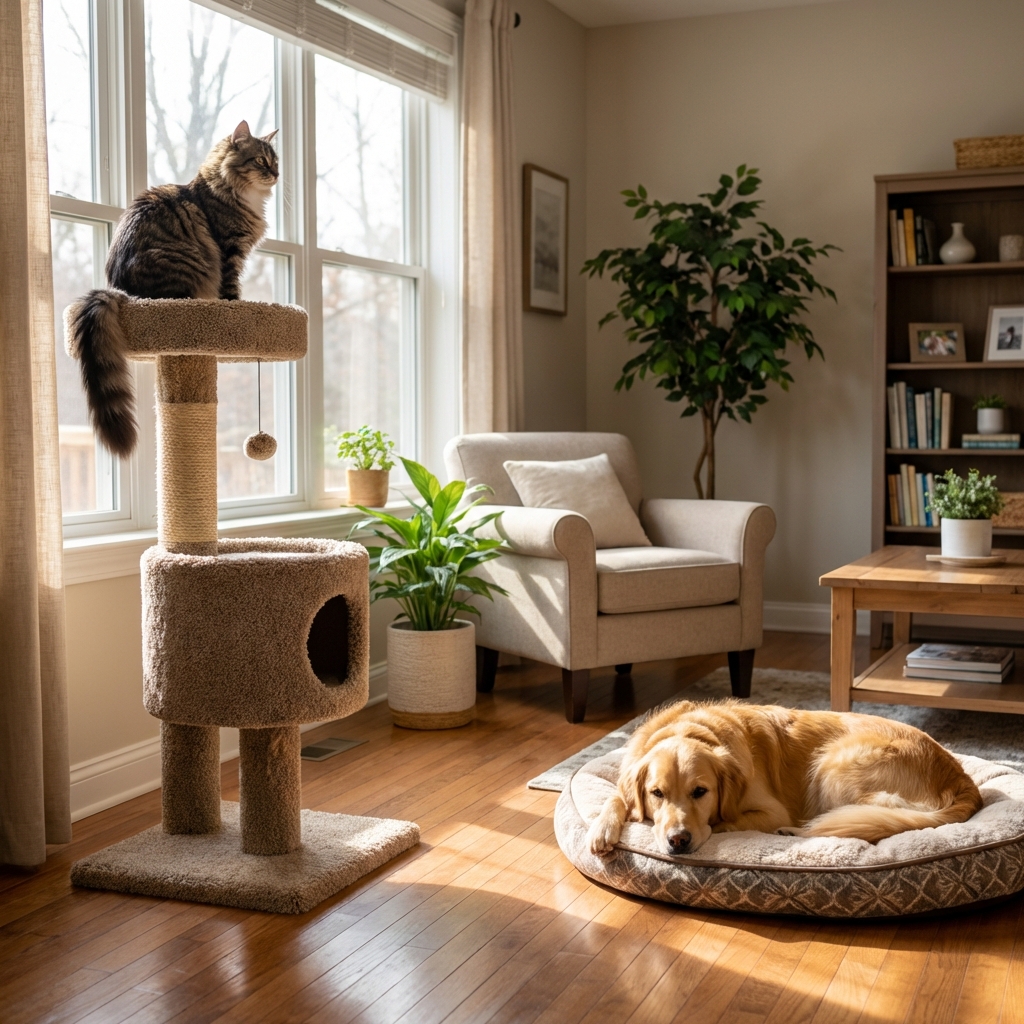
- Vertical escape routes: cat trees, shelves, or the top of sturdy furniture.
- Safe room: a separate room with food, water, litter box, and hiding spots.
- Physical barriers: baby gates with a small cat door, a tall gate, or a door latch that allows the cat through but not the dog.
This is not just comfort. It prevents cornering, which is a major trigger for scratching, biting, and panic.
Step 1: scent first
Animals learn a lot through scent. Before any face-to-face meeting, start with low-pressure scent exposure for a few days.
- Swap bedding or small blankets between pets.
- Let each pet sniff the other’s scent on your hands after gentle petting.
- Feed high-value treats while the other pet’s scent item is nearby to create a positive association.
A common evidence-based approach used in behavior work is desensitization and counterconditioning: pairing a trigger (new animal scent or presence) with something good (treats, meals) to reduce fear and reactivity over time.
Step 2: controlled visuals
Use a barrier and keep it short
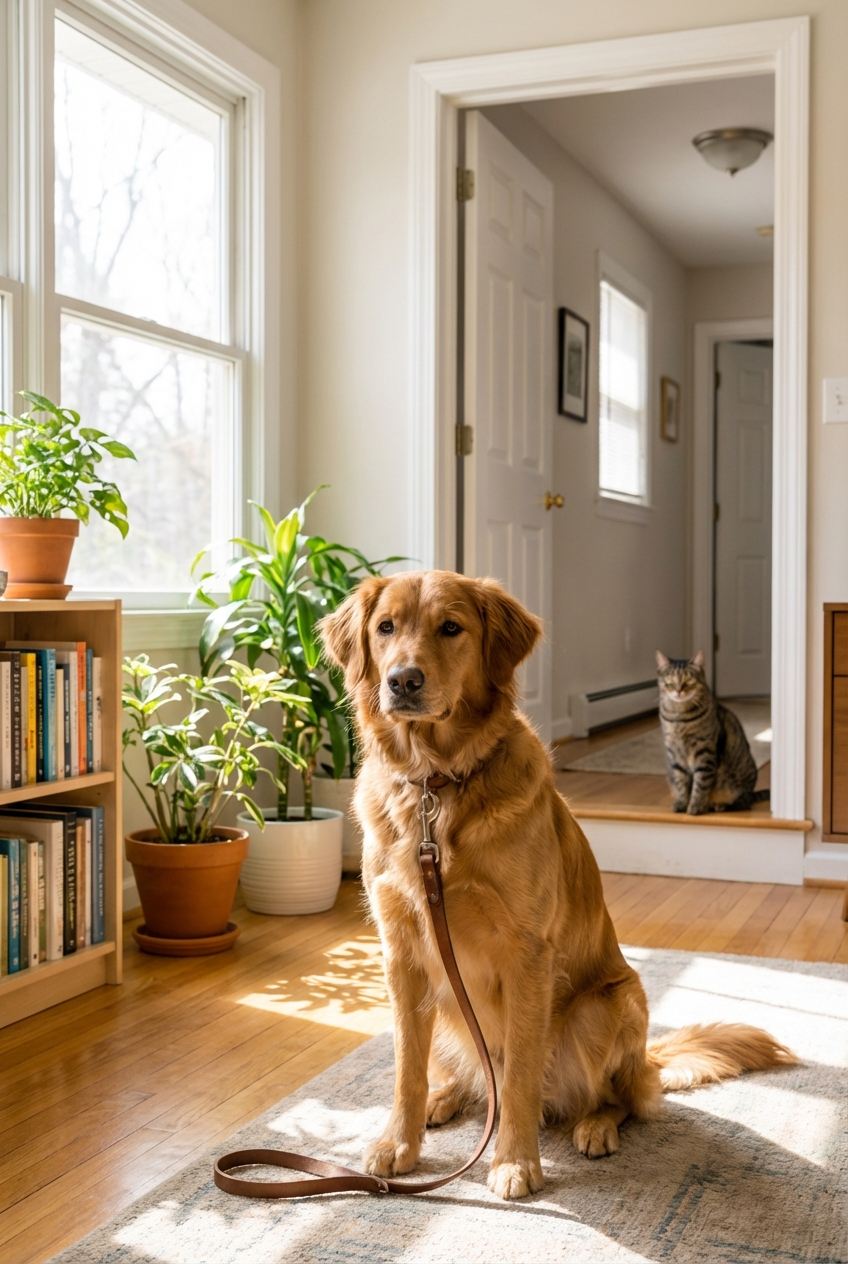
Start with brief “look and relax” sessions through a baby gate, cracked door, or exercise pen. Keep the dog on leash and far enough away that they can stay calm.
- Duration: 30 to 90 seconds at first.
- Frequency: 2 to 5 times per day if everyone stays relaxed.
- Goal: dog looks at cat, then can disengage and look back to you for a reward.
What “relax” looks like: soft body, loose tail, no whining or lunging, able to take treats, and able to respond to their name.
Reward calm behavior like it is your job
Any time the dog notices the cat without staring, lunging, whining, or fixating, reward immediately. For cats, offer a special treat or a meal near the barrier if they will eat. If the cat will not eat, you are likely too close or moving too fast.
If the dog starts to fixate, quietly increase distance, use a higher-value reward, and end the session before anyone escalates. Then go back to an easier version next time.

Step 3: first shared room (leash on)
When your barrier sessions look boring in a good way, you can try sharing the same room.
- Dog is on a leash and ideally wearing a front-clip harness for better control. For safety, avoid retractable leashes and consider a secure, two-point setup (harness plus collar) if your dog is strong.
- Cat has an exit route and is not trapped.
- Start with the dog sitting or lying on a mat. Reward quiet behavior.
- Keep it brief and end on a calm moment.
If your dog is too excited to take treats, that is useful information. Increase distance, shorten the session, and return to barrier work.
Step 4: supervised off-leash (optional)
Many families ask when the leash can come off. The safest answer is: not until calm behavior is consistent for a sustained period, and even then, start small and stay present.
- Only try off-leash if: the dog can reliably disengage from the cat, respond to cues, and stay loose and quiet around normal cat movement.
- Start with: short sessions in a larger room with multiple escape routes and vertical space for the cat.
- Keep supervision strict: no off-leash time together when you are cooking, on calls, asleep, or out of the house.
Some dog and cat pairs can eventually share a home safely but should still not have unsupervised access. That is a normal, responsible outcome.
Body language: when to pause
Dog stress or prey signals
- Stiff posture, closed mouth, intense stare
- Whining, barking, lunging, trembling
- Freezing or slowly stalking
- Ignoring treats or not responding to their name
Cat stress signals
- Ears flattened, tail puffed or lashing
- Crouching low, growling, hissing, swatting
- Hiding and refusing food long after the dog appears
If you see these, calmly separate and go back a step. Setbacks are normal. What matters is not rehearsing scary or chase behavior.
Common mistakes
- Letting the dog chase just once: it can become a habit fast, and it teaches the cat to fear the dog.
- Holding the cat in your arms: many cats panic when they cannot escape, and you can get scratched.
- Long, intense sessions: short and successful beats long and stressful.
- Unprotected resources: food bowls, litter boxes, and favorite beds can trigger conflict.
Daily management
Protect the litter box
Dogs often see cat litter or stool as something “interesting,” but it can lead to stomach upset and serious stress for your cat. It can also create conflict if the dog blocks access or repeatedly harasses the cat near the box. Place litter boxes behind a gate, in a dog-free room, or use a top-entry box if your cat tolerates it.
Separate feeding stations
Feed the cat in a dog-free area, and avoid letting the dog hover. Cats that feel unsafe may eat less or stop eating, and that can be dangerous, especially for overweight cats. If your cat is not eating at all for about 24 to 48 hours, or seems unwell, call your veterinarian for guidance.
Give your dog an outlet
A tired dog makes better choices. Aim for daily walks, sniff time, training sessions, puzzle toys, and calm settle practice on a mat.
Support your cat’s confidence
Keep your cat’s routine steady and add low-stress enrichment like interactive play, cozy hiding spots, and predictable quiet time. Some households also benefit from feline facial pheromone products. Your veterinarian can help you decide if that is a good fit.
Timeline: typical progress
Every household is different, but here is one common pace:
- Days 1 to 3: scent swapping, cat safe room, no direct contact.
- Days 4 to 10: barrier views with treats, very short sessions.
- Weeks 2 to 4: leashed in-room sessions, gradual increases.
- After a month: some pairs coexist calmly. Others need longer.
Important disclaimer: many introductions take 2 to 3 months or longer, especially with adult dogs, fearful cats, or high-prey breeds (often terriers and sighthounds). Progress is measured in calm behavior, not the calendar. Some pairings may never be safe without management, and that is okay.
Some dogs and cats become best buddies. Some simply learn to share space peacefully. Both outcomes are wins.
When to get help
- Your dog has a strong chase response and cannot disengage from the cat.
- Your cat stops eating, hides constantly, or starts eliminating outside the litter box.
- There has been any bite, attempted bite, or repeated cornering behavior.
- You feel unsafe managing the dog, even on leash.
Medical issues can also contribute to irritability or anxiety, so a wellness check can be part of a smart plan.
Gentle encouragement
If you take one thing from this, let it be this: slow introductions protect trust and safety. Trust helps, but so do training, management, and respecting each pet’s comfort level. Start small, reward calm, and give both pets a home that feels safe.