
Learn why lean turkey is a smart protein for dogs, plus an easy base recipe, mix-and-match bowl ideas, transition steps, calcium guidance, and food-safety tips.
Article
•
Designer Mixes
How to Introduce a Dog and Cat

Shari Shidate
Designer Mixes contributor
As a veterinary assistant here in Frisco, Texas, I have seen dog and cat introductions go beautifully and I have also seen them go sideways when we rush. The good news is that most pets can learn to live together peacefully when we set them up for success: slow steps, safe spaces, and smart supervision.
Important note: If either pet has a history of aggression, severe anxiety, or predatory behavior, talk with your veterinarian and consider a certified trainer or veterinary behaviorist before you attempt introductions at home.

Quick facts that matter
- Dogs and cats speak different body language. A wagging tail is not always friendly. For many dogs, a stiff wag can signal high arousal.
- Stress is often silent. Cats may hide, stop eating, over-groom, or miss the litter box. Dogs may pant, pace, lick lips, or fixate.
- First impressions are powerful. A scary first meeting can create a long-lasting fear response, especially for cats.
- Most problems come from speed, not “bad pets.” Slow introductions protect everyone.
Before you start: set up your home
Create safe zones
Your cat needs true escape options that the dog cannot access. Think vertical and protected.
- Cat-only room with litter box, food, water, scratching post, and a hiding spot.
- Vertical space like a sturdy cat tree or cleared shelves.
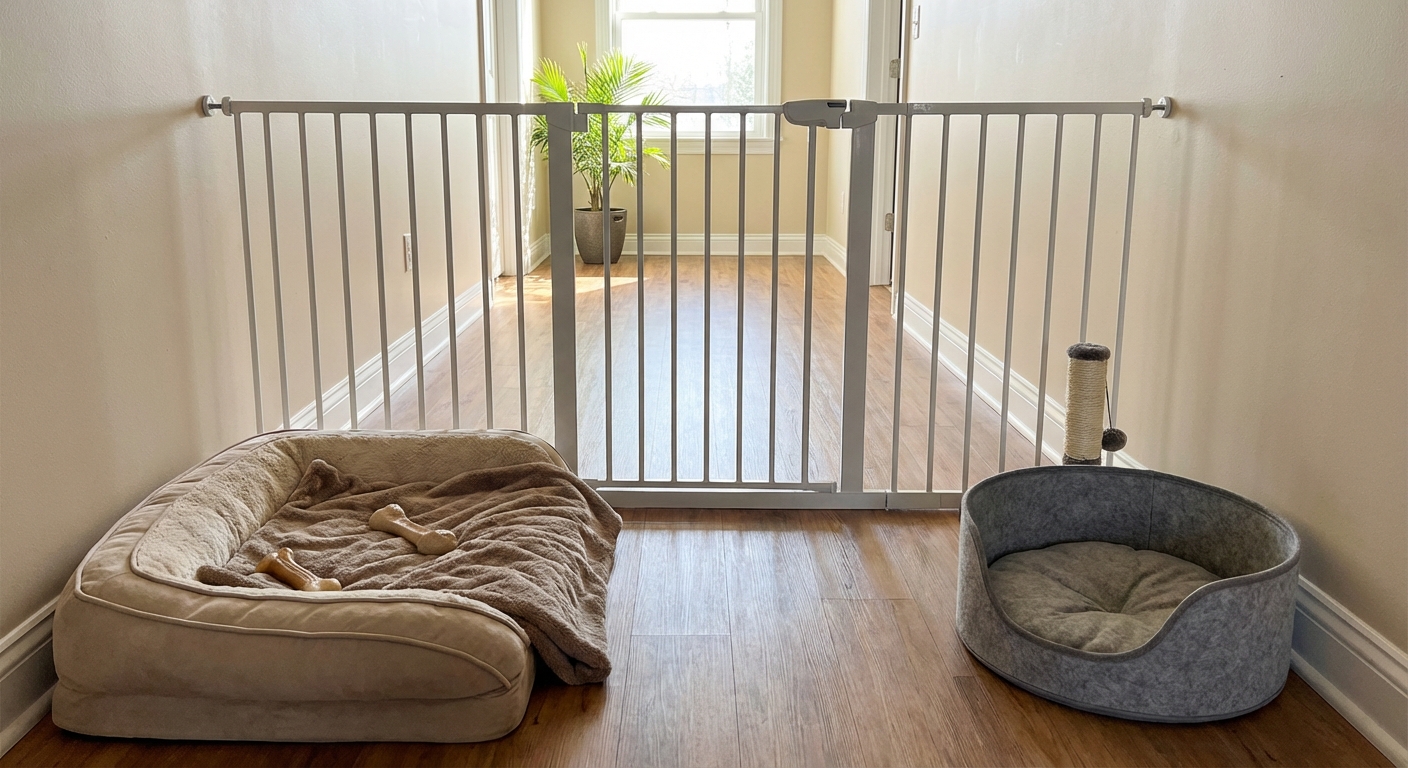
- Baby gates or a door with a secure barrier so pets can see and smell without contact.
Gate safety note: Some dogs can jump, push through, or climb gates. Choose a sturdy, extra-tall gate and do not rely on a gate alone if your dog has a strong chase instinct. Supervision still matters.
Separate key resources
Resource guarding is a common trigger. Feed separately and keep litter boxes out of dog reach.
- Feed the cat in a dog-free area.
- Pick up dog food after meals if your dog tends to guard.
- For the litter box, aim for a truly dog-inaccessible setup: a cat-only room, a latched or gated laundry room, or a top-entry box if your cat tolerates it. Covered boxes alone are not a reliable dog blocker, and some cats dislike them.

Step-by-step introduction
These steps follow the same gradual desensitization and positive association approach we use in behavior medicine. The theme is simple: small exposures plus good things, repeated often.
Step 1: Scent first (often 2 to 7 days)
Scent is information. Before they ever meet face-to-face, let them learn each other safely. Some homes need a couple of days, others need longer.
- Swap bedding or gently rub each pet with a clean cloth and place it near the other pet’s resting spot.
- Let them sniff under the door.
- Reward relaxed behavior with tiny treats.
Goal: “That smell predicts good things.”
Step 2: Visual access with a barrier (short sessions)
Use a baby gate or cracked door with a secure barrier. Keep the dog on leash.
- Start with 1 to 3 minute sessions.
- Give your dog a job: sit, touch, or look at you for a treat.
- Let the cat choose distance. Never force the cat toward the gate.
Goal: Settled looking, then disengaging, then returning to normal behavior.
Step 3: Controlled meet-and-greet (dog leashed, cat free)
When barrier sessions are relaxed, move to the same room with the dog on leash and the cat able to leave.
- Keep the dog at a distance where they can stay loose and responsive.
- Reward your dog for checking in with you, not staring at the cat.
- End the session early, while it is still going well.
Goal: Neutral coexistence. Friendship is optional.
Step 4: Supervised freedom (after many good reps)
When you are ready to add freedom, safety comes first. If you need something to grab, consider a short “tab” leash, or a lightweight house line only in a clear, snag-free area and only under direct supervision. A dragging leash can snag on furniture and startle pets, so keep this step controlled.
- Continue to separate when you are not home.
- Maintain cat-only retreats permanently.

How long should it take?
Timelines vary widely. Some pets settle in within a week or two, many need a few weeks, and shy cats or high-energy dogs may need a month or more. A helpful rule is to go at the pace of the most stressed pet. In most homes, that is the cat.
Body language: what to watch for
Green flags (keep going)
- Dog can look at the cat and then look away easily.
- Loose dog body, relaxed mouth, normal breathing.
- Cat explores, grooms, eats, or plays in the dog’s presence.
- Both pets can rest in the same space with distance.
Yellow flags (slow down)
- Dog is intensely staring, whining, or freezing with a stiff posture or weight forward.
- Cat crouches, tail tucked, ears back, growling, or swatting at the barrier.
- Either pet refuses food during sessions.
Red flags (stop and get help)
- Dog lunges, snaps, or tries to chase repeatedly.
- Cat attacks with no ability to retreat, or is cornered.
- Any bite attempt, even if it “didn’t connect.”
If something goes wrong
Even careful introductions can have a bad moment. What you do next matters.
- Separate calmly. Use a barrier, a door, or call the dog away. Avoid grabbing collars near a conflict if you can help it.
- No punishment. Yelling can increase fear and make future sessions harder.
- Go back a step. Return to the last stage where both pets were comfortable and repeat it for several days.
- Get help if it repeats. If you see stalking, repeated lunging, or escalating stress, involve your vet and a qualified behavior professional.
Common mistakes (and easy fixes)
Mistake: letting the dog chase “just once”
Chasing is self-rewarding for many dogs and terrifying for cats. Prevention is kinder and safer.
Fix: Use gates, leashes, and structured sessions until relaxed behavior is consistent.
Mistake: forcing the cat to “face it”
Cats do best when they control distance.
Fix: Give your cat vertical space, hiding options, and permission to leave.
Mistake: skipping exercise and enrichment
A bored, under-exercised dog is much more likely to fixate.
Fix: Walks, sniff time, food puzzles, and basic training make a huge difference.
Tools that can help
- Baby gates for safe visual access (use sturdy, tall options).
- Crate or exercise pen for dog management when needed.
- High-value treats (tiny, soft, and smelly) for training relaxed behavior.
- Food puzzles and lick mats to lower arousal and build positive associations.
- Cat pheromone diffuser in the cat’s safe room for some households.
- Basket muzzle (properly conditioned) for certain dogs as an added safety layer during training. This should be introduced slowly and positively, not used as a shortcut.
Special situations
Puppy and adult cat
Puppies are bouncy and rude by cat standards. Teach a solid leave it and reward calmness early. Keep sessions short and frequent.
Adult dog with high prey drive
Some dogs are triggered by fast movement. If your dog locks in on the cat, trembles, stalks, or cannot disengage even with treats, professional help is the safest next step.
Kitten and adult dog
Kittens can be fearless. That can lead to risky close contact. Continue to supervise and provide safe exits so your dog never feels trapped or overwhelmed.
Multiple pets
If you have multiple dogs, introduce them one calm dog at a time. “Pack” energy can overwhelm a cat quickly. In multi-cat homes, keep the new cat’s safe room in place and add space and resources so no one feels crowded.
Kids and visitors
Most setbacks I see happen when someone forgets a door or tries to “let them say hi.” Set clear house rules.
- Use door signs or reminders during the first few weeks.
- Ask guests to ignore the cat and avoid excited greetings for the dog.
- Do not allow kids to carry the cat toward the dog or hold the cat in place during introductions.
When to call your vet
Reach out if you see:
- Cat not eating for 24 hours, hiding constantly, or new litter box accidents (sooner for kittens, seniors, or cats with health conditions).
- Dog obsessive behaviors: pacing, staring for long periods, or escalating reactivity.
- Any injuries, even minor scratches near eyes.
Sometimes anxiety support, pain control, or behavior medication can be the bridge that helps pets learn safely and calmly.
The bottom line
Successful dog and cat introductions are not about forcing friendship. They are about building trust through safe, repeatable experiences. Go slow, reward relaxed behavior, and protect your cat’s ability to retreat. If you do those three things consistently, you are already ahead of the game.