A health-first, low-stress plan for introducing a new cat: safe room setup, separation, scent swapping, visual sessions, supervised meetings, body language, ...
Article
•
Designer Mixes
How to Introduce a Cat to Another Cat

Shari Shidate
Designer Mixes contributor
Bringing a new cat into your home can be exciting and also a little nerve-wracking, especially if you are trying to keep things calm for the whole family. The good news is that most cat-to-cat tension is not “bad behavior.” It is normal feline communication, stress, and territory instincts colliding.
In clinic settings, I have seen introductions go beautifully when families slow down, follow a plan, and let the cats set the pace. Below is a family-friendly, step-by-step approach that protects confidence, reduces fights, and helps your cats build a safer relationship over time.
Before You Start: Set Up for Success
The biggest mistake I see is letting the cats “work it out” face-to-face on day one. Cats usually do better with gradual exposure. Think of it like introducing two strangers by letting them get used to each other’s scent first.
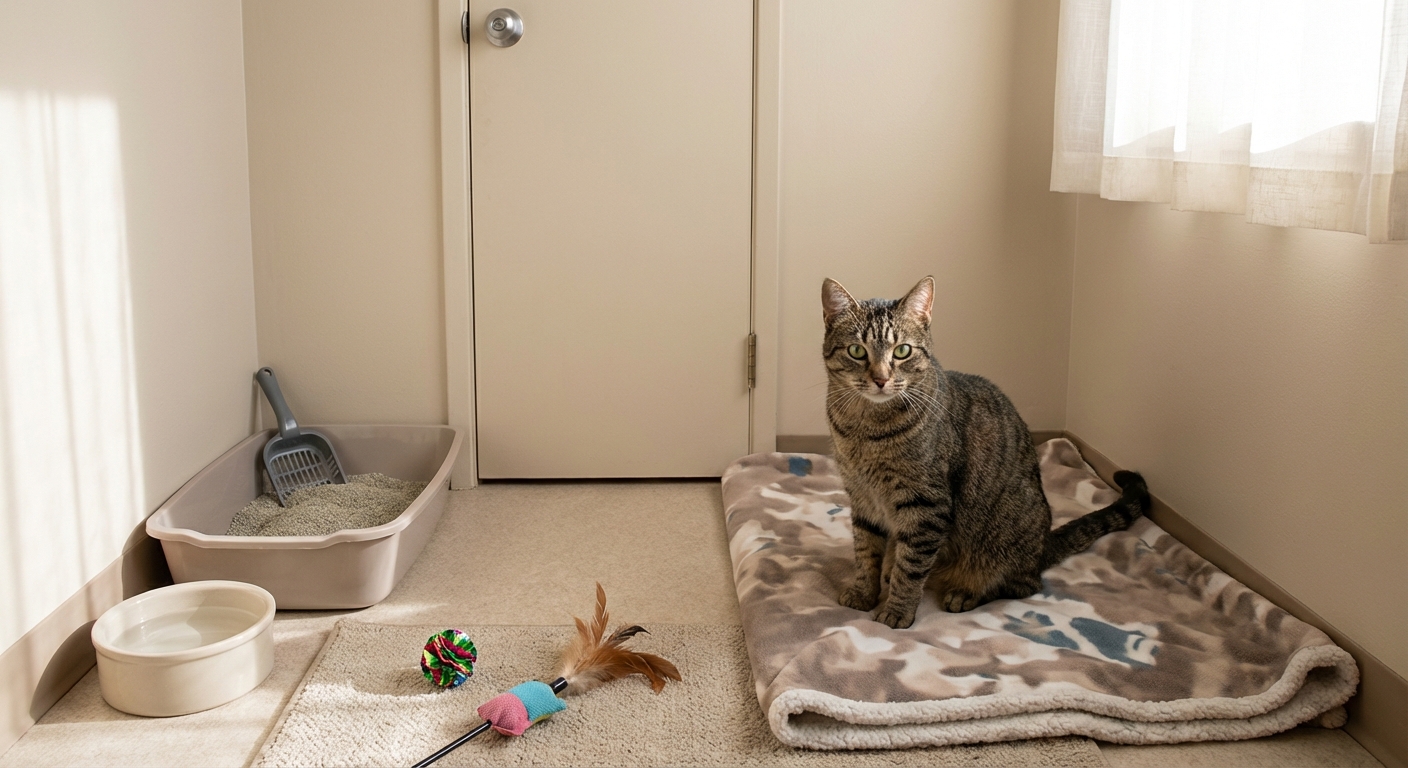
Create a safe base camp
Give your new cat a quiet room with everything they need:
- Litter box (in a private corner, away from food)
- Food and water
- Scratching post or pad
- Hiding spot (carrier with the door removed, covered bed, or a box)
- Cozy resting spot
- Toys
This base camp helps your new cat decompress, and it prevents your resident cat from feeling like their territory was suddenly taken over.
Set up resources for two cats
Resource competition is a major driver of conflict. A helpful rule is:
- Litter boxes: one per cat, plus one extra (so 2 cats = 3 boxes)
- Food stations: separate bowls, ideally in different areas
- Water: multiple water stations or a cat fountain plus a bowl
- Resting and climbing: add vertical space like cat trees or shelves
Resident cat tip: Keep your resident cat’s favorite routines and spaces as unchanged as possible. Try to keep their bed, window perch, and go-to nap spots available, and keep their meal and play schedule consistent.
Step-by-Step Cat Introduction Timeline
Every cat is different. Some cats need a few days. Others need weeks or longer, especially if one cat is fearful, undersocialized, or has had a rough past. The goal is not speed. The goal is calm, repeatable wins.
Step 1: Separation first (often 1 to 2+ weeks)
Keep the cats fully separated, including no peeking through cracked doors. Let the new cat settle and establish routines.
- Feed both cats on a schedule.
- Play with each cat daily, especially your resident cat, to reduce stress.
- Use a predictable routine so kids know when it is “quiet cat time.”
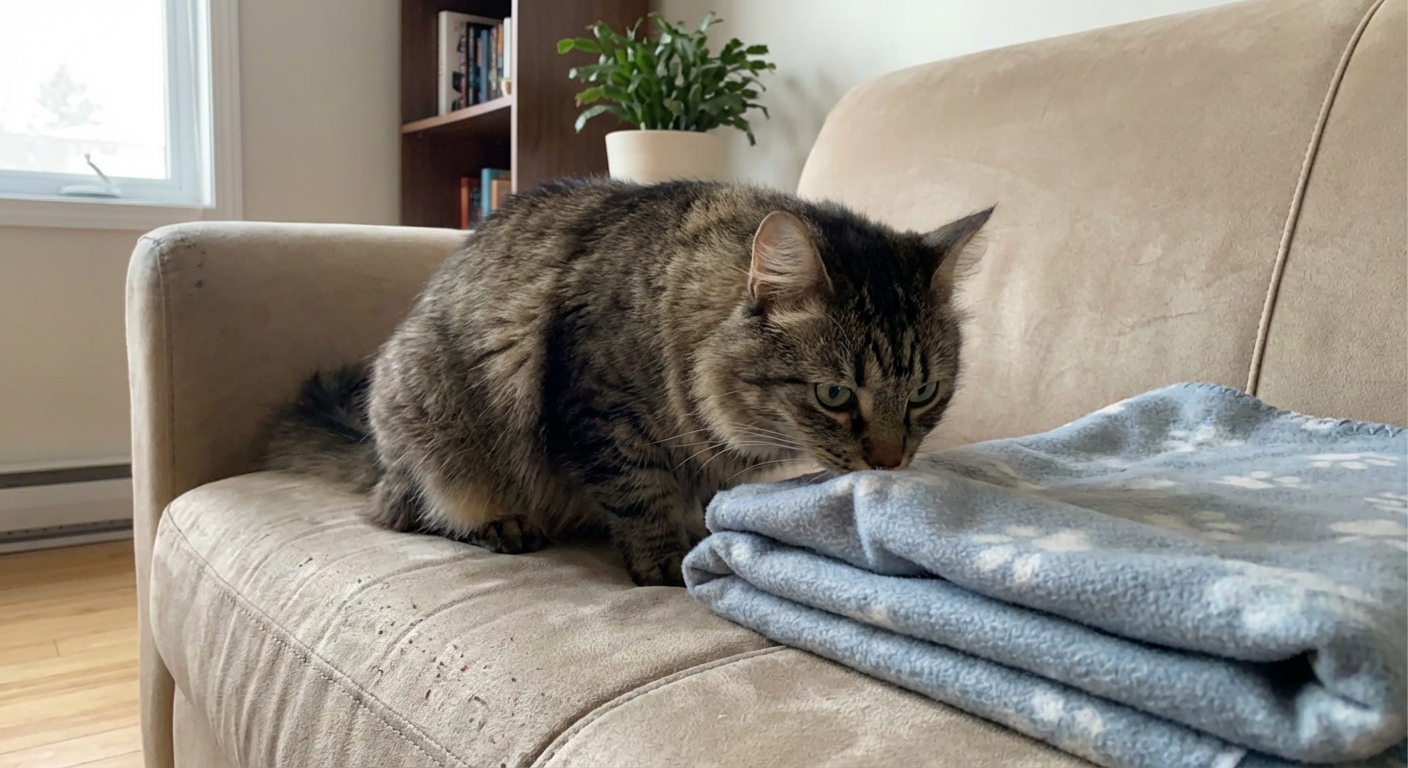
Step 2: Scent swapping (start when both seem settled)
Cats rely heavily on scent to recognize who is safe and familiar. You are helping their environment smell like “both cats belong here.”
- Swap bedding or small blankets daily.
- Gently rub each cat’s cheeks with a soft cloth and place it near the other cat’s sleeping area.
- Switch rooms for short periods, so each cat can explore the other’s scent without a face-to-face meeting.
Family tip: Let kids help by placing a blanket in the “swap bin.” This keeps them involved without forcing interaction.
Step 3: Feeding near the door (days to weeks)
Feed the cats on opposite sides of the closed base-camp door.
- Start with bowls several feet from the door.
- Over meals, slowly move bowls closer if both cats stay relaxed and keep eating.
- If either cat stops eating, growls, or backs away, move bowls farther away again.
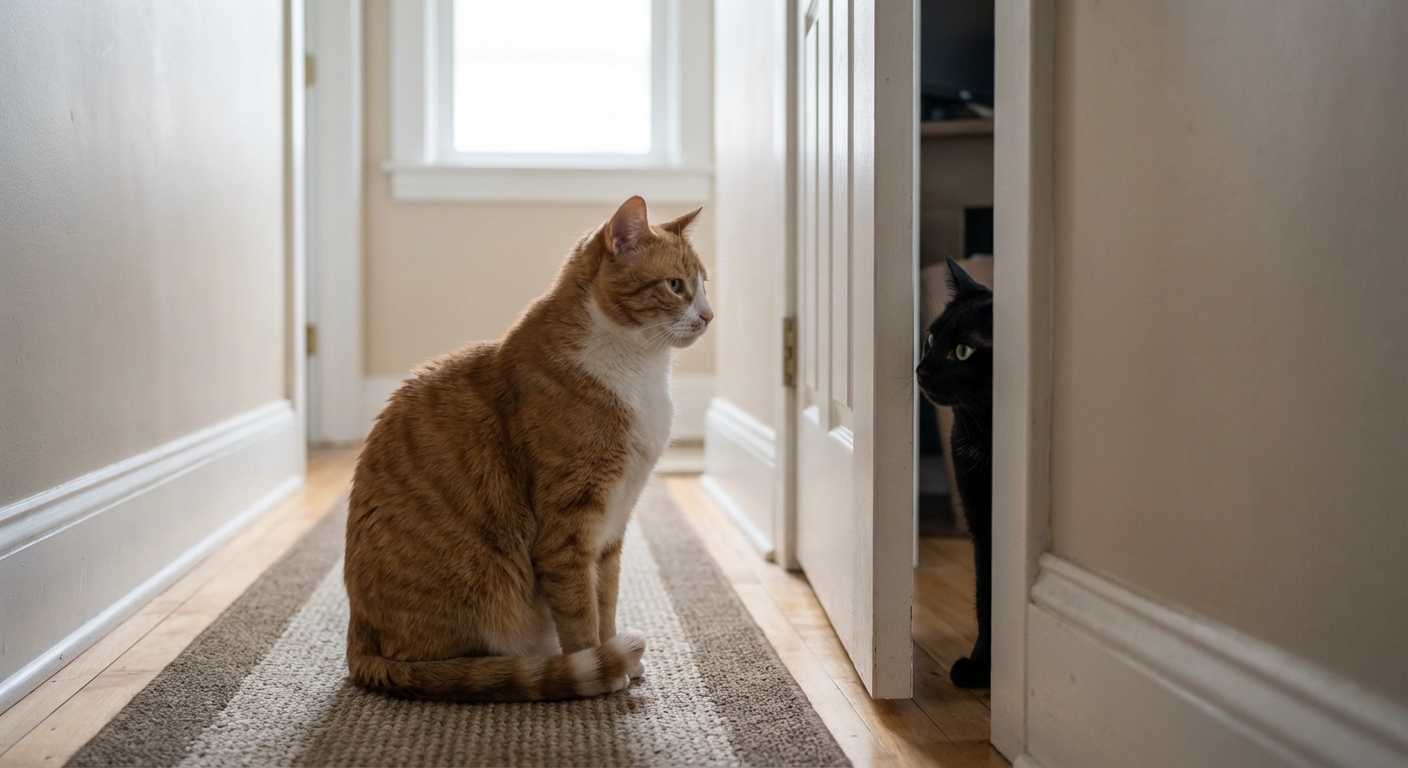
Step 4: Visual introductions (use a sturdy barrier)
Once both cats can eat calmly near the door, allow brief, controlled visual contact.
- Use a baby gate, stacked gates, a screen door, or a secure door-latch setup so nobody can squeeze through.
- Avoid a simple cracked door if you can. Paws can swat through gaps, and doors can slam.
- Keep sessions short, like 30 to 90 seconds at first.
- Pair sightings with something positive: treats, wet food, or a favorite toy.
When to move forward: Only progress when both cats show relaxed body language during and after sessions. If either cat gets tense, go back a step and build more calm repetitions.
Step 5: Supervised time together (minutes at first)
Start with short sessions in a neutral room. “Neutral” usually means a space the resident cat does not strongly guard. If possible, pick an area without high-value items at first, like favorite beds or tight hallways that can cause cornering.
- Have toys ready to redirect energy.
- End the session before either cat gets overwhelmed.
- Keep escape routes open. Cats do best when they do not feel trapped.
- Increase time slowly over days to weeks.
Step 6: Gradual home access
When your cats can spend supervised time together with minimal tension, begin allowing the new cat access to more of the home, still with supervision.
Continue separate feeding stations and multiple litter boxes. Many cats coexist peacefully because the environment makes it easy to avoid conflict. Also, success does not have to mean they become best friends. Peaceful coexistence is a win.
Body Language: When to Pause
If you are unsure whether to move forward, watch the cats, not the calendar.
Relaxed signs
- Soft eyes and normal blinking
- Ears forward or gently to the side (not pinned)
- Loose posture, normal walking, or sitting with weight evenly distributed
- Tail held neutrally or softly swishing (not whipping)
Stressed or escalating signs
- Hard staring, freezing, or stalking posture
- Ears pinned back, crouching low, or body stiff
- Puffed fur, arched back, tail tucked or lashing
- Growling that escalates or does not resolve with distance
Normal vs When to Intervene
Often normal at first
- Brief hissing or growling at first sight
- Staring for a moment, cautious posturing
- Occasional swatting without chasing, then separating
- Walking away and hiding, then returning to normal routines
Intervene right away
- Full-body lunging, biting, or wrestling that does not break quickly
- One cat relentlessly stalking, chasing, or cornering the other
- Urine marking or sudden litter box avoidance
- Diarrhea, vomiting, or other signs of illness (stress can contribute, but these also need a medical check)
- Injuries, even small punctures (cat bites can get infected quickly)
How to safely break up a fight: Never use your hands. Instead, toss a blanket between them, place a pillow as a visual barrier, or make a brief noise interruption. Then separate and reset the plan to an earlier step.
Family Tips
Kids often want to “help” by holding the new cat up to meet the resident cat. That usually backfires. Your job is to make the environment predictable and gentle.
- Make a simple rule: “Cats choose, humans wait.”
- Use quiet voices near the base camp door.
- No chasing, no carrying to meet the other cat.
- Give kids a job: measuring food, filling water, or wand-toy play during supervised sessions.
- Provide cat-only zones: a bedroom or a tall cat tree where the cats can retreat.
Tools That Can Help
You do not need a cabinet full of products, but a few supportive tools can make the process smoother:
- Pheromone diffusers or sprays: These may help some cats feel calmer, but results vary, and they work best alongside a slow introduction plan.
- Interactive play: Wand toys help redirect tension into healthy hunting behavior.
- Treats and wet food: Use them strategically to create positive associations during door-feeding and visual sessions.
- Vertical space: Cat trees, shelves, or window perches help cats feel secure and give them options to avoid each other.
Common Mistakes
- Mistake: Letting them meet right away.
Instead: Start with separation and scent work. - Mistake: Moving too fast because “they seem fine.”
Instead: Add time gradually. Stress can build after the first calm meeting. - Mistake: One shared litter box.
Instead: Provide multiple boxes in different locations. - Mistake: Punishing hissing or growling.
Instead: See it as communication. Create distance and reward calm behavior. - Mistake: Forcing cuddles or face-to-face “introductions.”
Instead: Let curiosity happen naturally, supported by routine.
When to Call Your Veterinarian
If your cats are not improving, or if you see sudden behavior changes, it is worth getting medical causes ruled out. Pain, urinary issues, and stress-related conditions can all make cats less tolerant.
- Any bite wounds or scratches that break the skin
- Litter box avoidance, straining, or blood in urine
- Not eating for 24 hours, or hiding and acting unwell
- Diarrhea, vomiting, or lethargy during the introduction process
- Ongoing aggression that escalates rather than improves
Your veterinarian may also refer you to a qualified feline behavior professional for a customized plan.
Introduction Checklist
If you want a quick way to stay consistent, use this checklist on your fridge:
- Base camp ready with litter, food, water, scratcher, hide
- Cats separated with calm routines
- Daily scent swapping
- Door feeding with bowls moved closer slowly
- Barrier visual sessions paired with treats
- Short supervised sessions with toys
- Multiple litter boxes and separate resources maintained
Progress is not linear. A step back is not failure. It is part of listening to your cats and keeping everyone safe.