Yes, older dogs can be potty trained—often faster than puppies. Use a vet checklist, a 2-week routine, supervision, fast rewards, and enzyme cleaning to st...
Article
•
Designer Mixes
How to House Train an Older Dog

Shari Shidate
Designer Mixes contributor
House training an older dog is absolutely doable, and it can be surprisingly fast once you find the right routine. Adult dogs can be easier to house train in some ways than puppies because they can often hold their bladder longer and many crave structure. That said, every dog is different, and a dog’s history, stress level, and prior reinforcement matter. The key is to remove guesswork by setting up predictable potty breaks, rewarding the behavior you want, and preventing accidents long enough for a new habit to stick.
As a veterinary assistant, I like to start with two truths that keep this process kind and effective: most potty issues are either medical, management-related, or communication-related, and punishment typically makes house training harder. It can increase fear and anxiety, and it can teach dogs to hide when they need to go. Let’s set your dog up to win.
Quick note: This is general education and not a substitute for veterinary advice for your specific dog.
Step 1: Rule out medical causes
If your adult dog was previously house trained and suddenly started having accidents, treat that like a health clue. Even if your dog is new to you, a quick vet visit can save weeks of frustration.
Common medical reasons for accidents
- Urinary tract infection (UTI) or bladder inflammation
- Diabetes or kidney disease (often with increased thirst and urination)
- Cushing’s disease (often increased drinking, panting, appetite)
- Arthritis or mobility pain (they cannot get outside fast enough)
- Gastrointestinal upset, parasites, or chronic GI disease like IBD (more urgent stool needs)
- Cognitive dysfunction in seniors (doggy dementia)
- Spay incontinence (urethral sphincter mechanism incompetence), often in spayed females
- Medication effects (for example, steroids or diuretics can increase thirst and urination)
Call your vet promptly if you see blood in urine, straining, frequent squatting with little output, vomiting, diarrhea lasting more than a day, poop accidents that are new or frequent, or a sudden change in thirst.
Step 2: Reset the setup
Think of management as removing opportunities to rehearse accidents. Every indoor accident is practice, and practice builds habits. Your job is to make “potty outside” the easiest, most rewarding option.
Use a simple confinement plan
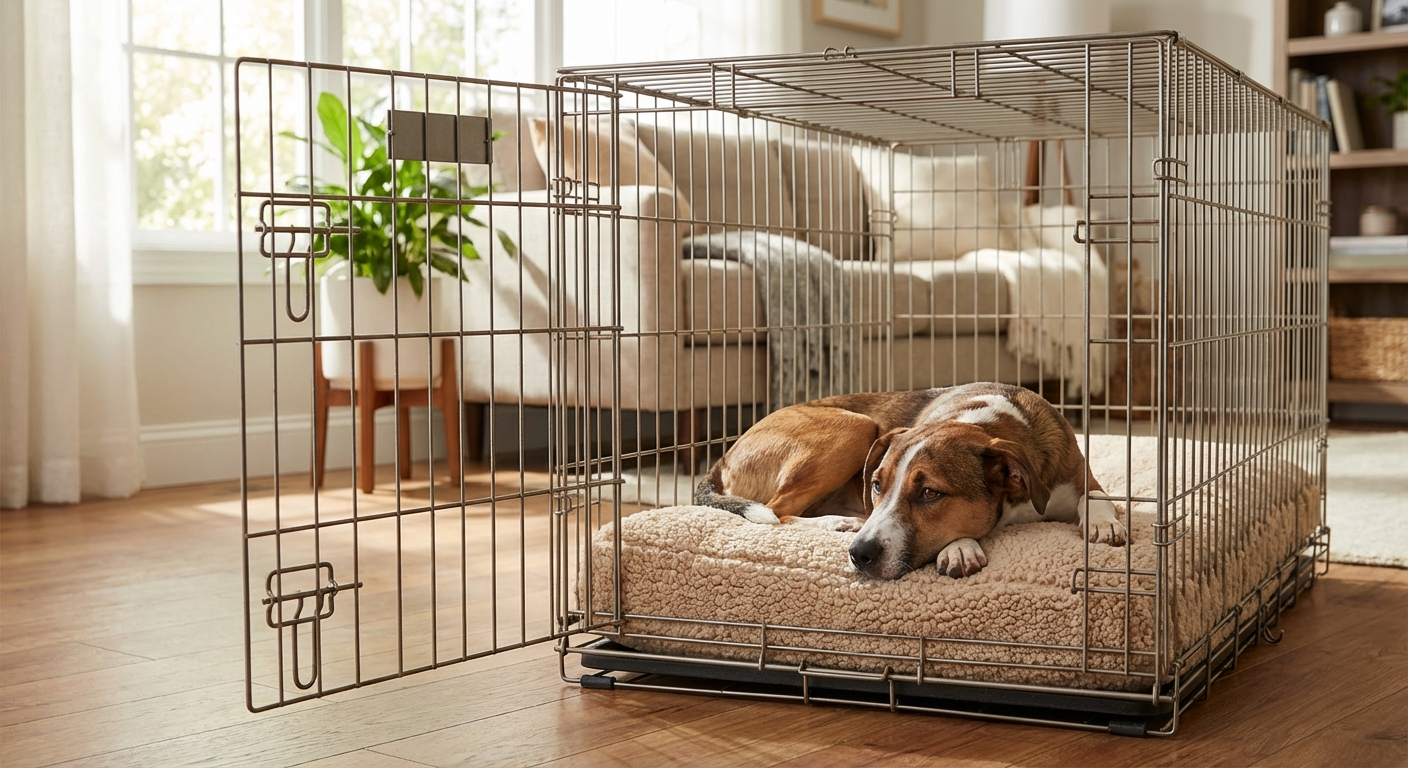
- Use a crate or exercise pen when you cannot supervise closely. Most dogs avoid soiling their sleeping area if the space is appropriately sized.
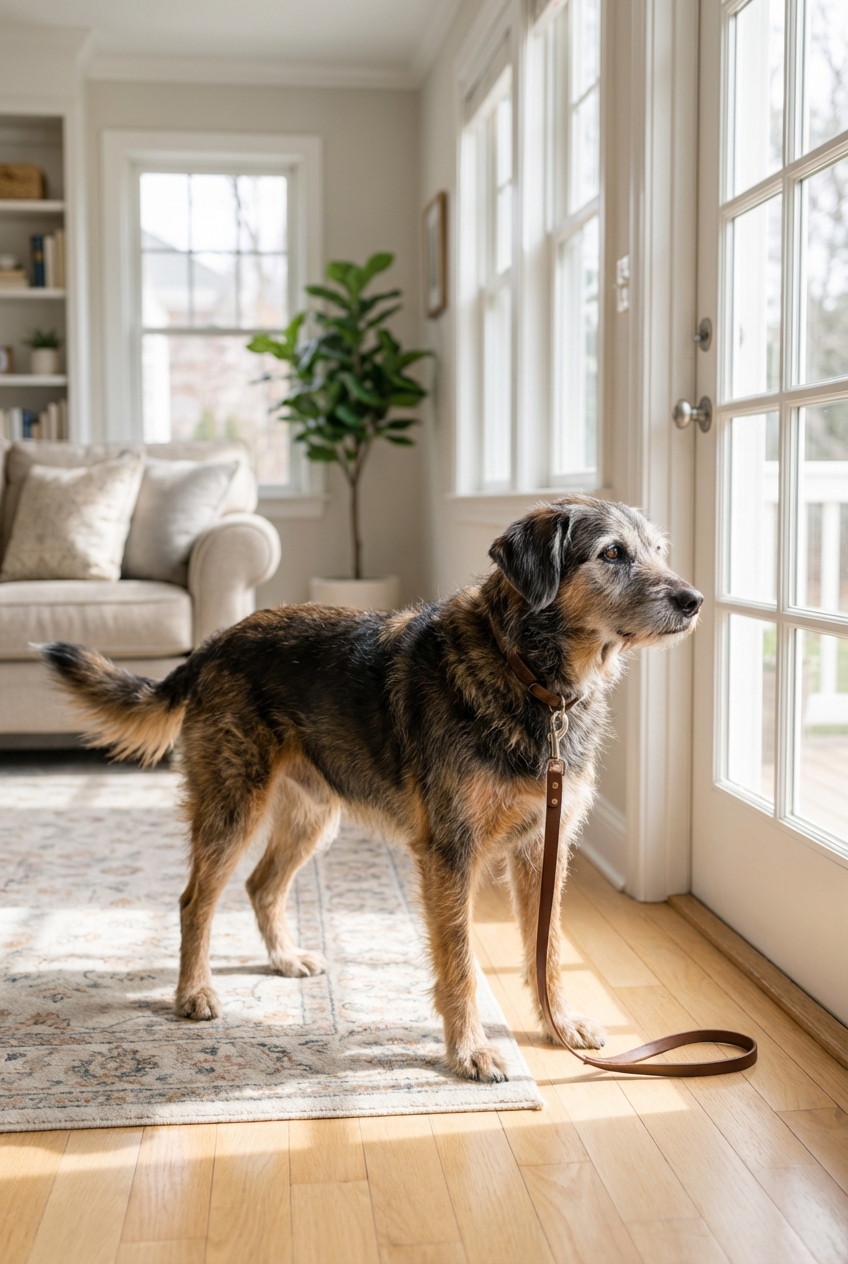
- Use baby gates or a leash indoors so your dog stays in your line of sight.
- Block off carpeted rooms early on. Hard floors are easier to clean thoroughly.
Pick one potty spot
Choose a consistent outdoor potty area. Familiar scent helps trigger the behavior, and your dog learns exactly what “we’re out here to do.”
Step 3: Set a potty schedule
Consistency beats intensity. A reliable schedule helps your dog learn when relief is coming, which lowers stress and reduces accidents.
Starter schedule for adult dogs
- First thing in the morning
- After each meal (many dogs go within 10 to 20 minutes, but some need 30 to 60 minutes)
- After naps
- After play or excitement
- Midday (especially for newly adopted dogs)
- Right before bed
If you are starting from scratch, plan on every 2 to 3 hours at first while your dog is awake, then gradually extend the time as accidents stop.
Feed on a schedule
Set meal times help set bowel movement times. Most dogs poop on a predictable rhythm when meals are consistent.
Step 4: Add a potty cue
Pick a simple cue like “Go potty” or “Do your business”. Say it once when your dog starts to eliminate, then reward right after they finish. Over time, the cue becomes a helpful tool during bad weather, travel, and busy mornings.
Rewarding basics
- Reward immediately when your dog finishes outside. Timing matters.
- Use something your dog truly loves, like small soft treats, chicken, or a favorite toy.
- Be calm and positive. Many dogs prefer gentle praise plus a treat.
A common benchmark is 2 full weeks with zero accidents before you start fading treats. Even then, taper gradually and keep praise.
Step 5: Supervise closely
Until your dog is reliable, supervision prevents “sneaky” accidents behind the couch. Watch for early signals and head outside quickly.
Common pre-potty signs
- Sudden sniffing or circling
- Wandering away from the room
- Restlessness or pacing
- Heading toward a previous accident spot
- Sitting by the door, staring, or softly whining
If you see a sign, calmly clip on the leash and go to your potty spot. Keep it boring until they go, then reward.
If they do not go outside
Give your dog a focused 5 to 10 minutes outside on leash. If they do not go, bring them back in and either crate them or keep them in very close supervision, then try again in 15 to 20 minutes. This “bridge” prevents an accident the moment you come back inside.
Step 6: Handle accidents well
Accidents are information, not “misbehavior.” Your dog is not being spiteful. They are either confused, stressed, physically uncomfortable, or simply did not have enough opportunity.
If you catch your dog mid-accident
- Interrupt gently with a neutral “uh-oh” or “oops.” Avoid anything that scares your dog.
- Take them outside immediately to the potty spot.
- Reward if they finish outside.
If you find an accident later
- Do not scold. They will not connect it to the earlier behavior.
- Clean thoroughly with an enzyme cleaner made for pet urine or feces. Avoid ammonia-based cleaners, which can smell like urine and encourage repeat accidents. A blacklight can help you find old spots that keep “calling” your dog back.
Special situations
Newly adopted adult dogs
New dogs often need a decompression period. Stress can cause frequent urination, marking, or loose stool. Start with a tight schedule and limited freedom, then expand access to the home as reliability improves.
Marking (small amounts of urine)
Marking is often about communication, not bladder fullness. It is common in intact males but can happen in any dog.
- Clean with enzyme cleaner and block access to favorite marking spots.
- Reduce triggers when possible, like access to recently soiled areas, new items on the floor, visits from other dogs, or high-traffic windows.
- Use belly bands temporarily for males while training improves.
- Increase structure with more frequent outdoor trips and rewards for full voids outside.
- Tether indoors (leash clipped to you) during high-risk times so you can interrupt and redirect quickly.
- Talk to your vet about neutering and medical causes if marking is sudden.
Seniors with mobility issues
If stairs or slippery floors slow your dog down, they may not make it in time.
- Add runners or non-slip mats
- Try a support harness for rear-end weakness
- Consider a closer potty option like a fenced side yard or a covered area
- Ask your vet about pain management if arthritis is suspected
Nighttime and overnight needs
Many healthy adult dogs can sleep through the night, but seniors, dogs on certain medications, and newly adopted dogs may need an overnight potty break at first. If your dog is having nighttime accidents, set an alarm for a quiet, boring trip outside once overnight, then gradually push it later as mornings stay dry.
When weather is the problem
Some dogs refuse rain, wind, or cold. A covered potty spot, a warm coat, and keeping potty trips short and focused can help. Reward heavily for success in bad weather so your dog learns it is worth it.
A simple 10-day plan
Every dog is unique, but this is a practical structure that works for many adult dogs.
Days 1 to 3: Tight structure
- Potty breaks every 2 to 3 hours while awake
- Crate or pen when unsupervised
- Leash walks to potty spot, reward every success
Days 4 to 7: Add some freedom
- If accidents are decreasing, extend time between potty breaks slightly
- Allow one additional room under supervision
- Keep rewards consistent
Days 8 to 10: Proof the habit
- Practice your potty cue in different conditions (morning, evening, light rain)
- Continue enzyme cleaning anywhere there was an accident
- Start spacing treats to every other success, but keep praise
If accidents reappear, it is not failure. It simply means the schedule expanded too quickly or something changed. Go back to the previous step for a few days.
Troubleshooting
- Too much freedom too soon: reduce access and increase supervision.
- Inconsistent schedule: set alarms for potty breaks.
- Not rewarding enough: use higher value treats and reward immediately.
- Cleaner is not enzymatic: switch to an enzyme product to remove odor cues.
- Stress or separation anxiety: ask your vet or a qualified trainer for a plan.
- Urine accidents keep happening: consider a medical check (including medication side effects or incontinence) and tighten the schedule.
- Poop accidents keep happening: consider diet changes, parasites, GI disease, or a schedule mismatch, and involve your vet sooner rather than later.
- Possible medical issue: schedule a vet exam and bring a fresh urine sample if requested.
If you are feeling discouraged, please know this: the goal is not perfection overnight. The goal is to create a calm, predictable routine where your dog can succeed consistently. Confidence is built one good potty break at a time.
Quick checklist
- Crate, pen, or baby gates ready
- Enzyme cleaner on hand
- High-value treats in a jar by the door
- Leash staged near your exit
- Potty schedule written down
- Vet appointment planned if there are any warning signs
With a little structure and a lot of kindness, most older dogs can become reliably house trained again. You are not behind. You are simply building a new habit, and your dog will thank you for the clarity.