
A vet-assistant guide to introducing cats and dogs using slow decompression, scent swapping, barrier sessions, and reward-based training. Includes safety che...
Article
•
Designer Mixes
How to Help Dogs and Cats Get Along

Shari Shidate
Designer Mixes contributor
As a veterinary assistant here in Frisco, Texas, I hear this question all the time: “Can my dog and cat ever be friends?” In many cases, yes. The bigger truth is this: success usually comes from management + slow introductions + training, not luck.
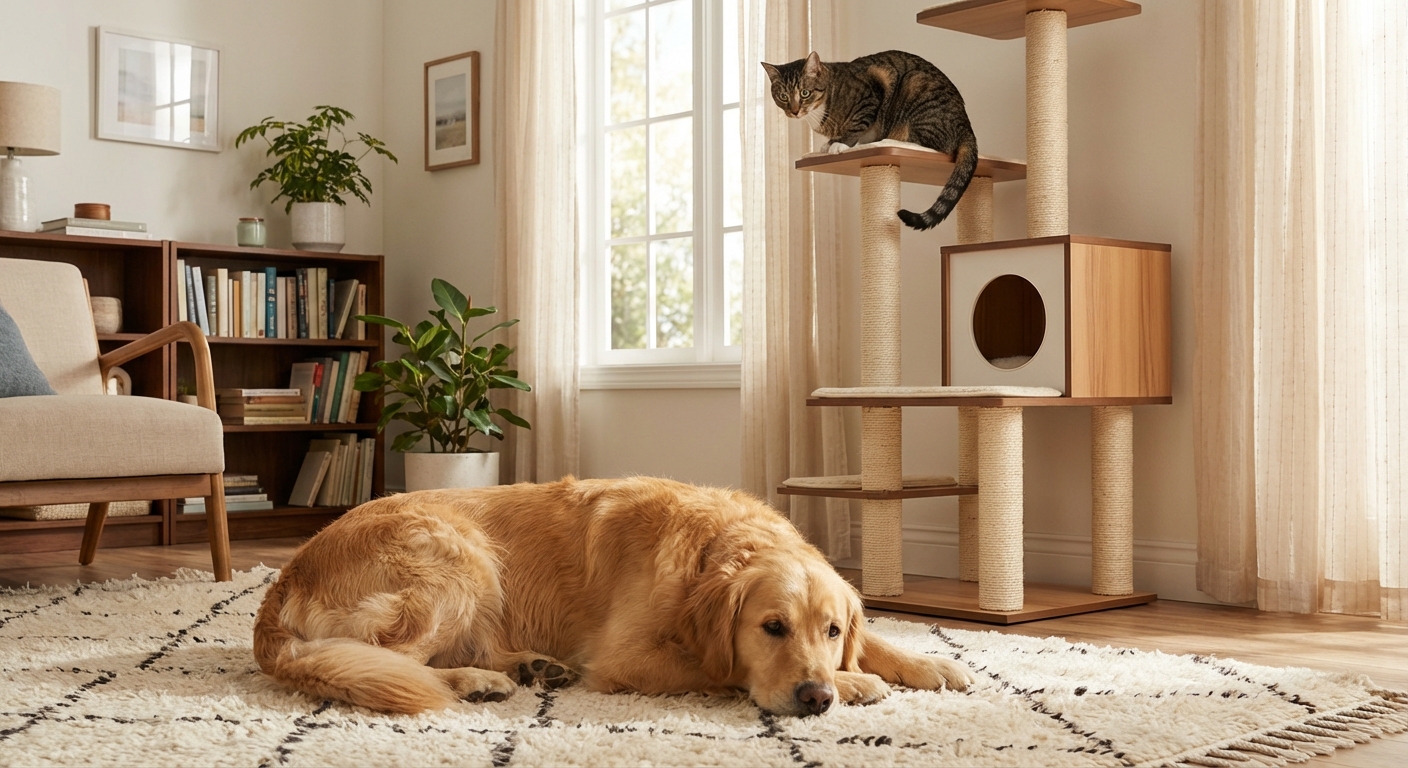
The goal is not always snuggling on the couch. A realistic, healthy goal is peaceful coexistence, where both pets can eat, rest, and move around the home without fear or chasing.
Why dogs and cats clash
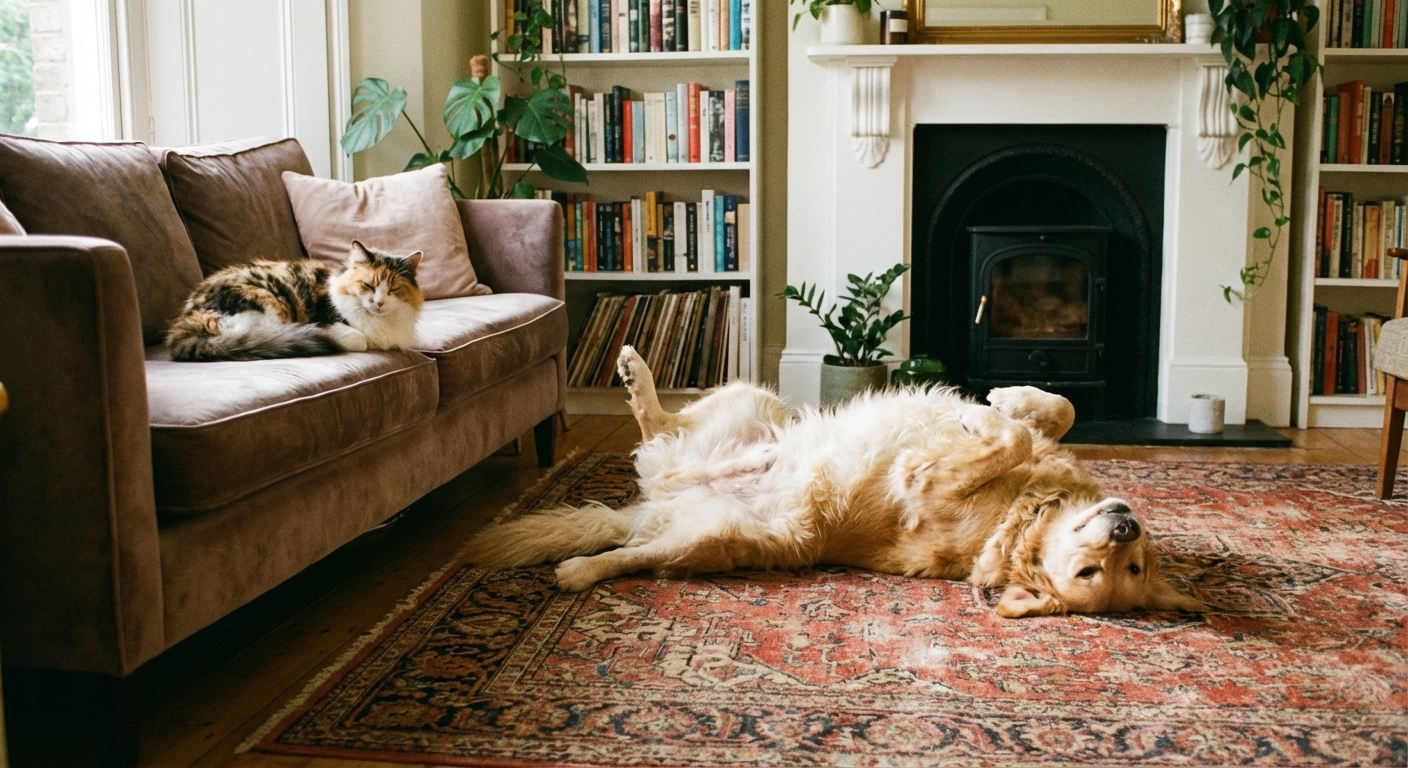
Dogs and cats communicate differently, and those mixed signals can trigger fear or chasing.
- Prey drive: Some dogs are genetically wired to chase fast, small animals.
- Fear and lack of control: Cats feel safer when they have escape routes and high spaces.
- Resource concerns: Food, resting spots, litter boxes, and human attention can create tension.
- Poor first meetings: A single scary chase can teach a cat “dog equals danger.”
Breed and personality matter, but individual history matters just as much. A mellow Labrador may struggle more than a well-socialized terrier, depending on early exposures.
Before you start: set the home up for success
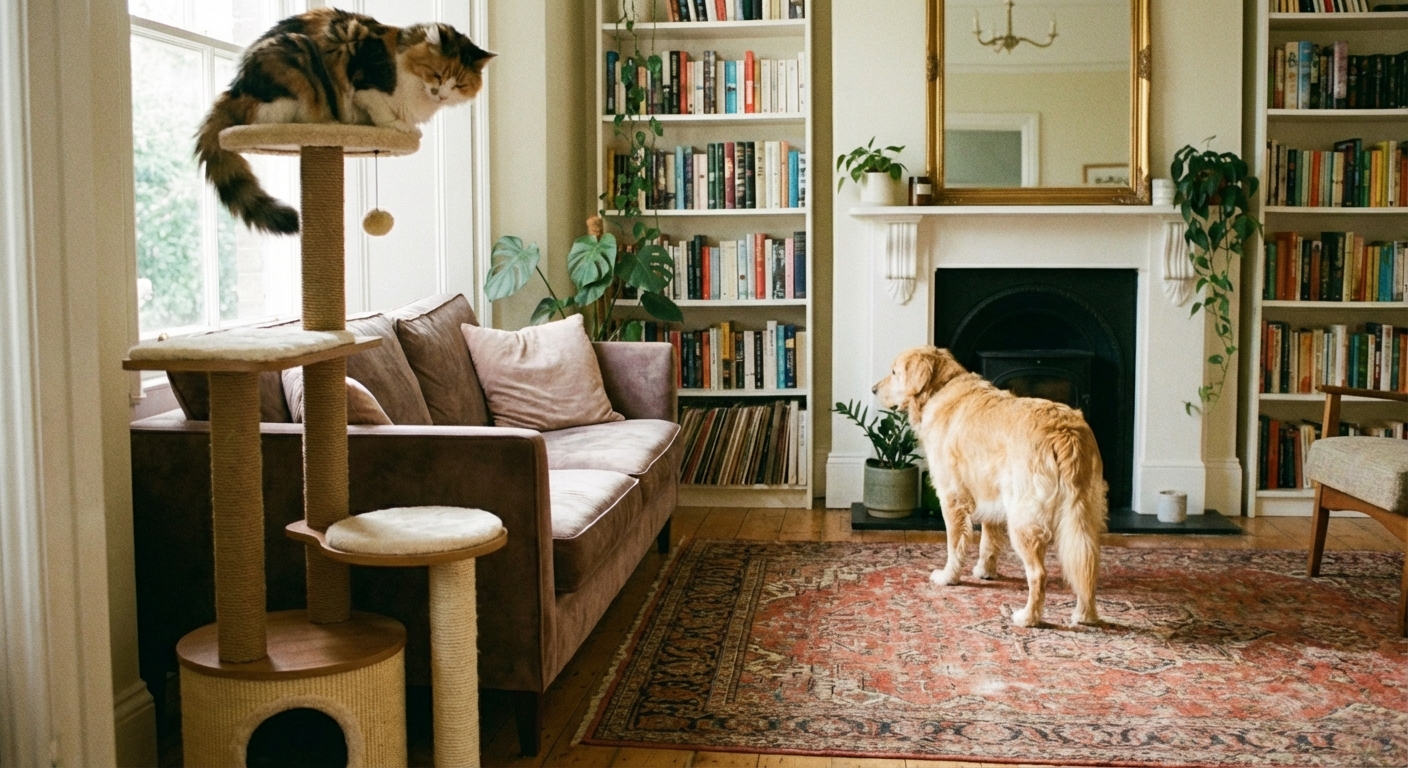
Give the cat vertical space
Your cat needs a way to observe without being approached. Think of this as emotional safety, not “spoiling.”
- Cat tree near a window
- Wall shelves or sturdy bookcases
- A dog-free room with a secure gate or closed door (do not assume a stressed cat will jump, or that a dog cannot jump)
Create true separation zones
For the first stage, you want two closed-door areas or a reliable gate system. Each pet should have:
- Its own food and water station
- Its own resting area
- Its own enrichment (toys, chews, scratching post)
Cat-specific tip: Keep the litter box in a cat-only area or behind a cat door so the dog cannot access it. Dogs eating cat poop is common, but it is also stressful for many cats and can lead to guarding or avoidance.
Use tools that lower risk
- Leash and harness for the dog during early sessions
- Baby gates to create distance while allowing sight and scent exposure (use tall, secure options and never assume a gate alone is escape-proof)
- Crate only if the dog is already happily crate-trained (never as punishment)
- Basket muzzle can be an added safety layer for some dogs, but only if properly conditioned and ideally with professional guidance
If you are using treats, pick something both pets truly love. High-value rewards make learning faster.
The step-by-step introduction plan
Timelines vary widely, so go at the pace of the more cautious pet. Move forward only when both pets look relaxed: soft bodies, normal breathing, able to eat treats, and able to disengage.
Step 1: scent first (2 to 7 days, sometimes longer)
Scent swapping is a gentle way to say “this new animal exists” without pressure.
- Rub each pet with a clean towel and place it near the other pet’s resting area
- Feed both pets on opposite sides of a closed door
- Rotate rooms briefly so they can investigate each other’s spaces
Step 2: visual introductions with a barrier (several short sessions)
Use a baby gate or cracked door with a doorstop. Keep the dog on leash.
- Start far enough away that the dog can look at the cat and still respond to you
- Mark and reward calm behavior (looking away, sitting, sniffing the floor)
- If the dog fixates, vocalizes, or stops taking treats, increase distance and end the session
- End the session before either pet escalates

Step 3: controlled contact (minutes at a time)
When barrier sessions are calm, try brief time in the same room.
- Dog on leash, cat free to move
- Dog practices “sit,” “down,” and “look” while the cat exists nearby
- Reward the dog for disengaging from the cat
Keep the bar high. If you see stiff posture, a hard stare, creeping, or sudden lunging, calmly lead the dog away and go back a step for a few days.
If the cat chooses to leave, that is a win. It means the cat trusts it can control distance.
Step 4: supervised normal life (weeks to months)
Even after things improve, keep supervision until you have a long track record of safety. Many households continue using gates when nobody is home, especially with high prey drive dogs.
A good rule: no off-leash contact until you have consistent calm behavior over time, and you can reliably call your dog away from the cat.
Training that makes the biggest difference
Teach “leave it” like you mean it
“Leave it” is not just a cue. It is a safety skill. Start with food in your hand, then progress to toys, then to real life movement at a distance.
- Reward immediately when the dog looks away from the temptation
- Practice daily for 3 to 5 minutes
- Use the cue before arousal gets high
Reinforce calm, not curiosity that escalates
Many dogs stare because they are “interested.” In dog language, a hard stare can turn into a chase quickly.
Reward:
- Soft eyes
- Sniffing the ground
- Turning away from the cat
- Choosing a mat or bed
Use “place” or mat training
Mat training gives your dog a job that is incompatible with chasing. It also lowers stress because the dog knows what earns rewards.
Reading body language: what to watch for
Dog stress or chase signals
- Stiff body, closed mouth, intense stare
- Whining, trembling with excitement
- Fixating on the cat and ignoring treats
- Sudden lunging or “creeping” low to the ground
Cat fear signals
- Ears flattened, crouching, tail puffed
- Growling, hissing, swatting
- Hiding and refusing food
- Bolting and scrambling on floors (this often triggers chasing)
If you see these signs, increase distance and go back to the previous step for a few days.
What success looks like
Success is not always cuddling. In real homes, success often looks like:
- The cat can walk to the litter box, food, and favorite nap spots without being followed
- The dog can notice the cat, then look away when cued (or on its own)
- Both pets can relax in the same room with supervision
- No chasing, cornering, or guarding of doorways
Common mistakes that slow progress
- Rushing the first face-to-face meeting: Quick intros cause setbacks.
- Letting the dog “cry it out” at the gate: Rehearsing arousal builds the habit.
- Holding the cat in your arms: Cats often feel trapped and may scratch, and the dog may lunge.
- Chasing the cat to “teach a lesson”: This increases fear and hiding.
- Free feeding both pets in shared spaces: Food tension is real.
- Ignoring household chaos: Kids running, visitors, and loud play can spike arousal. Use gates and routines during busy times.
Special situations
If you have a puppy
Puppies can learn quickly, but they are bouncy and rude by cat standards. Use leashes, teach gentle play, and give the cat lots of escape routes.
If you have an adult dog with strong prey drive
You can still make progress, but safety comes first. A qualified positive-reinforcement trainer can help you build a structured plan. In some cases, long-term management like gates and separation when unsupervised is the kindest option for both pets.
If your cat has a history of hiding
Plan for a longer timeline. Ongoing stress in cats can be associated with issues like decreased appetite and litter box problems, but those signs can also be medical. If your cat is not eating, is vomiting, or is avoiding the litter box, schedule a veterinary check to rule out health problems and get support.
When to call a professional
Get help early if you see any of the following:
- Dog attempts to grab, pin, or bite
- Cat is not eating, is hiding constantly, or is eliminating outside the box
- Dog cannot take treats or respond to cues around the cat
- You feel unsafe managing them
A board-certified veterinary behaviorist or a qualified trainer can assess risk, design a plan, and, when appropriate, coordinate with your veterinarian about medication support for anxiety.
A simple daily routine that works
If you want one actionable plan to start today, here is a gentle routine that supports steady, calm habits.
- Morning: Dog walk or play session first, then calm barrier time with treats
- Midday: Separate enrichment (food puzzle for dog, wand toy for cat)
- Evening: Short training session for the dog plus quiet cat-only time in a safe room
- Night: Separate sleeping spaces until you have months of consistent calm
Progress is usually measured in softer body language, fewer long stares, and quicker recovery after seeing each other. Those small wins add up.