Dog diarrhea is stressful, but many mild cases improve fast with hydration and a short-term bland diet. Get safe food options, portions, foods to avoid, and ...
Article
•
Designer Mixes
How to Help a Dog With Diarrhea

Shari Shidate
Designer Mixes contributor
As a veterinary assistant here in Frisco, Texas, I can tell you this with a lot of warmth and a little urgency: diarrhea is common. Mild, short-lived diarrhea can often be monitored at home, but it should always be taken seriously. Sometimes it is a simple stomach upset that improves in a day. Other times it is your dog’s body waving a red flag that they need medical help.
This guide will walk you through what you can safely do at home, what to avoid, and when it is time to call your veterinarian.
First: Decide how urgent this is
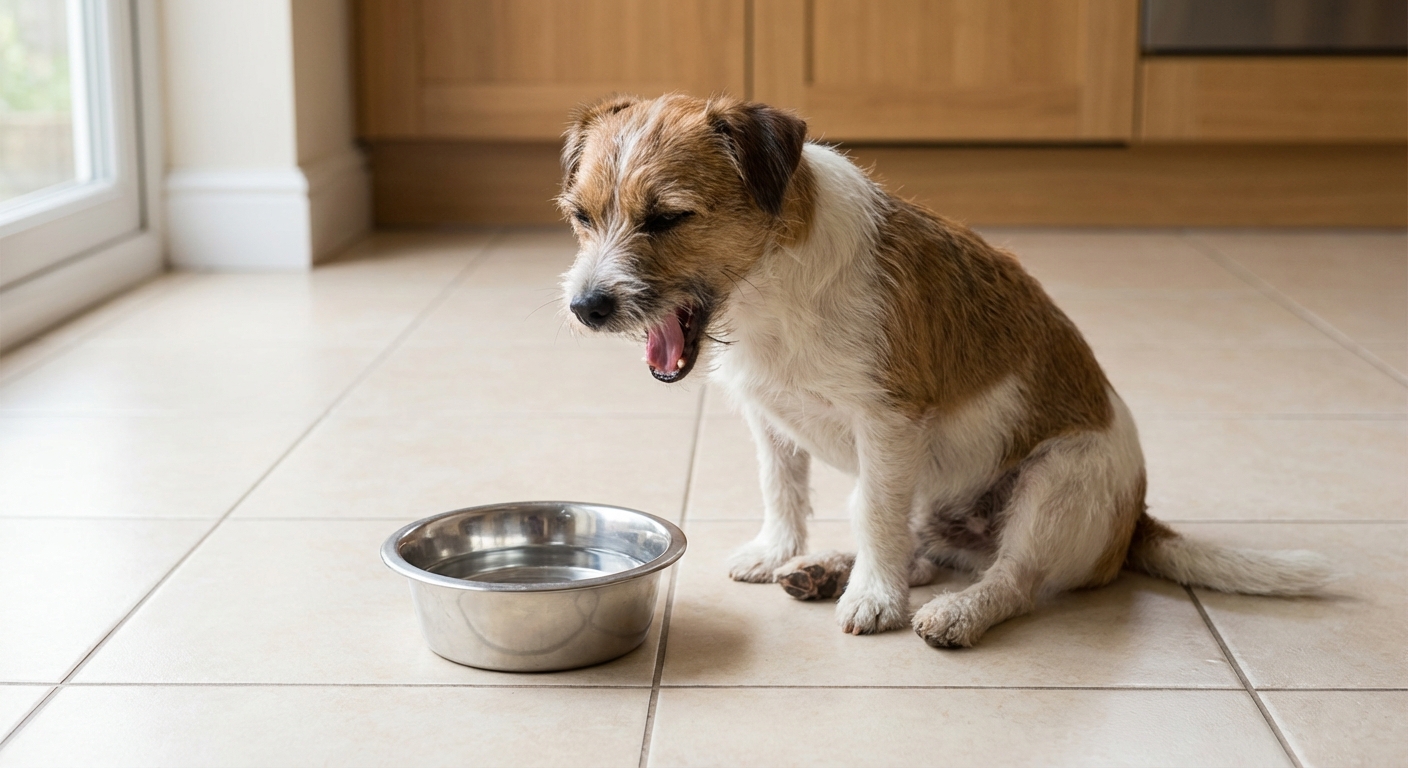
Diarrhea can become dangerous quickly when dehydration, significant blood loss, toxins, or a blockage is involved. Parasites and infections can also be serious, especially in puppies or medically fragile dogs. When in doubt, call your veterinarian.
Go now
Go to an emergency clinic or contact your vet urgently if you notice any of the following:
- Repeated vomiting, especially along with diarrhea
- Blood in the stool (bright red streaks or black, tarry stool, sometimes called melena)
- Severe lethargy, collapse, or weakness
- Signs of dehydration: tacky or dry gums, sunken eyes, reduced urination, prolonged skin tenting, weakness, or your dog is not interested in water
- Straining with little output (could be constipation, colitis, or even an obstruction)
- Abdominal pain: hunched posture, crying, guarding the belly
- Puppies, seniors, and tiny dogs (they dehydrate quickly)
- Known toxin exposure (garbage, compost, xylitol, medications, rodent bait, grapes or raisins, etc.)
- Possible foreign body: your dog chewed a toy, sock, corn cob, bones, etc.
Call your vet within 24 hours
- Diarrhea lasting more than 24 to 48 hours even if your dog seems okay
- Diarrhea that keeps returning over days or weeks
- Not eating for more than a meal or two, or appetite is clearly reduced
- New diarrhea after starting a medication (especially antibiotics or NSAIDs)
- Multiple pets with diarrhea (possible contagious cause)
If you are unsure, it is absolutely appropriate to call your vet and describe what you are seeing. A quick conversation can prevent a long, expensive night.
If you are local to Frisco, keep an emergency clinic number saved in your phone ahead of time. When your dog is sick is not the moment you want to be searching.
What causes diarrhea in dogs?
Diarrhea is a symptom, not a diagnosis. The most common causes I see include:
- Dietary indiscretion: trash, greasy table foods, sudden diet change, too many treats
- Stress: travel, boarding, new pets, big household changes
- Parasites: giardia, roundworms, hookworms, whipworms
- Infections: viral or bacterial (including foodborne bacteria)
- Food intolerance or allergy
- Medications: antibiotics and some NSAIDs can upset the gut
- Pancreatitis: often after fatty foods, can become serious quickly
- Chronic disease: inflammatory bowel disease, liver disease, endocrine conditions
Clue: Large vs small bowel diarrhea
Owners often say “diarrhea,” but the details can point your vet in the right direction.
- Large bowel signs: frequent small amounts, urgency, mucus, straining, bright red blood
- Small bowel signs: larger volume, fewer trips, weight loss over time, black tarry stool (melena) can be a concern
You do not need to diagnose this at home. Just noticing the pattern is helpful.
Step-by-step: What you can do at home (mild cases)
If your adult dog is bright, alert, drinking, and the diarrhea is mild with no red flags, home care is often reasonable for a short window. Your goal is to protect hydration and let the intestines settle.
1) Support hydration first
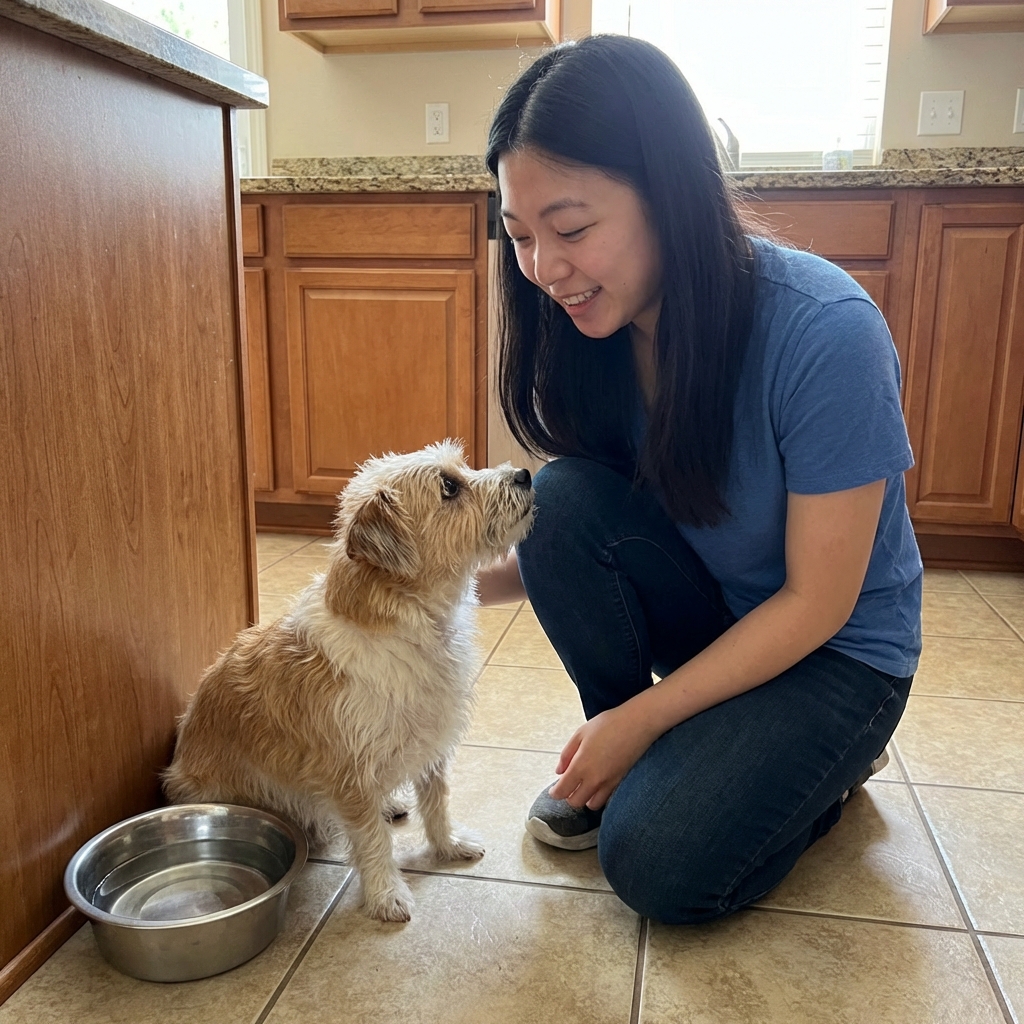
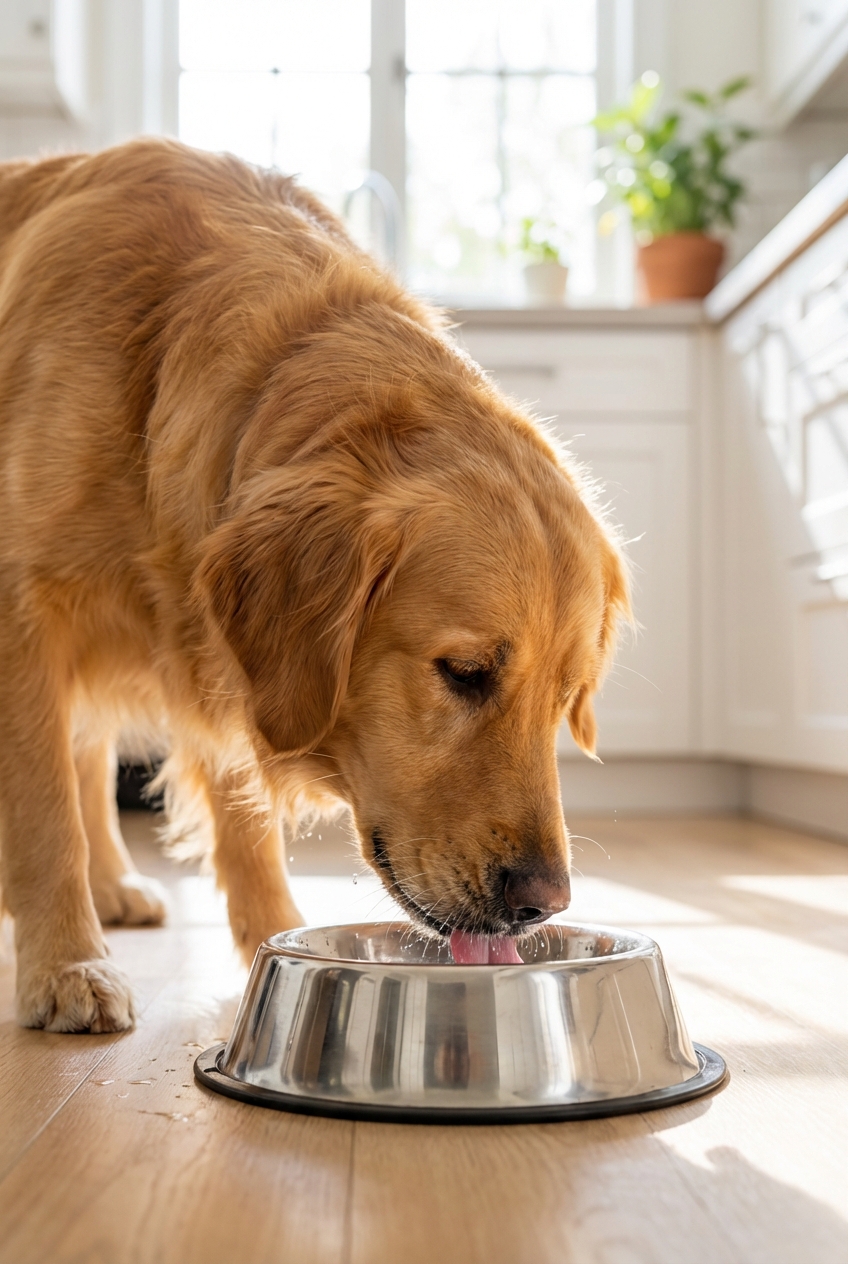
Water matters more than food in the first phase. Offer frequent access to fresh water.
- Encourage sipping: refresh the bowl often, add an extra water station, or offer ice cubes.
- If your vet approves, ask about an oral electrolyte solution made for pets.
- Do not force large volumes of water, especially if your dog is vomiting or very nauseated. Gulping can trigger more vomiting and increases aspiration risk if your dog vomits and inhales fluid.
Simple dehydration check: gently lift the skin over the shoulder blades and release. It should snap back quickly. This test is only one clue because skin elasticity varies with age, weight, and breed. Gums that feel tacky or dry and reduced urination are often more useful signs.
2) Food strategy: small meals or a brief rest
There are a couple of safe approaches, and different veterinarians prefer different plans. Some dogs do best with small bland meals right away. In other cases, your vet may recommend a brief food rest for a healthy adult dog, often in the 8 to 12 hour range, then restarting with small bland meals.
Puppies, toy breeds, dogs with diabetes, and dogs with other medical conditions should not fast unless your veterinarian specifically directs it.
3) Feed a gentle, temporary diet
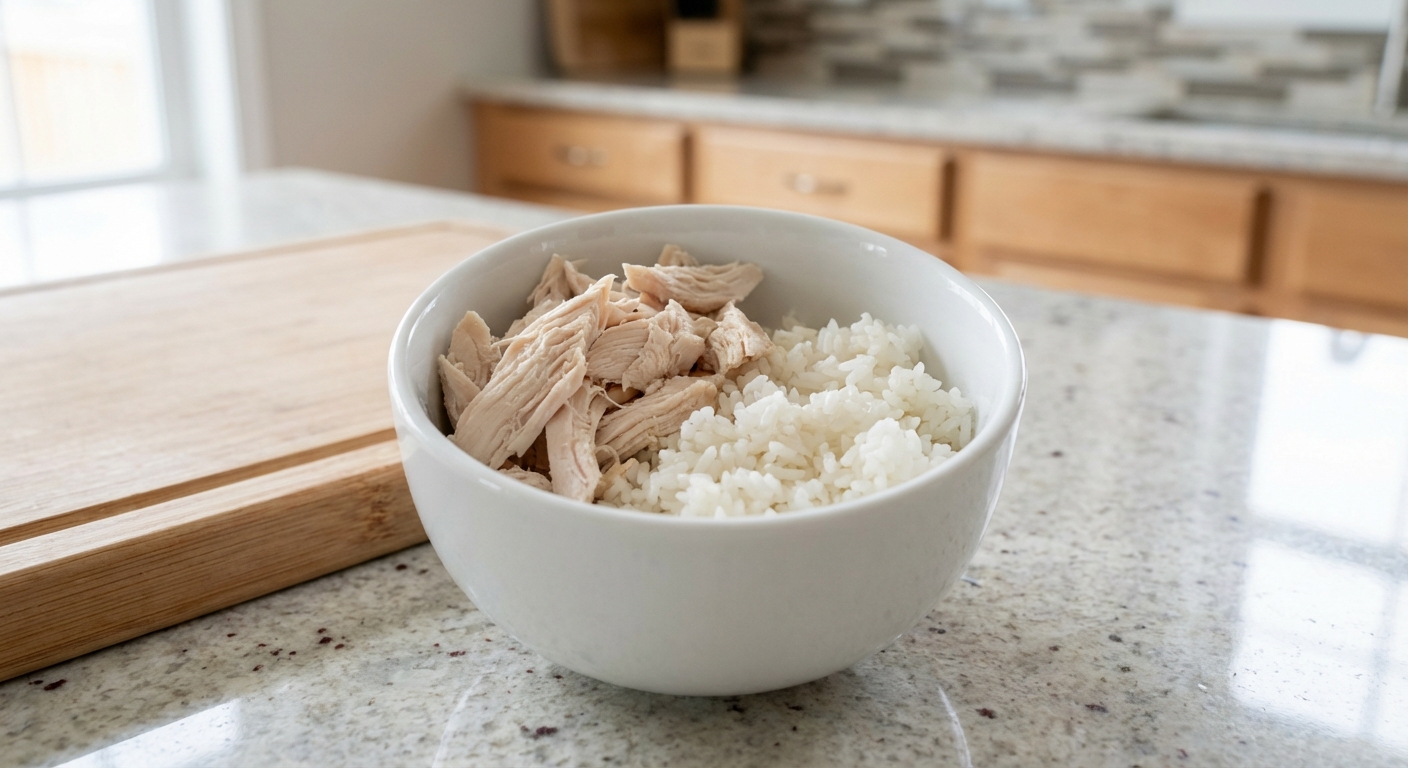
When you restart food, think bland, simple, and low fat. Offer small meals every 4 to 6 hours for the first day.
- Boiled chicken breast (no skin, no seasoning) plus plain white rice
- Turkey (lean, cooked, unseasoned) plus rice
- Plain canned pumpkin (not pie filling) can help some dogs by adding gentle fiber
A quick note: chicken and rice is not ideal for every dog (for example, dogs with a history of pancreatitis, or dogs that truly cannot tolerate chicken). If you know your dog has sensitivities, ask your vet about a prescription gastrointestinal diet or another bland option that fits their history.
Keep treats minimal, and skip rich chews for now.
4) Consider probiotics (ask your vet)
Some evidence suggests certain canine-specific probiotics may help shorten diarrhea episodes, especially stress-related or antibiotic-associated diarrhea. Use a product made for dogs and follow label instructions or your vet’s recommendation.
5) Go slow when returning to normal food
Once stools improve, transition back over several days (often 2 to 5 days, sometimes longer for sensitive dogs) by mixing the bland diet with your dog’s regular food. A sudden switch right back can restart the problem.
- Day 1: 75% bland, 25% regular
- Day 2: 50% bland, 50% regular
- Day 3: 25% bland, 75% regular
- Day 4+: 100% regular (if stools stay normal)
What not to do
It is tempting to reach into your medicine cabinet, but a few common choices can make things worse.
Avoid these mistakes
- Do not give human anti-diarrheal meds unless your veterinarian tells you to. Some are dangerous for certain dogs, and they can mask serious illness.
- Avoid fatty foods like bacon, sausage, butter, cheese, or greasy leftovers. These can trigger pancreatitis.
- Do not switch foods repeatedly in a panic. Too many changes can prolong diarrhea.
- Do not give bones to “firm things up.” Bones can splinter or cause constipation or obstruction.
How to describe diarrhea to your vet
If you call your vet, a clear description helps them triage your dog appropriately. Here is what to track:
- Duration: when it started
- Frequency: how many times in the last 12 to 24 hours
- Appearance: watery, pudding-like, mucus, bright red blood, black tarry stool (melena)
- Other symptoms: vomiting, appetite changes, drinking more or less, fever, lethargy
- Diet history: new food, new treats, table scraps, chews, garbage exposure
- Parasite risk: dog park visits, daycare, boarding, wildlife feces exposure
- Medications: especially antibiotics, NSAIDs, supplements
Stool sample tips
If you can, bring a stool sample to your appointment. It often speeds up answers.
- Best sample: fresh, ideally within 12 hours (your clinic may allow up to 24 hours if refrigerated)
- How to store: place a small amount in a clean bag or container, seal it, and refrigerate it until you leave
- Do not freeze unless your clinic tells you to
Contagious risks and cleanup
Some causes of diarrhea spread easily between dogs, and some can affect people too (giardia is a common example). Until you know what you are dealing with:
- Pick up stool promptly and dispose of it securely.
- Limit contact with other dogs (skip dog parks and daycare for now).
- Wash hands well after cleanup.
- Clean soiled areas with an appropriate disinfectant. Your vet can advise you on what is best if parvo is a concern.
When tests and an exam really matter
Diarrhea that keeps coming back or comes with red flags often needs a deeper look. In clinic, your vet may recommend:
- Fecal testing for parasites like giardia and worms
- Parvovirus testing for unvaccinated or young dogs with severe diarrhea
- Bloodwork to check hydration status and organ function
- X-rays or ultrasound if a foreign body, pancreatitis, or other abdominal issue is suspected
These are not “extra.” They are how we make sure we are treating the cause, not just the symptom.
Food tips to prevent flare-ups
Many diarrhea episodes start in the bowl. A few evidence-based habits can make a big difference.
Prevention basics
- Make diet changes slowly over 7 to 10 days
- Keep treats under 10% of daily calories
- Avoid sudden fatty foods, especially around holidays
- Use a consistent, high-quality diet that your dog tolerates well
- Ask your vet about fiber if your dog has recurring soft stool
If you are interested in gently adding fresh foods, do it the same way you would transition any diet: slowly, in small amounts, and while watching stool quality. Even a little bit of whole, simple food can be a step in a healthier direction.
My simple 24-hour plan (mild cases)
If your adult dog has mild diarrhea, is acting normal, and has no red flags, here is a practical approach many families find helpful.
- Hour 0 to 6: focus on hydration, offer water frequently in small amounts
- Hour 6 to 24: small bland meals if your dog is not vomiting
- Any time: if symptoms worsen, blood appears, vomiting starts, or your dog seems painful or weak, call your vet right away
You know your dog best. If something feels off, trust that instinct and get help. It is always better to ask early than wait too long.