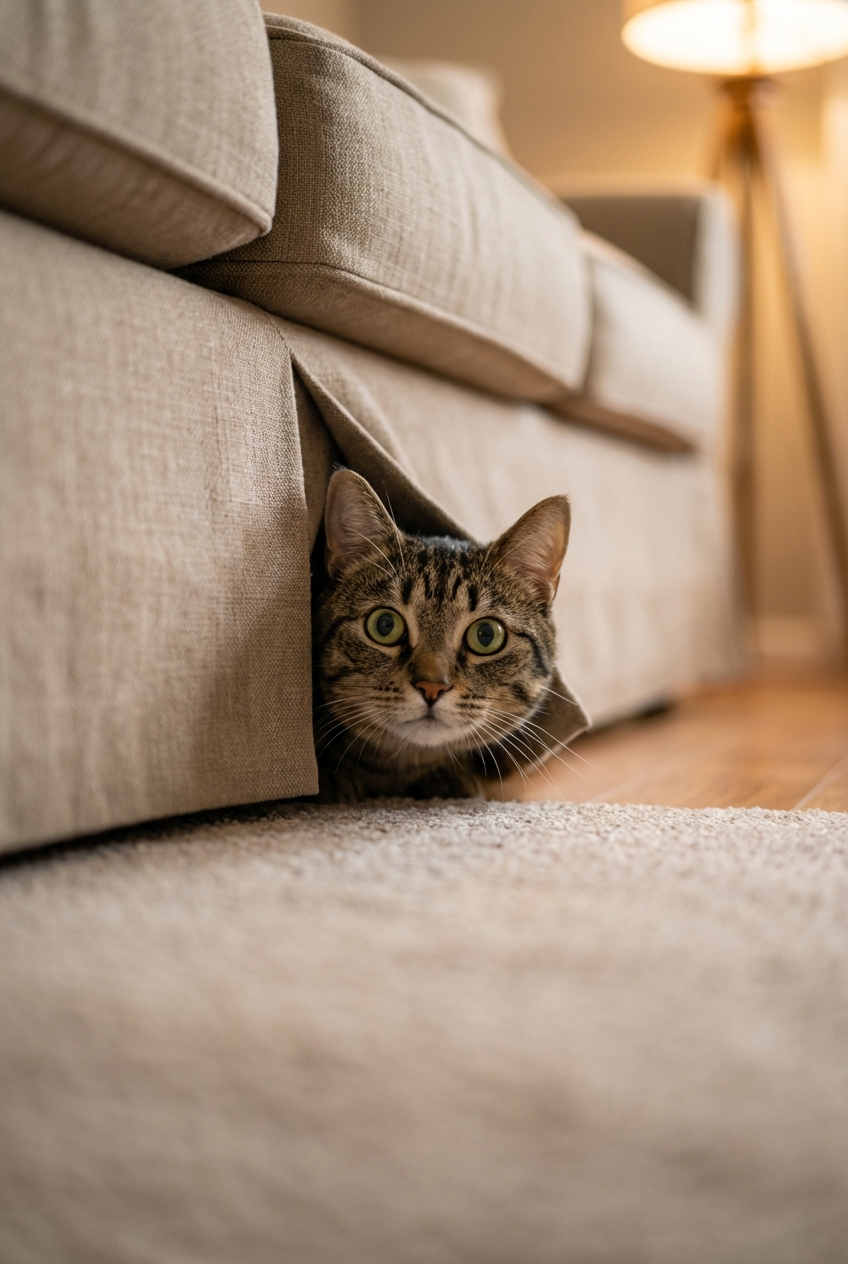
Is your cat vocalizing, overgrooming, or peeing outside the box when you leave? Learn key signs, medical rule-outs, enrichment, departure training, and when ...
Article
•
Designer Mixes
How to Help a Cat Grieve Daily

Shari Shidate
Designer Mixes contributor
Cats can show grief-like behaviors. And when you are living it day by day with them, it can feel confusing because their sadness does not always look like ours. As a veterinary assistant, I have seen many cats struggle after the loss of a companion animal or a favorite person. The good news is that simple, steady support at home can make a real difference.
This daily care guide will help you recognize what grief can look like in cats and create a calm routine that supports healing.
What feline grief can look like
Grief is not a diagnosis, but it can change a cat’s behavior, appetite, and sleep. Some cats bounce back quickly. Others need weeks, and occasionally months, to return to their normal baseline.
Common signs
- Appetite changes: eating less, skipping meals, begging more, or suddenly becoming picky
- Vocalization changes: meowing or yowling more, or calling at unusual times
- Clinginess or withdrawal: following you from room to room, hiding more, or avoiding touch
- Sleep and activity shifts: lethargy, pacing, restlessness, less play
- House soiling: accidents outside the litter box, especially if routines changed
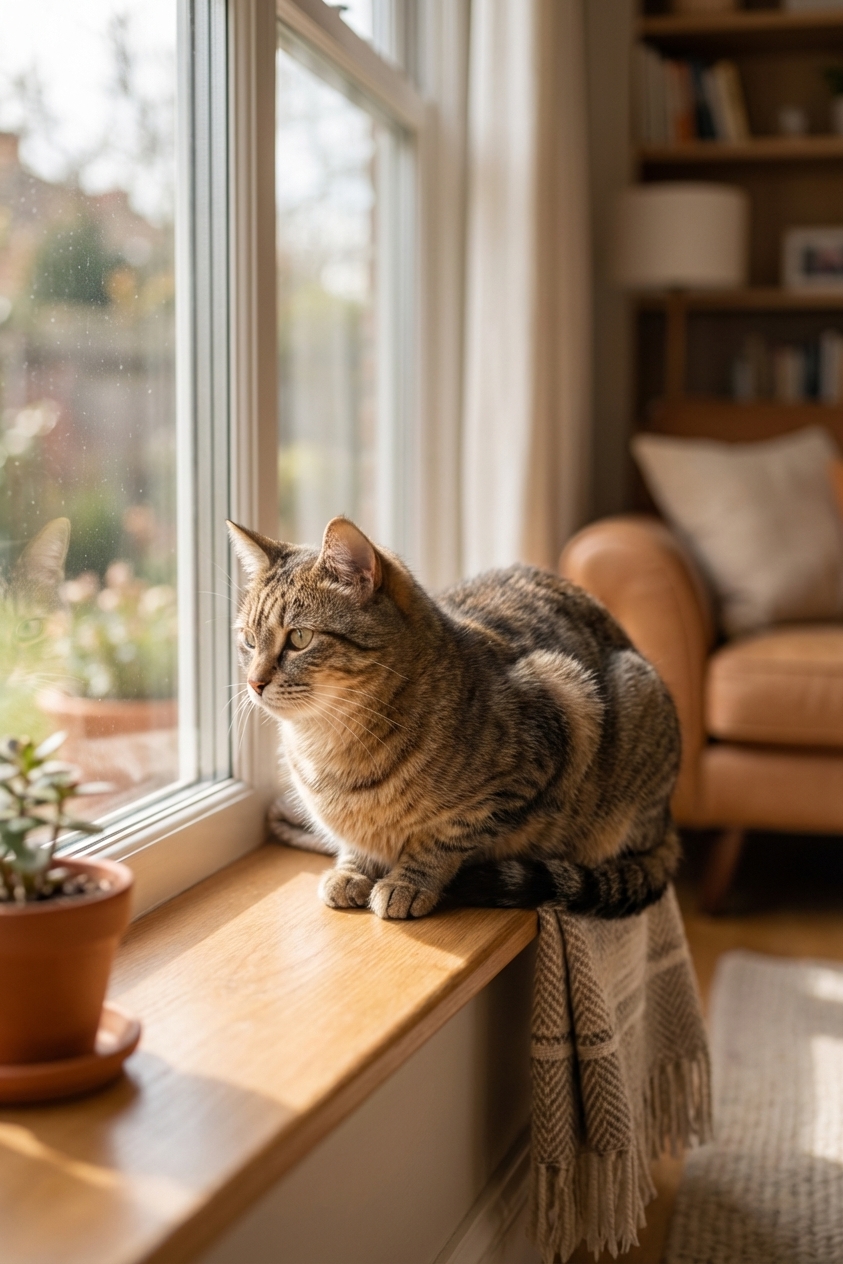
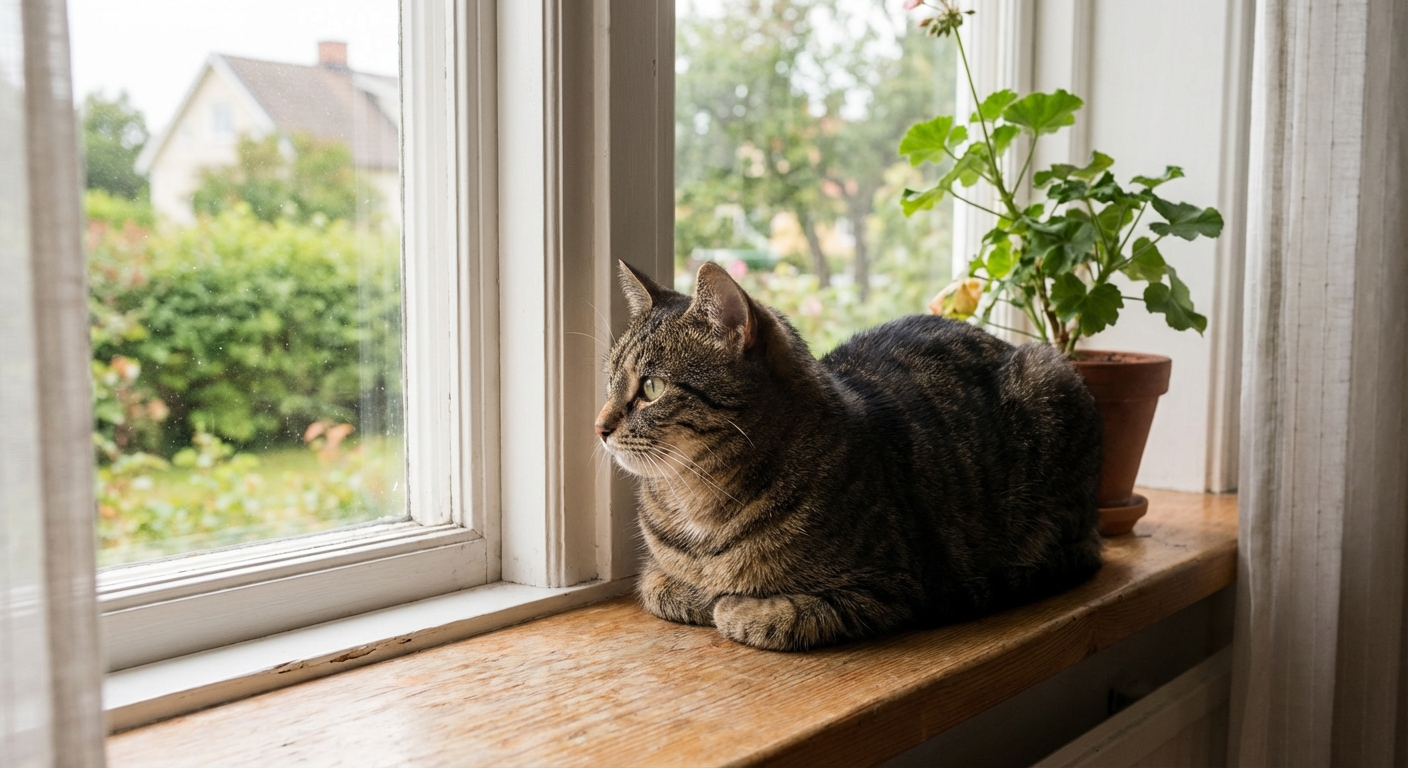
- Searching behavior: checking favorite sleeping spots, waiting by doors, scanning windows
These signs can also overlap with medical problems, especially in older cats. Pain and illness can look a lot like “sadness” in cats. Arthritis, dental disease, kidney disease, and hyperthyroidism are common examples. If anything feels sudden, intense, out of character, or persists more than a few days, it is always okay to call your veterinarian and check in.
Your daily grief support routine
When a cat is grieving, routine is comfort. Think in terms of small daily anchors: meals, play, rest, and safe connection.
Morning: predictable start
- Serve breakfast on time and in the same place if possible.
- Offer a calm greeting without forcing interaction. Let your cat choose closeness.
- Do a quick health check: note appetite, litter box output, and energy level.
Midday: gentle engagement
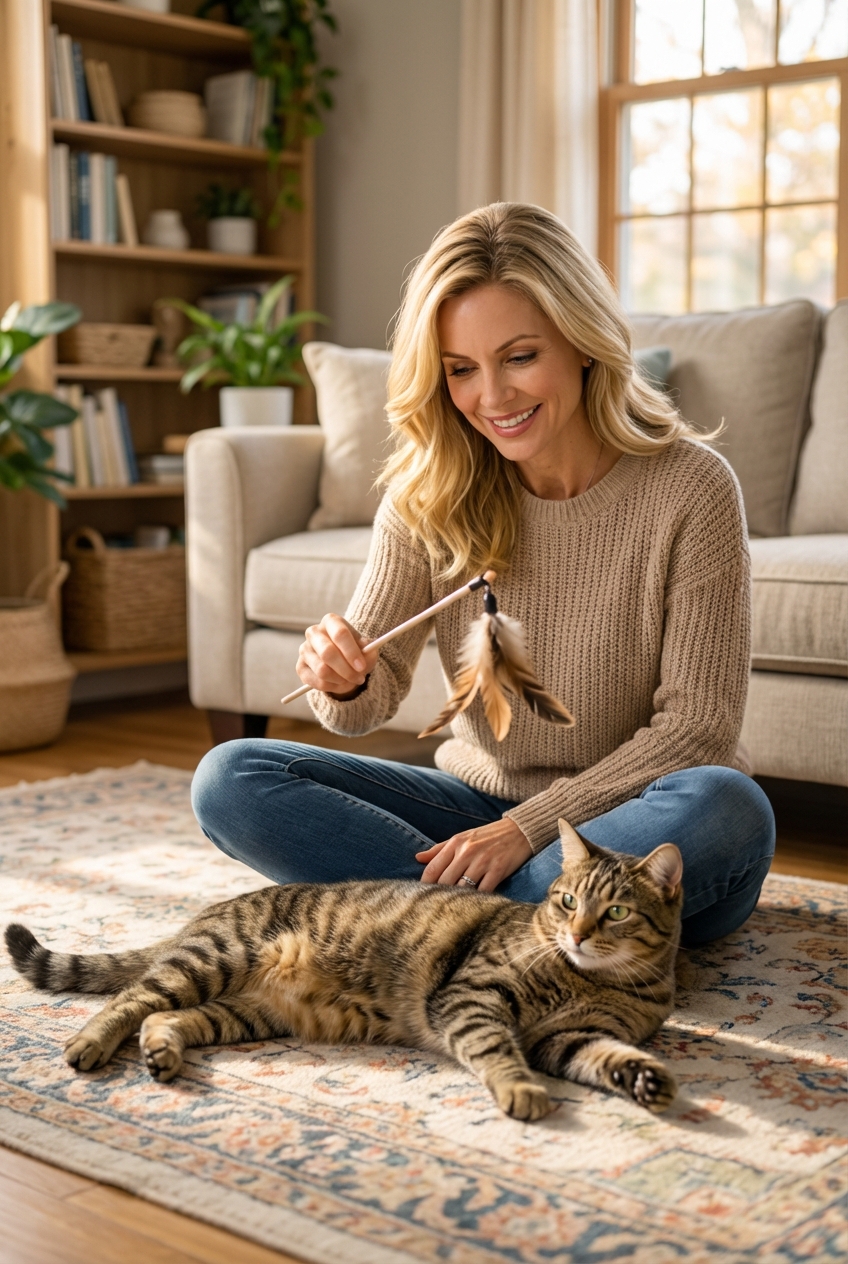
- Short play session (5 to 10 minutes): wand toy, feather, or a soft kicker toy.
- Food enrichment: treat ball, puzzle feeder, or a few kibbles hidden in a snuffle mat.
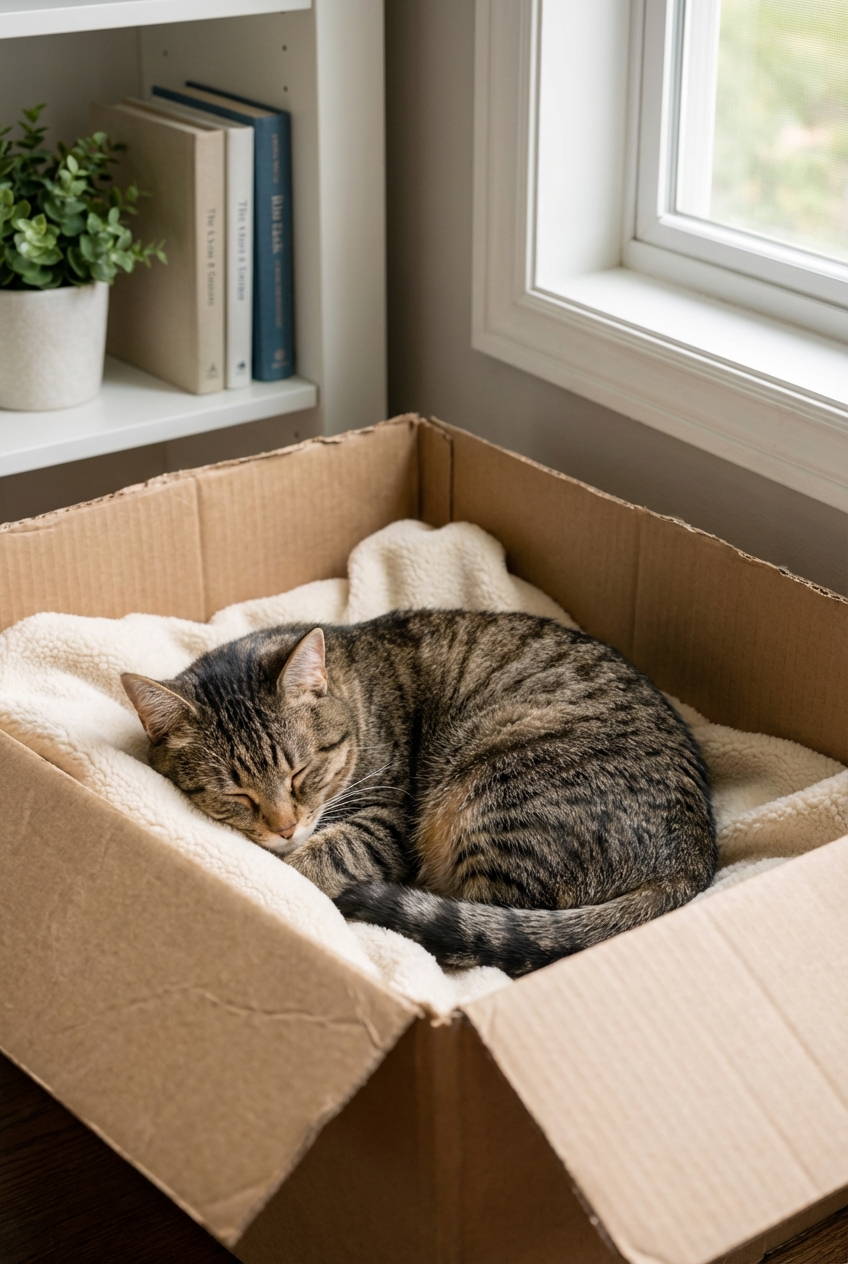
- Comfort spaces: keep a favorite bed, box, or cat tree available and undisturbed.
Evening: connection and calm
- Second play session if your cat is willing, then feed dinner. This play then eat rhythm can help many cats settle.
- Quiet companionship: sit nearby, read, or watch TV softly. Your presence matters even if they do not ask for attention.
- Wind-down cues: dim lights, reduce loud noises, keep nighttime routines consistent.
How to support appetite safely
In grieving cats, appetite is often the first thing to wobble. The goal is to keep them eating enough while avoiding accidental stomach upset from too many sudden food changes.
Simple appetite helpers
- Warm wet food slightly to increase aroma. A few seconds in the microwave is usually enough. Stir well and check temperature.
- Offer smaller, more frequent meals if your cat seems overwhelmed by a full bowl.
- Try a food topper like a small amount of tuna water (not oil), bonito flakes, or a veterinary-approved topper. Use only a little and avoid high-salt products. These are meant to entice, not replace a balanced diet.
- Keep water accessible in multiple locations. Some cats drink more from a fountain.
Important safety note
If your cat stops eating completely, treat it as urgent. Cats can develop hepatic lipidosis (fatty liver disease) when they go without adequate calories, especially if they are overweight. If your cat has not eaten in 24 hours, or is eating much less than normal, call your veterinarian right away for guidance.
Comfort without stress
We naturally want to fix grief fast, but cats do best with low-stress, respectful support.
Do
- Let your cat lead the amount of touch and closeness.
- Keep familiar items like beds, blankets, and scratching posts in place.
- Use pheromone support if appropriate, like a feline facial pheromone diffuser in the main living area.
- Speak softly and move slowly, especially around hiding areas.
Avoid
- Major changes all at once such as rearranging furniture, switching litter brands, or changing feeding stations immediately after a loss.
- Forcing social time with visitors, children, or other pets if your cat is withdrawn.
- Punishment for accidents. Stress can worsen litter box issues.
Litter box support
If your cat has accidents, assume they are stressed or not feeling well, not being “difficult.” While you are monitoring, make the litter box as easy as possible to use.
- Scoop daily and keep the area quiet and accessible.
- Add an extra box temporarily, even for a single cat (a simple rule is boxes = cats + 1).
- Make access easy for seniors by using a lower-entry box if needed.
- Keep location consistent and avoid moving boxes around during a stressful week.
If accidents are new, frequent, or paired with straining, crying, blood, or very frequent trips to the box, contact your veterinarian the same day. Urinary issues can become serious quickly.
When there are other pets
Sometimes the surviving pet is grieving, and sometimes they are simply reacting to a changed routine. Either way, it helps to reduce friction and keep everyone feeling secure.
- Give each pet dedicated one-on-one time daily, even if it is brief.
- Increase resource spacing: more litter boxes, more water bowls, and separate resting areas.
- Watch for tension: staring, blocking doorways, swatting, or hiding can increase after a loss.
If a new pet is being considered, it is usually best to wait until your grieving cat has stabilized. A “replacement friend” can be stressful if introduced too soon.
After the loss of a person
If your cat lost a favorite person, their grief can be intense. They may wait by a door, sleep on that person’s clothing, or search familiar rooms.
- Create a comfort station with a soft bed and an unwashed item of clothing that smells like the person, if available.
- Keep the daily rhythm steady with consistent feeding and interaction times.
- Offer choice-based affection: sit nearby, extend a hand to sniff, and let your cat decide.
Track changes with a log
When you are tired and worried, it is easy to lose track of what is improving and what is not. A quick daily log helps you and your veterinarian spot patterns early.
- Food: how much eaten, any new pickiness
- Water: normal, more, or less
- Litter box: urine and stool frequency, any accidents
- Behavior: hiding, clinginess, vocalizing, play interest
- Sleep and mobility: especially in seniors
If you notice a steady decline, or no improvement over a couple of weeks, bring the log to a vet visit. It can be incredibly helpful.
When to call the veterinarian
Please trust your instincts. If your cat seems off, it is better to check in early.
Call your vet if you notice
- Not eating for 24 hours, or eating far less than normal for more than a day
- Vomiting, diarrhea, or signs of dehydration
- Hiding constantly or seeming unable to relax
- Rapid weight loss
- New aggression, confusion, or vocalizing that seems distressed
- Persistent coughing, breathing changes, or open-mouth breathing (this is urgent, seek same-day care)
Your vet may recommend a wellness exam, lab work, pain assessment (especially for arthritis in older cats), appetite support, or short-term anti-anxiety medication if needed. For some cats, targeted help is what gets them back to eating, sleeping, and coping.
Hope, one day at a time
Grief is not something you rush a cat through. It is something you support them through. With a steady routine, gentle enrichment, and careful attention to appetite and stress, most cats gradually return to their normal selves.
If you can do three things each day, do these: keep meals consistent, offer a short play session, and provide calm companionship.
You are doing a loving thing by noticing your cat’s feelings and meeting them where they are. That is real care.