Recognize early overheating signs and heatstroke red flags in dogs. Learn quick checks, safe cooling steps, what to avoid, high-risk dogs, and when to see a ...
Article
•
Designer Mixes
How to Handle Multiple Dogs During Heat

Shari Shidate
Designer Mixes contributor
Living in Frisco, I can tell you Texas heat is no joke. And when you have more than one dog, hot weather can turn a normal day into a safety puzzle fast. The good news is you do not have to be perfect. You just need a plan that reduces risk, keeps everyone hydrated, and prevents the most common summer emergencies.
Why heat is harder with multiple dogs
Heat risk stacks up when you have a pack. Dogs get excited, play longer, compete for space and water, and sometimes hide early signs of trouble. Add different coat types and ages, and one dog can be struggling while another seems totally fine.
- More movement: Play and group energy raise body temperature quickly.
- More competition: One dog may block access to shade, water, or the coolest spot.
- Different risk levels: Short-nosed breeds, seniors, puppies, overweight dogs, and dogs with heart or airway disease overheat faster.
- Harder to monitor: It is easy to miss subtle panting changes when you are watching three dogs at once.
Know the danger zones
Dogs cool themselves primarily by panting and by moving heat away from the core through blood flow near the skin. They can sweat a little through their paw pads, but it is not enough to count on. When humidity is high, panting becomes less effective. Pavement can also burn paw pads even when the air does not feel that hot.
Heat stress vs heat stroke
Heat stress is when your dog is struggling to cool down but is still responsive and improves with rest and cooling. Heat stroke is a medical emergency, often with mental changes (confusion, collapse), vomiting or diarrhea, or symptoms that do not improve quickly.
Signs of heat trouble
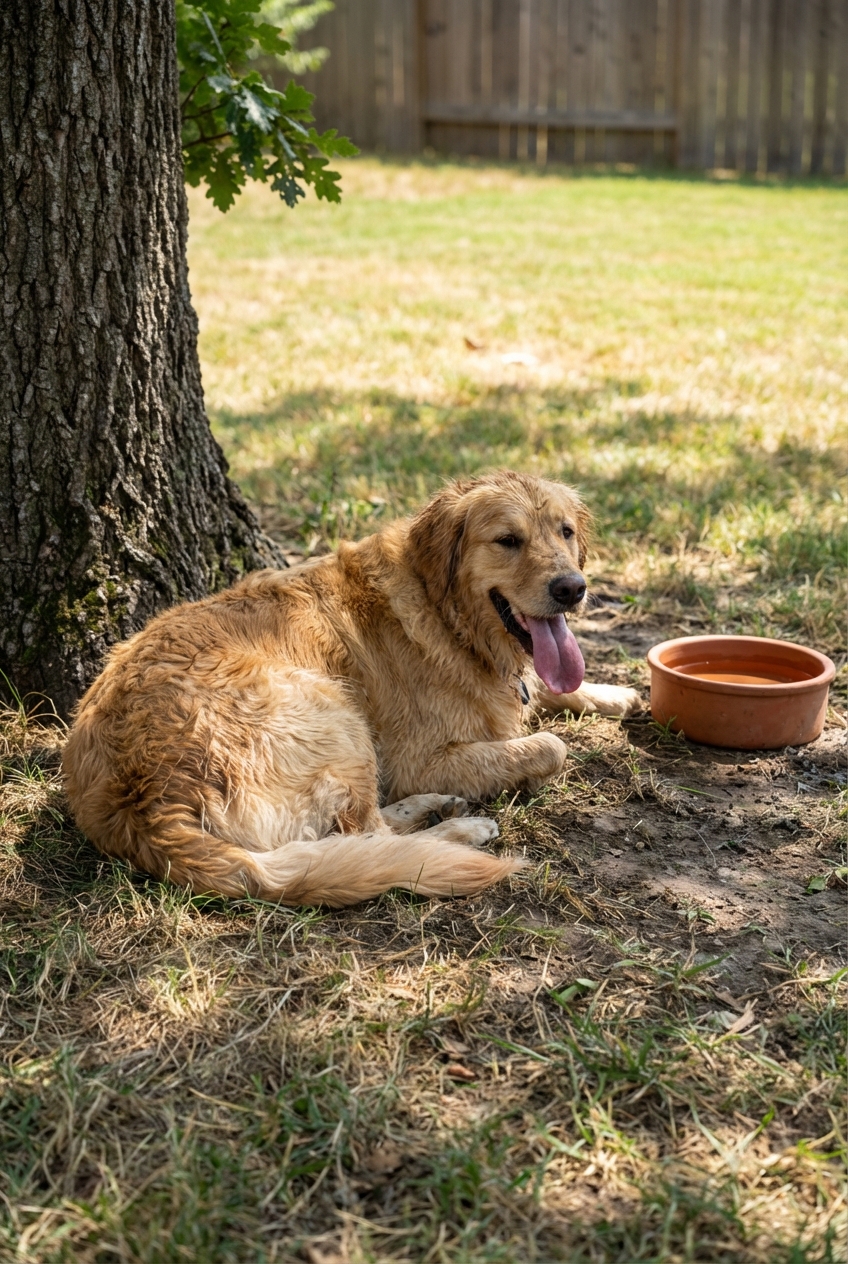
- Heavy, rapid panting that does not slow down after resting
- Bright red, gray, or pale gums
- Drooling that suddenly becomes thick or ropey
- Weakness, wobbliness, or reluctance to move
- Vomiting or diarrhea
- Confusion, glassy eyes, collapse, or seizures
Emergency note: Heat stroke is life-threatening and can worsen quickly. If a dog collapses, cannot stand, vomits repeatedly, has bloody diarrhea, or seems mentally “not there,” go to an emergency vet immediately while you begin cooling measures.
Set up your home like a cooling station
Before you even think about walks or backyard time, make your home easy to navigate and safe when everyone is warm and tired.
1) Create multiple water and rest zones
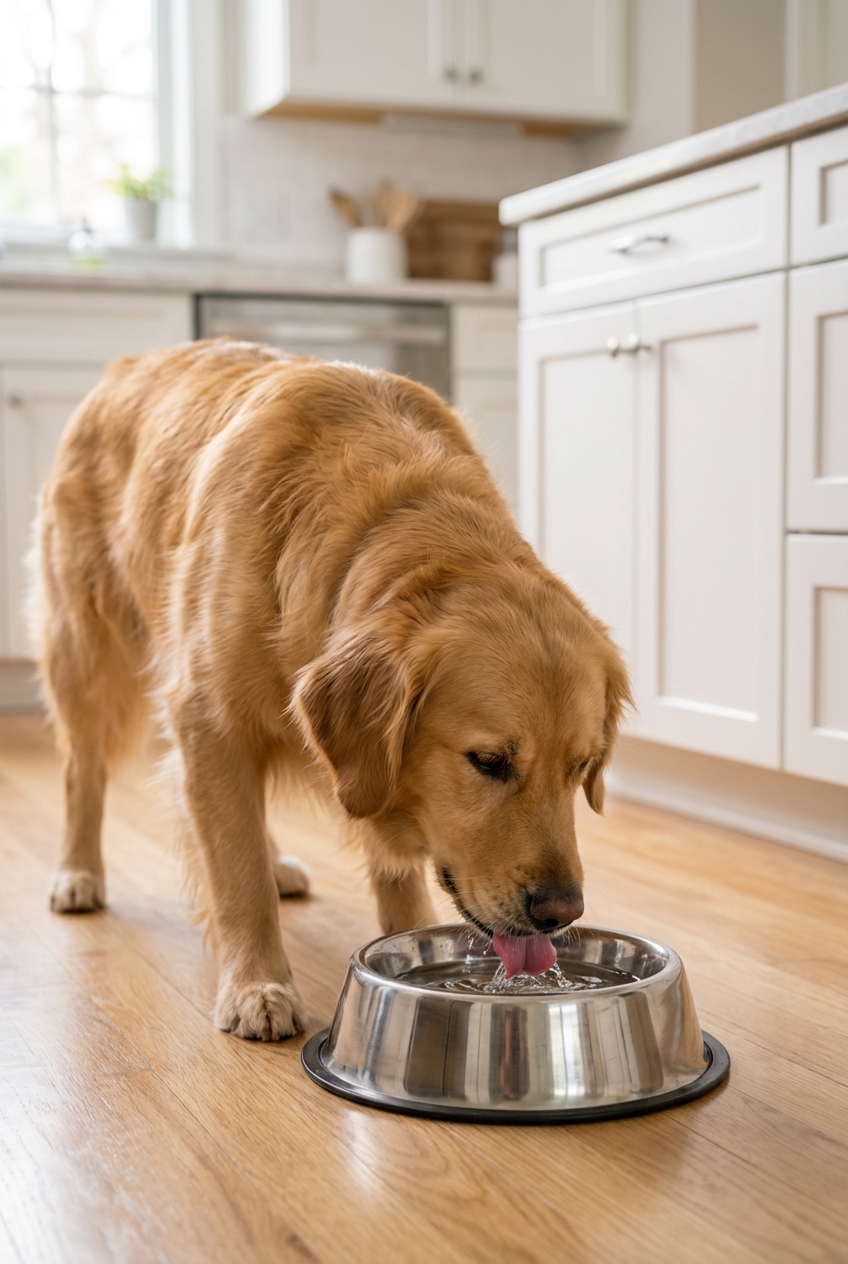
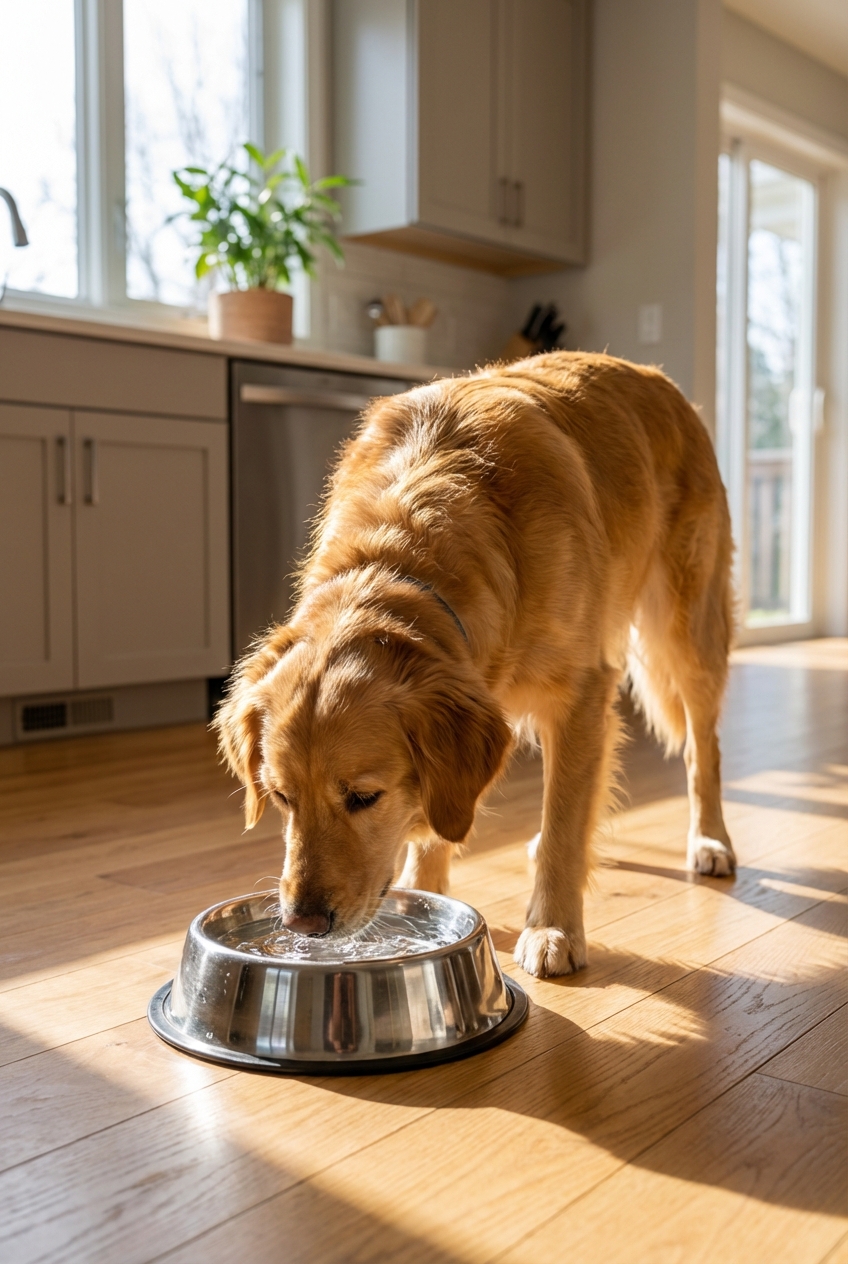
- Place two to four water bowls in separate areas so one dog cannot “guard” the only bowl.
- Add a bowl near the door for quick drinks after potty breaks.
- Refresh water often. In multi-dog homes, bowls get warm and dirty faster.
- If one dog tends to under-drink, consider labeling bowls, offering that dog a separate station, or using a pet water fountain (some dogs drink more from moving water).
2) Make shade and airflow non-negotiable
- Use fans to move air across the dogs’ resting areas.
- Close blinds on sunny windows that heat up the floor.
- If you use crates, make sure they are not in a sunbeam and never cover them in a way that traps heat.
3) Cooling tools that actually help
- Cooling mats or a damp towel on tile for short rests.
- Frozen water bottles wrapped in a towel so dogs can lie near them.
- Ice cubes or a small amount of crushed ice in water for some dogs, but skip it if your dog gulps and tends to choke.
4) Power outage plan
Texas summers and power outages can be a bad combo. If your house warms up fast, have a simple backup plan: know the nearest pet-friendly place you can cool off (family, hotel, boarding facility, or an emergency vet lobby), keep extra water on hand, and have crates or leashes ready for a quick move.
Outdoor time: manage the pack
With multiple dogs, the biggest heat wins come from reducing excitement and preventing competitive running. Short-nosed dogs can overheat even on quick bathroom trips, so keep those outings calm and truly brief.
Stagger activity
If you can, take dogs out in smaller groups or one at a time. It sounds like more work, but it is often safer and calmer, especially for dogs that trigger each other into nonstop play.
- Take your higher-risk dog first, early in the morning.
- Save brief backyard potty breaks for the hottest part of the day.
- Use sniffy, slow walks instead of high-speed fetch.
Check the ground every time
Use the “back of the hand” test as a quick rule of thumb. If you cannot hold the back of your hand on the pavement for about 7 seconds, it is likely too hot for paws. When in doubt, stick to grass and shade, shorten the outing, or use booties.
Leashes help in heat
In hot weather, leashes reduce sudden sprints and wrestling matches that spike body temperature. Consider a long line for sniffing instead of full off-leash play.
Walk timing and route choices
In summer, your schedule matters as much as your distance.
- Best times: Early morning and later evening.
- Pick shady routes: Tree-lined sidewalks, parks with shade, or trails with natural cover.
- Shorter is smarter: Two 10-minute walks can be safer than one 25-minute walk.
- Bring water: For multi-dog walks, bring more than you think you need.
Hydration tips for multi-dog homes
Dehydration happens quietly, especially if one dog drinks well and another does not. I love simple systems that make it easy to notice changes.
Easy ways to encourage drinking
- Add a splash of low-sodium broth to water, or offer a separate “flavored water” bowl.
- Serve wet food or add water to kibble during heat waves.
- Offer dog-safe water-rich snacks like seedless watermelon or cucumber in small amounts.
Possible dehydration signs
- Sticky, tacky gums
- Lethargy or acting “off”
- Sunken-looking eyes
- Skin that does not spring back quickly when gently lifted at the shoulder blades
- Decreased urination or noticeably darker urine
If you suspect dehydration, call your veterinarian for guidance, especially if your dog is vomiting, has diarrhea, or seems weak.
Prevent fights and stress
When dogs are hot, they can get cranky. Heat increases irritability, and competition for cool spots or water can trigger scuffles even in friendly groups.
- Separate high-value resources: Multiple water bowls, multiple beds, and space between resting areas.
- Feed separately if anyone guards food.
- Give quiet-time breaks: Rotate dogs inside for cooling while the others potty.
- Watch for subtle tension: Hard stares, blocking, hovering near bowls, or stiff body posture.
Breed and body type notes
Designer mixes come in all shapes, and it helps to know which traits raise heat risk.
- Short-nosed mixes (like Frenchie mixes, Pug mixes): Keep outings very short, avoid humidity, and never push through heavy panting. These dogs can overheat fast, even on quick potty breaks.
- Double-coated mixes (like Husky mixes, Aussie mixes): Do not shave to the skin. A healthy coat can help regulate temperature when it is clean, unmatted, and well-brushed, but a packed undercoat can trap heat. Regular brushing to remove undercoat helps airflow.
- Giant breeds: They carry more mass and can overheat after surprisingly mild activity.
- Small dogs: They can overheat too, especially in direct sun or on hot patios.
If one dog overheats: do this now
If you think a dog is overheating, separate them from the group immediately. You need calm and space to assess.
First steps
- Move to shade or an air-conditioned area.
- Offer small amounts of cool water. Do not force drinking.
- Begin cooling with cool (not icy) water on the belly, groin, and paws.
- Use a fan to increase evaporation while the coat is damp.
Do not: Use ice baths or ice-cold water. Avoid rubbing alcohol on paw pads or skin. It is unsafe and does not help.
When to go to the vet
- Any collapse, disorientation, vomiting, bloody diarrhea, or seizure
- Gums that are pale, gray, or very bright red
- Symptoms that do not improve quickly once resting in a cool place
Even if your dog seems better, heat illness can cause internal damage that is not obvious right away. When in doubt, call your vet or an emergency hospital.
A simple multi-dog heat plan
Here is a realistic routine that works for many families:
- Morning: Walks early, shorter distances, bring water.
- Midday: Potty breaks only, on leash, then straight inside.
- Afternoon: Indoor enrichment like frozen food toys, sniff games, or short training sessions.
- Evening: Another short walk when pavement cools.
- All day: Multiple water bowls, fans, and quiet rest spaces for every dog.
Heat safety reminders
- Never leave dogs in a parked car, even with windows cracked.
- Avoid muzzles that restrict panting in hot weather. If a muzzle is needed for safety, ask your veterinarian or trainer about heat-safe options and strict time limits.
- Ask your vet if any medications your dog takes can affect heat tolerance.
Your goal is not to “toughen them up” for summer. Your goal is to keep body temperature steady, excitement manageable, and hydration easy.