Keep your long-haired cat comfortable with a simple grooming routine: how often to brush, tools that work, mat safety, hairball prevention, coat nutrition, a...
Article
•
Designer Mixes
How to Groom a Cat With Matted Hair

Shari Shidate
Designer Mixes contributor
Mats happen to the best-loved cats. One missed brushing week, a winter coat change, or a senior kitty who cannot twist around like they used to, and suddenly you find tight clumps of fur that pull at the skin.
The good news is that many mild mats can be handled at home with patience, the right tools, and a very gentle plan. The key is safety first, because matted hair can hide irritated skin, parasites, or even painful sores.
As a veterinary assistant, I always tell families this: your goal is comfort, not perfection. If your cat is stressed, the mat is close to the skin, or you are tempted to reach for scissors, it is time to pause and consider a groomer or your veterinarian.
Why mats form and why they matter
A mat is fur that has tangled so tightly that it clumps together. In long-haired cats it is common behind the ears, under the collar area, in the armpits, along the belly, and around the rump. In short-haired cats, mats can still form when a cat is overweight, arthritic, ill, or not grooming normally.
Common causes
- Seasonal shedding: Loose undercoat tangles with topcoat.
- Friction areas: Collar area, harness rub, or where legs move.
- Moisture and debris: Drool, litter dust, or wet fur can knot quickly.
- Pain or limited mobility: Arthritis and obesity reduce self-grooming.
- Skin disease or parasites: Itching leads to over-grooming and tangles. If you suspect fleas or mites, grooming alone will not fix the problem. Ask your veterinarian about safe treatment.
Why you should not ignore mats
Mats pull on the skin and can cause constant discomfort. Tight mats can trap moisture and debris, leading to hot spots, infections, and a “felted” coat that blocks airflow. In severe cases, mats can hide wounds or create restricted movement, especially in the armpits and groin.
Safety checklist before you start
Before you begin, do a quick “cat comfort” assessment. This sets you up for a calmer session and helps you decide whether home grooming is appropriate today.
Do this first
- Pick a calm time: After a meal or play session is often best.
- Choose a stable surface: A towel on the floor is safer than a counter for many cats.
- Check the skin: Look for redness, odor, scabs, swelling, or fleas.
- Limit the goal: Plan to work on one or two small mats, not the whole cat.
Stop and call a pro if you notice
- Mats that are tight to the skin or feel like a solid sheet of fur.
- Bleeding, oozing, or foul smell under the mat.
- Your cat is biting, yowling, or panicking.
- Mats around genitals or anus that could be contaminated with urine or stool.
- You think your cat may need sedation for humane, safe removal.
Important: Avoid cutting mats out at home with scissors. Cat skin is thin and can fold into the mat, making accidental cuts surprisingly easy.
Tools that make mat removal safer
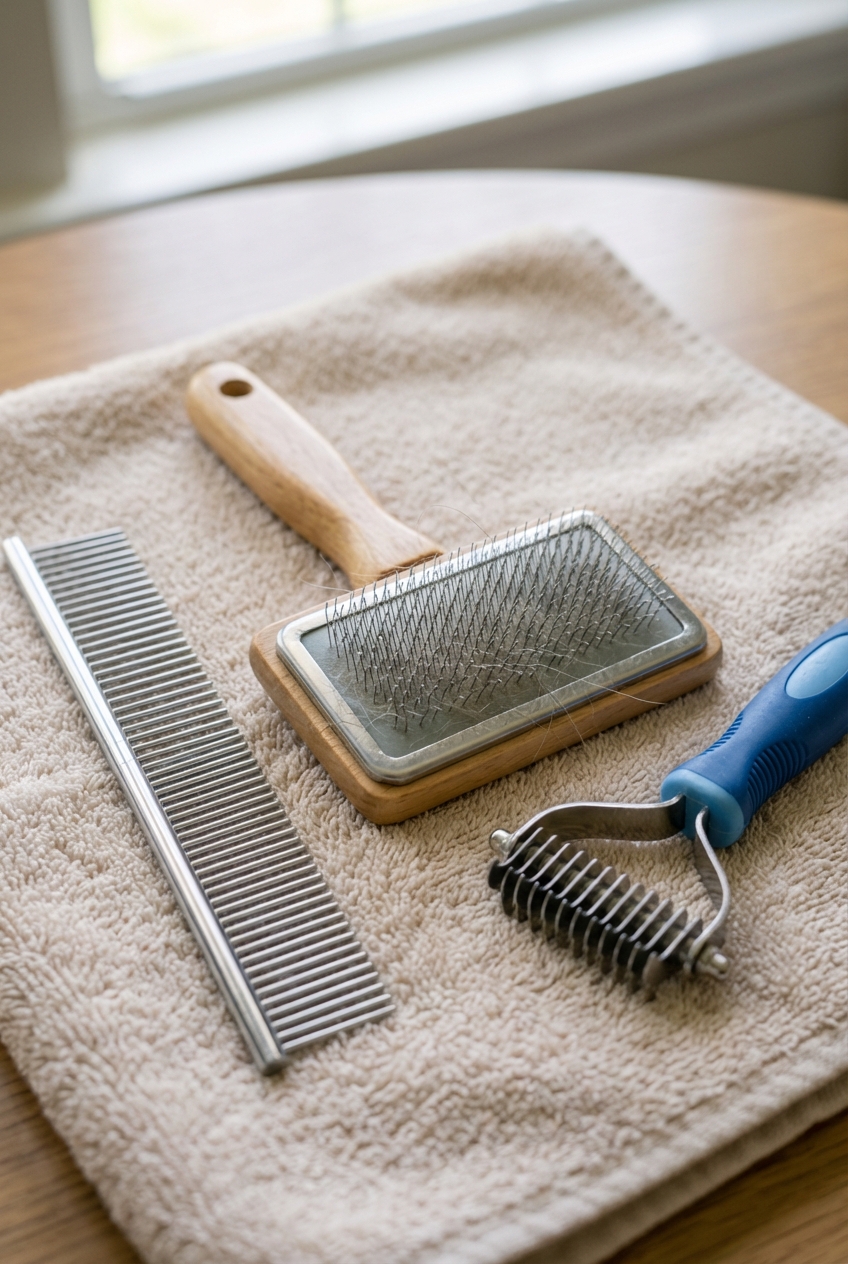
You do not need a huge grooming kit, but the right tools prevent pulling and help you work slowly. If you only buy one item, choose a good metal comb.
- Metal greyhound comb: Great for finding and gently loosening small tangles.
- Slicker brush: Helpful for finishing and general coat maintenance, especially long hair.
- Dematting comb or mat splitter: Designed to break mats into smaller sections with less pulling.
- Pet clippers (cat-safe): Best used by professionals, but can be helpful for experienced pet parents in limited situations. Use clippers designed for pets, not human hair clippers, and stop if you cannot do it without tugging or getting close to the skin.
- Cornstarch: Can add grip and reduce friction when working a small mat. Use a tiny amount and avoid creating dust that your cat could inhale. Skip this if your cat has asthma or is sensitive to powders.
- High-value rewards: Churu-style treats, freeze-dried meat treats, or a favorite toy.
Avoid using human “detangling” products unless your veterinarian confirms they are cat-safe. Cats groom themselves, and many ingredients are not meant to be ingested.
Step by step: small mats at home
If the mat is small, not tight to the skin, and your cat is comfortable, you can often work it out over multiple short sessions. Think minutes, not marathon.
Step 1: Set up your cat
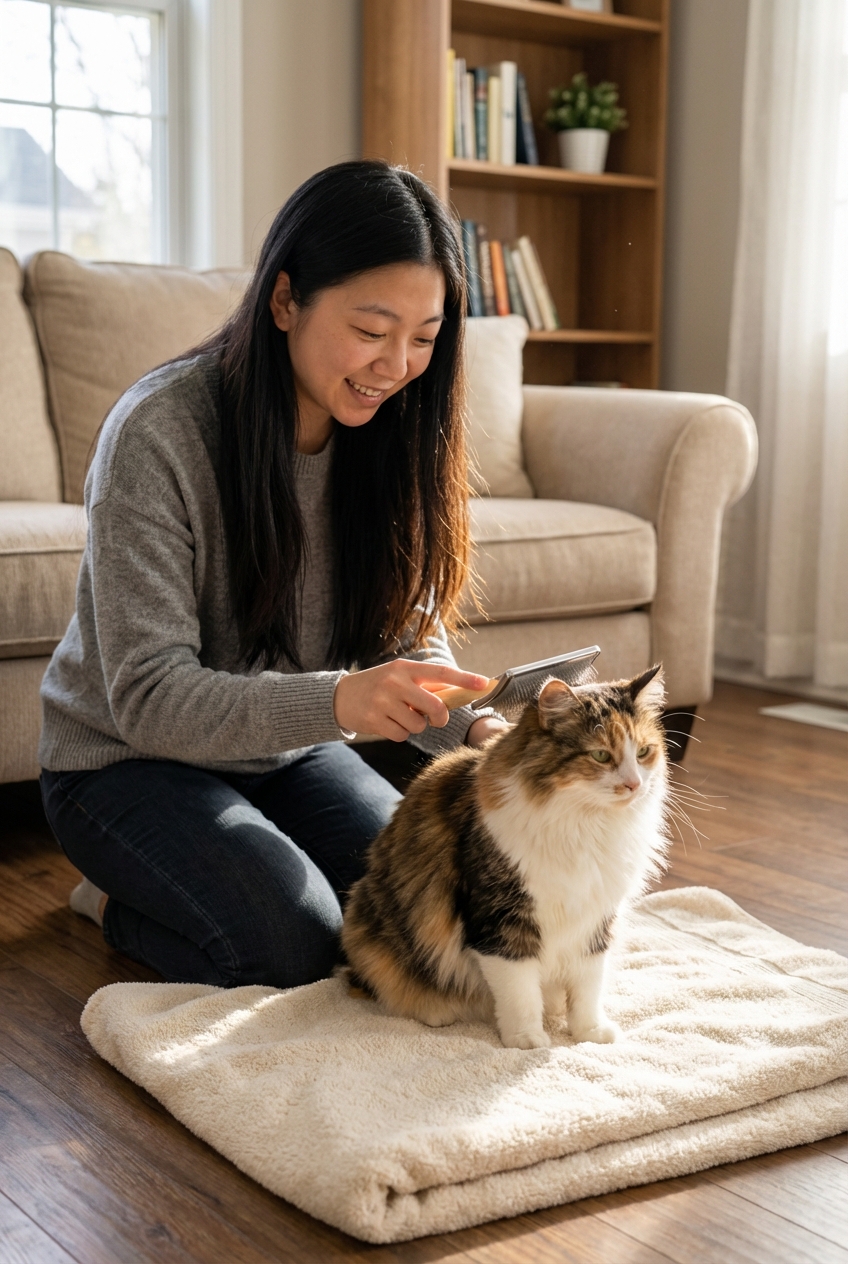
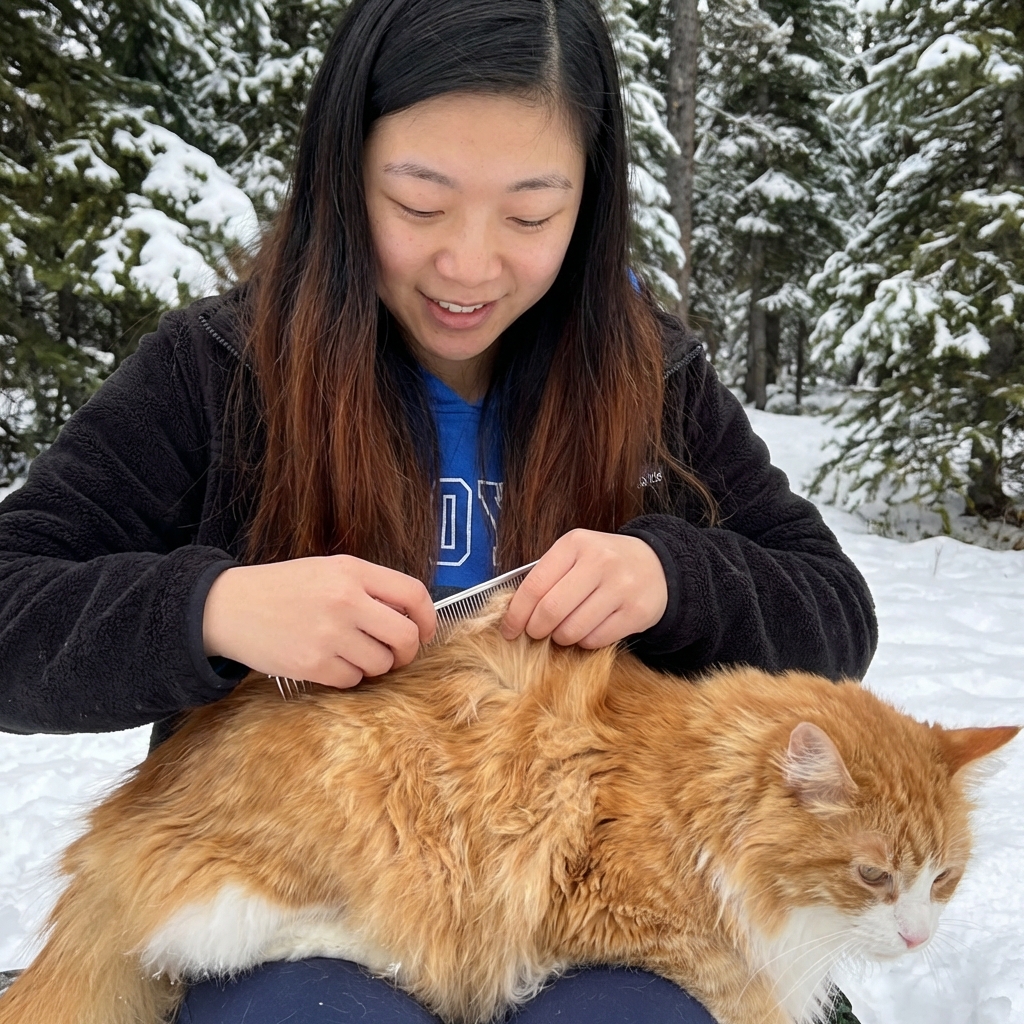
- Place your cat on a towel in a quiet room.
- Offer a lickable treat and let them settle.
- Use gentle, steady touch. Many cats do best when you keep one hand resting calmly on their body.
Step 2: Isolate the mat
Use your fingers to separate the mat from surrounding fur. Then hold the fur at the base of the mat (closest to the skin) to reduce pulling sensation while you work the outer edges.
Step 3: Start at the outside
Start at the outer end of the mat (the part farthest from the skin) and use a metal comb in tiny strokes. As the ends loosen, you can work a little closer toward the skin. If the comb does not move, do not force it. Switch to your fingers to gently tease a few strands at a time.
Step 4: Add a tiny bit of cornstarch
For a stubborn knot, sprinkle a small amount of cornstarch onto the mat and gently rub it in. This can help the strands separate more easily. Avoid puffing powder into the air.
Step 5: Break it into smaller pieces
If needed, use a dematting comb to split the mat into thinner sections. Work slowly, keeping the tool angled away from the skin. Small progress is still progress.
Step 6: End on a good note
Stop before your cat gets upset. Even 2 to 5 minutes is a win. Give a reward, then come back later. Many cats tolerate mat removal best as a daily mini-routine.
What not to do
- Do not use scissors: This is one of the most common causes of accidental skin lacerations reported in clinics.
- Do not yank or rip mats: This makes grooming painful and can create grooming fear.
- Do not bathe first: If mats are already present, water can tighten them and make them harder to remove. Bathe only after mats are removed, or have a professional handle the process.
- Do not hold your cat down: Struggling increases risk of injury to you and your cat.
- Do not use essential oils: Many are toxic to cats, even at low doses.
When clipping is the kindest choice
Sometimes the most humane option is to clip the mats off. This is especially true for “pelted” coats where the fur is felted close to the skin. Professional groomers and veterinary teams have the tools, experience, and support staff to do this safely.
Signs you need a pro
- Mats cover a large area or form a tight blanket along the back or belly.
- The mat is in a high-risk area like armpits, groin, belly, or near nipples.
- Your cat has thin skin (seniors) or medical conditions.
- Your cat becomes aggressive or panicked during brushing.
If sedation is recommended, that is not a failure. For some cats, sedation is the most compassionate way to remove painful mats without fear or injury.
If you try clippers at home
I will be honest: this is where many accidents happen. If you are not confident, stop and book a groomer or vet visit.
- Only use pet clippers and a clean, sharp blade. Dull blades pull.
- Keep the blade flat against the coat, and move slowly in the direction the fur grows.
- Never clip if you cannot slide a comb between the mat and the skin. If it is that tight, it is a job for a pro.
- Avoid danger zones: armpits, groin, belly, and anywhere there are skin folds.
- Watch blade heat: blades can get hot quickly and burn skin. Take breaks and check often.
After a shave or lion cut
- Keep your cat warm: shaved cats can get chilly, especially seniors.
- Protect skin: avoid sun exposure on shaved areas. Cats can sunburn too.
- Expect the coat to look different for a while: some cats have temporary texture or color changes as it grows back.
Prevention made simple
Once mats are removed, prevention is much easier than treatment. Aim for short, consistent grooming that your cat can tolerate.
Easy routine
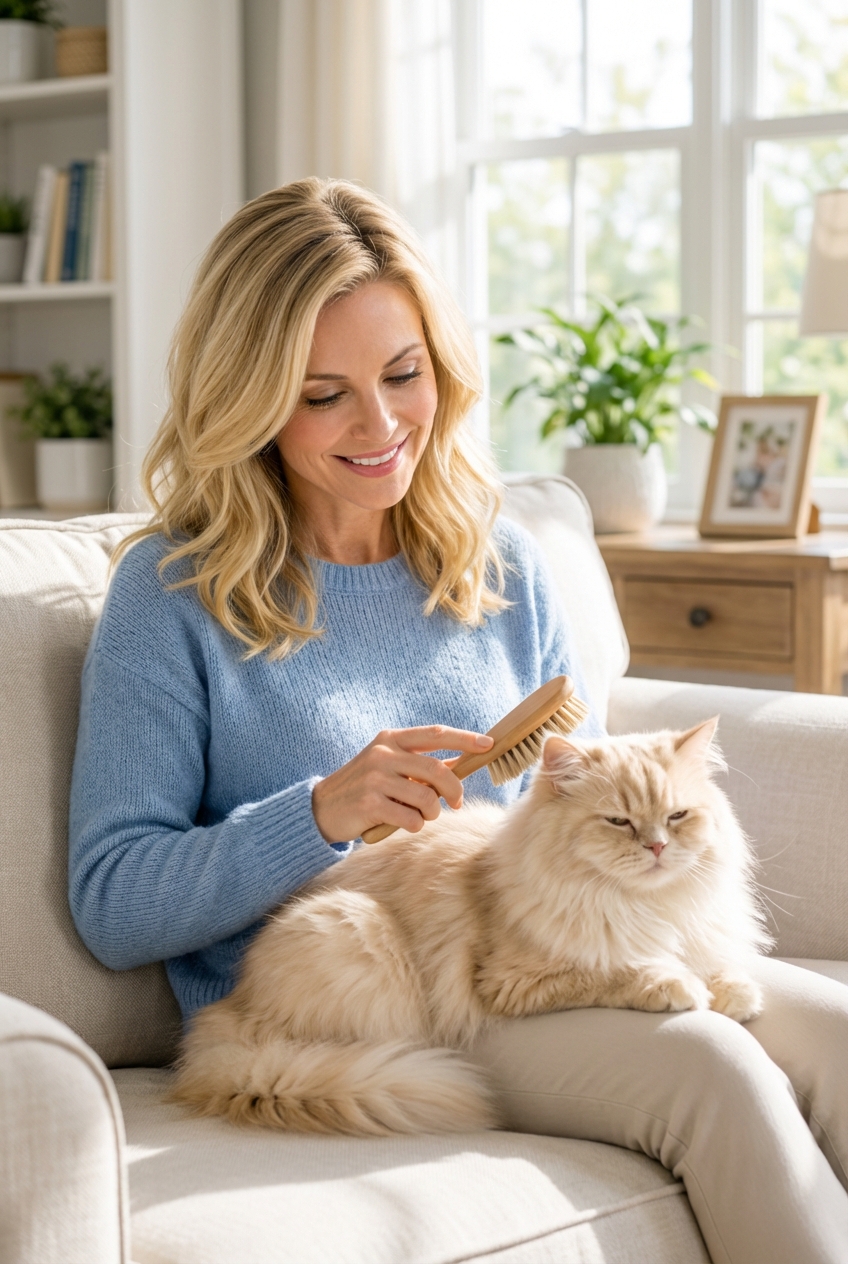
- Long-haired cats: Comb 3 to 5 times per week, focusing on friction areas.
- Short-haired cats: Brush 1 to 2 times per week, more during shedding seasons.
- Daily quick check: Run your fingers behind ears, under collar area, armpits, belly, and rump.
Make it family-friendly
- Assign one person to give treats while another does 1 minute of combing.
- Let kids help by offering rewards and talking softly, not by holding the cat.
- Use the same calm spot each time so it feels routine.
Support from health basics
Mats are sometimes a clue that something else is going on. If your cat is suddenly matting more than usual, consider a wellness check. Weight management, pain control for arthritis, and treatment for skin allergies or parasites can make grooming easier and more comfortable.
Quick FAQ
Can I use a human hair detangler on my cat?
It is best to avoid it unless your veterinarian approves a specific product. Cats lick their coats, and many human products are not meant to be ingested.
My cat hates brushing. What is the gentlest way to start?
Start with 10 to 20 seconds of combing, then reward. Build slowly. Focus on places your cat already enjoys being touched, like cheeks and shoulders, before you move to sensitive areas.
Are mats painful?
They can be. Even small mats pull on the skin, and tight mats can cause bruising, skin irritation, and infections under the fur.
Bottom line
You can absolutely handle many mild mats at home, especially if you go slow and keep sessions short and positive. If mats are tight, widespread, or causing stress, professional grooming or a veterinary visit is the safest and kindest next step. Your cat is counting on you to choose comfort over convenience, and you do not have to do it perfectly to make a real difference.