Make puppy bath time calm and safe with age-by-age bathing guidance, how often to wash, step-by-step washing tips, shampoo advice, and common mistakes to avoid.
Article
•
Designer Mixes
How to Give a Puppy a Bath

Shari Shidate
Designer Mixes contributor
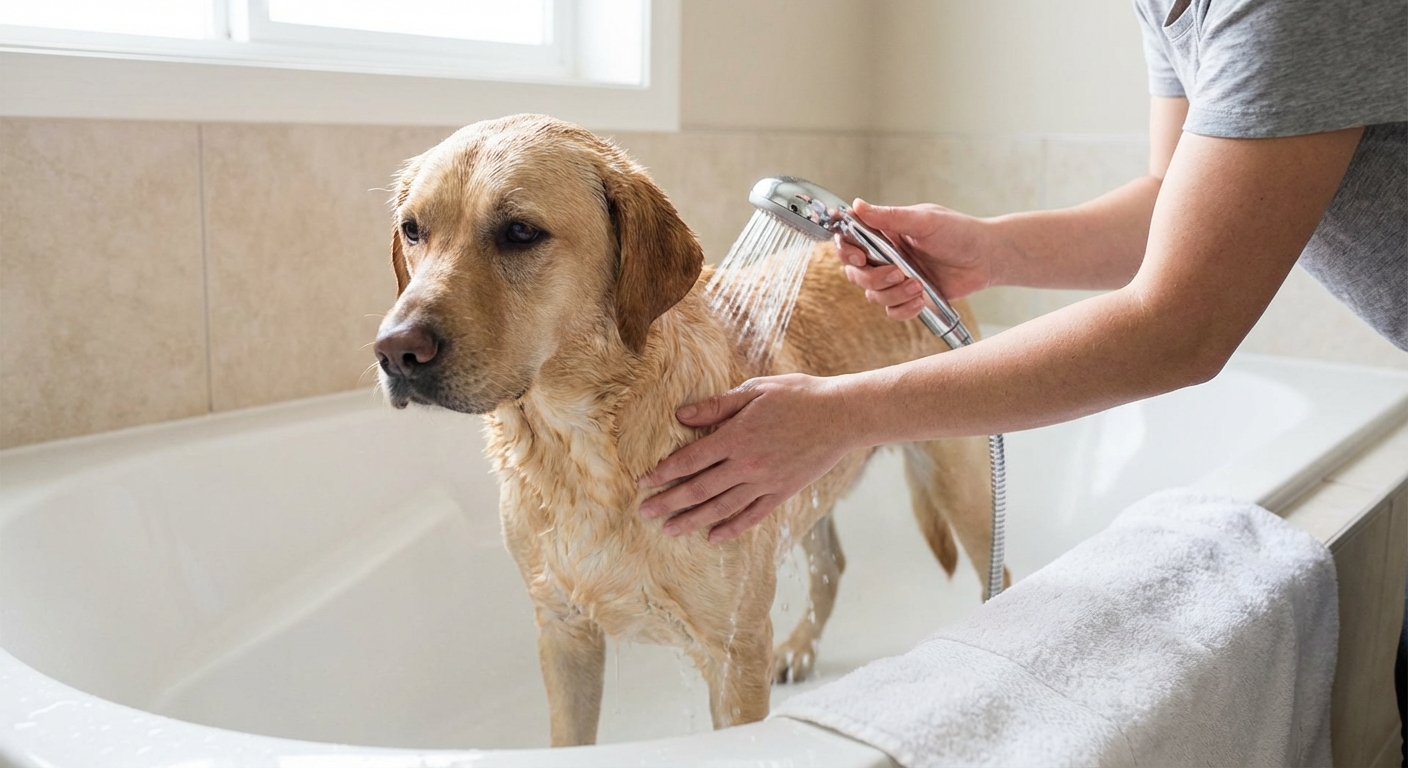
Bath time with a puppy is part hygiene, part training session. Done gently and consistently, it teaches your pup that being handled, rinsed, and dried is safe. Done too quickly or roughly, it can create a fear of the tub that lasts for years. The goal is not just a clean coat. It is calm, cooperative behavior you can build on for nail trims, vet exams, and grooming visits.
Safety first: Never leave a puppy unattended in a tub or sink, even for a moment. Puppies can slip, panic, or try to jump out.
When puppies should get their first bath
Most puppies can have a gentle bath once they are settled in at home and you can keep them warm and supervised the whole time. If your puppy is very young, recently adopted, or prone to chilling, you can often start with a wipe-down and spot cleaning instead of a full bath.
- Healthy default: Bathe only when needed. Over-bathing can dry out skin and worsen itching.
- After vaccines: A bath is often fine, but keep it low-stress. If your puppy seems off, had a prior vaccine reaction, or your vet advised rest, wait and ask your veterinarian.
- Parasites or illness: If you suspect fleas, ringworm, skin infection, or ear problems, talk with your veterinarian before bathing. Some products can make certain conditions worse.
Evidence-based note: Puppies lose body heat faster than adult dogs. Warm water, quick drying, and a draft-free room help prevent chilling.
Supplies to gather first
Having everything within reach is one of the easiest ways to keep bath time calm. If you need to step away mid-bath, puppies can panic or try to jump out.
- Non-slip mat or towel for the tub or sink
- Puppy-safe shampoo (low-fragrance, made for dogs). Avoid flea shampoos unless your veterinarian directs you, especially for very young puppies.
- Plastic cup or gentle sprayer for rinsing
- 2 towels (one for initial drying, one for final drying)
- High-value treats (tiny and soft)
- Brush or comb appropriate for your puppy’s coat
- Cotton balls (optional) to rest loosely at the ear opening to reduce splashes. Do not push cotton into the ear canal, and remove immediately after the bath.
A quick product note: Dog skin can be more alkaline and is different from human skin, so human shampoo may irritate or dry out the coat and skin. Choose a dog shampoo labeled for puppies or for sensitive skin when in doubt.
Avoid: Human shampoo, harsh degreasers, essential oils, and anything labeled “medicated” unless your veterinarian specifically recommends it.
Set up for calm baths
Bath success is not only about the shampoo you choose. Puppies learn from repetition. Your setup can teach “bath equals safe” or “bath equals scary.”
Before you turn on the water
- Exercise first: A short play session or walk (age-appropriate) helps take the edge off puppy energy.
- Brush first: Mats and tangles tighten when wet. A quick brush-out prevents discomfort.
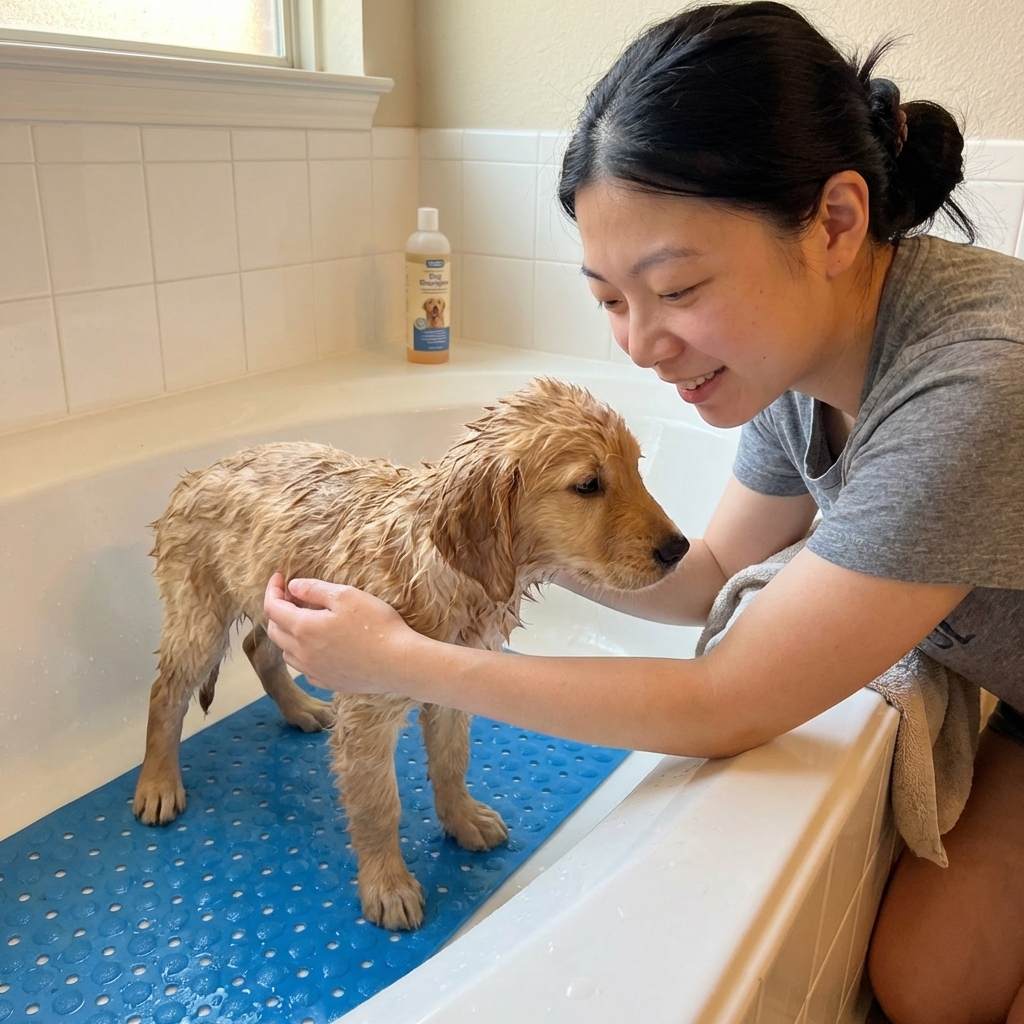
- Pick a small space: Many puppies do best in a sink or small tub where they feel secure.
- Prevent slipping: A non-slip mat can change everything. Puppies panic when their feet slide.
- Temperature and towels: Close windows, avoid fans, and have towels ready so you can dry right away.
Choose a calm cue and reward it
Pick one phrase like “bath time” or “easy.” Say it softly and reward calm behavior with treats. You are teaching a predictable routine.
Action step: For the first few baths, reward small wins like stepping onto the mat, letting you wet one paw, or standing still for five seconds.
Step-by-step: How to bathe a puppy
1) Test the water temperature
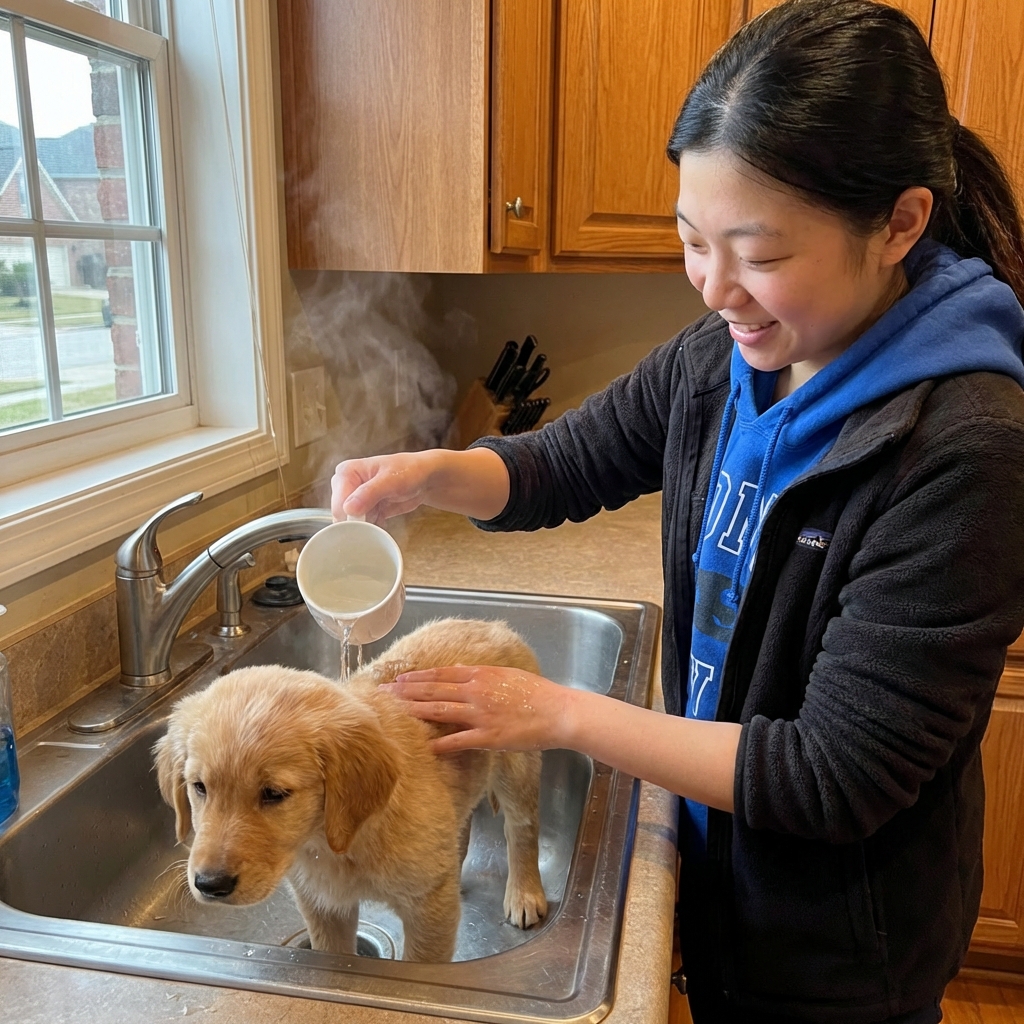
Use lukewarm water, similar to what you would use for a baby. Too hot can irritate skin, and too cold can make your puppy tense and shiver.
2) Wet the body slowly
Start at the shoulders and back, then move to the sides, chest, legs, and tail. Go gradually. Many puppies dislike the feeling of water hitting them suddenly.
- Avoid pouring water over the head.
- Avoid spraying directly into the face.
- Keep one steady hand on your puppy for support, and position your body so jumping out is harder.
3) Dilute shampoo if needed
Many dog shampoos work best when diluted (check the label). Diluting can help the shampoo spread evenly and rinse out more completely, which can reduce residue and itchiness.
4) Lather gently
Use a small amount of puppy shampoo and massage into the coat. Think “spa day,” not “scrub brush.” Gentle circular motions help lift dirt without irritating skin.
5) Clean the face safely
Most face messes are best handled with a damp washcloth rather than direct rinsing. Wipe under the chin, around the muzzle, and the top of the head. Avoid getting soap in eyes or inside ears.
6) Rinse longer than you think
Leftover shampoo is a common cause of post-bath itching. Rinse until the water runs clear and there is no slick or soapy feel left in the coat.
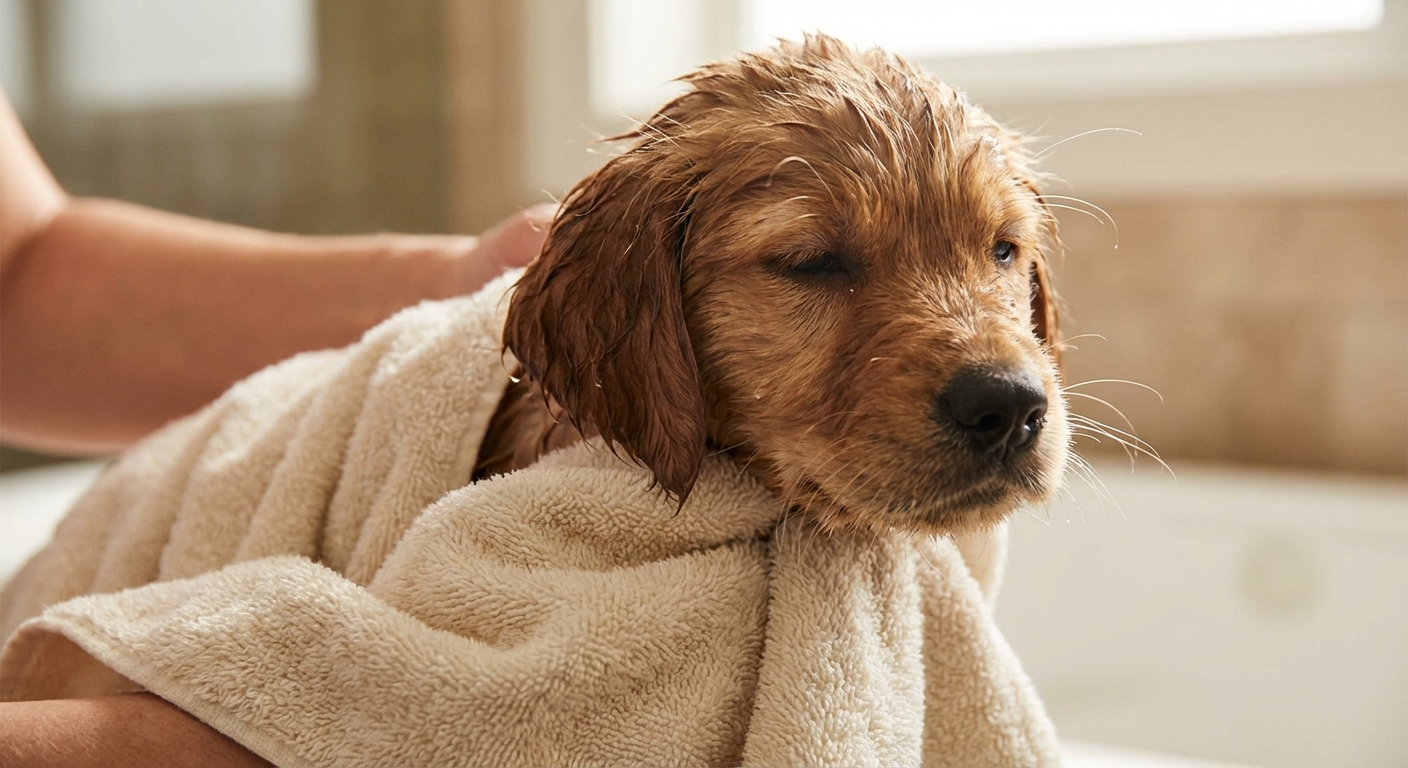
7) Towel dry right away
Wrap your puppy in a towel and blot, then rub gently in the direction of hair growth. Some puppies get wiggly and excited here. That is normal.
8) Dry completely and keep warm
If you use a blow dryer, keep it on low heat and low airflow, and introduce it slowly with treats. Many puppies find dryers loud and startling. For sensitive pups, towel drying in a warm room is often enough.
Ear tip: If the outer ear gets wet, gently towel-dry it. Do not insert anything into the ear canal. Use a veterinary ear cleaner only if your veterinarian recommends it.
Behavior tips for puppies who hate baths
Fear is not stubbornness. If a puppy is shaking, trying to escape, or vocalizing, their nervous system is telling you they are overwhelmed. The kindest plan is to make it smaller and easier.
Try these confidence-builders
- Do “dry runs”: Put your puppy in the tub with no water, feed treats, then end the session. Repeat for a few days.
- Use a lick mat: Spread a small amount of puppy-safe peanut butter or plain yogurt on a lick mat and stick it to the tub wall to create a positive association.
- Keep baths short: A quick wash of paws and belly is better than a long stressful bath.
- Choose the right timing: Avoid bath time when your puppy is overly tired or already stressed.
- Prevent slipping: Add a non-slip mat and keep your support hand steady so your puppy feels secure.
What not to do: Avoid yelling, pinning your puppy down, or forcing them to stay in the tub. That can increase fear and make future grooming much harder.
How often to bathe a puppy
There is no single perfect schedule. Coat type, lifestyle, and skin sensitivity matter, so treat timing as flexible and bathe as needed.
- Many family puppies: About every 4 to 8 weeks, or as needed.
- Muddy adventures: Rinse with water or wipe down, and save shampoo for truly dirty days.
- Dry or itchy skin: Bathe less often and ask your veterinarian about moisturizing shampoos or leave-on conditioners made for dogs.
Breed and coat note: Double-coated breeds, curly coats, and puppies with known skin disease may need a different routine and products. When in doubt, your groomer or veterinarian can help you choose a plan.
If your puppy is getting frequent baths because of odor, dandruff, or redness, that is a sign to look for an underlying cause like allergies, infection, or parasites.
Common bath mistakes to avoid
- Using human shampoo: Dog skin is different from human skin and can be more alkaline. Human products can dry and irritate.
- Not rinsing enough: Residue can cause itching and flaky skin.
- Water in the ears: Moisture trapped in the ear canal can contribute to irritation or infection.
- Bathing too frequently: Stripping natural oils can lead to dull coat and dry skin.
- Leaving your puppy unattended: Slips and jump-outs can happen fast.
- Letting the puppy air-dry in a cold room: Chilling can happen quickly, especially in small breeds.
When to call your veterinarian
Bathing should leave your puppy clean and comfortable. Reach out to your veterinarian if you notice:
- Hives, facial swelling, or sudden intense itching after a bath
- Red, moist, or smelly skin
- Head shaking, ear redness, or discharge
- Bald patches, circular lesions, or scaly spots
- Persistent dandruff or greasy coat
Those can point to allergy, infection, mites, or other issues that need medical treatment, not just a different shampoo.
A simple bath routine
If you want one easy plan, here it is:
- Brush for 2 minutes.
- Non-slip mat, warm room, towels within reach, lukewarm water.
- Wet body slowly, avoid the head and face.
- Dilute shampoo if the label recommends it, lather gently, then rinse very thoroughly.
- Towel dry, reward calm behavior, and end on a positive note.
Over time, your puppy learns that baths are predictable, safe, and even rewarding. That is the real win.