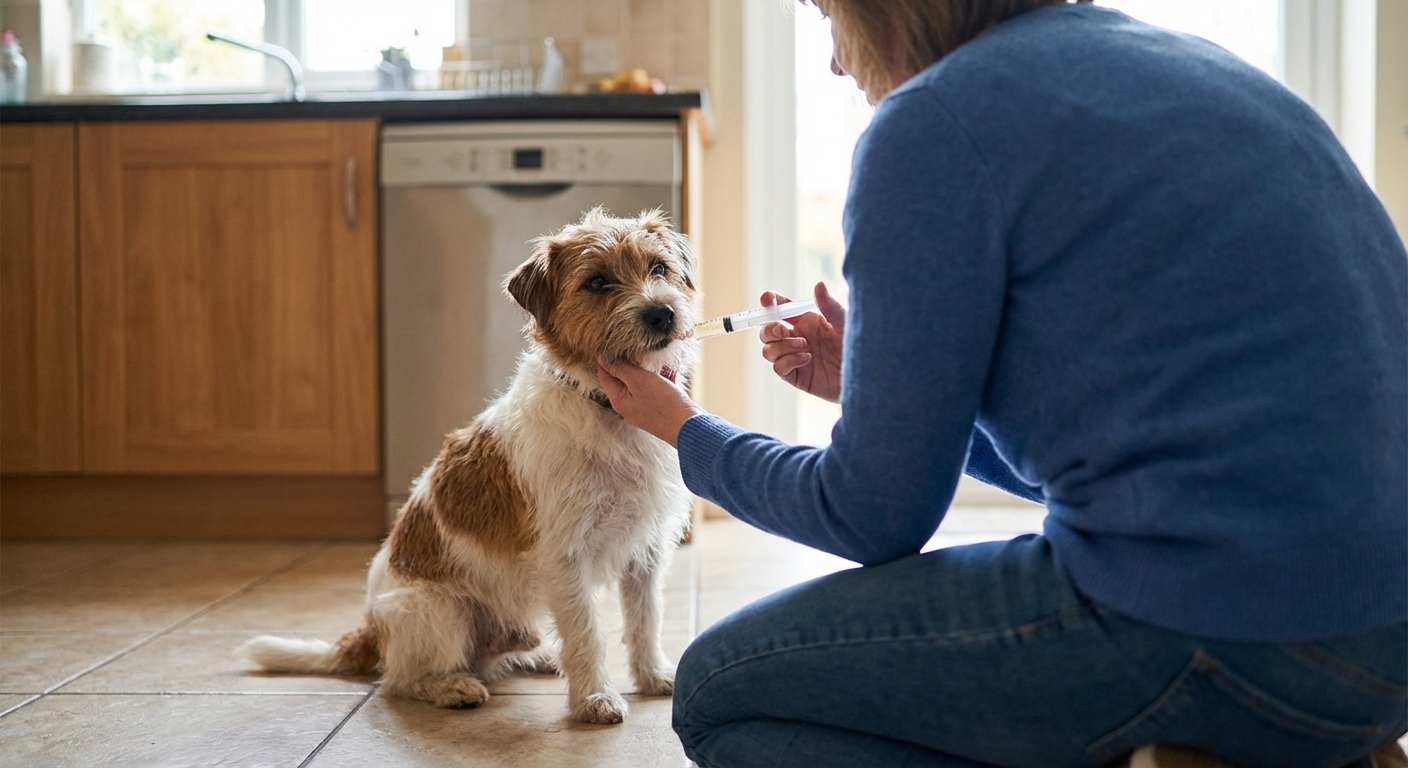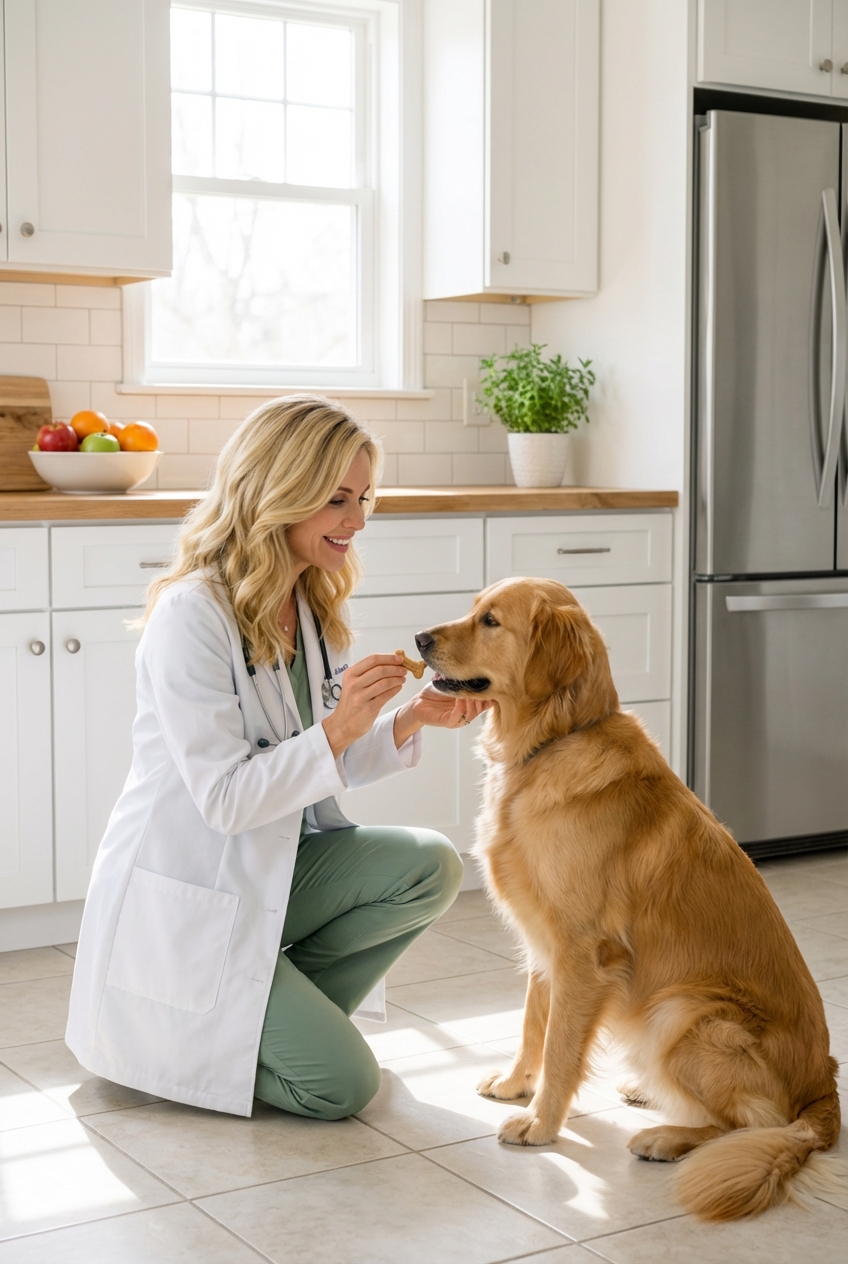
A vet assistant’s complete guide to giving dogs tablets, capsules, and liquids safely. Learn pill-in-food tricks, direct pilling, pill poppers, and when to...
Article
•
Designer Mixes
How to Give a Dog a Pill

Shari Shidate
Designer Mixes contributor
As a veterinary assistant here in Frisco, Texas, I can tell you this is one of the most common questions pet parents ask. Giving a dog a pill sounds simple until your sweet pup suddenly develops expert-level skills in hiding medication in their cheeks. The good news is that with the right technique and a little planning, most dogs can take pills safely and with far less stress for everyone.
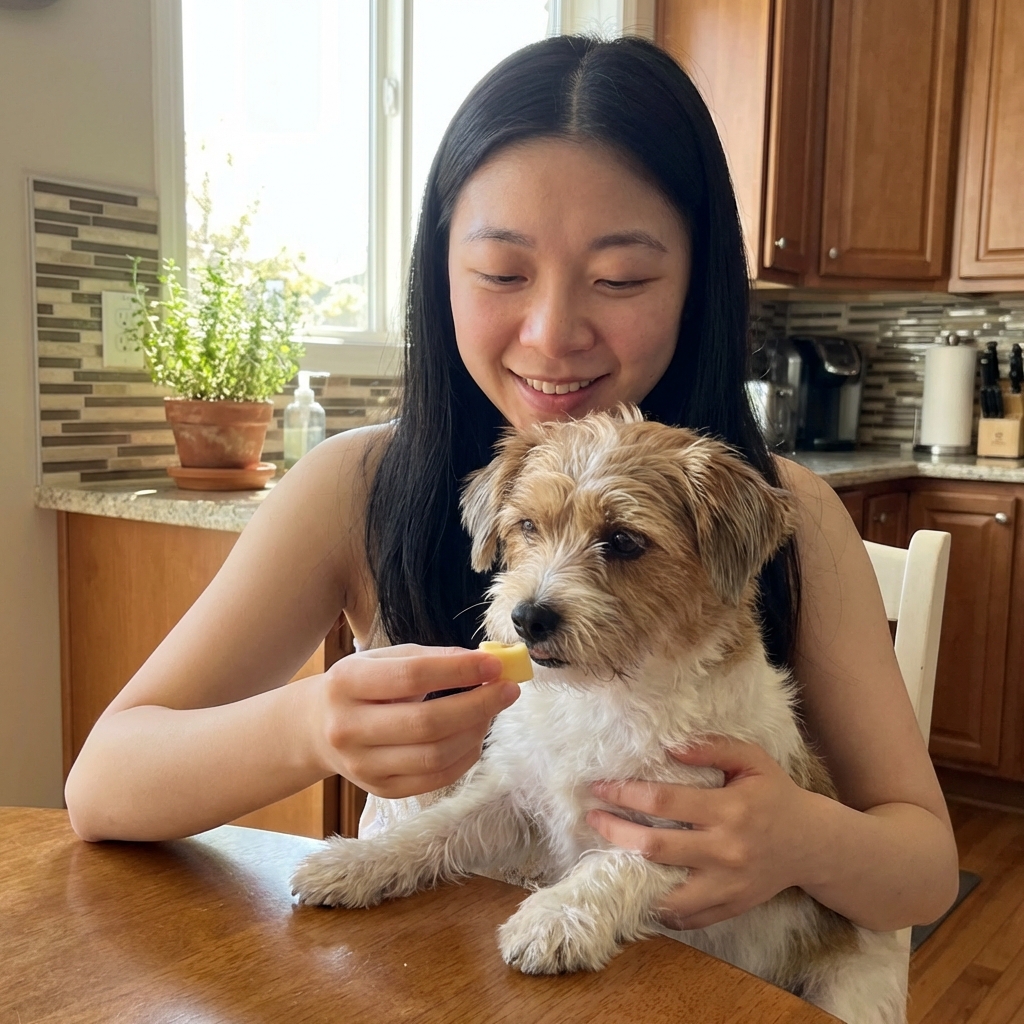
Important note: Always follow your veterinarian’s instructions and the label on the prescription. Some medications must be given with food, others on an empty stomach, and some should never be crushed, opened, or split.
Before you start
Know what you are giving
- Confirm the medication and dose. Check the label every time, especially if you have multiple pets.
- Check timing. Some meds work best at specific intervals, like every 12 hours.
- Ask about food. “Give with food” can reduce stomach upset. Many vets define “empty stomach” as about 1 hour before or 2 hours after a meal, but this can vary by medication. When in doubt, follow your vet’s directions.
- Ask if it can be split or crushed. Time-release and enteric-coated pills often should not be altered because it changes how the drug is absorbed.
- Tablets vs. capsules. Capsules can stick in the throat in some dogs. A small treat or a sip of water after (if your vet says it is ok) can help them go down smoothly.
Set up for success
Pick a calm space with good lighting. Have your supplies ready so you are not fumbling mid-dose.
- Pill or capsule
- Small high-value treats or pill pockets
- A little water or a syringe of water (only if your vet recommends)
- A towel for wiggly pups
Multi-dog tip: Separate pets during dosing. It prevents pill theft and makes it easier to confirm the right dog got the right dose.
5 commonly recommended ways to give a dog a pill
1) The treat trick
Many dogs will take pills happily if you make it feel like snack time.
- Use 2 to 3 small treats.
- Give a “clean” treat first.
- Give the pill hidden in the second treat.
- Immediately follow with another clean treat to encourage swallowing.
Tip: Soft options that often work well include pill pockets, a small meatball of canned food, a bit of cream cheese, peanut butter (xylitol-free), or a small piece of cheese.
2) Hide it in a mini meal
If your dog is suspicious of treats, mixing the pill into a small portion of a strong-smelling food can help. Give a small “test bite” first, then the medicated bite, then finish with a normal meal. This way, if your dog refuses, you know right away and do not lose the dose in a full bowl of food.
3) Manual pilling
This method can be very safe when done gently and confidently.
- Have your dog sit, or place small dogs on a stable surface with a non-slip mat.
- Hold the pill ready in your dominant hand.
- With your other hand, rest your fingers on either side of the upper jaw, just behind the canine teeth, with your fingers staying outside the mouth. Gently tilt the head up.
- Use your dominant hand to open the lower jaw and place the pill toward the back of the tongue (past the “hump” in the middle) without forcing.
- Close the mouth, keep it closed, and encourage a swallow. You can gently stroke the throat. Some dogs will swallow if you softly blow on the nose, but not all dogs respond to that cue.
- Offer a small treat or water after, if allowed.
Safety note: Never force a dog’s head too far back and never put your fingers where you could be bitten. If your dog is fearful, painful, or reactive, stop and ask your vet team for a hands-on demo. If you have been bitten, wash the wound with soap and water right away and call your doctor. For some dogs, a properly fitted muzzle can be the safest option, but get guidance from your veterinary team so it is done correctly and humanely.
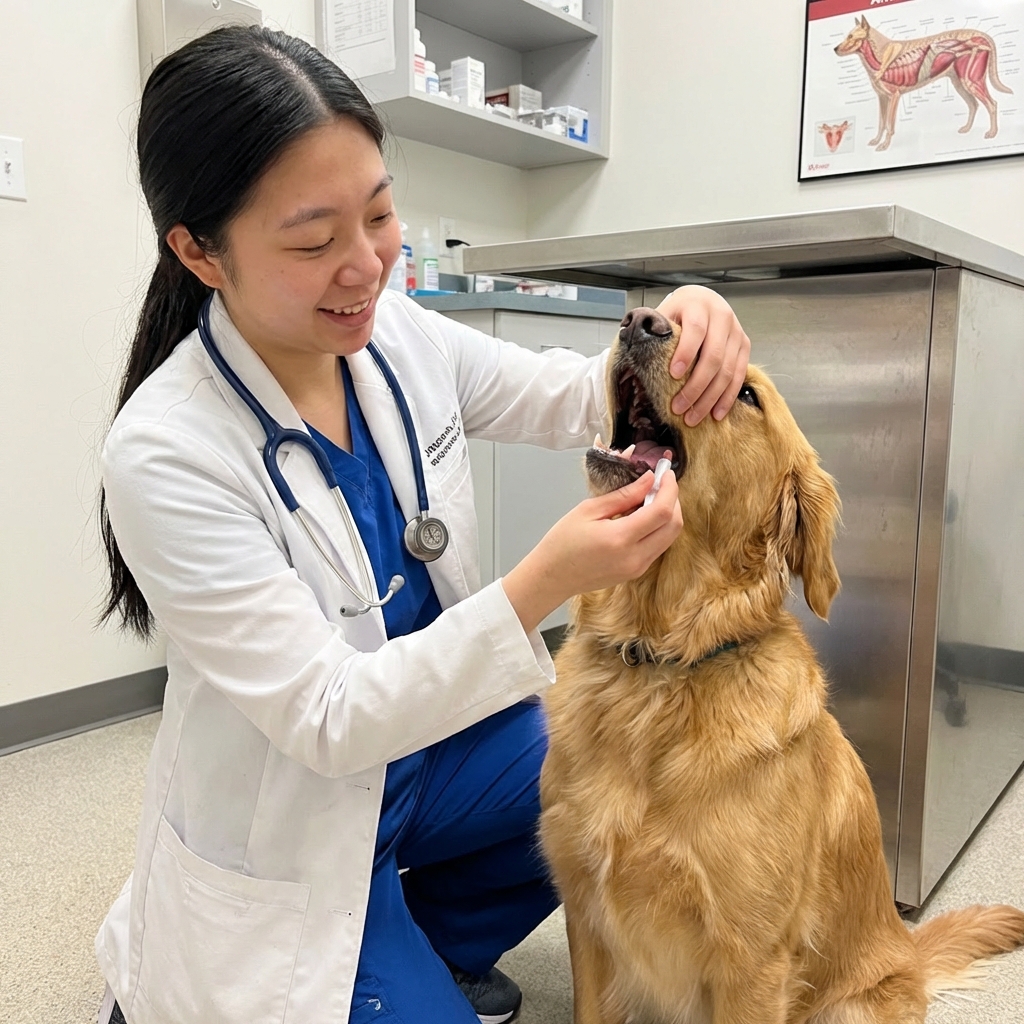
4) Use a pill popper
A pill popper can protect your fingers and help you place the pill farther back. Ask your veterinary clinic to show you how to use it the first time. Reward right after so your dog does not start to fear the routine.
5) Ask for a different form
If pilling is turning into a daily wrestling match, talk to your veterinarian about alternatives:
- Chewable tablets
- Flavored liquids
- Transdermal gels (for certain medications)
- Long-acting injections
- Compounded flavors (like chicken or beef)
Did they swallow it?
Some dogs are masters at “pretend swallowing.” Watch for these signs:
- Licking lips and swallowing once or twice
- No chewing motions after the treat is gone
- No pill found on the floor or in bedding later
If you are unsure, gently open the mouth and look along the cheeks and under the tongue. Some dogs “pocket” pills in the cheek and spit them out when you walk away.
Common mistakes
- Crushing without asking. Some pills should not be crushed or opened.
- Hiding meds in a full meal first. If your dog refuses the food, you may not know whether they got the dose.
- Chasing and cornering. This can create long-term fear and make future medicating harder.
- Using the wrong foods. For some medications, certain foods can interfere with absorption or increase side effects. For example, high-calcium foods (like dairy) can affect absorption of some antibiotics, and high-fat foods can worsen stomach upset for some meds. When in doubt, ask your vet or pharmacist what to use.
- Skipping doses or doubling up. Antibiotics and heart medications especially need consistent dosing. If you miss a dose, call your veterinarian for guidance. Do not automatically give two doses at once unless you are specifically told to.
When to call your vet
Contact your veterinarian promptly if you notice:
- Vomiting shortly after dosing (especially if you can see the pill)
- Hives, facial swelling, or trouble breathing
- Severe lethargy, collapse, or weakness
- Profuse diarrhea or bloody stool
- Your dog may have swallowed a pill meant for another pet
If you ever suspect an emergency, call your nearest emergency vet or ASPCA Animal Poison Control at (888) 426-4435. A consultation fee may apply.
Make it easier long term
Pair it with something positive
Dogs learn fast. If every pill is followed by a favorite treat, a short walk, or a few minutes of play, many dogs become less suspicious over time.
Practice when you do not need to medicate
One simple trick: occasionally give “training treats” the same way you give the medicated treat, so the routine does not always predict a pill.
Track doses
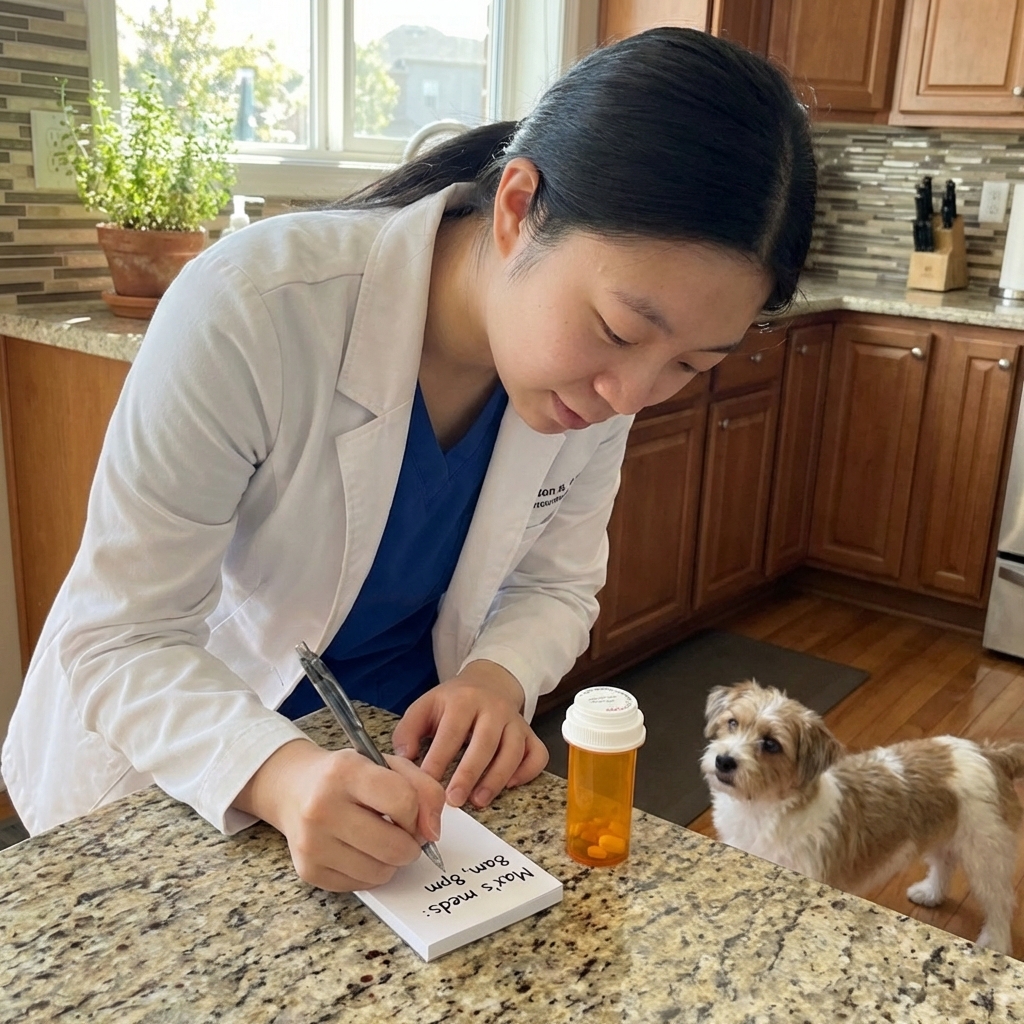
A sticky note on the fridge, a phone reminder, or a simple checklist can prevent missed or doubled doses, especially in busy households.
Quick FAQs
Can I put a pill in peanut butter?
Often, yes, but make sure it is xylitol-free. Xylitol is toxic to dogs. Also use a small amount so your dog does not slowly lick around the pill.
My dog bit the pill and it tasted bitter. Now what?
Many medications taste awful once broken. Call your vet and ask if you can switch to a flavored option, use a pill pocket, or try a different formulation.
What if my dog vomits after taking medication?
Do not automatically re-dose. Call your veterinarian with details: how long after dosing, whether you saw the pill, and whether food was given.
What if I missed a dose?
Call your veterinarian or follow the written prescription instructions. In many cases you will give it when you remember and return to the normal schedule, but do not double up unless your vet specifically tells you to.
Pill time does not have to be a battle. Start with the easiest method, stay calm, reward generously, and ask your vet team for help early if your dog is struggling.