Make bath time easier and safer with vet-assistant tips on how often to bathe, prep and brushing, lukewarm water, proper rinsing, shampoo choices, ear safety...
Article
•
Designer Mixes
How to Give a Dog a Bath

Shari Shidate
Designer Mixes contributor
Bath time can be simple, safe, and even soothing when you approach it like a mini training session instead of a wrestling match. As a veterinary assistant in Frisco, Texas, I have seen the difference a calm, step-by-step routine makes, especially for puppies, seniors, and dogs with sensitive skin.
The goal is not “squeaky clean at all costs.” The goal is clean skin, a healthy coat, and a dog who learns, over time, that bathing is predictable and not scary.
Safety note: If your dog has open sores, a strong odor, hair loss, or recurring itchiness, schedule a vet visit before you keep bathing. Many skin issues are medical, not hygiene problems.
How often should you bathe your dog?
There is no one schedule that fits every coat and lifestyle. As a typical grooming interval, many healthy dogs do well with a bath about every 4 to 8 weeks, but plenty of dogs need less, and some need more.
- Short coat, low odor: Often every 6 to 10 weeks is fine.
- Curly, doodle-type, or thicker coats: Commonly every 4 to 6 weeks, with regular brushing between baths.
- Allergies or medicated shampoo: Follow your veterinarian’s instructions, which may be 1 to 3 times weekly for a set period.
- Dirty day at the park: A quick rinse or spot clean can be better than frequent full shampooing.
If your dog’s coat feels dry, looks dull, or your pup is suddenly itchy after baths, you may be bathing too often, using water that is too hot, or using a shampoo that is too harsh.
What you need before you start
Having everything ready before you turn on the water makes bath time shorter and calmer.
Supplies checklist
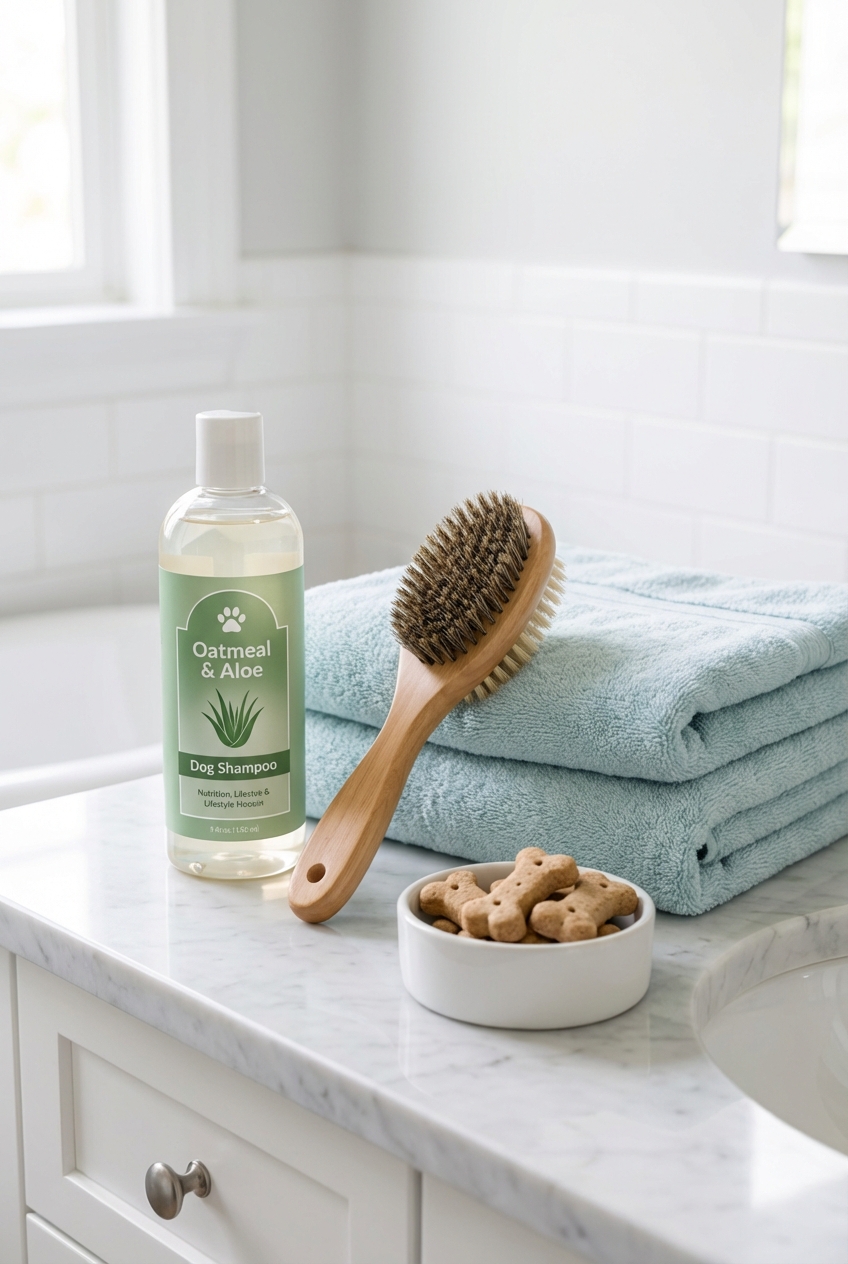
- Dog-specific shampoo (and conditioner if your dog’s coat tangles easily)
- Washcloth or soft sponge for the face
- Two towels (one for the body, one for the face and paws)
- Non-slip mat for the tub or sink
- Brush or comb appropriate for your dog’s coat
- High-value treats (tiny pieces you can deliver quickly)
- Cotton balls (optional) to place loosely in the outer ear for splash protection
- Handheld sprayer or a large cup for rinsing
Choosing the right shampoo
Use a shampoo made for dogs. Human shampoos are formulated for a different skin pH and can dry or irritate canine skin.
- For routine bathing: A gentle, fragrance-light dog shampoo.
- For sensitive skin: Oatmeal-based or hypoallergenic formulas can help with mild dryness, but they do not treat true allergies on their own.
- For fleas: Talk to your vet about safer, proven preventatives. Flea shampoos do not provide long-term control, and most topical or oral preventatives work better than bathing alone.
- For skunk or heavy odor: Use a deodorizing dog shampoo, and rinse extremely well.
Step-by-step: how to give your dog a bath
1) Brush first
Brush before the bath, not after. Water can make mats felt together and harder to remove. This is especially important for doodle mixes, long coats, and thick undercoats.
2) Set the environment
- Place a non-slip mat in the tub or sink.
- Close the bathroom door so your dog cannot bolt.
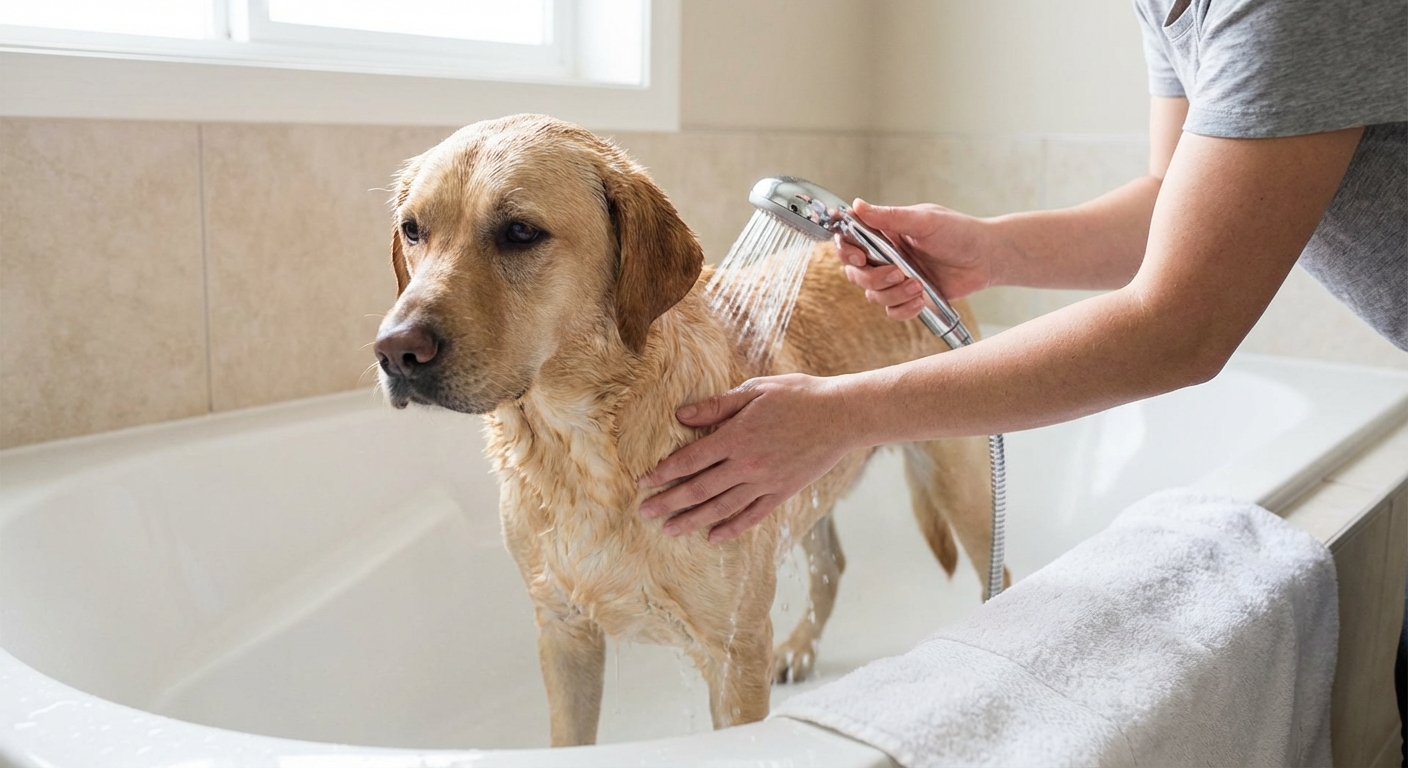
- Use lukewarm water. A good test is comfortably warm on the inside of your wrist, not hot.
3) Start with calm, slow wetting
Wet the body from the neck down first. Many dogs startle when water hits their head or ears, so save the face for later. If your dog is noise-sensitive, turn on the water quietly and keep the spray gentle.
4) Lather correctly
Apply shampoo and work it into the coat using your fingertips, not nails. Focus on “dirt zones” like paws, belly, rump, and under the collar. Avoid getting shampoo in the eyes or ear canal.
Pro tip: For thick coats, dilute shampoo in a cup of water first. It spreads more evenly and rinses out faster.
5) Let it sit briefly (if directed)
Some shampoos, especially medicated ones, need contact time to work. Read the label and follow it. If your dog hates standing still, use that minute for treat feeding and calm praise.
6) Rinse longer than you think
Leftover shampoo is one of the most common reasons dogs get itchy after a bath. Rinse until the water runs clear and the coat no longer feels slippery, then rinse a little more. Pay extra attention to armpits, groin, and between toes.
7) Clean the face gently
Use a damp washcloth on the muzzle, cheeks, and under the eyes. Do not pour water over the face unless your dog is comfortable with it. Never spray directly into the eyes, nose, or ears.
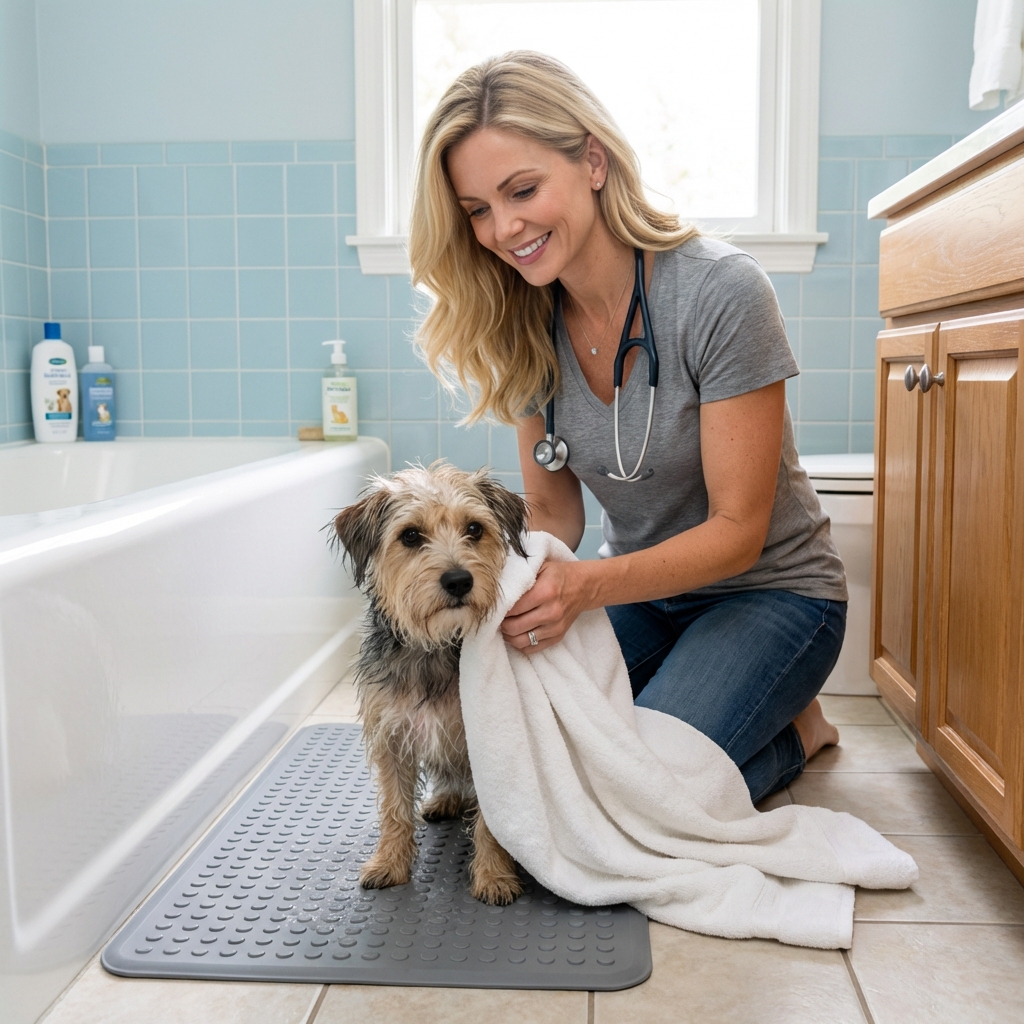
8) Dry thoroughly
Towel dry first. Many dogs tolerate a blow dryer only if it is low heat and low force, held at a distance.
If your dog has a thick coat, drying matters. Moisture trapped near the skin can contribute to hotspots and skin infections in some dogs, especially in warm or humid climates.
Bath time training tips that actually work
Bathing is care plus training. If you build positive associations, your dog’s stress level drops, and your job gets easier every month.
Use the treat ladder
- Step 1: Treat for entering the bathroom.
- Step 2: Treat for stepping into the tub (dry).
- Step 3: Treat for hearing water run.
- Step 4: Treat for getting paws wet.
- Step 5: Treat for a short rinse, then end the session.
Work in short sessions over several days if needed, especially for puppies and rescues.
Give your dog a job
A simple “stand” or “chin rest” on your hand can reduce wiggling. Reward the behavior you want, not the chaos you are trying to stop.
Keep handling gentle and predictable
Fast grabbing and sudden restraint tends to increase thrashing. Instead, use one steady hand for support and one hand for washing, and keep your voice calm.
Common bath mistakes (and how to avoid them)
- Using human shampoo: Can cause dryness and irritation. Choose dog shampoo.
- Skipping brushing: Leads to tighter mats and painful pulling later.
- Water in the ear canal: Moisture can contribute to ear infections, especially in dogs with allergies, narrow ear canals, or floppy ears. Keep water out, and dry ears well.
- Not rinsing enough: Residue can cause itchiness and dandruff-like flakes.
- Bathing too frequently: Can strip oils and worsen skin sensitivity.
- Letting a thick coat air dry: Can increase the risk of hotspots in some dogs, especially in warm or humid climates.
Special situations
Puppies
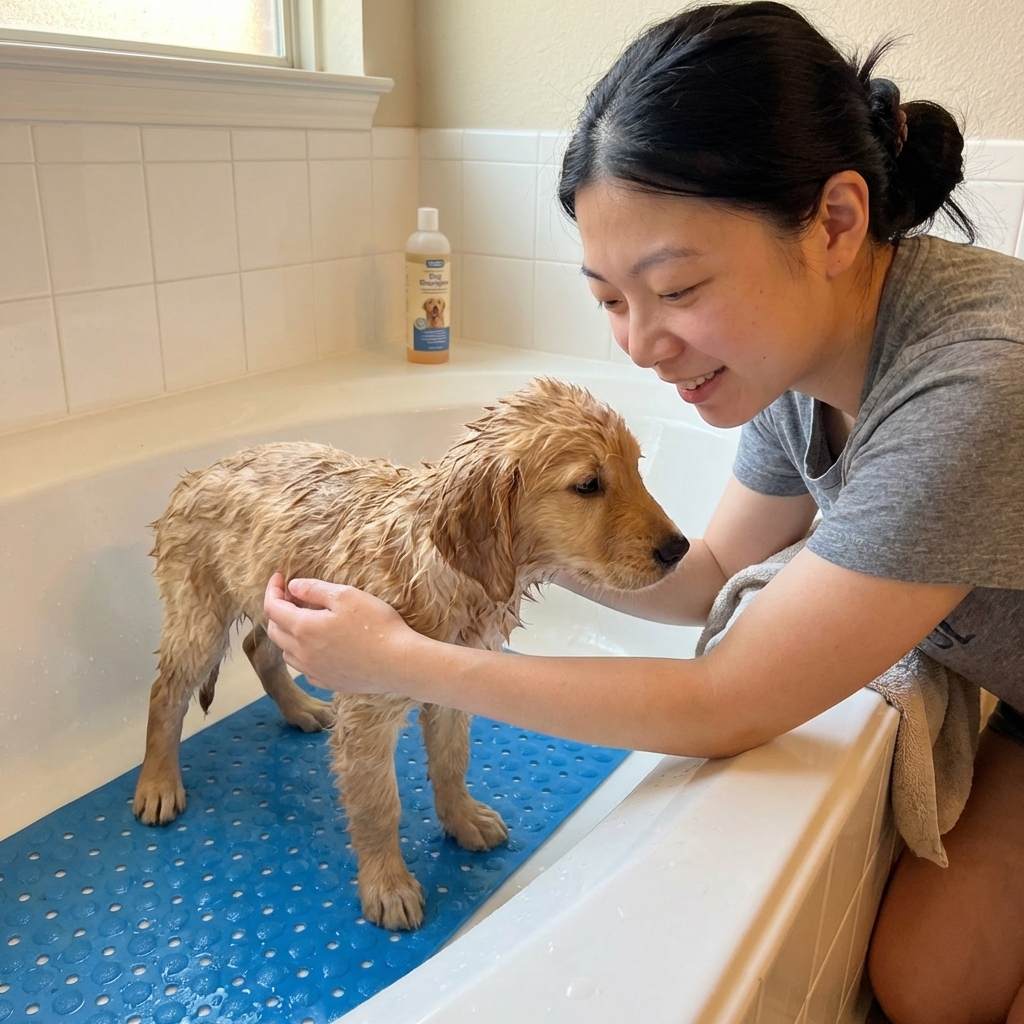
Keep baths short and warm. Focus on teaching the routine. Even a “partial bath” for paws and belly after messy adventures is a win.
Senior dogs
Seniors may have arthritis and less stability. Use a thick towel or mat for traction, and keep sessions brief. If standing is hard, try bathing in stages or asking your groomer about support slings.
Dogs with skin allergies
If your dog is chronically itchy, has red skin, or recurrent ear infections, bathing can help, but only with the right plan. Medicated shampoos and specific frequencies are often prescribed for a reason. If you are guessing, you are likely delaying real relief.
Double-coated breeds and mixes
These coats hold water and shed heavily. Plan extra time for rinsing and drying. Bath frequency varies widely by breed, season, and lifestyle, so focus on coat condition and comfort over the calendar. Avoid shaving double coats unless a veterinarian recommends it for a medical reason.
Outdoor baths
Outdoor baths can be convenient, but watch water temperature (hoses can run hot) and choose a non-slip surface. Shade helps keep the experience safe and calm in warm weather.
Ear care basics
For most dogs, a bath is not the same as an ear cleaning. Do not use cotton swabs inside the ear canal. If your veterinarian has recommended an ear cleaner, use it as directed and keep the ear canal as dry as possible after bathing.
Other grooming tasks
Many owners bundle grooming chores on bath day. Nail trims and anal gland expression are separate tasks with their own technique and risks. If you are not trained and your dog is uncomfortable, ask your vet clinic or groomer for help.
When to call your vet
Bathing should not cause pain, panic, or lingering irritation. Contact your veterinarian if you notice:
- Persistent itching or redness after baths
- A strong odor that returns quickly
- Greasy coat, dandruff, or hair loss
- Hotspots, scabs, or oozing areas
- Head shaking or ear redness after water exposure
Good hygiene supports health, but it cannot replace medical treatment when the skin is inflamed or infected.
A simple bath routine you can repeat
If you want one routine that works for most healthy dogs, here it is:
- Brush for 3 to 5 minutes
- Wet neck down with lukewarm water
- Lather (diluted shampoo helps)
- Rinse very thoroughly
- Face with a washcloth
- Towel dry, then finish drying as needed
- Treats and a calm cuddle break after
Consistency creates confidence. The more predictable you make bath time, the more your dog will trust the process.