Step-by-step ways to pill a cat with less stress: hiding pills in food, the 3-bite trick, gentle direct pilling, using pill poppers, and preventing pills fro...
Article
•
Designer Mixes
How to Give a Cat a Tablet

Shari Shidate
Designer Mixes contributor
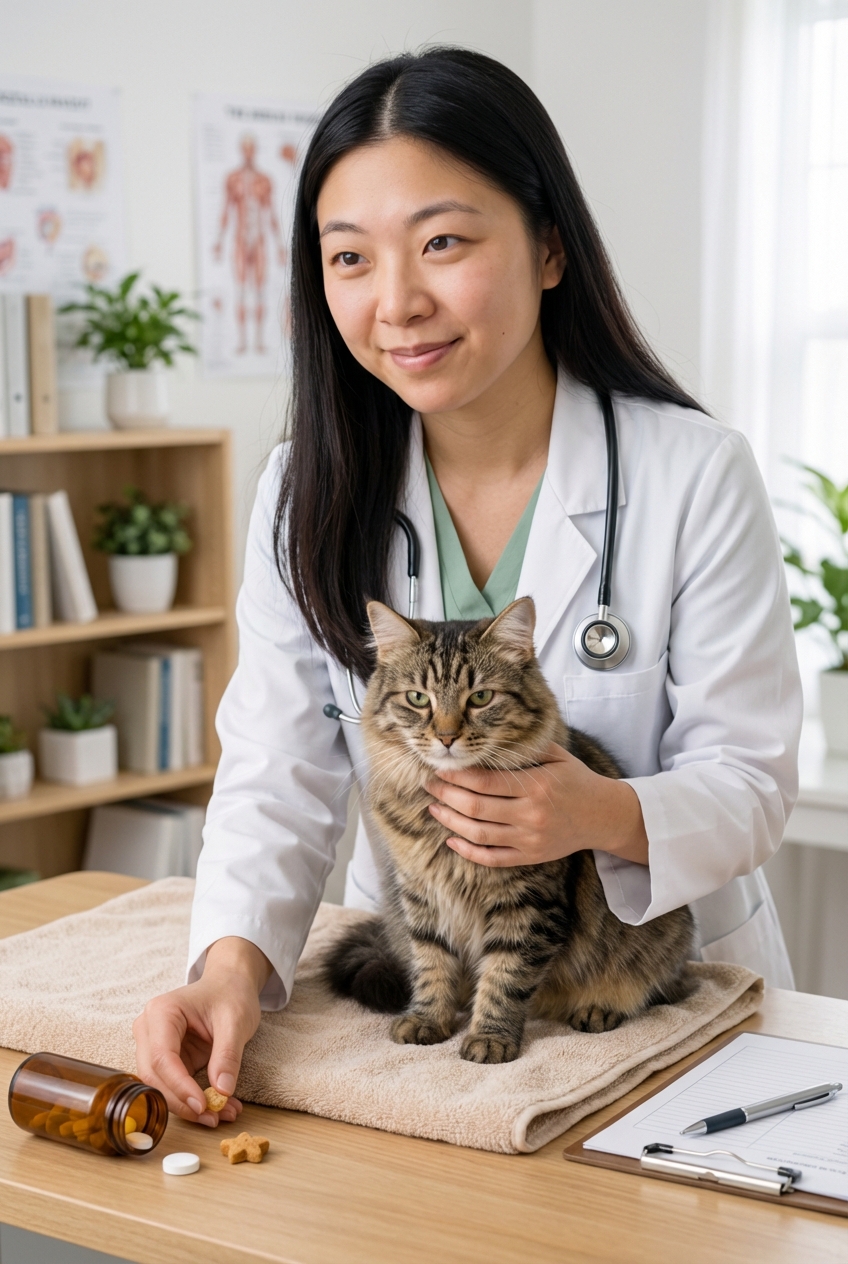
Giving a cat a tablet can feel like a tiny wrestling match you did not sign up for. You are not alone. In my work as a veterinary assistant, I have seen that most “difficult pill cats” are not being stubborn. They are being normal cats, with a strong gag reflex, a sensitive mouth, and a talent for spitting a pill into a different zip code.
The good news is that with the right setup and a calm, step-by-step approach, most people can learn to pill a cat safely. This guide walks you through what to do, what to avoid, and when to call your veterinarian for help.
Read this first: Stay calm, keep it quick, and end on a positive note. If you or your cat are getting stressed, take a short break and try again later.
Before you start
Confirm the basics
- Check the label: Verify the medication name, dose, and timing. Some meds must be given with food or on an empty stomach, so follow your vet’s directions. If you missed a dose, do not double up unless your veterinarian told you to.
- Use only what was prescribed: Never give a medication meant for humans or another pet unless your veterinarian prescribed it for your cat.
- Ask if the tablet can be altered: Some tablets can be crushed or split. Others cannot (extended-release, enteric-coated, some bitter meds). When in doubt, call your vet or pharmacist.
- Know your cat’s “no-go” zones: If your cat has mouth pain, dental disease, or recent oral surgery, pilling may require a different plan.
Gather supplies
- The tablet
- Small high-value treat or a spoon of wet food
- A small syringe of water (ask your vet how much is right for your cat) or, if appropriate, a small amount of low-sodium tuna water
- A towel for gentle restraint if needed
- Pill giver (optional but very helpful for some cats)
Quick safety note: For many cats, giving a pill “dry” is uncomfortable and can increase the risk of irritation in the esophagus. Follow your veterinarian’s guidance, but many clinics recommend a small water chaser or a bite of food afterward when appropriate.
Small but important: Wash your hands before and after dosing, and keep pills out of reach of kids and other pets.
About tuna water: Keep it to a small amount. If your cat has kidney disease, heart disease, or is on a restricted diet, check with your veterinarian first.
3 ways to give a tablet
1) Hide it in food
If your cat will take the pill voluntarily, take the win. This is the lowest-stress method for both of you.
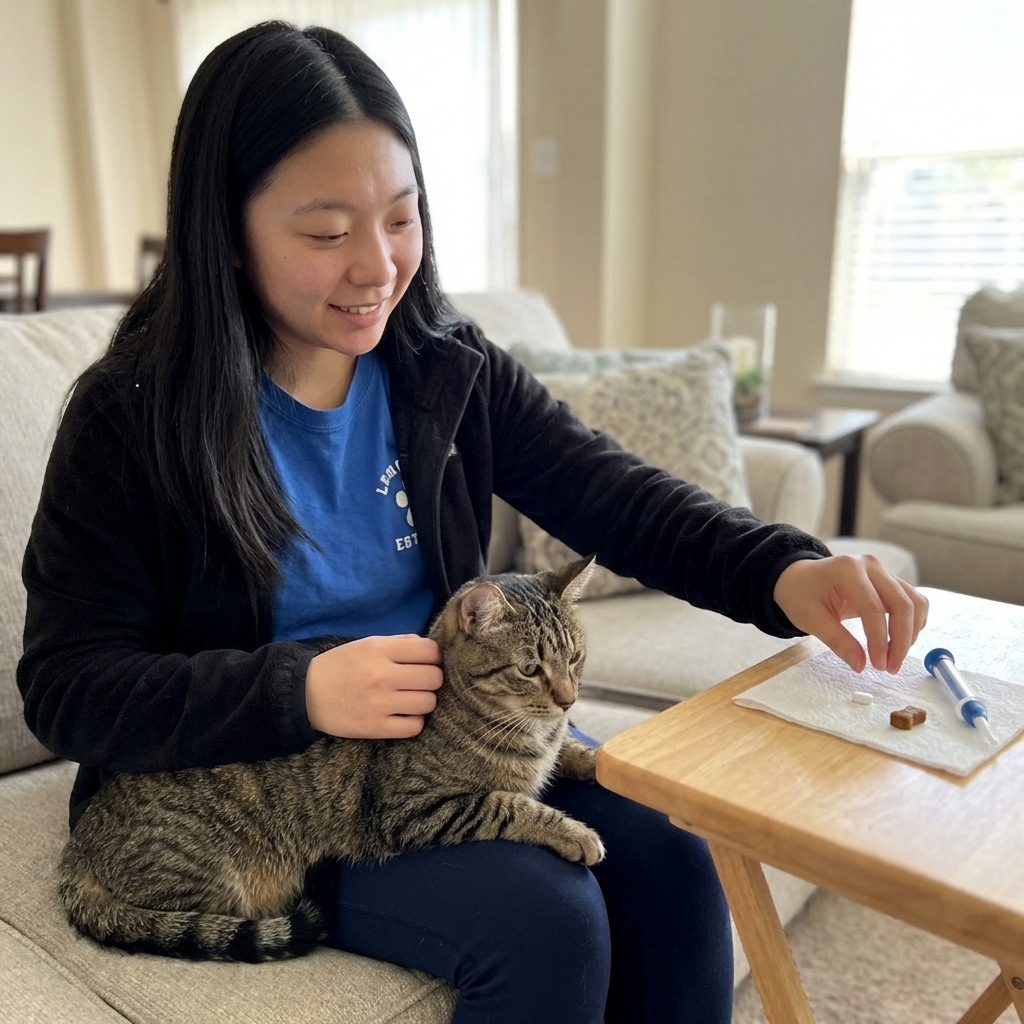
- Offer a small amount of a strong-smelling food (wet food, a lickable treat, or a tiny meatball of canned food).
- Try a “decoy” bite first with no pill, then the pill bite, then another decoy bite.
- Use only a small portion so you can be sure it was eaten.
Tip: Some tablets are very bitter once they get wet. If your cat chews and then refuses future doses, ask your vet about a coated option, a capsule, or a compounded flavor.
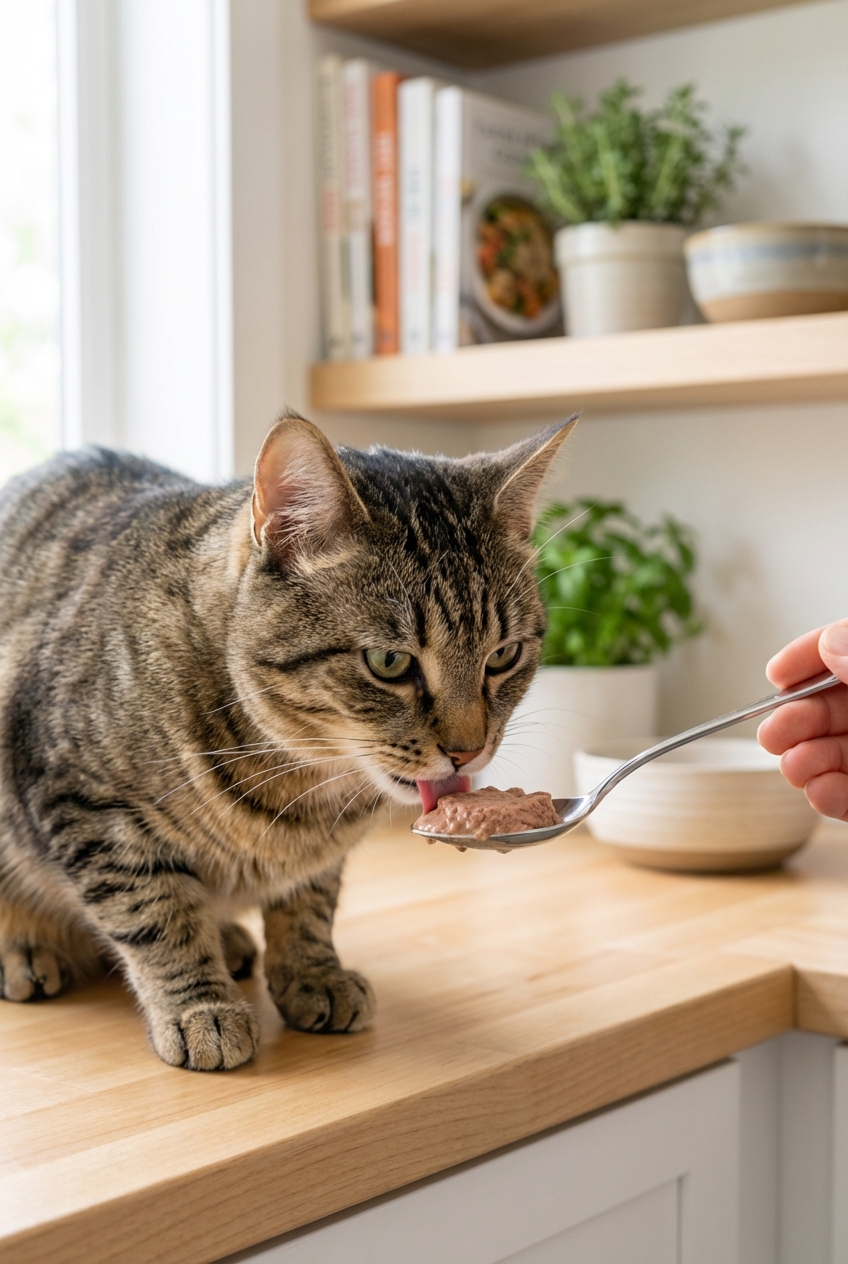
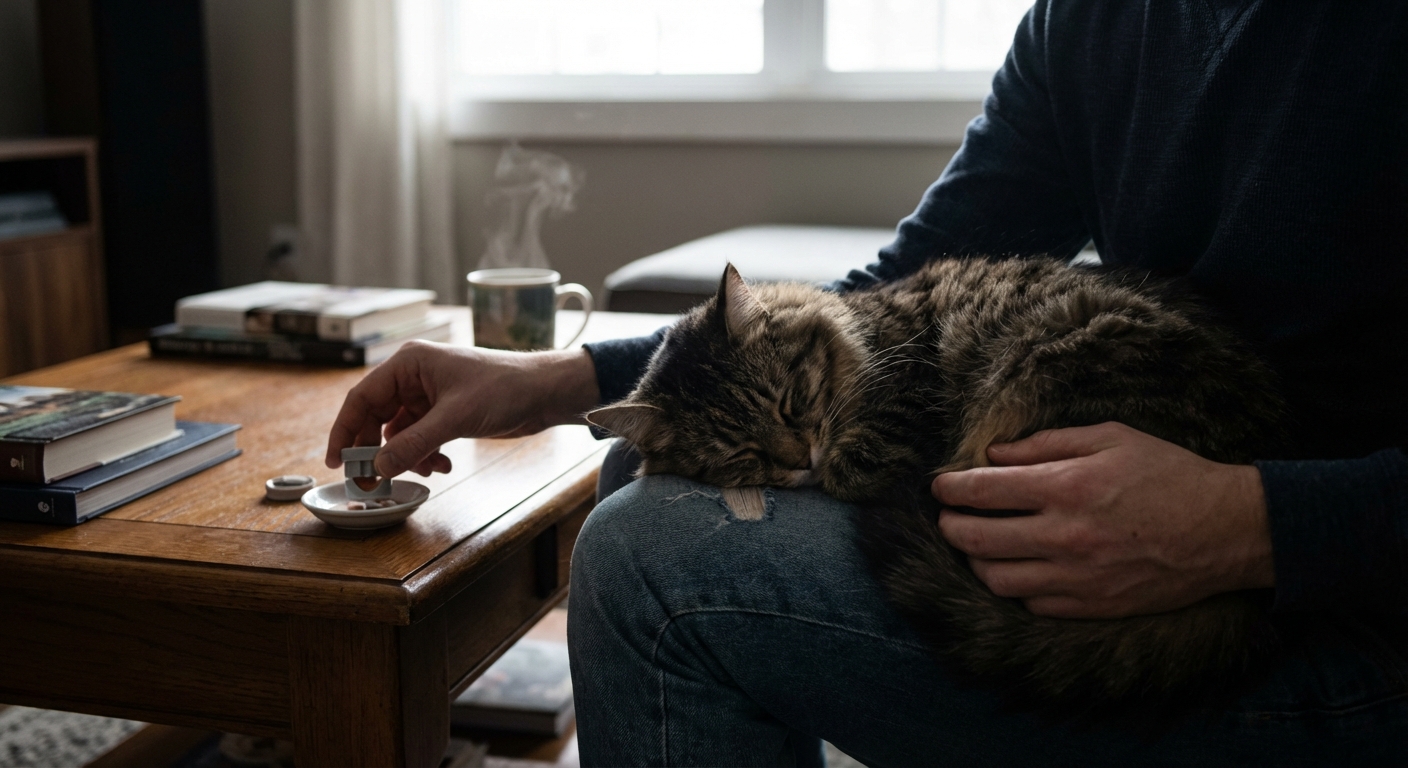
2) Use a pill pocket or soft treat
Pill pockets can work wonderfully, especially for cats that like treats. Mold the treat fully around the tablet so it is not exposed.
- Warm the treat slightly in your fingers to make it pliable.
- Make sure the tablet is fully sealed inside.
- Follow with a favorite treat to reduce suspicion next time.
If your cat is on a special diet: Check with your veterinarian before introducing new treats.
3) Direct pilling
Some medications cannot be hidden successfully, or your cat is too clever for food tricks. Direct pilling can be safe and quick when done correctly.
Step-by-step: towel wrap method
- Set up a calm space: Quiet room, door closed, everything within reach.
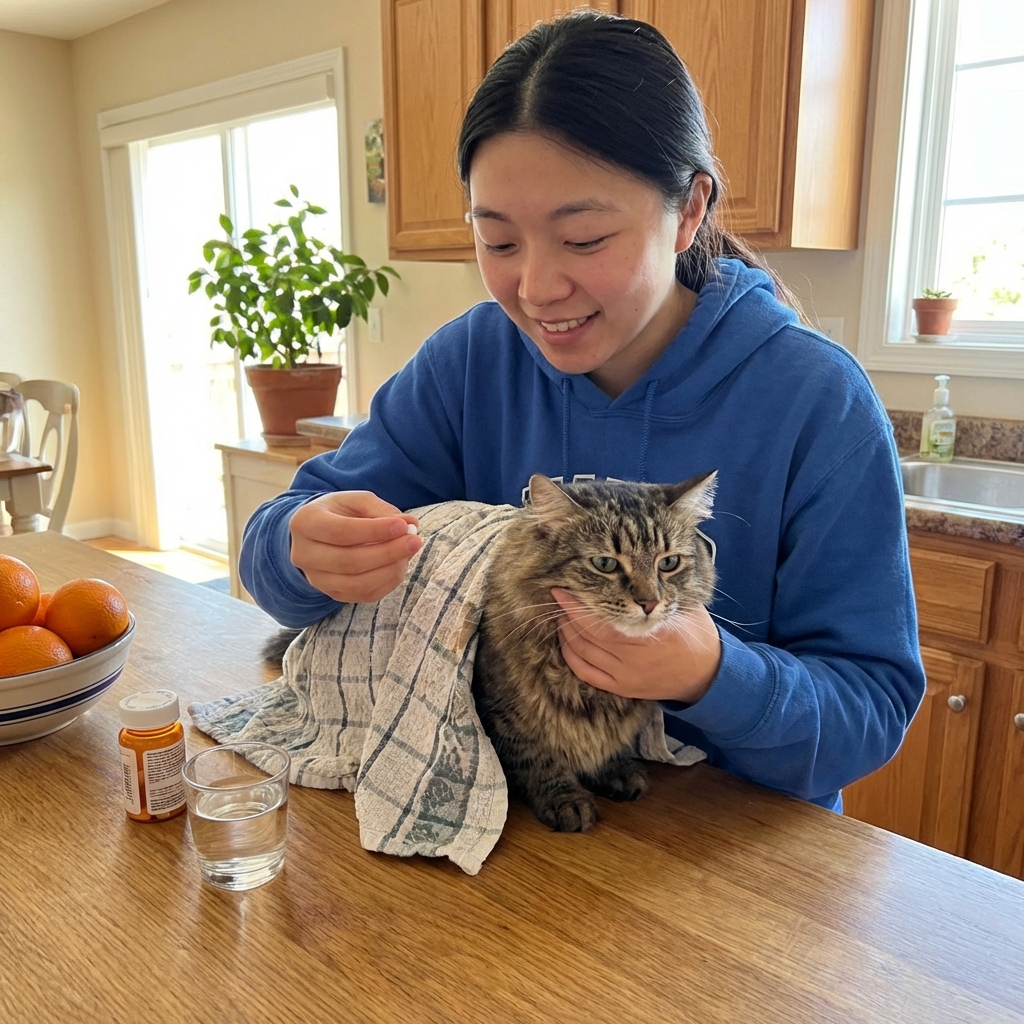
- Towel wrap if needed: Place your cat on the towel, wrap snugly around the body with front legs tucked in. This “kitty burrito” is restraint, not punishment.
- Position: Keep your cat’s body on a stable surface. Many cats do better facing away from you, backed gently against your torso.
- Open the mouth: With your non-dominant hand, place your thumb and forefinger at the corners of the mouth. Tilt the head slightly upward, then keep it level or only slightly elevated once the pill is in.
- Place the tablet: With your dominant hand, quickly place the tablet as far back on the tongue as you can, past the hump of the tongue. Do not push straight down the throat.
- Close and encourage a swallow: Close the mouth and hold it closed gently. You can softly stroke the throat to encourage swallowing. Some cats also swallow when you lightly touch the nose tip.
- Give a chaser: Offer a small sip of water by syringe into the side of the mouth (cheek pouch) or offer a bite of wet food, if your vet says it is okay for that medication.
- Reward: Praise, treat, and release. End the session quickly.
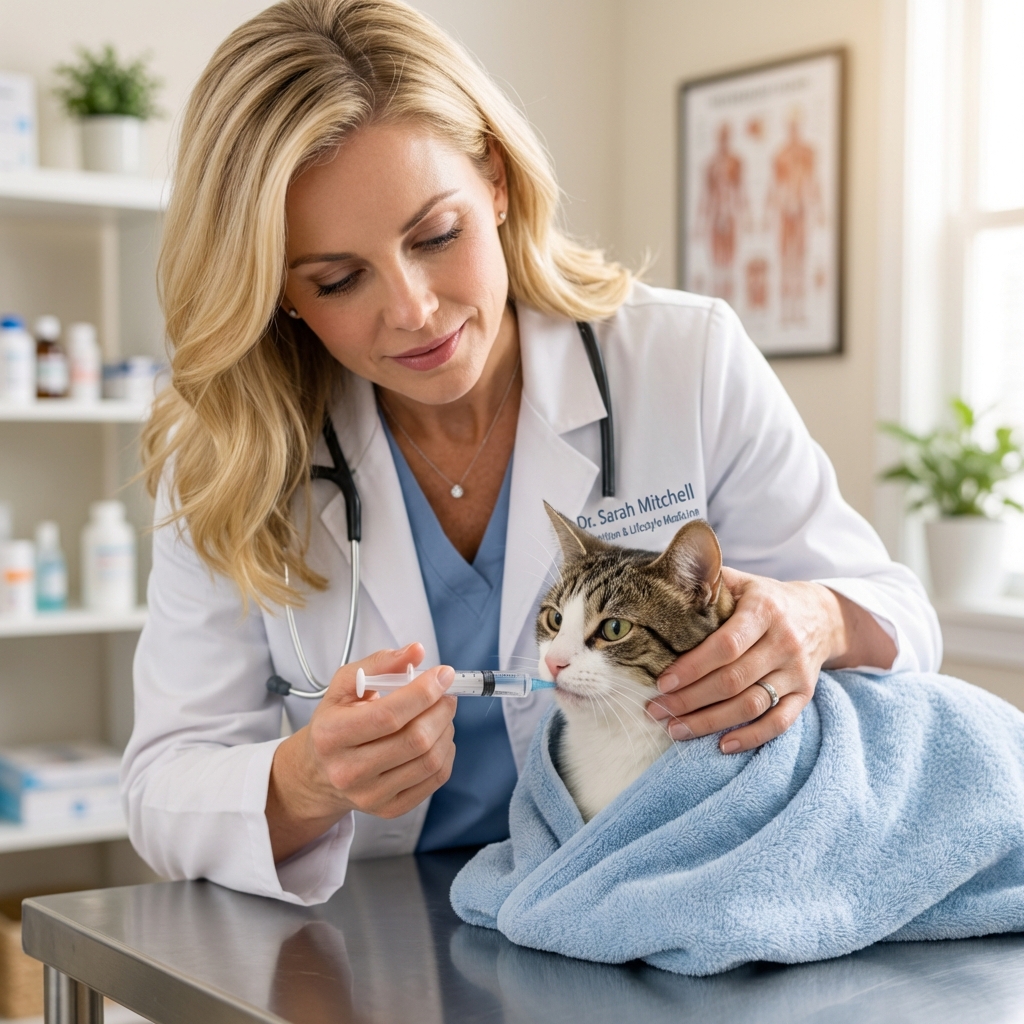
Using a pill giver
A pill giver can help you place the tablet farther back without risking a finger bite.
- Load the tablet securely.
- Open the mouth as above.
- Place the tip over the back of the tongue and depress the plunger.
- Follow with water or food as directed.
Important: Never tilt the head far back and squirt water straight toward the throat. Always aim into the cheek pouch to reduce the chance of aspiration.
Common mistakes
- Chasing your cat around the house: It increases fear and makes the next dose harder. Bring the cat to a calm space instead.
- Trying too many times in a row: If it is not working, pause and reset. Stress escalates quickly for cats.
- Crushing tablets without approval: Some medications lose effectiveness or become unsafe when altered.
- No follow-up swallow help: Some pills can stick. A water chaser or food bite can help move it along when appropriate.
- Scruffing hard: Some cats freeze, but many panic. Gentle, controlled handling is safer.
Did they swallow it?
- Watch for a clear swallow and a quick lick of the lips.
- Keep your cat in the room for a minute and check nearby surfaces.
- If your cat is a “cheek stuffer,” gently open the mouth and look inside the cheeks.
If you find the tablet spit out and you are unsure what to do next, call your veterinary clinic. Whether you can re-dose depends on the medication and timing.
When to call your vet
Contact your vet promptly if you notice any of the following:
- Repeated gagging, choking, or trouble breathing
- Drooling, pawing at the mouth, or signs the medication tastes extremely bitter
- Vomiting right after dosing
- Refusing food for more than 24 hours, or sooner (within 12 to 24 hours) in kittens, senior cats, or cats with chronic illness
- Suspected bite to you or injury to your cat
Also call if pilling is becoming a daily battle. Many medications come in alternative forms, including flavored liquids, smaller tablets, transdermal gels (only for certain drugs and not a drop-in substitute), or long-acting injections. A less stressful plan is often available.
If you get bitten: Cat bites can become infected quickly. Wash the area well and contact your doctor promptly, especially if the skin was punctured.
Long-term success
Make it routine
- Give meds at the same time and in the same place.
- Handle your cat’s mouth gently during non-med times and reward afterward.
- Keep sessions short. Calm and quick beats perfect and slow.
Protect the relationship
If your cat hides when you reach for the pill bottle, build positive associations. Bring out the bottle, give a treat, put it away. Repeat. You are teaching, “Pill time does not always mean stress.”
Bottom line
You do not need to be fearless to be good at giving a cat a tablet. You just need a plan, a calm setup, and a method that fits your cat’s personality. Start with the gentlest option, use direct pilling when necessary, and do not hesitate to ask your veterinary team for alternatives. We want your cat healthy, and we want you safe too.