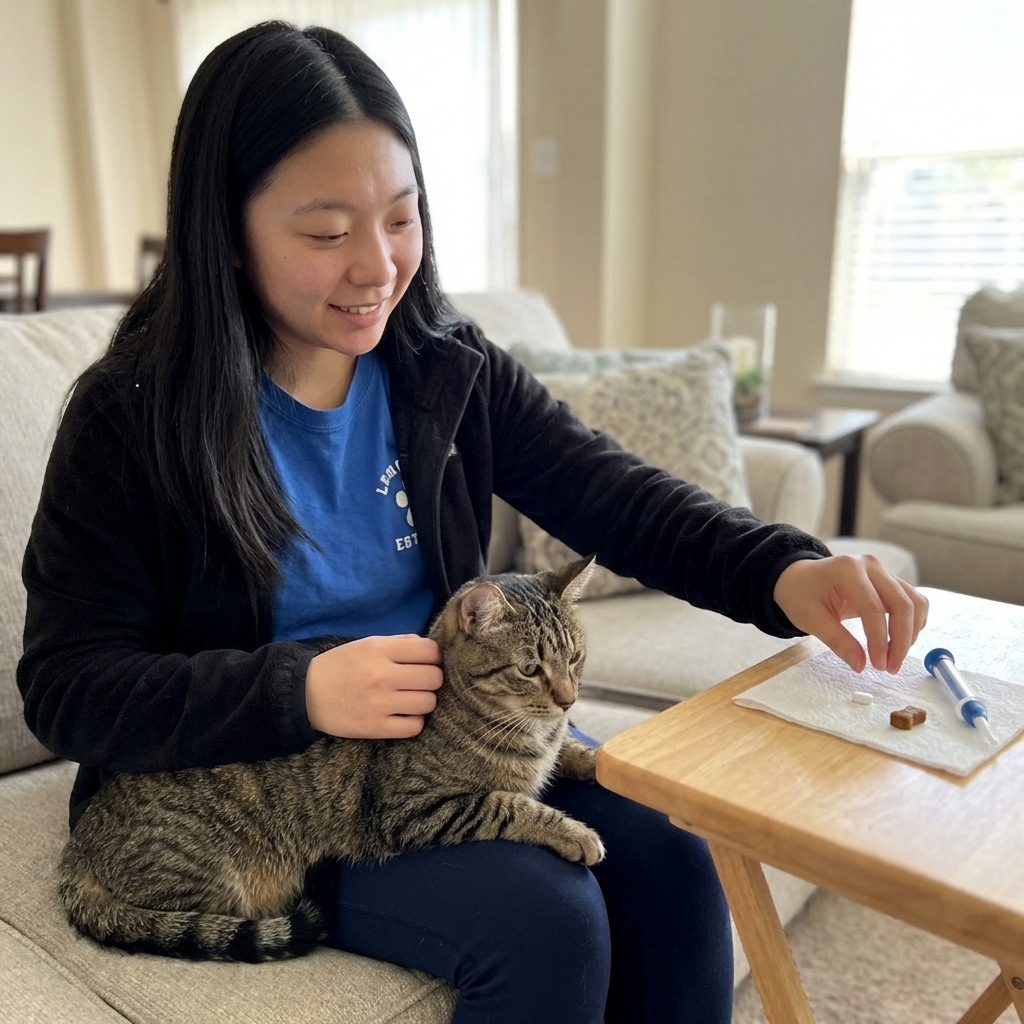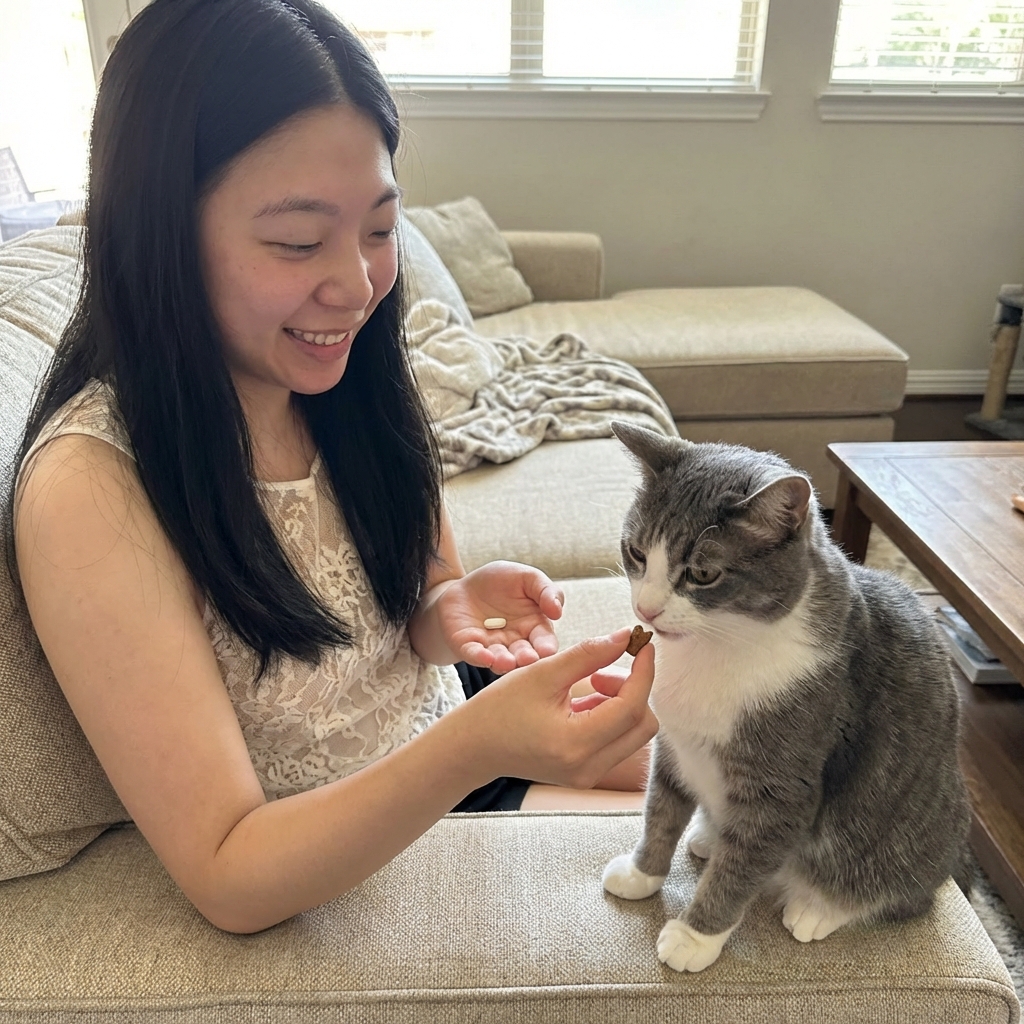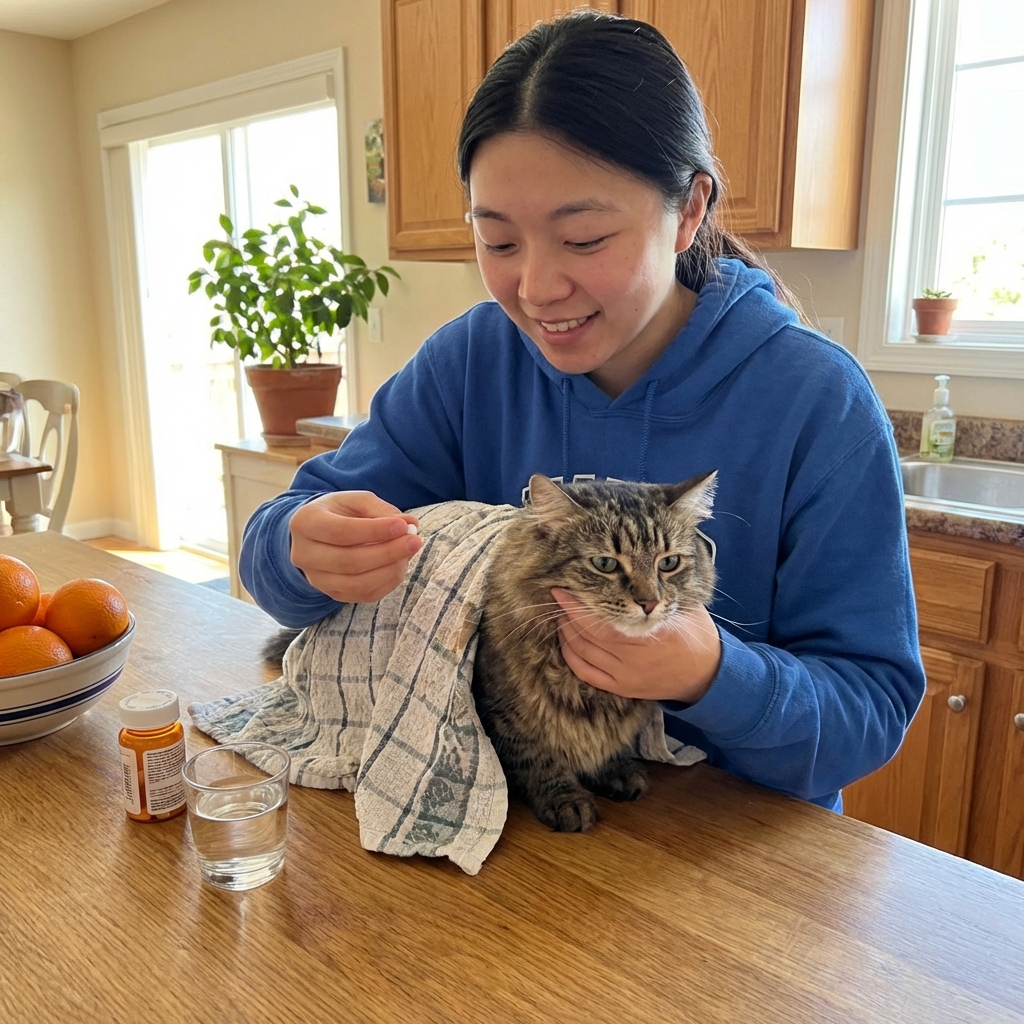
Step-by-step ways to pill a cat with less stress: hiding pills in food, the 3-bite trick, gentle direct pilling, using pill poppers, and preventing pills fro...
Article
•
Designer Mixes
How To Give a Cat a Pill (Without the Battle)

Shari Shidate
Designer Mixes contributor
Giving a cat a pill can feel like an extreme sport. Cats are sensitive to taste, texture, and stress, and many will spit a tablet out the moment you look away. The good news is that with a calm setup and the right technique, most people can learn to pill their cat safely and quickly.
Quick note: This article is educational and not a substitute for veterinary advice. If your cat is very ill, has trouble swallowing, or you are unsure whether a medication can be crushed or mixed with food, ask your veterinarian first.
Before you start
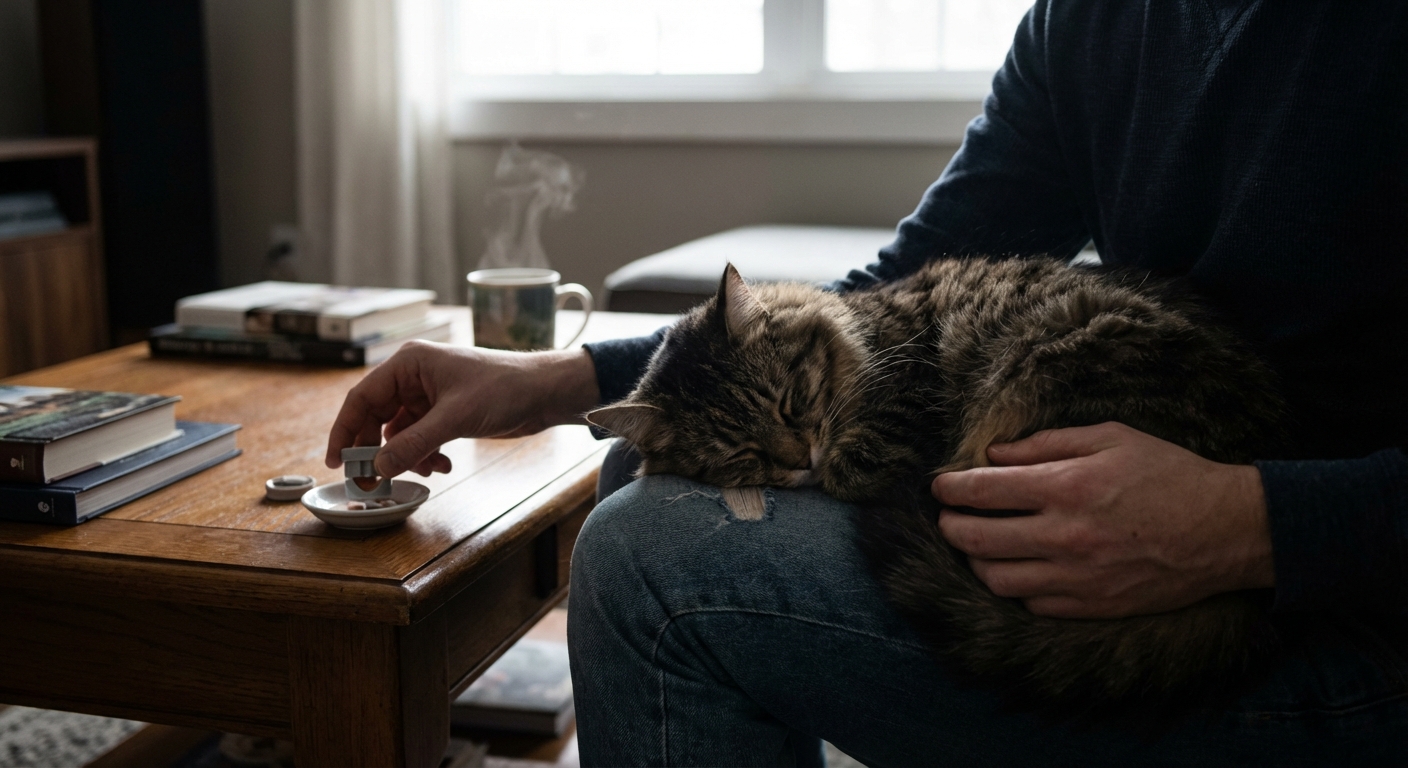
Most pilling problems happen before the pill ever reaches your cat. A few small preparations can make a big difference.
Ask these questions first
- Can this pill be crushed or opened? Many medications must be swallowed whole (including some extended release or coated tablets). Crushing the wrong medication can reduce effectiveness or irritate your cat’s mouth and stomach. Some medications can also be unsafe for you to handle if crushed (for example, certain hormones or chemotherapy drugs), so confirm with your vet or pharmacist.
- Should it be given with food? Some medications need an empty stomach, while others are gentler with a small meal.
- Tablet or capsule? Capsules can be more likely to stick in the esophagus, so many vets recommend a small water or food follow-up when appropriate.
- What if a dose is missed or vomited? Your vet can tell you whether to repeat the dose or wait.
Gather supplies
- The pill, already removed from packaging
- A few high-value treats
- A small amount of a safe soft food (if approved), such as a tiny spoonful of wet food
- A pill popper (pill gun) if needed
- A small oral syringe with water (1 to 3 mL) if your vet says it is appropriate
- A towel for a gentle “cat burrito” if your cat uses their paws to push away
Choose a quiet room, close the door, and keep your movements slow. Cats read tension quickly, so aim for calm and confident.
Method 1: Hide it in food
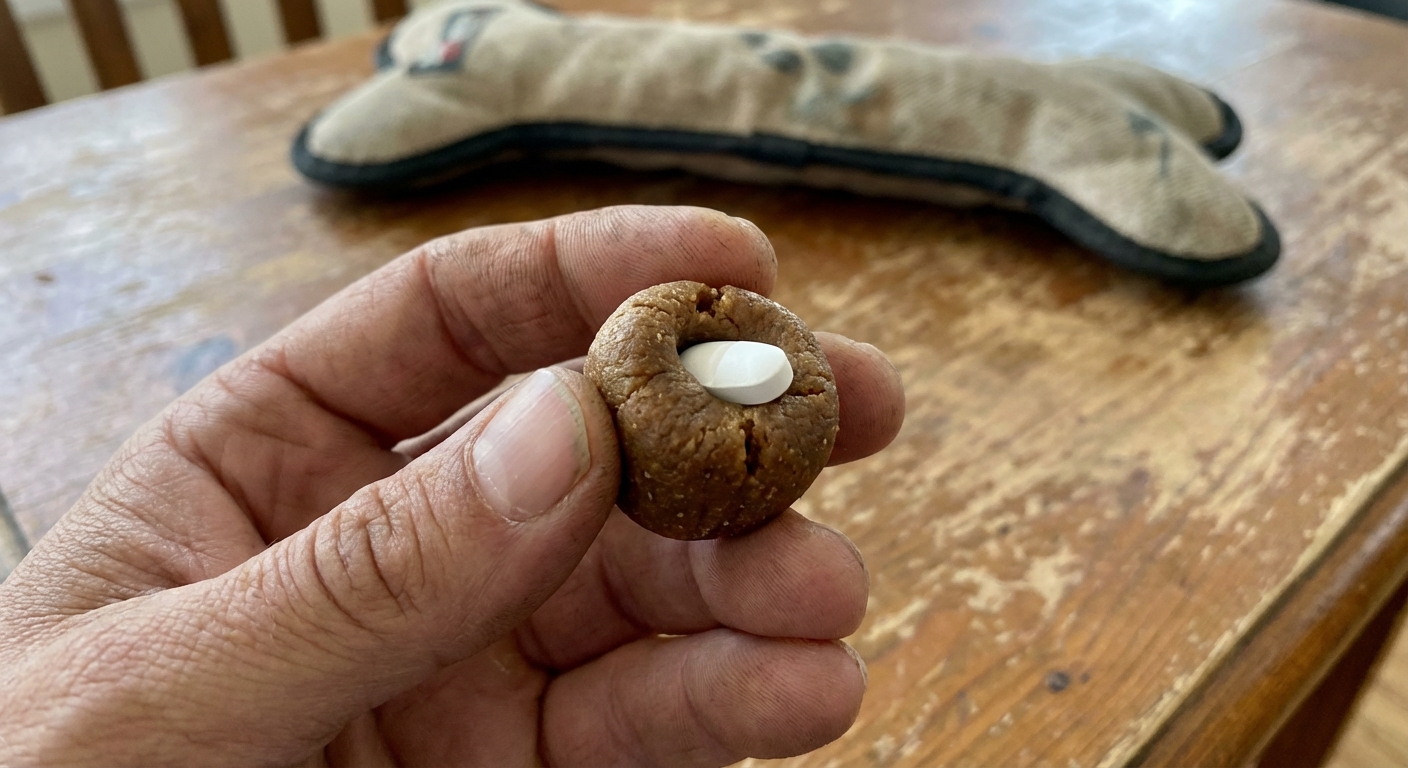
If your cat will take medication willingly, this is the least stressful option. Some cats do great with pill pockets or a small meatball of wet food.
How to do it
- Try a “test treat” first: Offer a plain treat or small bite of wet food so your cat starts eating confidently.
- Use a tiny portion: Hide the pill in a small amount, just enough to swallow quickly. If the portion is large, some cats chew and discover the pill.
- Follow with a favorite bite: Immediately offer another tasty bite after the medicated one to encourage swallowing.
Common mistakes to avoid
- Mixing into the full meal: If your cat refuses the food, you may not know how much medication they actually got.
- Using strong smelling “maskers” without guidance: Some foods are not appropriate for cats or may interact with certain medications.
Method 2: Direct pilling
If food tricks do not work, a gentle direct approach is often the most reliable. The goal is to place the pill far enough back on the tongue that your cat reflexively swallows, then immediately reward. Keep restraint minimal and stop if your cat escalates into a hard struggle.
Step by step
- Position your cat: Place your cat on a stable surface or in your lap. Many cats do best facing away from you so they cannot back up easily.
- Hold the head gently: With your non-dominant hand, place your thumb and fingers on either side of the upper jaw (behind the canine teeth). Tilt the head slightly upward. Do not crank the neck back.
- Open the mouth: Use your dominant hand to gently lower the jaw by pressing on the lower incisors.
- Place the pill: Drop or place the pill on the back third of the tongue (near the base). This reduces the chance it will be spit out.
- Close and encourage swallowing: Close the mouth and hold it closed for 1–2 seconds. A gentle throat stroke may help, and some cats swallow if you softly blow toward the nose. If your cat struggles or seems stressed, stop and reset.
- Finish with water or a treat: If your vet approves, offer a small sip of water from an oral syringe slowly into the cheek pouch (from the side of the mouth), only if your cat is calm and swallowing. Follow with a treat or a small bite of food to create a positive association.
How to tell your cat swallowed it
- You see a clear swallow motion in the throat.
- Your cat licks their nose or lips several times.
- They do not immediately spit out a wet, foamy pill.
If your cat is a champion at “pretend swallowing,” do a quick, gentle check: look near the front of the mouth and under the tongue if your cat allows it. Then offer a treat to encourage a real swallow.
Important safety note: Some medications can cause esophageal irritation if they lodge after swallowing. Doxycycline and clindamycin are commonly cited examples. Many vets recommend following with a small amount of water or food to help the pill reach the stomach, unless your veterinarian has told you not to.
Method 3: Pill popper
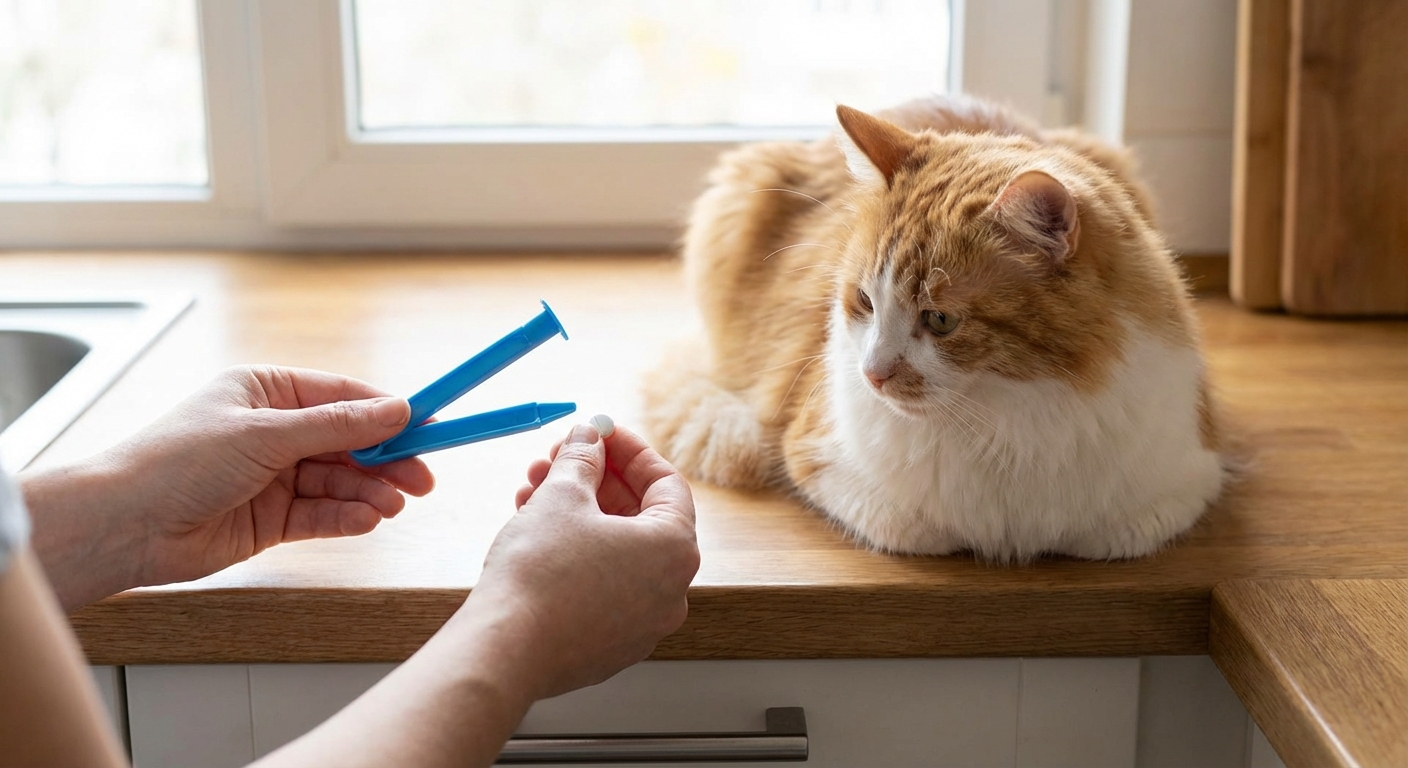
A pill popper can be helpful if you are worried about being bitten or if your cat is very quick at spitting pills out. It allows you to place the pill farther back without putting your fingers in your cat’s mouth.
How to use it
- Load the pill according to the product instructions.
- Open your cat’s mouth using the same gentle head hold as above.
- Place the tip over the back of the tongue (aiming for the back third), but do not push it into the throat. If your cat gags, you are likely too far back.
- Depress the plunger to release the pill, then close the mouth and encourage swallowing.
Go slowly the first few times. Many cats accept a pill popper well when it is paired with immediate treats afterward.
The towel wrap
If your cat scratches, backs away, or uses their paws to block your hands, a towel wrap can help you work safely while keeping your cat from escalating.
Simple “cat burrito” wrap
- Lay a towel flat.
- Place your cat in the center with their head near one edge.
- Wrap one side snugly around the body, then the other side, leaving only the head out.
- Keep your grip gentle but secure, and work efficiently.
A wrap should never restrict breathing. If your cat is open-mouth breathing, panting, or panicking, stop and call your veterinarian for alternatives.
If your cat is consistently scratching or you are doing this alone and it feels unsafe, consider a second person to help steady the body (not the face), or ask your veterinary team for an in-clinic demonstration. Some cats do better with a different formulation than with more restraint.
Make the next dose easier
Cats learn from patterns. If medication time always ends in fear, it gets harder each day. If it ends in relief and rewards, many cats become more tolerant.
- Reward immediately: A favorite treat, a lickable puree, or a brief play session can help.
- Keep it short: Aim for a calm 30 to 60 seconds, not a long struggle.
- Return to normal: Let your cat leave and decompress.
- Track doses: Use a simple checklist so you do not double dose.
Practice when you are not medicating
If your cat is anxious, do a few quick “practice reps” on non-med days: touch the cheeks, briefly lift the lip, then treat and stop. This kind of low-pressure handling can make real medication days feel less dramatic.
What not to do
- Do not force a pill down with lots of water or food. This increases the risk of choking or aspiration.
- Do not tilt the head extremely far back. A slight tilt is enough.
- Do not pry the mouth open aggressively. This can injure the gums, teeth, or your hands.
- Do not crush medication unless your vet confirms it is safe. Some pills taste extremely bitter and can cause drooling and foaming if crushed. Others should not be crushed due to safety risks for people handling the powder.
When to call your vet
Stop and get professional guidance if you notice any of the following:
- Coughing, gagging that does not resolve quickly, or breathing difficulty
- Repeated vomiting after dosing
- Drooling or pawing at the mouth that lasts more than a few minutes (possible irritation from a bitter pill)
- Refusal to eat, especially if it continues into the next day. This is particularly concerning in overweight cats due to the risk of hepatic lipidosis.
- You cannot reliably get the full dose into your cat
If pilling is consistently stressful, ask your veterinarian about alternatives like flavored liquid medication, smaller tablets, compounded treats, transdermal options when appropriate, or a different medication plan.
Keep it calm
I often remind people that small, consistent habits compound into remarkable results over time. The same is true with cats and medication. A quiet environment, confident handling, and a treat at the finish line can turn a daily struggle into a quick, manageable routine.
If you are stuck, ask your veterinary team to watch your technique and help you troubleshoot. A two-minute demo can save you (and your cat) a lot of stress.