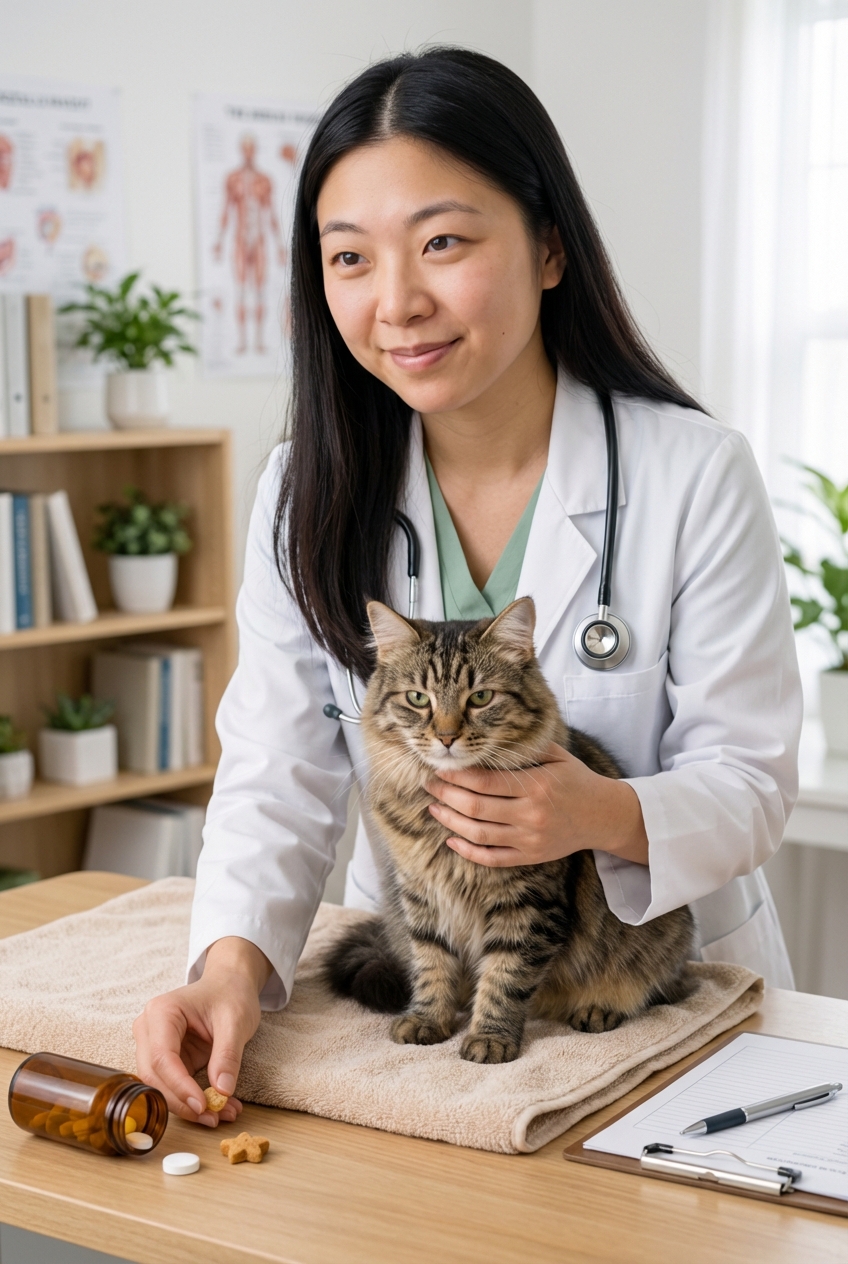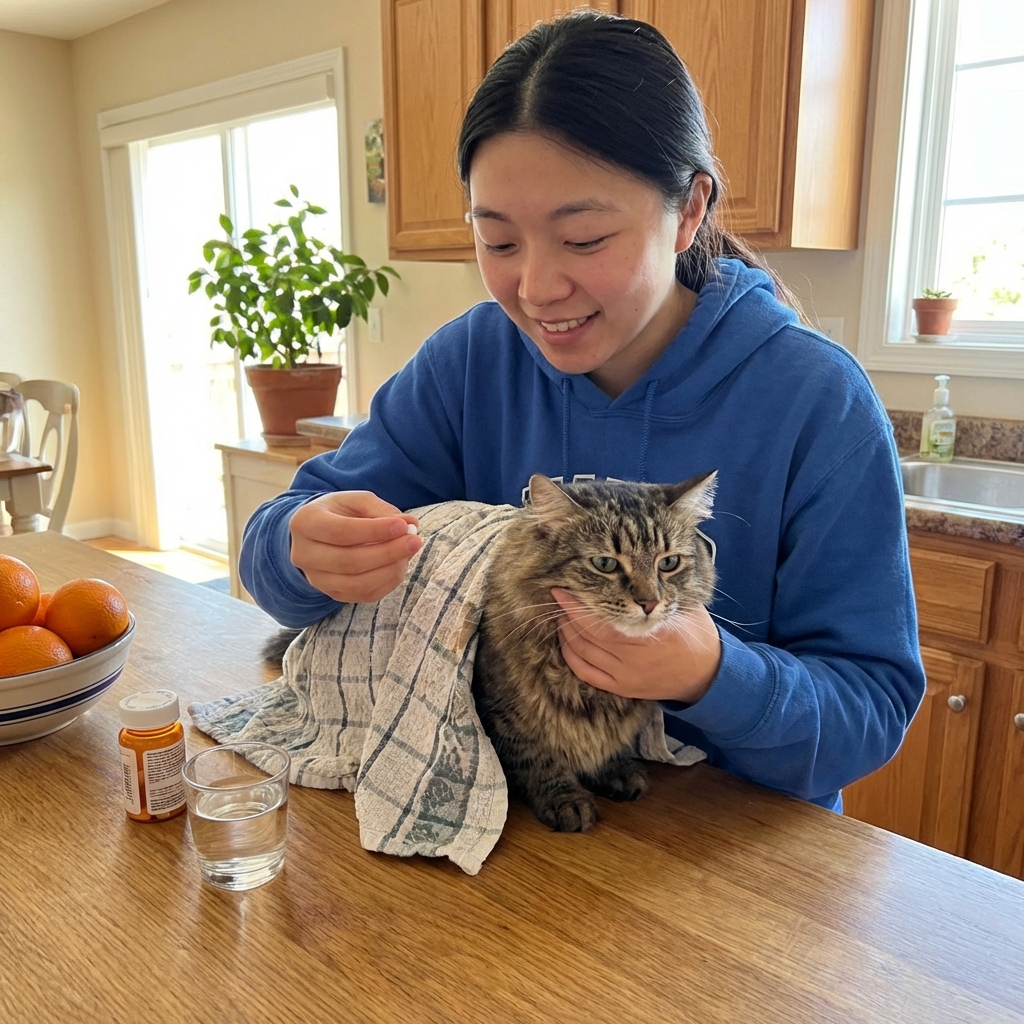
Step-by-step ways to pill a cat with less stress: hiding pills in food, the 3-bite trick, gentle direct pilling, using pill poppers, and preventing pills fro...
Article
•
Designer Mixes
How to Give a Cat a Pill by Mouth

Shari Shidate
Designer Mixes contributor
Giving a cat a pill can feel like a tiny wrestling match you did not sign up for. I get it. As a veterinary assistant, I have helped a lot of families through this, and the good news is that many cats can learn to accept medication when you use the right technique, the right timing, and a calm plan.
This guide walks you through vet-clinic style methods to pill a cat by mouth, plus safer alternatives when your cat is truly not having it.
Before you start
1) Check if the pill can be split or crushed
Some tablets can be split, some can be crushed and mixed into food, and some should never be altered (like certain extended-release medications or special coatings). If you are unsure, call your veterinarian or pharmacist before changing the pill.
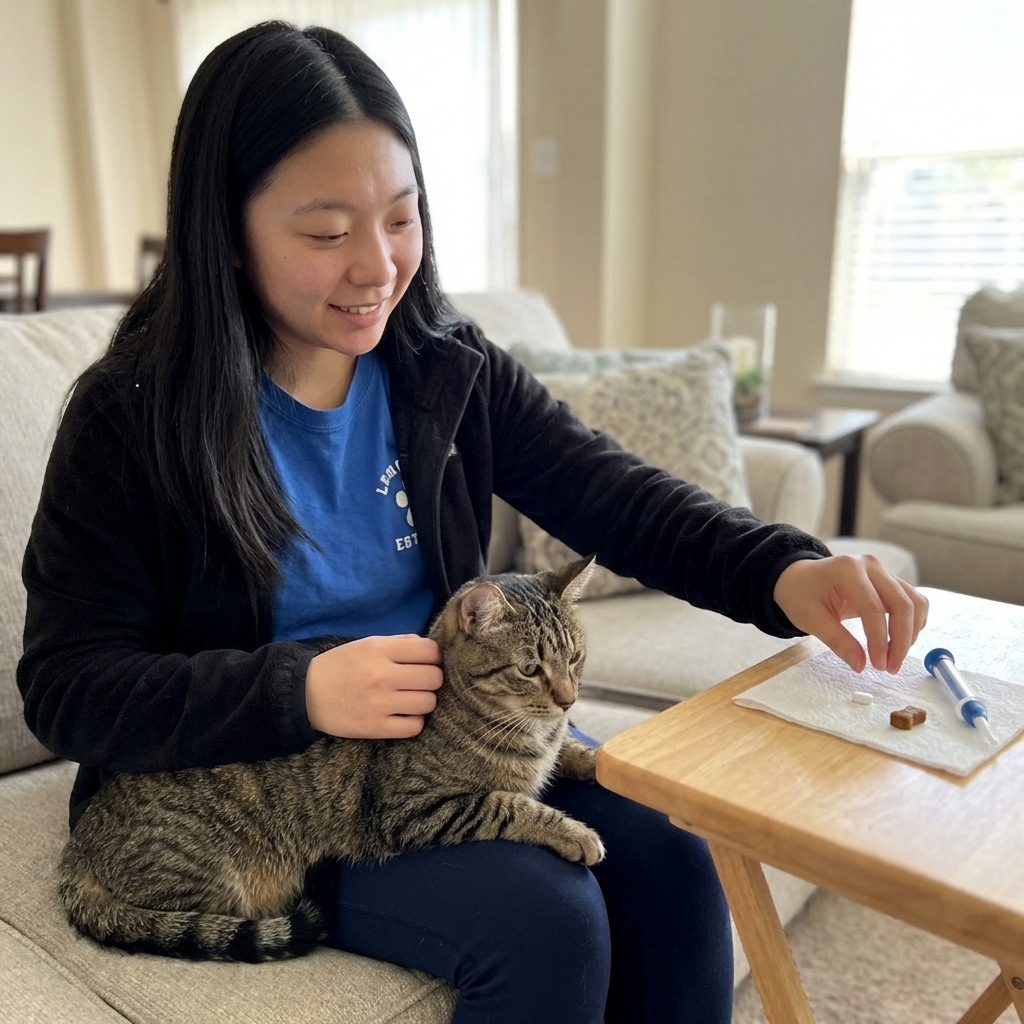
2) Gather your tools
- The pill (double-check the label and dose)
- A few high-value treats (or a spoon of wet food)
- A small syringe of water (a small amount, often about 1 to 3 mL, but follow your vet’s instructions) or a vet-approved liquid chaser
- A towel (for the “kitty burrito” if needed)
- Pill popper (optional but very helpful for many people)
- Optional: empty gelatin capsules (only if your vet says it is OK, helpful for bitter pills)
Set everything within arm’s reach. When you pause to search for supplies, cats get suspicious fast.
Quick safety note: If you use any “broth,” only use pet-safe, vet-approved options. Many human broths are high in sodium and may contain onion or garlic.
3) Pick a calm spot and time
Choose a quiet room with the door closed. A non-slip surface helps, like a rug or your lap. Aim for a time when your cat is naturally calmer, often after a play session or nap.
If you are not comfortable doing this, your veterinary team can demonstrate the technique in the exam room. That is a normal request.
4) If you have more than one cat
Separate cats during dosing and during the treat reward. This helps prevent the wrong cat from eating medicated food or treats, and it keeps the moment calmer for everyone.
Option 1: Direct pill by hand
This is a reliable clinic method because it does not depend on your cat choosing to eat medicated food.
Plan for calm and quick: Have everything ready, take a breath, and aim for one smooth attempt. If your cat panics, stop, give everyone a break, and try again later or switch methods.
Step-by-step
- Position your cat: Place your cat facing away from you on your lap or a table. Keep their body close to yours for stability.
- Hold the head gently: With your non-dominant hand, place your thumb and forefinger on the cheekbones (not the throat). Tilt the nose slightly upward.
- Open the mouth: Instead of pressing on teeth, use a finger at the corner of the mouth to gently encourage the jaw to open, or lightly guide the lower jaw down.
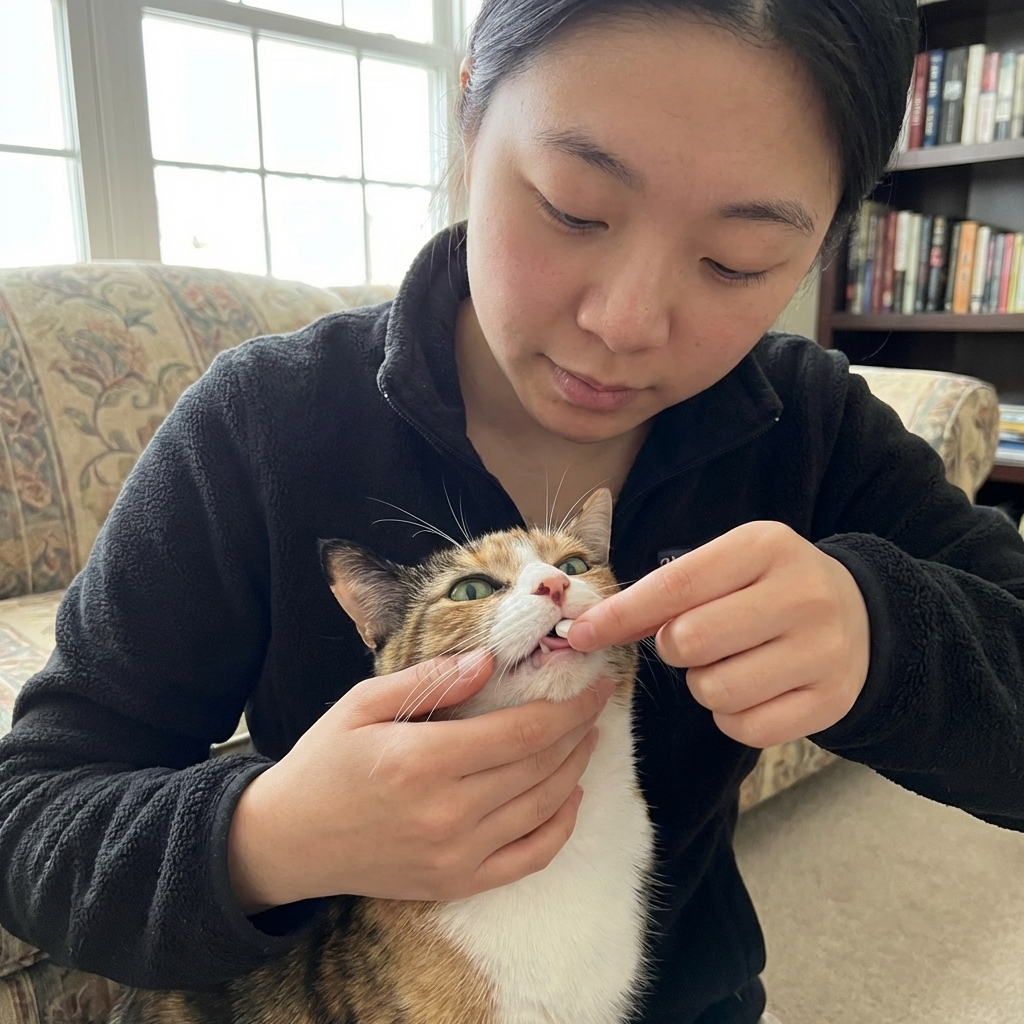
- Place the pill far back: Aim for the back of the tongue, just past the “hump” in the middle. The farther back it lands, the less likely it is to be spit out.
- Close and wait for a swallow: Close the mouth and hold it closed for 2 to 5 seconds. You can try a gentle nose rub or a brief, light throat stroke if your cat tolerates it, but do not force it. Many cats swallow when they lick their nose.
- Follow with a liquid chaser: Offer a small amount of water (often about 1 to 3 mL, or as your vet advises) by syringe into the side of the mouth (the cheek pouch), slowly, giving your cat time to swallow. Never squirt liquid straight to the back of the throat.
- Reward immediately: Treat, praise, and then give space. You are building a routine where “pill time” predicts something good.
Why the water matters: Cats can develop pill-related esophageal irritation if a tablet sticks on the way down (classic examples include doxycycline and clindamycin). Your veterinarian may have specific instructions for your cat’s medication, so use the “water chaser” approach in the way they recommend and go slowly to reduce aspiration risk.
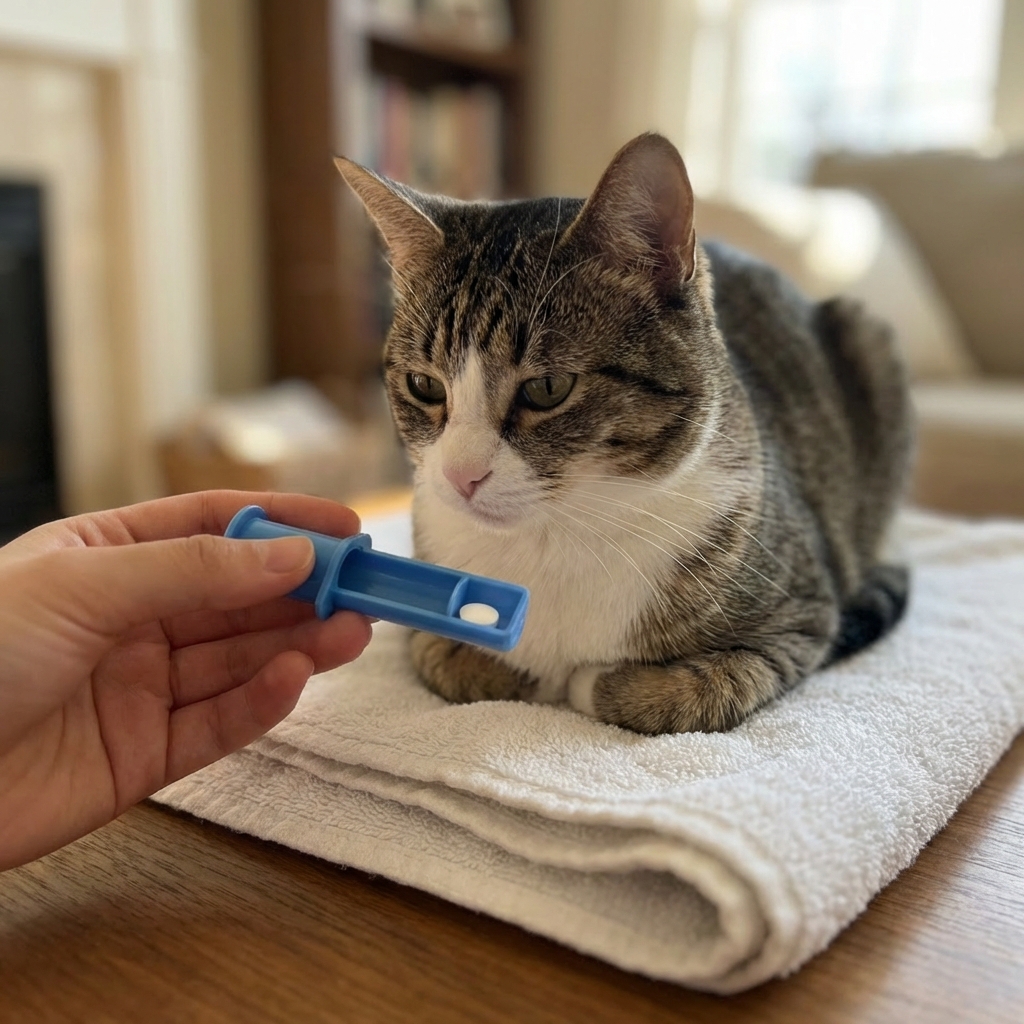
Option 2: Pill popper
A pill popper (pill gun) can reduce finger stress and helps you place the pill farther back with more control.
How to use it
- Load the pill into the soft tip (if yours has one).
- Open the mouth using the same gentle head hold as above.
- Slide the pill popper over the tongue toward the back, then press the plunger to place the pill (do not “shoot” it forcefully).
- Close the mouth, wait for a swallow, then offer a small amount of water into the cheek pouch, slowly.
Tip: Practice the hand positioning and angle first (even with the popper empty) so you feel confident and controlled.
Option 3: Hide the pill in food
This works best for cats who are food-motivated and not suspicious. It also depends on the medication being safe to give with food. Ask your vet if you are unsure.
What tends to work
- Pill pockets: Use just enough to cover the pill, then offer a plain piece first, medicated piece second, plain piece third.
- Wet food “meatball”: Wrap a small amount of wet food around the pill. Keep it bite-sized so your cat swallows rather than chews.
- Lickable treats: Some cats will swallow a small pill tucked into a thicker lickable treat, but many will detect it if the pill is large or bitter.
- Capsule trick (vet-approved): For very bitter tablets, your vet may OK placing the pill into a small empty gelatin capsule to reduce taste, then giving it with the direct method.
If your cat bites into the pill and it tastes bitter, they may refuse that food for a long time. When that happens, switch methods rather than escalating the food battle.
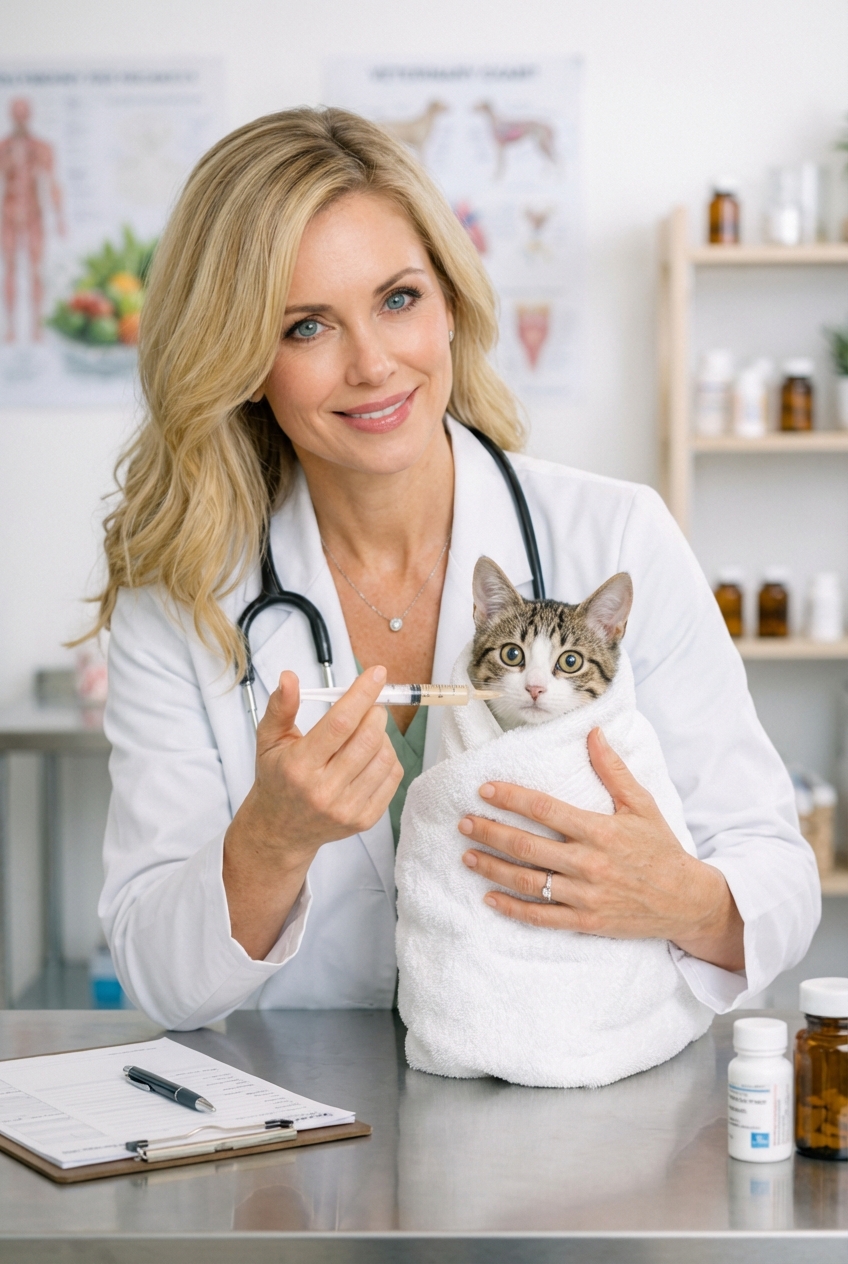
Towel wrap for safety
If your cat scratches, flails, or tries to back away, a towel wrap is not mean. It is a safety tool that helps you be gentle and quick.
Simple towel wrap
- Lay a towel flat.
- Place your cat in the center, facing away from you.
- Wrap one side snugly over the body, then the other side, leaving only the head out.
- Pill using the hand technique or a pill popper.
Did it go down?
Cats are talented at hiding pills in their cheeks and spitting them out later.
- Watch for a swallow: A visible throat movement or a series of licks can be a good sign.
- Check the lips and front of the mouth: Some cats tuck pills into the lower lip area.
- Offer a treat or a little food: If they eat normally afterward, the pill is more likely down.
- Look around: Check the floor, blankets, and the side of your chair for a “mystery pill” later.
Mistakes to avoid
- Hesitating too long: Calm and efficient beats slow and anxious. Have everything ready.
- Tilting the head too far back: A slight tilt is enough. Over-tilting can make some cats panic.
- Putting fingers deep in the mouth: Many cats will bite reflexively. Use a pill popper if you are worried.
- Skipping the liquid chaser: Especially important for tablets that can stick.
- Squirting liquid too fast: Always aim into the cheek pouch and go slowly so your cat can swallow.
- Chasing your cat around the house: That turns medication into a daily fear event. Instead, bring your cat into a small room first, then start.
When to stop and call your vet
Please reach out to your veterinarian if any of these happen:
- Your cat coughs, gags repeatedly, or seems to choke
- Your cat is drooling heavily (some meds are bitter, but intense drooling can signal stress or irritation)
- Your cat vomits repeatedly after dosing
- You see signs of pain swallowing, decreased appetite, or hiding that persists
- You are getting scratched or bitten, or your cat is becoming fearful of you
Many medications have alternatives: smaller tablets, flavored compounded liquids, transdermal gels (for certain drugs), or long-acting injections. Transdermal medications are not available for every drug, and absorption can be variable, so ask your veterinarian what is appropriate for your cat.
Quick troubleshooting
If your cat foams or drools
This often happens with bitter meds or if the pill dissolves in the mouth. Ask your vet if the pill can be placed in a capsule, given with food, or switched to a different form. A slow liquid chaser can help.
If your cat spits the pill out
Try a pill popper, aim farther back on the tongue, and close the mouth gently for a few seconds while waiting for a swallow. Follow with a small treat to encourage swallowing.
If your cat gets fearful
Pause and reset. Do one calm “practice session” with treats only, then try again later. If fear is escalating, ask your vet about other medication options.
A routine that helps
- Bring your cat into a quiet room and close the door.
- Offer one small treat.
- Pill quickly with the hand method or popper.
- Give a small amount of water into the cheek pouch, slowly (often about 1 to 3 mL, or as directed).
- Offer 2 to 3 treats and release.
Consistency matters. Cats learn patterns, and your calm confidence can change the whole experience over time.
Cleanup tip: Wash your hands after handling medication (especially transdermals). Store pills safely, and if you drop one, pick it up right away and dispose of it per label instructions or your vet’s guidance.