A vet assistant’s guide to the best way to bathe a cat without the drama—when to bathe, what to prep, cat-safe shampoo tips, rinsing, towel drying, and a...
Article
•
Designer Mixes
How to Give a Cat a Bath

Shari Shidate
Designer Mixes contributor
Most cats do a fantastic job grooming themselves. So when a bath is truly needed, it can feel like a tiny, wet rodeo. The good news is that with the right setup and a calm, step-by-step approach, many cats tolerate bathing better than you might expect. As a veterinary assistant, I have seen that the bath itself is rarely the biggest problem. It is the surprises that stress cats out: loud water, slippery footing, and being rushed.
This vet-informed guide focuses on safety, low-stress handling, and simple tips that protect your cat’s skin and your hands. It is not a substitute for veterinary care.
Do cats need baths?
Often, no. Many cats never need a full bath. But veterinarians may recommend bathing in certain situations, such as:
- Something sticky, oily, or toxic on the coat (paint, grease, certain adhesives). If you suspect a toxic substance, call your veterinarian or a pet poison hotline before bathing. Do not use solvents like paint thinner on your cat.
- Flea dirt or heavy flea exposure as part of a broader flea control plan. A bath can help remove dirt and some fleas, but consistent vet-recommended flea prevention (topical or oral) is usually essential.
- Medical reasons like certain skin infections or allergies, when your vet prescribes a medicated shampoo.
- Senior, overweight, or arthritic cats who cannot groom well.
- Long-haired cats with recurring mats or soiling around the rear end.
If your cat is just a little dusty or shedding, try a warm damp washcloth, grooming wipes made for cats, or a good brushing session first.
Before you start
A calm, prepared environment is the secret weapon. Gather everything first so you are not leaving your cat unattended mid-bath.
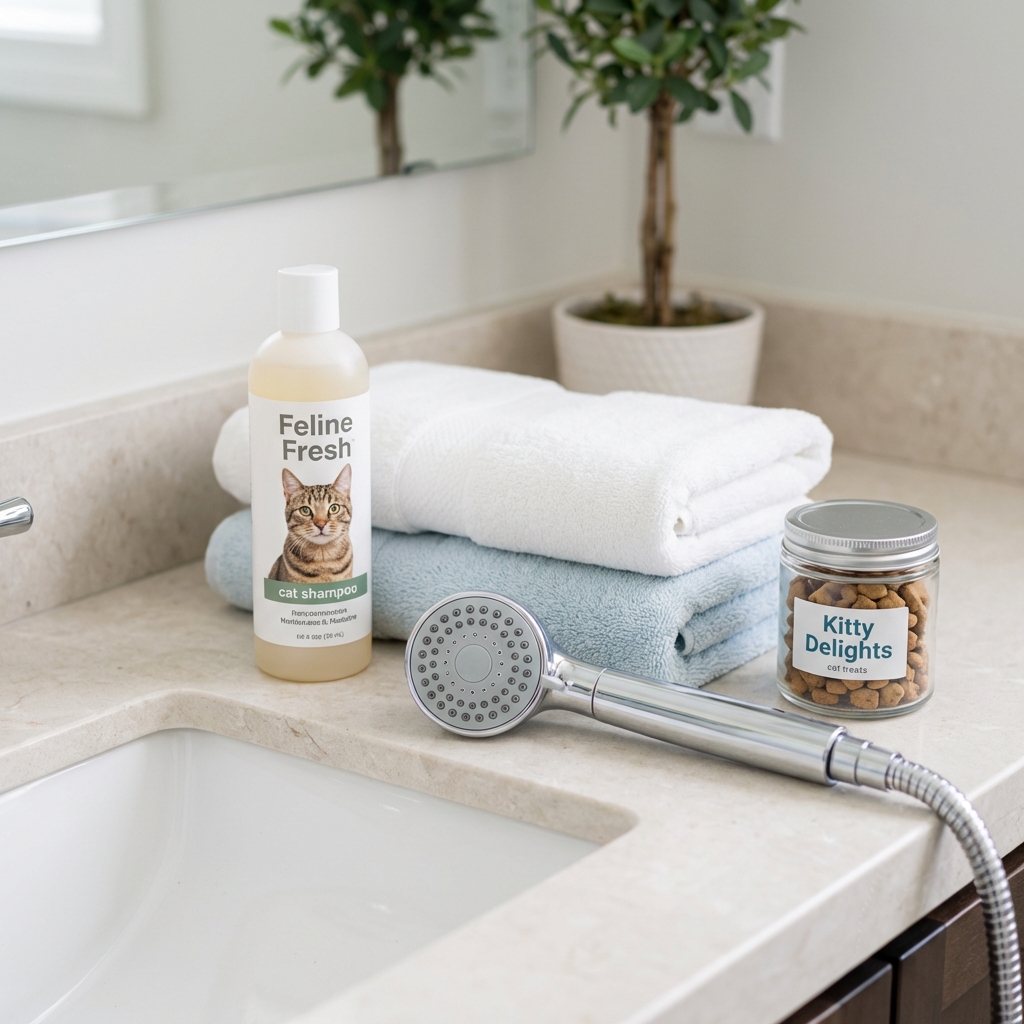
Supplies checklist
- Cat-formulated shampoo (or a veterinarian-prescribed medicated shampoo). Avoid human shampoo. Avoid dog shampoos unless your vet explicitly okays it. Never use dog flea and tick products or shampoos on cats. Some contain permethrins, which are toxic to cats.
- 2 to 3 towels, including one to line the sink or tub for traction.
- Non-slip mat (optional but very helpful).
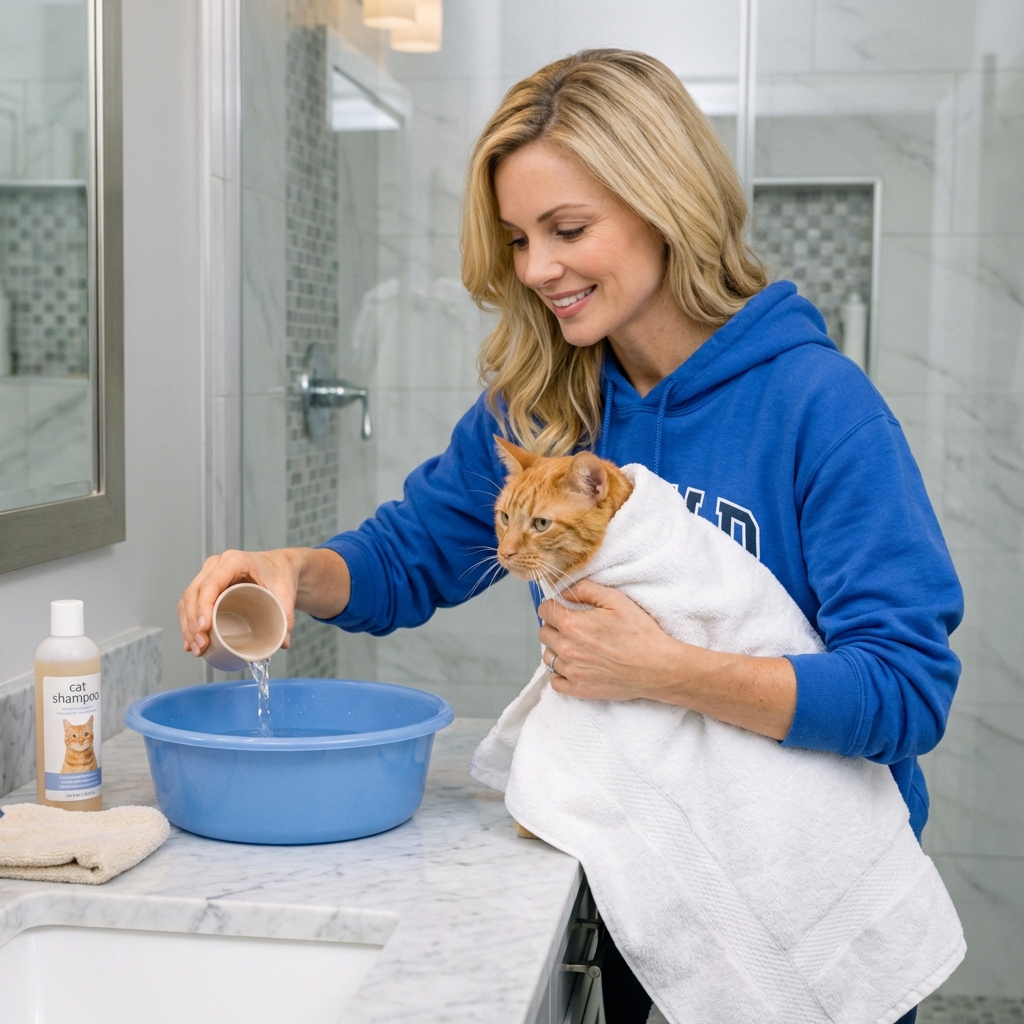
- Cup or handheld sprayer for gentle rinsing.
- Washcloth for the face (no soap near eyes).
- Treats your cat loves.
- Optional: cotton balls for the outer ear opening (never push into the ear canal), and a grooming comb for after.
Prep steps
- Trim nails the day before if your cat allows it. This reduces accidental scratches.
- Brush first, especially for long-haired cats. Water tightens mats and makes them harder to remove.
- Choose a warm, draft-free room. Chilled cats struggle more.
- Keep the water quiet and shallow. Pre-fill the sink or tub to a shallow level or use a cup with warm water. You want lukewarm water, similar to what you would use for a baby’s bath. Loud rushing water can be scary.
Step-by-step bath
1) Stay calm
Cats read our body language. Speak softly, keep your movements predictable, and avoid sudden changes in pressure or sound.
2) Give traction
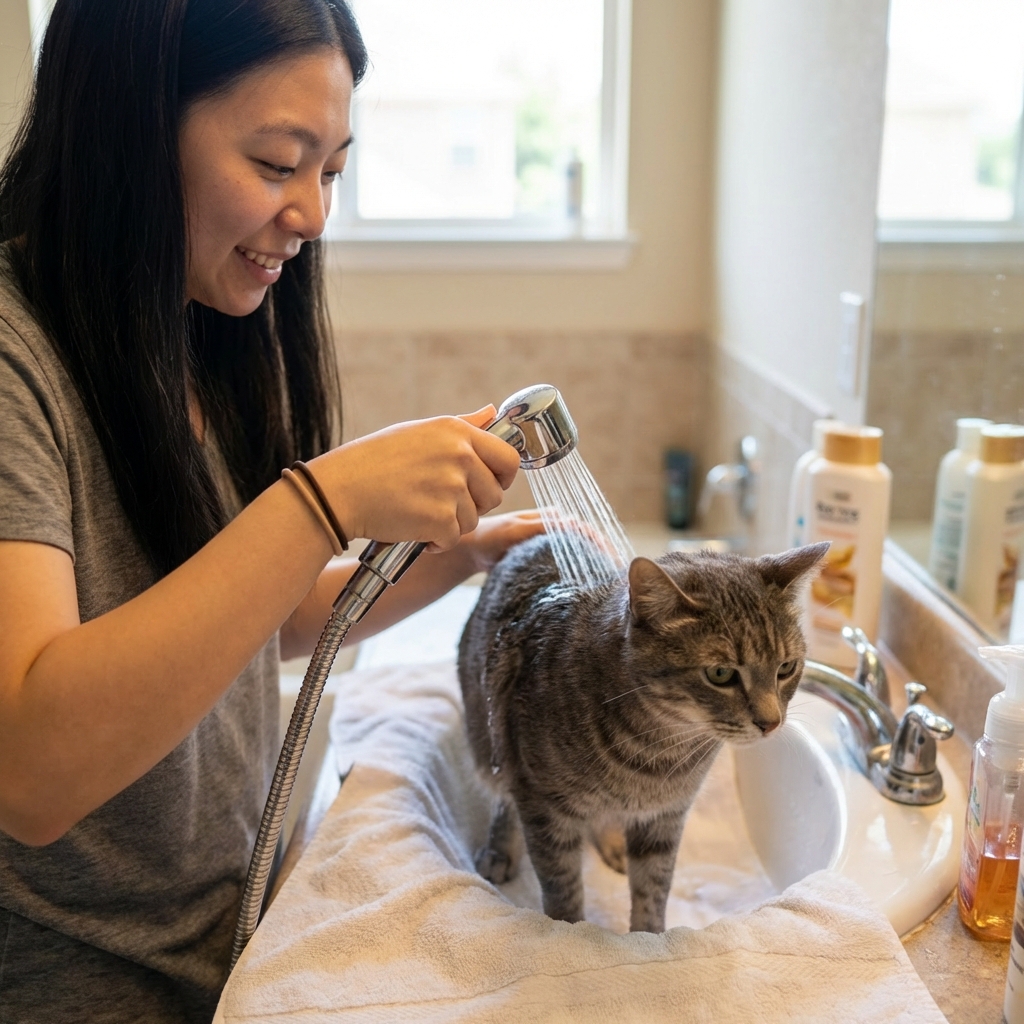
Line the sink or tub with a towel or non-slip mat. Slipping is a major reason cats panic.
3) Handle gently
Avoid scruffing. It can increase fear and struggling in many cats. Use a steady, supportive hold and stop if your cat is escalating. If you need a second person, choose someone calm and only continue if your cat stays manageable. If safety becomes a concern, it is okay to stop and book a vet or professional groomer.
4) Wet the body, not the face
Use lukewarm water and start at the shoulders, then work down the back and sides. Avoid spraying directly at the face. Keep water out of ears and eyes.
5) Shampoo, then rinse well
Use a small amount of cat shampoo. Massage with your fingertips down the neck, body, legs, and tail. Then rinse thoroughly. Leftover shampoo can cause itching, dandruff, or skin irritation.
6) Clean the face
Use a clean, warm washcloth to wipe the face. No soap needed. Be extra gentle around the eyes and whisker pads.
7) Towel-dry right away
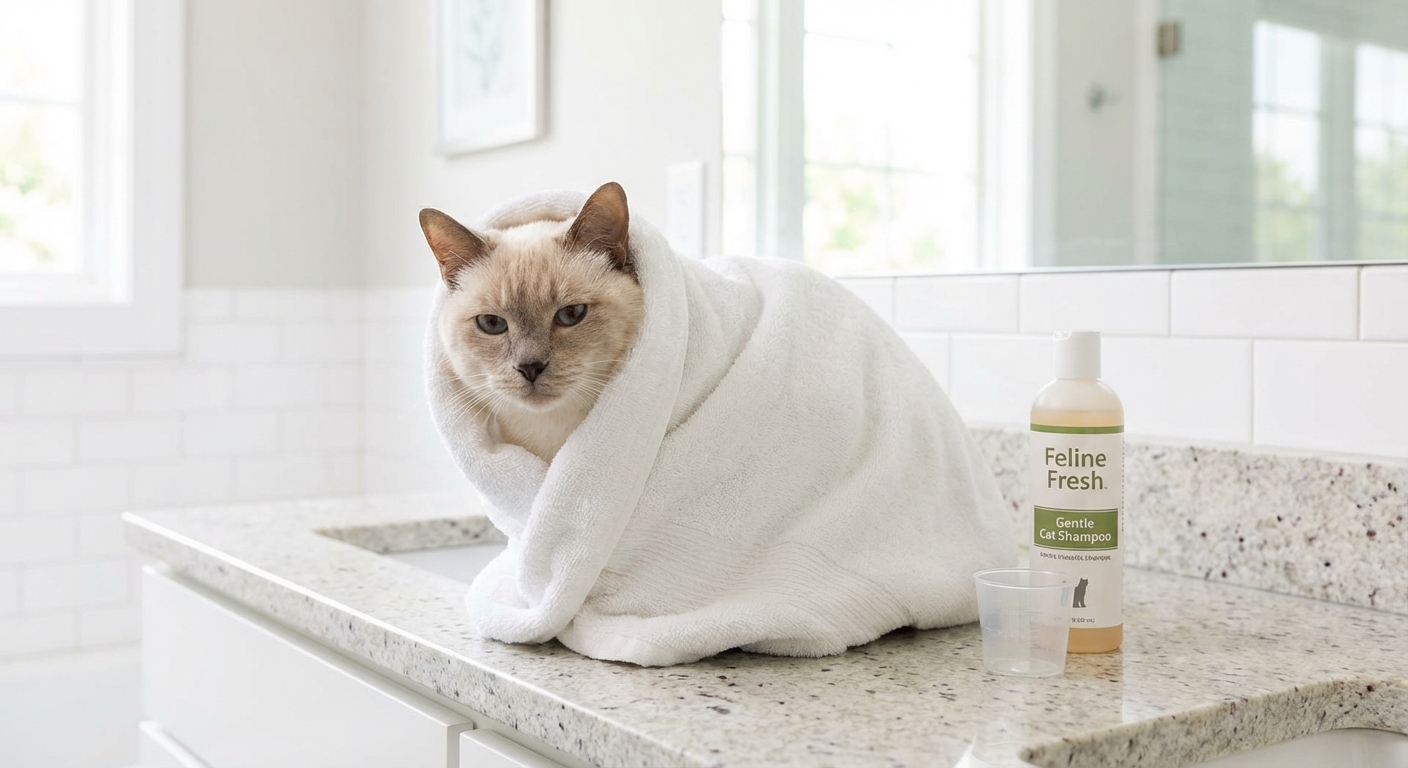
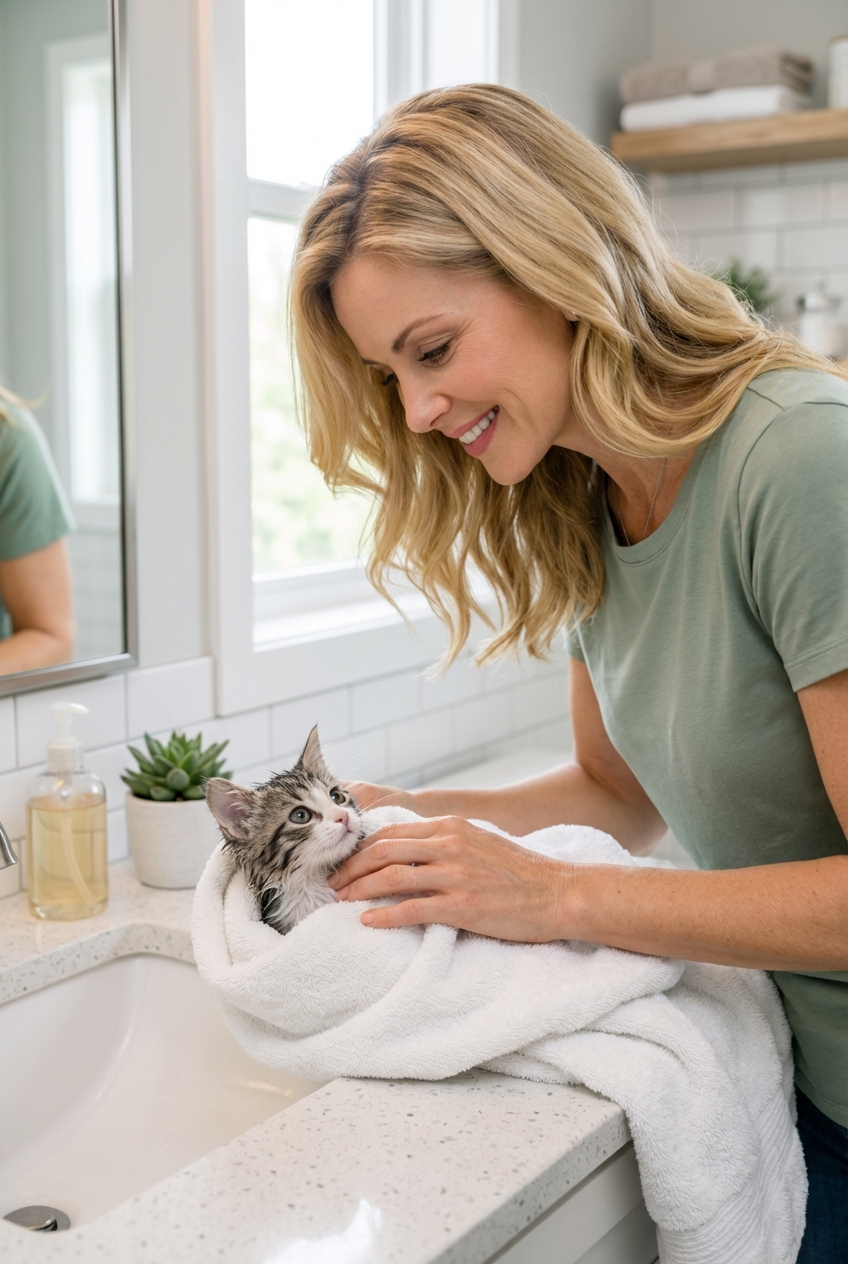
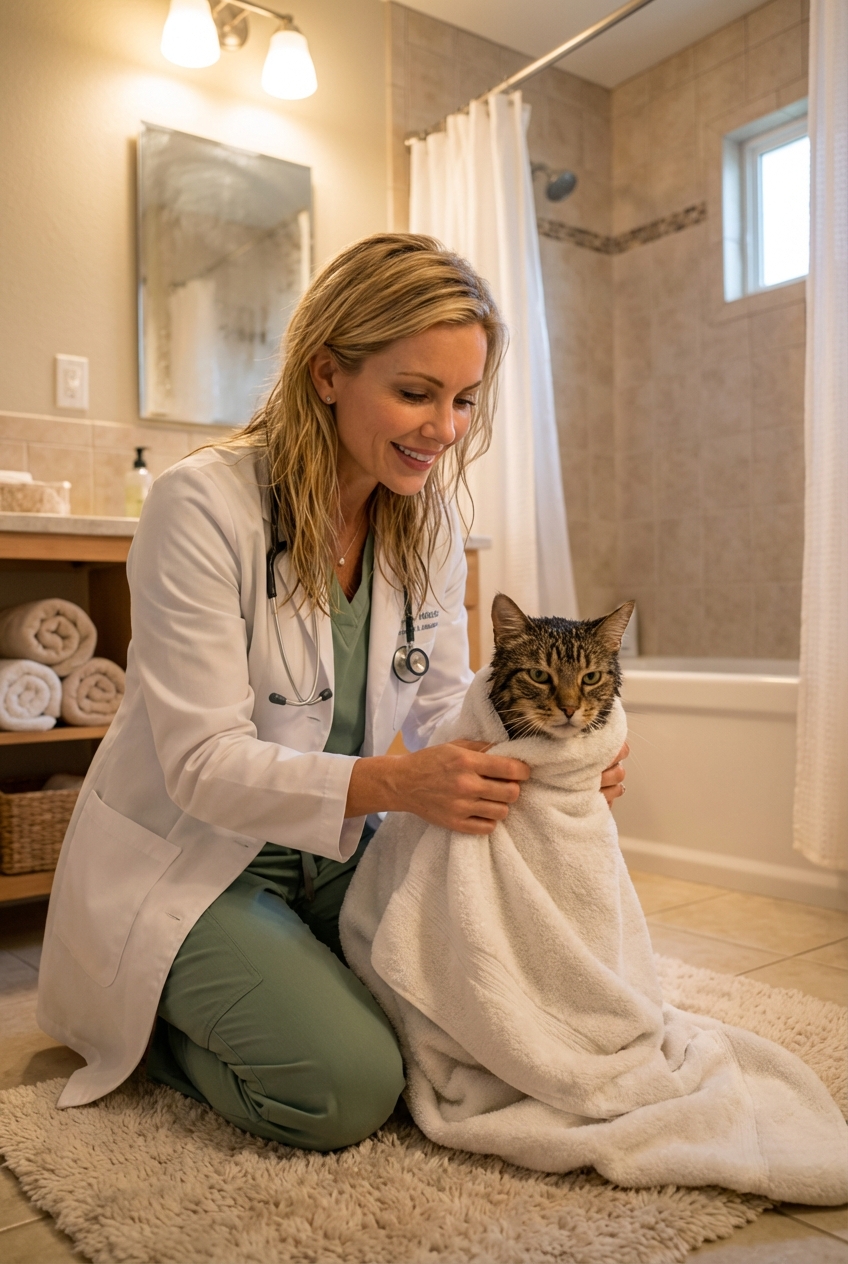
Lift your cat onto a dry towel and wrap snugly like a “kitty burrito,” leaving the head out. Blot and squeeze the coat instead of rubbing vigorously, especially for long-haired cats.
If your cat tolerates it, you can use a blow dryer on the lowest heat and lowest speed from a safe distance. Many cats find the noise stressful, and too much heat can contribute to overheating. Towel-drying in a warm room is often enough.
8) Warmth and decompress
Keep your cat indoors, warm, and away from drafts until fully dry. Offer treats, a favorite blanket, and a quiet room. Some cats zoom afterward. That is normal.
Fun facts
- Cats have sensitive skin. Their skin barrier can be disrupted by harsh soaps or frequent bathing, which is why cat-specific products and thorough rinsing matter.
- Many cats dislike restraint more than water. Traction plus a gentle, steady hold often reduces the drama.
- Overheating is a risk during prolonged stress. This is more likely with extended struggling, a hot room, or blow-dryer use. If you see panting, open-mouth breathing, or extreme agitation, stop and let your cat cool down in a quiet space. Contact your vet if you are concerned.
- Spot baths often work best. Cleaning only the dirty area is often safer and kinder than a full soak.
Common mistakes
- Using human shampoo or strongly scented products, including essential oils.
- Using dog flea and tick products on cats. This can be dangerous.
- Bathing without brushing first, especially with mats.
- Rinsing poorly, which can leave residue and cause itchiness.
- Running water loudly or using a strong spray that startles your cat.
- Powering through panic. If your cat is thrashing, biting, or open-mouth breathing, stop and regroup. Safety first.
When to call a vet or groomer
Skip the DIY bath and ask for help if:
- Your cat has open sores, severe dandruff, redness, or a strong odor (these can signal infection or parasites).
- Your cat is elderly, has heart or breathing issues, or becomes extremely stressed.
- You need a medicated bath and are not sure how long to leave the shampoo on or how often to repeat it.
- Your cat has significant matting. Mats can hide skin wounds and can be painful to remove without proper tools.
In some cases, vets may recommend anti-anxiety medication for grooming or bathing, especially for cats with a history of severe stress. It is not a failure. It is compassionate care.
Low-stress options
- Pet grooming wipes for cats for light dirt and dander.
- Warm damp washcloth for targeted cleanups.
- Waterless cat shampoo made for cats, used as directed. The main concerns are skin irritation and licking too much product, so choose a cat-specific formula and keep application light.
- Regular brushing to reduce shedding, hairballs, and debris.
If you are unsure whether a bath is necessary, start with a spot-clean and a brushing session. You can always escalate to a full bath later, but you cannot undo a stressful one.
Cat bath FAQs
How often can I bathe my cat?
Only as needed. For most cats, that is rarely. If your veterinarian prescribes medicated bathing, follow that schedule exactly.
Is it okay if my cat licks after a bath?
Some grooming afterward is normal. The key is to rinse very thoroughly so there is no shampoo residue to ingest. If you used any product you are unsure about, call your veterinarian.
What if my cat hates baths?
Use alternatives when possible, keep sessions short, and consider professional help. For highly fearful cats, talk to your veterinarian about pre-bath calming strategies.
Simple bath plan
- Day before: trim nails, brush coat, set supplies aside.
- Bath day: warm room, towel for traction, quiet water, quick wash, thorough rinse.
- After: towel-dry, warm rest spot, treats, and quiet time until fully dry.
You do not have to make bath time perfect. You just have to make it safe, gentle, and predictable. That is how trust builds, one small step at a time.