A quick, vet-aligned guide to getting your dog to take pills fast: treat-treat-pill-treat, pill pocket tips, direct pilling steps, swallow checks, and safer ...
Article
•
Designer Mixes
How to Get Your Dog to Take a Pill Daily

Shari Shidate
Designer Mixes contributor
Daily meds can be truly life-changing for dogs with allergies, heart disease, arthritis, seizures, anxiety, infections, thyroid issues, and more. But if your dog is suddenly turning into a tiny, furry escape artist at pill time, you are not alone. The good news is this is a skill you can build with calm routines, smart hiding tricks, and a little bit of canine psychology.
Important note: Always follow your veterinarian’s instructions and the prescription label. Some pills must be given with food, some must be given on an empty stomach, and some should never be crushed or split.
Start with the basics
Ask these questions first
- Can this pill be crushed or split? Some medications are enteric-coated or extended-release and should not be crushed or split. Crushing or splitting can change how the dose is released, make the taste more bitter, and sometimes increase side effects. If your vet says splitting is OK, a pill cutter helps keep doses more accurate.
- Should it be given with food? Some meds cause nausea on an empty stomach, while others absorb better without food. Follow the label and your veterinarian’s guidance, especially for time-sensitive medications.
- Is there a flavored or liquid option? Some medications may be available as chewables, flavored liquids, compounded forms, transdermal gels, or long-acting injections. Availability and effectiveness vary by medication and by species, so ask your vet what is realistic for your dog.
- Is this long-term? If yes, it is worth building a routine that is easy for you and low-stress for them.
If your dog is drooling, gagging, pawing at the mouth, coughing, or vomiting after meds, call your veterinarian. Those can be signs of nausea, mouth irritation, or that the medication is not agreeing with them.
Simple routines that work
Keep it boring and consistent
Dogs read our energy beautifully. If you look nervous or apologetic, many dogs get suspicious. Pick a calm location, use the same cue (like “treat time”), and keep it short.
- Same schedule: Give meds at the times your veterinarian prescribed (once daily, twice daily, and so on). Consistency supports steady medication levels and predictability.
- Pre-measure everything: Have the pill and the “delivery system” ready before you call your dog over.
- End with something positive: A walk, a favorite toy, or a few seconds of play can change the whole emotional story around meds.
Use high-value rewards
Save special foods for medicine time only. Think tiny amounts of something aromatic and sticky enough to hide a pill.
Method 1: Hide the pill
This is the easiest daily method for many families, but it has a few important rules.
Good pill hiders
- Commercial pill pockets
- Cream cheese (tiny amount)
- Peanut butter that does not contain xylitol (tiny amount, and skip it if your dog is prone to pancreatitis or does not tolerate fatty foods)
- Canned dog food or pâté-style wet food
- Cooked ground turkey or beef (cooled, small amount)
- Soft cheese or a small piece of deli meat (use sparingly due to sodium and fat)
Quick safety reminder: Avoid toxic foods like grapes or raisins, onion or garlic, and macadamia nuts. When in doubt, use dog-safe treats or ask your vet for options.
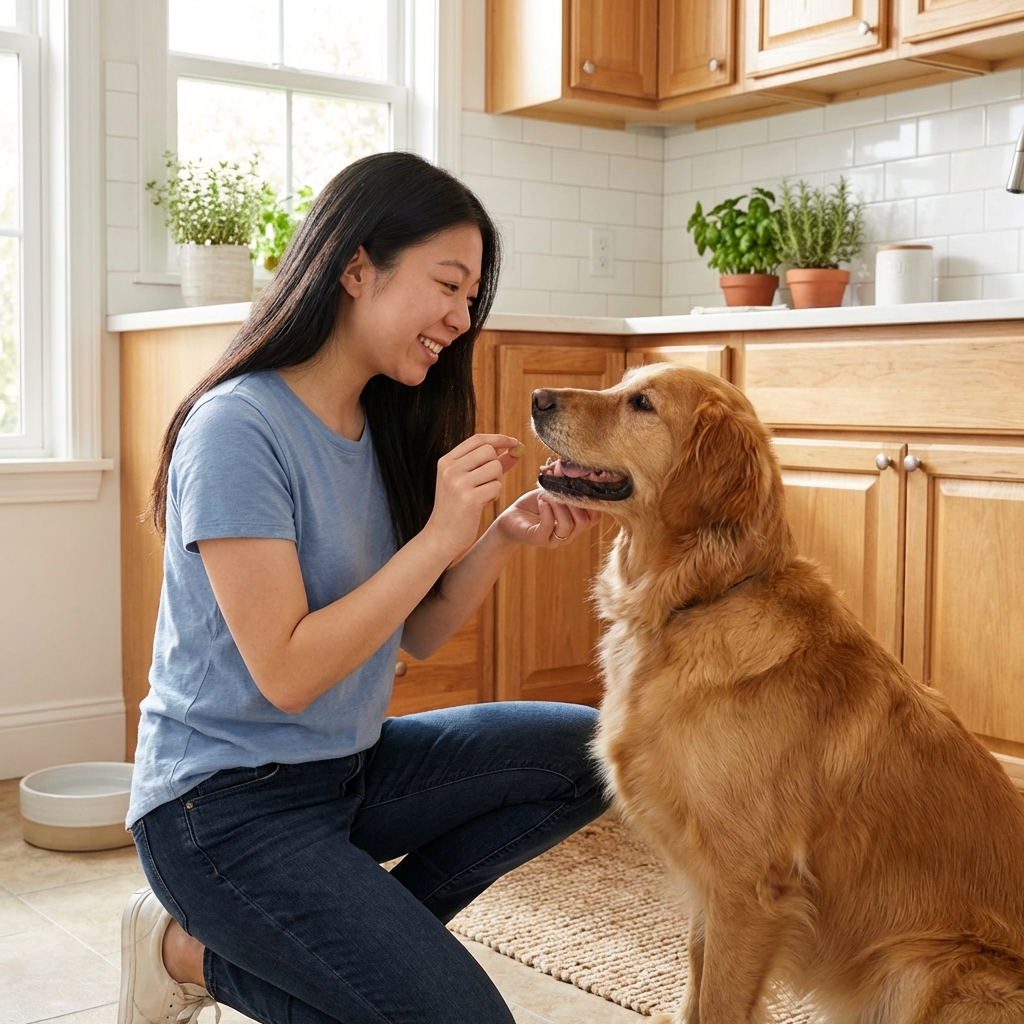
The three treat trick (my daily favorite)
This helps prevent your dog from slowing down to inspect the suspicious bite.
- Give a normal treat first (no pill).
- Immediately give the pill treat.
- Follow with another normal treat right away.
Keep it fast and smooth so your dog focuses on the next snack, not the last one.
Prevent the pill spit
- Make it small: Too much food encourages chewing and pill detection.
- Seal the pill completely: If the tablet touches the tongue, many dogs will reject it.
- Wash your hands: Some meds smell bitter. Handle the pill as little as possible.
Method 2: Direct pilling
Some dogs are too smart for hidden pills, or they need multiple medications and the snack method becomes too much food. In those cases, a calm pilling technique can be a lifesaver.
Step-by-step
- Have a small treat ready for after, plus a little water in a syringe or a few spoonfuls of wet food if your vet says it is allowed.
- Position your dog so they cannot easily back away. Small dogs can be on your lap. Larger dogs can sit with their side against your legs.
- Gently hold the upper jaw, tilt the nose slightly upward (not cranked back).
- Use your other hand to open the lower jaw and place the pill as far back on the tongue as you safely can.
- Close the mouth, keep it closed briefly, and softly stroke the throat or blow lightly on the nose to encourage swallowing.
- Reward immediately.
Tip: If your veterinarian says it is OK, follow with a sip of water or a small bite of food. This can help the pill go down smoothly and may reduce irritation, especially with certain medications.
Confirm the swallow: Look for a lick of the nose, a relaxed jaw, or a normal swallow. Some dogs “cheek” pills, so do a quick check that it is not tucked in the cheek before you celebrate.
When not to do this
- If your dog is growling, snapping, or panicking. Safety comes first.
- If your dog has a history of bite risk or severe anxiety at handling.
- If you are unsure. Ask your veterinary team for a quick demo. We do this all the time and we are happy to help.
If there is any bite risk, do not push through it. Ask your vet about alternatives (like compounding) or whether a basket muzzle and a handling plan would make this safer for everyone.
Method 3: Use tools
Pill gun (pet piller)
A pill gun can help you place the pill farther back without putting fingers in the mouth. Used gently, it can be a great option for dogs who alligator clamp their jaw.
Safety note: Improper use can injure the mouth or throat. Ask your veterinary team to show you the correct technique before you use one at home.
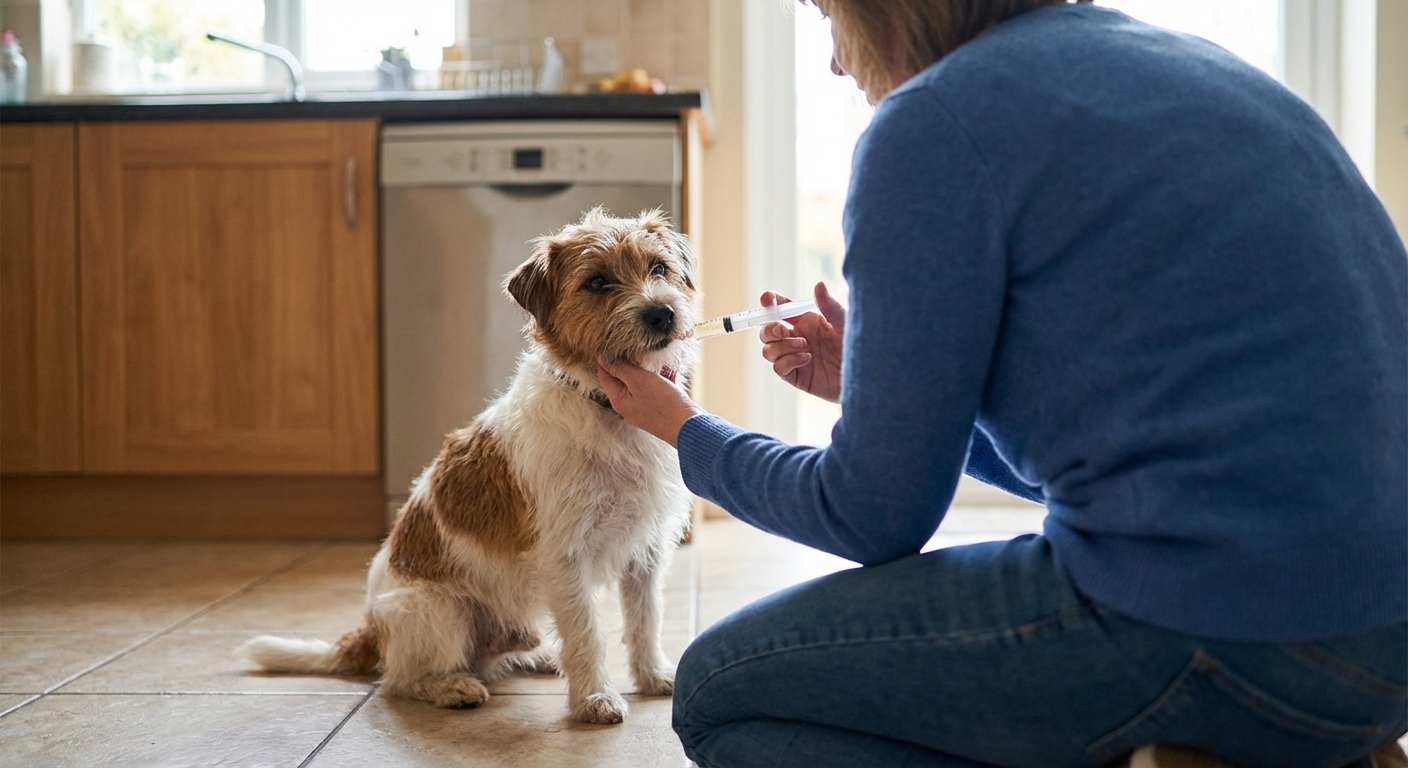
Compounded meds, liquids, or chews
If daily pilling is turning into a wrestling match, ask your veterinarian about compounding. Some medications can be made into chicken, beef, or fish-flavored liquids or chews. For the right dog and the right medication, this can make a huge difference.
Common problems and fixes
“My dog eats the treat and spits out the pill.”
- Try smaller pill parcels and the three treat trick.
- Switch to a stickier food (pâté wet food often works better than chunks).
- Ask your vet if the medication can be given as a chewable, capsule, or liquid.
“My dog refuses anything once they smell the medicine.”
- Do not let the pill touch the outside of the food.
- Wash hands well (or use gloves) to reduce odor transfer.
- Offer a few “free” treats at random times of day so treat time does not always predict medicine.
“My dog foams or drools after the pill.”
This often happens when a medication is bitter or irritating. Offer a small amount of water or food if allowed, and call your vet if it is frequent or severe. Do not assume it is normal.
“My dog needs multiple pills.”
- Ask your vet if any meds can be combined, compounded, or timed differently.
- Give one at a time, and reward after each successful swallow.
- Use a medication log so you never double dose by accident.
Make it a low-drama habit
When you are giving a pill every day, your goal is not perfection. Your goal is a routine your dog can tolerate with minimal stress, and a routine you can keep up with for months or years.
A helpful mindset shift: pill time is not a battle to win. It is a tiny daily care ritual, like brushing your own teeth.
Try one method for 3 to 5 days before switching. Many dogs improve once they realize medicine time is quick, predictable, and ends with something good.
When to call your vet
- Your dog vomits after medication more than once.
- You notice coughing, gagging, repeated swallowing, or trouble swallowing after pills (possible irritation).
- Your dog is suddenly impossible to medicate when they used to cooperate.
- You missed a dose or your dog may have gotten a double dose.
- You are tempted to crush, split, or mix meds without guidance.
As a veterinary assistant, I can tell you that your clinic team wants this to be easier for you. If a method is not working, ask. There is almost always another option.