Cat spraying is usually communication, not spite. Learn how to tell spraying vs accidents, rule out medical issues, improve litter boxes, reduce stress, and ...
Article
•
Designer Mixes
How to Get Your Cat to Stop Spraying

Shari Shidate
Designer Mixes contributor
Cat spraying can feel personal, especially when it hits your couch, laundry basket, or favorite rug. But in most cases, spraying is a communication behavior, not “spite.” The good news is that once you identify why it is happening, you can usually reduce it dramatically or stop it altogether.
As a veterinary assistant, I always start with two priorities: protect your cat’s health (because pain and urinary problems can look like behavior issues) and lower stress in the home (because cats are sensitive to change and conflict). Let’s walk through both in a clear, step-by-step way.
Spraying vs. peeing outside the box
These look similar, but they often have different causes and solutions.
What spraying usually looks like
- Small amount of urine
- Sprayed on a vertical surface like a wall, sofa side, door, or hamper
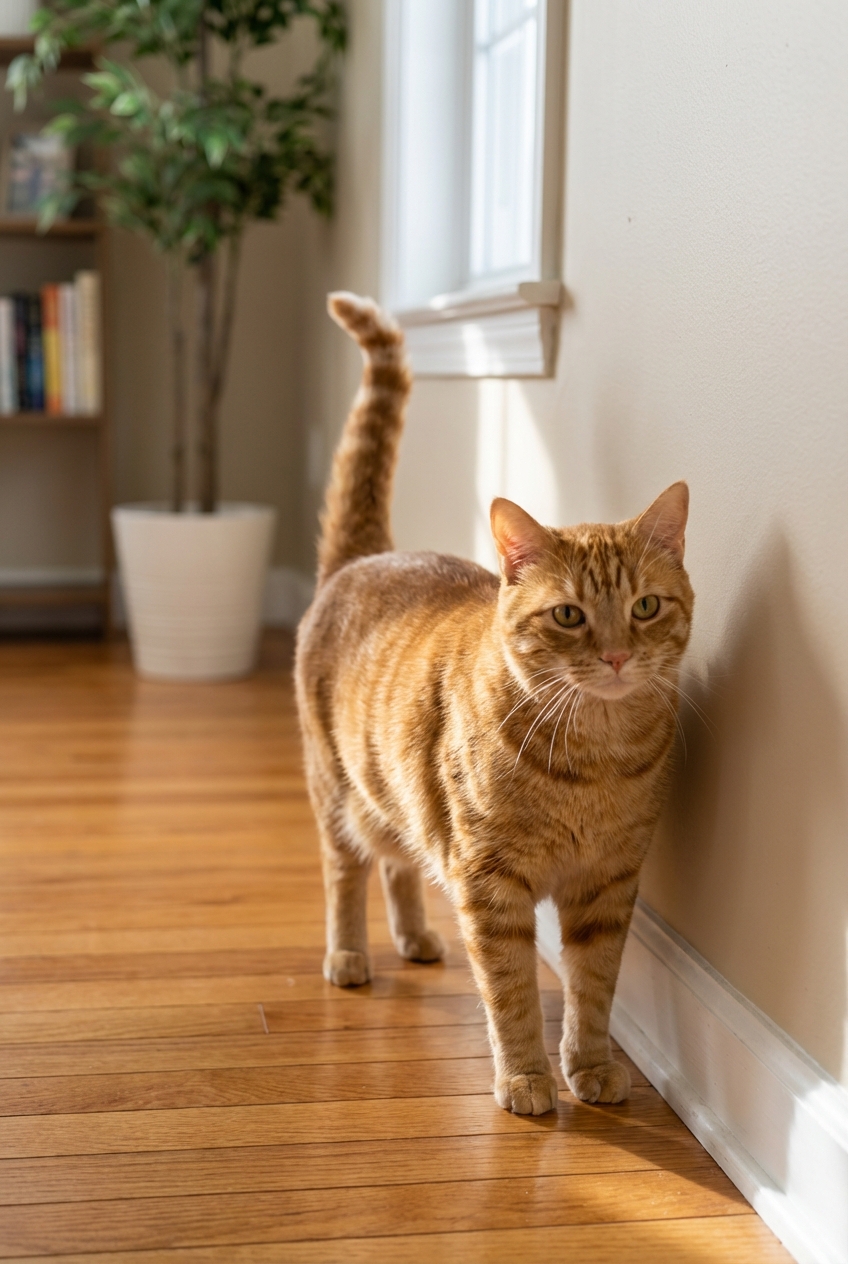
- Cat often stands with tail up, sometimes with tail quivering
- Frequently happens around doors, windows, or “boundary” areas
What inappropriate urination often looks like
- Larger puddle
- Usually on a horizontal surface like carpet, bedding, bath mat
- May be tied to litter box avoidance, pain, or urinary urgency
What if it is poop too?
Spraying is urine marking. If you are finding stool outside the box as well, that can point to different problems (constipation, diarrhea, box setup issues, or stress). It is still worth addressing the litter box and stress, but make sure your vet knows it is not only urine.
If you are not sure which one is happening, that is okay. Start the same way: rule out medical causes, then address environment, routine, and social stress.
Step 1: Rule out medical issues
If your cat is suddenly peeing or spraying, especially if it is new, frequent, or paired with signs of discomfort, schedule a vet visit. This is not just a formality. Urinary problems can become emergencies.
Red flags to treat urgently
- Straining in the litter box
- Crying, restlessness, or repeatedly going in and out of the box
- Blood in urine
- Urinating tiny amounts frequently
- Licking the genital area more than usual
- Hiding, reduced appetite, or acting “off”
Common medical contributors include feline lower urinary tract disease (FLUTD), bladder inflammation (often stress-related), arthritis pain that makes climbing into a box difficult, and kidney disease in older cats. Urinary tract infections are typically uncommon in young adult cats, and more common in older cats (often with other health issues), but they can happen. Your vet may recommend a urinalysis, culture, and possibly bloodwork.
If your male cat is straining and producing little or no urine, treat it as an emergency. Urinary blockage can become life-threatening quickly.
Step 2: Spay or neuter
If your cat is not spayed or neutered, this is one of the biggest, evidence-supported steps to reduce spraying in many cats. Intact males are the most likely to spray, but intact females can spray too, especially when in heat.
Neutering does not work like a light switch for every cat, but it often helps significantly. If spraying has been happening for a long time, your cat may have developed a learned habit, so you will still want to pair surgery with environmental changes and cleanup.
Step 3: Clean the scent message
If an area still smells like urine to your cat, it remains an invitation to re-mark. Standard cleaners and many “pet deodorizers” do not fully remove urine compounds.
Cleaner basics
- Use an enzymatic cleaner made for cat urine.
- Blot first, do not rub. Rubbing pushes urine deeper into fabric.
- Follow label directions exactly, including dwell time (how long the product needs to stay wet on the area to work).
- For old stains, you may need multiple treatments.
- Test first on an inconspicuous spot, especially on upholstery, rugs, or hardwood.
- Do not mix cleaners. Never combine products like bleach and ammonia.
Avoid ammonia-based cleaners. To a cat’s nose, ammonia can resemble urine and may increase repeat spraying.
Step 4: Make the litter box a yes
Even when spraying is the main issue, improving litter box comfort reduces overall stress and helps prevent inappropriate urination.
Litter box checklist
- Number of boxes: one per cat, plus one extra (example: 2 cats = 3 boxes).
- Locations: quiet, accessible, and spread out. Avoid trapping a cat in a corner where another cat can ambush.
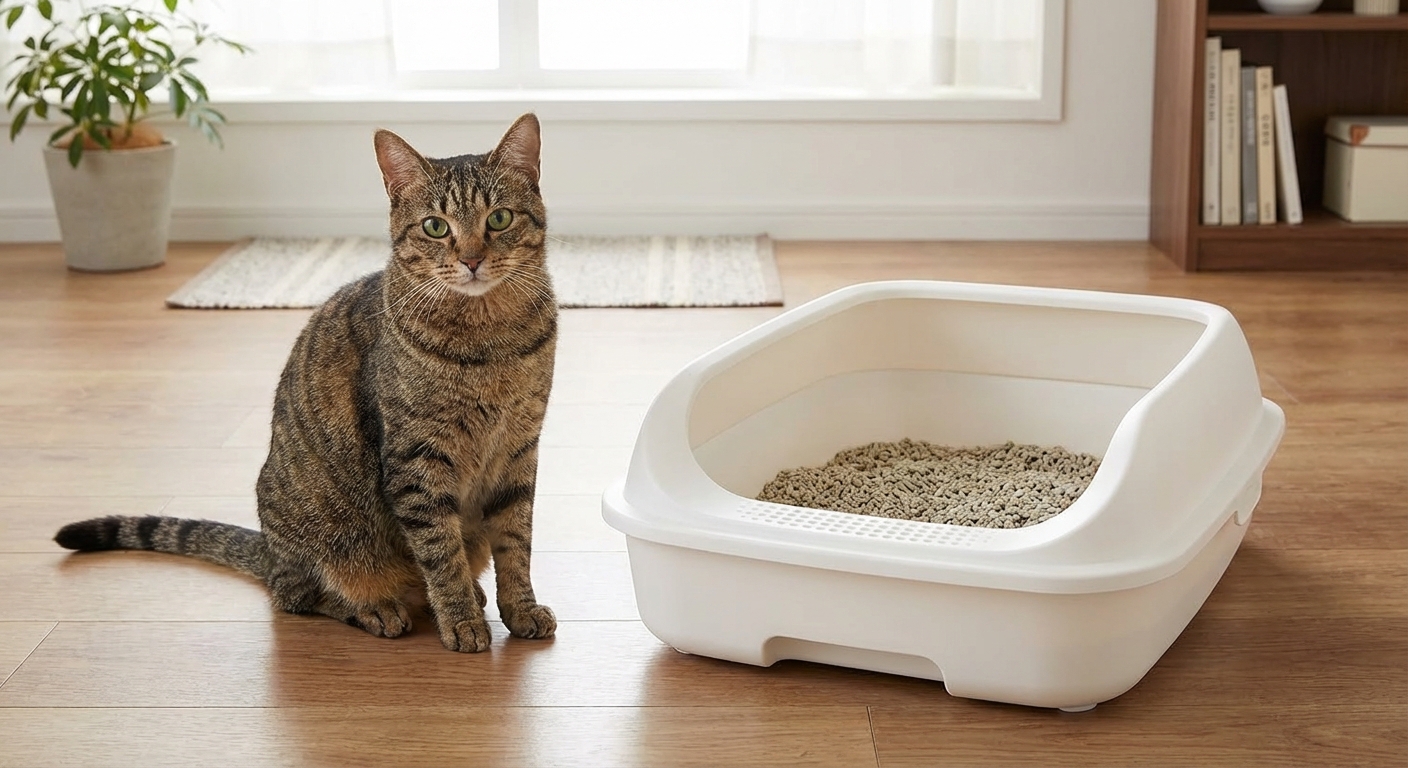
- Size: bigger is usually better. Many cats dislike small, cramped boxes.
- Covered or open: many cats prefer large open boxes. Covered boxes can trap odor and may make some cats feel cornered.
- Litter: most cats prefer unscented, fine-grain litter.
- Litter depth: aim for a moderate depth (often about 2 to 3 inches). Too little can feel slippery, too much can feel unstable.
- Consistency: during troubleshooting, avoid frequent litter brand changes unless you have a clear reason.
- Cleanliness: scoop daily, wash with mild soap regularly, replace litter as needed.
- Entry: low-entry boxes for seniors or cats with arthritis.
If your cat sprays near the litter box, it can be a sign of conflict, stress, or that the box setup feels unsafe.
Step 5: Find the trigger
Spraying is often triggered by a cat feeling insecure about territory, resources, or social stability. In real homes, these are the most common drivers I see:
Common triggers
- Outdoor cats visible through windows or near doors
- New pets, new baby, new roommate, or visiting animals
- Moving or remodeling, new furniture, new smells
- Conflict between cats in the home, even subtle tension
- Schedule changes like travel, longer work hours, or school starting
You do not need to guess perfectly. Focus on patterns: where does your cat spray, when does it happen, and what changed right before it started?
Step 6: Lower stress
Behavior change is much easier when your cat feels safe. These adjustments can be surprisingly powerful.
Calm the territory
- Block visual triggers: frosted window film on lower windows, close blinds at key times, or move furniture away from “patrol” windows.
- Reduce outdoor traffic: if outdoor cats are lingering, consider motion-activated sprinklers or humane deterrents outside, and block access to porch or doorway hangouts when possible.
- Add vertical space: cat trees, wall shelves, or a cleared bookcase shelf so your cat can observe without feeling cornered.
- Provide safe retreats: covered beds, open carriers, quiet rooms with a box and water.
- Enrich daily: 2 to 3 short play sessions with a wand toy plus a small meal after (hunt, catch, eat, rest).
Multi-cat homes
Many spraying cases improve when cats stop competing. Place food, water, and litter in multiple locations. Add more scratchers. Give each cat a predictable place to rest. Reduce bottlenecks in hallways or doorways when possible.
Step 7: Pheromones and calming help
Synthetic feline facial pheromones can help some cats feel more secure, especially when spraying is stress-related. Results vary from cat to cat, and the research is mixed, but it can be a worthwhile, low-risk support alongside the other steps.
- Use a diffuser in the rooms where spraying happens most.
- Give it a consistent trial, often a few weeks, while you also adjust the environment.
Some cats also benefit from veterinarian-approved calming supplements. If you go this route, let your vet guide you, especially if your cat has medical conditions or is on other medications.
Step 8: When medication helps
If your cat’s spraying is persistent, severe, or tied to high anxiety, talk with your veterinarian about medication. For some cats, short-term or longer-term anti-anxiety medication can lower the stress response enough for training and environmental changes to work.
This is not about sedating your cat. It is about helping their nervous system settle so they can make better choices. Many families find that medication, paired with environmental improvements, is what finally breaks the cycle.
What not to do
These responses often backfire because they increase fear and instability, which can increase spraying.
- Do not punish your cat for spraying.
- Do not rub your cat’s nose in it.
- Do not chase or yell.
- Do not confine to a tiny area long-term without enrichment.
Instead, if you catch it in the moment, keep your response low-key. For some cats, a very mild interruption can stop the act, but avoid startling noise if your cat is shy or anxious. Often the best move is to gently redirect with a treat toss, a wand toy, or by calmly guiding your cat toward a better option like a scratcher or a food puzzle. The real work happens in prevention and stress reduction.
A simple 14-day plan
Days 1 to 3
- Schedule a vet check if this is new or any red flags are present.
- Buy an enzymatic cleaner and treat all marked spots.
- Add one extra litter box if you can.
Days 4 to 7
- Start two short play sessions daily.
- Block or reduce window access where outdoor cat triggers exist.
- Add one vertical perch and one hiding spot in the “hot zone.”
Days 8 to 14
- Spread resources in multi-cat homes.
- Try a pheromone diffuser in the problem area.
- Track incidents on a calendar to see patterns and improvement.
If you see no improvement after a couple of weeks of consistent changes, that is a good sign you need deeper help, either from your veterinarian or a qualified veterinary behaviorist.
When to get help
Get extra support if:
- Spraying is escalating or spreading to multiple rooms
- There is fighting, stalking, blocking, or one cat seems afraid
- You have tried litter box and cleaning changes with no progress
- You suspect outdoor cats are driving territorial stress
Your veterinarian can rule out medical causes and discuss medication. A veterinary behaviorist can create a structured plan for conflict and anxiety cases. You do not have to figure this out alone.