Your cat in heat? Learn common signs, how long estrus lasts, and practical at-home steps to reduce stress, prevent escape and pregnancy, and know when to cal...
Article
•
Designer Mixes
How to Get Your Cat Out of Heat

Shari Shidate
Designer Mixes contributor
If your cat is in heat, it can feel like your whole household is suddenly on a sleepless schedule. The loud calling, restlessness, extra affection, and escape attempts are not “bad behavior.” They are normal, hormone-driven signs of a female cat in estrus (heat). Heat should not cause severe lethargy, vomiting, or collapse, so if your cat seems truly sick (not just noisy and restless), it is time to check in with your veterinarian.
What “heat” means in cats
Heat is the fertile part of a cat’s reproductive cycle. Most female cats (queens) can start cycling as young as 4 to 6 months, although some start later (often up to around 10 months) depending on breed, body condition, and season. Cats are seasonally polyestrous. In plain language, that means they can go into heat repeatedly during breeding season, especially when days are longer. Indoor cats exposed to lots of artificial light may cycle year-round.
Unlike dogs, many cats ovulate after mating. If a cat in heat is not bred, she often cycles again in a short period of time. That is why some cats seem like they are “always in heat” during certain months.
Common signs your cat is in heat
Every cat expresses estrus a little differently, but these are the signs families notice most:
- Vocalizing that can sound like crying, yowling, or constant calling
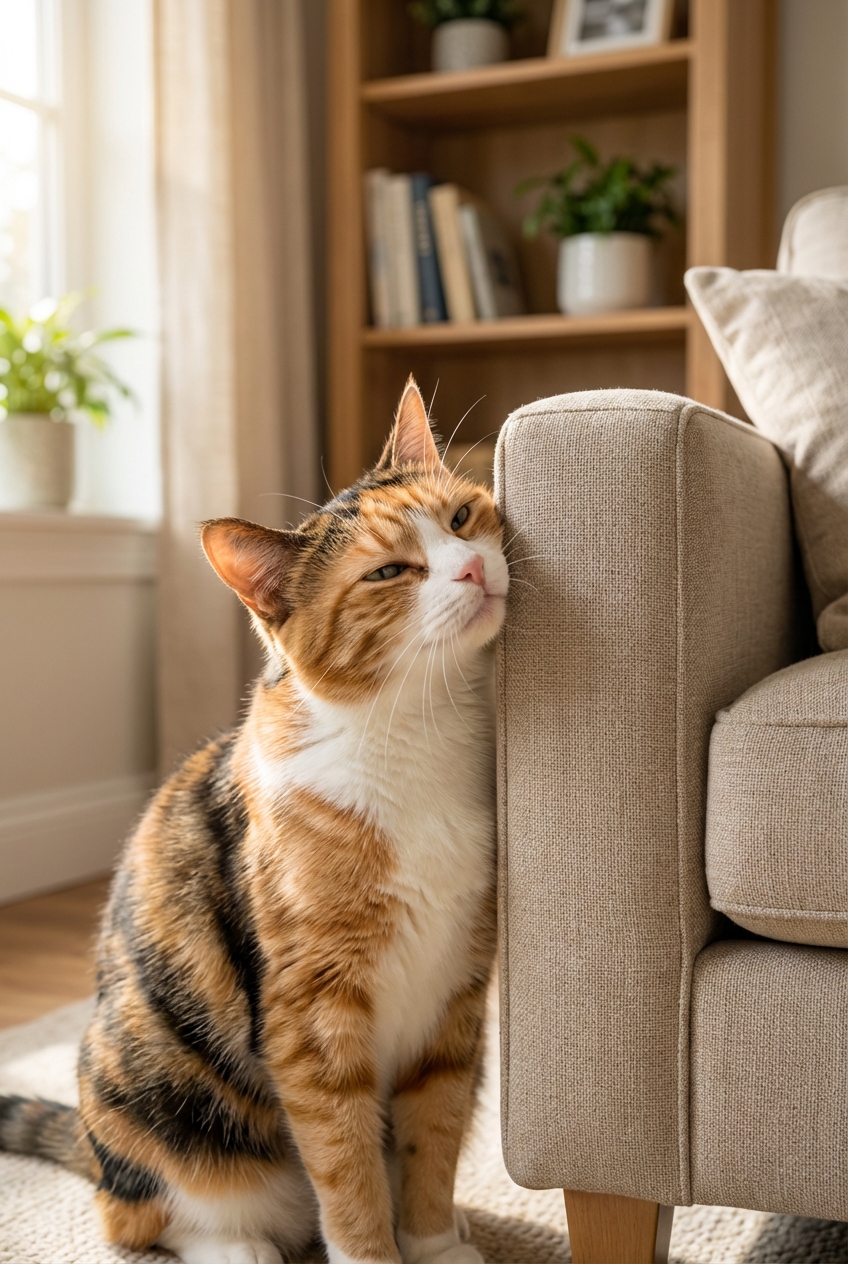
- Extra affection, rubbing on people, furniture, and doorways
- Restlessness, pacing, difficulty settling
- Escape behavior, darting toward doors and windows (some cats will even try to “reach” other cats through screens or glass)
- Heat posture, lowering the front end, raising the hind end, tail held to the side
- Rolling on the floor more than usual
- Spraying or increased marking in some cats
Important note: Many people expect bleeding like dogs. Most cats do not have noticeable bleeding during heat. If you see blood, that is a reason to check in with your veterinarian.
How long does a heat cycle last?
Heat commonly lasts about 3 to 7 days, but it can be shorter or stretch longer (often up to about 14 days). If she does not mate, she may go out of heat briefly and then cycle again in as little as 1 to 3 weeks, sometimes sooner during peak breeding season.
That “on, off, on again” pattern is why families feel worn down. It is real, and you are not imagining it.
Safe ways to help right now
There is no instant, at-home “off switch” for heat that is both safe and reliable, but you can reduce stress, limit escape risk, and make the experience easier for your cat and your family.
1) Keep her indoors and secure
- Open doors carefully. Consider a double barrier like keeping her in a bedroom when the family is coming and going.
- Check window screens and sliding doors. Cats in heat can push harder than you expect.
- If you have kids, make it a family job: “count the cat” before anyone goes outside.
This is not just about preventing pregnancy. Intact cats can run, fight, and get injured trying to reach a mate. Also, intact male cats from outside can be attracted to your home and may linger near doors and windows.
2) Create a calm comfort zone
Pick one quiet room and set it up like a kitty retreat:
- Litter box, food, water
- Cozy bed or covered hideaway
- Scratching surface
- White noise or a fan to soften household sounds
Many cats settle better when stimulation is lowered.
3) Offer play and food puzzles
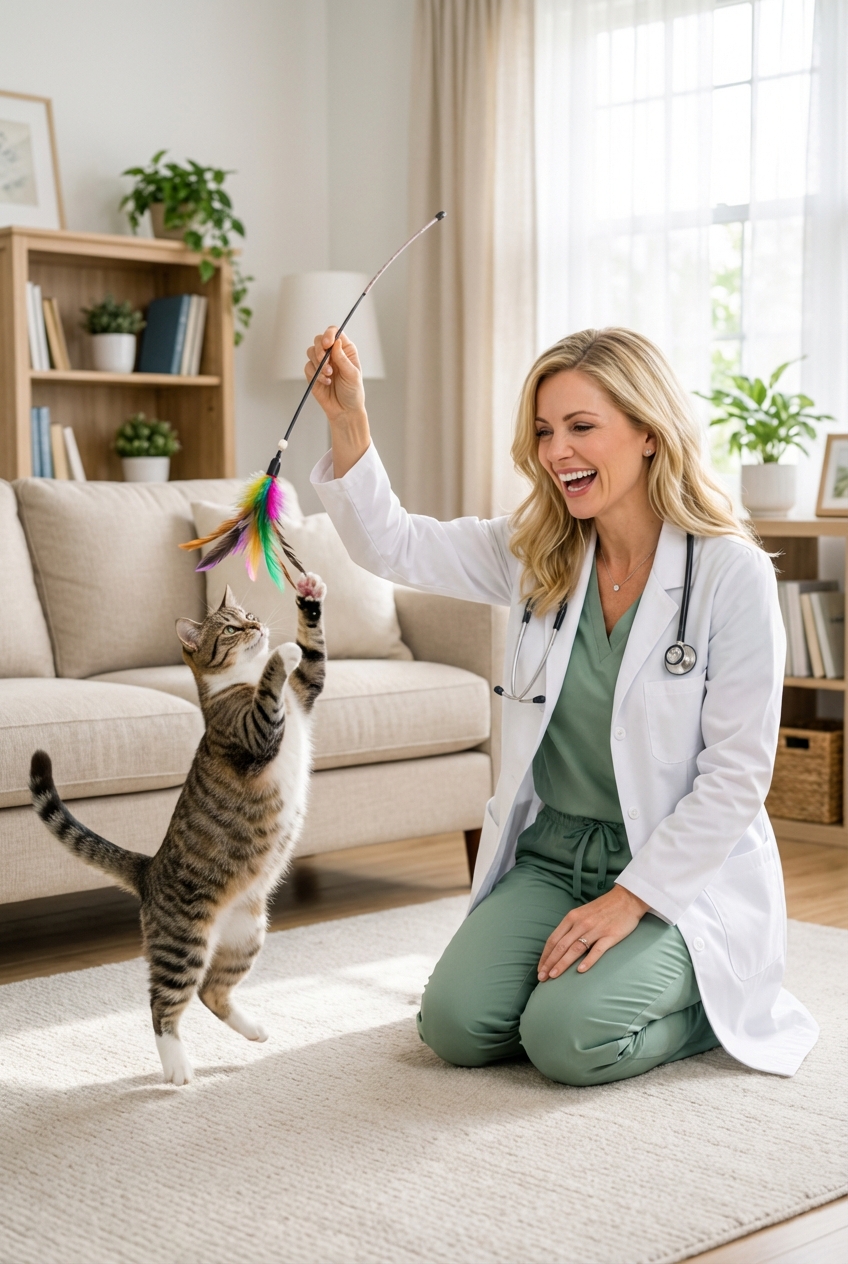
Two to four short play sessions a day can help. Use wand toys, paper balls, or a food puzzle. End play with a small meal or treat to mimic a natural “hunt, eat, groom, sleep” cycle.
4) Add comfort, not punishment
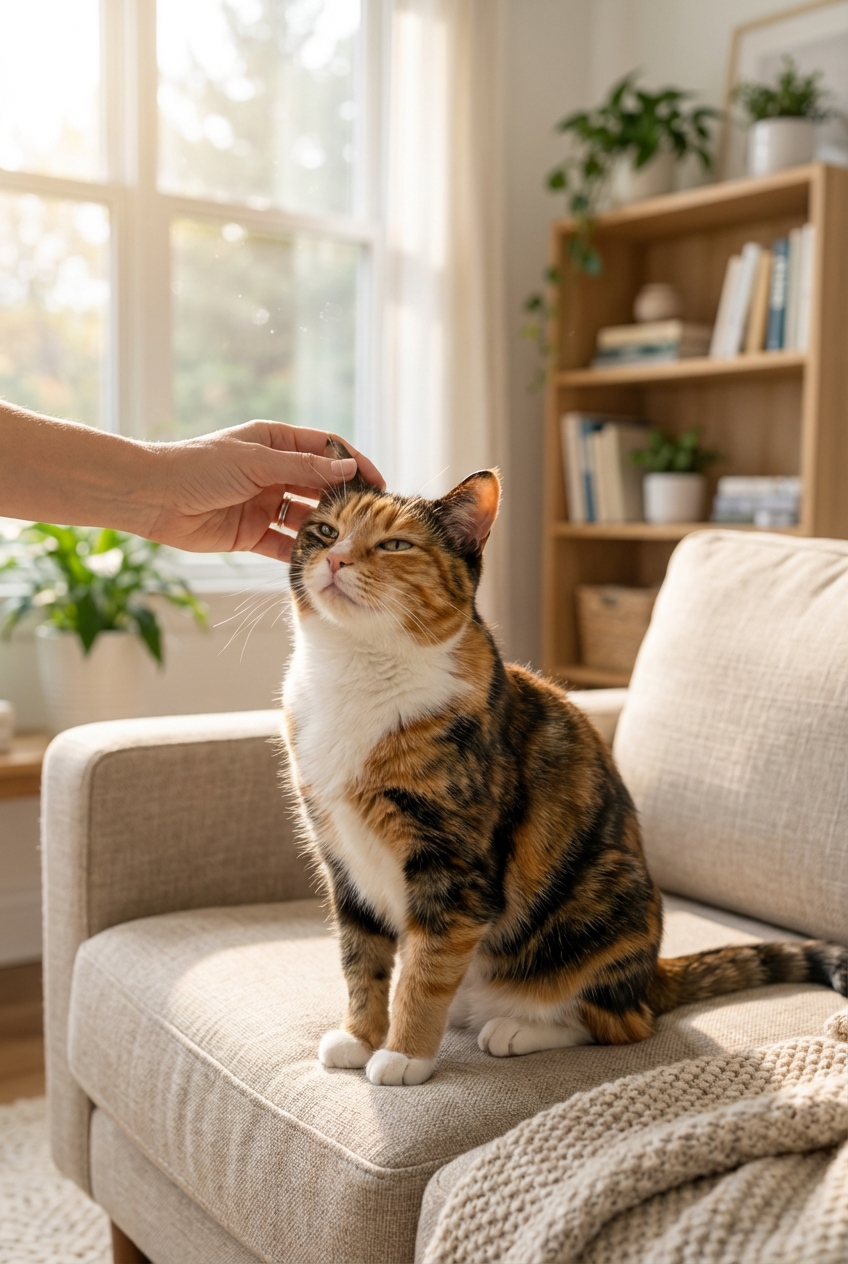
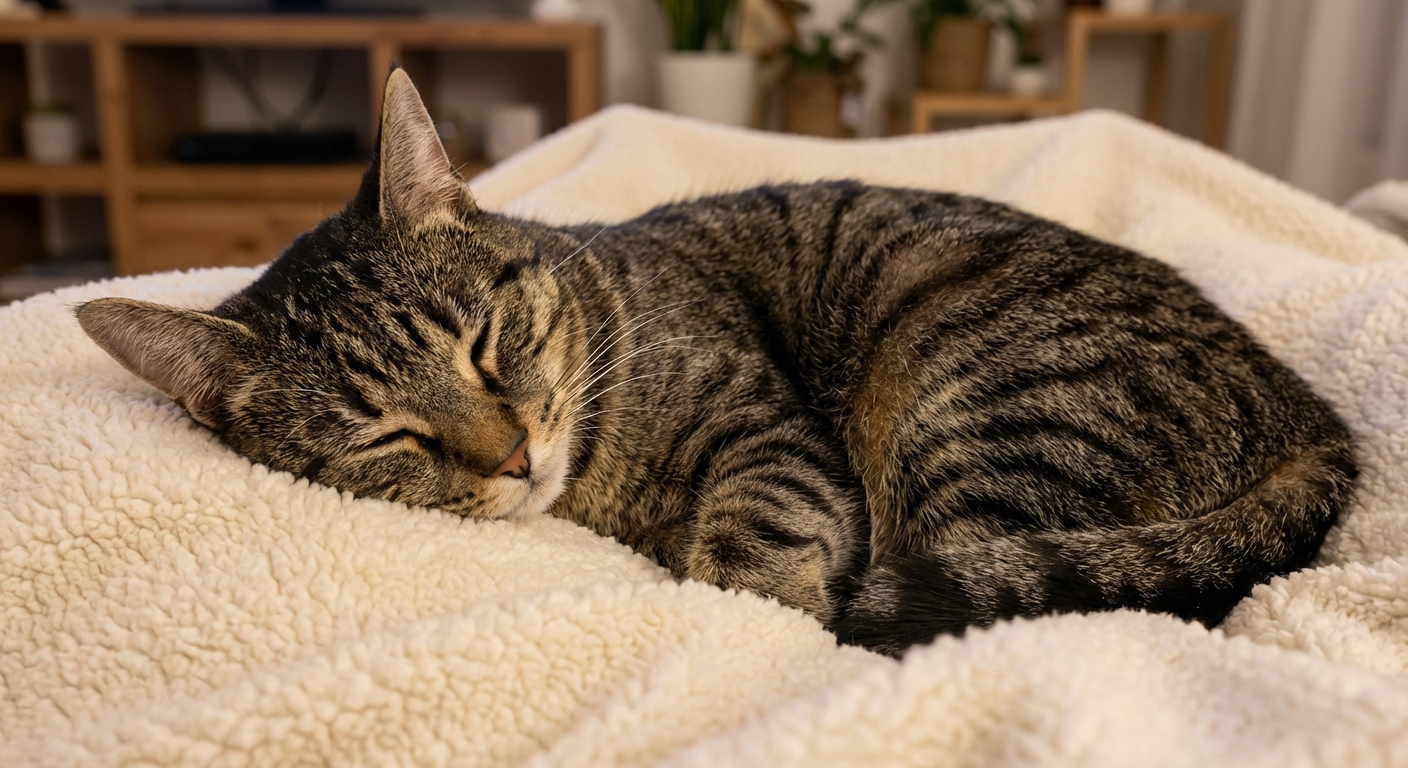
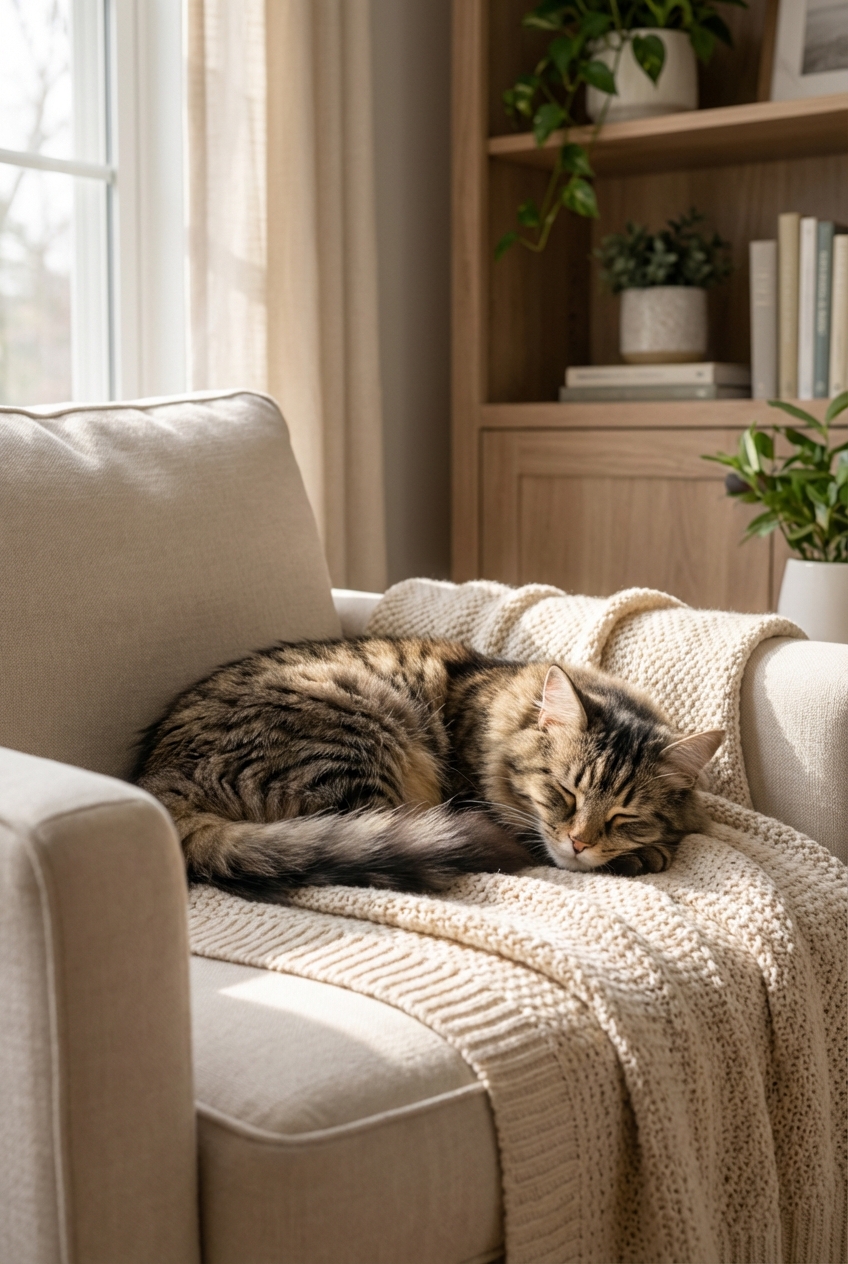
Heat behaviors can be intense, but punishment will not help and can increase anxiety. If she seeks affection, offer extra petting and calm companionship. If she likes warmth, a warm blanket or a heated pet bed on low may help her relax.
5) Try pheromones for stress support
Many families find calming pheromone diffusers or sprays helpful for reducing general stress in the household. They do not stop heat, but they can take the edge off for some cats.
6) Use warm compresses only if she enjoys them
Some cats relax with a warm (not hot) towel placed near them. Always let your cat choose. If she tries to leave, let her.
7) Keep intact males separate
If you have an intact male in the home, separate them completely. Even if you think you can supervise, cats are quick and persistent when hormones are involved. If your household includes male cats that are spraying or trying to roam, talk to your veterinarian about neutering. It can make life calmer for everyone.
What not to do
- Do not give human medications. Many are toxic to cats, and dosing is not comparable to people.
- Do not use essential oils on or near your cat unless specifically approved by your veterinarian. Cats are especially sensitive to many concentrated oils.
- Do not attempt unregulated “hormone remedies.” They can be unsafe and may delay real care.
- Do not use birth control pills, injections, or other hormonal suppression unless your veterinarian specifically prescribes it. These options can have significant side effects and are generally not a first-choice solution for routine heat control.
- Do not punish yowling or spraying. It is communication and biology, not spite.
When to call your veterinarian
Heat itself is not an emergency, but these situations deserve a veterinary call:
- Blood from the vulva, foul odor, or discharge
- Severe lethargy, vomiting, not eating, or hiding more than usual
- Signs of pain, fever, or a swollen belly
- Heat behavior that seems nonstop for weeks
One major condition to be aware of in intact females is pyometra, a serious uterine infection. It is more common after cycling and can become life-threatening quickly. Cats can have open pyometra (discharge may be seen) or closed pyometra (discharge may be absent). Symptoms can include lethargy, decreased appetite, fever, vomiting, increased thirst, and a painful or swollen belly. If you suspect it, seek veterinary care right away.
The long-term solution: spaying
If your goal is to stop heat cycles, spaying is the reliable, evidence-based option. Spaying prevents pregnancy, stops heat behaviors, and reduces the risk of several serious health issues over a cat’s lifetime.
- Prevents unwanted litters and the stress that comes with them
- Eliminates heat cycles and the repeated hormonal ups and downs
- Greatly reduces the risk of pyometra
- Reduces the risk of mammary tumors, with the biggest benefit when done before the first heat. The protective effect decreases with each heat cycle, but spaying can still offer health and household benefits later too.
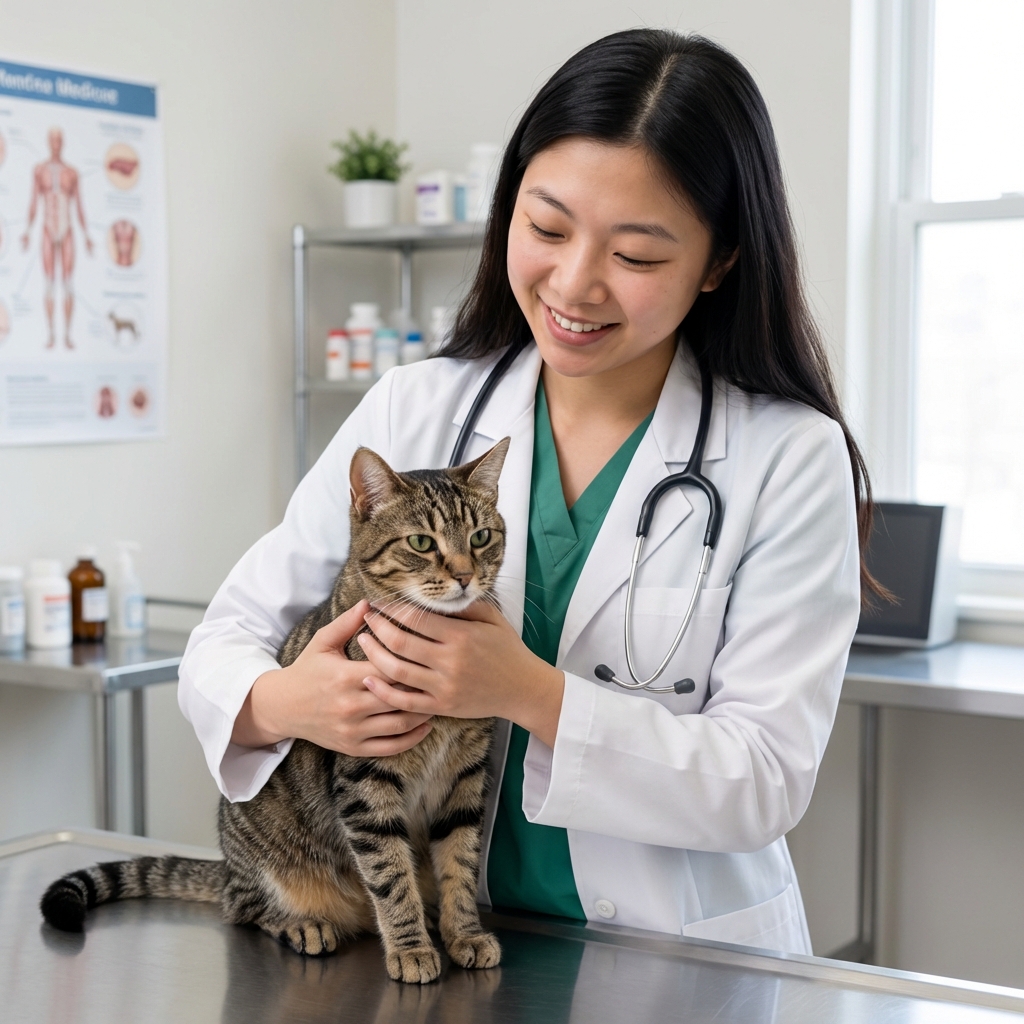
If your cat is currently in heat, many clinics can still perform a spay. Some veterinarians prefer to schedule when she is out of heat due to increased blood flow to the reproductive tract, while others will proceed with appropriate precautions. Your veterinarian can advise what is safest for your cat based on her age, health, and timing.
If you are breeding
Responsible breeding requires planning, genetic screening, parasite prevention, vaccination guidance, and a relationship with a veterinarian. If you are not intentionally breeding with a plan for lifelong placement of kittens, it is kinder and safer to prevent pregnancy.
Quick checklist for tonight
- Keep your cat indoors and away from doors and windows
- Set up a quiet room with a litter box, food, water, and soft bedding
- Do 10 to 15 minutes of play, then offer a small meal
- Try a calming pheromone diffuser if you have one
- Book a spay consultation, even if you plan it a few weeks out
Heat can be exhausting, but it is temporary. With a calm setup and a plan, most families get through it much more smoothly, and your cat feels safer too.