Introduce cats the right way with a proven, low-stress plan: safe room setup, scent swapping, door feeding, barrier sessions, and short supervised visits to ...
Article
•
Designer Mixes
How to Get Two Cats to Get Along

Shari Shidate
Designer Mixes contributor
Bringing a second cat into your home can be wonderful, and it can also feel stressful when hissing, hiding, or swatting starts. The good news is that most cats can learn to coexist, and many become true buddies, but they need a slow, structured introduction that protects their sense of safety.
As a veterinary assistant, I like to frame this as a health and behavior project: reduce stress, prevent negative experiences, and let time do the heavy lifting. Below is a practical plan that is widely recommended by veterinary and shelter behavior guidance, and you can follow it step by step.
First, set expectations
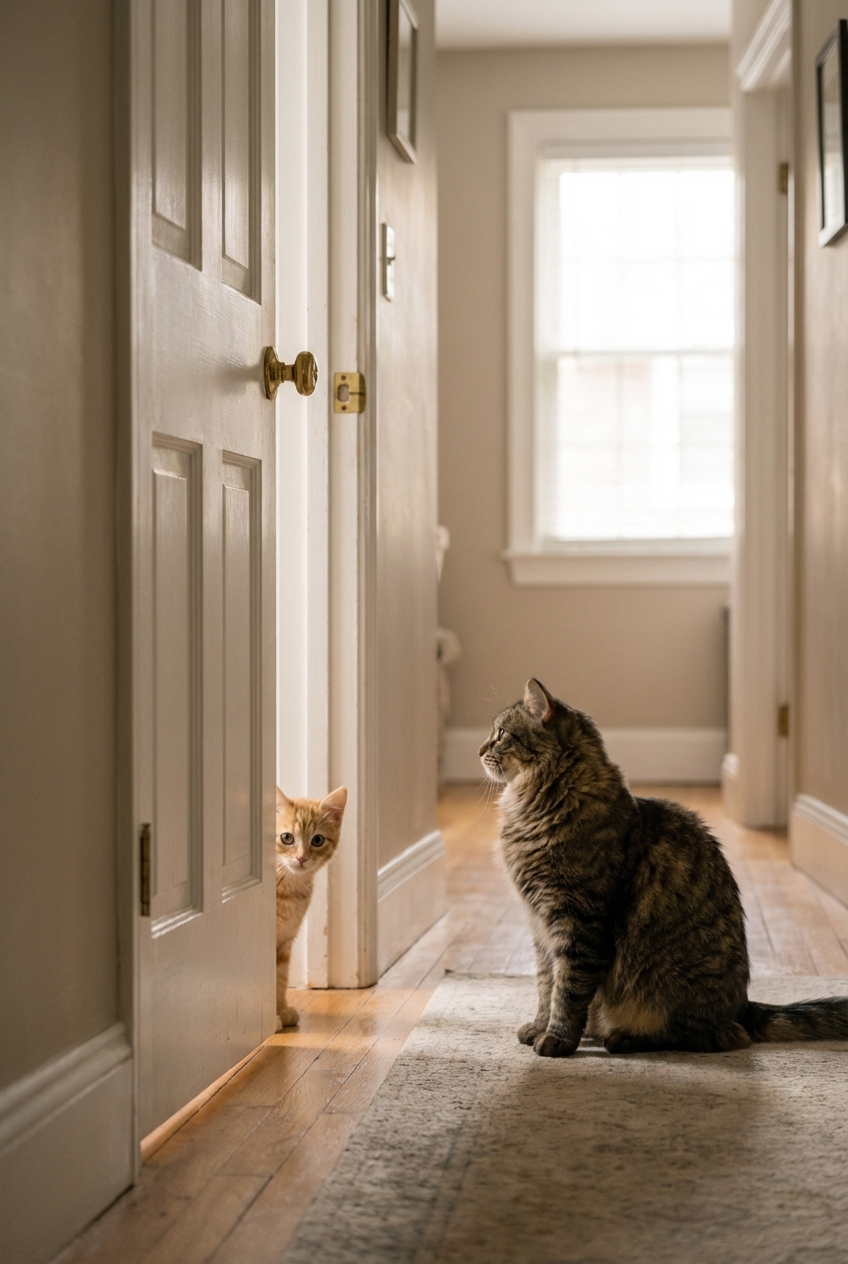
Cats are territorial by nature. When a new cat arrives, the resident cat often sees it as a threat to resources like food, resting spots, and your attention. That does not mean they will never get along. It means they need introductions that avoid forcing face-to-face contact too soon.
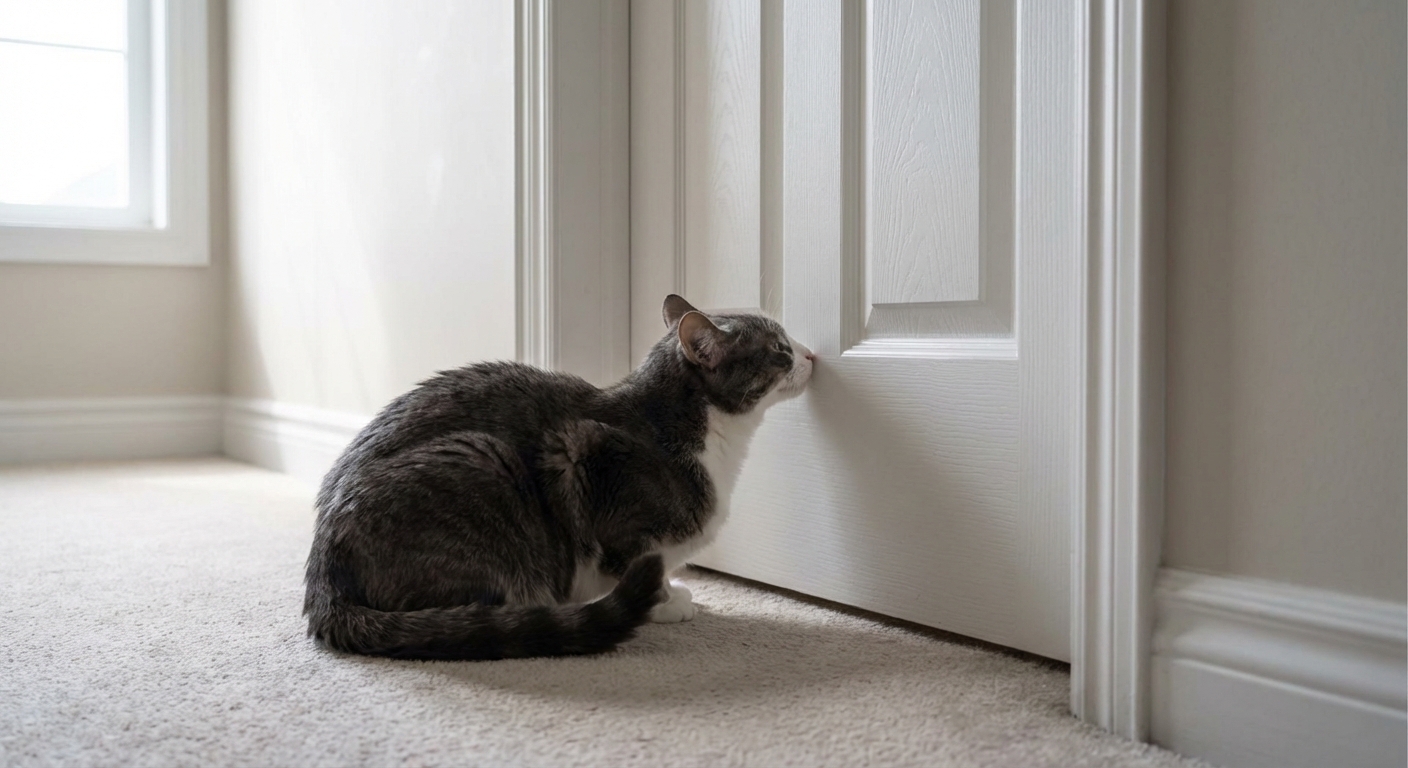
- Normal at first: hissing, growling, hiding, cautious staring, sniffing under a door.
- Not normal: repeated full-contact fights, relentless stalking, a cat that cannot access litter, food, or water, or stress signs that keep worsening.
Before you start: health basics
Before introductions, set both cats up for success medically. Stress can flare problems, and illness can look like “bad behavior.”
- Schedule a vet visit for the newcomer (and the resident cat if they are overdue).
- Confirm vaccines and parasite prevention are current for your household and region.
- Ask your vet about FeLV and FIV testing for the new cat, especially if either cat has an unknown history.
- Spay and neuter if needed. Intact cats are more likely to spray, roam, and fight.
Set up a safe room
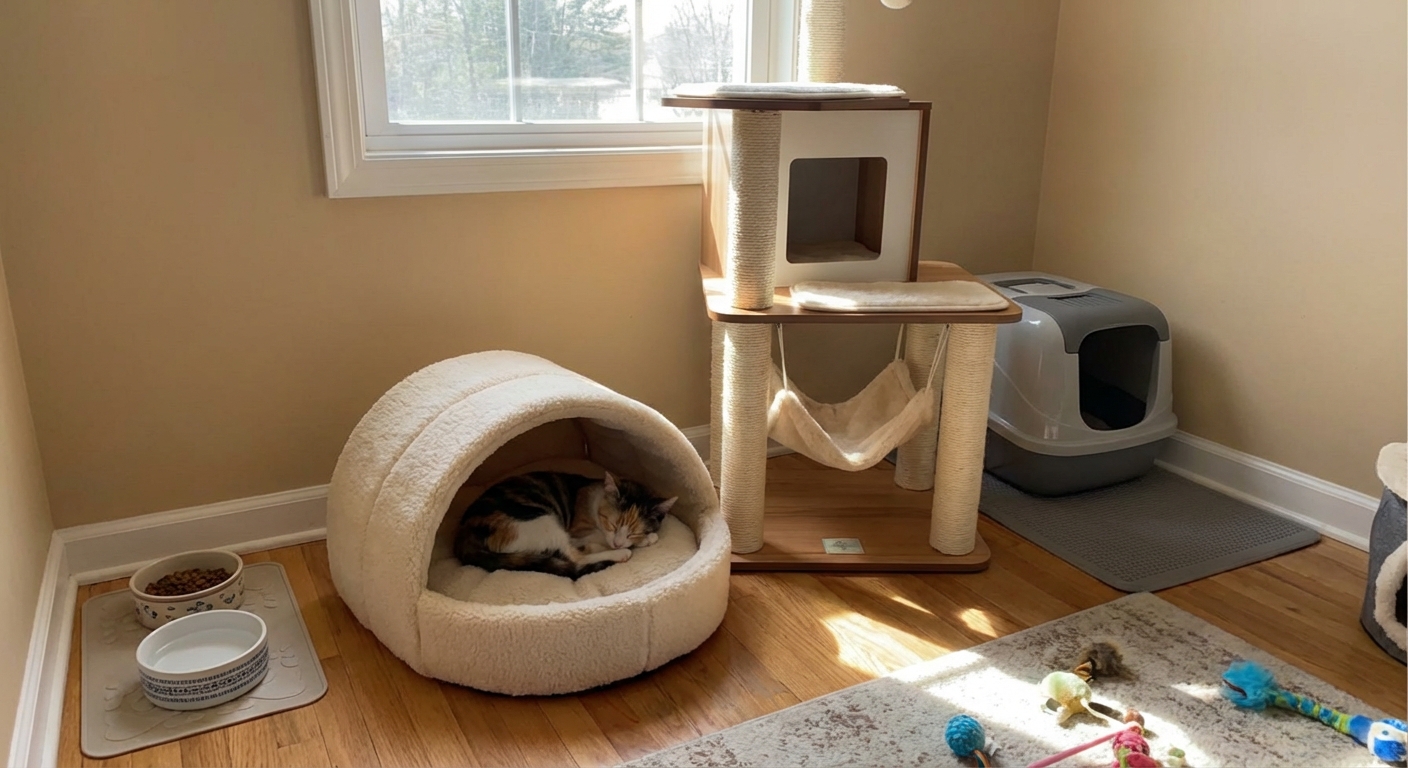
Give the new cat a dedicated room for at least several days, sometimes a few weeks. This is not “punishment.” It is stress management. The safe room should include:
- A litter box
- Food and water placed away from the litter
- A hiding spot (covered bed or a box turned on its side)
- A vertical option (cat tree or shelf)
- Scratchers
- Interactive toys
This setup lets the newcomer decompress and prevents early conflicts that can create long-term negative associations.
The golden rule: go slow
If you only take one thing from this guide, let it be this: the timeline should be set by the cats’ body language, not by the calendar. Some pairs integrate in a week. Others need a month or more. Rushing is a very common reason introductions fail.
Progress happens when both cats can stay under their stress threshold. If either cat is tense, you are moving too fast.
Step-by-step plan
Step 1: Scent swapping (days 1 to 7, or longer)
Cats rely heavily on scent cues to identify familiar individuals. Your goal is to help them accept each other’s scent as normal.
- Swap bedding or small blankets daily.
- Rub a soft cloth on one cat’s cheeks, then place it near the other cat’s sleeping area.
- Rotate which cat uses a shared space for short periods (with the other cat securely closed in a separate room). Avoid door-dashing and do not allow face-to-face contact yet.
What you want to see: relaxed sniffing, ignoring the scent item, or curiosity without hissing.
Ready to progress when: both cats are consistently calm around scent items for a few days in a row.
Step 2: Site swapping (after Step 1 is calm)
Now let each cat thoroughly investigate the other’s territory, still without meeting. This teaches them that both cats “belong” in the whole home.
- Secure the new cat elsewhere (a bedroom or bathroom with food, water, litter, and a treat or toy).
- Let the resident cat explore the safe room for 15 to 30 minutes so they can fully take in the newcomer’s scent in that secure space.
- Then secure the resident cat, and let the new cat explore the main living area for 15 to 30 minutes.
- Repeat daily, and keep it calm and routine.
Tip: If either cat sprays, overgrooms, or stops eating after swaps, shorten sessions and add more enrichment.
Ready to progress when: both cats can do swaps without hissing at the door, stress behaviors, or lingering agitation.
Step 3: Controlled visual contact
When scent is no big deal, introduce brief, calm visuals.
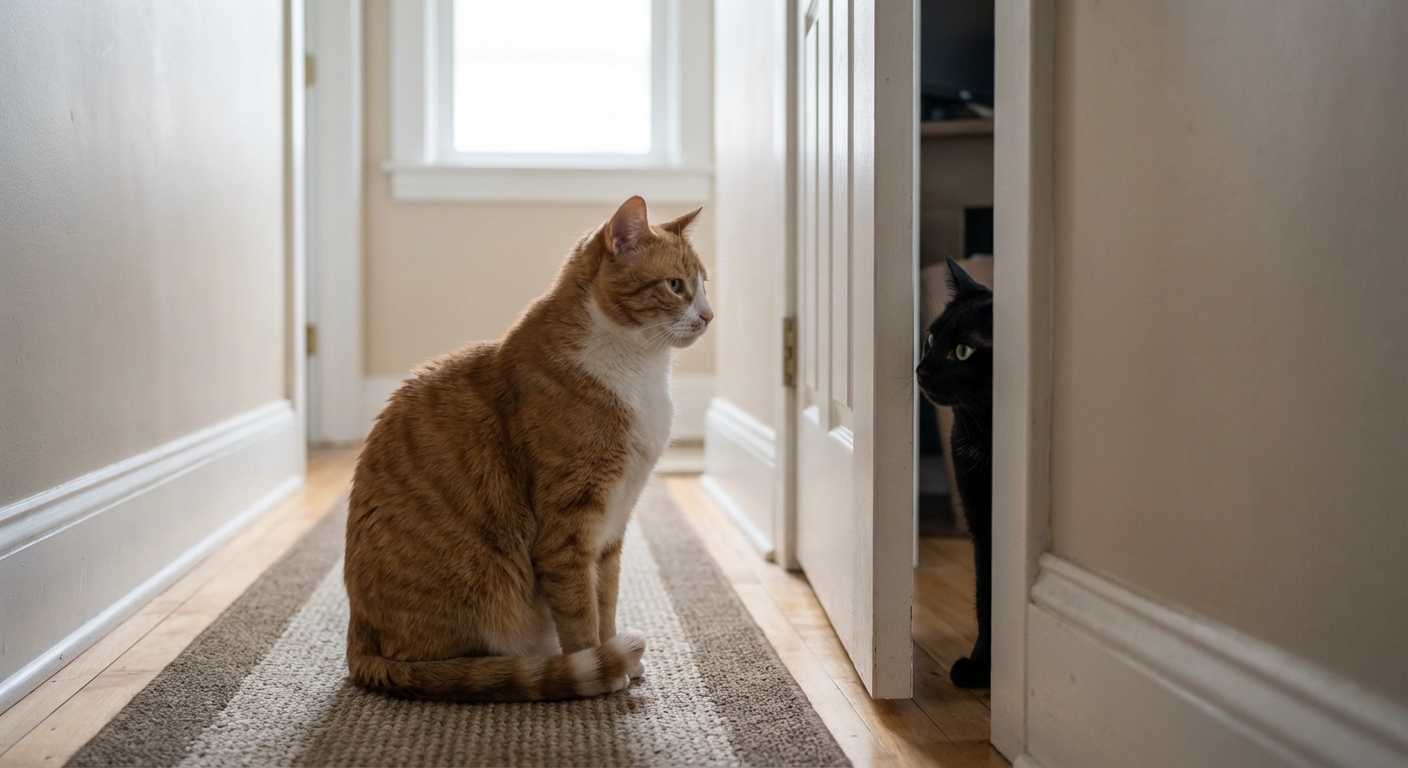
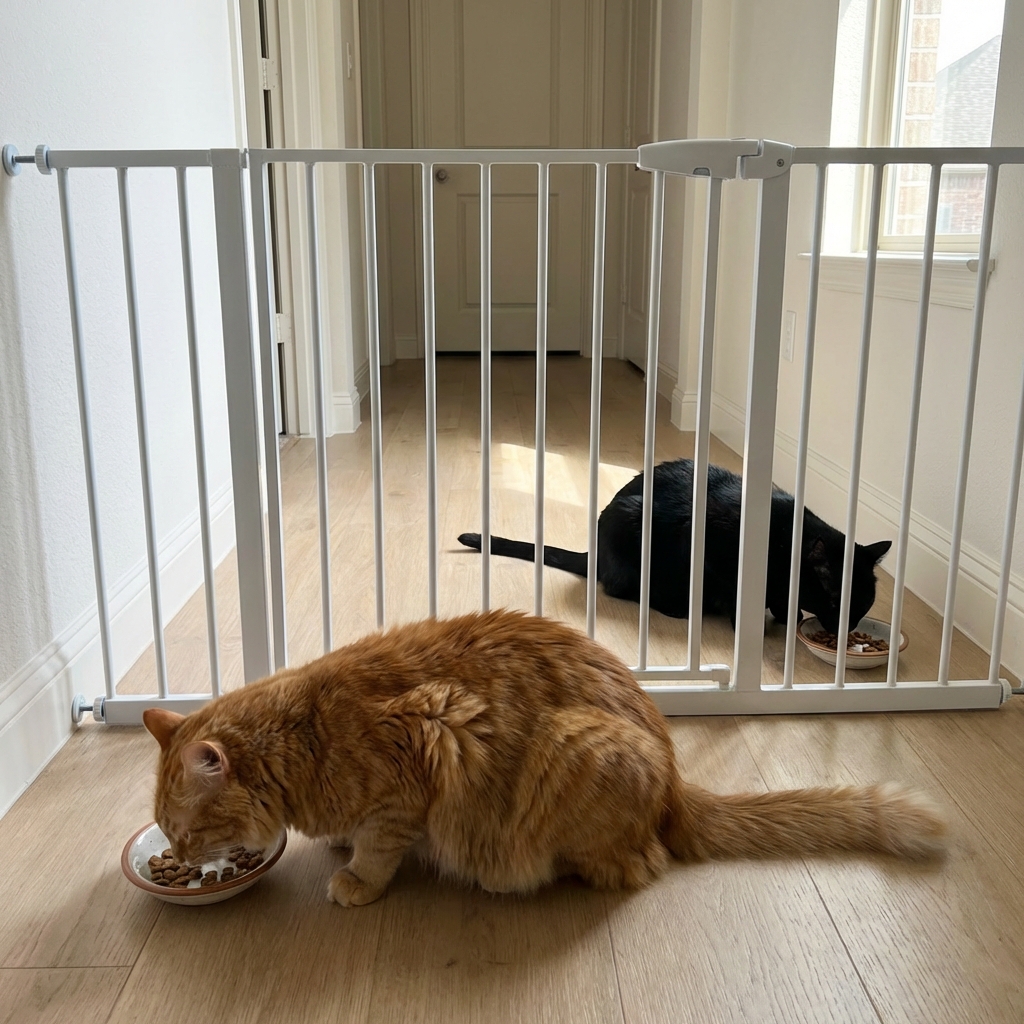
- Use a solid barrier as your default, such as a baby gate with a sheet clipped over it, a screen door, or stacked gates. This helps prevent paw swipes and accidental door slams.
- Feed high-value treats or meals on each side, starting far away and slowly moving closer over days.
- Keep sessions short, 1 to 5 minutes at first.
What you want to see: eating, blinking, looking away, grooming, loose bodies. These are calm signals.
If you see: hard staring, puffed tail, ears pinned, growling, or lunging, increase distance and shorten sessions.
Ready to progress when: they can see each other at the barrier while staying relaxed and able to take treats.
Step 4: Supervised time together
Only start this when both cats can see each other with minimal tension.
- Choose a large room with escape routes and vertical space.
- Start with 2 to 5 minutes.
- Use interactive play (wand toy) to create a positive shared activity.
- End on a good note before either cat gets overwhelmed.
Important: Do not force them to “work it out.” A fight is not a normal step. It is a setback.
Ready to progress when: you see repeated sessions with loose body language and no chasing or cornering.
Step 5: Increase freedom
Increase time together slowly. Continue to separate them when you are not home until you have a consistent pattern of calm interactions for at least 1 to 2 weeks.
Safety note: If you use collars, choose breakaway collars. Avoid leaving harnesses on cats when unsupervised since they can snag.
Set up for peace
Many cat conflicts are really resource conflicts. Even friendly cats can squabble if they feel boxed out.
Litter boxes
A common guideline is one box per cat, plus one extra, spread out across different areas. Try not to line them up in one spot since that can still feel like one “guarded” location.
Small detail that matters: Some cats feel trapped by covered boxes or boxes tucked into tight corners, especially in multi-cat homes. If you are having tension, try at least one large, uncovered box in an open area with more than one approach route.
Food and water
- Provide separate feeding stations, especially early on.
- Use puzzle feeders to reduce boredom and tension.
- Add multiple water bowls or a cat fountain.
Space and zones
- Add multiple resting spots and beds in separate zones.
- Place multiple scratchers (vertical and horizontal) around the home, not just in one room.
Vertical space
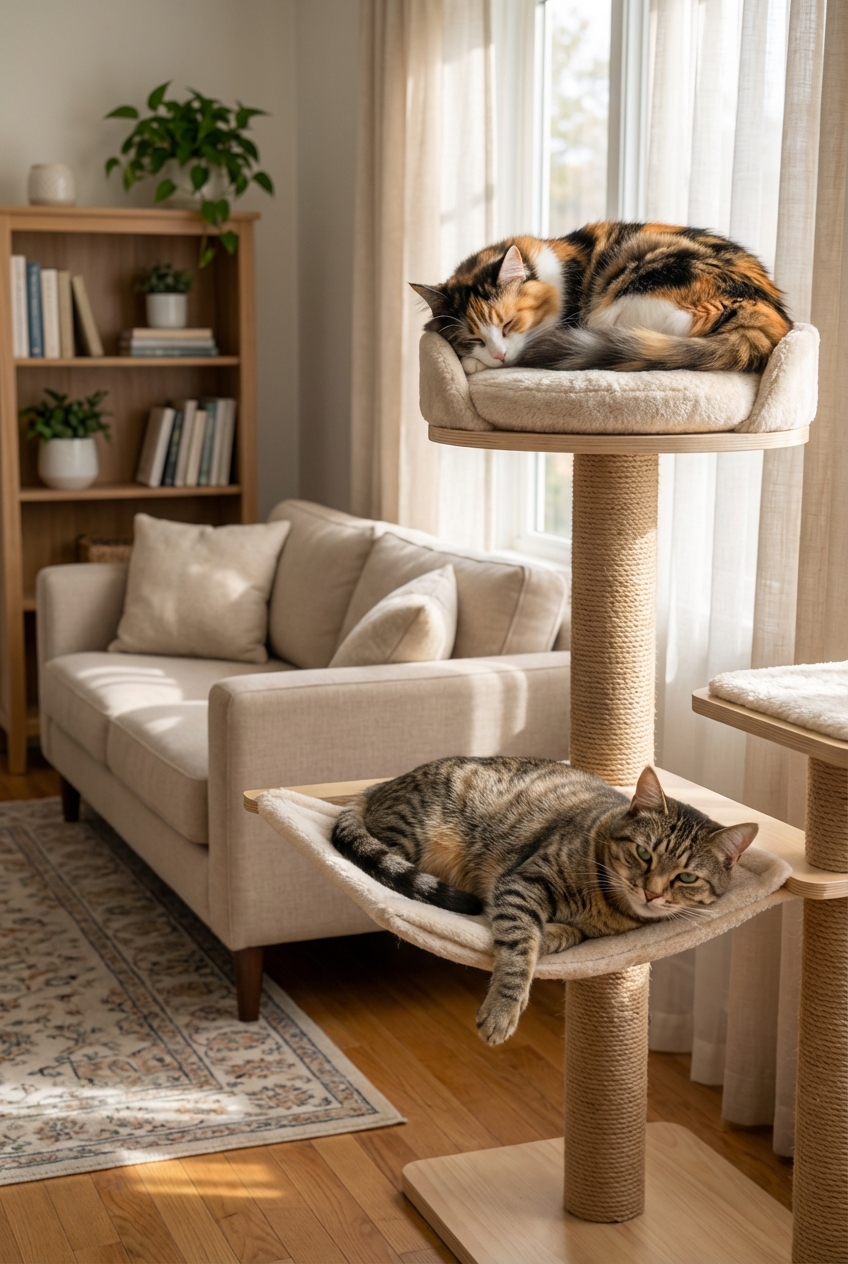
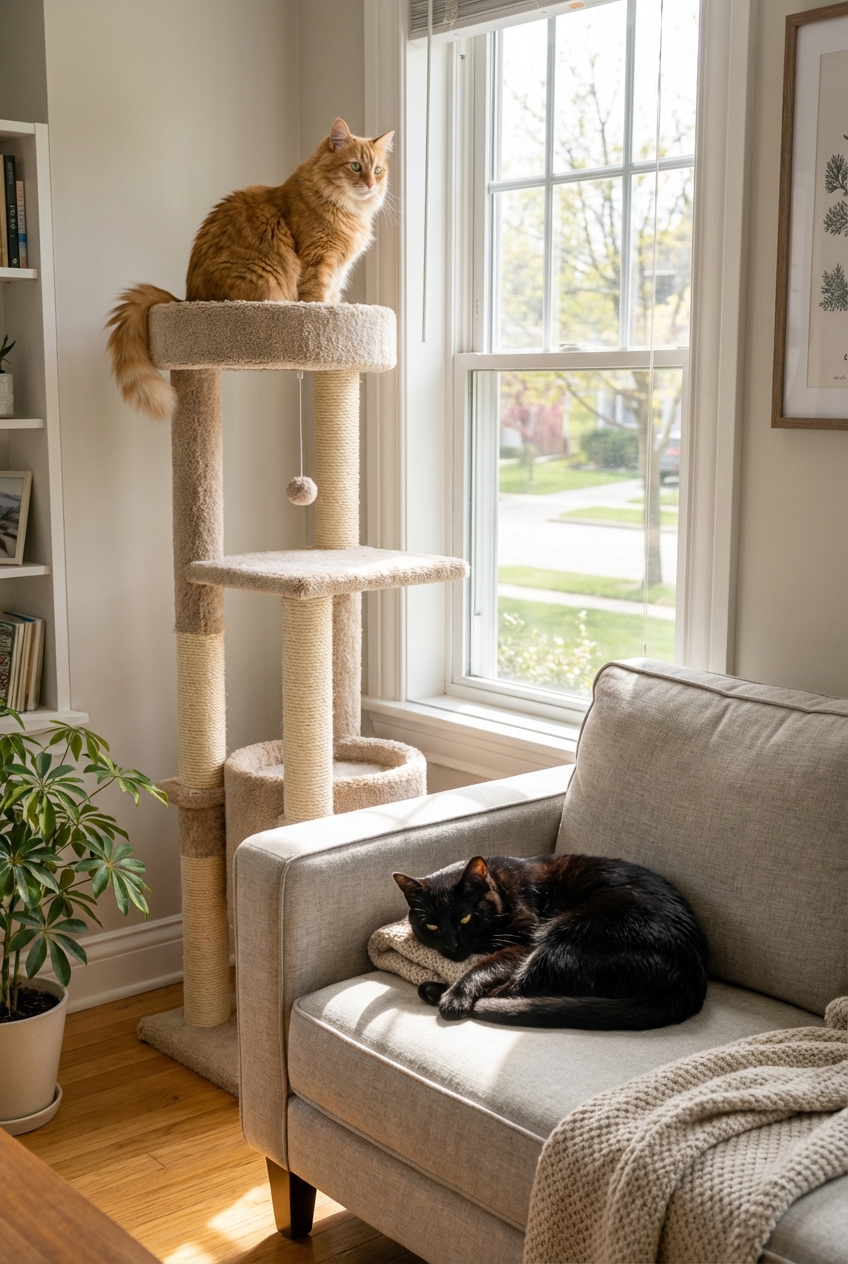
Cat trees, shelves, window perches, and sturdy furniture routes help cats avoid each other without confrontation. This is one of the simplest ways to lower stress in multi-cat homes.
Read body language
Signs you are going too fast
- Flattened ears, dilated pupils, piloerection (puffed fur)
- Hard staring with a stiff body
- Growling, yowling, or repeated hissing
- Swatting that escalates into chasing
- One cat blocking doorways, litter boxes, or food
Signs you are on track
- Sniffing and looking away
- Slow blinking
- Grooming or relaxed stretching in the other cat’s presence
- Eating treats, playing, exploring
If they fight
If a fight happens, your priority is safety and preventing future fear.
- Do not use your hands to separate cats.
- Try to break visual contact with a large piece of cardboard, a laundry basket, or a pillow between them.
- If needed, toss a towel or light blanket over one cat to interrupt and separate more safely.
- A loud noise can work for some cats, but it can also spook others. Use it only if a barrier is not possible in the moment.
- Separate them into different rooms and allow a full cool-down period (often 24 to 48+ hours, or until both cats are back to normal behavior).
- Go back to the previous successful step (usually scent and visual work).
If fights are intense or frequent, involve your veterinarian early. Pain, anxiety, or medical issues can lower a cat’s tolerance quickly.
Health issues to rule out
When I see sudden aggression at the clinic, I always think: could pain or illness be driving this? A cat with dental pain, arthritis, urinary discomfort, or other medical issues (including thyroid disease) may be more reactive and less tolerant.
Schedule a vet visit if:
- A previously friendly cat becomes aggressive suddenly
- There is hiding, appetite change, vomiting, diarrhea, or weight loss
- You notice limping, sensitivity to touch, or changes in grooming
- There are litter box accidents (especially in male cats, where urinary blockage is an emergency)
Helpful tools
Positive reinforcement
Reward calm behavior in the presence of the other cat. Tiny treats and short play sessions work beautifully.
Pheromone support
Some households benefit from feline pheromone diffusers or sprays, especially during the first few weeks. Results vary by cat, and this is not a substitute for slow introductions and good resource setup.
Enrichment
- Daily interactive play (5 to 10 minutes, 1 to 2 times per day)
- Bird feeders outside a window (cat TV)
- Rotate toys weekly
- Food puzzles and treat hunts
14-day sample timeline
Every pair is different, but here is a gentle starting framework:
- Days 1 to 3: new cat in safe room, scent swapping begins
- Days 4 to 7: continue scent work, add site swapping
- Days 8 to 10: controlled visual sessions with treats or meals
- Days 11 to 14: brief supervised meetings, increase time slowly
If you hit hissing or lunging, pause, increase distance, and return to the last calm step for a few days. Slow is fast with cats.
When to get help
Sometimes you need extra eyes and a customized plan. Consider a certified cat behavior consultant or your veterinarian if:
- There are repeated fights or injuries
- One cat is chronically hiding or not using the litter box
- You see persistent guarding of food, litter, or you
- Progress stalls for more than a few weeks
Support early can prevent a long-term feud and protect both cats’ wellbeing.
Bottom line
Most cats can learn to live together peacefully when introductions are slow, resources are plentiful, and you protect them from scary face-to-face moments. Focus on scent first, then site swapping, then calm visuals, then short supervised time together. Celebrate small wins, and do not be afraid to slow down.
With patience and a plan, you are giving both cats the best chance at a comfortable, secure home, which is the foundation for real friendship.