Cat urine odor lingers because of uric acid residue. Learn vet-approved enzymatic cleaning steps for carpet, floors, wood, and fabrics—plus how to stop rep...
Article
•
Designer Mixes
How to Get the Smell of Cat Pee Out

Shari Shidate
Designer Mixes contributor
Cat urine smell can feel impossible to remove, especially once it has soaked into carpet, fabric, or wood. The good news is that you can fix it. The key is understanding what you are fighting: uric acid that can form stubborn crystals and cling to surfaces. When moisture or humidity is present, those residues can dissolve again and re-release odor. That is why the smell can “come back” even after you clean.
In this guide, I will walk you through a practical approach that works in real homes, plus how to prevent repeat accidents. If you suspect your cat is urinating outside the box because of pain or stress, you are not alone, and there are clear next steps.
Why cat pee smell is so strong
Cat urine is uniquely stubborn because it contains:
- Urea that bacteria break down into ammonia
- Urochrome (pigments) that stain
- Uric acid that can form crystals which bind to carpet fibers, grout, and other porous materials
Many “good smelling” cleaners only mask odor temporarily. If uric acid residue remains, the smell can return later, especially on humid days or after a surface-level clean.
What works (and what to skip)
Best choice: enzyme cleaners
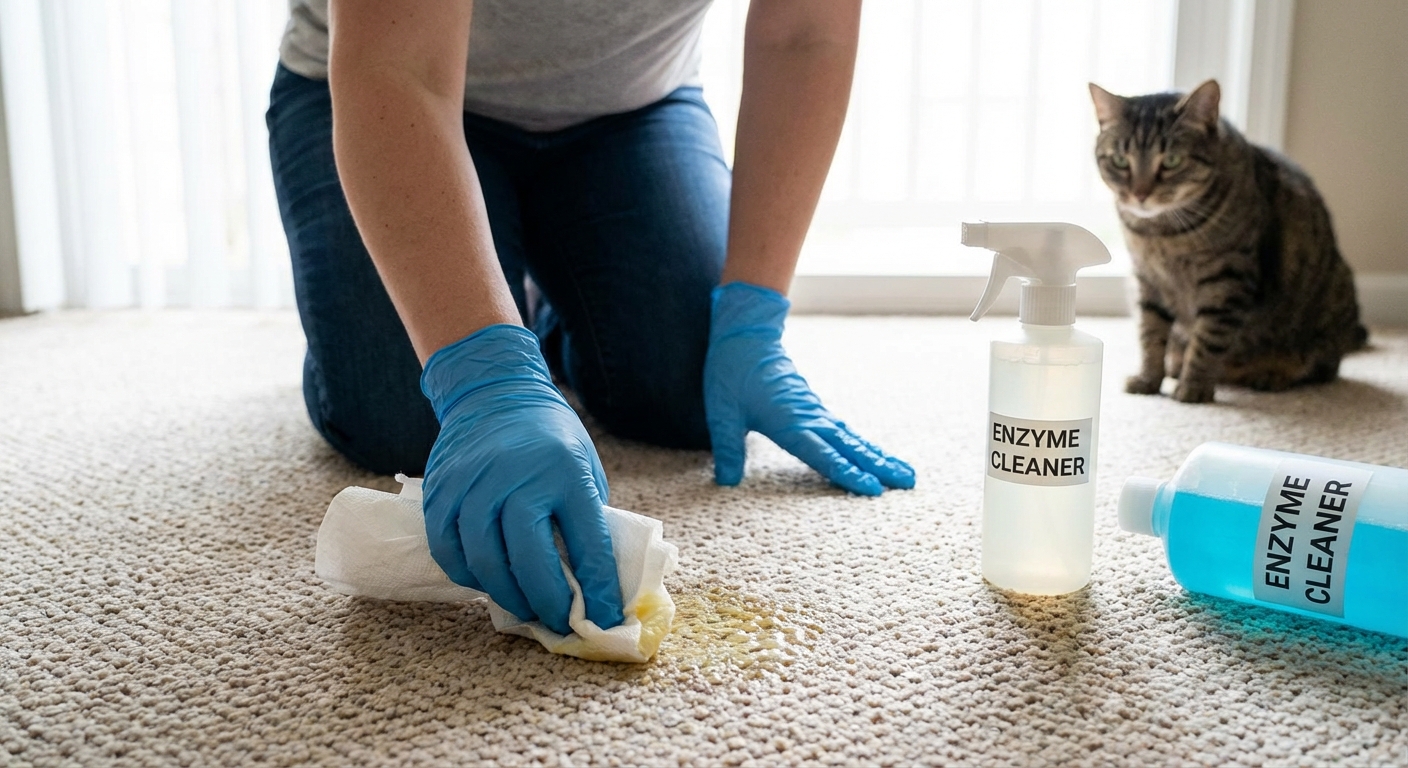
Enzymatic cleaners are the gold standard because they break down urine components at the source. Look for products labeled for cat urine and follow the label directions exactly.
Dwell time matters. Some products need to stay wet for 10 to 15 minutes, while others work best with a longer soak time, sometimes hours. Old spots often need repeated applications. If the area dries too quickly, the enzymes can stop working.
Helpful for fresh accidents: blotting and dilution
If the urine is fresh, removing as much liquid as possible first makes every other step more effective.
Be careful with vinegar and baking soda
These can help with light odor and fresh spots, but they often do not fully eliminate uric acid, especially in carpet padding and porous flooring. They are not a replacement for enzymes.
Avoid ammonia-based products
Ammonia can smell similar to urine and may encourage repeat marking. Skip anything that lists ammonia or has a strong ammonia odor.
What not to do
- Do not rub. It can push urine deeper into fibers.
- Do not use hot water or steam. Heat can intensify odor and can make residues harder to remove. It can also drive urine deeper into carpet and padding.
- Do not use bleach or mix cleaners. Dangerous fumes can occur, especially if any ammonia is present.
Quick steps for fresh cat pee
If you catch it quickly, you can often prevent a lingering odor.
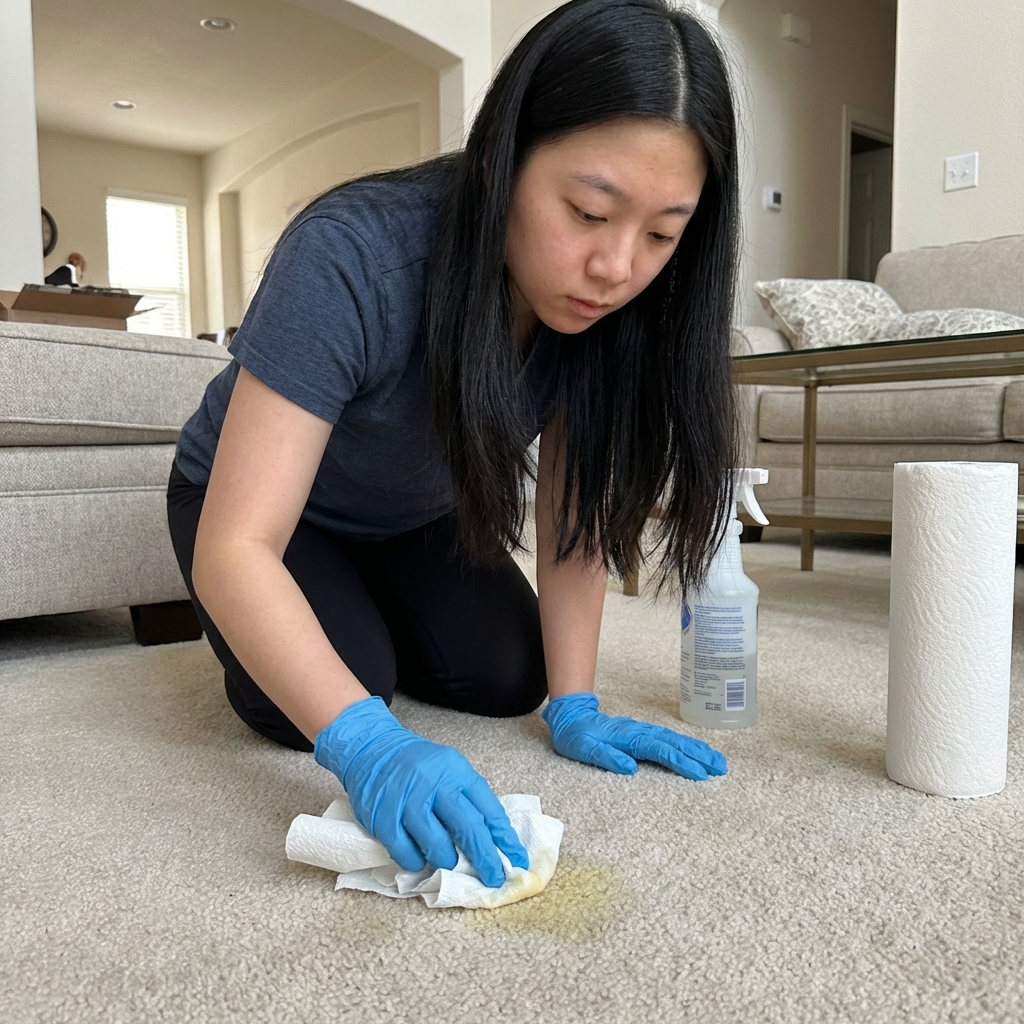
- Blot, do not rub. Use paper towels or an absorbent cloth. Stand on it to apply pressure and pull urine up.
- Rinse lightly with cool water (carpet or fabric) and blot again. This helps dilute what is left.
- Apply an enzyme cleaner generously. The goal is to reach as deep as the urine went.
- Keep it damp for the recommended time. Enzymes need moisture to work. If the label says to cover the area, do it.
- Air-dry completely. Fans help. Avoid heat until the odor is gone.
Cat pee smell in carpet (and padding)
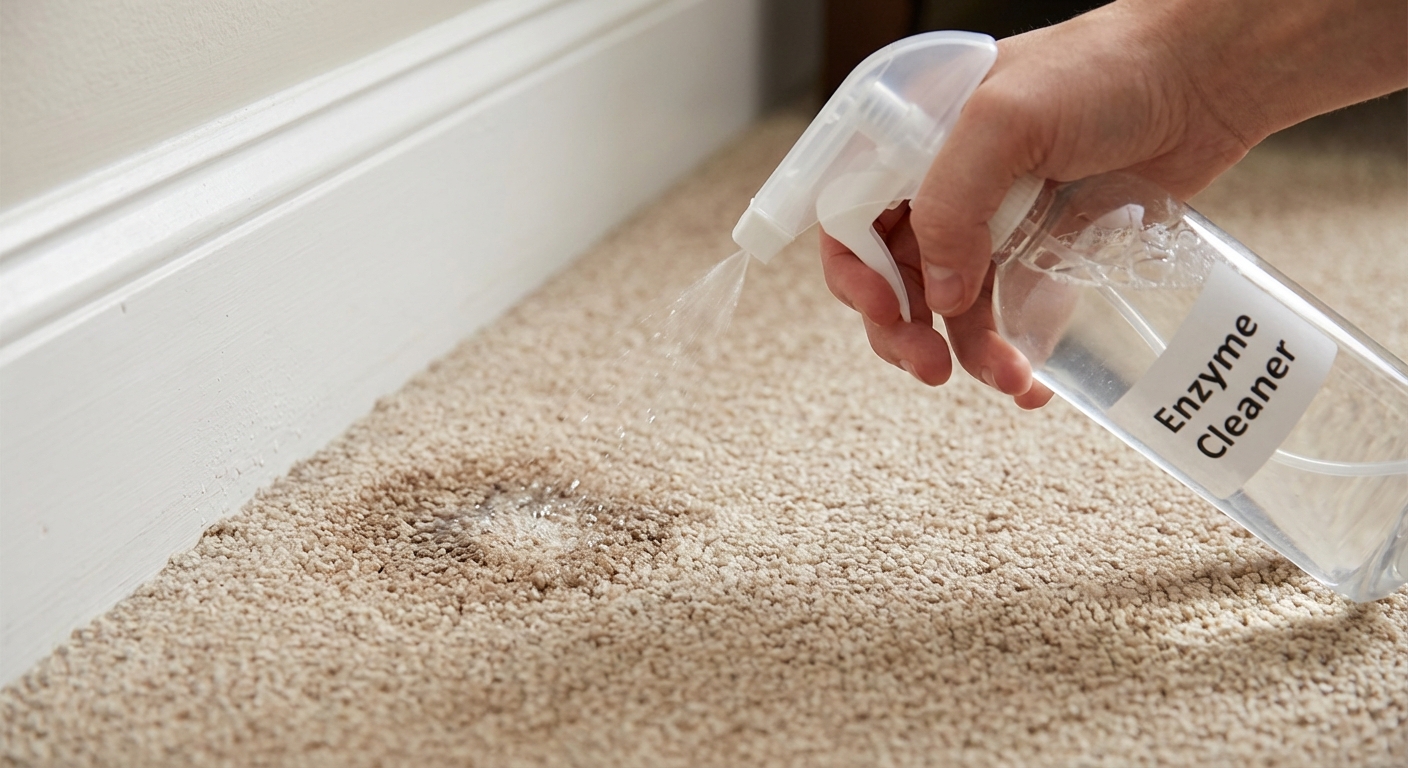
Carpet is the most common “smell trap” because urine often soaks through into the padding.
Step-by-step
- Find the full area. In daylight, look for staining. At night, a UV flashlight can help reveal dried urine spots.
- Blot and extract. If you have a wet vac, use it with cool water only. Avoid carpet shampoo or soaps before enzyme treatment, since residues can make removal harder.
- Saturate with enzyme cleaner. Use enough to reach the padding. Light misting will not cut it.
- Cover with plastic wrap (optional but helpful) to slow evaporation so enzymes can work longer.
- Let it sit. Follow label times, but for old or heavy spots, longer contact time is often needed.
- Blot excess, then air-dry. Fans and good ventilation matter.
If the odor persists after drying: Repeat the enzyme step. Old urine often needs multiple rounds. If you are still smelling it after several treatments, the padding may be contaminated and replacement may be the only true fix.
If the subfloor is affected, an odor-blocking sealer (often shellac-based) can help after everything is fully dry and cleaned, especially if replacing materials is not feasible.
Cat pee smell on hard floors
Hard floors vary. The big question is whether the surface is sealed or porous.
Sealed tile, sealed laminate, vinyl
- Wipe up urine promptly.
- Clean with a mild detergent and water.
- Apply enzyme cleaner and let it dwell.
- Wipe and allow to air-dry.
Grout, concrete, unsealed surfaces
These can absorb urine deeply.
- Blot and clean surface debris.
- Saturate with enzyme cleaner and allow extended dwell time.
- Repeat as needed.
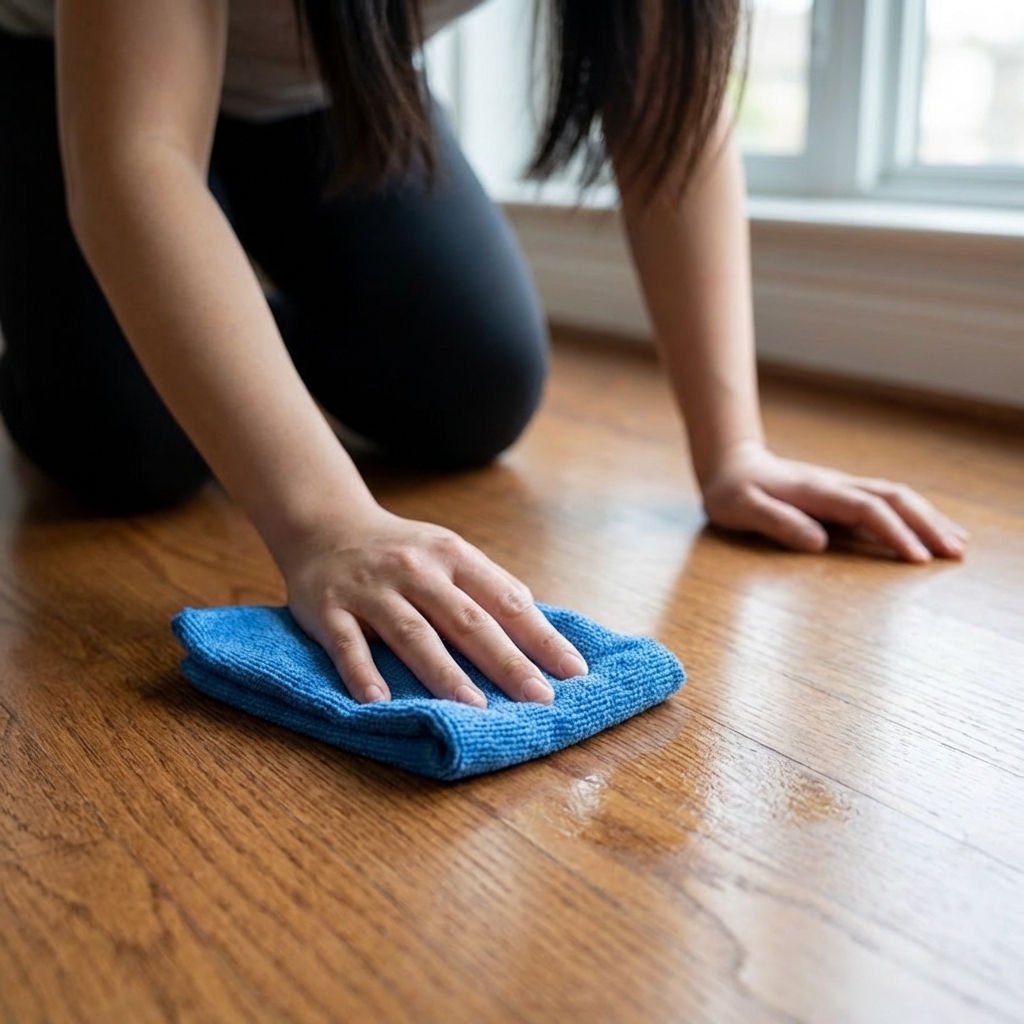
Hardwood floors
Hardwood is tricky because urine can seep between boards.
- If the floor is well-sealed and the accident is fresh, enzyme treatment may be enough.
- Do not over-saturate wood. Use a minimally wet application, blot promptly, and dry the area quickly with airflow to reduce the risk of warping.
- If urine has soaked in, you may need professional help, refinishing, or replacing affected boards.
Cat pee smell in fabric and bedding
For washable items, enzymes plus proper laundering usually works well.
- Rinse with cool water if fresh.
- Pre-treat with enzyme cleaner (check label for fabric safety).
- Wash with detergent in cool or warm water as the fabric allows.
- Air-dry first and smell-check before using the dryer. Heat can lock in odor if urine remains.
If the item still smells after air-drying, repeat the enzyme pre-treat and wash again.
How to find hidden urine spots
Sometimes you are smelling cat urine but cannot locate it. Here is a simple process:
- Start with likely locations: near litter boxes, along walls, in corners, on rugs, on pet beds, near doors and windows.
- Use your nose strategically: get low to the floor and check baseboards.
- Try a UV flashlight in a dark room. Many urine spots fluoresce, though cleaning products, some glues, and certain fibers can also glow.
UV tips
- Turn off lights and let your eyes adjust for a minute.
- If possible, scan when the area is dry.
- Mark spots with painter’s tape or chalk so you can treat them all in one pass.
Once you find a spot, treat it as if it is deeper than it looks.
When the smell keeps coming back
If you clean and the odor returns, one of these is usually the reason:
- Not enough product used to reach the full depth of urine
- Cleaner did not dwell long enough or dried too quickly
- Old urine in carpet padding or subfloor
- Heat or steam intensified odor or pushed residues deeper
- Repeat marking in the same area
In persistent cases, you may need to treat below the surface, replace padding, seal the subfloor with an odor-blocking primer, or consult a professional cleaning company experienced with pet urine.
Preventing repeat accidents
As a veterinary assistant, I always like to share this gently but clearly: peeing outside the litter box can be a medical issue, not just a behavior problem. If your cat is suddenly missing the box, straining, vocalizing, or visiting the box frequently with little urine produced, contact a veterinarian promptly. This is especially urgent for male cats who strain and produce little or no urine.
Home prevention checklist
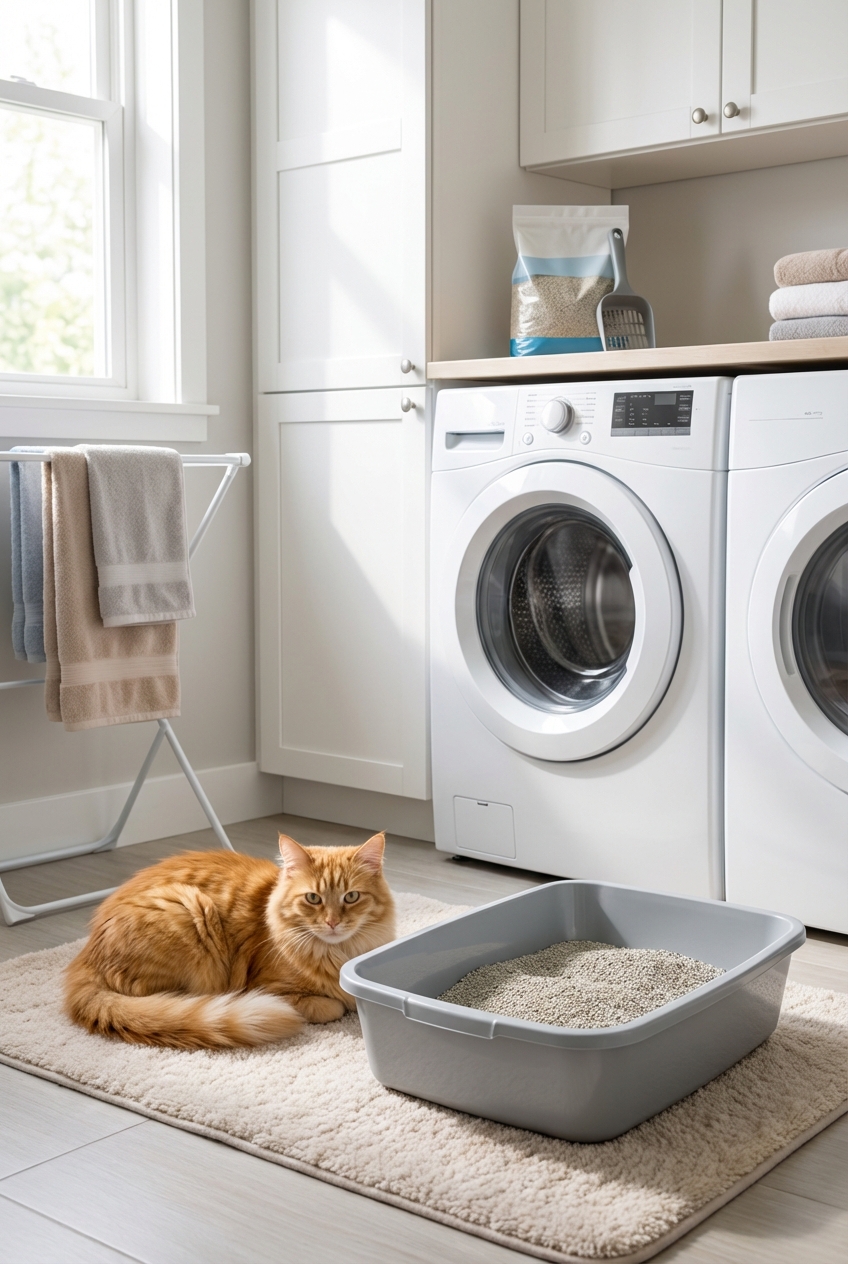
- Litter box count: aim for one box per cat, plus one extra.
- Placement: quiet, accessible locations, not trapped in a dead-end where another cat can block access.
- Cleanliness: scoop daily and wash boxes regularly.
- Litter preference: many cats prefer unscented, fine-grain clumping litter.
- Box style: many cats do best with a large, uncovered box. Low-entry boxes can help seniors or cats with mobility issues.
- Stress reduction: provide vertical spaces, routine, playtime, and separate resources in multi-cat homes.
Safety notes for cleaners
- Do not mix cleaners (especially bleach and anything else). Dangerous fumes can occur.
- Test first on an inconspicuous area for colorfastness and finish changes.
- Ventilate the room while cleaning and drying.
- Keep pets away until the area is dry and safe.
When to call the vet
Contact your veterinarian if you notice any of the following:
- Sudden litter box avoidance
- Blood in urine
- Frequent trips to the box
- Crying, straining, or producing only small drops
- Straining with little or no urine produced (treat as urgent, especially in male cats)
- Accidents paired with increased thirst or weight loss
Cleaning solves the smell. Addressing the underlying cause helps prevent it from happening again.
If your cat is having urinary symptoms, please treat it as urgent. It is always better to check early than to wait.