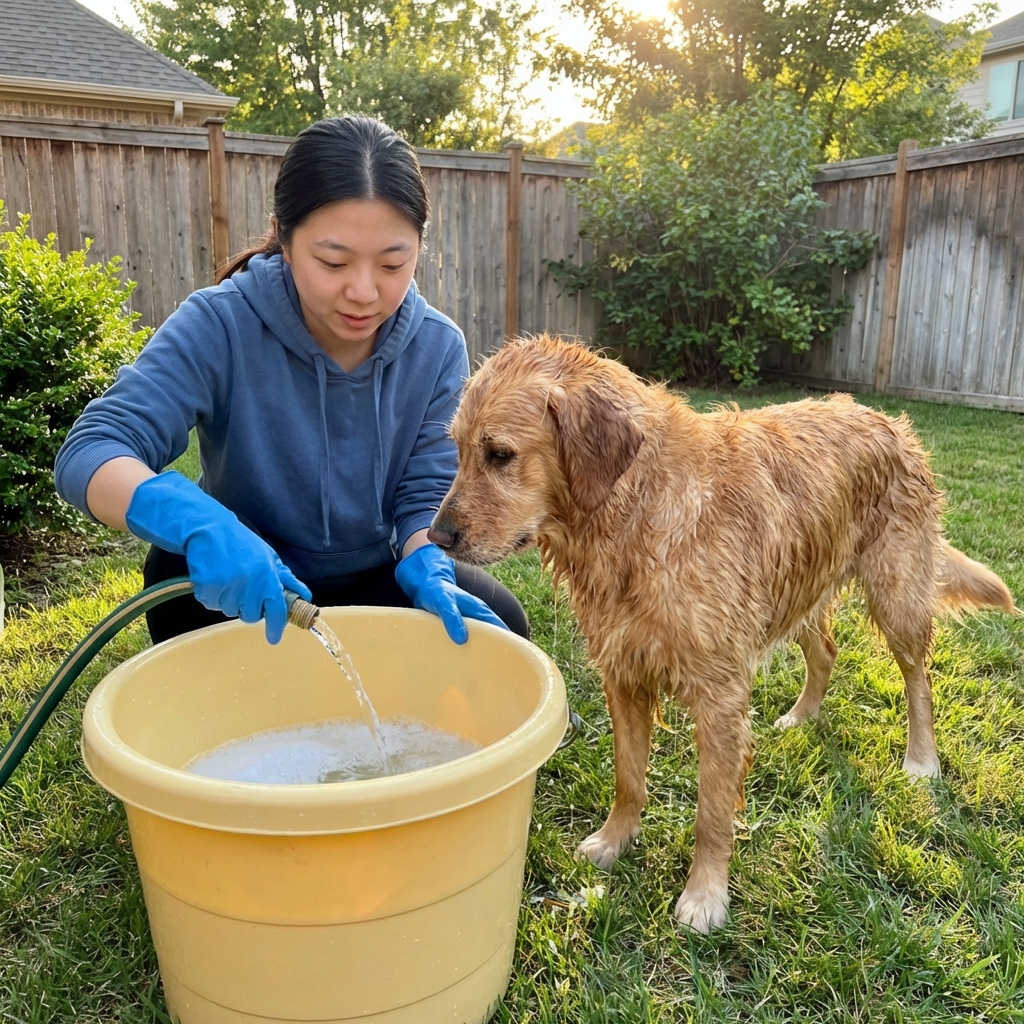
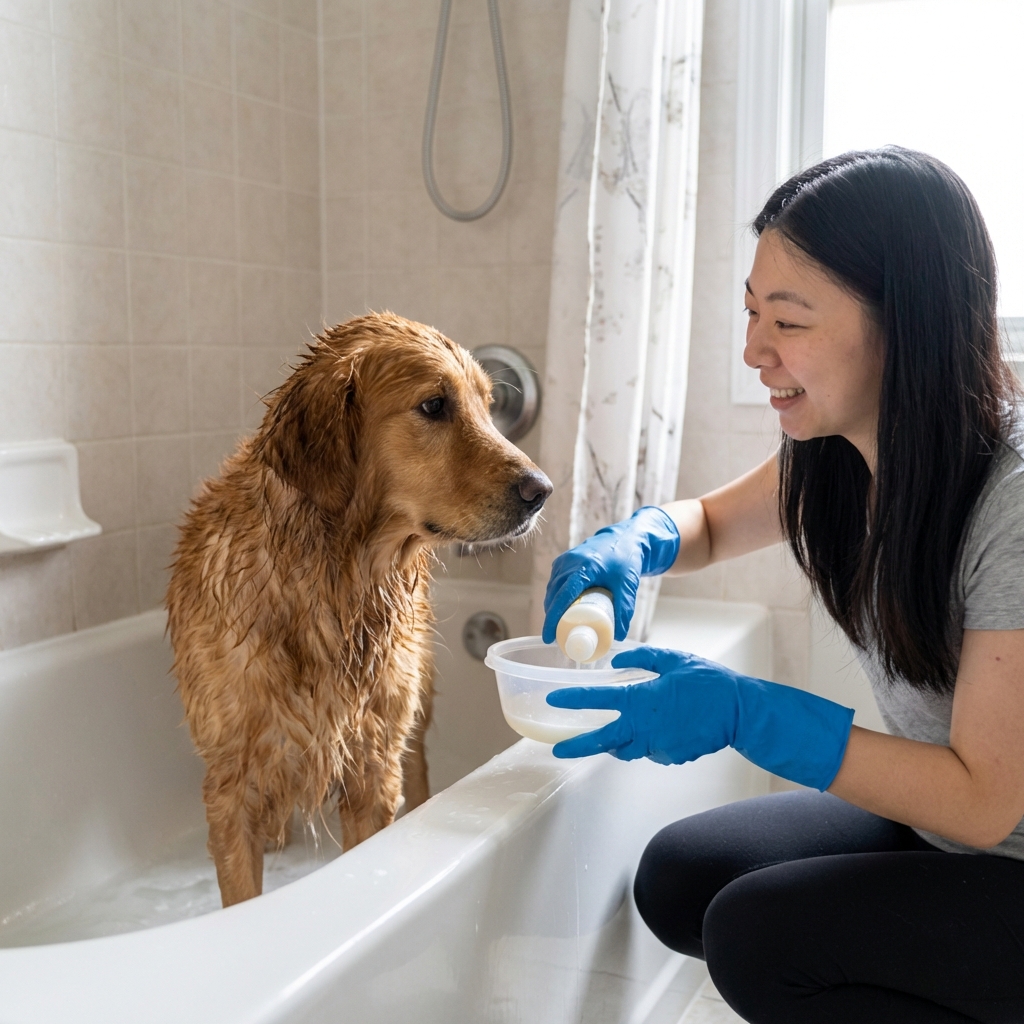
Skunk spray clings for days. Learn why the odor returns, the best peroxide + baking soda + dish soap mix, how to wash safely (including face/eyes), and when ...
Article
•
Designer Mixes
How to Get Skunk Smell Out of a Dog

Shari Shidate
Designer Mixes contributor
Few things stop you in your tracks like the moment your dog trots in smelling like skunk. If you are panicking, take a breath. In most cases, you can get the odor under control at home with the right steps, and your dog can be comfortable again quickly.
As a veterinary assistant, I have seen the biggest improvements when families do two things: they use a proven formula (not tomato juice), and they work fast before the oils spread.
Quick note: This is general guidance and not a substitute for veterinary care. If you are worried about your dog’s eyes, breathing, or skin, call your vet.
Why skunk odor is hard to remove
Skunk spray is an oily mix of sulfur-containing compounds (including thiols). That is why it clings to fur, skin, collars, and anything your dog rubs against. Regular shampoo can make your dog cleaner, but it often does not break down those oils well enough to fully remove the smell.
Time matters. The longer skunk oil sits, the more it can spread through the coat. Many owners also notice the smell seems to “come back,” especially when the dog gets wet, because tiny residues can remain trapped close to the skin and undercoat.
Before you bathe: quick safety checklist
- Keep your dog outside if possible, or in a laundry room. Skunk oil transfers easily to carpets and couches.
- Protect your own eyes and skin with gloves and old clothes.
- Check the eyes, mouth, and nose. If your dog was sprayed in the face, irritation is common.
- Do not let your dog roll. Rolling spreads the oil deeper into the coat.
- Start with dry fur if you can. Many vets recommend applying deodorizing treatments before soaking the coat, since heavy wetting can make oily residues harder to manage.
Call your vet promptly if your dog has significant eye redness, squinting, excessive drooling, vomiting, trouble breathing, obvious facial pain, or if you suspect they were sprayed directly into the eyes or mouth.
The best at-home remedy (widely used)
The most widely recommended home formula is a simple mix that helps oxidize and neutralize those smelly sulfur compounds. This approach is commonly credited to chemist Paul Krebaum and is frequently recommended in veterinary and grooming settings.
Skunk odor wash (make fresh)
- 1 quart (4 cups) 3% household hydrogen peroxide
- 1/4 cup baking soda
- 1 to 2 teaspoons liquid dish soap (a grease-cutting type)
Important: Mix this right before use and do not store it in a closed container. It can build pressure.
How much do you need? This amount often covers a medium-sized dog. Large dogs or thick double coats may need a second batch.
How to use it
- Apply to dry fur (or as dry as possible). Work it in thoroughly, especially where the spray hit. Part the fur so it reaches the undercoat.
- Avoid eyes, inside ears, and mouth. Use a damp washcloth around the face instead of pouring.
- Let it sit about 5 minutes (up to 10 if the coat and skin tolerate it), then rinse very well.
- Follow with a gentle pet shampoo if needed, then rinse again.
- Repeat once if the odor is still strong. Many dogs need 2 rounds.
Skin safety: Do not use this mixture on open wounds, abraded skin, or hot spots. Stop and rinse right away if you notice redness, intense itching, or discomfort, and call your vet if irritation persists.
What not to do
- Skip tomato juice. It can mask odor briefly but does not neutralize skunk oils well.
- Do not use bleach or harsh cleaners on your dog’s coat or skin.
- Do not store the peroxide mixture. Make it fresh each time.
- Avoid essential oils as a “cover-up.” Many are irritating or toxic to pets, and they do not remove the sulfur compounds.
- Do not use higher-concentration peroxide. Stick to 3% household hydrogen peroxide only.
Face and eye area: extra gentle care
If your dog was sprayed near the face, be cautious. The peroxide mixture can sting eyes and delicate tissue.
- Eyes: If you see redness or squinting, flush with sterile saline eyewash if you have it, and call your vet for guidance.
- Muzzle and cheeks: Use a damp cloth with a tiny amount of dish soap, wipe gently, and rinse with a clean damp cloth.
- Inside the mouth: Call your vet. Some dogs drool or vomit after tasting skunk spray.
When in doubt, let your veterinary team help. Eye injuries are not something to “wait out.”
How to handle lingering odor
Even after a good bath, a faint smell can linger for a week or two, especially when your dog gets damp. That does not mean you did it wrong. It usually means tiny amounts of oil are still trapped in the coat.
Helpful next steps
- Wash or replace the collar and harness. These hold odor intensely.
- Wash bedding and blankets in hot water with a detergent boost.
- Wipe paws and legs after outdoor time in case your dog tracked oil.
- Brush the coat once dry to remove loosened oils and undercoat.
- Use a pet-safe deodorizing shampoo between treatments if needed.
Simple home cleanup
- Ventilate by opening windows and running fans if weather allows.
- Wash your towels and clothes promptly (separately if possible). Add a laundry booster if you use one.
- Wipe hard floors with a pet-safe cleaner if your dog walked through the house.
- Wash hands well and avoid touching your face during cleanup.
When to use a commercial skunk shampoo
Commercial skunk shampoos can work very well, especially when they are designed to chemically neutralize odor (not just perfume it). If your dog has sensitive skin, or if you are worried about peroxide lightening a dark coat, a reputable skunk shampoo is a great option.
Look for products that mention neutralizing or oxidizing sulfur compounds and that are specifically labeled for skunk odor removal. Follow the label directions closely and rinse extremely well.
When to go pro
At-home treatment is often enough, but professional help can be the kinder and safer option in a few situations:
- Very large or thick-coated dogs that are hard to fully saturate and rinse.
- Anxious or reactive dogs who may bite during bathing.
- Repeat skunk encounters where skin is getting dry or irritated from multiple washes.
- Owners with asthma or scent sensitivity who may feel sick during cleanup.
If you are stuck, call your vet or groomer and ask what they recommend for your dog’s coat and skin.
Special considerations
Puppies and senior dogs
Young and older dogs can be more sensitive to skin irritation and temperature changes during bathing. Use lukewarm water, keep the session short, and dry them quickly.
Dogs with skin disease or allergies
If your dog has dermatitis, hot spots, or chronic allergies, skunk treatment can flare the skin. If you know your dog is prone to skin issues, consider calling your vet first and using a gentle, veterinary-recommended approach.
Light or color-treated coats
Peroxide may lighten fur slightly, especially with repeated use, and it can also dry or irritate sensitive skin. If coat color is a concern, a commercial skunk shampoo may be a better first choice.
Preventing the next skunk encounter
- Leash at dusk and dawn, when skunks are most active.
- Use a flashlight before letting your dog into the yard at night.
- Secure trash and pet food. Skunks follow easy meals.
- Block access under decks and sheds where skunks may den.
Action step: Keep a “skunk kit” ready with gloves, baking soda, dish soap, a bottle of 3% hydrogen peroxide, and an old towel. When it happens again, you will be ready in minutes.
Quick FAQ
How long does skunk smell last on a dog?
With prompt treatment, many dogs improve dramatically the same day. A faint odor can linger 1 to 2 weeks, especially when wet, if small amounts of oil remain in the coat.
Can I use the peroxide mixture more than once?
Yes, but do not overdo it. Too many rounds can dry the skin or cause irritation. If the smell is still strong after 2 treatments, switch to a quality skunk shampoo or call your vet or groomer for help.
What if my dog was sprayed in the eyes?
That is a veterinary call. Eye exposure can be very painful and needs proper flushing and evaluation.