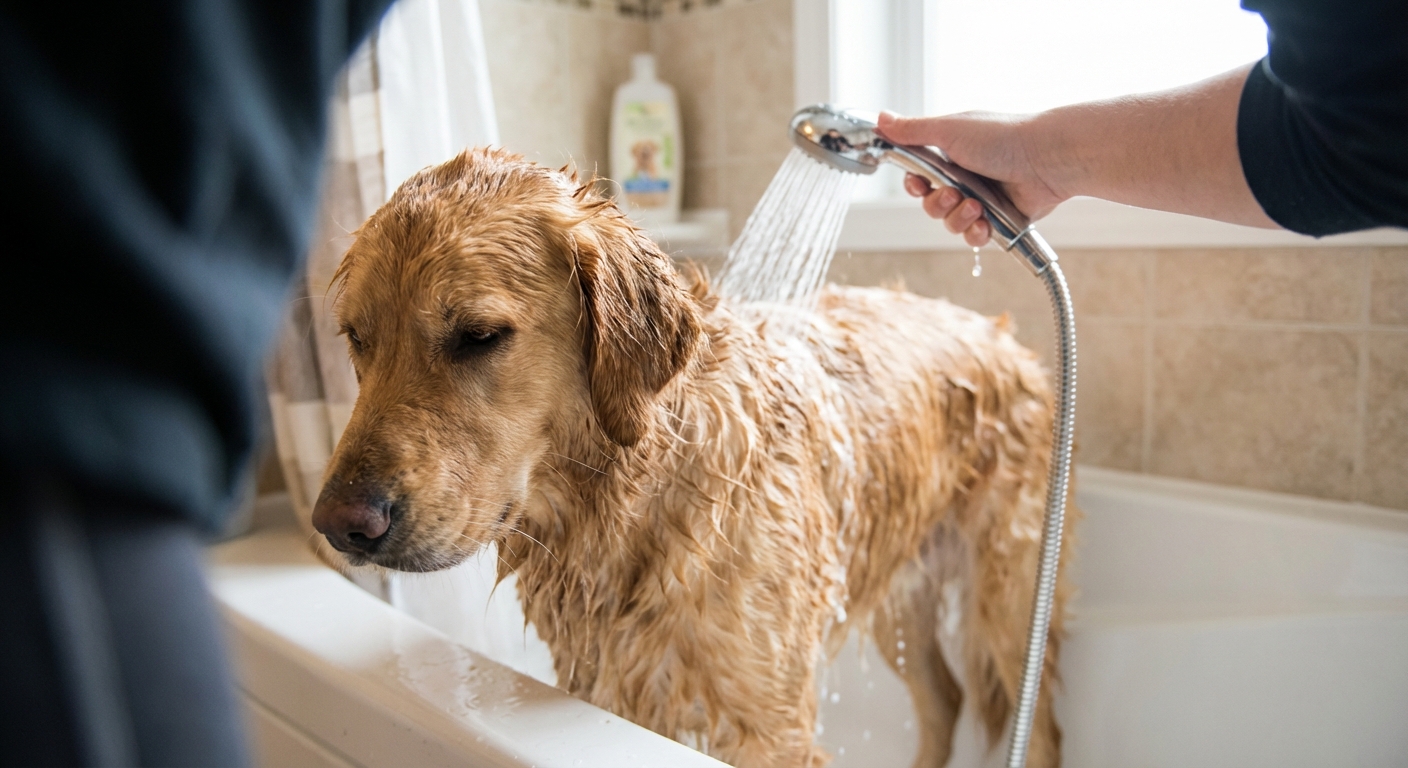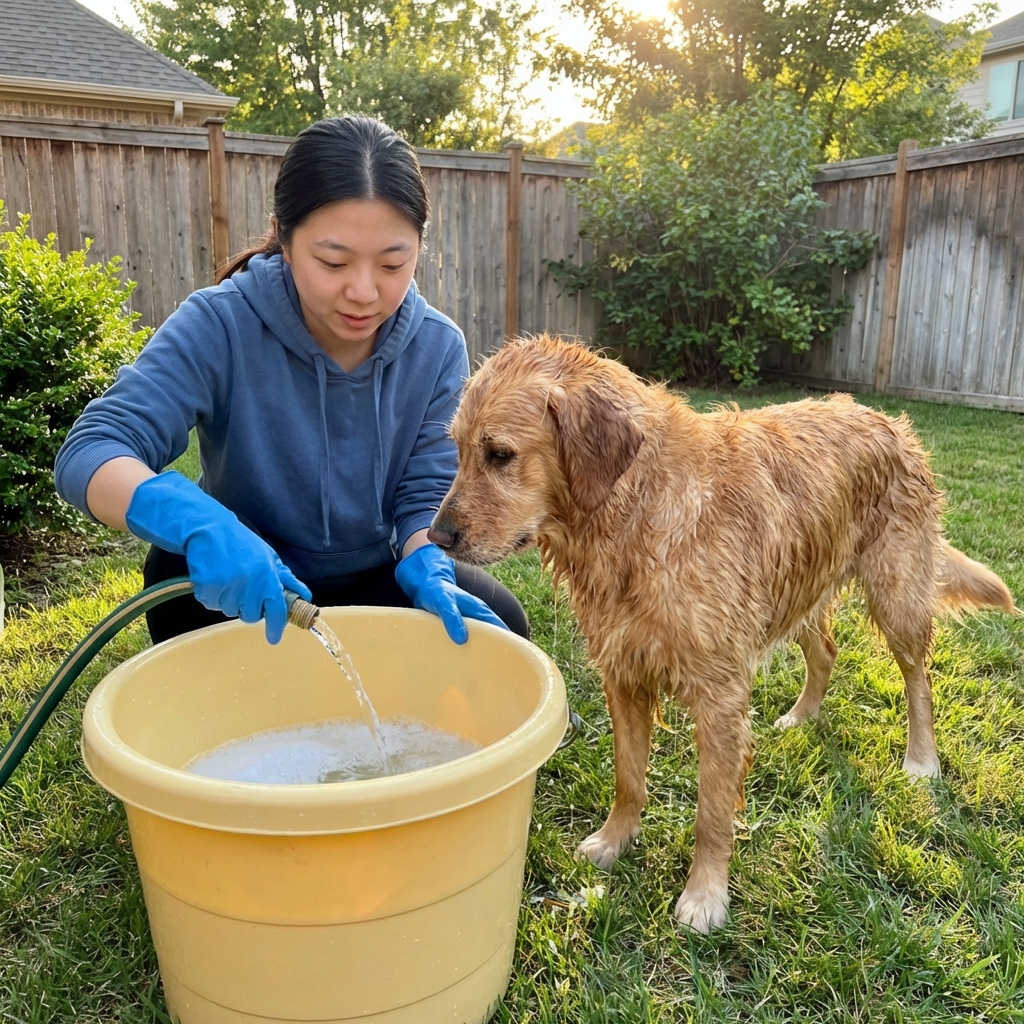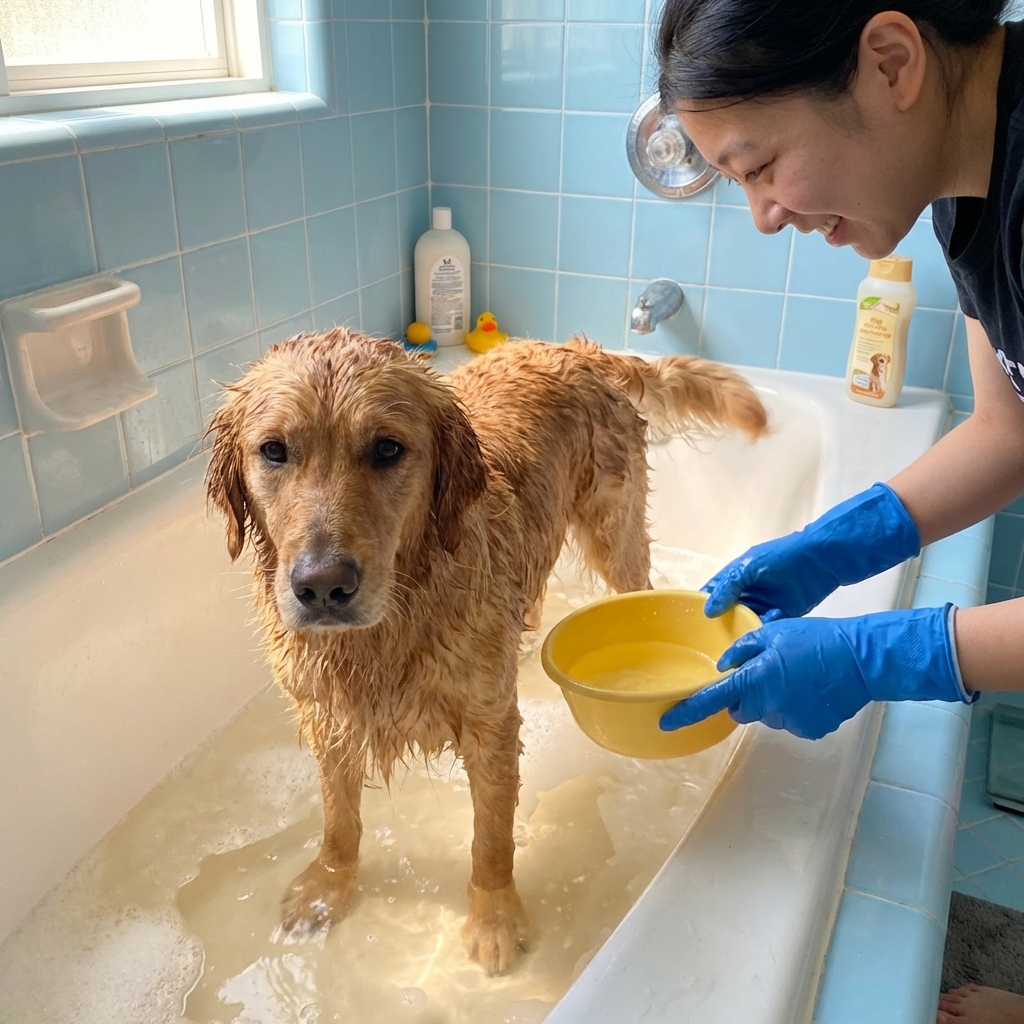
Dog sprayed by a skunk? Learn why the odor lingers and how to remove it safely using the peroxide, baking soda, and dish soap method—plus home cleanup and ...
Article
•
Designer Mixes
How to Get Skunk Smell Off Your Dog

Shari Shidate
Designer Mixes contributor
If you have ever watched your dog come trotting back with that wide-eyed “I regret everything” look, you already know skunk spray is not just a smell. It is a whole event. The good news is that you can get skunk odor off your dog at home with the right steps and a little patience.
As a veterinary assistant, I want to share what actually works, what to avoid, and when it is time to call your vet.
Quick note: This article is for general education and is not a substitute for veterinary care.
Why skunk smell is so stubborn
Skunks spray an oily mixture that contains sulfur-based compounds, including thiols. Some of the compounds are thioacetates that can convert into thiols later, which helps explain why the odor can seem to “come back” after your dog gets wet or the next day.
The goal is to chemically neutralize those compounds, not just cover them up with perfume.
What to do right away
1) Keep your dog outside if you can
It is much easier to clean your dog than your couch, bedding, and carpet. If it is safe and the weather allows, keep your dog in a contained outdoor area while you gather supplies.
2) Grab supplies first
- 3% hydrogen peroxide (do not use higher concentrations)
- Baking soda
- Liquid dish soap (grease-cutting works well)
- Old towels and an old shirt
- Gloves (if you have them)
- Sterile saline eyewash (helpful if the face was sprayed)
3) Protect yourself and your home
- Put on old clothes, gloves if you have them, and tie back long hair.
- Open windows and turn on fans if you are bathing indoors.
- Use old towels you do not mind laundering twice.
4) Check eyes, mouth, ears, and breathing
Skunk spray can irritate eyes and mucous membranes. If your dog is squinting, pawing at the face, drooling, gagging, head-shaking, or seems distressed, gently rinse the eyes with sterile saline if available and contact your veterinarian for guidance.
Do not put the DIY mixture into the eyes, nose, mouth, or inside the ears. If the ears were sprayed and your dog seems painful or will not stop shaking their head, your vet may want to check for irritation or inflammation.
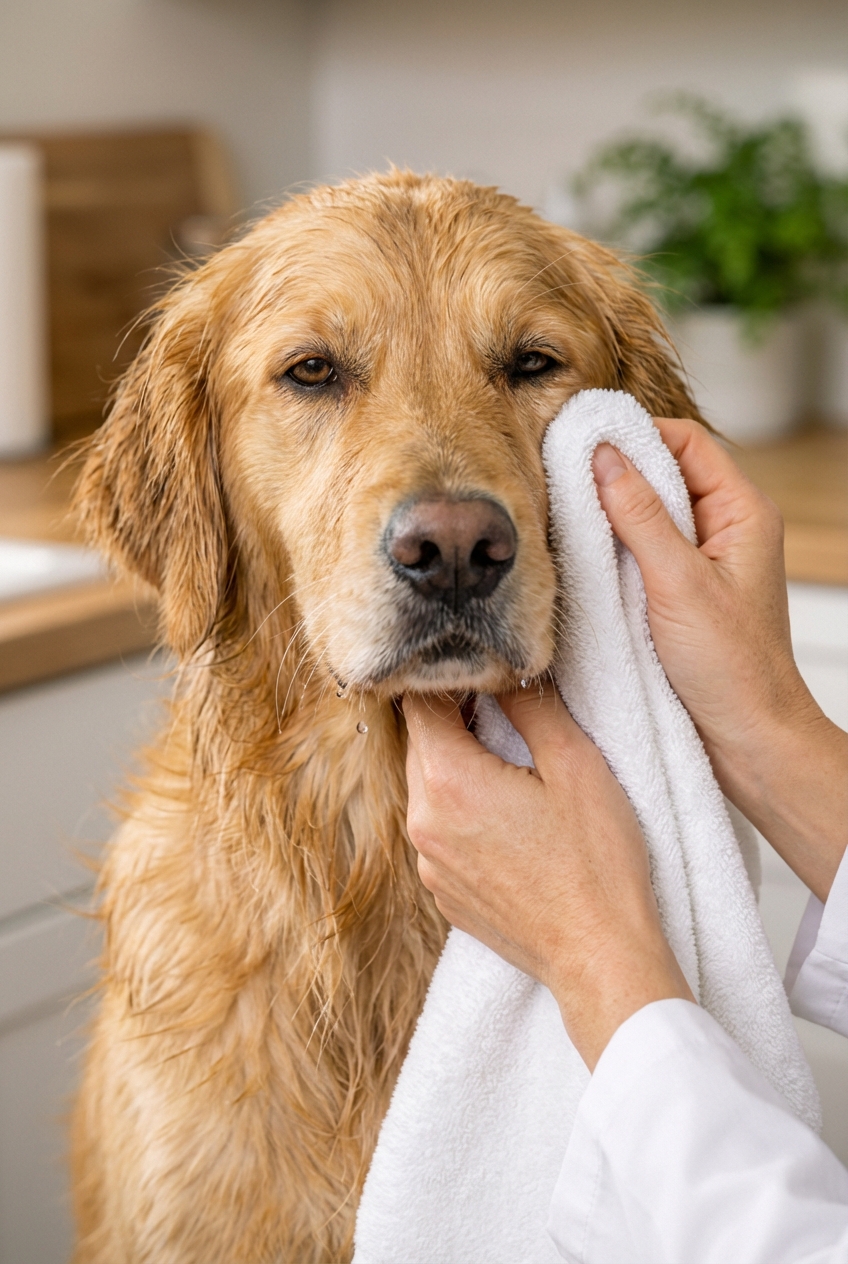
The best DIY skunk bath
This simple mixture is widely recommended in veterinary settings because it neutralizes skunk odor compounds. Many people know it as the Paul Krebaum recipe.
Mix fresh right before use
- 1 quart (4 cups) of 3% hydrogen peroxide
- 1/4 cup baking soda (sodium bicarbonate)
- 1 to 2 teaspoons liquid dish soap (a grease-cutting one works well)
Important: Do not store this mixture in a closed container. It can build pressure. Make it, use it, discard the leftovers.
Multi-pet note: Keep cats away from the bathing area and products. Cats can be more sensitive to many substances, and they are famously unhelpful during skunk emergencies.
How to use it safely
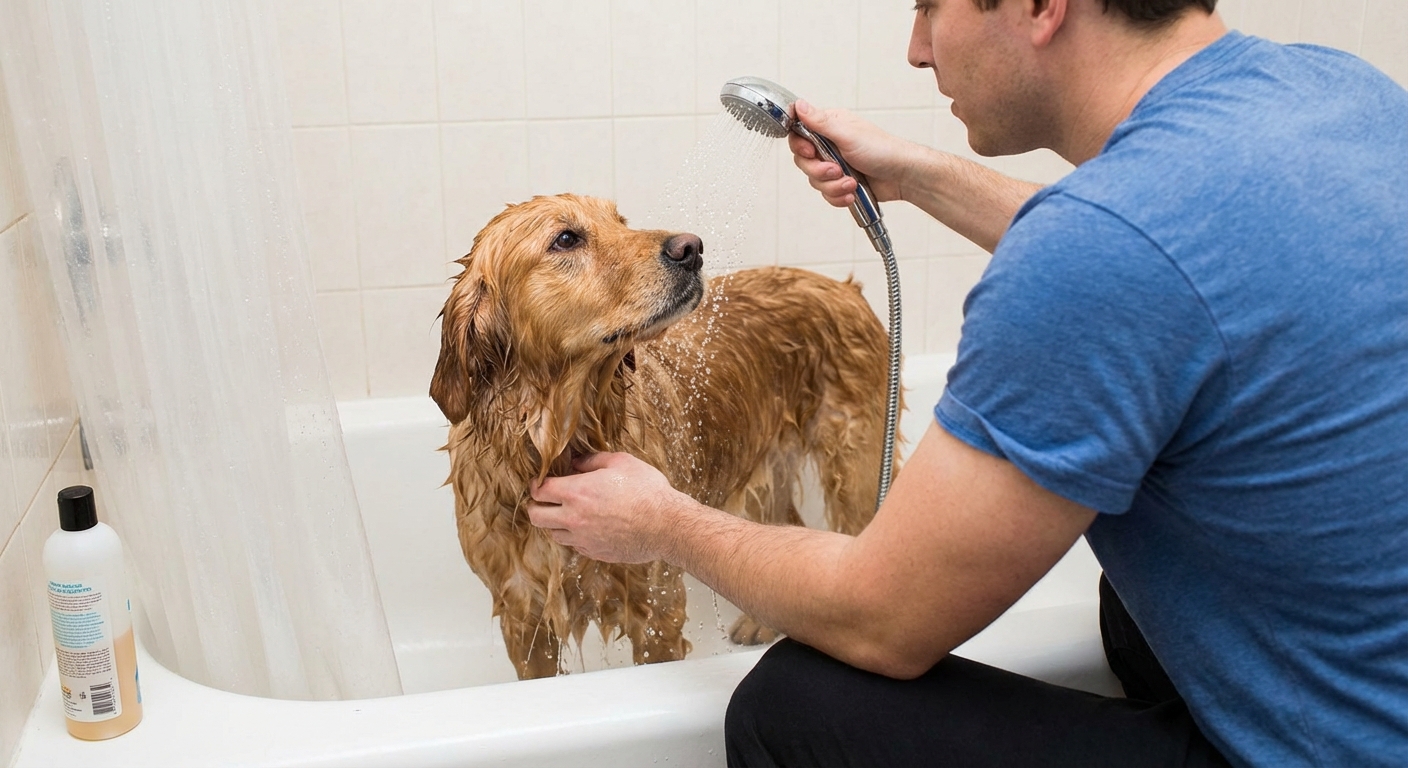
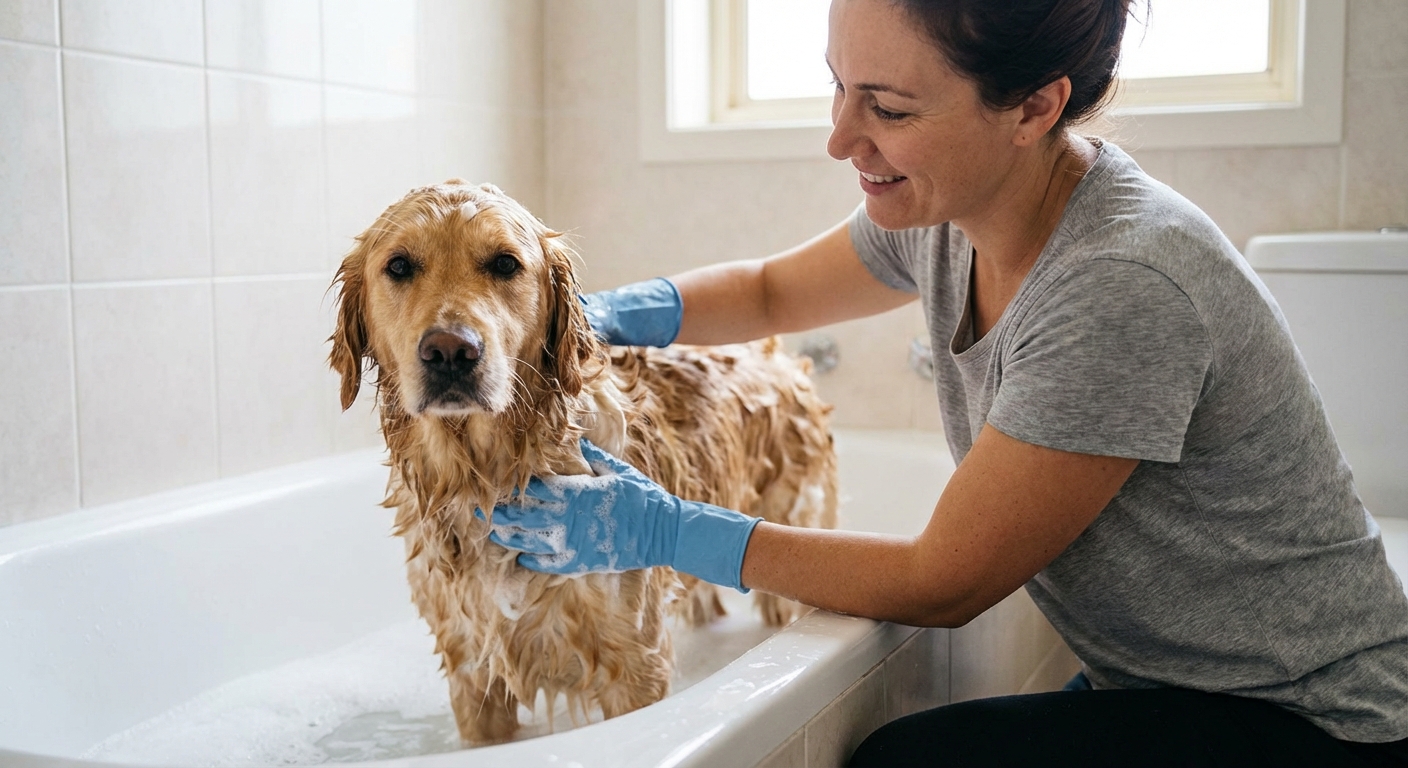
- Start with a dry coat if possible. This often works best because water can spread the oils. If your dog is already wet, towel dry well first.
- Work the mixture into the coat. Avoid eyes, nose, mouth, and inside the ears.
- Let it sit for about 5 minutes. Longer is not better and can irritate skin.
- Rinse thoroughly. Take your time here.
- Follow with a gentle dog shampoo. This helps remove residue and leaves the coat more comfortable.
- Dry your dog well. Towel dry, then use a blow dryer on a low, cool setting if your dog tolerates it.
If your dog has a thick double coat or was sprayed heavily, you may need a second round. Many dogs improve dramatically after one treatment, but a faint odor can linger for a couple of days.
Quick tip: The direct hit is often the cheeks, chin, neck, chest, shoulders, and front legs. Work carefully around the face area while strictly avoiding eyes, lips, nostrils, and gums.
What not to do
- Do not use tomato juice. It does not neutralize the odor. It mostly just overwhelms your nose temporarily.
- Do not reach for essential oils. Many are irritating or toxic to pets, and they do not solve the chemistry problem.
- Avoid human shampoo on sensitive dogs. Human products can disrupt skin pH and worsen irritation.
- Do not scrub the face aggressively. If spray got near the eyes, gentle is the rule.
Puppies and sensitive skin
The peroxide mixture can be drying, especially on dogs with allergies, very young puppies, or seniors with delicate skin. If your dog has known skin issues, consider these adjustments:
- Use the mixture once, then shampoo with a gentle, fragrance-free dog shampoo.
- Condition after with a dog-safe conditioner if your dog tends to get itchy.
- Call your vet first if your dog has open sores, hot spots, or a history of severe dermatitis.
Also note: hydrogen peroxide can lighten fur, especially on darker coats. It is usually mild, but it can happen.
When to call the vet
Most skunk encounters are just stinky, but sometimes they become medical.
- Eye exposure with ongoing squinting, redness, swelling, or discharge
- Repeated vomiting, heavy drooling, or trouble breathing (especially if spray was ingested)
- Lethargy, weakness, pale gums (rarely, severe exposure or ingestion can contribute to hemolytic anemia; your vet may check bloodwork if concerned)
- Spray to the face plus intense pain or a dog that will not open their eyes
- Any bite wounds from a skunk encounter, or concern about rabies exposure
If your dog may have been bitten or had direct contact with a skunk, contact your veterinarian immediately about rabies protocol and your pet’s vaccination status. Do not try to handle the skunk yourself. Contact local animal control or the appropriate public health resource in your area.
Get the smell out of your house
Even if you kept your dog outside, skunk odor can drift in on your hands, clothes, and gear.
Laundry and towels
- Wash with your usual detergent.
- Add 1/2 cup baking soda to the wash cycle if the fabric allows.
- Air dry first if you are unsure. Heat from the dryer can set odors.
Hard surfaces
- Wipe with a mild detergent solution.
- Ventilate the room well.
Carpets and upholstery
- Blot, do not rub.
- An enzymatic cleaner can help with general pet odors, but skunk spray is not always enzyme-solvable.
- For best results, use a commercial skunk odor remover made for pets and follow label directions.
- Consider professional cleaning if spray was direct or extensive.

Prevent the next run-in
- Leash at dawn and dusk. Skunks are most active in low light hours.
- Keep yard temptations down. Secure trash, bring pet food indoors, and pick up fallen fruit.
- Check under decks and sheds. Skunks may den in quiet spaces.
- Practice a strong recall. A reliable “come” cue can save you a lot of cleanup.
And if you live in an area where skunks are common, it is worth keeping peroxide, baking soda, and dish soap stocked so you are not panic-shopping at 10 pm.
A calm reminder
Skunk smell feels overwhelming in the moment, but it is fixable. Go step by step, keep the mixture out of your dog’s eyes, mouth, and ears, and know that even after a great bath, a faint odor can linger briefly as the oils fully lift.
If you are unsure, especially with eye exposure or possible bites, your veterinarian is your best partner. You do not have to figure it out alone.