Skunked dog? Learn the proven peroxide + baking soda + dish soap recipe, step-by-step bathing tips, face-safe cleanup, and when to call your vet.
Article
•
Designer Mixes
How to Get Skunk Smell Off a Dog

Shari Shidate
Designer Mixes contributor
If your dog just got sprayed by a skunk, I know the feeling. It hits your nose first, then your whole house, then your clothes, and suddenly you are Googling at top speed. The good news is you can get the smell off your dog at home with the right steps and a little patience. The key is doing it safely and in the right order, because skunk odor is not a regular stink. It is chemistry.
Why skunk smell sticks
Skunk spray is loaded with sulfur-based compounds, especially thiols and thioacetates. They are oily, they cling to fur, and they can seem to “come back” later when thioacetates break down into thiols, especially after your dog gets wet again. That is why a dog can smell “fine” for a day or two, then the odor returns after a bath, rain, or even a humid walk.
To truly remove the smell, you need a solution that breaks down those sulfur compounds, not just covers them up.
First steps: safety
1) Check eyes, mouth, and breathing
- Eyes: Skunk spray can cause intense irritation. If your dog is squinting, pawing at the face, or the eyes are red and watery, flush gently with sterile saline eye wash or clean lukewarm water for several minutes. If irritation continues, call your vet.
- Mouth: Drooling or vomiting can happen if they tasted the spray. A small amount of drool can be normal, but persistent vomiting needs a vet call.
- Breathing: Coughing, wheezing, or distress is not typical. If you see this, contact an emergency vet.
2) Get your dog outside and contain the mess
Before you do anything else, keep your dog out of carpeted rooms and off furniture. Put a washable towel on the floor, leash your dog, and head to an outdoor bathing spot if you can. Skunk oil transfers easily to fabric.
3) Avoid wetting the coat first (when possible)
This is the step people accidentally skip. Water can spread the oily compounds and make the smell harder to remove. When you can, start with the de-skunk solution on a dry coat. If you need to flush eyes or rinse obvious debris off the face, do that first, then move on to the solution.
Best home remedy
This is the evidence-based classic many clinics recommend because it neutralizes odor instead of masking it.
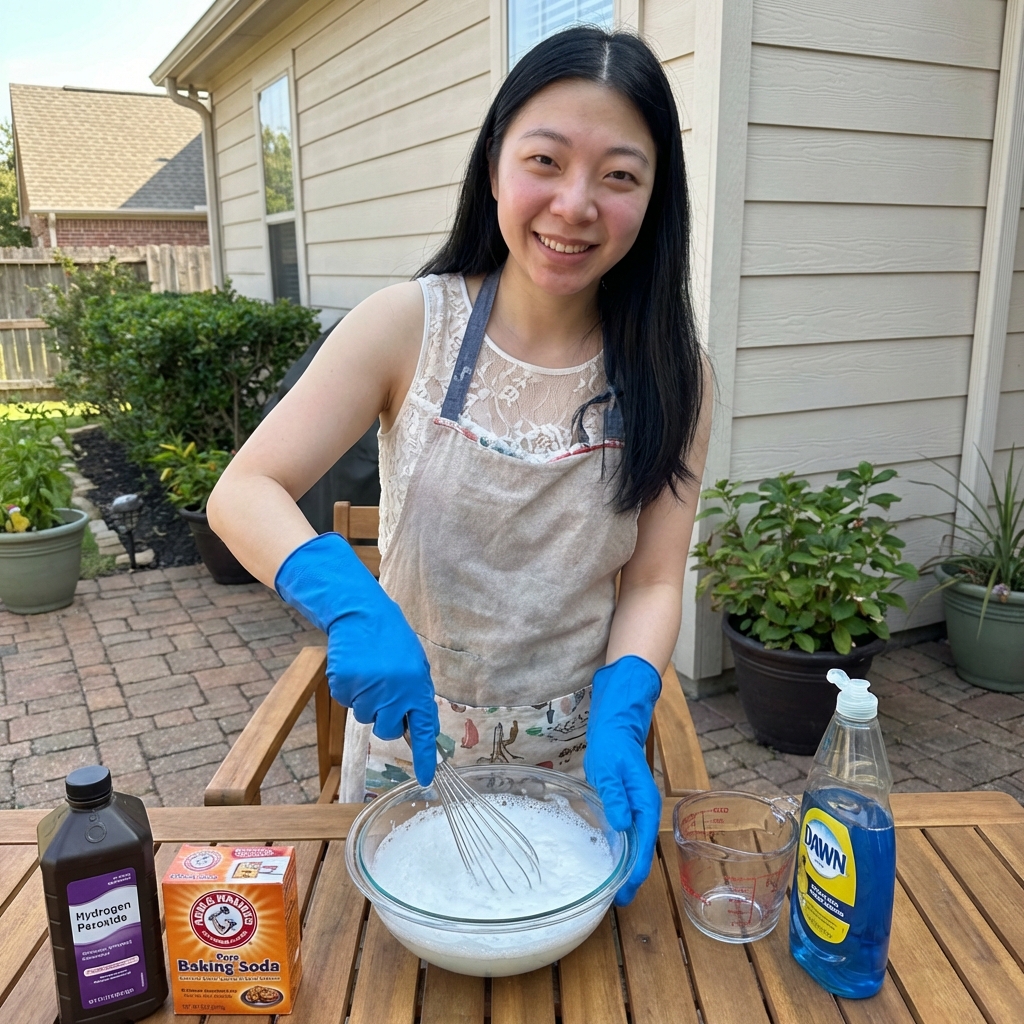
DIY de-skunk solution
- 1 quart (4 cups) of 3% hydrogen peroxide
- 1/4 cup of baking soda
- 1 teaspoon of dishwashing liquid (a grease-cutting one)
Why this combo works: The peroxide oxidizes the thiols, the baking soda helps with odor neutralization, and the dish soap helps lift the oily residue so it can rinse away.
Heads up: Hydrogen peroxide is a mild bleaching agent. This mixture can lighten fur (especially dark coats) and it can bleach towels, clothing, and some fabrics. Use old towels and wear clothes you do not mind sacrificing.
How to use it
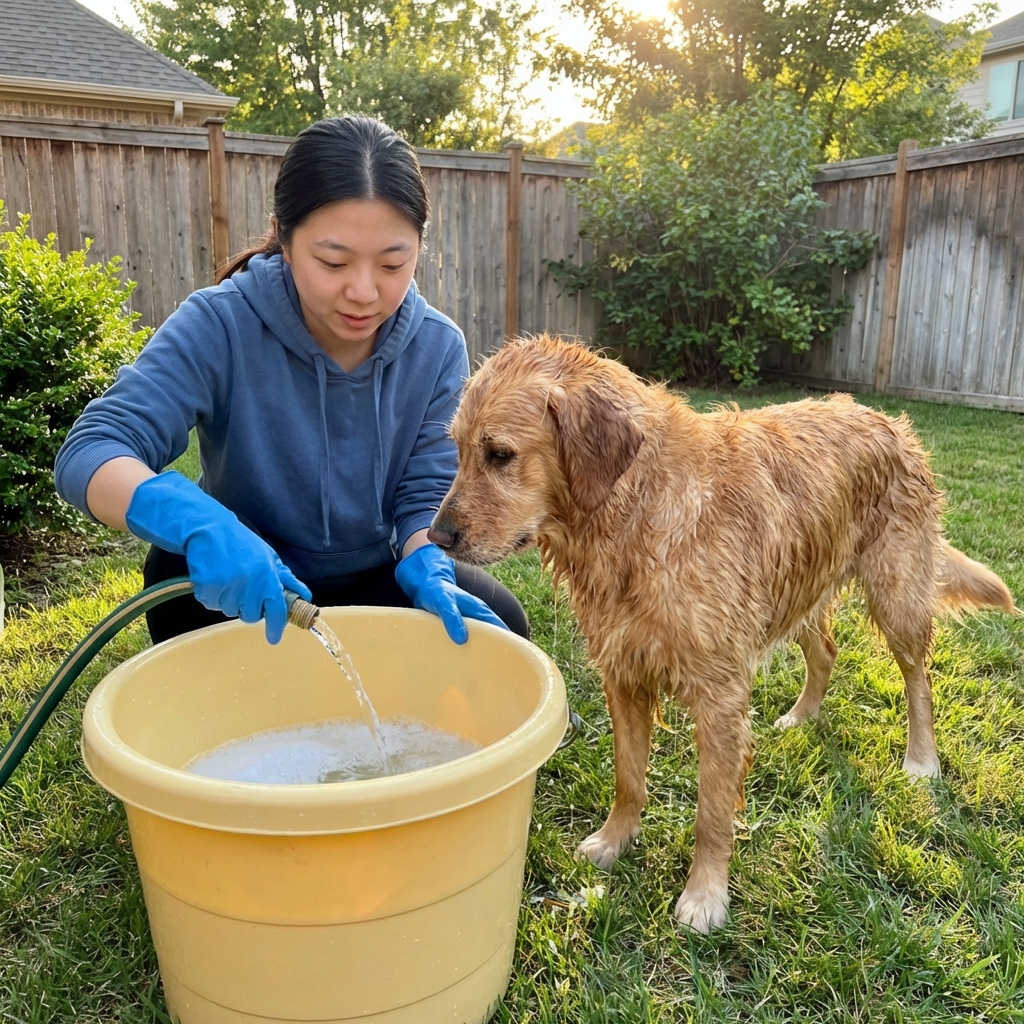
- Wear gloves and old clothes. Skunk oil transfers easily to skin.
- Mix fresh and use right away. It may fizz, which is normal.
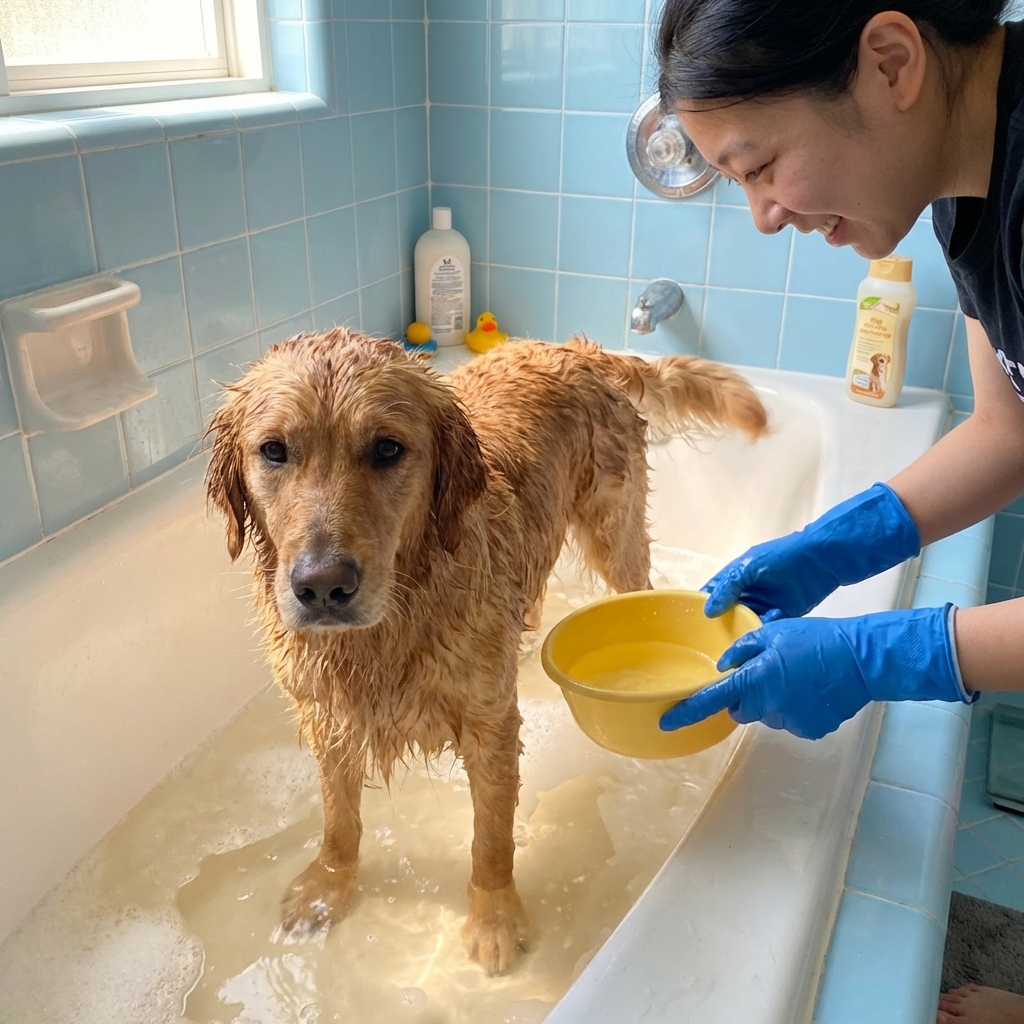
- Apply to a dry coat and work it in thoroughly, especially on the sprayed areas. Use enough to fully saturate the smelly fur down toward the skin.
- Avoid eyes, nose, mouth, and ears. Use a damp washcloth around the face instead.
- Let it sit 5 to 10 minutes. Do not let your dog lick the mixture.
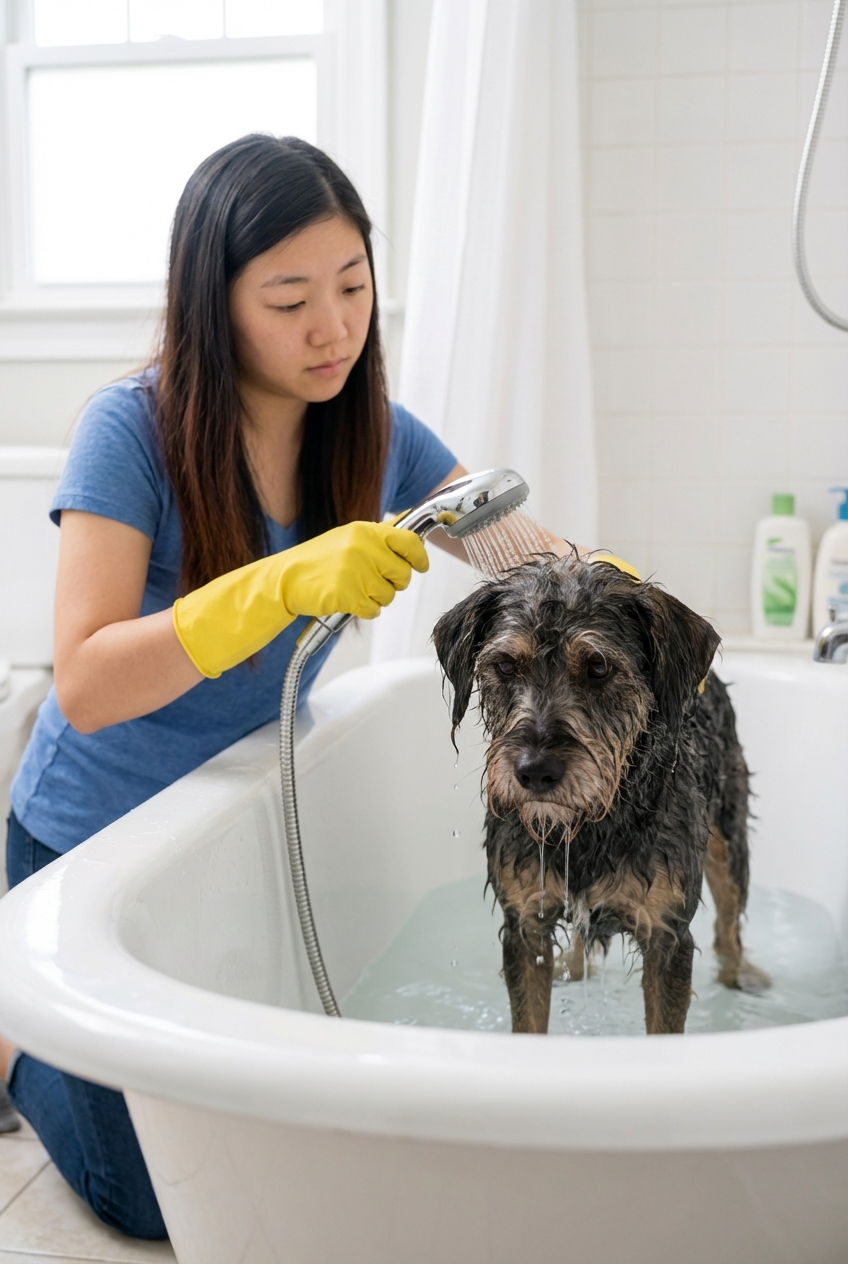
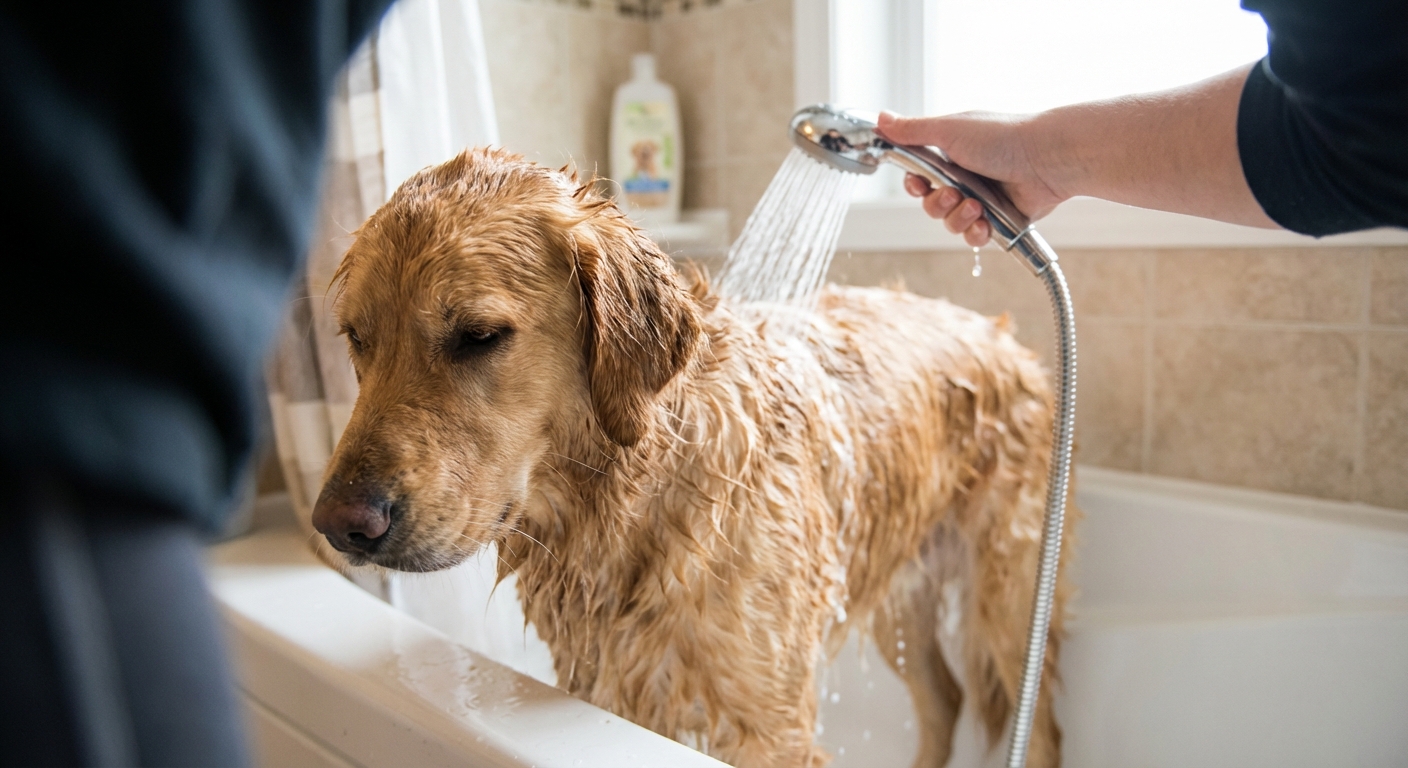
- Rinse extremely well with lukewarm water.
- Follow with a dog shampoo and rinse again.
Important: Mix this fresh each time and use it right away. Do not store it in a bottle or closed container, because peroxide mixtures can build pressure.
Extra safety notes: Do not combine this with other cleaners. Never mix with bleach or ammonia products. Do not use this recipe on cats, and keep it away from all mucous membranes.
How much you need
- Small dogs: You may only need half a batch.
- Medium dogs: One batch is usually enough.
- Large or fluffy dogs: Plan on doubling the recipe and working in sections.
If your dog has skin disease, open sores, or a history of reactions, do a small patch test first or check with your veterinarian before you start.
What to skip
Tomato juice
Tomato juice does not neutralize skunk thiols well. Many people think it worked because of smell fatigue, which is when your nose temporarily stops detecting an odor after heavy exposure.
Vinegar
Vinegar can help with general odors, but it is not as effective at breaking down skunk sulfur compounds as the peroxide method. It may also irritate already inflamed skin.
Perfume and essential oils
These usually just layer scent on top of skunk odor. Some essential oils can also irritate skin or be toxic to pets if licked.
Hot water and harsh soaps
Hot water can spread oils and make the smell linger. Stick with lukewarm water. Avoid harsh human shampoos that can strip and irritate skin.
Commercial skunk shampoos
Some are excellent, especially oxidizing or enzyme-based formulas made specifically for skunk spray. They can be a great choice if you already have one on hand. If you do not, the peroxide-baking soda-dish soap method is often the fastest option using common household supplies.
Special situations
Spray in the face
- Flush eyes first if irritated, then call your vet if redness or squinting continues.
- Use a damp cloth to apply tiny amounts of the solution to cheek and neck fur, staying well away from the eyes, lips, and nostrils.
- Consider a professional groomer or vet bath for heavy facial exposure.
Thick or long coats
Expect to repeat the process. Work the solution down to the skin and rinse longer than you think you need to. A second round the next day is common for dense double coats.
Sensitive skin
Peroxide can be drying. Keep contact time to 5 to 10 minutes, rinse thoroughly, and use a gentle dog shampoo after. If your dog develops redness, itching, or hives, stop and call your veterinarian.
Get the smell out of your home
Once your dog is handled, the next battle is the “everywhere else.” The trick is removing skunk oils from surfaces and fabrics.
Towels, collars, and washable fabrics
- Wash separately from other laundry.
- Add a degreasing detergent and run an extra rinse.
- Air-dry first. Heat from the dryer can set the odor if it is not fully removed.
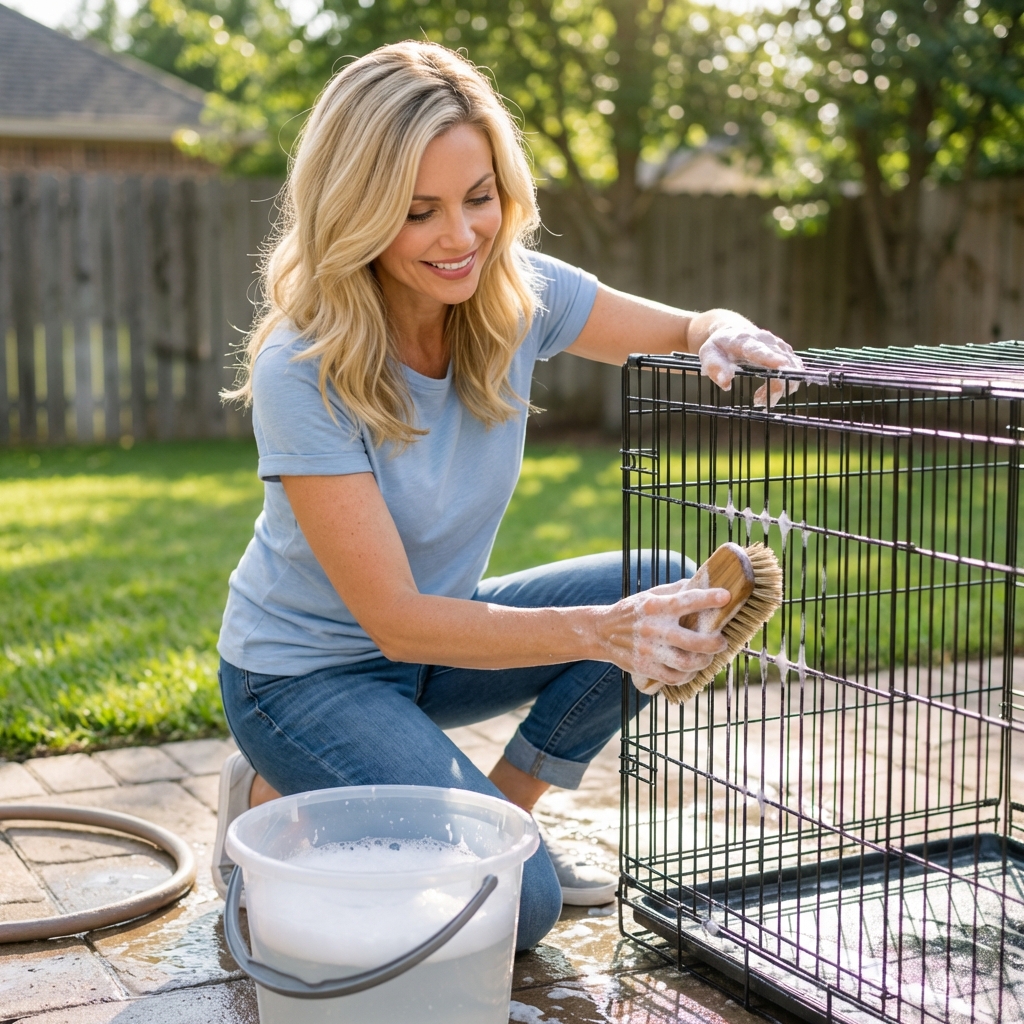
Hard floors and crates
- Use warm water plus a grease-cutting cleaner.
- Rinse well. Cleaner residue can hold odor and attract hair.
Carpets and upholstery
- Blot first, do not rub.
- Use a cleaner designed for pet odors and oils. Enzyme cleaners can help, but skunk smell is oily and may take more than one treatment.
- For stubborn spots, a carefully spot-tested oxidizing cleaner can work well on some fabrics. Follow label directions and do not mix products.
- If the smell lingers, a professional carpet cleaning can be worth it.
When to call the vet
Most skunk encounters are miserable but manageable. Please call your veterinarian promptly if you notice any of the following:
- Persistent squinting, eye redness, or discharge after flushing
- Repeated vomiting, severe drooling, or refusal to drink
- Labored breathing, coughing, or extreme lethargy
- Skin burns, intense itching, or widespread rash
Also, if your dog is elderly, very small, has chronic respiratory issues, or has a history of skin problems, it is totally reasonable to ask your clinic for guidance before you start.
Prevention tips
- Leash at dawn and dusk: Skunks are most active in low light.
- Fence check: Close gaps under fences and sheds where skunks may den.
- Remove attractants: Secure trash cans, bring pet food indoors, and clean up fallen fruit.
- Practice “leave it”: That one cue can save you a lot of heartache.
Quick takeaway: treat the spray like oil, not like dirt. Neutralize first, then shampoo and rinse thoroughly.