Stop skunk odor fast with a proven peroxide, baking soda, and dish soap bath. Learn what not to do, when to call the vet, and how to remove skunk smell from ...
Article
•
Designer Mixes
How to Get Skunk Smell Off a Dog

Shari Shidate
Designer Mixes contributor
If your dog just got sprayed by a skunk, I know that sinking feeling. The smell is intense, it spreads fast, and it can make your whole house feel unlivable. The good news is that skunk odor is not permanent. With the right steps, you can break down the smell at the source and get your pup comfortable again.
As a veterinary assistant, I also want you to know this: skunk spray can irritate the eyes, nose, and mouth. The best approach is gentle, evidence-based, and done in the right order. This article is general guidance, not a substitute for veterinary care.
First, stay calm and contain the smell
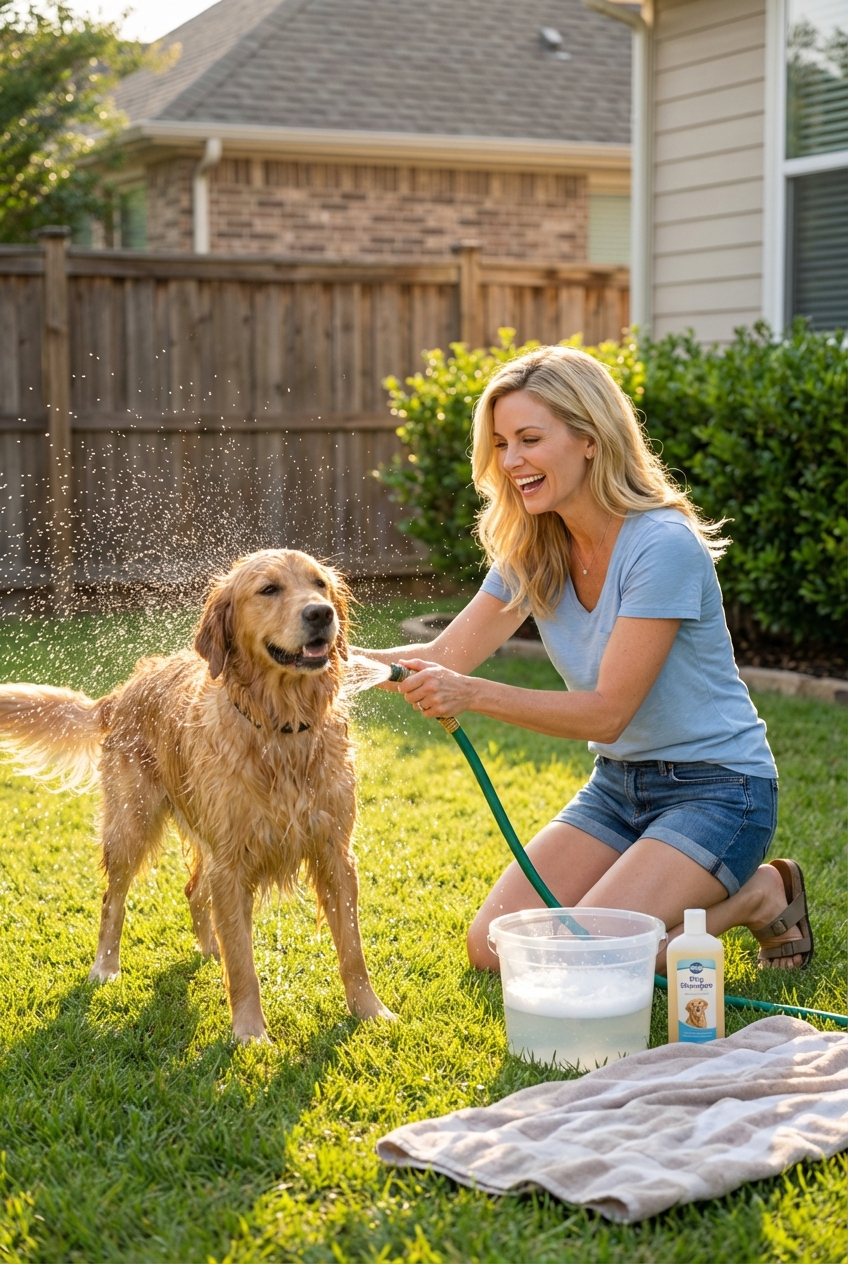
Before you start mixing anything, do a quick reset. Skunk spray is oily and clings to fur, skin, collars, and anything your dog rubs against.
- Keep your dog outside if possible, or in an easy-to-clean area like a laundry room.
- Stop the rubbing. Rubbing spreads the oils deeper into the coat and onto furniture.
- Remove collars and harnesses. Plan to wash them separately, and be prepared to replace fabric items if they hold odor.
- Open windows and turn on fans if odor got indoors.
Check eyes and mouth before the bath
Skunk spray can cause painful irritation, especially to the eyes.
- If your dog is squinting, pawing at the face, or has red eyes, flush eyes gently with sterile saline eyewash if you have it.
- If your dog vomits, drools excessively, seems very distressed, or has trouble breathing, call your veterinarian right away.
- If you suspect the spray went directly in the eyes, it is smart to call your vet for guidance even if your dog seems okay. Corneal irritation can sneak up.
Note: Eye flushing takes priority. Some incidental wetting around the face can be unavoidable when you are protecting the eyes, and that is okay.

Use a solution that neutralizes odor
Tomato juice, vinegar-only rinses, and heavy perfume shampoos often just mask the smell. Skunk odor comes largely from sulfur-containing compounds called thiols. Skunk spray can also include thioacetates, which can break down later and re-release that “skunky” smell when the coat gets wet. That is why dogs sometimes have a faint odor again after rain or a bath.
The most reliable home method is a peroxide-based mix that helps oxidize those sulfur compounds so they stop smelling. This formula is widely known as the Krebaum formula (attributed to Paul Krebaum).
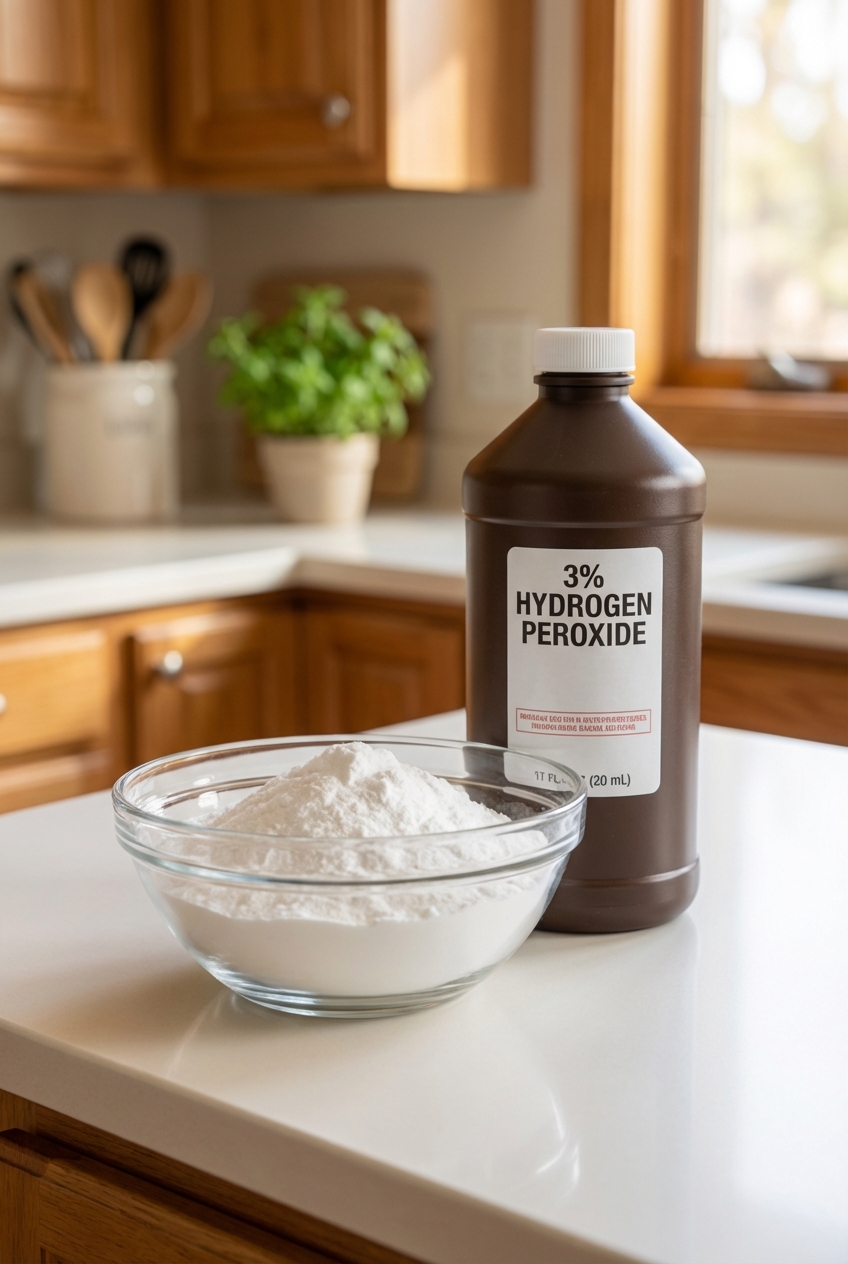
The classic de-skunking mix
- 1 quart (4 cups) of 3% hydrogen peroxide
- 1/4 cup baking soda
- 1 teaspoon liquid dish soap (a grease-cutting one)
How much do you need? One quart is often enough for a small to medium dog with light to moderate exposure. For large dogs, heavy coats, or a direct hit, plan on 2 quarts worth of solution (mixed in separate fresh batches).
Important safety notes:
- Mix fresh and use immediately. Do not store it in a closed bottle or container. It can build pressure.
- Avoid the eyes, inside the ears, and mouth.
- Hydrogen peroxide can lighten fur, especially on dark coats. It is usually mild with 3%, but it can happen.
- Do not use higher concentrations of peroxide.
- Skin sensitivity is possible. If your dog’s skin becomes very red, painful, or increasingly itchy, rinse thoroughly and contact your veterinarian.
Step by step bath (order matters)
Here is the detail that makes the biggest difference: avoid fully wetting your dog’s coat first. Water can help spread the oily skunk spray through the fur. The exception is urgent eye flushing, as noted above.
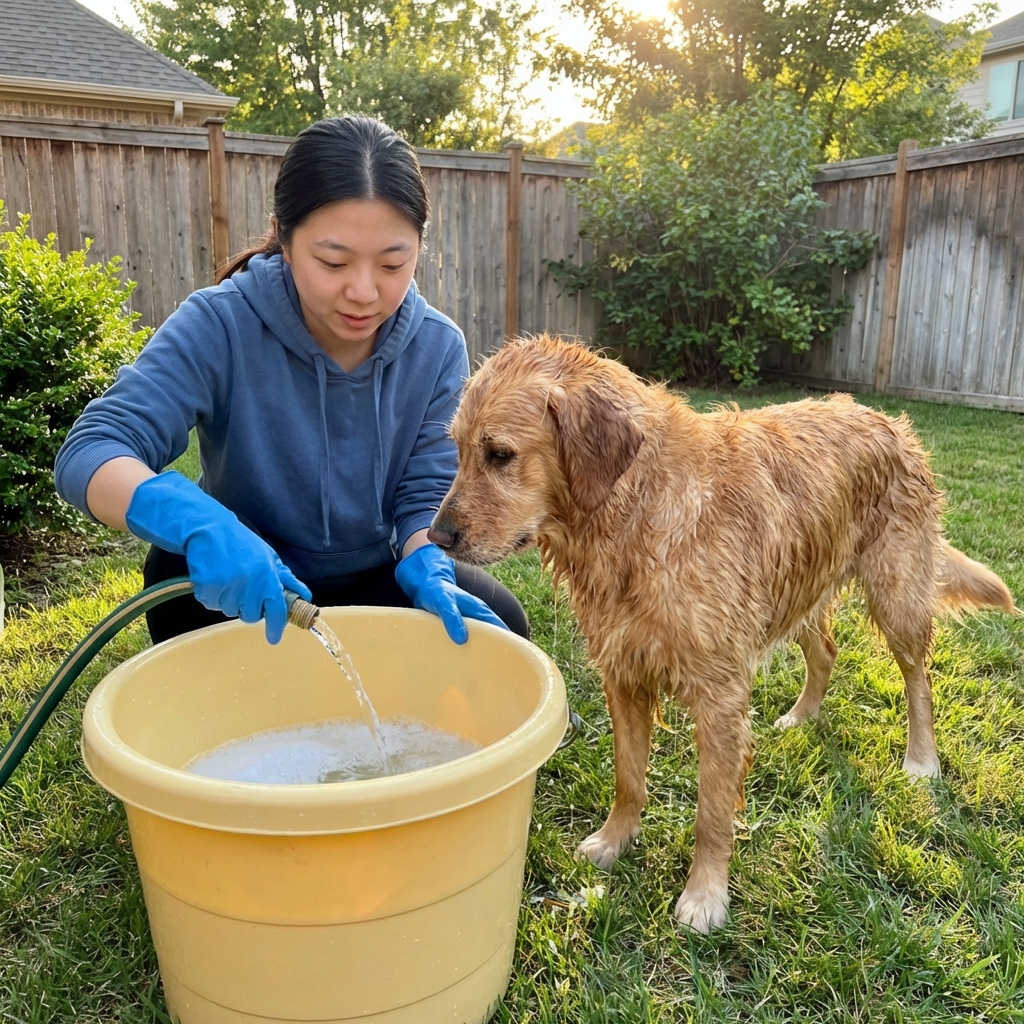
- Put on gloves and wear old clothes.
- Apply the fresh mixture to dry fur, starting where the spray hit most (often the chest, shoulders, and neck). Use care around the face.
- Work it in thoroughly like you are massaging in shampoo. For the face, use a damp washcloth instead of pouring.
- Let it sit about 5 minutes. Do not let it dry on the coat.
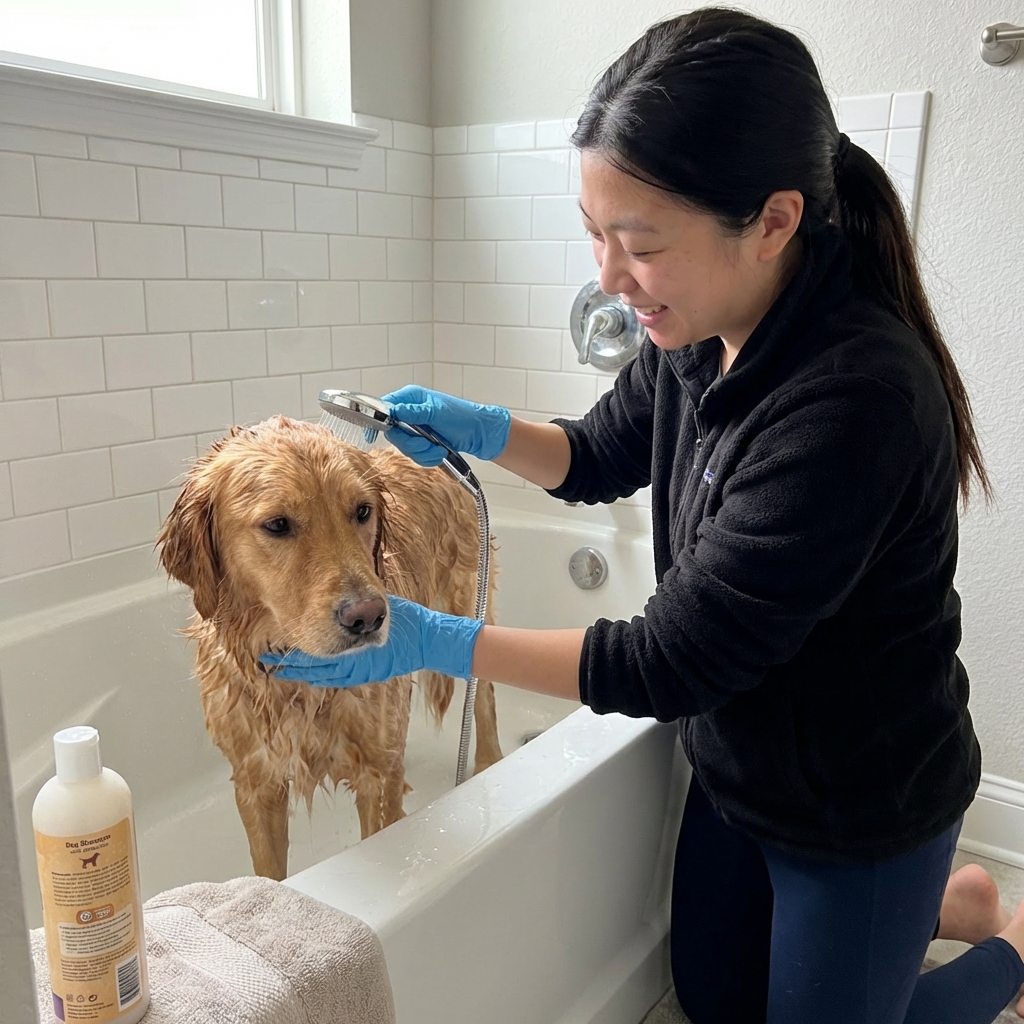
- Rinse very well with lukewarm water.
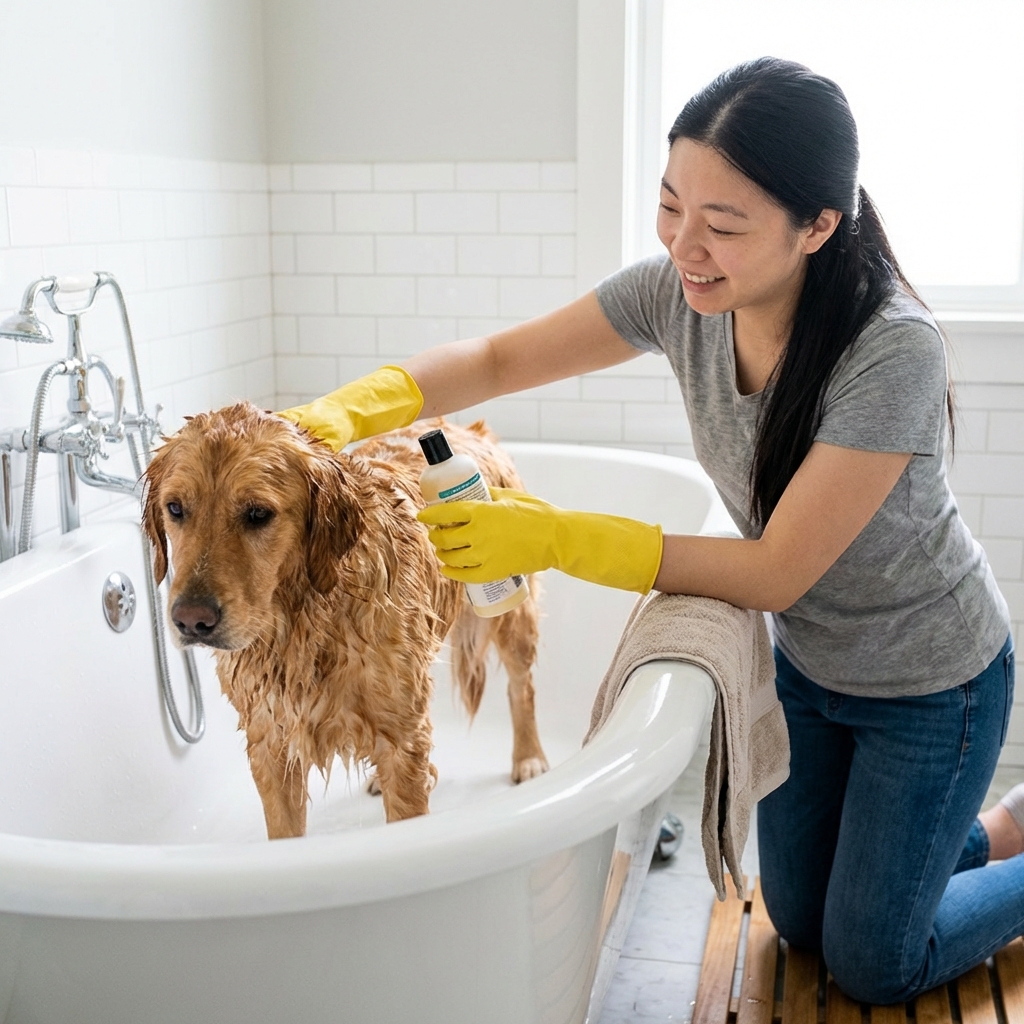
- Shampoo with a gentle pet shampoo afterward and rinse again.
- Towel dry and keep your dog warm.
If your dog has a thick double coat, you may need a second round. Many dogs improve dramatically after one treatment, then have a faint “ghost smell” when damp for a few days. That is usually leftover oil and the thioacetate effect mentioned above, not you doing anything wrong.
Face, ears, and sensitive dogs
Face
For the face, less is more. Use a washcloth lightly dampened with the mixture, and wipe carefully while avoiding eyes and lips. Rinse the cloth often. Follow with a clean damp cloth to remove residue.
Ears
Do not pour anything into the ear canals. If the outer ear smells, wipe the ear flap gently. If your dog is shaking the head, scratching, or the ears look red, check in with your veterinarian.
Puppies, seniors, and dogs with skin disease
Dogs with allergies, broken skin, or very young puppies can be more reactive to any bath product. If your dog has skin sores, seems painful, or gets increasingly irritated during the bath, rinse thoroughly and call your vet for the safest next step.
If the smell lingers
It is normal for a little odor to linger, especially when your dog gets wet for the next week or two. It usually means tiny amounts of skunk oil are still trapped in the coat.
- Repeat once in 24 to 48 hours if needed, especially for thick coats or heavy exposure.
- Wash bedding and towels in hot water with a pet-safe detergent. If possible, do a quick pre-rinse outside before bringing items through the house.
- Clean hard surfaces your dog touched with a mild degreasing cleaner.
- Replace or deep-clean collars. Fabric collars can hold odor stubbornly.
If it has been hours or even a day or two: You can still de-skunk your dog. It may take an extra round because the oils have had more time to bind to the coat.
Cleanup and human safety
- Ventilate the area and avoid breathing fumes close to the coat.
- Protect your skin and eyes with gloves, and avoid splashes when applying and rinsing.
- Do not mix peroxide with other cleaners (especially bleach or ammonia products). Stick to the recipe and rinse surfaces with plain water afterward.
- Use old towels you do not mind sacrificing. If an item stays strongly skunky after washing, replacing it can be the kindest option for your nose.
Other options
Commercial de-skunking shampoos can work well and may be a better choice for dogs with sensitive skin, repeat encounters, or owners who prefer not to DIY. Look for products specifically labeled for skunk odor neutralization and follow label directions. If your dog is very reactive to bathing or has significant skin disease, ask your vet which product is safest.
Cats and other pets: Do not assume this dog protocol is right for cats. Cats are more prone to stress during bathing and can be more sensitive to products. If your cat was sprayed, call your veterinarian for the safest plan.
What not to do
- Do not rely on tomato juice as your main solution. It is messy and not very effective at neutralizing thiols.
- Do not fully hose your dog off first unless you are prioritizing urgent eye flushing and have no other choice in the moment.
- Do not use essential oils to cover the smell. Many are irritating or toxic to pets, and they do not neutralize skunk spray.
- Do not store peroxide mixtures in bottles or closed containers.
When to call the vet
Please call your veterinarian if:
- Your dog was sprayed directly in the eyes and keeps squinting or pawing
- You see redness, swelling, discharge, or your dog seems in pain
- Your dog is vomiting repeatedly, drooling heavily, or acting weak
- Your dog has underlying respiratory disease and is coughing or struggling to breathe
- Your dog has open sores, significant skin allergies, or severe itch after bathing
Warm reminder: skunk encounters happen to the best dogs and the most watchful families. With quick action and the right solution, most pups are back to normal very soon.