Keep neighborhood cats out of your garden and porch with a humane, layered plan: motion-activated sprinklers, digging barriers, pet-safe repellents, enzyme c...
Article
•
Designer Mixes
How to Get Rid of Stray Cats Humanely (What Works and What to Avoid)

Shari Shidate
Designer Mixes contributor
Finding outdoor cats in your yard can be stressful. Maybe they are spraying on doors, patio furniture, or walls, fighting at night, digging in garden beds, or stressing out your own pets. I also know many people feel torn because they do not want to harm the cats. The good news is that you can reduce or stop unwanted visits with humane, practical steps that target a few key drivers: food, shelter, and feeling safe in your space.
This guide focuses on safe options you can start today, plus longer-term solutions that can reduce the number of outdoor cats in a neighborhood over time. Because rules vary, always check local ordinances and shelter guidance on trapping, feeding, and return policies.

First, identify what you are dealing with
People often say “stray” when they mean different situations. The best approach depends on whether the cat is a lost pet, a true stray, or a feral cat.
- Lost pet: Friendly, may approach people, looks well groomed, may have a collar or seem confused.
- Stray: Previously socialized to people but living outdoors now. May be cautious but can sometimes be trapped and rehomed through a shelter or rescue.
- Feral: Not socialized to humans, avoids contact, often part of an outdoor colony. Often best handled through organized community cat programs.
If a cat seems injured, extremely thin, stuck, or sick (labored breathing, severe eye discharge), contact local animal control, a shelter, or a rescue for guidance.
Quick health note: Avoid handling unknown cats, and treat any bite or deep scratch as a medical issue. Rabies is rare in cats in many areas, but bites still need prompt care.
The humane goal: make your yard less rewarding
Cats return because something in your space meets a need. If you remove rewards and add gentle deterrents, many cats will shift their routine elsewhere. Results vary based on local cat density, season, and whether neighbors are feeding.
1) Remove food sources (even accidental ones)
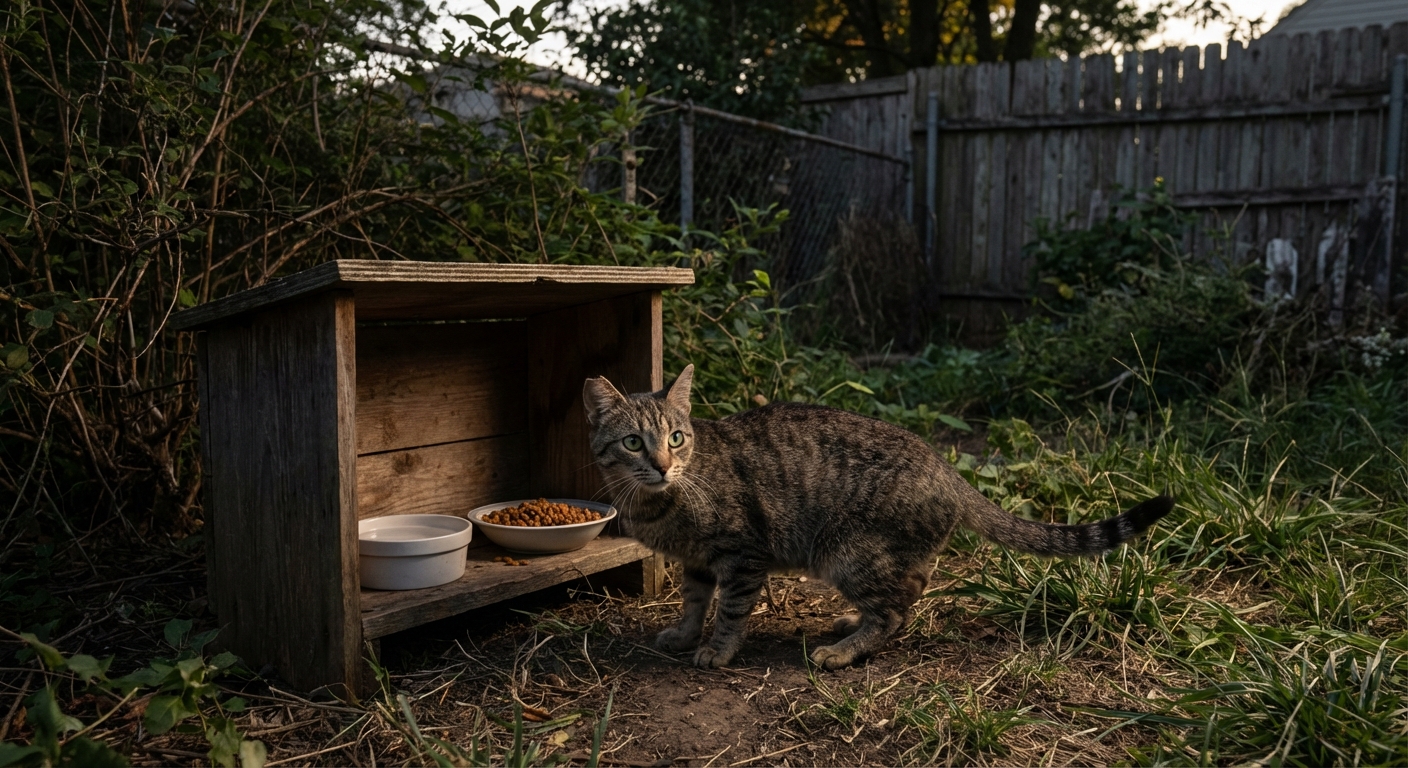
- Do not leave pet food outside, including on porches or in garages with open doors.
- Secure trash with tight lids. Rinse food containers before putting them in outdoor bins if possible.
- Feed birds carefully. Birdseed attracts rodents, and rodents attract cats. Consider a tidy feeder area and clean spilled seed daily.
- Talk with neighbors if someone is feeding cats outdoors. If they want to help, encourage a structured plan through a local shelter, rescue, or community cat program rather than open feeding.
2) Block shelter and hiding spots
Cats love protected areas that feel safe, especially in cold, wet weather and during kitten season.
- Close off crawl spaces, sheds, and decks using lattice or sturdy wire mesh (check local codes).
- Trim dense shrubs where cats nap or hide.
- Remove wood piles or elevate them on racks if possible.
- Keep garage doors closed and fix gaps under doors where cats slip in to rest.
- Cover sandboxes when not in use.
3) Use scent and texture as gentle “no thanks” signals
Many cats dislike certain textures and smells. Results vary, but these can help when combined with the steps above.
- Texture: Place prickly mulch (pine cones), coarse gravel, or commercial cat deterrent mats in garden beds.
- Scent: Citrus peels or citrus-based outdoor sprays may deter some cats. Reapply after rain.
- Protect soil: If cats are using your garden as a litter box, keep soil covered with mulch, secured netting, or ground cover plants.
A safety note: Avoid mothballs, ammonia, bleach, cayenne pepper, or essential oils placed outdoors. These can irritate or injure animals, contaminate soil, and may create harmful fumes or residues. Stick to humane deterrents made for outdoor use and follow label directions.
4) Add motion-based deterrents (often a top performer)
Deterrents work best when they are immediate and consistent. Motion-based tools are often among the most effective options homeowners report, especially when you also remove food and shelter.
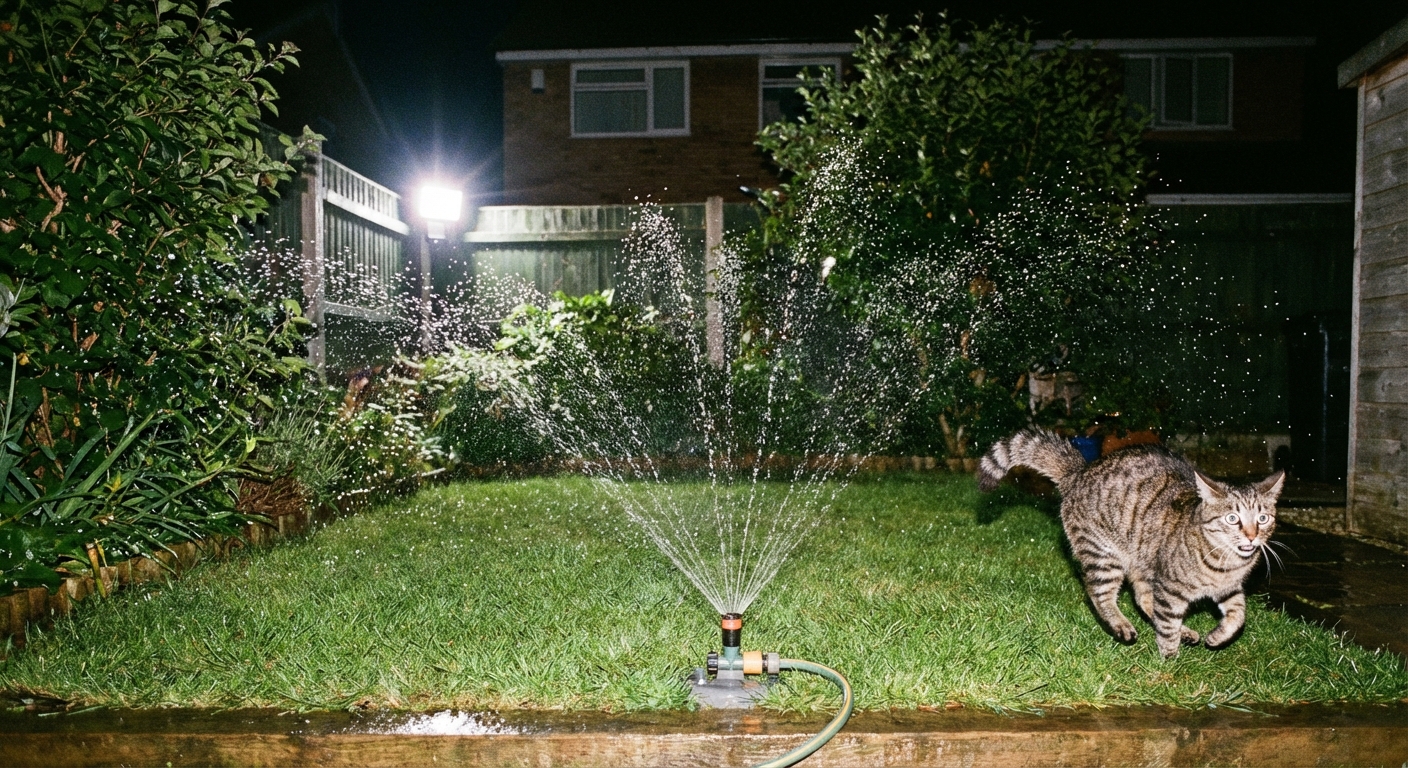
- Motion-activated sprinklers are a common favorite because they startle without injuring.
- Motion lights can help reduce nighttime loitering, especially near entry points.
- Ultrasonic devices have mixed results. Some people see short-term benefit, but cats may habituate and the devices can affect other animals.
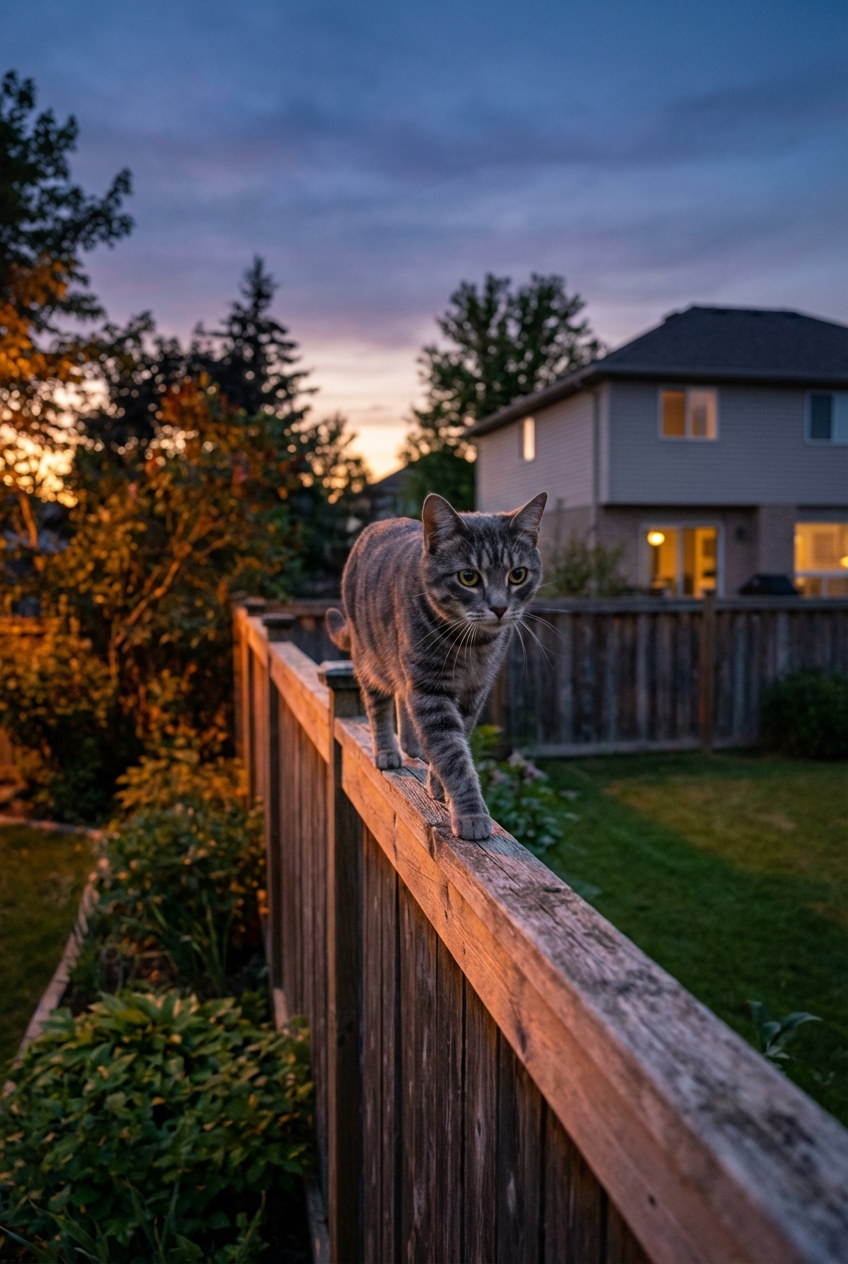
Optional upgrade: If cats are coming over a fence line, consider cat-proof fence toppers or rollers where allowed.
If cats are spraying, fighting, or marking
Unneutered cats are more likely to roam, fight, yowl, and spray. Reducing breeding through spay and neuter is one of the most reliable ways to lower these behaviors neighborhood-wide.
Clean urine properly to prevent repeat marking
- Use an enzymatic cleaner designed for pet urine. Regular cleaners often do not remove the scent cues cats detect.
- Follow the product directions and let it soak long enough to break down odor compounds.
- If the area is porous (wood, concrete), multiple treatments may be needed.
Make “hot spots” less appealing
- Block access under porches and near doors where cats feel protected.
- Use motion sprinklers near areas where spraying happens.
- Remove or cover scent-holding items like outdoor cushions until the area is no longer being marked.
A community option: TNR (Trap, Neuter, Return)
If you have a consistent group of cats visiting, you may be seeing a colony. In many communities, a widely used approach is TNR: cats are humanely trapped, spayed or neutered, vaccinated when possible, and then returned to their home territory. Program outcomes depend on local policy, colony size, and participation, so check what your area supports and what resources are available.
Why people use TNR
- Prevents new litters, which can reduce colony size over time when done consistently.
- Neutered cats often roam and fight less.
- Helps create a coordinated plan instead of ad hoc feeding and repeated complaints.
How to get started
- Contact local shelters, rescue groups, or municipal animal services and ask about community cat or TNR resources.
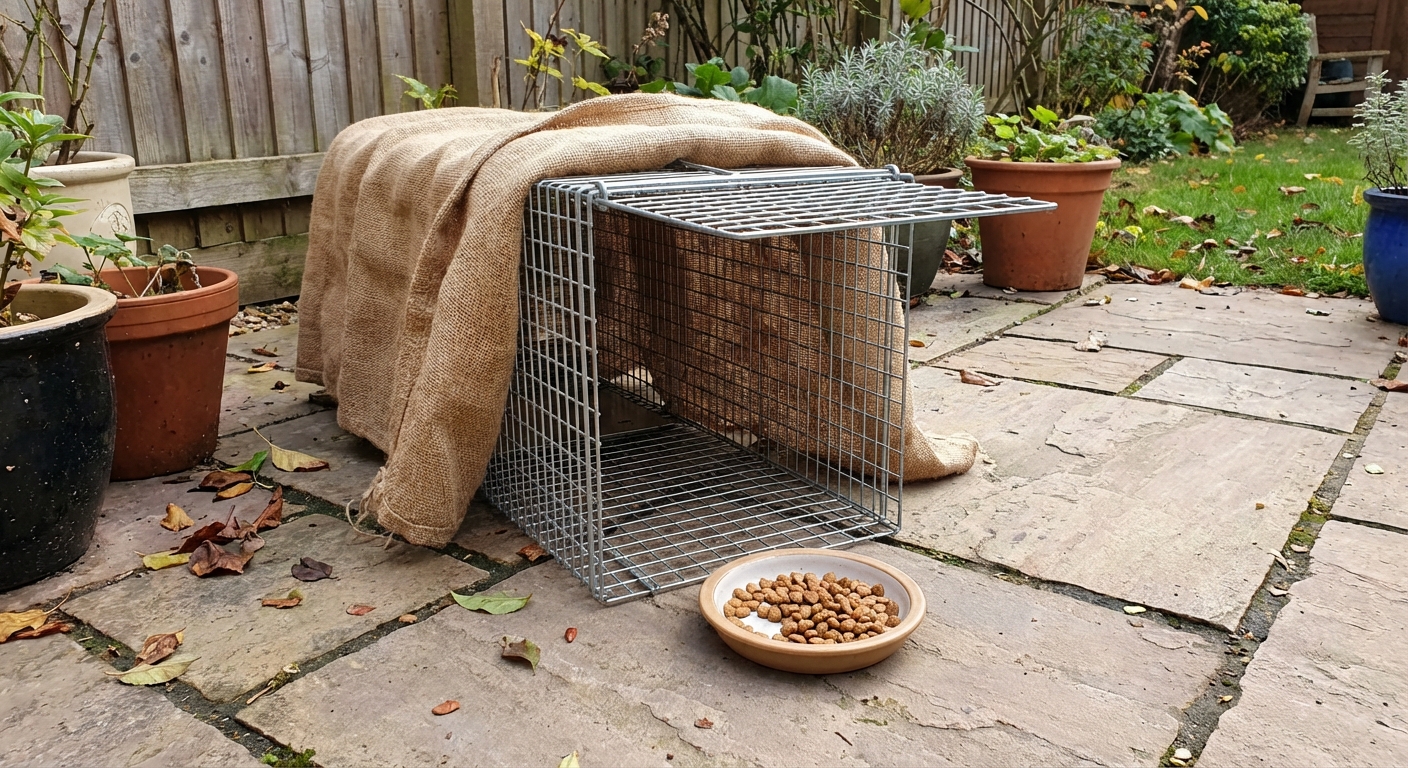
- Borrow a humane box trap from a rescue or purchase one from a pet supply store.
- Ask about low-cost spay and neuter clinics and whether they offer feral cat appointments.
Trapping safety basics
- Do not trap in extreme heat or cold. Choose a mild weather window whenever possible.
- Never leave a trap unattended. Check frequently.
- Cover the trap with a towel or sheet to reduce stress once a cat is inside.
- Use a trap liner (newspaper or cardboard) for footing.
- Do not try to touch a trapped cat. Transport the cat in the covered trap.
- Coordinate the surgery appointment first so the cat is not held longer than necessary.
If you are not comfortable trapping cats yourself, many areas have volunteer community cat teams who can help.
Kitten season note: If you find kittens, do not assume they are abandoned. Mom cats often leave briefly to find food. Contact a rescue for guidance before moving kittens, especially if they appear clean, warm, and quiet.
What not to do
Some approaches can backfire, are inhumane, or may be illegal depending on where you live.
- Do not poison. It is cruel, dangerous to children and pets, and often illegal.
- Do not use glue traps or leg-hold traps. These cause severe injury and distress.
- Do not relocate cats far away. Relocation often has poor outcomes and, in some settings, removal can contribute to a “vacuum effect” where other cats move in if food and shelter remain.
- Do not approach aggressive or cornered cats. Bites and scratches can become infected quickly.
If you suspect the cat is someone’s pet
If a cat seems friendly, clean, and comfortable around people, it may be owned or recently lost.
- Take a clear photo and post it to local lost-and-found pet groups and neighborhood forums.
- Ask a vet clinic or shelter to scan for a microchip.
- If you can safely contain the cat in a garage or bathroom temporarily, provide water and a small amount of food while you seek help.
A simple 7-day action plan
If you want a straightforward starting point, here is a realistic plan that tends to work well.
- Day 1: Remove outdoor food sources and secure trash.
- Day 2: Identify where cats enter and rest. Block access to crawl spaces, sheds, and under decks.
- Day 3: Add texture barriers in garden beds and cover fresh soil.
- Day 4: Install a motion-activated sprinkler or motion light near the main hot spot.
- Day 5: Enzymatically clean any sprayed areas and remove scent-holding items.
- Day 6: Contact a local shelter or rescue about community cat options (including TNR where supported) if cats are persistent.
- Day 7: Reassess. Move deterrents if cats shifted to a new area and keep the environment unrewarding.
When to call for help
Reach out to animal control, a local shelter, or a community cat organization if:
- You see kittens, or a pregnant cat, and need guidance on safe handling.
- A cat is injured, appears ill, or is acting unusually (staggering, severe lethargy).
- You have repeated fighting, yowling, or spraying that does not improve with deterrents.
- You are dealing with multiple cats and want to coordinate a neighborhood plan.
With a calm, consistent approach, most people can significantly reduce outdoor cat visits without harming animals or escalating conflict with neighbors. Small steps add up quickly, and combining deterrence with a community-wide plan is where you are most likely to see lasting change.
Sources and further reading
- ASPCA: Community Cats and humane deterrents
- Humane World for Animals (formerly HSUS): Living with community cats
- Alley Cat Allies: TNR and colony management guidance
- University extension resources on wildlife-safe yard practices and deterrents