Your dog got skunked? Follow calm first steps, use the proven peroxide + baking soda + dish soap mix safely, protect eyes and ears, deodorize your home, and ...
Article
•
Designer Mixes
How to Get Rid of Skunk Spray on a Dog

Shari Shidate
Designer Mixes contributor
If your dog just got skunked, take a deep breath. It is awful, but it is fixable, and you do not have to live with that smell for weeks. The key is to act fast, use the right solution, and avoid a few common mistakes that make the odor harder to remove.
First: safety and containment
Skunk spray is an oily secretion with powerful sulfur compounds that cling to fur, skin, fabric, and can even linger on painted walls and drywall. Before you start cleaning, focus on stopping the spread and protecting your dog’s sensitive areas.
- Keep your dog outside if possible, or in a garage, mudroom, or laundry area that is easy to wipe down.
- Put on gloves and wear clothes you do not mind sacrificing.
- Do not let your dog rub on carpets, couches, or bedding.
- Remove the collar or harness right away so it does not keep re-contaminating the neck and chest.
- Check the eyes and mouth. Skunk spray can irritate mucous membranes.
Call a vet the same day if your dog was sprayed directly in the face, is squinting or pawing at the eyes, has significant redness, repeated vomiting, trouble breathing, or facial swelling.
What not to do
- Do not use tomato juice. It may mask odor briefly, but it does not neutralize the compounds in skunk spray.
- Do not rinse with plain water first. Water can spread the oils across the coat and make the odor harder to fully remove.
- Do not use harsh household cleaners like bleach or strong solvents. They can burn skin and create dangerous fumes.
Best home remedy: peroxide mix
This is the go-to approach many veterinary teams recommend because it neutralizes sulfur-containing compounds in skunk spray.
Mix it fresh
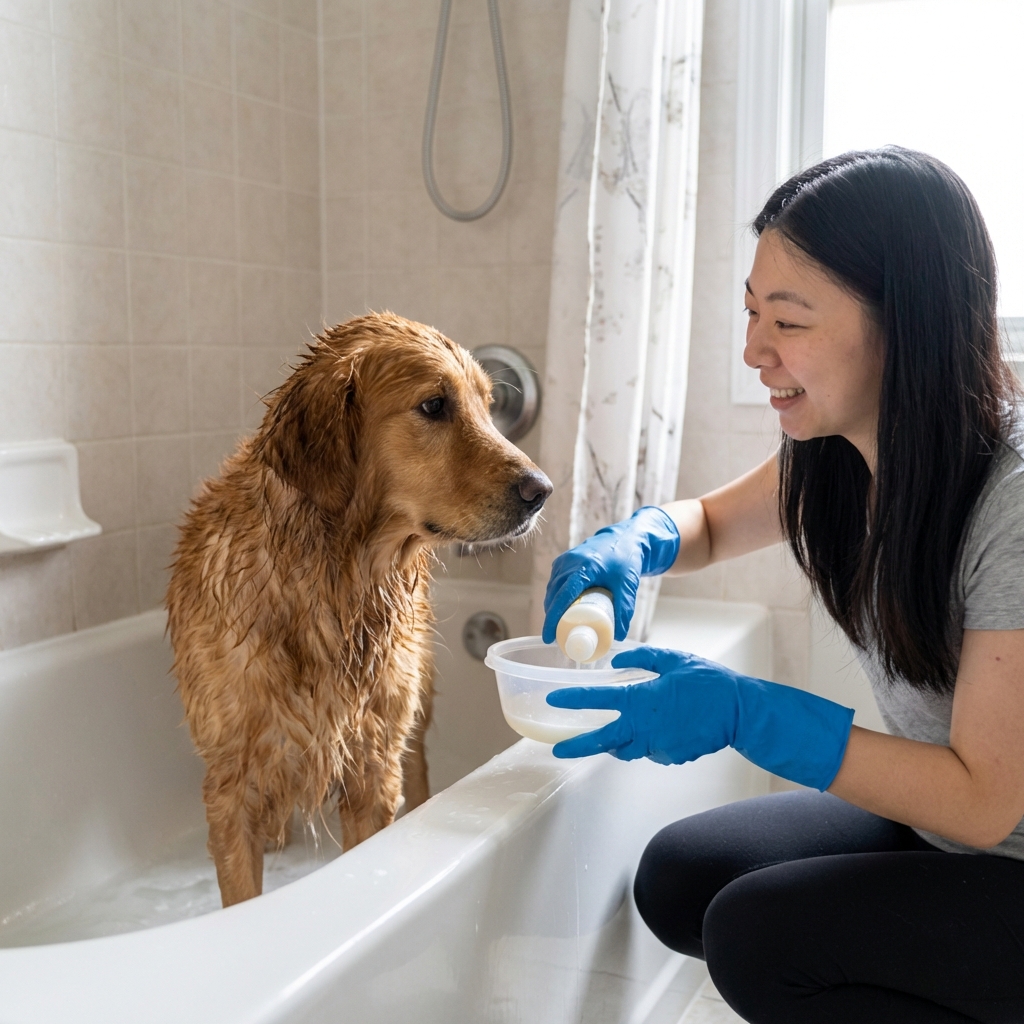
In an open container (not a bottle), mix right before you use it:
- 1 quart (4 cups) of 3% hydrogen peroxide
- 1/4 cup baking soda
- 1 teaspoon liquid dish soap (a grease-cutting type is helpful)
Tip: Stir peroxide and baking soda first, then add dish soap last to reduce excessive foaming.
Important: Do not store this mixture. It can build pressure in a closed container and potentially burst.
How to use it
- Blot, do not rub any wet spray you can see on the coat.
- Apply to dry fur, working it in thoroughly. Focus on the neck, chest, shoulders, and any area your dog rubbed.
- Keep it away from eyes, nose, mouth, and inside ears. Do not use this mixture on the face.
- Let it sit 5 to 10 minutes. Do not let it fully dry on the coat.
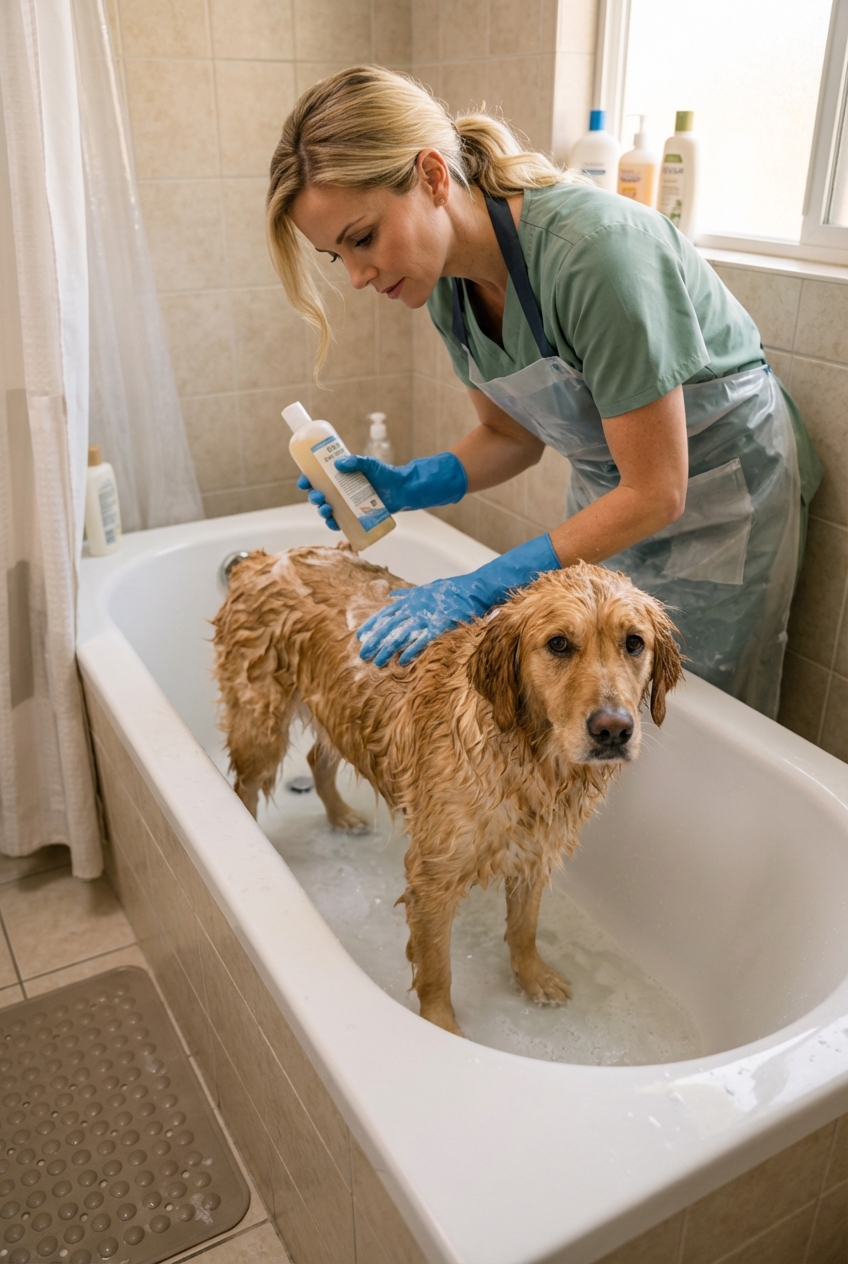
- Rinse thoroughly with lukewarm water, then shampoo with a dog shampoo.
- Repeat once if needed. Many dogs need two rounds for a direct hit. For large dogs, plan on mixing a second fresh batch rather than stretching the first.
Ventilation: If you are bathing in a garage or laundry room, open doors and windows if you can. The smell can be intense while you work.
Coat and skin notes
Hydrogen peroxide can have a mild bleaching effect, especially on dark coats, and can be drying on sensitive skin. Avoid using this mixture on broken skin or open wounds. If your dog has allergies, dermatitis, very dry skin, or you are worried about coat lightening, a commercial skunk shampoo can be a gentler first choice.
Multi-pet note: This article is written for dogs. If a cat gets sprayed, call your veterinarian for the safest next steps.
Face and eyes
Dogs commonly get sprayed in the face, and that is where you need to slow down and be extra careful.
- Do not use the peroxide mixture near the eyes (or on the eyelids).
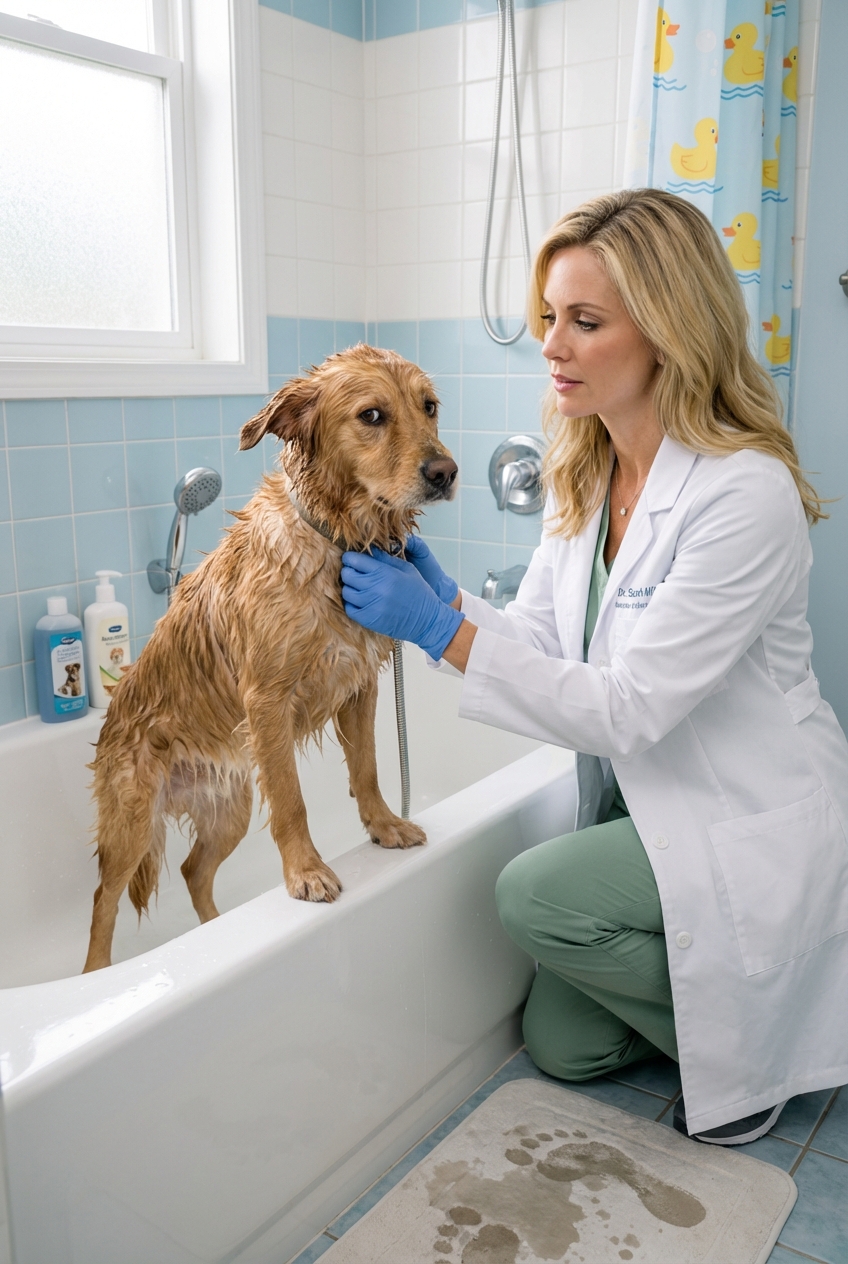
- For the face: Use a soft washcloth lightly dampened with warm water and a small amount of dog shampoo, or use a commercial product labeled for skunk odor, and carefully wipe the fur while avoiding eyes and lips.
- For the eyes: Flush with sterile saline eyewash if you have it. If your dog was sprayed in the eyes or is squinting, red-eyed, or painful, contact your veterinarian promptly.
- For the mouth: Offer fresh water. If drooling or vomiting continues, call your vet.
Commercial skunk shampoos
A quality commercial skunk odor remover can be an excellent option, especially if:
- Your dog was sprayed more than once
- Your dog has sensitive skin or you worry about coat lightening
- You want something you can keep on hand for future incidents
Look for products that say they neutralize skunk odor (not just “deodorize” or “mask”) and follow the label directions carefully, including recommended contact time.
Why the smell comes back
If you notice skunk odor returning when your dog gets damp, that is common. Skunk oils can linger in the undercoat or on the skin, and moisture can bring the odor back.
What helps:
- A second wash 24 to 48 hours later if your dog’s skin is not irritated
- Thorough drying with clean towels you can wash immediately
- Brushing once the coat is dry to help remove residual oils
Cleaning your home
Even a quick “run inside” can leave odor behind. Focus on what skunk oils stick to most: soft surfaces, dog gear, and airflow through your home.
Washable items
- Dog collar, harness, leash: Wash as soon as possible. Soak in warm water with a degreasing dish soap, then rinse and wash again if needed.
- Bedding and blankets: Wash separately in hot water (if fabric allows) with detergent plus 1/2 cup baking soda. Air dry if possible and rewash if odor remains.
- Your clothes: Wash separately. Add baking soda to the wash cycle.
Carpet and upholstery
- Blot any damp areas, then use a cleaner specifically labeled for skunk odor (or a reputable odor neutralizer made for sulfur-based pet odors). Enzymatic pet-odor cleaners can help with general pet smells, but skunk odor often needs a skunk-specific product.
- Ventilate the room well and consider changing HVAC filters if the smell circulated.
When to call the vet
Most skunk encounters are messy but not dangerous. Veterinary help is the safest choice if:
- Your dog was sprayed in the eyes or face and is squinting, red-eyed, or pawing at the face
- There is repeated vomiting, drooling, or lethargy
- Your dog has trouble breathing or severe facial swelling
- Your dog has open wounds, hot spots, or significant skin irritation
- You have a very young puppy, a senior dog, or a pet with chronic illness
Prevent it next time
Skunks are most active from dusk through dawn, and they are attracted to easy food sources.
- Walk dogs on a leash at night and use a flashlight to scan ahead.
- Keep trash secured, and do not leave pet food outdoors.
- Block access under decks and sheds where skunks may den.
- If skunks are frequent visitors, talk to a local wildlife professional about humane options.
Quick steps
If you only remember one thing, remember this: use the peroxide solution on dry fur first, then rinse and shampoo.
- Contain your dog, remove collar or harness, protect eyes and mouth
- Mix fresh peroxide, baking soda, dish soap solution
- Apply to dry coat, wait 5 to 10 minutes
- Rinse well with lukewarm water, shampoo, dry thoroughly
- Repeat once if needed and wash gear, bedding, and towels