Skunked dog? Learn the vet-recommended peroxide + baking soda + dish soap wash, how to apply it safely, avoid common mistakes, clean your home, and know when...
Article
•
Designer Mixes
How to Get Rid of Skunk Smell on Dogs

Shari Shidate
Designer Mixes contributor
If your dog got skunked, I know how panicky that moment feels. The smell is powerful, it clings to fur, and if you do the wrong thing first, it can get harder to remove. The good news is that skunk odor is very treatable at home with the right approach, and you can usually get your pup back to normal quickly.
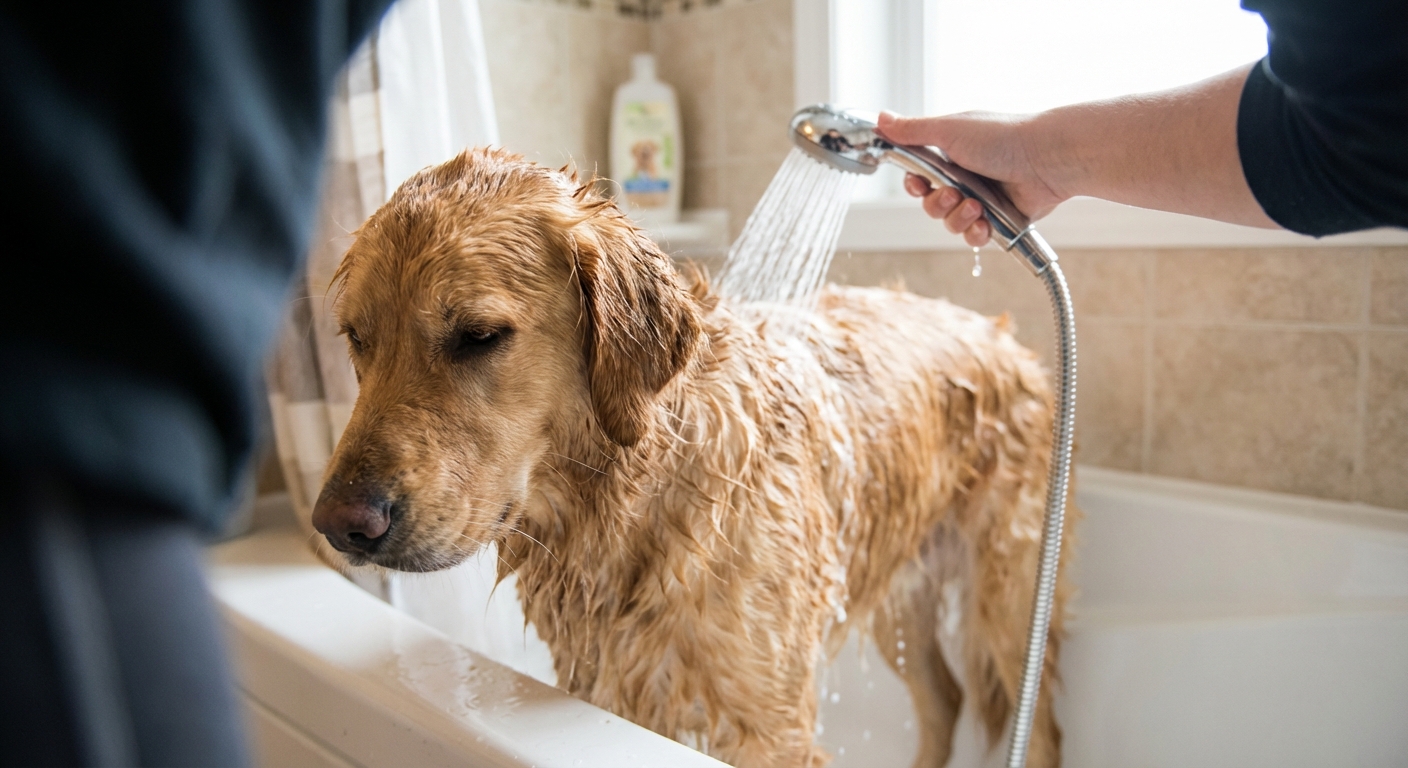
As a veterinary assistant in Frisco, Texas, here is the evidence-based method I trust, plus the extra steps that make a big difference for your house, your nose, and your dog’s skin. This guide is not a substitute for veterinary care. When in doubt, call your veterinarian.
First, do this now
1) Keep your dog outside if you can
Skunk spray transfers to couches, carpets, bedding, and car upholstery very easily. If it is safe and warm enough, keep your dog outdoors or in a washable area like a garage or laundry room while you gather supplies.
2) Avoid wetting or shampooing at first
Try not to wet your dog before you deodorize. Water and regular shampoo can spread skunk oils and push them deeper into the coat, which can make the smell linger. If your dog is already wet from rain or heavy spray, blot with paper towels and move on to deodorizing as soon as you can.
3) Protect yourself and your dog’s eyes
Put on gloves and old clothes. Skunk spray can irritate eyes and mucous membranes. If your dog was sprayed in the face, keep all solutions away from eyes, nose, and mouth.
4) Quick triage: when to call your vet
- Eye exposure: squinting, redness, pawing at the face, or visible discharge.
- Breathing trouble or excessive drooling.
- Vomiting after likely licking spray off the coat.
- Pets with asthma, seniors, or very young puppies can be more sensitive.
If eyes are affected, flush gently with sterile saline (or plain water in a pinch) and call your veterinarian for guidance.
Why the smell lingers
Skunk spray contains sulfur-based compounds, including thiols and thioacetates. Thiols are oily and bind to hair and skin. Thioacetates can break down later and release more thiols, which is a big reason some dogs seem to re-skunk after they get wet again. The goal is to chemically neutralize these compounds, not just cover them up.
Best at-home solution
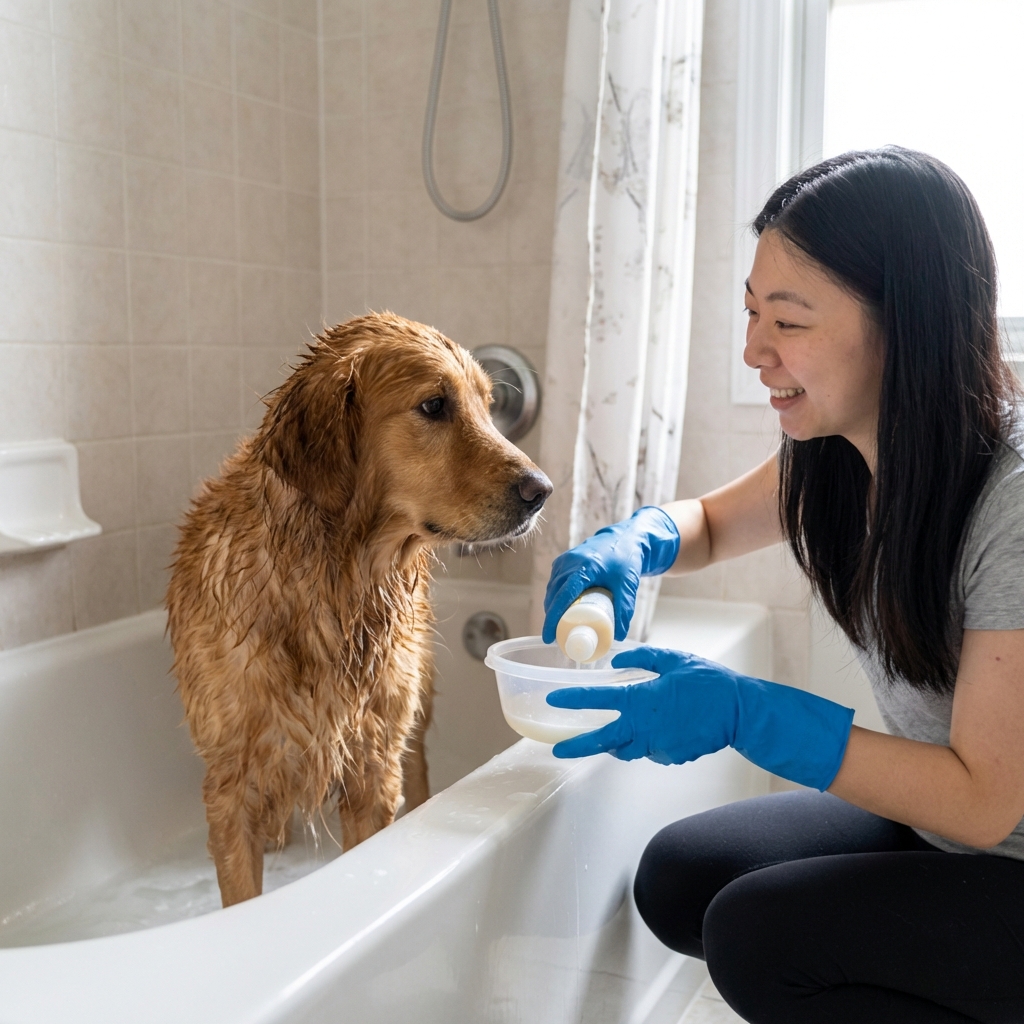
This is the classic hydrogen peroxide, baking soda, and dish soap formula often recommended in veterinary settings (often called the Krebaum recipe). It works because it oxidizes and breaks down odor molecules. When used correctly, it is very effective.
Skunk odor recipe
- 1 quart (4 cups) 3% hydrogen peroxide
- 1/4 cup baking soda (sodium bicarbonate)
- 1 to 2 teaspoons grease-cutting dish soap (about 5 to 10 mL, use plain, unscented if possible)
Important safety notes:
- Mix fresh each time and use immediately. It loses effectiveness if it sits.
- Do not store the mixture in a closed container. It can build pressure.
- Avoid use near the eyes and mouth.
- Do not use on broken or very irritated skin. Call your vet for alternatives.
- Only use 3% peroxide. Higher concentrations can burn skin.
- Use only a small amount of dish soap and rinse extremely well. Heavy degreasing soaps can be drying.
- Peroxide can have a mild lightening effect on some coats, especially dark fur. It is usually minimal at 3%, but it is worth knowing.
- Do not use this on cats or other species unless your veterinarian tells you to.
- If your pet ingests a significant amount of the mixture or seems unwell after exposure, call your vet or pet poison control right away.
How much do you need?
- Small dogs: about 1/2 batch may do it.
- Medium dogs: plan on 1 full batch.
- Large or double-coated dogs: 1 to 2 batches (mix one at a time).
It is better to mix a second fresh batch than to make a huge amount and let it sit.
Step-by-step
- Start on a dry or blotted coat. Blot any wet spray with paper towels.
- Work in a ventilated area. Gloves on. Remove your dog’s collar or harness first and set it aside to clean separately.
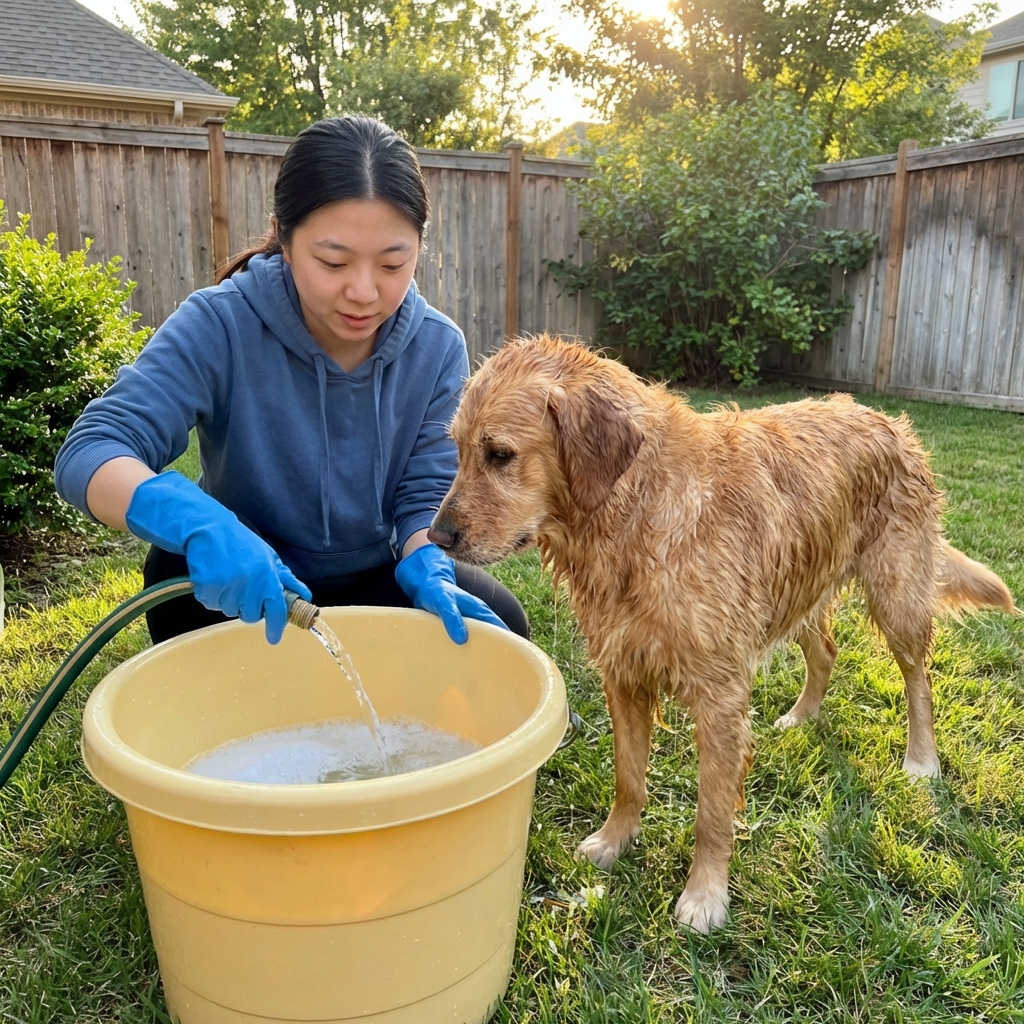
- Apply the solution thoroughly, massaging down to the skin. Concentrate on the neck, chest, and any area that took the direct hit.
- Let it sit 5 to 10 minutes. Do not let it dry on the coat.
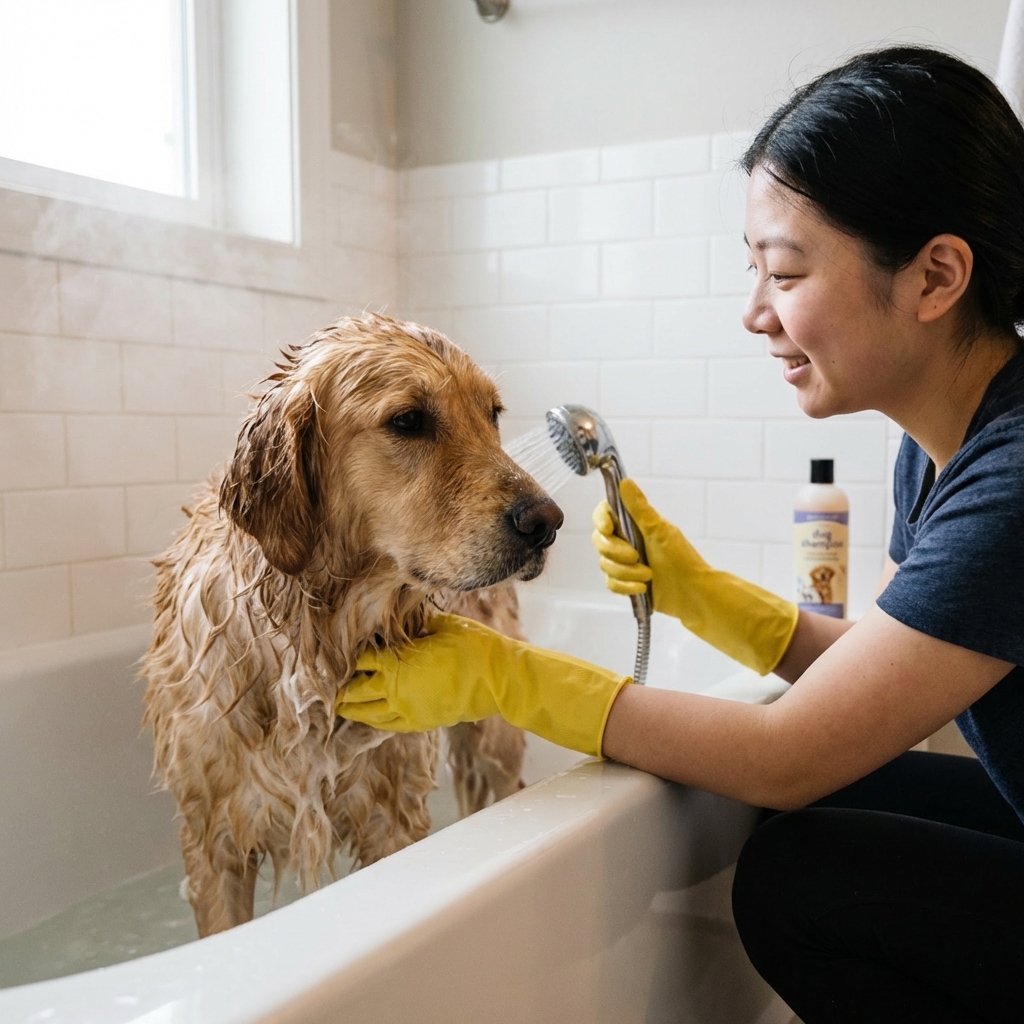
- Rinse very well with lukewarm water.
- Follow with a pet shampoo to remove residue, then rinse again.
- Towel dry, then allow your dog to air dry in a warm area.
If your dog is heavily sprayed, you may need a second round. In my experience, two careful treatments beat one overly long soak.
What not to do
- Tomato juice baths: They do not neutralize thiols. At best, they mask the odor and leave your dog smelling like skunk plus tomato.
- Essential oils: Many are irritating or toxic to pets, and they do not solve the chemistry of skunk spray.
- Human hair dyes, perfumes, or harsh cleaners: High risk for skin irritation and poisoning if licked.
- Over-bathing: Repeated shampooing strips oils and can cause itchy, inflamed skin. Neutralize first, then gently cleanse.
Spray on the face
This is where you want to go extra gentle. Do not apply the peroxide mixture near eyes, lips, or inside ears.
- Eyes: Flush with sterile saline if you have it. If redness or squinting continues, call your vet.
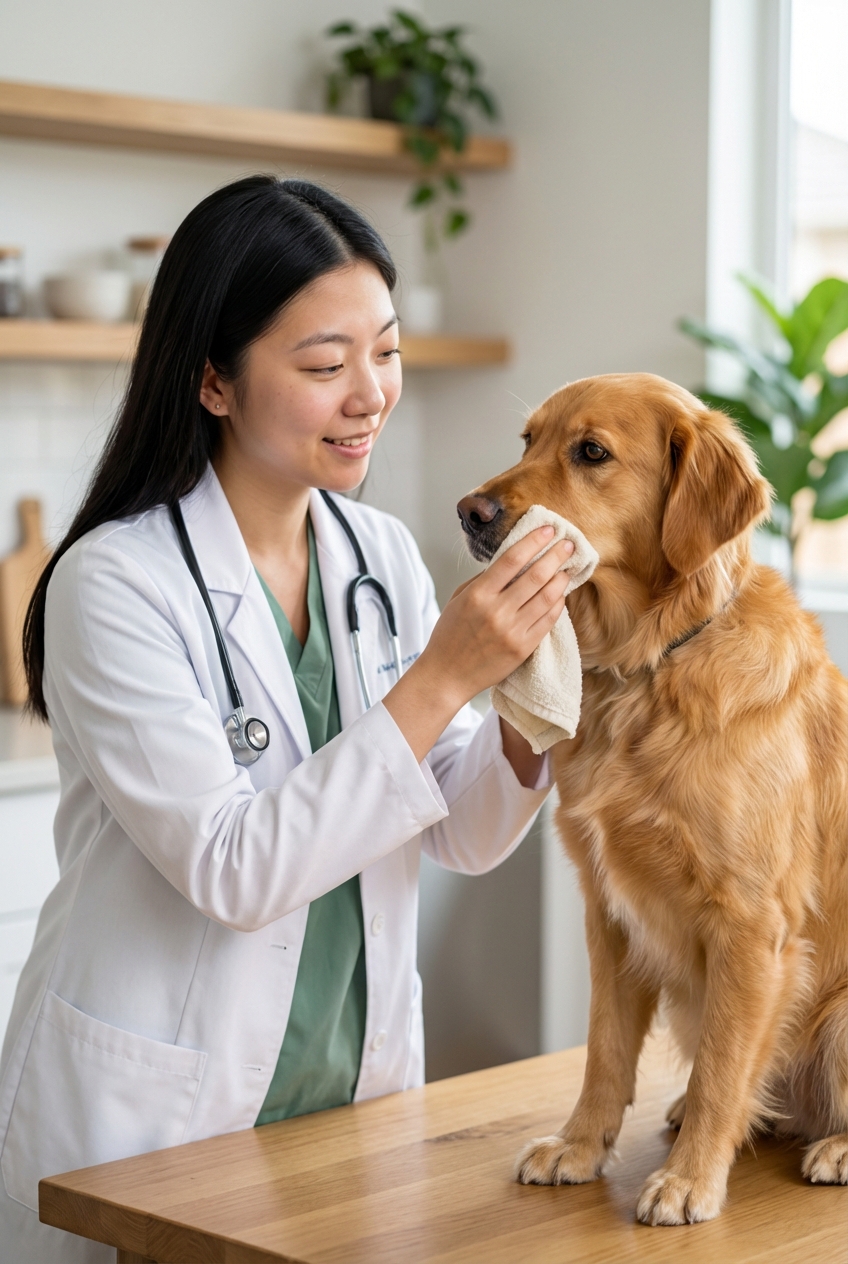
- Muzzle and cheeks: Use a small amount of pet shampoo on a damp washcloth, wipe carefully, and rinse with a clean damp cloth.
- Inside the mouth: Offer water. If your dog is drooling, vomiting, or refusing water, call your vet.
House, towels, and gear
Clothing, towels, collars, and leashes
- Wash in hot water if fabric allows.
- Add baking soda to the wash cycle and run an extra rinse.
- Air-dry if possible and rewash if odor remains.
- For collars and harnesses, soak in warm water with a small amount of dish soap, rinse well, then air-dry. Replace items that hold odor.
Hard surfaces
Wipe with a mild detergent solution, then rinse. Odor clings to oils, so degreasing matters.
Car upholstery and furniture
- Blot first, do not rub.
- Try a commercial skunk odor remover that is labeled upholstery-safe, following directions exactly. Some formulas use oxidizers and can be more effective on skunk oils than standard enzyme products.
- An enzymatic cleaner made for pet odors can still help with general organic smells, but it may not fully neutralize skunk oil on its own.
- Ventilate well and consider charcoal odor absorbers for a few days.
Skunk odor can wake up with humidity. Even after a great bath, you may notice a faint smell during rainy weather for a week or two.
Special situations
Puppies and sensitive skin
The peroxide mixture can be drying for some dogs. For very young puppies or dogs with known skin disease, talk with your veterinarian first. Sometimes a commercial skunk shampoo formulated for pets is a gentler first choice.
Long and double coats
Skunk oils can hide in dense undercoat. Work in sections, massage down to the skin, and rinse longer than you think you need to. A high-velocity dryer at a grooming salon can help remove residual odor trapped in undercoat, but only after the smell is neutralized and the dog is stable and calm.
Skunk kit checklist
- 3% hydrogen peroxide (check expiration dates)
- Baking soda
- Grease-cutting dish soap
- Disposable gloves
- Old towels
- Sterile saline for eye flushing
- Pet shampoo and a cup for mixing
- Spare collar or slip lead (so you can wash the smelly one)
Bottom line
Skunk smell is miserable, but it is not a life sentence. Avoid wetting at first, neutralize the odor with the peroxide and baking soda method, rinse thoroughly, and be gentle with the face. If eyes are involved, your dog has broken skin, your dog seems sick, or you are worried at any point, your veterinarian should be part of the plan.
Your dog did not mean to get skunked. They are just being a dog. With a calm, step-by-step approach, you will both get through it.