Worried your cat has ringworm? Learn the most common symptoms, how vets confirm diagnosis, proven topical and oral treatments, and practical home cleaning st...
Article
•
Designer Mixes
How to Get Rid of Ringworm on a Dog

Shari Shidate
Designer Mixes contributor
Ringworm on dogs can look scary, spread quickly, and make your whole household feel on edge. The good news is that it is very treatable. The key is knowing what you are dealing with, getting a solid diagnosis from your veterinarian, and being consistent with treatment and cleaning until it is truly gone.
One reassuring note: ringworm is not a reflection on your hygiene or your care. The spores are common in the world, and exposure can happen easily at parks, grooming salons, boarding, shelters, and even from an apparently healthy pet.
What ringworm is (and why it spreads)
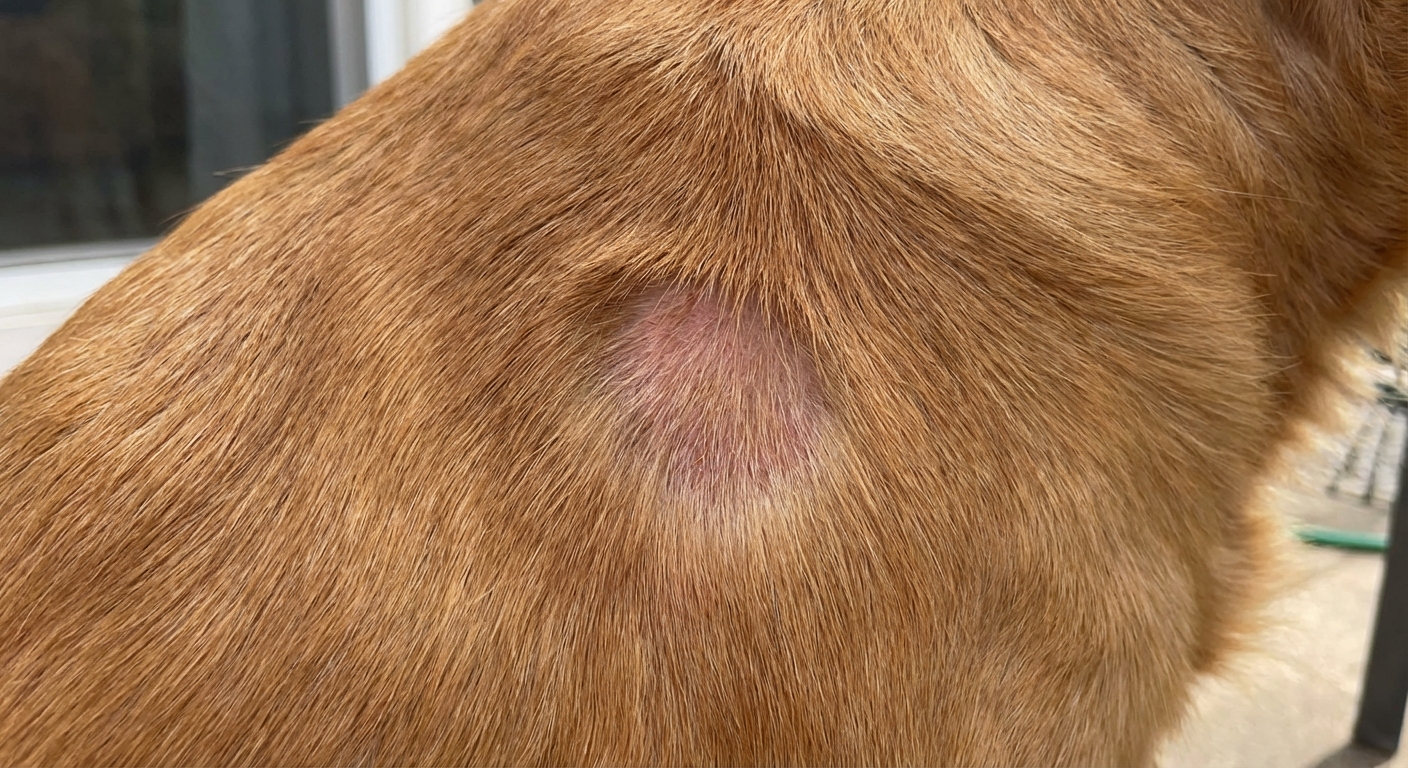
Despite the name, ringworm is not a worm. It is a fungal infection of the skin, hair, and sometimes nails. These fungi are called dermatophytes. Ringworm often causes round areas of hair loss with flaky skin, but it can also show up as general dandruff, broken hairs, or mild itchiness.
Ringworm spreads through fungal spores. Those spores can ride on fur, bedding, brushes, furniture, carpets, and even your clothing. Spores can survive in the environment for months (sometimes longer), which is why treatment is both medical and household.
First step: confirm it is ringworm
A lot of skin issues look like ringworm, including allergies, bacterial infections, demodex mites, and hot spots. Treating the wrong problem wastes time and can make things worse.
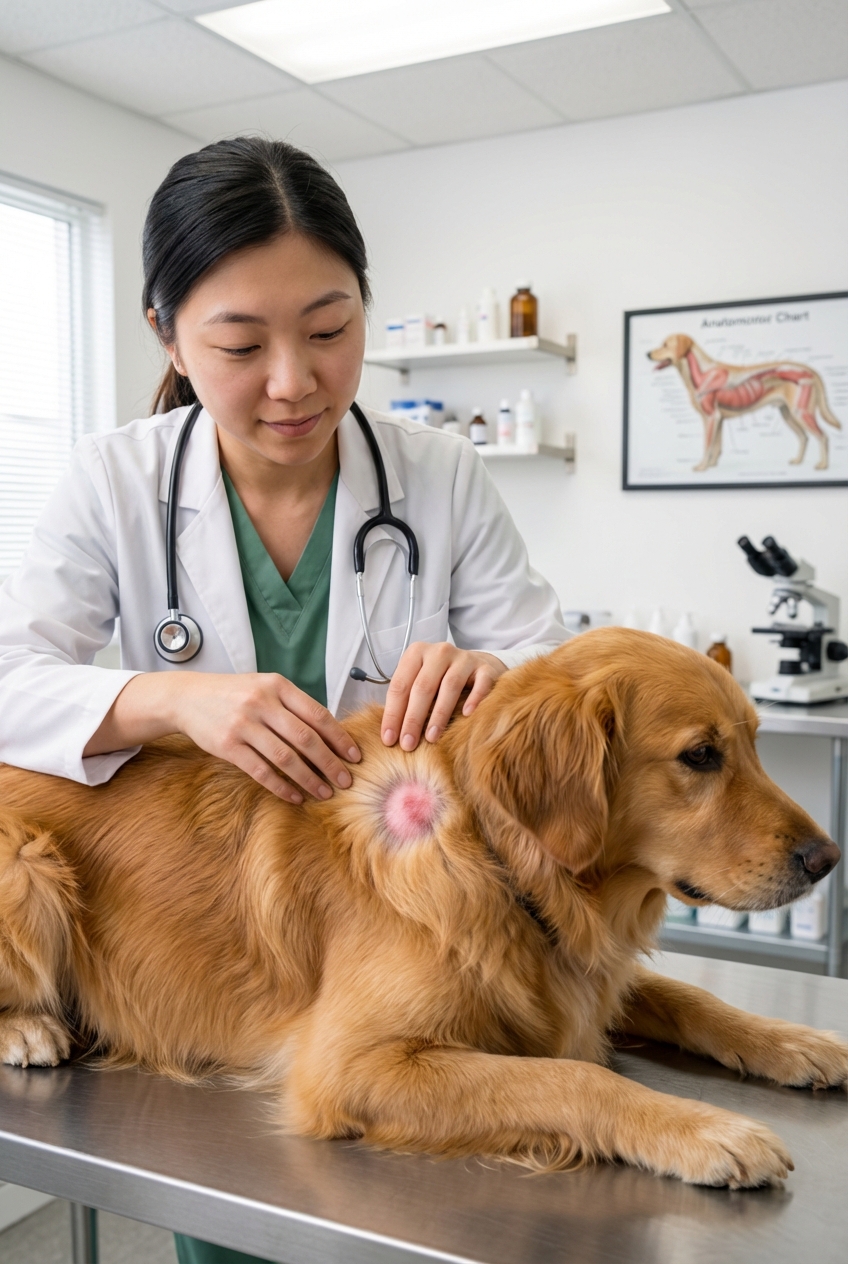
How vets diagnose ringworm
- Wood’s lamp exam: Microsporum canis is the classic fluorescing species. Even then, fluorescence is not definitive and many dermatophytes do not glow, so this is a helpful screening tool, not a perfect test (false negatives and false positives can happen).
- Direct microscopic exam (trichogram): Your vet may examine plucked hairs and skin scale under a microscope to support suspicion and guide next steps.
- Fungal culture or PCR: A culture is often considered the gold standard and can take about 1 to 3 weeks. PCR can be very fast and accurate depending on the lab, and many practices use it more frequently now.
Your vet may also do additional tests to rule out look-alikes. For example, skin scraping is commonly used to check for mites, which can mimic ringworm.
If you suspect ringworm, call your vet and mention it before your appointment. Clinics may schedule you differently to reduce exposure to other pets.
How to get rid of ringworm on your dog
Successful ringworm care usually combines three things: topical treatment, sometimes oral medication, and environmental cleaning. Your dog may look better before the infection is actually resolved, so stick with the plan your veterinarian gives you.
1) Start vet-directed treatment promptly
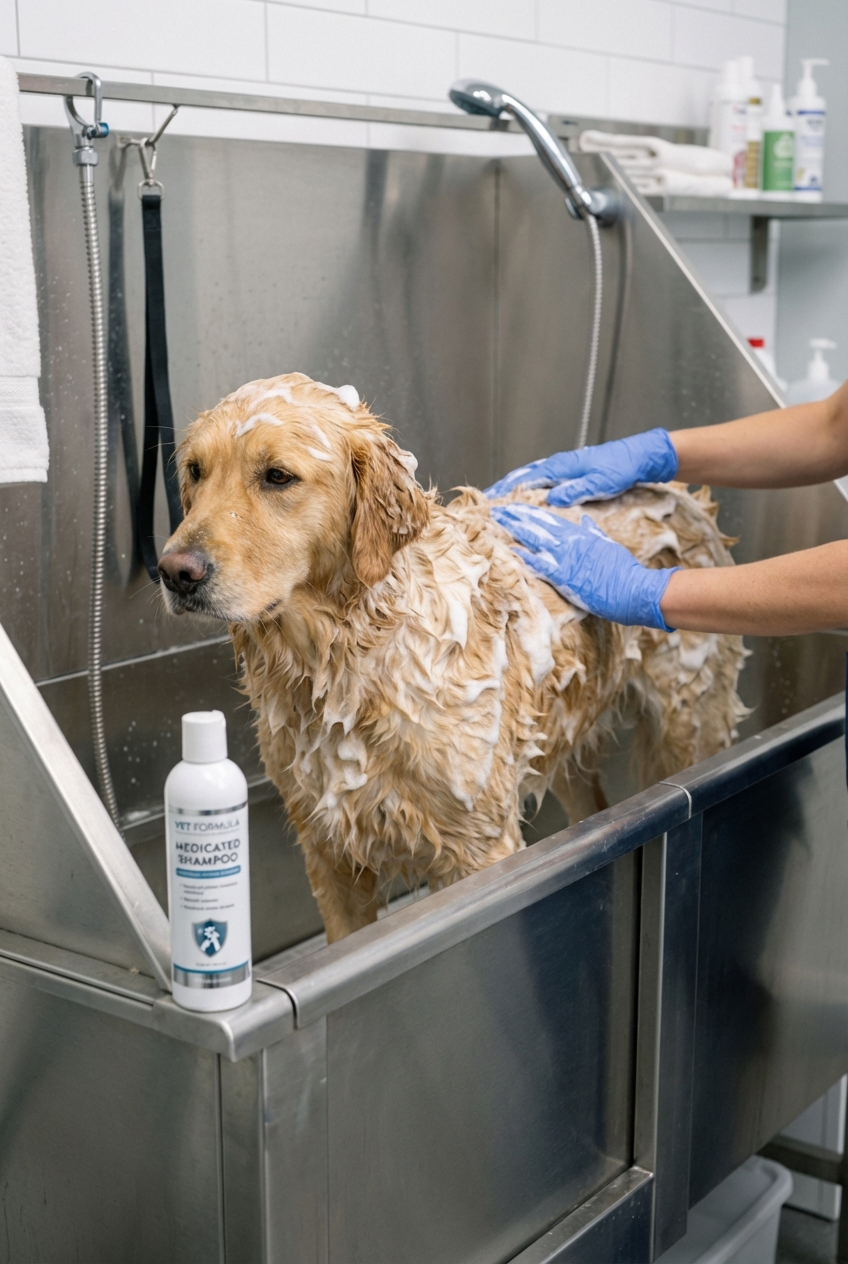
Topical therapy helps reduce surface spores and speeds recovery. Your vet may recommend:
- Medicated shampoos (often containing miconazole, ketoconazole, or chlorhexidine in specific combinations)
- Lime sulfur dips (very effective, strong odor, can stain fabrics, but commonly used in shelters and multi-pet homes)
- Antifungal creams or sprays for small lesions (only products your vet approves)
Oral antifungals are often needed if lesions are widespread, your dog is long-coated, there are multiple pets involved, or the case is not improving. Common prescription options include itraconazole, terbinafine, or griseofulvin. These require vet oversight and sometimes follow-up bloodwork.
Possible side effects and monitoring: Oral antifungals can cause stomach upset, and some can affect the liver. Your vet may recommend baseline or follow-up bloodwork, especially for longer courses. Griseofulvin is not used in all situations and may be avoided in pregnancy, so always follow veterinary guidance.
Do not use human antifungal creams without guidance. Some are safe, some are not appropriate for dogs, and licking is a big concern.
2) Reduce spreading
Limit access and set up a recovery area
- Choose one easy-to-clean room like a bathroom, laundry room, or gated kitchen area.
- Remove rugs, extra blankets, and anything difficult to disinfect.
- Use washable bedding you can rotate frequently.
Use an e-collar if licking is an issue
Licking can irritate skin and spread spores to the mouth area and paws. If your dog cannot stop licking or scratching, ask your vet about an e-collar or other safe barrier.
Grooming tips
- Do not shave without veterinary direction. Clippers can spread spores, and shaving can irritate skin.
- Use separate grooming tools and wash them after each use.
- Wash your hands after handling your dog and consider changing clothes if you are cuddling a lot.
3) Clean your home (it matters)
If treatment is the medicine, cleaning is the secret weapon. Without cleaning, spores can re-infect your dog and spread to people and other pets.
Daily and weekly cleaning checklist
- Vacuum daily in the dog’s area and any rooms they used. Use a vacuum with a HEPA filter if possible.
- Dispose of vacuum contents promptly (bagged vacuums are easier for this).
- Launder bedding, blankets, and soft toys in hot water with detergent, then dry on high heat.
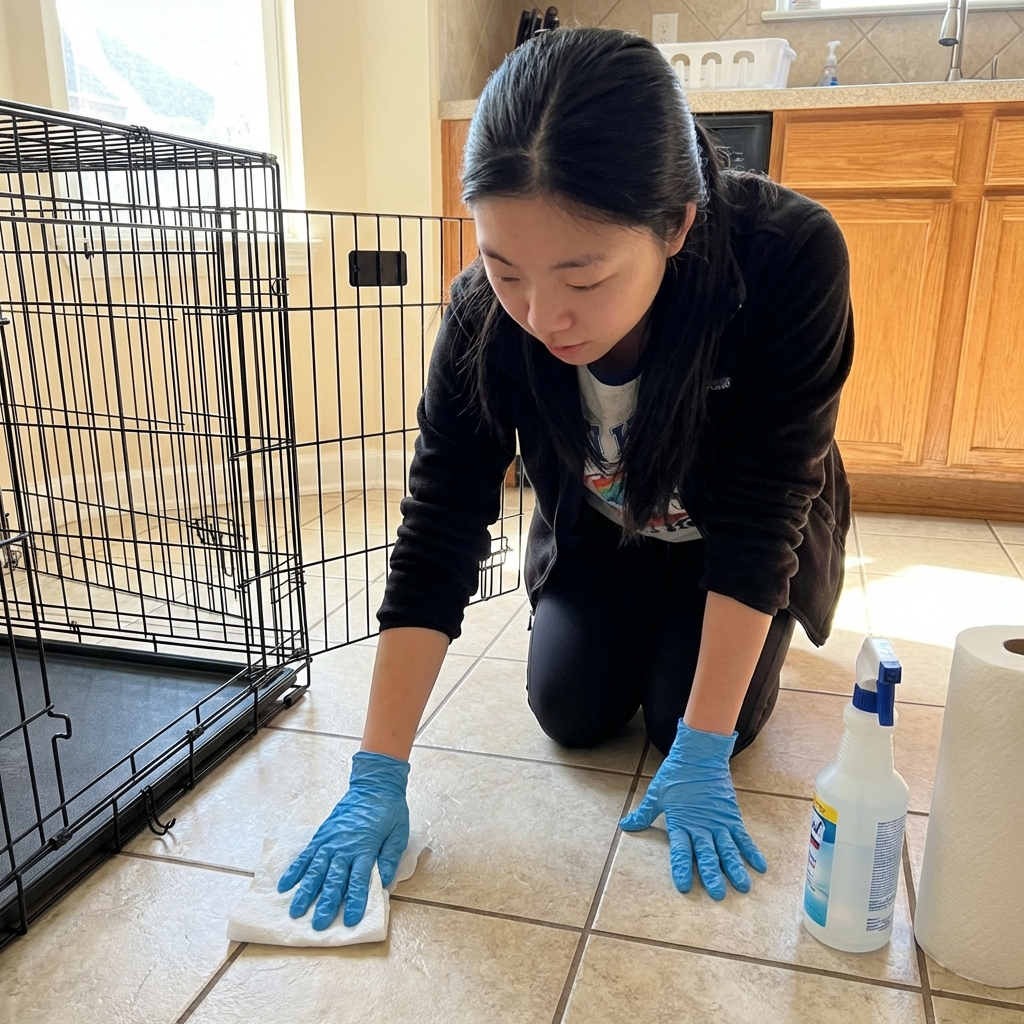
- Disinfect hard surfaces like floors, crates, and baseboards.
What disinfectants work
Ringworm spores are hardy, and cleaning works best in two steps: remove hair and debris first, then disinfect. Many vets recommend a properly diluted bleach solution for hard surfaces where appropriate. Common guidelines range from about 1:10 to 1:32 depending on the bleach concentration and setting, so check the product label and follow your veterinarian’s instructions. Never mix bleach with other cleaners. Use the correct wet contact time before rinsing or wiping.
For households where bleach is not ideal, ask your vet about other fungicidal disinfectants proven effective against dermatophyte spores.
Protect people and other pets
Ringworm is zoonotic, which means it can spread from pets to humans. Kids, seniors, and anyone with a weakened immune system should be extra cautious.
Smart precautions
- Wash hands after handling your dog or cleaning their space.
- Avoid face-to-face snuggles until your vet says your dog is clear.
- Do not share bedding between pets.
- Keep cats in mind. Cats can carry ringworm with minimal signs and can re-seed the home.
In multi-pet homes, your veterinarian may recommend checking other pets (especially cats) even if they look fine. In some situations, all pets may need treatment to fully stop the cycle.
If you notice a circular, itchy rash on your skin, call your healthcare provider and mention your pet has ringworm.
Care tips while your dog heals
Because ringworm can mean temporary isolation, many dogs get bored, clingy, or frustrated. We can support them with structure and enrichment that does not increase contamination.
Low-mess enrichment ideas
- Food puzzles that can be washed (hard rubber toys that tolerate hot water and soap)
- Snuffle mats you can launder frequently, or skip them if laundering is difficult
- Short training sessions (sit, down, touch, leave it) for mental exercise
Keep routines consistent
Feed, potty, and medicate on a predictable schedule. Consistency reduces stress, which can help your dog feel better while the skin heals.
Bath time cooperation
If your dog hates baths, go slowly. Use calm praise, a lick mat that can be disinfected, and take breaks. Your goal is not perfection, it is getting through repeated treatments safely.
How long does it take?
With proper treatment and cleaning, many dogs improve within a few weeks, but full clearance can take longer, especially in multi-pet homes or long-coated breeds.
What “clear” usually means: Your veterinarian may recommend follow-up fungal cultures or PCR testing to confirm your dog is truly negative before stopping treatment. Many protocols continue until at least one, and sometimes two, negative tests depending on the clinic and the situation.
Important: Do not stop medications early just because the spots look better. Lesions can look healed while spores persist in the coat or the environment, and the infection can bounce back.
When to call the vet ASAP
- Lesions are spreading rapidly
- Your dog seems painful, lethargic, or has a fever
- There is pus, significant redness, or a bad odor (possible secondary bacterial infection)
- Your dog is very young, elderly, pregnant, or immunocompromised
- Multiple pets in the home are developing lesions
Common mistakes to avoid
- Skipping the diagnosis: Not every bald patch is ringworm.
- Only treating the dog, not the environment: This is a top reason infections linger.
- Using random home remedies: Some irritate skin or are toxic if licked.
- Stopping early: You want clearance, not just improvement.
Gentle reminder from a veterinary assistant: ringworm is annoying, but it is not a reflection on your cleanliness or your care. With the right plan and steady follow-through, you can absolutely get your dog back to healthy skin and a comfortable home.