Matted dog hair can pull skin and trap moisture. Follow a calm, step-by-step method with the right tools, plus clear signs it’s time for clippers or a pro ...
Article
•
Designer Mixes
How to Get Rid of Matted Hair on Dogs

Shari Shidate
Designer Mixes contributor
Mats are more than a cosmetic problem. In the clinic, I see matted coats causing real pain, skin infections, and even hidden injuries that owners could not see until the fur was removed. The good news is that some mats can be handled safely at home when they are small and not tight to the skin. The key is knowing when to detangle, when clipping is needed, and when to let a professional step in.

Below is a vet-informed, safety-first, step-by-step approach to getting rid of matted hair on dogs, plus the tools and habits that help prevent it from coming right back.
Quick note: This article is educational and not a substitute for veterinary care. If your dog seems painful, has skin sores, or you are unsure, it is safest to contact your veterinarian or a professional groomer.
What mats are and why they happen
A mat is a tight tangle of hair that clumps together and traps loose undercoat, dirt, and moisture. Mats are especially common in dogs with curly, dense, or long coats (including many doodle-type mixes), but any dog can mat depending on coat type, lifestyle, and how often the coat is brushed.
Common causes
- Friction areas: behind ears, under the collar or harness, armpits, groin, tail base, and where legs rub the body.
- Moisture: swimming, rain, or bathing without fully drying and brushing.
- Coat type: curly, long, double coats, or fine puppy coat transitioning to adult coat.
- Skipping line-brushing: brushing only the top layer leaves the undercoat to mat near the skin.
- Shedding plus curls: dead hair does not fall out easily and tangles into the coat.
Why it matters: mats pull on the skin, can hide fleas or ticks, reduce airflow to the skin, and trap moisture that encourages hot spots and bacterial or yeast overgrowth.
Safety first: when not to DIY
Some mats are simply not safe to tackle at home. If you try to yank a tight mat apart, you can bruise skin, cause small tears, or accidentally cut your dog.
Call a groomer or vet if you notice any of the following
- Mats are tight to the skin and do not lift easily when you pinch the hair above them.
- Skin looks angry: redness, odor, oozing, scabs, or thickened skin under the mat.
- Your dog is in pain: flinching, yelping, growling, snapping, or trying to escape.
- Mats in high-risk zones: ears, tail tip, armpits, belly, groin, between toes, around the anus, or under a collar or harness. These areas have thinner skin, folds, and poor visibility, so it is easier to cause injury.
- You suspect parasites (fleas, ticks) or you see moving debris.
- Senior dogs or dogs with arthritis, heart disease, breathing issues, or anxiety that makes grooming stressful.
Important: Do not use scissors at home to cut mats out. Skin can fold into a mat like a thin piece of paper, and scissor injuries are a common emergency visit. Even trained professionals treat scissoring mats as high-risk and use very specific techniques when it is appropriate.
Tools that help
You do not need a grooming salon at home, but the right tools reduce pulling and help you work in small, controlled steps.
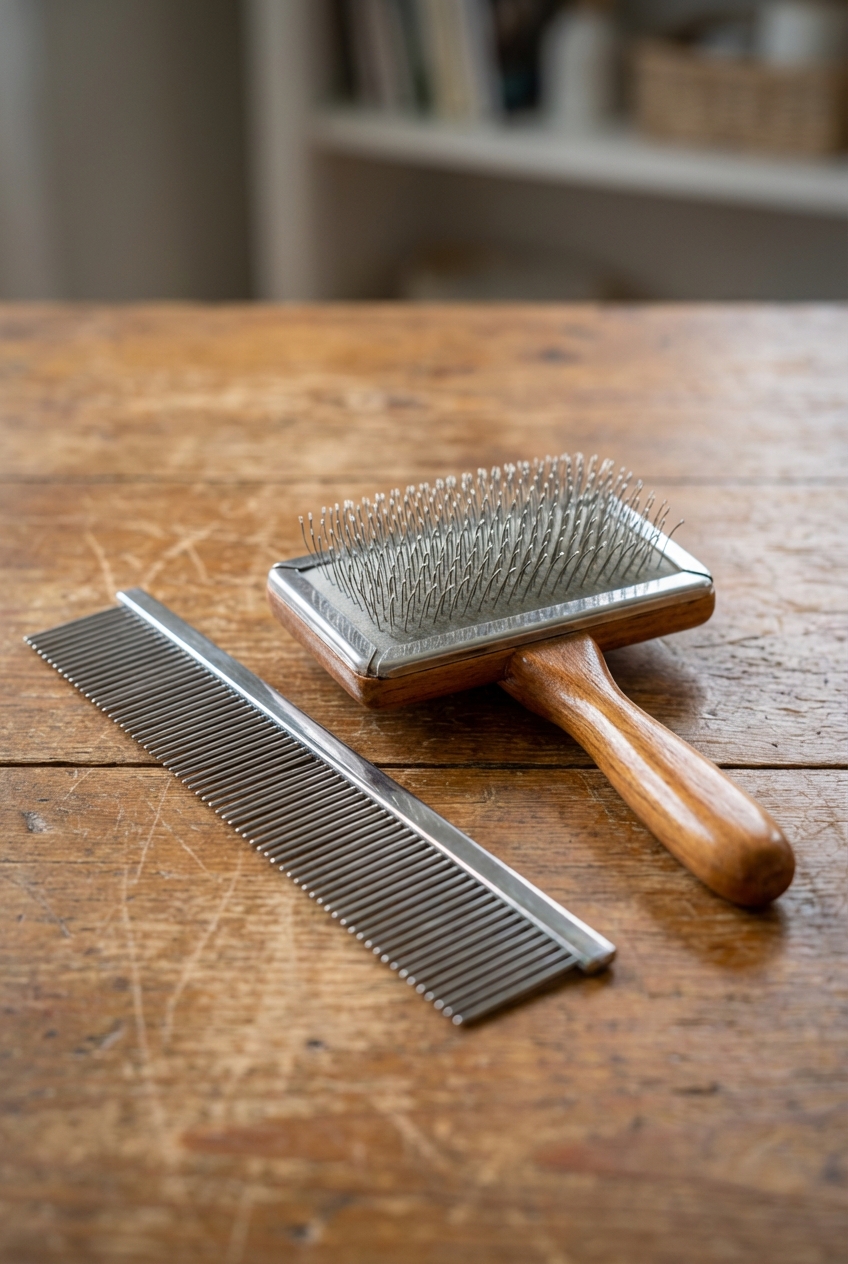
- Slicker brush: great for surface tangles and after you have loosened a mat.
- Metal greyhound comb (wide and fine teeth): helps you confirm whether you are truly mat-free down to the skin.
- Detangling spray made for pets: adds slip to reduce friction and breakage.
- Dematting tool or mat splitter: useful for breaking larger mats into smaller pieces, but must be used carefully to avoid scraping skin.
- Dog clippers: for experienced users only. For tight mats, professional clipping with the correct blade is usually safest. Guards often cannot get under tight mats and may snag or pull.
- Professional grooming: often the safest, kindest option for dense coats, sensitive dogs, or any mat that is close to the skin.
- High-velocity dryer (optional): can help blow out loose coat, but only if your dog tolerates it and you keep it moving to avoid overheating.
Step-by-step: remove mild mats at home
If the mat is small, not tight to the skin, and your dog is comfortable, you can try a gentle detangling session. As a practical rule, home detangling is most appropriate when you can lift the mat slightly away from the skin and you can start a comb into the outer edge without forcing it. Pick a time when your dog is relaxed and plan to work in short bursts.
1) Set up a calm, grippy space
- Use a non-slip bath mat or yoga mat so your dog feels stable.
- Keep sessions short, like 5 to 10 minutes.
- Pair grooming with tiny rewards and breaks.
2) Find the mat and protect the skin
With one hand, hold the hair at the base between the mat and the skin (or as close as you can safely get). This “skin guard” reduces tugging while you work on the tangle below your fingers.
3) Add slip
Lightly mist a pet-safe detangling spray onto the mat and surrounding coat. Let it sit for 30 to 60 seconds. Avoid heavy products that make the coat sticky.
4) Start with fingers
Use your fingertips to gently tease the mat apart from the ends. Think of it like loosening a knot in a necklace: you work from the outside in, not by pulling the whole knot.
5) Use a comb to pick, then brush to smooth
- Use the wide end of the metal comb to pick at the mat’s outer edges.
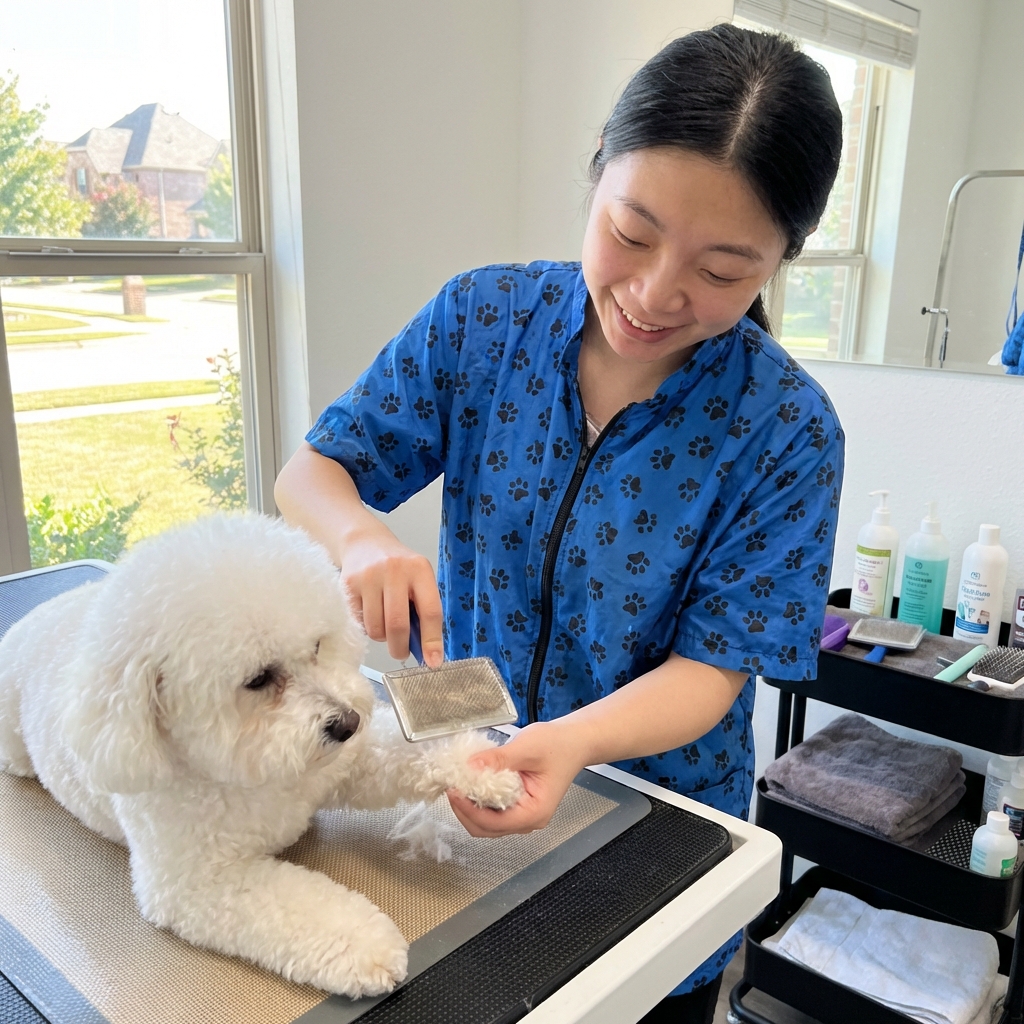
- Once it starts to loosen, switch to the slicker brush with light strokes.
- Finish by combing from skin outward to confirm the comb passes through without snagging.
6) Split larger mats into smaller ones
If a mat is bigger than a quarter or you cannot work a comb into the outer edge within about a minute, stop and reassess. You can carefully use a dematting tool to split it into sections, then detangle each section. Keep the tool parallel to the body and avoid repeated scraping in one spot.
7) Stop before it becomes a battle
If your dog is getting stressed or you are not making progress, pause and try later. Pushing through increases the risk of injury and creates grooming fear. Many families do better with “little and often” instead of one long session.
Tight mats and pelted coats
Tight mats close to the skin usually need clipping, not brushing. This is where a professional groomer is worth their weight in gold, especially for curly, dense coats. Groomers use the right blades and technique to get under mats while protecting the skin.
Pelted coat (also called felted matting) is when large areas of the coat form a dense layer that sits against the skin. If the coat feels like one solid blanket and you cannot part the hair to see skin, this is not a DIY situation. The kindest option is typically a professional shave-down and a fresh start.
If mats are extensive, a short haircut can feel emotional, but comfort and skin health come first. A clean reset also makes it much easier to build a brushing routine that prevents future matting.
After-care: check the skin
When mats come off, the skin underneath can be tender. Take a few minutes to do a gentle “skin audit.”
- Look for redness, pimples, scabs, flakes, or dark, thick skin.
- Smell for a yeasty or sour odor, which can signal infection.
- Feel for swelling or heat.
If you find raw skin, open sores, a strong odor, or significant tenderness, call your veterinarian. Skin infections are common under mats and may need prescription treatment.
Prevent mats in curly and mixed coats
Prevention is easier than removal. The most effective routine is simple, consistent, and focused on the friction zones.
Line-brushing (the method that works)
Line-brushing means you lift the coat in layers and brush from the skin outward, section by section. This is how you reach the undercoat where mats start.
- Start at the feet and work upward.
- Hold a small section of hair up, brush the hair below, then move to the next line.
- Follow with a metal comb. If the comb glides through, you are done. If it catches, there is still a tangle.
How often to brush
- Curly or long coats: many dogs need line-brushing 3 to 5 times per week, sometimes daily in friction zones.
- After swimming or baths: always dry completely and brush. Damp coats mat fast.
- During coat change (puppy to adult): brush more often. This phase is a mat factory.
Haircuts help
Keeping a manageable length is one of the best mat prevention strategies. Talk with your groomer about a length that matches your lifestyle. A slightly shorter, teddy-bear trim often looks adorable and is much easier to maintain than a long, fluffy coat.
Quick FAQ
Can I bathe my dog to loosen mats?
Bathing a matted coat often makes mats tighter, especially if you shampoo and rinse without detangling first and drying thoroughly. If your dog is matted, detangle or clip first, then bathe.
Is coconut oil good for mats?
Oils can make the coat slippery at first, but they also attract dirt and can create buildup that worsens tangles over time. A light, pet-formulated detangling spray is usually a better choice.
My dog hates brushing. What can I do?
Start with very short sessions, use high-value treats, and focus on calm handling. Many dogs benefit from cooperative care training, where they learn a “start button” behavior like placing their chin on a towel. If grooming causes panic, talk with your vet about anxiety support and consider a professional groomer experienced with fearful dogs.
Can ear and toe mats cause problems?
Yes. Vigorous brushing around ear mats can be painful, and severe matting near the ear flap can contribute to irritation. Mats between toes can change how a dog walks and can trap moisture and debris. If these areas are matted, it is often safer to have a groomer or vet handle them.
Bottom line
Matted hair is common, especially in curly or dense coats, but it is not something you have to live with. Small mats can often be teased out safely with slip, patience, and the right tools. Tight mats and pelted coats should be clipped by a groomer or vet to avoid pain and injury. Once you reset the coat, a simple line-brushing routine and realistic haircut schedule will keep your dog comfortable, clean, and happy.
If you want, tell me your dog’s breed mix and coat length, plus where the mats are forming, and I can suggest a maintenance routine that fits your schedule.