Stop the flea cycle with a proven plan: confirm fleas, use cat-safe vet-recommended treatments, treat every pet, and clean your home with vacuuming, laundry,...
Article
•
Designer Mixes
How to Get Rid of Fleas on Cats Daily

Shari Shidate
Designer Mixes contributor
As a veterinary assistant here in Frisco, Texas, I can tell you this with a lot of love and zero judgment: fleas are not a sign of a “dirty” home or a “bad” pet parent. Fleas are just very good at what they do, and in warm climates they can be persistent. The key is consistency. If you want real results, you need to treat your cat and your home, and you need to do it on a schedule that matches the flea life cycle.
This guide gives you practical daily steps, plus the evidence-based treatments that actually break the cycle.
First, confirm it is fleas
Before you treat, it helps to be sure you are targeting the right problem. Cats can itch from allergies, mites, skin infections, or dry skin, too.
Quick at-home check
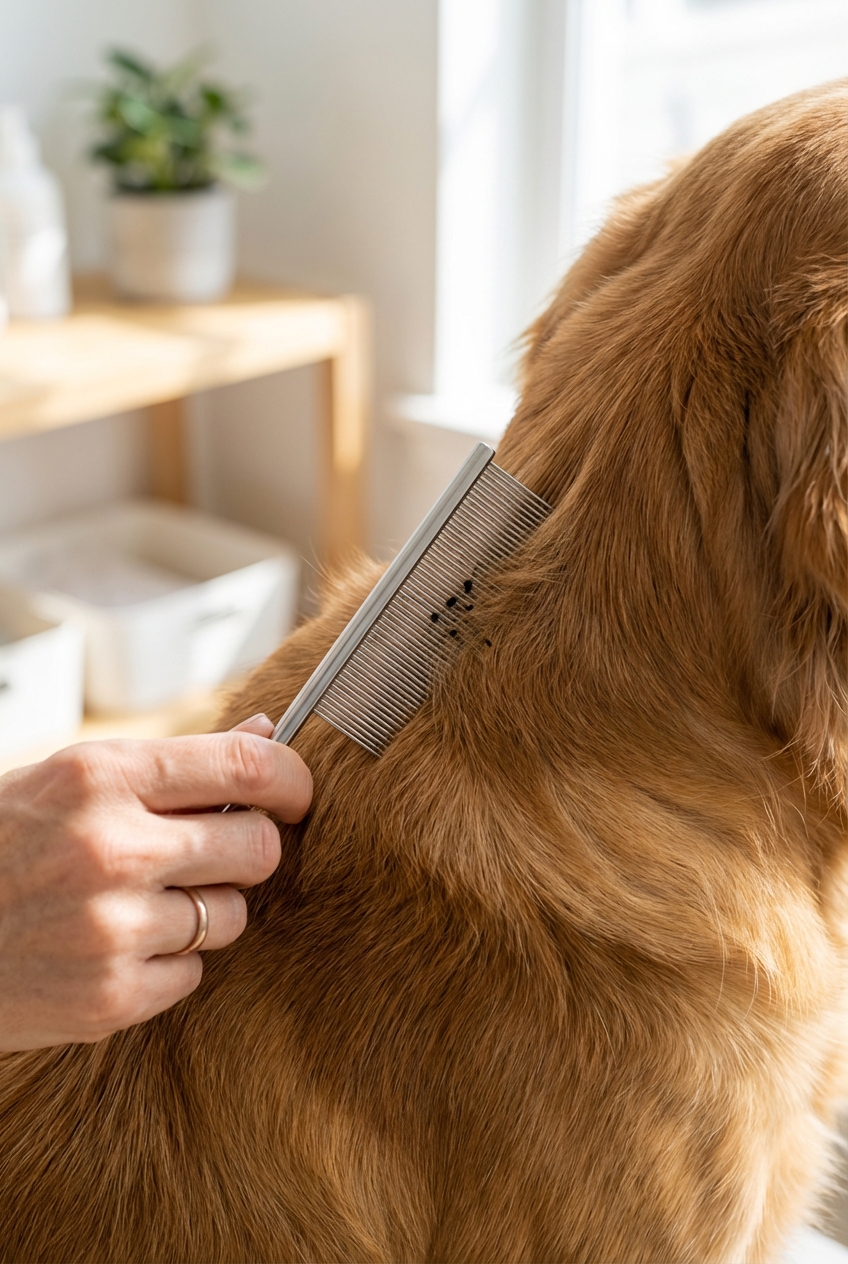
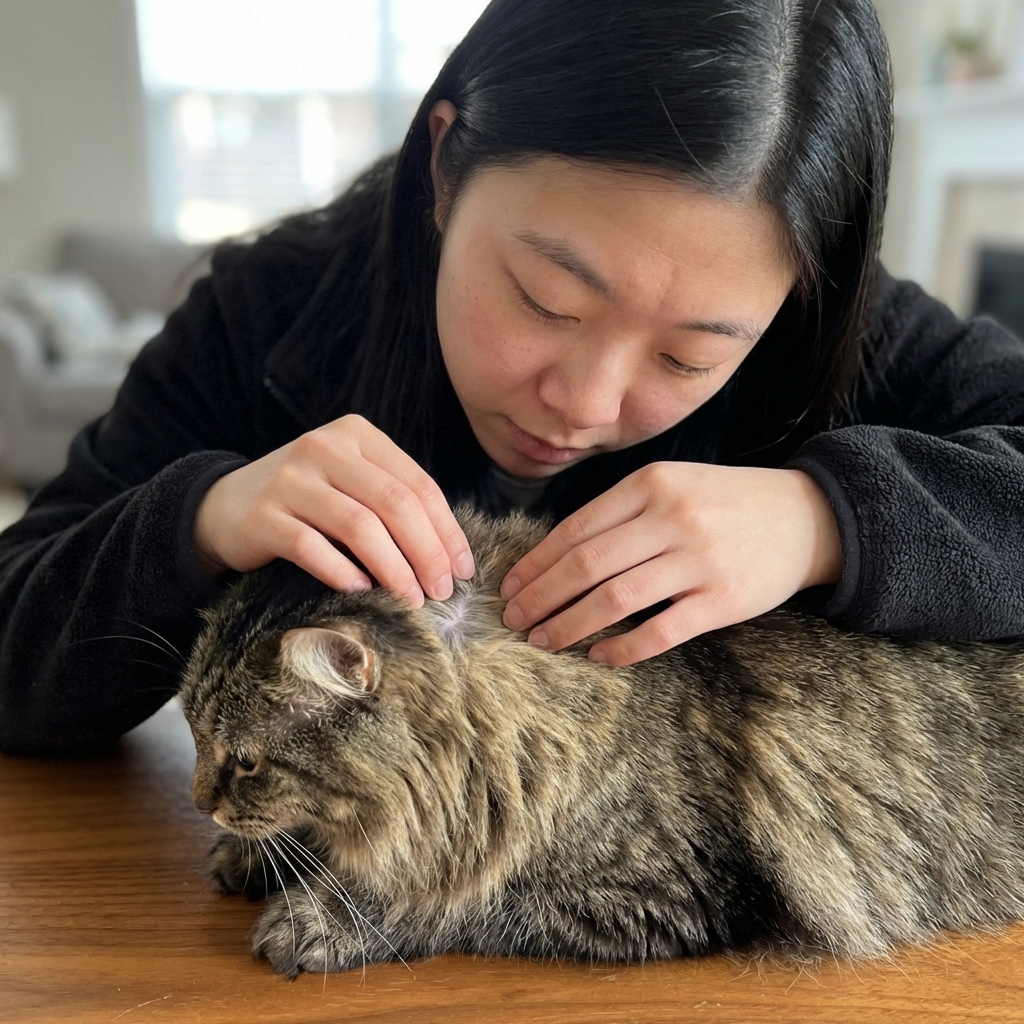
- Flea comb test: Comb along the neck, lower back, and base of the tail. Look for live fleas or “flea dirt” (black pepper-like specks).
- Wet paper towel test: Put the specks on a damp white paper towel. If they turn reddish-brown, that is digested blood, which strongly suggests flea dirt.
- Common flea zones: Base of tail, belly, armpits, and around the neck.
If your cat is very young, elderly, sick, or seems weak or pale, call your vet promptly. Fleas can contribute to anemia, especially in kittens.
Know the flea life cycle
Most of the flea problem is not on your cat. Adult fleas prefer to feed on pets, but the majority of flea stages (eggs, larvae, and pupae) live in the environment. Eggs fall off into carpet, bedding, furniture cracks, and baseboards. Pupae can wait and “hatch” when they sense cues like vibration and warmth.
That is why one-time treatments often fail. You are not just killing today’s fleas. You are preventing next week’s fleas from becoming adults.
Your daily routine (10 to 20 minutes)
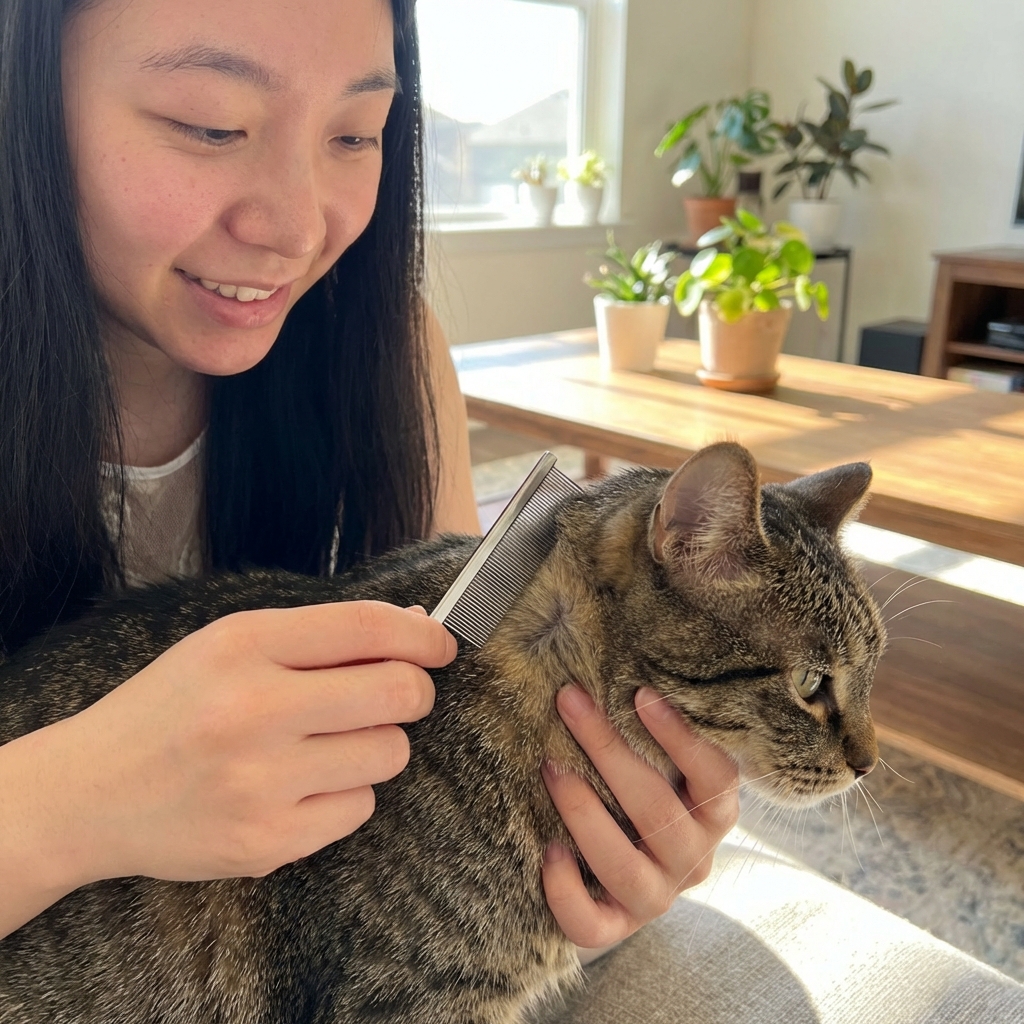
1) Comb your cat daily
Use a fine-toothed flea comb, especially around the neck and tail base. Drop anything you catch into a cup of warm soapy water so fleas cannot jump away.
- Pick a consistent time, like after breakfast or before bed.
- Keep sessions short and calm. Treats help.
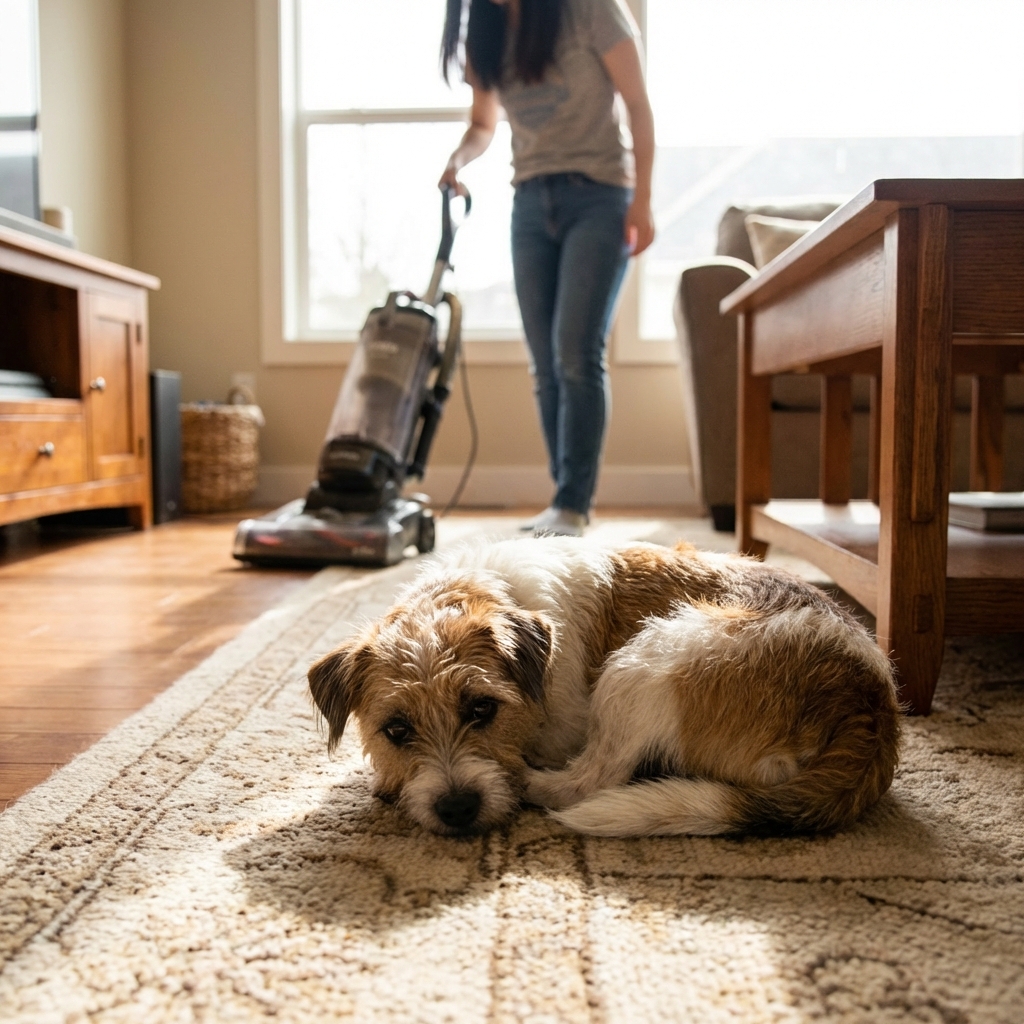
2) Vacuum daily in rest areas
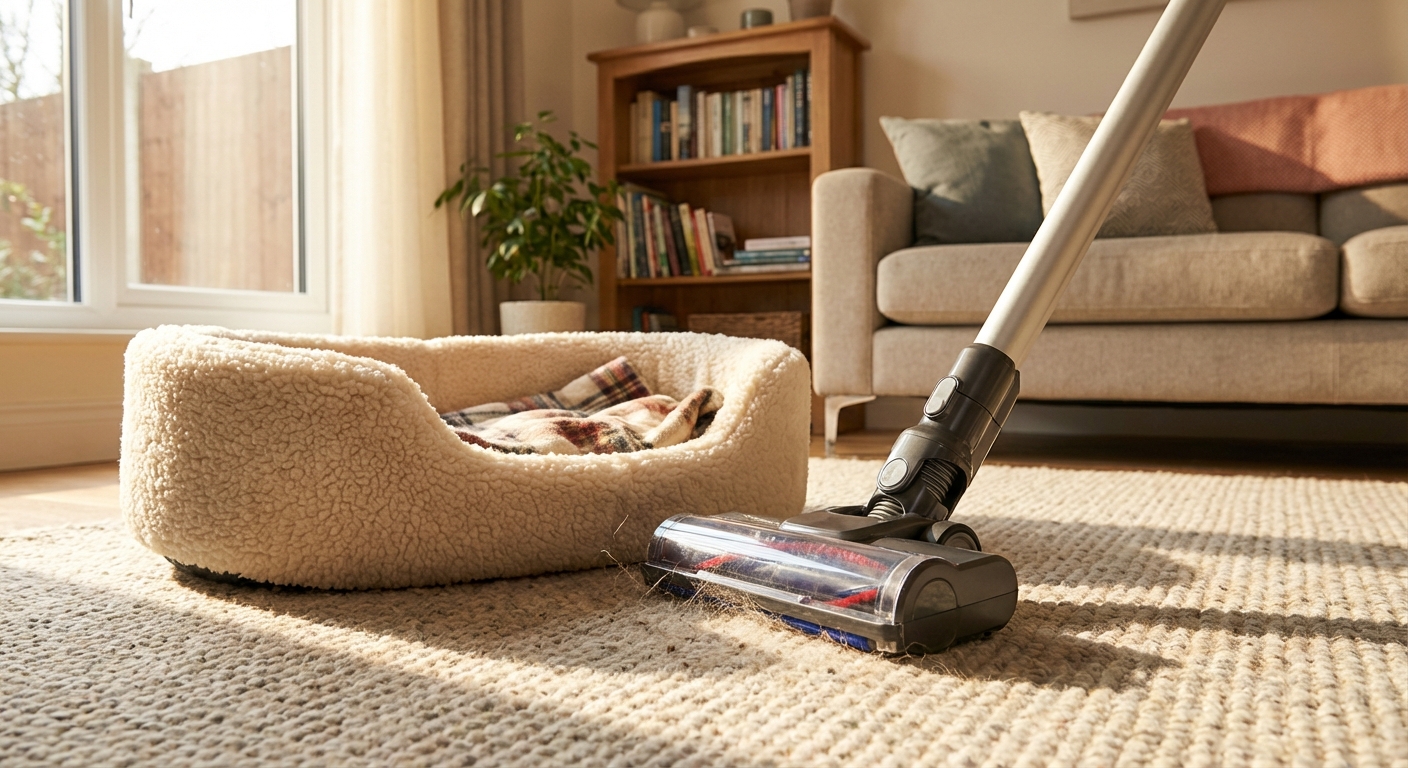
Daily vacuuming is one of the most underrated flea-control tools because it removes eggs and larvae. It can also help disturb flea pupae, which may encourage some to emerge and get exposed to your overall plan.
- Focus on rugs, carpet edges, couch cushions, and under furniture.
- Empty the canister outside, or seal the vacuum bag in a trash bag and take it out immediately.
3) Wash and dry one high-contact item
Each day, pick one item your cat uses a lot: your cat’s bedding, your throw blanket, or the cushion cover your cat naps on. Wash on hot if the fabric allows, then dry on high heat. Always check care labels so you do not ruin anything.
4) Do a quick daily check
- Look for new itchy areas or scabs (especially on the neck and lower back).
- Check your cat’s gums. Healthy gums are typically pink. Pale gums can be a concern, especially in kittens.
- Make sure other pets are on prevention too. Fleas will simply hop hosts if one animal is untreated.
The treatment that breaks the cycle
Daily combing and cleaning help a lot, but if you want to fully break the flea cycle, most homes need a proven flea product for the cat. The most effective options are typically vet-recommended topical or oral medications that kill adult fleas quickly and keep working for weeks.
What to use
- Monthly topical preventives: Applied to the skin (usually between the shoulder blades). Many kill adult fleas and may include ingredients that disrupt the life cycle.
- Oral flea medications: Some work very fast for adult fleas. Your vet can help match the product to your cat’s age, weight, and medical history.
- IGRs for the home: Insect growth regulators prevent eggs and larvae from developing. They are often used alongside adult flea killers to stop the next generation.
Treat all pets on the same day
This is a big one. If you have more than one pet, treat every dog and cat in the household with a species-appropriate product on the same day, then keep everyone on the same schedule. If one pet is left unprotected, fleas can keep circulating.
Home sprays and foggers
If you are considering a home treatment, be cautious. Many families do well with vacuuming, washing, and consistent pet prevention alone, plus an IGR if needed. I generally discourage “flea bombs” or foggers because they are easy to misuse and often do not reach where flea stages hide. If you use any spray or IGR product, follow the label exactly, ventilate well, and keep pets (and people) out of the area as directed.
What to avoid
- Dog-only flea products on cats: This is a true emergency risk. Some dog products contain permethrins that can be toxic to cats.
- Essential oils on cats: Cats have unique liver metabolism and can be sensitive to many oils. “Natural” does not automatically mean safe.
- Garlic, home remedies, or DIY sprays applied to your cat: These are unreliable and can cause harm.
Best next step: If you are unsure what is safe for your cat, call your veterinarian and ask for flea prevention options based on your cat’s weight and age. That one phone call can prevent a lot of trouble.
If itching continues
Some cats have flea allergy dermatitis, which means even one bite can trigger days of intense itching and scabbing. So yes, your cat can still act miserable even when you are making progress. If the skin looks angry, your cat is over-grooming, or you see hot spots or open sores, check in with your vet. Many cats need itch relief while you eliminate the fleas.
Bathing
A bath can reduce adult fleas, but it usually does not solve the problem by itself. Many cats find bathing stressful, and stress can lead to scratching, hiding, and appetite changes.
If you do bathe your cat
- Use a cat-safe shampoo recommended by your vet.
- Protect the face and ears. Do not pour water into ears.
- Follow with thorough drying and warmth.
If your cat is elderly, has heart or breathing issues, or panics during handling, skip the bath and focus on vet-approved flea medication plus daily combing and cleaning.
Kittens need extra care
If your kitten is under 8 weeks old, do not reach for over-the-counter flea meds without vet guidance. Many products are not safe for that age group. For young kittens, the safest starting point is often careful flea combing, warm soapy water for the fleas you remove, and strong environmental control, with your vet directing the rest.
How long until fleas are gone?
With consistent cat treatment and daily environmental control, many households see big improvement within 1 to 2 weeks. Full control often takes 4 to 12 weeks, depending on the product used, how established the infestation is, and how much carpet and upholstery is in the home. Some infestations can take longer even when you are doing things correctly.
The hardest part is the “false setback.” You treat, things look better, and then you see fleas again. That is often pupae emerging. Stay the course.
Call the vet right away
- Kittens with fleas, especially under 8 weeks old
- Pale gums, weakness, rapid breathing, or lethargy
- Severe scabbing, hair loss, or open sores
- Tapeworm segments (rice-like pieces near the tail or in stool), since fleas can transmit tapeworms
- If you applied a dog flea product to a cat or suspect toxin exposure
Weekly checklist
These add-ons make your daily efforts more effective without turning your life upside down.
- Weekly: Vacuum under furniture and along baseboards more thoroughly.
- Weekly: Wash and rotate pet bedding (have at least two sets if possible).
- Monthly: Give flea prevention on schedule. Set a phone reminder.
- Seasonally: Treat all pets in the home consistently, even indoor-only cats. Fleas can hitchhike inside.
Bottom line
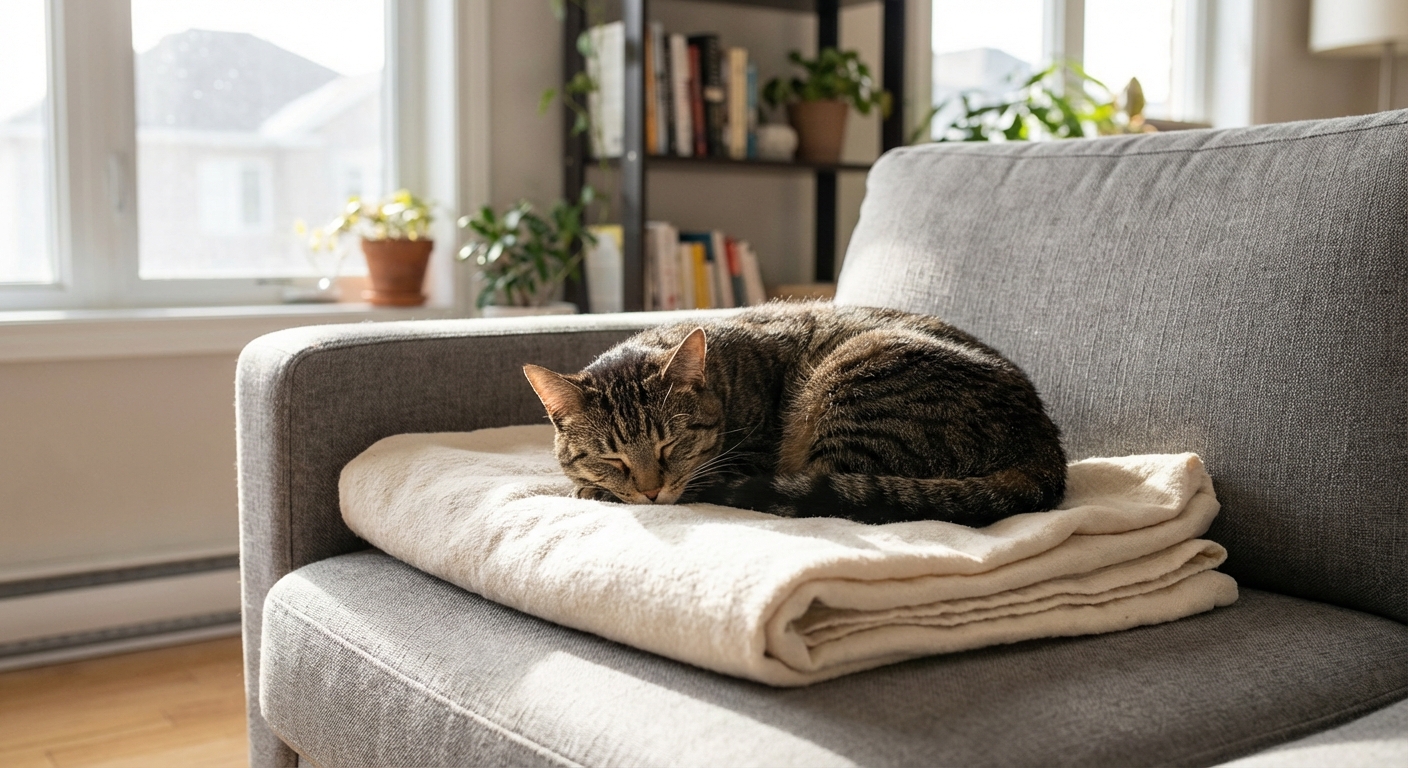
Getting rid of fleas on cats is absolutely doable, but it is rarely a one-and-done situation. Think of it like brushing teeth: small daily actions plus the right product choice equals long-term success. Comb daily, vacuum daily, wash fabrics regularly, and use vet-recommended flea prevention consistently. Treat every pet in the home on the same schedule. Your cat will feel better fast, and your home will catch up shortly after.