Stop the flea cycle with a proven plan: confirm fleas, use cat-safe vet-recommended treatments, treat every pet, and clean your home with vacuuming, laundry,...
Article
•
Designer Mixes
How to Get Rid of Fleas on Cats

Shari Shidate
Designer Mixes contributor
If your cat is scratching, overgrooming, or you are spotting tiny black specks in their coat, fleas may be the culprit. I know how stressful this feels. The good news is that flea control is very doable when you treat the cat and the home at the same time, and you stick with it long enough to break the flea life cycle.
Quick reality check: Only a minority of the flea population is on your cat at any given moment. Many more are in your home as eggs, larvae, and pupae. That is why home steps matter just as much as the product you apply.
Confirm it is fleas
Before you treat, it helps to confirm what you are seeing. Cats can itch from allergies, mites, ringworm, dry skin, or infections. Here are a few practical ways to check for fleas at home.
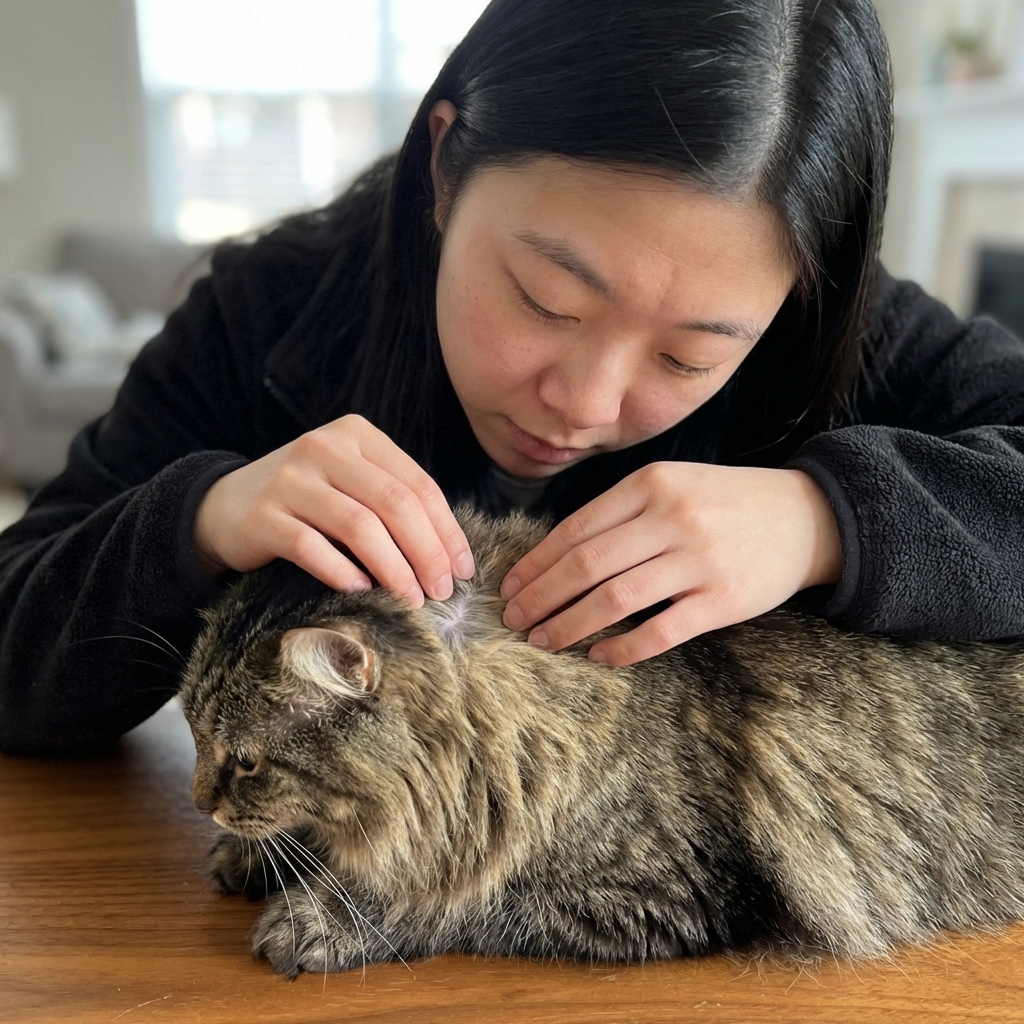
Look for live fleas or flea dirt
- Live fleas are fast, brown, and about 1 to 3 mm long (roughly sesame-seed sized).
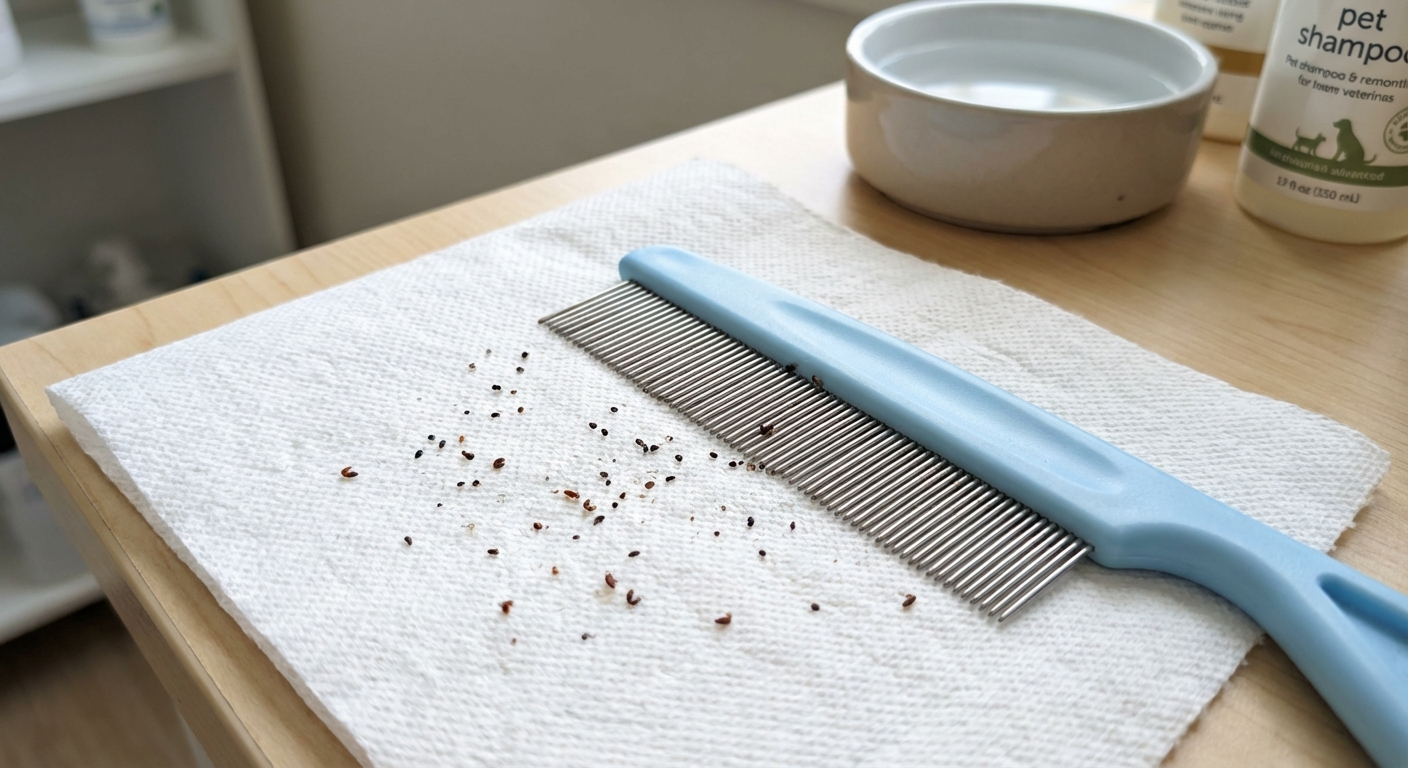
- Flea dirt looks like black pepper. It is flea feces made mostly of digested blood.
Do the “white paper towel” test
Comb your cat over a white damp paper towel. If the black specks dissolve into reddish brown streaks, that strongly suggests flea dirt.
Start with the right flea treatment
For most families, the safest and most effective plan is using a veterinarian-recommended flea preventive that is labeled for cats. Over the counter products can work, but some are less reliable, and a few can be dangerous when used incorrectly.
Use cat-only products
Never apply dog flea products to cats. Some dog spot-on medications contain permethrin and related ingredients that can be toxic to cats and may cause tremors, seizures, or worse.
What usually works best
- Topical treatments applied to the skin at the back of the neck (often monthly, depending on the product)
- Oral preventives if your veterinarian recommends them for your cat (often monthly, depending on the product)
- Fast-acting oral medication may be used short-term to reduce adult fleas quickly, especially in heavy infestations
Your veterinarian can help you choose based on your cat’s age, weight, health history, and whether you have other pets in the home.
Apply correctly
- Weigh your cat so you use the correct dose range.
- Part the fur and apply directly to the skin, not the hair.
- Keep cats separated until the application site is dry if you have cats that groom each other.
- Keep children and other pets away from the application site until it is fully dry, and store medications out of reach.
- Mark your calendar. Missing doses is the most common reason fleas “come back.”
Kitten note: Young kittens have fewer safe options. If your cat is under 8 weeks old or very small, ask your veterinarian before using any flea product.
Why you may still see fleas at first
Even with an excellent product, it is common to keep seeing fleas for a while. Pupae can “wait” in carpets and cracks and then emerge over days to weeks when they sense warmth, vibrations, or carbon dioxide. Also, many flea preventives work after the flea bites, so you may spot a flea before it dies. This does not always mean the treatment failed. It usually means you are watching the life cycle play out.
Flea combing and bathing
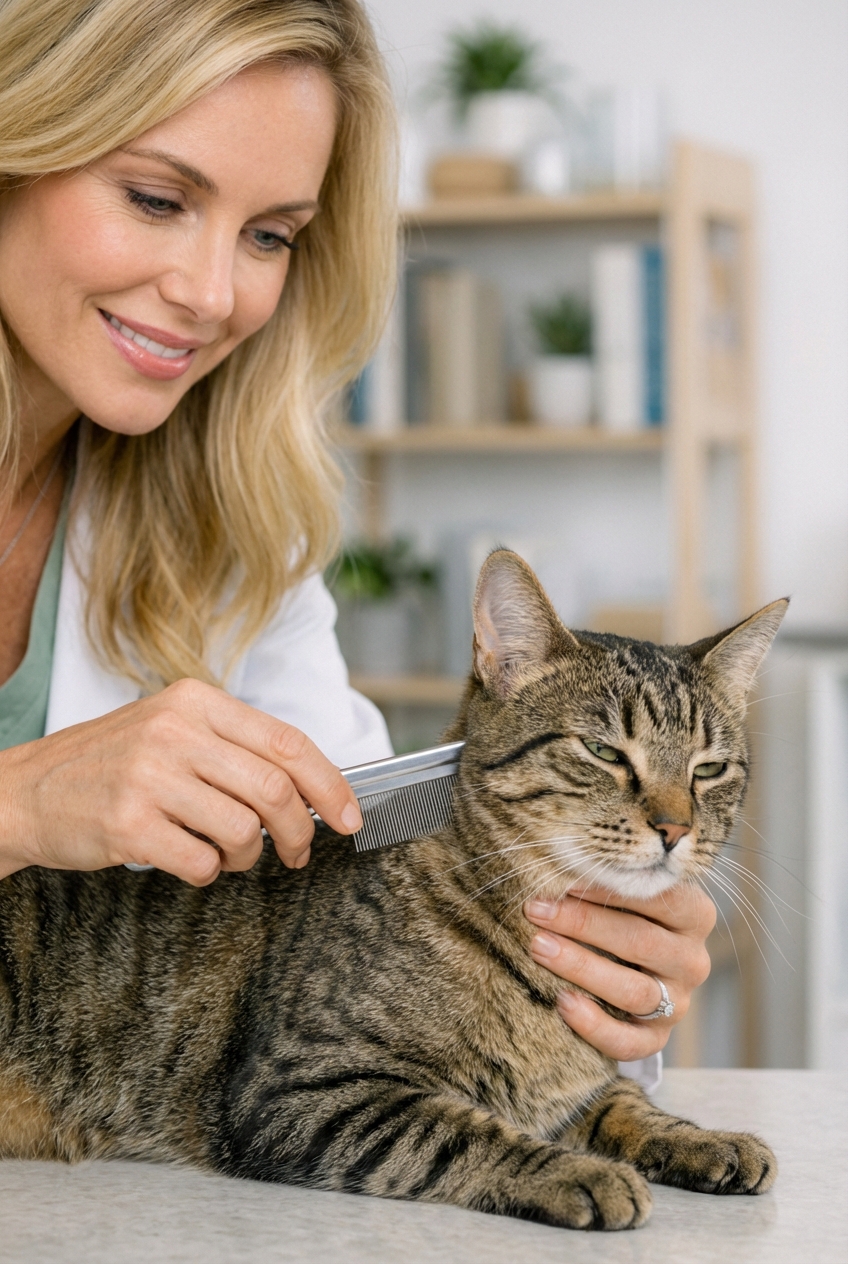
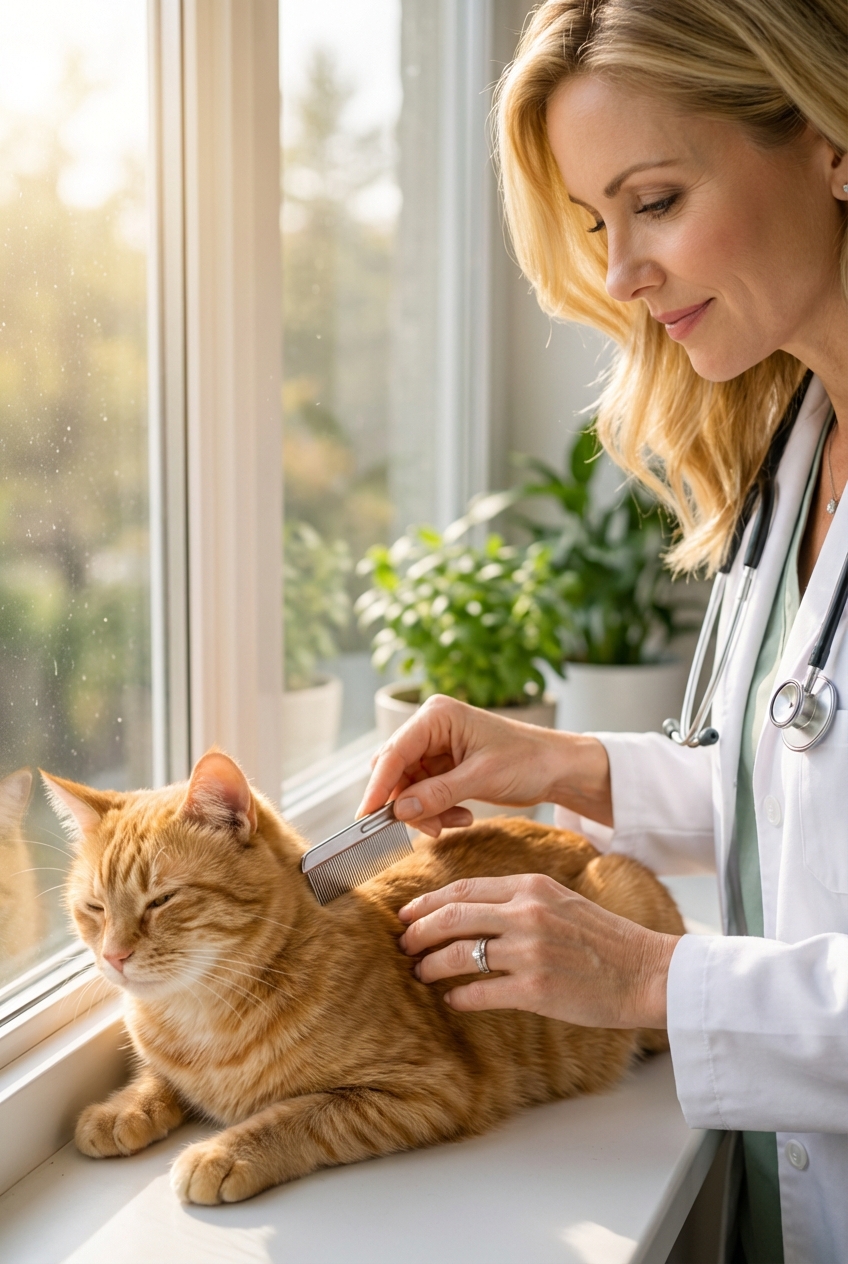
In clinic settings, flea combs are a favorite because they give you immediate feedback. Just remember that combing alone will not clear an infestation once eggs and pupae are in your environment.
How to flea-comb effectively
- Comb daily for 7 to 14 days.
- Focus on the neck, base of the tail, and belly.
- Dip the comb in soapy water to trap and kill fleas.
Should you bathe your cat?
Many cats hate baths, and stress matters. A gentle bath can remove fleas temporarily, but it does not provide lasting protection. If you do bathe, use a cat-safe shampoo and avoid essential oils. Then still start a true flea preventive.
Treat your home
Fleas go through four stages: egg, larva, pupa, adult. Adult fleas are the easiest to kill. Pupae are the toughest because they can “wait” in carpets and cracks until vibrations, warmth, or carbon dioxide signal a host nearby.
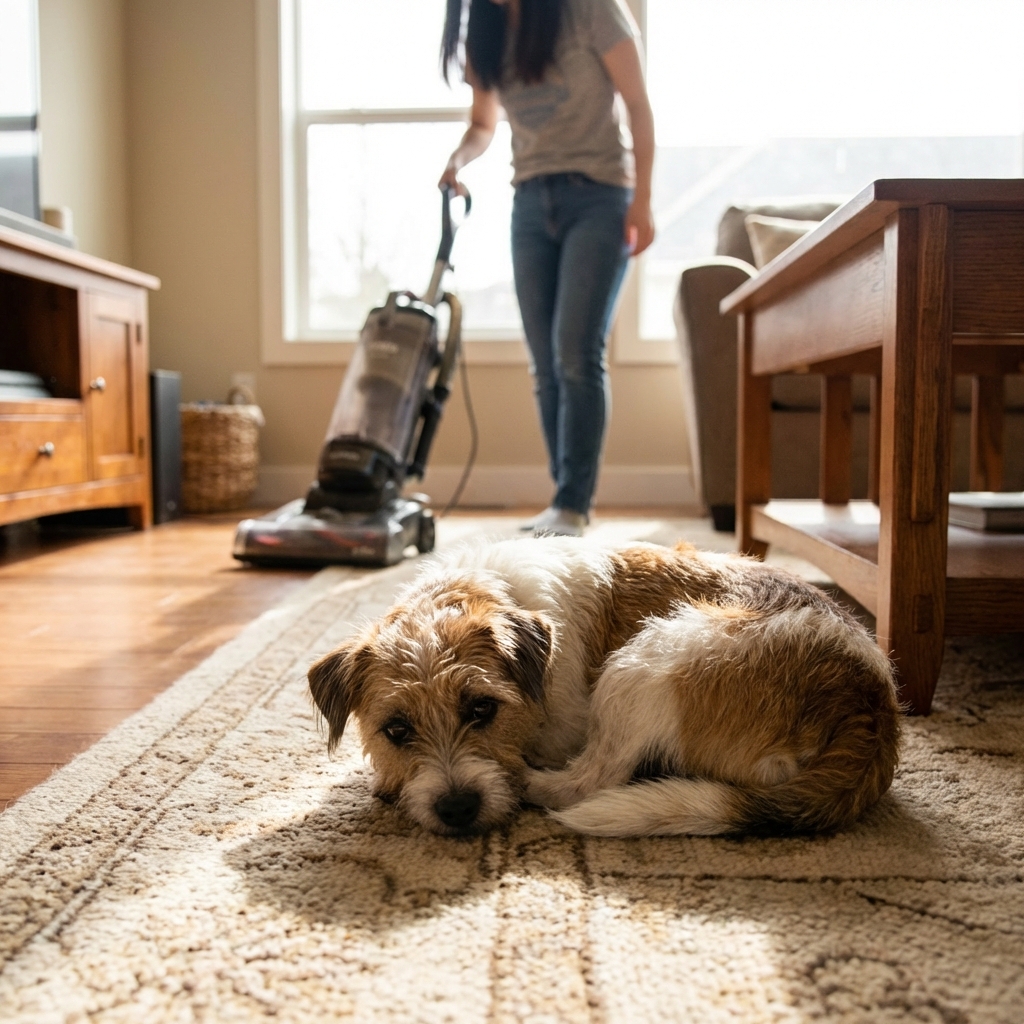
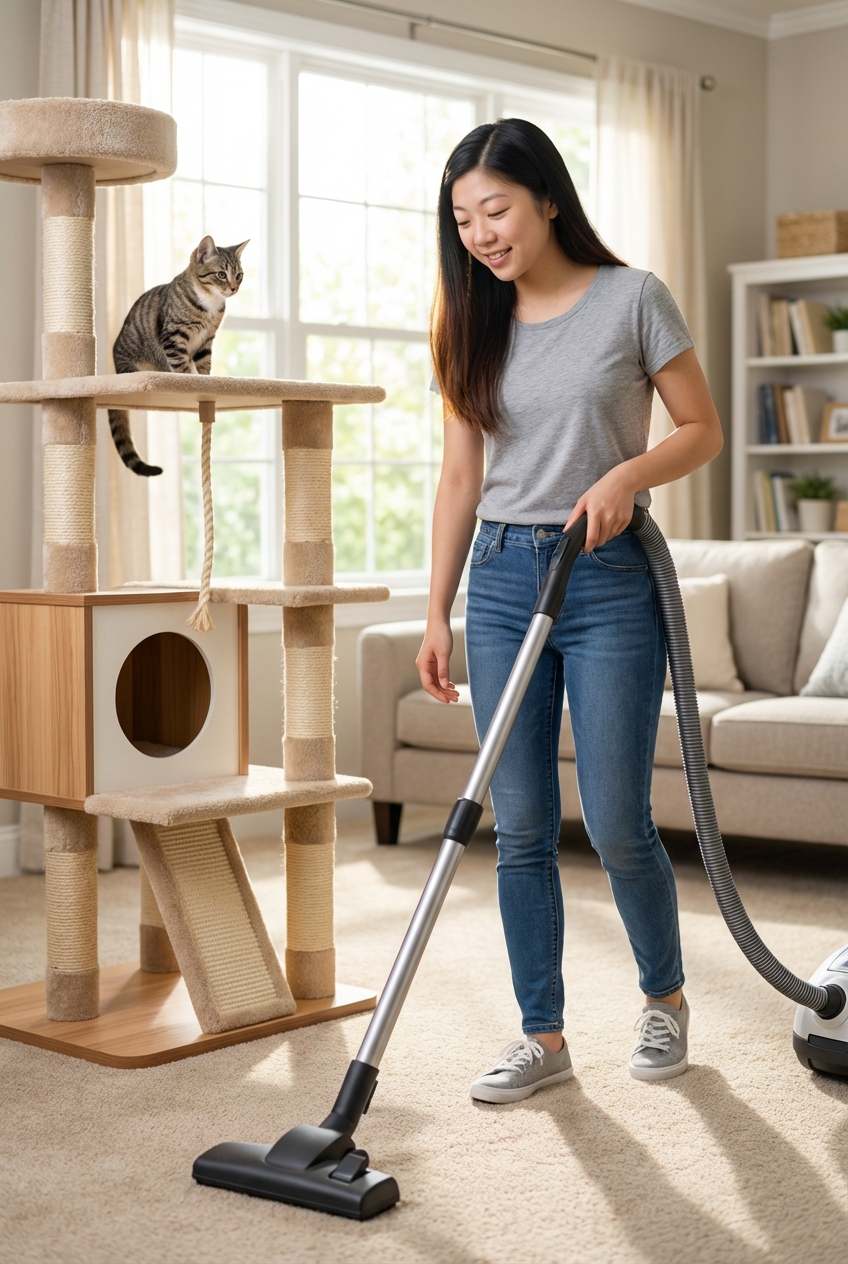
Vacuum consistently for 2 weeks
- Vacuum carpets, rugs, baseboards, and under furniture daily if possible for the first 10 to 14 days.
- Empty the canister outside or seal the vacuum bag in a trash bag immediately.
- Do not forget cat trees, couches, and the places your cat naps.
- Bonus: vacuuming helps stimulate pupae to emerge, which makes them easier to eliminate over time.
Wash bedding on hot
Wash your cat’s bedding, throw blankets, and any washable covers in hot water and dry on high heat weekly for at least 2 to 3 weeks.
Consider an IGR or professional help
If the infestation is heavy, an insect growth regulator (IGR) can stop eggs and larvae from maturing. This can be very effective when paired with consistent vacuuming and on-schedule prevention for every pet.
For tough cases, carpet steam cleaning can be a helpful add-on, especially in high-traffic pet areas. Some households also benefit from a licensed pest professional who can choose the safest, most targeted approach.
Safety first: Follow label directions exactly and keep cats away until sprays are fully dry. If your cat has asthma or respiratory sensitivity, ask your veterinarian before using any household spray.
Treat other pets
Yes, in most cases. If you have a dog or another cat, treat every pet in the household with an appropriate species-specific flea preventive, even if only one pet is itching. Fleas share.
Yards and garages
Most flea issues are solved by treating pets and the indoor environment. Yard treatments can help if your pets spend lots of time outside or you have wildlife traffic.
- Keep grass trimmed and remove leaf piles where fleas thrive.
- Discourage wildlife that can carry fleas, like stray cats, raccoons, and opossums.
- If you use yard products, choose pet-safe options and follow directions carefully.
What not to do
When you are desperate, it is easy to reach for whatever is on the shelf. These are common mistakes I see.
- Do not use essential oils like tea tree, peppermint, pennyroyal, eucalyptus, or clove on cats. Cats are sensitive to many oils, and toxicity can be serious.
- Do not “double up” flea medications unless your veterinarian tells you to. More is not better.
- Do not use homemade sprays that are not tested for safety and efficacy.
- Do not forget the calendar. Skipped doses allow the next generation to mature.
How long does it take?
With a good plan, you should see improvement quickly, but full resolution often takes 4 to 12 weeks. That is usually because newly emerging fleas can keep appearing from pupae in the environment even after you start treatment.
If you are doing everything right and still seeing fleas after 8 to 12 weeks, it is time to talk with your veterinarian. The most common reasons are missed doses, incorrect application, untreated pets in the home, or ongoing environmental exposure. Less commonly, your veterinarian may consider whether a different product is needed in your area.
Call the vet right away
Fleas are more than an annoyance. They can cause real medical problems, especially in kittens and sensitive cats.
- Kittens that seem weak, pale, or lethargic (fleas can contribute to anemia)
- Tapeworm segments that look like tiny rice grains near the tail or in bedding
- Severe scabs or hair loss, which can indicate flea allergy dermatitis
- Open sores, odor, or oozing that suggest secondary skin infection
- Any reaction after applying a flea medication (drooling, vomiting, wobbliness, tremors)
If you ever accidentally apply a dog flea product to a cat, call your veterinarian or an emergency clinic immediately.