Fleas can make kittens sick fast. Learn how to confirm fleas, remove them safely with combing and gentle baths, choose vet-approved prevention, and clean you...
Article
•
Designer Mixes
How to Get Rid of Fleas on a Kitten

Shari Shidate
Designer Mixes contributor
Seeing fleas on a tiny kitten can make your heart drop. I get it. As a veterinary assistant, I have watched many loving pet parents panic and then feel huge relief once they realize there is a safe, step-by-step plan.
The most important thing to know is this: kittens are not just small cats. Their size and age change what products are safe. Some common dog flea medications and many “natural” essential oil remedies can seriously harm a kitten.
Quick start (if you are in panic mode): Use a flea comb right now, keep your kitten warm and dry, call a vet the same day if gums are pale or your kitten is weak, start a vet-approved preventive that matches age and weight, and wash bedding plus vacuum daily.
Below are practical, evidence-based answers to help you remove fleas from your kitten, protect them from anemia and illness, and stop the flea life cycle in your home.
First: check age and weight
Before you do anything, figure out your kitten’s approximate age and current weight. This determines what you can safely use, because flea products have specific minimum ages and weight cutoffs.
- Under 4 weeks old: Generally avoid flea shampoos and spot-ons unless a veterinarian specifically directs you. Focus on gentle manual removal and environmental control.
- 4 to 8 weeks: Some kitten-labeled products may be options, but dosing and product choice matter and may still require veterinary guidance.
- 8 weeks and older: More vet-approved flea preventives become available, often based on weight (many require a minimum weight such as around 2 lb).
If you are unsure of age, your veterinarian can estimate it quickly based on teeth and size.
Why fleas are risky for kittens
A few fleas on an adult cat are annoying. On a kitten, fleas can become dangerous fast.
- Anemia: Fleas feed on blood. Small kittens can become weak, pale, or lethargic from blood loss.
- Tapeworms: Kittens can get tapeworms by swallowing a flea while grooming.
- Skin infection: Scratching can lead to scabs and secondary infections.
Call a vet the same day if your kitten seems weak, has pale gums, breathes fast, is not eating, or is covered in fleas.
Safe flea removal now
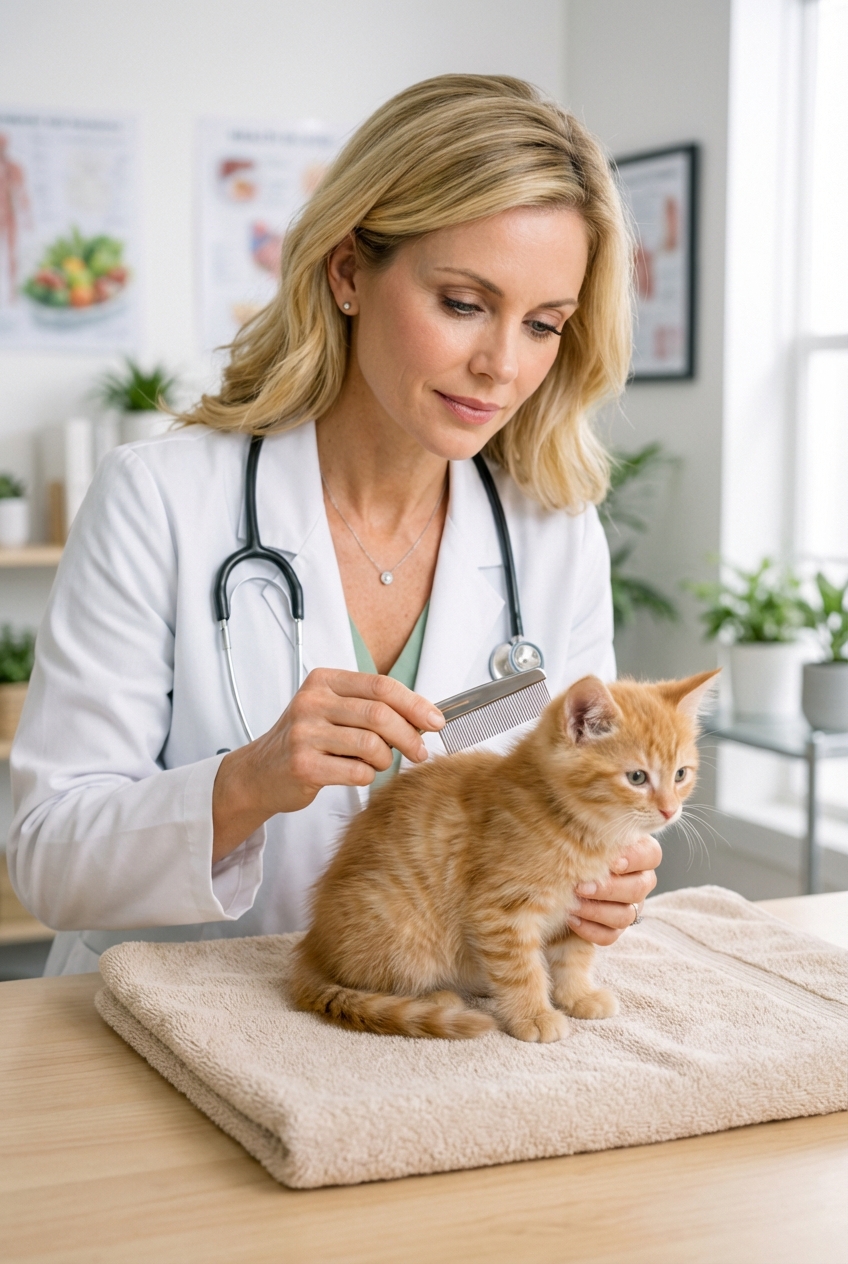
1) Use a flea comb
A flea comb is one of the safest tools for kittens of any age. It does not rely on chemicals, and it works immediately.
- Place your kitten on a towel in good light.
- Comb slowly, focusing on the neck, behind ears, base of tail, and belly.
- Dip the comb into a bowl of warm water with a drop of dish soap to trap and drown fleas.
- Repeat a few times a day for the first several days.
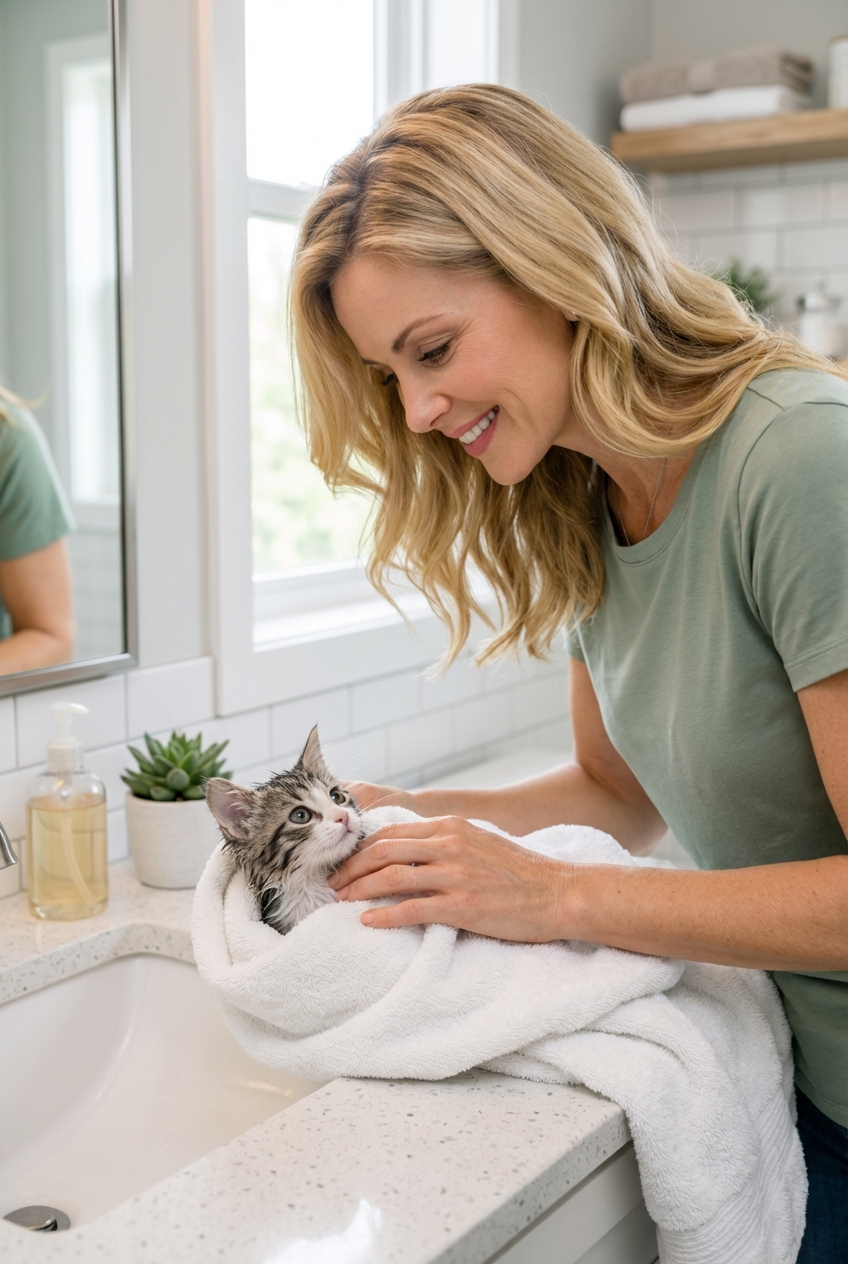
2) Bathing: only if appropriate
If your kitten is old enough and stable, a gentle bath can help remove fleas. For very young kittens, getting chilled is a real risk.
- Use warm water, not hot.
- Keep the room warm and have towels ready.
- Lather a ring of mild soap around the neck first. This helps prevent fleas from running to the head.
- Rinse thoroughly and dry your kitten completely.
Important: Only use shampoos labeled for kittens and appropriate for their age. If you are tempted to “just use Dawn,” ask your vet first. Mild dish soap can physically remove fleas, but it does not provide residual protection and frequent use can dry or irritate the skin. It is not a long-term plan.
3) Avoid essential oils and homemade sprays
Tea tree oil, peppermint, eucalyptus, and many other essential oils can be toxic to cats, especially kittens. Cats have limited ability to metabolize certain compounds, and toxicity can happen even with “natural” products.
4) What not to do
- Never use dog flea products on a kitten. Some dog treatments (including products containing permethrin or other pyrethroids) can cause tremors, seizures, or worse in cats.
- Avoid flea collars unless they are specifically labeled for kittens of your kitten’s age and weight, and your veterinarian agrees it is appropriate.
- Do not use flea powders or sprays on your kitten unless prescribed. Many over-the-counter products are too harsh or risky for young cats.
Fastest fix: vet-approved control
Combing and bathing remove fleas you see today, but they do not stop newly emerging fleas tomorrow. Ending an infestation usually requires a vet-approved flea preventive that is safe for your kitten’s age and weight.
Your veterinarian may recommend a kitten-appropriate product (topical or oral) that kills fleas quickly and keeps working for weeks. The best choice depends on:
- Age and weight
- Overall health and hydration status
- Whether other pets live in the home
- How heavy the infestation is
If a product is not specifically labeled for kittens or your kitten’s weight range, do not “guess.” In clinic, we do see flea medication dosing mistakes and species mix-ups lead to urgent visits, and it is much easier to prevent than to treat.
Treat all pets (and mom cat)
If there is a mother cat or other pets in the home, they need appropriate, species-specific flea control too. Otherwise, fleas will keep cycling back onto the kitten. This is one of the most common reasons home treatments fail.
Clean your home
Fleas have a life cycle. Many of the “fleas” in your home are actually eggs, larvae, and pupae hiding in carpet, bedding, and cracks.
What to do today
- Wash bedding: Wash all pet bedding and blankets in hot water and dry on high heat.
- Vacuum thoroughly: Carpets, rugs, couches, baseboards, and under furniture. Vacuum daily for 1 to 2 weeks if possible.
- Empty the vacuum: Dispose of the vacuum contents outside right away.
Sprays and foggers
Use caution. Many premise sprays are not kitten-safe until fully dried and ventilated, and foggers can be misused. If you have a heavy infestation, ask your vet about pet-safe options or consider a professional exterminator who has experience with homes that have cats.
Prevent re-infestation
Even indoor cats can get fleas from other pets, visitors, shared hallways (apartments), or hitchhiking fleas on clothing. If your kitten goes outdoors, yard exposure can also keep the cycle going.
How long it takes
With the right plan, you often see improvement quickly, but complete control can take several weeks because flea pupae can continue to emerge even after treatment begins.
- Within 24 to 48 hours: Many kittens have fewer live fleas after the correct treatment, though results vary by product and infestation level.
- Within 1 to 2 weeks: Typically less scratching, fewer flea dirt specks, and fewer fleas seen in the home with consistent cleaning and prevention.
- Within 4 to 12 weeks: Often a full break in the life cycle with consistent prevention and environmental control. Some homes take longer.
Consistency is what wins here, not harsh chemicals.
How to check for fleas
Look for flea dirt
Flea dirt looks like black pepper in the fur. Here is a quick check:
- Comb some specks onto a wet paper towel.
- If it turns reddish-brown, that is digested blood, which strongly suggests fleas.
Watch behavior
- Frequent scratching at the neck or base of tail
- Restlessness
- Overgrooming
Urgent vet signs
Please seek veterinary care quickly if you notice any of the following:
- Pale gums (lift the lip, gums should be pink, not white)
- Weakness, wobbliness, or collapsing
- Not eating or drinking
- Rapid breathing or extreme lethargy
- Large numbers of fleas or scabs all over
Kittens can go downhill fast, and getting help early can be life-saving.
Prevention
After you get through the worst of it, ongoing prevention makes life so much easier.
- Use a vet-recommended flea preventive as directed, especially in areas where fleas are common.
- Treat all pets in the household with appropriate species-specific products. If only the kitten is treated, fleas will keep hopping on from other pets.
- Tapeworm note: If you see rice-like segments near the tail or in bedding, ask your vet about deworming. Tapeworms typically require a specific dewormer (often praziquantel), and flea control is necessary to prevent recurrence.
You are doing the right thing by tackling this now. A calm, safe plan will protect your kitten and help your whole home feel comfortable again.