A vet-assistant guide to removing fleas from kittens safely: check age and weight, use a flea comb, bathe only when appropriate, choose vet-approved preventi...
Article
•
Designer Mixes
How To Get Rid Of Fleas On a Kitten

Shari Shidate
Designer Mixes contributor
As a veterinary assistant here in Frisco, Texas, I can tell you this with total confidence: fleas on kittens are common, treatable, and worth taking seriously right away. Kittens are tiny, their blood volume is small, and a heavy flea load can make them sick faster than many pet parents expect. And in North Texas, fleas can be a year-round problem, so quick action and consistent prevention really matter.
The good news is you do not have to panic or “bomb” your whole house overnight. You just need a smart, kitten-safe plan that breaks the flea life cycle and protects your kitten’s developing body.
First, confirm it is fleas
Before you treat, make sure you are treating the right problem. Adult fleas are sometimes visible, but flea dirt is often easier to spot. Also, itching is not always fleas. Mites, ringworm, and allergies can look similar, so it is worth checking closely.
Quick at-home check
- Look where fleas like to hide: around the neck, base of the tail, belly, and armpits.
- Check for flea dirt: tiny black specks that look like pepper. Place them on a damp white paper towel. If they turn reddish-brown, that is digested blood and strongly suggests fleas.
- Watch behavior: frequent scratching, biting at the skin, twitchy skin, or restlessness.
If you are unsure, take a clear photo of what you found and call your veterinarian. Many clinics can help you identify it quickly.
Why fleas hit kittens harder
Fleas are not just an itch. For kittens, they can cause real medical issues.
- Anemia: a heavy infestation can lead to dangerous blood loss, especially in small or underweight kittens.
- Flea allergy dermatitis: some kittens are very sensitive to flea saliva and will itch intensely from only a few bites.
- Tapeworms: kittens can get tapeworms if they swallow an infected flea while grooming.
- Skin infections: constant scratching can break the skin and invite bacterial infection.
Call your vet urgently if your kitten seems weak, pale-gummed, breathing fast, not eating, or unusually sleepy. Those can be signs of anemia or another serious issue.
The safest plan
Fleas have a life cycle that includes eggs, larvae, pupae, and adults. The adult fleas you see are only part of the problem. In many infestations, most flea life stages are in the environment (carpets, bedding, cracks in flooring), not on your kitten.
A solid plan always includes:
- Immediate kitten-safe removal of fleas on your kitten
- Veterinary-approved prevention so newly emerged adult fleas die before they reproduce
- Home cleanup to remove eggs and developing stages
Kitten-safe steps today
1) Use a flea comb
A fine-tooth flea comb is one of the best first tools for kittens, especially young ones.
- Comb slowly from head to tail, focusing on the neck and base of the tail.
- Dip the comb into a bowl of warm water with a small amount of dish soap to trap and kill fleas.
- Repeat at least once daily during an active infestation.
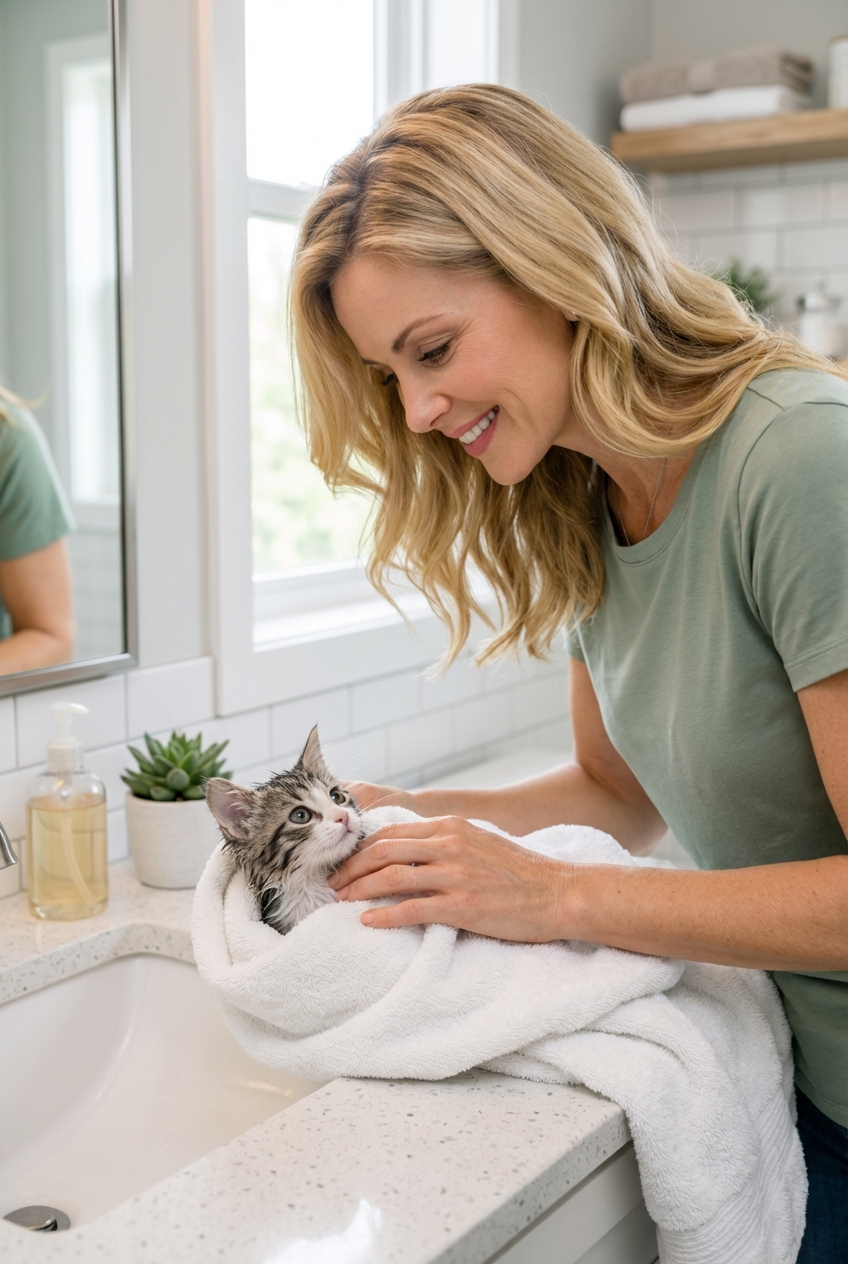
Tip for keeping it calm: wrap your kitten in a towel like a “kitty burrito,” leave one area exposed at a time, and take short breaks. A tiny bit of canned kitten food can help make this a smoother routine.
This is not a complete solution by itself, but it can give fast relief and reduce the flea load.
2) Consider a gentle bath
If your kitten is stable, warm, and old enough to tolerate it, a bath can help remove fleas. Use warm (not hot) water, and keep the entire process calm and quick.
- Ask your vet what is safe for your kitten’s age and weight. Many over-the-counter flea shampoos are not safe for kittens, and most insecticidal shampoos are not appropriate for very young kittens.
- For very young kittens (often under 8 weeks): many clinics prefer plain warm water plus careful flea combing, rather than medicated products. Call your veterinarian for the safest plan for your specific kitten.
- Do not use essential oils (like tea tree, peppermint, eucalyptus). Cats are especially sensitive and can become poisoned.
- Dry completely and keep warm afterward. Kittens can get chilled easily.
If your kitten is very young (especially under 8 weeks), avoid trial-and-error treatments and call your vet for the safest option for that age and weight.
Key step: vet-approved prevention
To truly get rid of fleas, you need prevention that continues working after the bath and combing. Modern veterinary flea preventives are designed to kill fleas efficiently, but they must be chosen by age and weight.
What to ask your veterinarian
- Which product is safest for my kitten’s exact weight?
- Is it appropriate for my kitten’s age (for example, under 8 weeks vs. over 8 weeks)?
- Do you recommend a topical, oral, or another option based on our household and other pets?
- Should we treat for tapeworms too?
Important: Never apply a dog flea product to a kitten or cat. Some dog-only spot-ons, especially products containing permethrin (a common pyrethroid used in dogs), can cause severe poisoning in cats. If a dog product was applied by mistake, call your veterinarian or pet poison helpline immediately.
Home cleanup that works
In many homes, the majority of flea life stages are off your pet. The goal is to remove eggs and larvae, and to keep momentum so newly emerged adult fleas are killed by your kitten’s (and other pets’) prevention.
Your 7 to 14 day routine
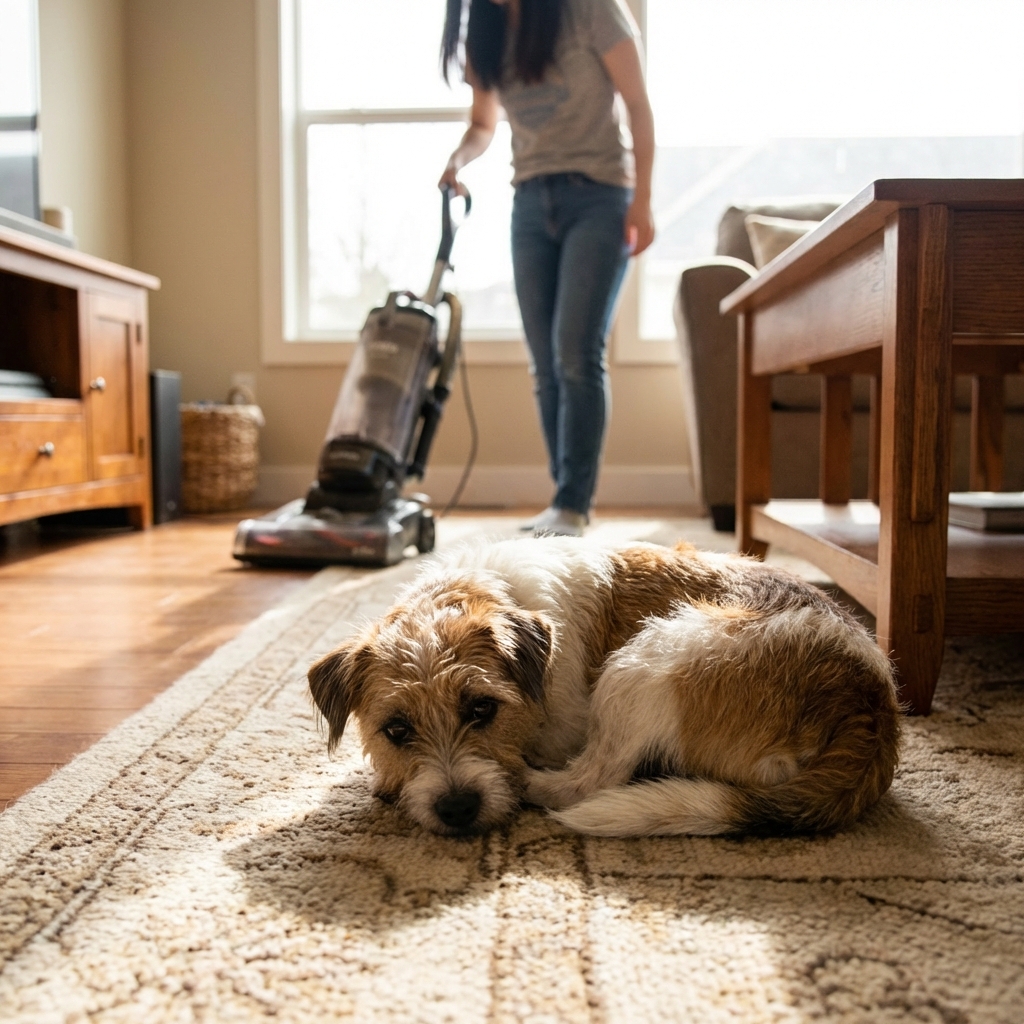
- Vacuum daily for at least a week: carpets, rugs, baseboards, couch cushions, and under furniture. Vacuuming removes debris where larvae develop and can also stimulate pupae to emerge, which is exactly why consistent prevention matters.
- Wash bedding in hot water: your kitten’s blankets, your bedding if the kitten sleeps with you, and throw covers.
- Dry on high heat when fabric allows.
- Dispose of vacuum contents right away: seal in a bag and take outside.
Skip harsh home foggers unless your veterinarian specifically recommends them. Many flea issues resolve with good prevention plus consistent vacuuming and laundry.
Quick reality check: even indoor-only kittens can get fleas. They hitchhike in on people, other pets, or wildlife that comes near patios, porches, or yards.
Other pets and outdoors
If you have other pets, plan to treat everyone appropriately, not just the kitten. Fleas bounce between hosts.
- All pets need vet-approved flea prevention that matches their species and weight (cat products for cats, dog products for dogs).
- Separate untreated pets from the kitten when possible until everyone is protected, especially if one pet goes outdoors.
- Do not share products between pets. Dosing and ingredients vary.
If your pets spend time outdoors, you may also be dealing with an outdoor source (wildlife, shaded areas, porch bedding). Staying consistent with prevention is usually more effective than trying to treat the entire yard.
Do not do these
- Do not use essential oil sprays on kittens, cats, or their bedding.
- Do not use random “natural” flea remedies without veterinary guidance. “Natural” is not always safe or effective.
- Do not over-bathe or use harsh soaps repeatedly. This can dry out skin and make irritation worse.
- Do not treat only one pet if you have multiple animals.
- Do not use dog-only spot-ons on cats (especially permethrin-containing products).
- Do not ignore pale gums, weakness, or poor appetite. Those are red flags in kittens.
When to see the vet
It is always okay to call your veterinarian for help choosing kitten-safe flea control. You should schedule a visit promptly if:
- Your kitten is very young, very small, or newly rescued and underweight
- You see lots of fleas, scabs, hair loss, or skin infection
- Your kitten has diarrhea, vomiting, lethargy, or pale gums
- The infestation is not improving after 1 to 2 weeks of proper prevention and home cleanup
Many kittens with fleas also benefit from a basic wellness exam, fecal check, and deworming plan. That sets them up for a healthier first year.
What to expect
Here is what I like pet parents to expect when they do this correctly. Timelines vary by kitten, home, and infestation size, and severe infestations can take longer.
- Day 1 to 2: often noticeable relief from combing and the right flea product
- Week 1: typically fewer fleas seen and less scratching
- Weeks 2 to 4: you may still spot an occasional flea as eggs in the home mature, but they should die quickly if prevention is working
If you keep prevention consistent and do the home cleanup, most households turn the corner fast.
Bottom line: be gentle, be consistent, and use kitten-safe products. With fleas, steady wins.