Stop the flea cycle with a proven plan: confirm fleas, use cat-safe vet-recommended treatments, treat every pet, and clean your home with vacuuming, laundry,...
Article
•
Designer Mixes
How to Get Rid of Fleas on a Cat

Shari Shidate
Designer Mixes contributor
Hi friend, Shari here. Fleas on cats are frustrating, quick to spread, and surprisingly sneaky. The good news is you can get control of a flea problem without guessing, as long as you treat the cat, the home, and any other pets at the same time. That three-part approach is what breaks the life cycle and stops the itch.
First, confirm it is fleas
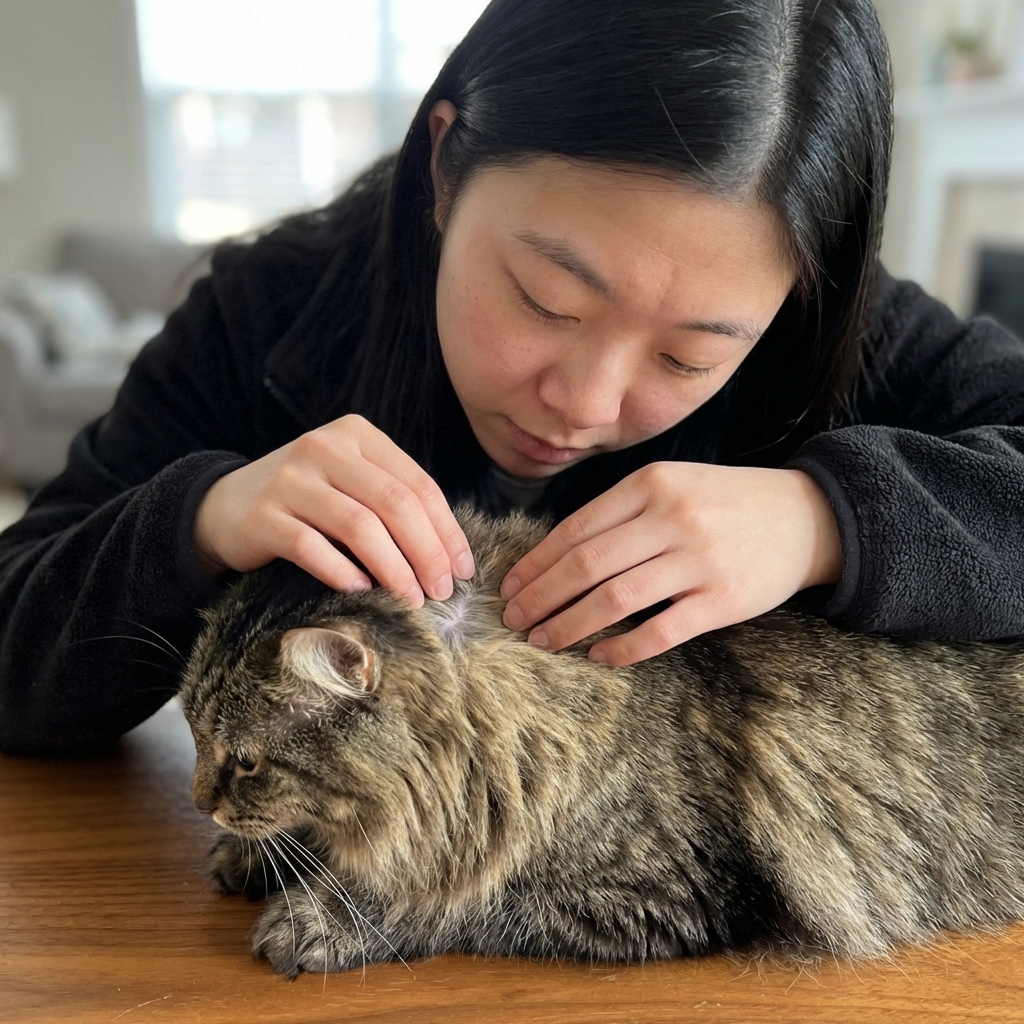
Before you treat, it helps to be sure you are dealing with fleas and not allergies, mites, or dry skin. Here are quick ways to check:
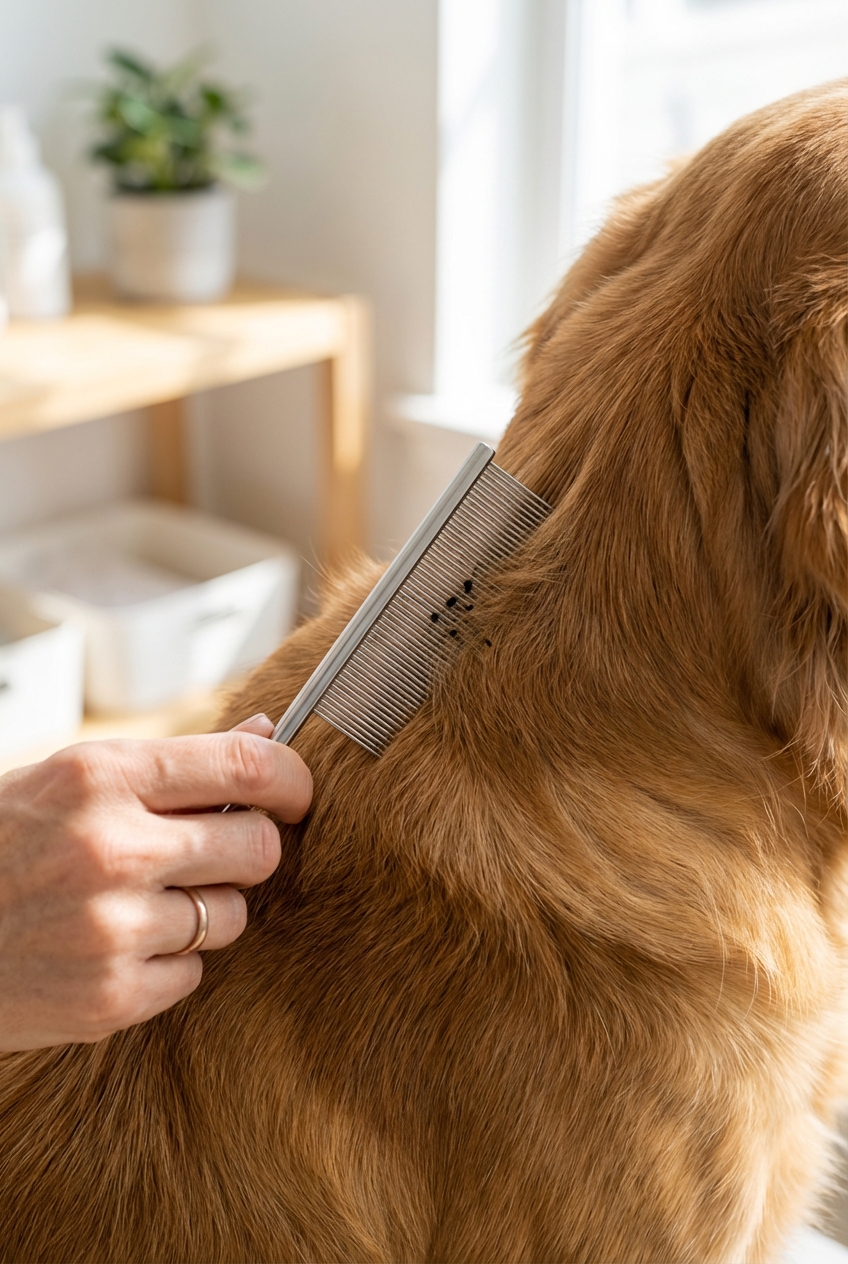
- Look for flea dirt: tiny black specks at the base of the tail, belly, or neck. Put a few specks on a damp white paper towel. If they turn reddish-brown, that is digested blood and strongly suggests fleas.
- Use a flea comb: comb slowly from head to tail, especially around the rump and behind the ears. Wipe debris onto a white tissue.
- Watch the pattern: intense scratching, over-grooming, and scabs on the neck and lower back are common.
If your cat is very young, pregnant, frail, or seems lethargic or pale, call your vet right away. Heavy flea loads can contribute to anemia, especially in kittens.
Quick note: This article is for general education and is not a substitute for veterinary care, especially if your cat is sick, very itchy, or you are unsure which product is safe.
Break the flea life cycle
Fleas have four life stages: egg, larva, pupa, and adult. Only adult fleas live on and feed on your cat. Eggs, larvae, and pupae develop in the environment, like carpets, cracks, bedding, and furniture. Pupae can “wait” and hatch later when they sense vibration and warmth. That is why you can treat your cat and still see new fleas show up for several weeks (often 2 to 6+ weeks depending on the home and how many pupae are present).
The strategy that works is simple: treat the cat with a proven product, treat the environment, and repeat on schedule long enough to catch new hatch-outs.
Step 1: Treat your cat safely
For most families, the fastest and most reliable option is a veterinary-approved flea medication used exactly as labeled. Look for products that:
- Kill adult fleas quickly
- Keep working for a full month
- Have a strong safety record in cats
Topicals and orals (vet-guided)
Your veterinarian can recommend a monthly topical or oral medication based on your cat’s age, weight, health conditions, and household. This matters because cats are uniquely sensitive to certain chemicals. A product that is fine for a dog can be dangerous for a cat.
If you like having a starting point for your vet conversation, you can ask about common flea control options that use ingredients such as selamectin, fipronil, imidacloprid, or vet-prescribed isoxazoline products for cats. For home sprays, you can ask about an insect growth regulator (IGR) such as pyriproxyfen or methoprene.
Flea combing: a powerful helper
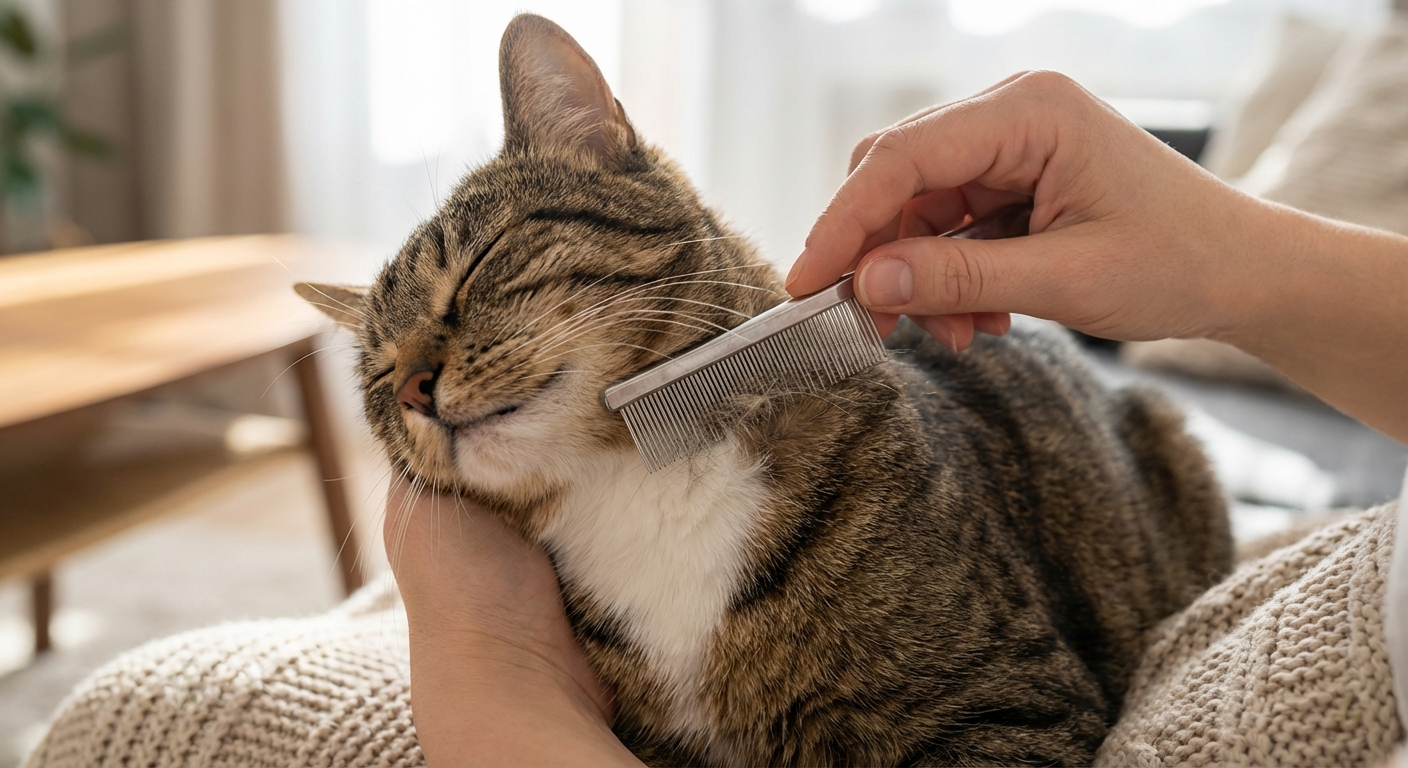
Flea combing is not enough on its own in most infestations, but it is excellent support while you are waiting for medications to kick in and for the home to clear.
- Comb daily for 5 to 10 minutes.
- Keep a cup of warm water with a drop of dish soap nearby and dunk anything you comb out.
- Focus on the base of the tail, groin, and neck.
Bathing (only if your cat tolerates it)
Many cats hate baths, so I consider this optional. If you do bathe, use a cat-specific gentle shampoo. Avoid essential-oil heavy “natural” products because cats can have trouble metabolizing certain compounds.
Important safety note
Never use dog flea products on cats, and never use permethrin-containing products on cats. If a cat is exposed and starts drooling, trembling, or acting uncoordinated, that is an emergency.
If the itch is intense
Some cats develop flea allergy dermatitis, which can cause extreme itching, scabs, and hair loss even with a small number of fleas. If your cat is miserable, has hot spots, or has skin that looks infected, your vet may recommend additional treatment for inflammation and secondary infection, along with flea control.
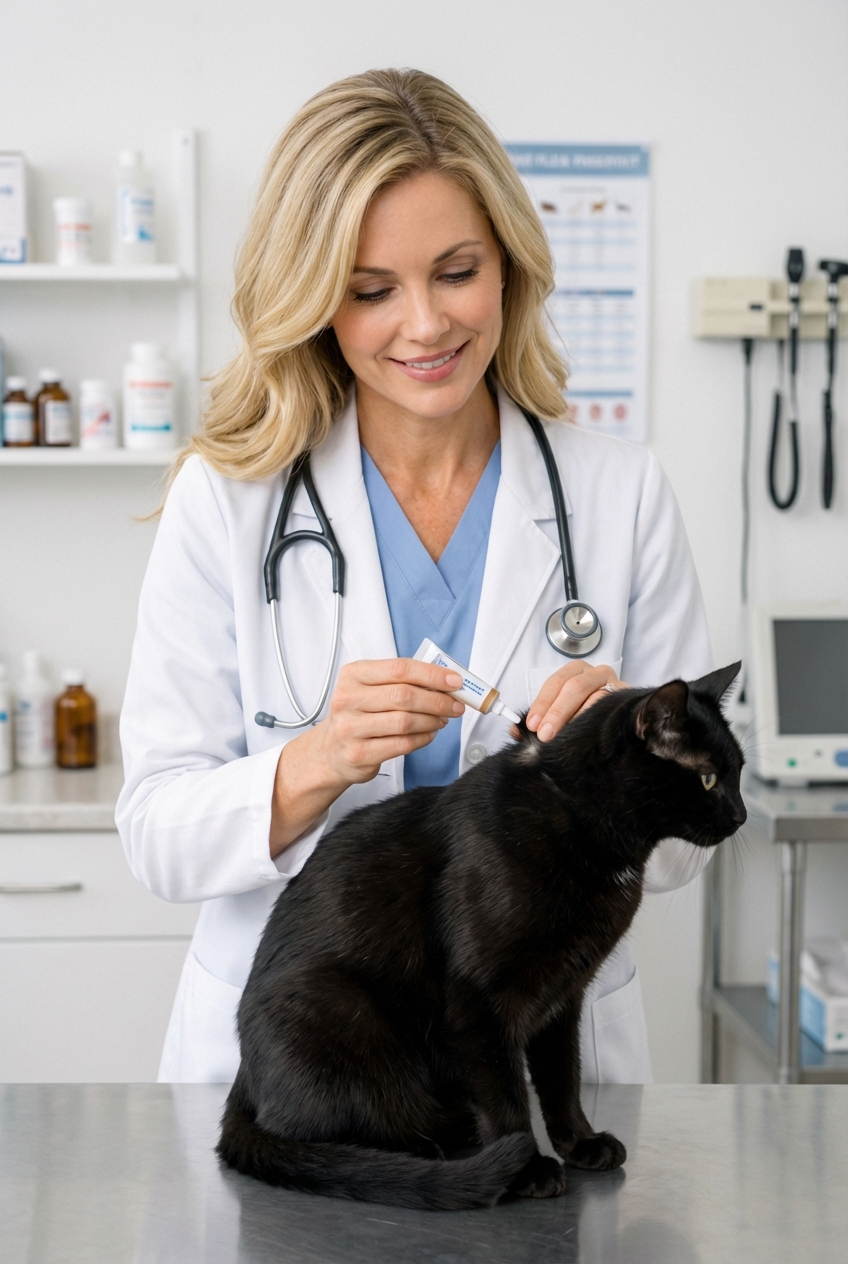
Step 2: Treat every pet
This is where many flea plans fail. If you treat the cat but not the dog, the fleas simply keep reproducing.
- Treat all cats and dogs with species-appropriate flea prevention.
- Keep pets on prevention for at least 3 consecutive months during an active infestation, and often longer, until you have fully broken the cycle in your home.
- If you have rabbits, ferrets, or other small pets, ask your veterinarian before using any flea products near them.
Step 3: Treat the home
If adult fleas are the tip of the iceberg, your home is the rest of it. Here is a practical plan that is very effective and does not require fancy equipment.
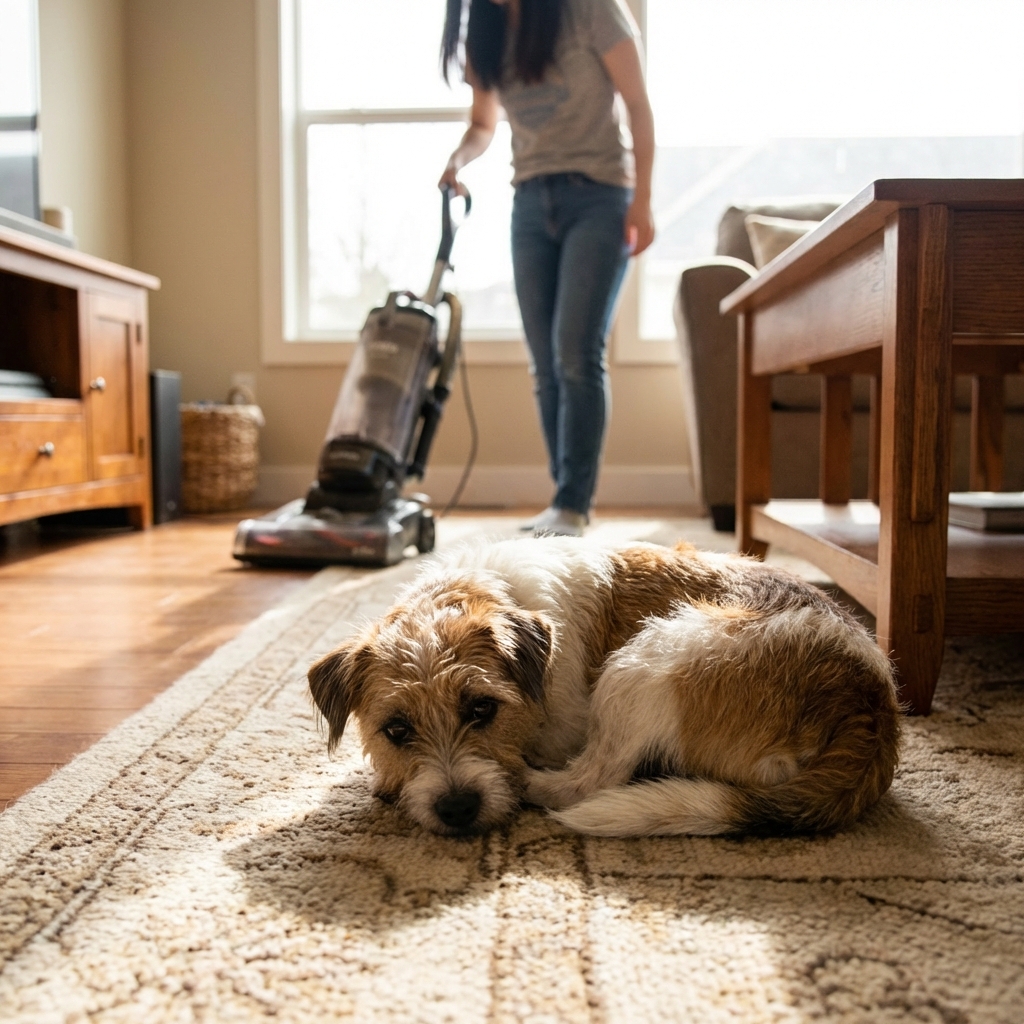
Vacuum daily at first
- Vacuum carpets, rugs, baseboards, and upholstered furniture daily for 7 to 14 days, then 2 to 3 times per week for a month.
- Empty the canister outside right away, or seal the bag in a trash bag and discard.
- Hit the “cat zones” first: sleeping spots, window perches, and under furniture.
Wash bedding on hot
- Wash pet bedding, throws, and washable covers weekly in hot water, then dry on high heat.
- If something cannot be washed, place it in a hot dryer for 20 to 30 minutes if safe for the fabric.
Use targeted home products (optional)
If your infestation is heavy, consider an environmental spray that contains an insect growth regulator (often abbreviated IGR). IGRs help stop eggs and larvae from developing into new adults. Follow label instructions carefully and keep cats away until surfaces are fully dry.

Step 4: Outdoor risk
Outdoor cats and indoor-outdoor cats often get reinfested from wildlife and shaded areas where fleas thrive. Action steps:
- Keep your cat on consistent monthly prevention during warm months, and often year-round in many regions.
- Limit access to crawl spaces, decks, and areas frequented by stray animals when possible.
- Focus on indoor control first. Yard treatments alone rarely solve a flea problem.
What not to do
- Do not use essential oils (tea tree, eucalyptus, peppermint) on cats, or use oil diffusers or aerosols in enclosed spaces around them. Cats can be sensitive, and toxicity can be serious.
- Do not rely on garlic, onion, or “home remedies” given by mouth. These can harm red blood cells.
- Do not use flea collars, powders, or shampoos unless your veterinarian confirms they are appropriate. Some older OTC collars are harsh and less effective, while some newer vet-recommended collars can be helpful in the right household.
- Do not treat only once and stop. Fleas are persistent because the pupa stage can hatch later.
When to call the vet
Please reach out promptly if any of these apply:
- Kittens or small cats with fleas (risk of anemia).
- Pale gums, weakness, rapid breathing, or collapse.
- Open sores, hair loss, or severe scabbing from scratching.
- Signs of tapeworms, which can look like rice grains near the tail or in bedding. Cats can get tapeworms from swallowing infected fleas. Tapeworm treatment is separate, and your vet can recommend the right dewormer and timing.
- Your cat has chronic allergies or asthma, or you are unsure which product is safe.
Encouragement from one animal-lover to another: you do not have to do everything perfectly in one day. Start with a safe, proven cat flea treatment, vacuum daily, and stay consistent for a few weeks. Consistency is what ends the cycle.
Quick checklist
- Treat your cat with a vet-approved flea medication.
- Treat every dog and cat in the household.
- Vacuum daily for 1 to 2 weeks, then maintain.
- Wash bedding weekly on hot.
- Consider an IGR environmental spray for heavy infestations.
- Stay on prevention for at least 3 months, often longer.