Stop fleas fast with a realistic, family-friendly plan. Learn the flea life cycle, how to check for flea dirt, vet-approved treatments, home cleaning steps, ...
Article
•
Designer Mixes
How to Get Rid of Fleas in Your House

Shari Shidate
Designer Mixes contributor
Few things feel as frustrating as realizing fleas have moved in. The good news is that with a calm plan and a little consistency, most families can clear a flea problem at home without panic buying a dozen products.
As a veterinary assistant here in Frisco, Texas, I like to keep this evidence-based and family-friendly: we will reduce bites today, make major progress this week, and stick with a plan long enough to prevent a comeback.
First, know what you are fighting
Fleas are not just on your pet. In many home infestations, most of the flea population is hiding in the environment as eggs, larvae, and pupae.
- Adult fleas live on pets and bite people.
- Eggs fall off the pet into carpets, bedding, couch cushions, and cracks in flooring.
- Larvae avoid light and crawl deeper into carpet fibers and baseboards.
- Pupae can stay protected in a cocoon and “wait” to emerge when vibrations, carbon dioxide, and warmth signal a host nearby.
This is why a one-time spray rarely solves the problem. You have to treat the pet and the home, and you have to repeat steps long enough to catch newly emerging fleas.
Signs it is fleas
- Pets scratching, chewing at the rump or tail base, or sudden restlessness.
- “Flea dirt” that looks like black pepper on your pet’s skin. If you place it on a damp paper towel, it can smear reddish-brown (digested blood).
- Small itchy bites on ankles or lower legs, especially after sitting on carpet or the couch.
If anyone in your home has severe swelling, hives, trouble breathing, or you suspect infection from scratching, contact a medical professional.
The family-friendly plan
Step 1: Treat every pet, same day
This is the cornerstone. If even one pet is untreated, fleas can keep reproducing.
- Use a veterinarian-recommended flea preventive appropriate for your pet’s species, weight, and age.
- Do not use dog flea products on cats. Many dog spot-ons contain permethrins, which can be dangerously toxic to cats.
- Treat every pet in the home, including indoor-only cats. Fleas can hitchhike inside on people, other pets, or visiting animals, and then spread.
What “effective preventive” usually means: a consistent, vet-recommended monthly topical or oral product (or a long-acting prescription option) that kills adult fleas and helps stop reproduction. Many over-the-counter sprays and shampoos provide only short-term relief.
Tip: If you have a puppy or kitten, or a pet with health conditions, ask your veterinarian before using any flea product, including “natural” options.
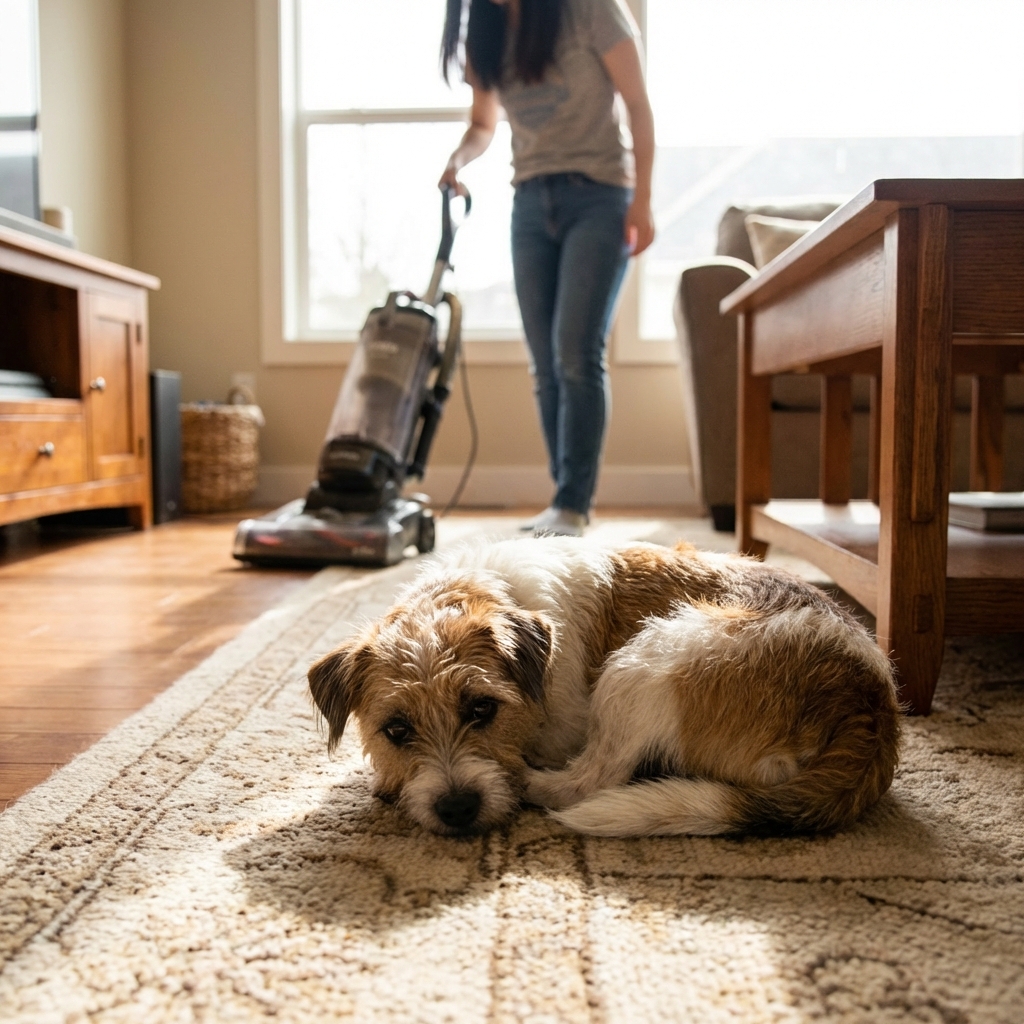
Step 2: Vacuum daily at first
Vacuuming is not just cleanup. It is a flea control tool.
- Vacuum carpets, rugs, baseboards, under furniture, and couch cushions daily for 7 to 10 days if you can, then several times per week.
- Focus on where pets sleep and where kids play on the floor.
- Immediately empty the canister into a sealed bag, or remove the vacuum bag and seal it before placing in an outdoor trash bin.
Vacuuming helps remove eggs and larvae and can encourage adult fleas to emerge from cocoons, which makes them easier to eliminate once preventives and treatments are in place.
Step 3: Wash and dry what fleas love
- Wash pet bedding, throw blankets, slipcovers, and washable rugs.
- Use the hottest water safe for the fabric and dry on high heat if allowed.
- Repeat at least weekly during active treatment.
Step 4: Add quick relief tools (optional)
If your pet is miserable, these can help while your main plan does the heavy lifting:
- Flea combing: Comb daily for a few minutes (especially around the neck, tail base, and belly). Dip the comb in soapy water to trap fleas.
- Bathing: A gentle bath can remove fleas on the coat, but it does not provide lasting protection. Many flea shampoos have limited residual effect, so do not rely on them as your main strategy.
Step 5: Use targeted home treatments (only if needed)
If vacuuming and pet prevention are not enough, an indoor treatment can help, especially in carpeted homes.
Look for products that include an insect growth regulator (IGR) such as methoprene or pyriproxyfen. IGRs stop immature fleas from developing into biting adults, which is crucial for breaking the cycle.
- Follow label directions exactly and keep kids and pets out of treated areas until the product says it is safe.
- Treat cracks, baseboards, under furniture, and pet resting areas.
- Avoid “bug bombs” or foggers when possible. They often do not reach under furniture or deep carpet fibers well, and they can add unnecessary exposure and cleanup.
Safety notes: Ventilate treated areas as directed. Cover or remove aquariums and turn off air pumps if the label instructs (fish are sensitive to many insecticides). If someone in the home is pregnant, has asthma, or is chemically sensitive, consider having another adult apply the product, or discuss the safest approach with your veterinarian or pest professional.
If you prefer a low-chemical approach, start with steps 1 through 3 first. Many households see major improvement within a couple of weeks when pets are on effective preventives and vacuuming is consistent.
Yard and outdoor fleas
In Texas, fleas can often be active much of the year. If your pet spends time outside, the yard can contribute, especially in shaded, humid areas.
- Keep grass trimmed and remove leaf litter and debris where fleas can hide.
- Focus on shaded spots where pets rest.
- Outdoor treatments can help, but they work best when pets are already on a reliable preventive.
Timeline: what to expect
This is important: you may still see fleas for a while even when you are doing everything right, because pupae can continue to emerge. Product choice, home setup (carpet vs hard floors), and infestation size all affect timing.
- Days 1 to 3: Bites may start decreasing once pets are treated, but you may still spot fleas.
- Week 1 to 2: Often a big drop in adult fleas if vacuuming and laundering are consistent.
- Weeks 3 to 8: Many homes see the infestation resolve, depending on severity, carpeting, and how many pets live in the home.
Consistency beats intensity. A steady routine is what breaks the life cycle.
Common mistakes
- Treating the house but not the pet or treating only one pet.
- Stopping too soon once you see improvement.
- Using the wrong product for the wrong species or weight range.
- Relying on essential oils as a primary strategy. Many essential oils can irritate skin and some are toxic to cats and dogs, especially if concentrated.
- Forgetting pet bedding and couches. Fleas love cozy, protected resting spots.
When to call the pros or your vet
Get help if:
- Your pet is very itchy, has scabs, hair loss, hot spots, or signs of skin infection.
- You see pale gums, weakness, or lethargy in a puppy or kitten (flea-related anemia can become serious quickly).
- You have tried a solid plan for 4 to 6 weeks and fleas are still active.
- There are multiple pets, heavy carpeting, or a large infestation that feels unmanageable.
Your veterinarian can also help you choose a preventive that matches what is happening in your area and your pet’s medical history. Also ask about tapeworm risk: pets can get tapeworms from swallowing infected fleas, so deworming may be recommended if you see rice-like segments in stool or around the tail area.
A simple weekly checklist
- Give flea preventive on schedule (set a phone reminder).
- Vacuum high-traffic pet areas 3 to 5 times per week during flea season.
- Wash pet bedding weekly.
- Comb your pet with a flea comb once or twice per week to monitor.
- Address outdoor shaded rest areas in the yard.
The bottom line: fleas are stubborn, but they are not mysterious. Treat the pet, clean the environment, and stick with the plan long enough to break the life cycle.