Stop fleas for good with a behavior-based, vet-informed plan: treat every pet, wash and heat-dry fabrics, vacuum to break the life cycle, consider an IGR, an...
Article
•
Designer Mixes
How to Get Rid of Fleas in Your Home

Shari Shidate
Designer Mixes contributor
As a veterinary assistant here in Frisco, Texas, I can tell you one thing with total confidence: if you only treat the pet, you almost always lose the flea battle. Fleas are a whole-house problem. The good news is that with the right steps in the right order, you can break the life cycle and get your home comfortable again.

How to tell it is fleas
Not every itch is fleas. Here are two quick checks you can do at home:
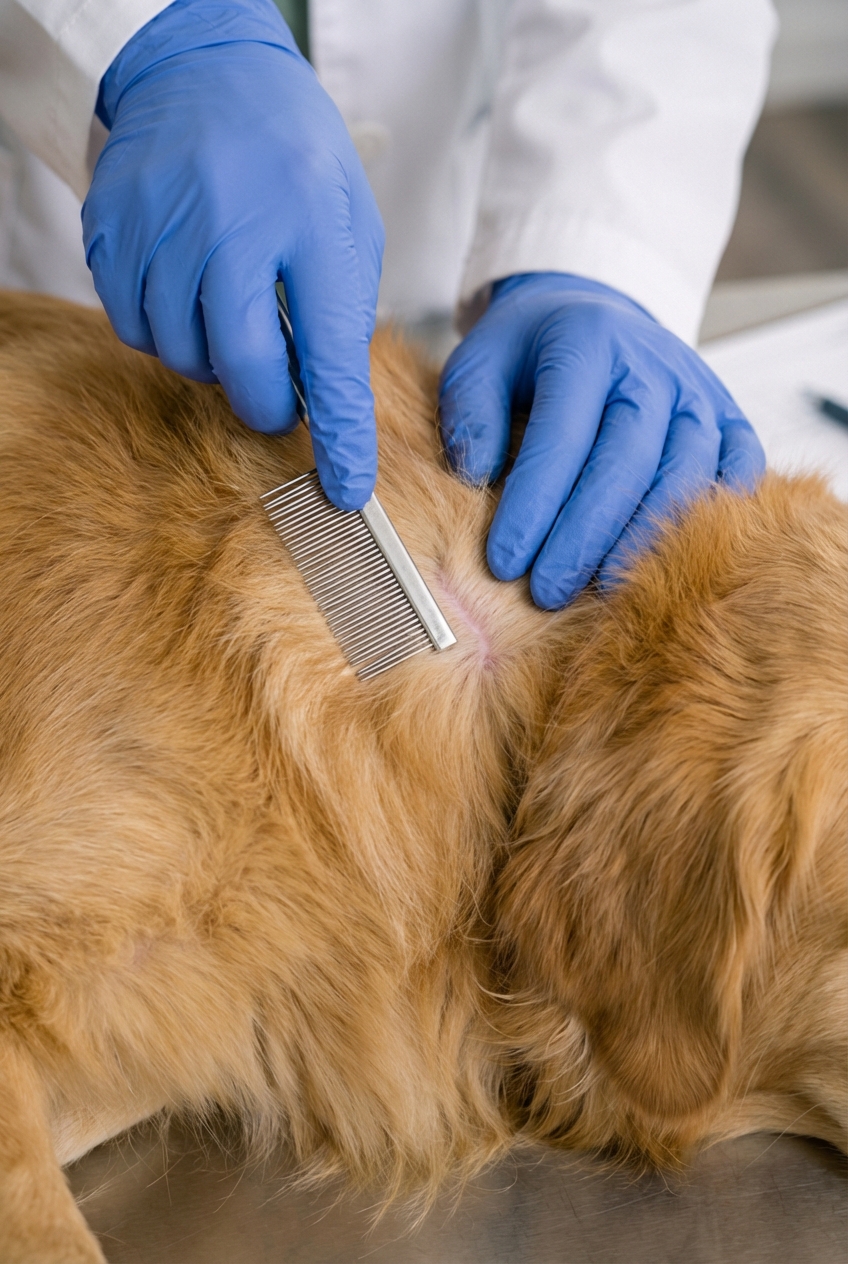
- Look for flea dirt: Comb your pet over a white paper towel. If you see tiny black specks, add a drop of water. If it turns reddish-brown, that is digested blood (classic flea dirt).
- Check favorite spots: Base of the tail, belly, and inner thighs are common flea hangouts, especially on dogs.
If you are not sure, your veterinarian can confirm and help you choose the safest treatment for your pet’s age, weight, and health.
Know what you are fighting
Adult fleas are the part you see, but they are only a small slice of the infestation. Fleas go through four stages: egg, larva, pupa, and adult. In most homes, much of the population is in the environment (eggs, larvae, pupae) rather than on your pet.
- Eggs fall off your pet into carpets, cracks, bedding, and furniture.
- Larvae hide in dark, protected areas and feed on organic debris.
- Pupae can “wait” in a protective cocoon for weeks, sometimes longer, until vibrations, heat, and carbon dioxide tell them a host is near.
- Adults jump on pets and people to feed and reproduce.
This is why fleas can seem to “come back” even after you vacuum once or bathe the dog. It is not failure. It is biology.
Step 1: Protect every pet first
Start by treating every dog and cat in the household, even the ones that “never itch” or live indoors only. Fleas can hitchhike in on people, visiting pets, or wildlife. If one pet is untreated, fleas keep reproducing and your home never truly clears.
What works best
- Veterinary-recommended monthly preventives (topical or oral) are the backbone of flea control. Many modern products kill adult fleas quickly and help stop reproduction.
- Prescription options can be especially helpful if over-the-counter products have failed or if fleas are heavy in your area.
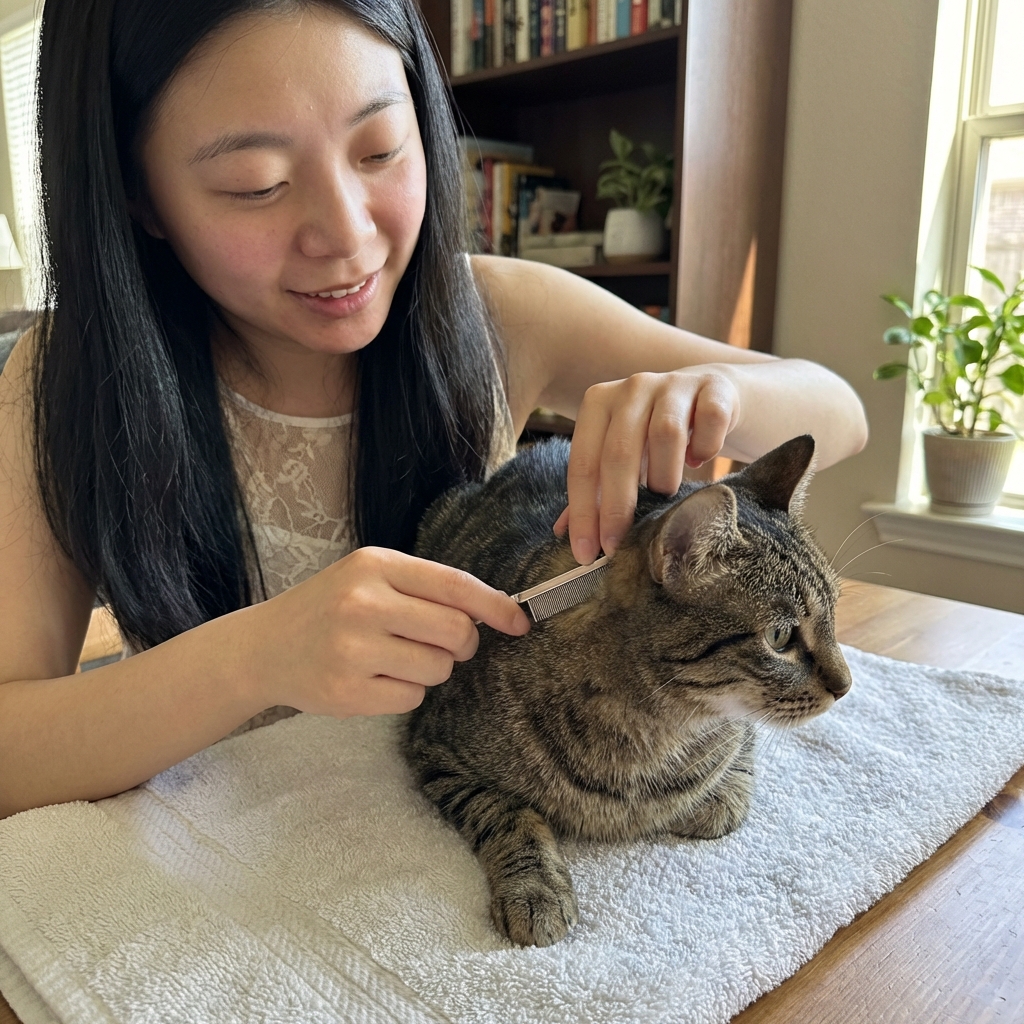
- Flea combing is a simple, evidence-based add-on. Comb daily for a week, dunking fleas into soapy water.
Safety notes
- Never use dog flea products on cats. Some dog products contain ingredients (like permethrin and other pyrethroids) that can be dangerous to cats.
- If your pet is very young, pregnant, nursing, or has a health condition, check with your veterinarian for the safest option.
- If you have other pets (like rabbits or ferrets), talk with your vet before using flea products. Dosing and product safety can differ a lot by species.
If your pet has tapeworm segments that look like rice grains, ask your vet about treatment. Fleas spread tapeworms when pets swallow fleas while grooming.
Quick note: Product choice and dosing are highly specific to species and weight. When in doubt, call your vet clinic and ask what they recommend for your pet.
Step 2: Clean the house like you mean it
Your goal is to physically remove eggs and larvae and to nudge pupae to emerge so newly hatched adults can be killed by your pet’s flea preventive and your cleaning routine. (Most products do not kill pupae inside the cocoon, so time and consistency matter.)
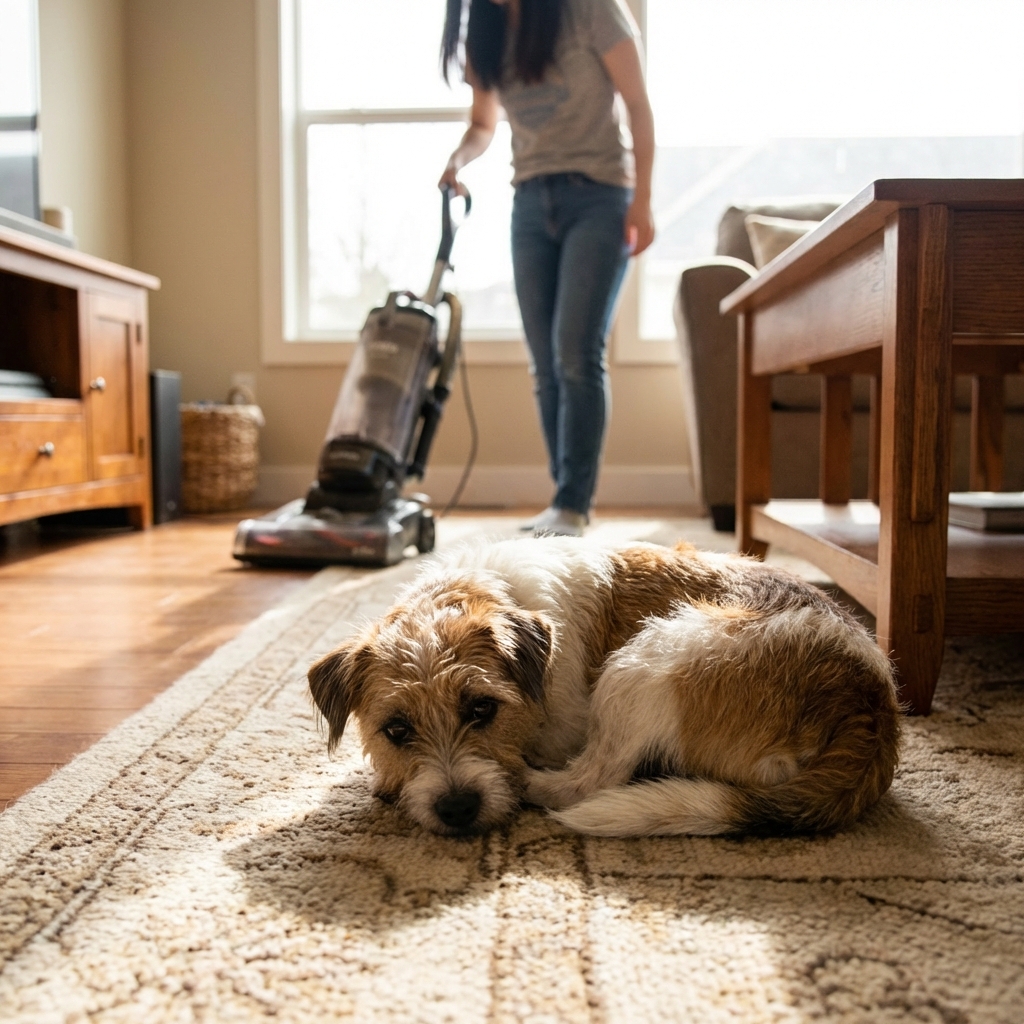
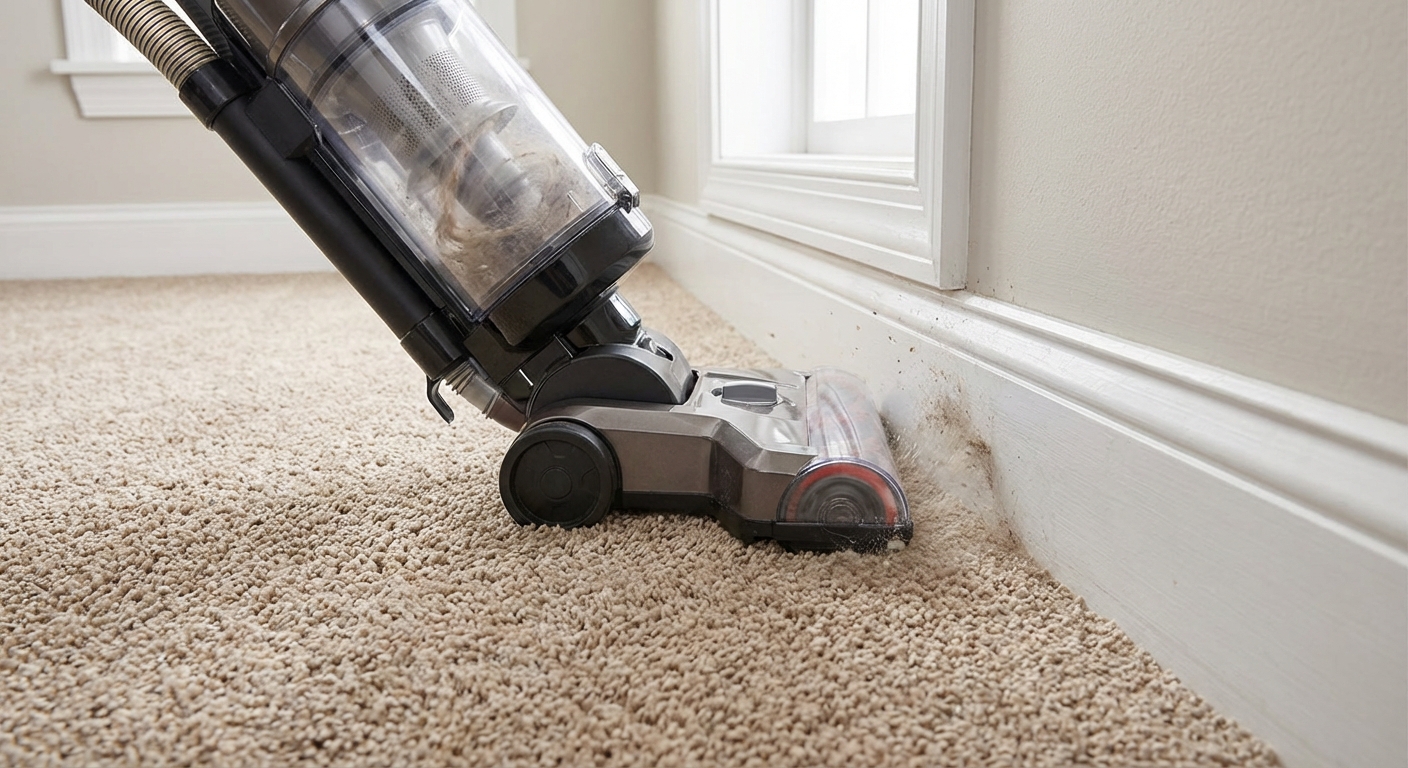
Vacuum daily for 7 to 14 days
- Focus on carpets, rugs, baseboards, under furniture, and pet resting spots.
- Use crevice tools along edges and between cushions.
- After vacuuming, empty the canister outside or seal the bag in a trash bag and take it out immediately.
Wash and dry fabrics on heat
- Wash pet bedding, blankets, throw covers, and washable slipcovers weekly during the infestation.
- Use the hottest dryer setting the fabric allows and dry thoroughly. Heat is very effective for exposed eggs, larvae, and adults in fabrics.
Do not forget the hidden zones
- Closets where pets nap
- Dog crates and crate pads
- Under beds and couches
- Entryways and mudrooms
Step 3: Treat the environment thoughtfully
Sometimes cleaning and pet protection is enough, but if you are seeing fleas regularly, an environmental product can speed results.
Choose life-cycle products
Look for a home flea spray that includes an IGR (insect growth regulator) such as methoprene or pyriproxyfen. IGRs help prevent eggs and larvae from becoming biting adults, which is why they tend to be more effective long-term than a “knockdown only” spray.
Spot treat, do not soak
- Target cracks, baseboards, under furniture, and pet areas.
- Follow label directions exactly, ventilate well, and keep pets and children out as directed until the product is fully dry.
Skip risky DIY and flea bombs
I know it is tempting to experiment, but essential oils and improvised mixtures can irritate lungs and skin and may be toxic to pets, especially cats. I also recommend skipping total-release foggers (often called “flea bombs”) in most homes. They tend to miss the places fleas actually develop (like deep carpet edges and under furniture) and can add unnecessary chemical exposure. Targeted treatment plus vacuuming is usually a better plan.
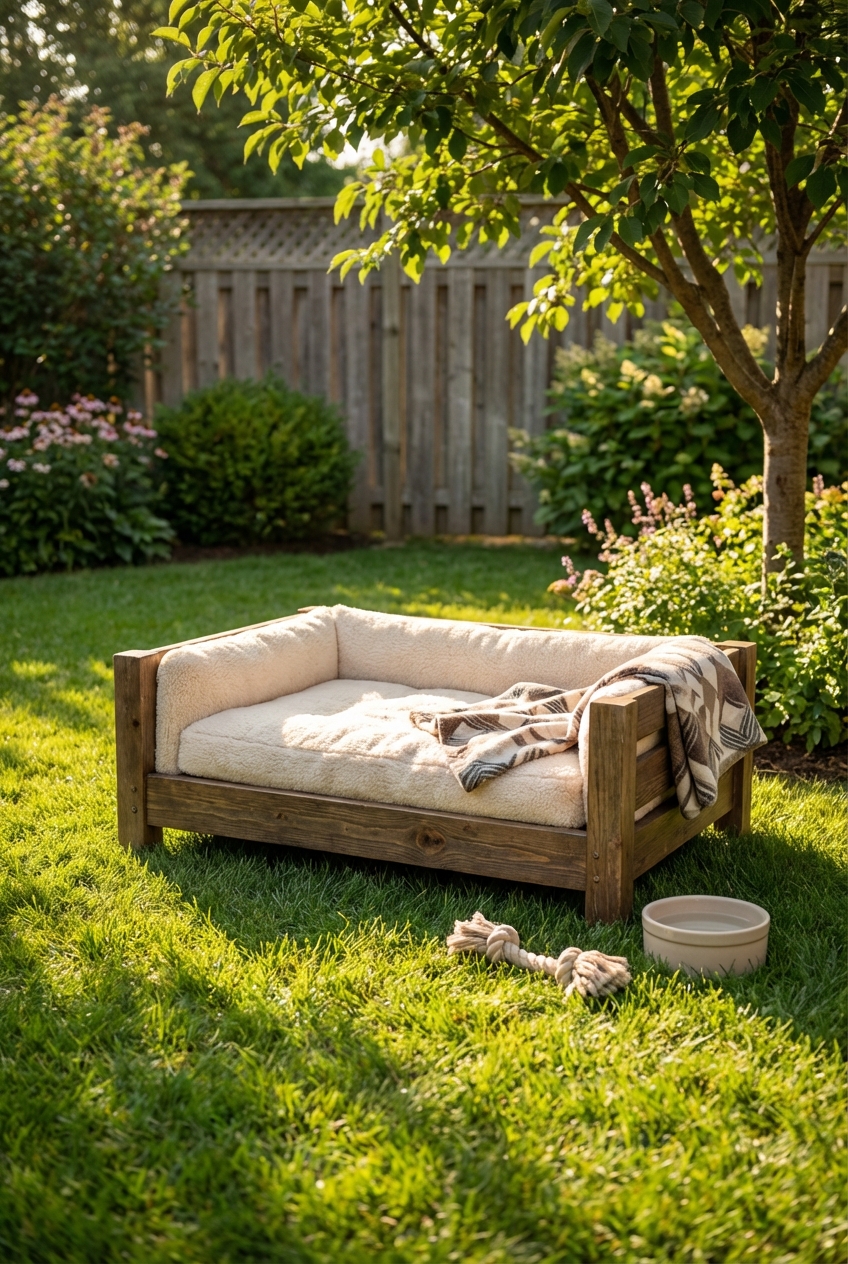
Step 4: Cover the yard
In Texas, fleas can thrive for long stretches of the year. If your pet spends time outside, the yard matters.
- Mow and trim to reduce cool, shaded flea habitat.
- Remove leaf litter and organic debris where larvae hide.
- Focus on shaded areas where pets rest, like under decks, shrubs, and dog runs.
- If you use a yard product, choose an EPA-registered option labeled for fleas and follow the label exactly. “Pet-safe” still means precautions and correct drying times.
- If fleas are severe outdoors, a licensed pest professional can help you treat the right areas safely.
Step 5: Stay the course
Most families start feeling relief within a couple of weeks, but complete control often takes 4 to 8 weeks, sometimes longer, depending on how established the infestation is and how consistently you vacuum and treat pets.
Here is what is normal:
- You may see a temporary increase in fleas as pupae emerge in response to vacuum vibrations and activity.
- Itching may continue briefly, especially if pets have flea allergy dermatitis. Your veterinarian can help with itch control and skin infection treatment if needed.
Consistency is the secret. Fleas are persistent, but they are not magic. If you break the life cycle and keep it broken, they run out of options.
When to call the vet or a pro
Call your veterinarian if:
- Your pet is very itchy, has scabs, hair loss, hot spots, or skin odor.
- You see pale gums, weakness, or lethargy, especially in puppies and kittens. Heavy flea burdens can contribute to anemia.
- Over-the-counter preventives are not working.
Consider a licensed pest professional if:
- Fleas persist after 6 to 8 weeks of consistent pet treatment plus cleaning.
- You have a complex home environment (multiple pets, heavy carpet, multi-unit housing) and need a structured plan.
Quick checklist
- Treat every pet with an effective flea preventive.
- Vacuum daily for 1 to 2 weeks, then several times weekly.
- Wash and heat-dry bedding and throws weekly.
- Use an IGR-based home flea spray if needed.
- Clean up shaded yard areas and keep preventives going.
Want a plan that fits your home? Contact our Frisco team today and we can help you choose a safe, effective approach based on your pets, your home setup, and what you are seeing.