Stop fleas for good with a behavior-based, vet-informed plan: treat every pet, wash and heat-dry fabrics, vacuum to break the life cycle, consider an IGR, an...
Article
•
Designer Mixes
How to Get Rid of Fleas in the Home

Shari Shidate
Designer Mixes contributor
Few things make pet parents feel more helpless than a flea problem. You spot one tiny jumper on your dog or cat, and suddenly it feels like your whole home is under attack. The good news is that fleas are beatable, and you do not need a “scorched earth” approach. You need a smart, veterinarian-guided plan that treats your pet and your home at the same time.
As a veterinary assistant in Frisco, Texas, I can tell you the cases that clear up fastest are the ones where families follow a simple routine for 3 to 8 weeks, stay consistent, and use products that actually work.
Why fleas keep coming back
Fleas are not just “on the pet.” They are in the environment. Adult fleas are only a small part of the problem. Typically, most of the flea population is in earlier life stages hiding in your home and yard.
- Adult fleas live on pets and bite.
- Eggs fall off your pet into carpets, bedding, couch cushions, and cracks in flooring.
- Larvae avoid light and burrow deep into carpet or upholstery.
- Pupae are protected in a cocoon and can “wait” to emerge when they sense vibration, heat, or carbon dioxide.
This is why one deep clean rarely solves it. You are breaking a life cycle, not just killing a bug.
Start with the pet (non-negotiable)
If you only treat the house but not the pet, fleas will keep reproducing. If you only treat the pet but ignore the home, newly emerging fleas can keep jumping back on. Do both.
Use a veterinarian-recommended flea preventive
Talk with your veterinarian about the best option for your pet’s age, weight, and health history. In general, vet-recommended products tend to be more reliable than many over-the-counter options.
- Oral preventives (monthly chewables) work from the inside out and can kill fleas quickly after they bite.
- Topical preventives (applied to the skin) can also be effective when used correctly.
- Flea collars can help, but quality varies a lot. Ask your vet before choosing one.
Safety note: Avoid stacking multiple flea products at the same time unless your veterinarian specifically tells you to. Mixing products can increase side effect risk.
If your pet is actively infested, ask about a fast knockdown
Some pets benefit from a product that kills adult fleas quickly, plus a monthly preventive to keep things controlled. Your vet can guide you, especially if your pet is very itchy, has flea allergy dermatitis, or has any other medical concerns.
Treat every dog and cat in the home
Fleas do not respect species boundaries. If one pet is treated but another is not, fleas will keep cycling. Treat all dogs and cats with species-appropriate, weight-based products.
Important safety note: Never use dog flea products on cats. Some dog products contain permethrin or other pyrethroids that can be dangerous for cats. When in doubt, call your veterinarian.
Quick transition: why the home matters
Once your pets are protected, the goal at home is to remove eggs and larvae and stay consistent long enough for any hidden pupae to emerge and get eliminated. That is where most people get tripped up.
Your 3 to 8 week home cleanup plan
This routine targets adult fleas and the developing stages in the environment. Think of the first 1 to 3 weeks as the intensive phase, then keep lighter but consistent maintenance until you are fully past the “waves” of emerging fleas.
Step 1: Vacuum consistently
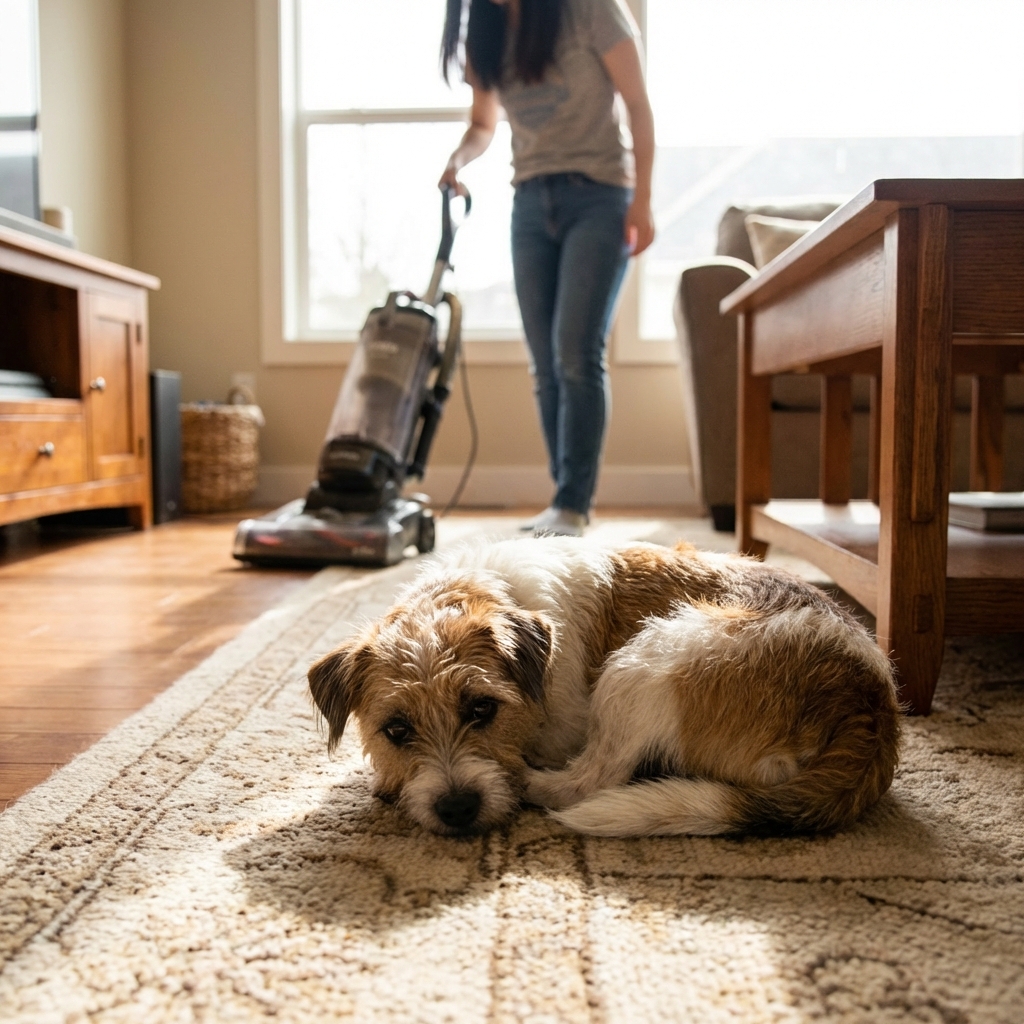
Vacuuming physically removes eggs and larvae, and the vibration can encourage pupae to emerge, which makes them easier to eliminate as your pet’s preventive continues working.
- Vacuum carpets, rugs, baseboards, under furniture, and couch cushions.
- Aim for daily vacuuming for 7 to 14 days, then every other day until things are calm.
- Do not forget pet hangout zones like under beds, along walls, and favorite nap corners.
- If pets ride in your vehicle, vacuum car upholstery and cargo areas, too.
- Immediately empty the canister outdoors or seal and discard the bag.
Step 2: Wash bedding and soft fabrics weekly
Anything your pet sleeps on or snuggles with should be cleaned.
- Wash bedding, blankets, and slipcovers in hot water when fabric allows.
- Use the highest heat dryer setting safe for the fabric.
- If something cannot be washed, tumble it on high heat if safe, or vacuum thoroughly and consider temporarily removing it from the pet’s favorite areas.
Step 3: Consider an IGR for established infestations
Insect growth regulators (IGRs) are commonly recommended by veterinarians and pest professionals because they stop flea eggs and larvae from developing. They do not “nuke” your home instantly, but they help prevent the next generation, which is exactly what you want.
Look for home treatments that include an IGR ingredient such as methoprene or pyriproxyfen. Follow label directions carefully, and keep pets and people away until the product is fully dry, as directed.
Step 4: Skip foggers in most cases
Many flea foggers do not reach deep into carpet and upholstery where immature fleas live. If you use any pesticide indoors, targeted sprays with an IGR are often more effective than “bombing” everything.
If the infestation is severe or you cannot get traction after a few weeks of consistent work, consider calling a licensed pest professional and always follow local regulations and label instructions.
Natural options: what helps and what to avoid
I love a gentle approach when it is safe and evidence-based. Just remember that “natural” does not automatically mean effective or harmless.
Helpful, low-risk steps
- Frequent vacuuming and washing are natural and very effective.
- Steam cleaning carpets and upholstery can help in some situations.
- Pet grooming with a flea comb can reduce adult fleas and help you monitor progress.
Use caution with these
- Essential oils: Many are toxic to cats and can irritate dogs. Diffusing or applying to bedding can be risky.
- DIY sprays: Vinegar and similar mixes may repel some fleas briefly but rarely end an infestation.
- “Natural” powders: Some can be irritating if inhaled by pets or people.
Outdoor areas: when the yard is part of the problem
In Texas, fleas can thrive in warm conditions, especially in shaded, moist spots.
- Mow regularly and remove debris where fleas can hide.
- Focus on shady resting areas where pets hang out, like under decks or along fences.
- If you suspect heavy outdoor flea pressure, ask your veterinarian or a licensed pest professional about the safest targeted treatment options.
No pets, still fleas?
It is less common, but it can happen. Fleas can hitchhike indoors on visiting animals (wildlife, neighborhood pets) or move in from shaded outdoor areas. If you do not have pets and you are seeing bites, consider contacting a licensed pest professional to help identify the source and create a safe plan.
How long until the fleas are gone?
With proper pet prevention plus home cleaning, many households see major improvement in 2 to 4 weeks. Some stubborn cases take 6 to 8 weeks because pupae are protected and can emerge in waves.
A good sign you are winning is fewer bites, less scratching, and fewer fleas found when you comb your pet. A common reason families get discouraged is expecting instant results after one weekend. Flea control is a short season of consistency.
When to call your veterinarian
Please reach out for help if any of these are true:
- Your pet is intensely itchy, losing hair, or has scabs, hot spots, or a rash.
- You see pale gums, weakness, or lethargy, especially in kittens and puppies. Fleas can contribute to anemia.
- You have tried over-the-counter products and the infestation persists.
- Anyone in the home is having significant bite reactions.
- Your pet is a very young puppy or kitten, pregnant, nursing, elderly, or has chronic health issues. You will want a product plan tailored for safety.
Your vet can confirm fleas versus other causes of itching, recommend safe products for your exact situation, and help you avoid common mistakes that waste time and money.
One more reason to be proactive: fleas can also contribute to tapeworm infections in pets. If you are seeing fleas, ask your veterinarian whether deworming is appropriate.
Quick checklist
- Treat every dog and cat with a veterinarian-recommended flea preventive.
- Vacuum daily for 1 to 2 weeks, then every other day until resolved.
- Wash pet bedding and blankets weekly using heat when possible.
- Consider a targeted home treatment with an IGR for established infestations.
- Stay consistent for 3 to 8 weeks to break the life cycle.