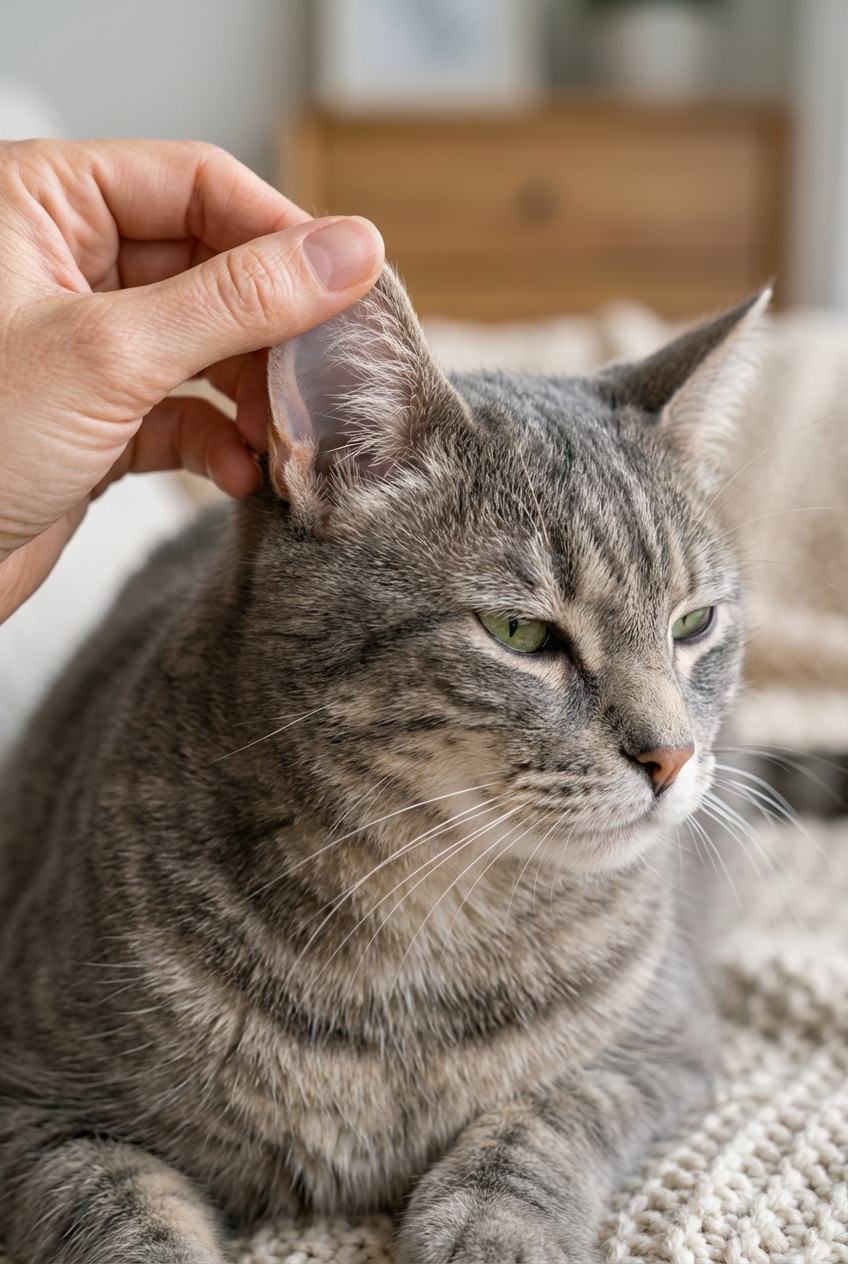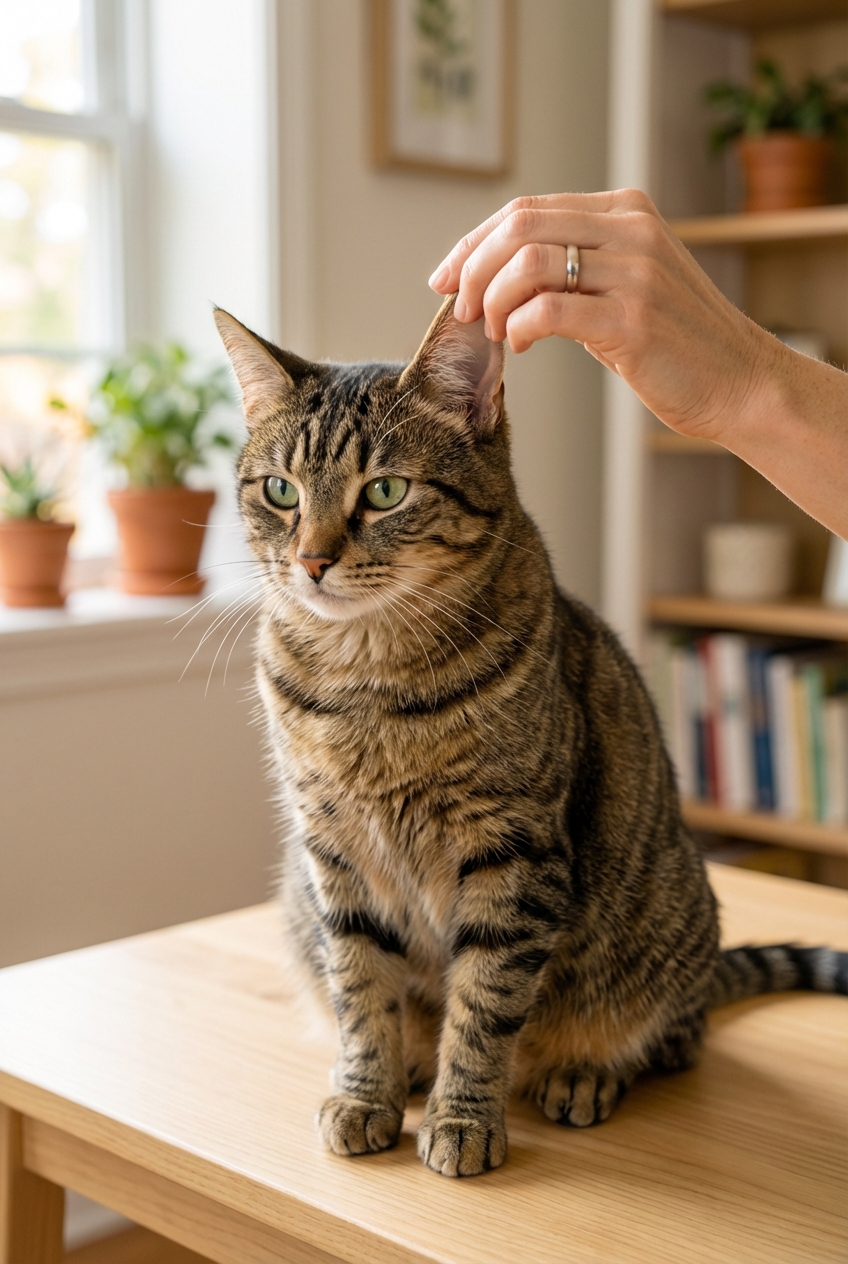
From “coffee ground” ear debris to nonstop scratching, learn how vets diagnose ear mites and the most effective treatments, safe ear cleaning steps, and ...
Article
•
Designer Mixes
How to Get Rid of Ear Mites in Cats

Shari Shidate
Designer Mixes contributor
Ear mites are one of those problems that can make even the calmest kitty miserable fast. If your cat is shaking their head, scratching like crazy, or you are seeing dark debris in the ears, ear mites are high on the list of possibilities. The good news is that they are very treatable, and once you know the steps, you can feel confident moving forward.
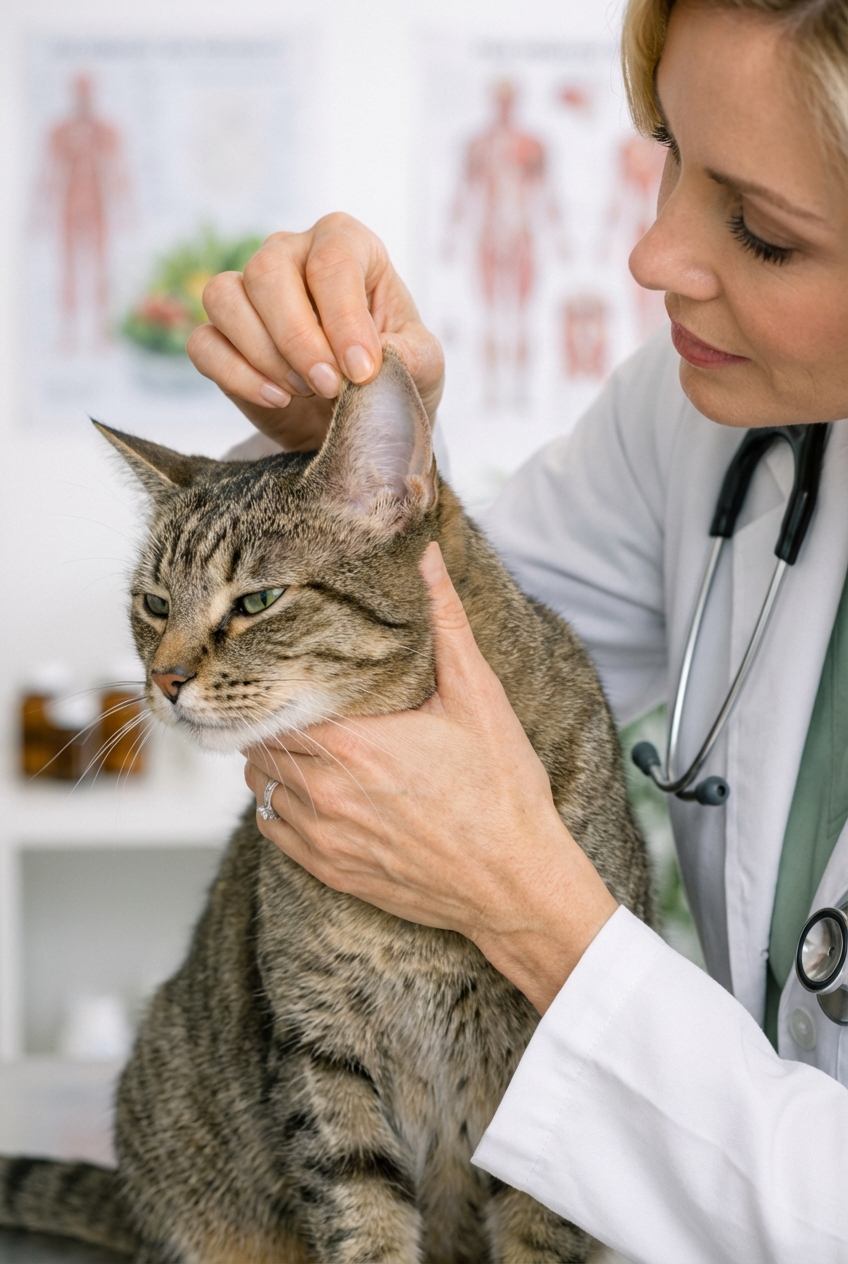
As a veterinary assistant in Frisco, Texas, I have seen a lot of itchy ears. Below I will walk you through what ear mites are, how vets diagnose them, which treatments work, what to avoid, and how to keep them from coming back.
What ear mites are
Ear mites, most commonly Otodectes cynotis, are tiny parasites that live on the surface of the skin in the ear canal. They feed on skin debris and trigger inflammation. That inflammation is what causes the intense itching, redness, and that classic dark, crumbly discharge that many people describe as looking like coffee grounds.
Ear mites are contagious between cats, and they can also spread to dogs and ferrets. They are most common in kittens, outdoor cats, and multi-pet homes, but any cat can get them.
Signs of ear mites
Some cats show obvious symptoms, while others have milder irritation. Here are the signs that raise my suspicion the most:
- Frequent head shaking
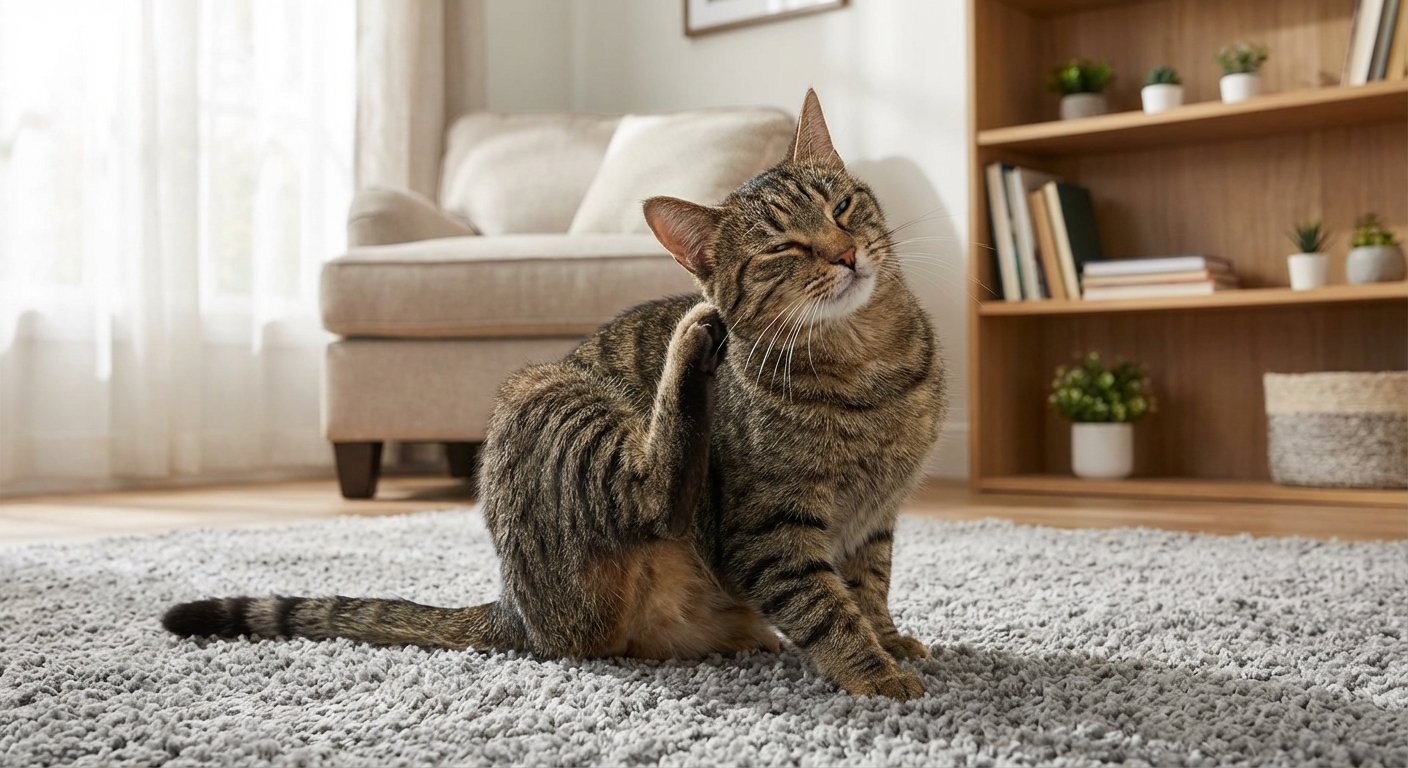
- Scratching at the ears or rubbing ears on furniture
- Dark brown or black debris in the ear canal
- Red, inflamed ear canal
- Hair loss or scabs around the ears from scratching
- Strong ear odor (this can also suggest infection)
- Ear hematoma, which is a swollen ear flap caused by vigorous shaking
Important: Not every itchy ear is ear mites. Yeast, bacteria, allergies, foreign material, and ear polyps can cause similar symptoms. Treating the wrong problem at home can delay relief and sometimes make things worse.
How vets diagnose ear mites
The most reliable way to confirm ear mites is with an ear exam plus microscopy (looking at a sample under the microscope). In clinic, we typically:
- Look in the ear canal with an otoscope
- Collect a small sample of ear debris
- Examine it under a microscope to look for live mites or eggs
One quick caveat: mites can be missed on a single sample, especially if there is a lot of wax or inflammation. If the signs fit but we do not see mites right away, your vet may recommend repeating the test or treating based on clinical suspicion and response.
This matters because treatment differs if your cat actually has a bacterial or yeast infection, or if the ear canal is too inflamed (or the eardrum is injured) for certain products to be used safely.
How to get rid of ear mites
1) Use a vet-recommended mite medication
Today, the easiest and most effective treatments are prescription parasiticides. Your veterinarian will recommend the best option based on your cat, your household, and what else is going on in the ears. Common vet-used options include:
- Topical spot-on products applied to the skin, often at the back of the neck. Examples your vet may discuss include selamectin, moxidectin with imidacloprid, or fluralaner. Many of these also cover fleas and certain intestinal parasites.
- Prescription ear medications placed directly into the ear canal. Some include a mite-killing ingredient plus medication for inflammation, and sometimes antibiotic or antifungal treatment if there is secondary otitis externa. Some formulas contain ivermectin or related medications, but these should be used only under veterinary direction.
Most cats start feeling relief within days, but finishing the full course is what prevents a rebound.
2) Treat every pet that could be carrying mites
If you have multiple pets, especially cats, assume more than one may be affected, even if only one is scratching. Ear mites spread through close contact. Treating just the itchy cat often leads to a frustrating cycle of reinfestation.
3) Clean the ears only if your vet advises it
Ear cleaning can be helpful, but technique and product choice matter. If the ear canal is very inflamed or painful, cleaning can be stressful and may worsen irritation.
If your vet recommends cleaning, use a cat-safe ear cleaner and follow their instructions. In general, we aim to gently remove debris so medication can contact the skin more effectively.
- Use only a veterinary ear cleaner, not peroxide, alcohol, or essential oils.
- Do not insert cotton swabs deep into the ear canal.
- Stop if your cat is in pain and contact your vet.
4) Recheck if symptoms persist
If your cat still itches after treatment, schedule a recheck. Common reasons include:
- Secondary bacterial or yeast infection that also needs treatment
- Ear inflammation that needs anti-inflammatory medication
- Incorrect diagnosis (allergies can look very similar)
- Reinfestation from an untreated pet in the home
- Mites missed on the first test, or a protocol that needs adjusting
What to avoid
I completely understand wanting a quick, natural fix. But cats are very sensitive, and ears are delicate. Here are a few things I recommend avoiding unless your veterinarian specifically directs them:
- Home remedies like oil, vinegar, alcohol, or hydrogen peroxide. These can irritate the ear canal, trap debris, or worsen inflammation.
- Dog-only ear products. Some ingredients are unsafe for cats.
- Over-the-counter mite drops without a diagnosis. Some OTC products are outdated, may not fully cover the mite life cycle, or may not address a secondary infection. They can also mask a more serious ear condition.
- Skipping treatment for other pets. This is one of the biggest reasons ear mites come back.
Tip from the clinic: if your cat is scratching hard enough to cause bleeding, swelling, or a puffy ear flap, book an appointment quickly. Ear hematomas can form and may need additional care.
How long it takes
Many cats look more comfortable within a few days of starting effective treatment, but complete resolution often takes a few weeks. Timelines vary by product and by the severity of the infestation. Many protocols are designed to cover the full mite life cycle, which is roughly 3 weeks.
Even if your cat seems better, continue treatment exactly as directed. Stopping early can allow newly hatched mites to restart the problem.
Cleaning and home hygiene
The mites live mainly on the animal, not in your carpet. So in most cases you do not need to do intensive household treatment. Still, a little common-sense cleaning can help:
- Wash bedding your cat sleeps on in hot water
- Vacuum favorite lounging spots
- Clean grooming tools
If your cat also has fleas, then more thorough environmental control is important, but ear mites alone typically do not require aggressive household treatment.
Can people catch ear mites?
This is a common worry. Ear mites prefer pets, and they do not usually set up a long-term infestation on humans. Occasionally, people can get temporary itchiness or small red bumps after close contact, but it typically resolves once the pets in the home are properly treated. If you develop a persistent rash, check in with your healthcare provider.
When to see a vet fast
Ear issues can go from annoying to painful quickly. Please contact your veterinarian promptly if you notice:
- Severe head tilt, loss of balance, or disorientation
- Blood, pus, or a strong foul odor from the ear
- A swollen ear flap
- Your cat cries when you touch the ear
- No improvement within a few days of starting treatment
- A kitten, senior cat, or immunocompromised cat with symptoms
These signs can suggest infection, significant inflammation, a possible ruptured eardrum, or another condition that needs targeted care.
Prevention
Once your cat is comfortable again, the focus shifts to prevention. These habits make a big difference:
- Use veterinarian-recommended parasite prevention consistently if your cat is at risk.
- Quarantine new pets and have them checked before introducing them to resident cats.
- Schedule ear checks if your cat has a history of ear problems, allergies, or recurring wax buildup.
- Act early the next time you notice head shaking or scratching.
The bottom line is this: ear mites are common, treatable, and very uncomfortable. With the right medication and a little follow-through, most cats bounce back beautifully.