Cat urine odor lingers because of uric acid residue. Learn vet-approved enzymatic cleaning steps for carpet, floors, wood, and fabrics—plus how to stop rep...
Article
•
Designer Mixes
How to Get Rid of Cat Urine Smell

Shari Shidate
Designer Mixes contributor
Cat urine odor is one of the most stubborn smells in any home, and it is not because you are doing anything “wrong.” It sticks around because of how cat urine breaks down. As it dries, uric acid and urate salts can bind to porous surfaces like carpet pad, wood seams, fabric, or grout. Later, humidity can re-activate those compounds and make the odor “bloom” again.
As a veterinary assistant in Frisco, Texas, I can tell you this: if you remove the smell the right way, you also reduce the chance your cat will return to that same spot. Cats are very location-driven, and lingering odor is a powerful invitation to re-mark.
Why the smell lingers
Cat urine is a mix of water, urea, uric acid, and other compounds. Over time, bacteria can break urea down into ammonia, and uric acid can form crystals that cling to surfaces. Regular soap, vinegar, or “good-smelling” sprays may reduce odor briefly, but they often leave the uric acid behind.
Key takeaway: You typically need a pet urine enzymatic cleaner (an enzyme cleaner made for urine) to break down the odor source. Just be aware that not every product labeled “enzyme” works the same, so following the label matters.
Step 1: Find every spot
Before you start cleaning, make sure you know how many areas you are dealing with. If you miss even one, you can keep smelling “mystery urine” and your cat may keep revisiting it.
How to locate hidden urine
- Use your nose first: Get close to baseboards, corners, and near litter boxes.
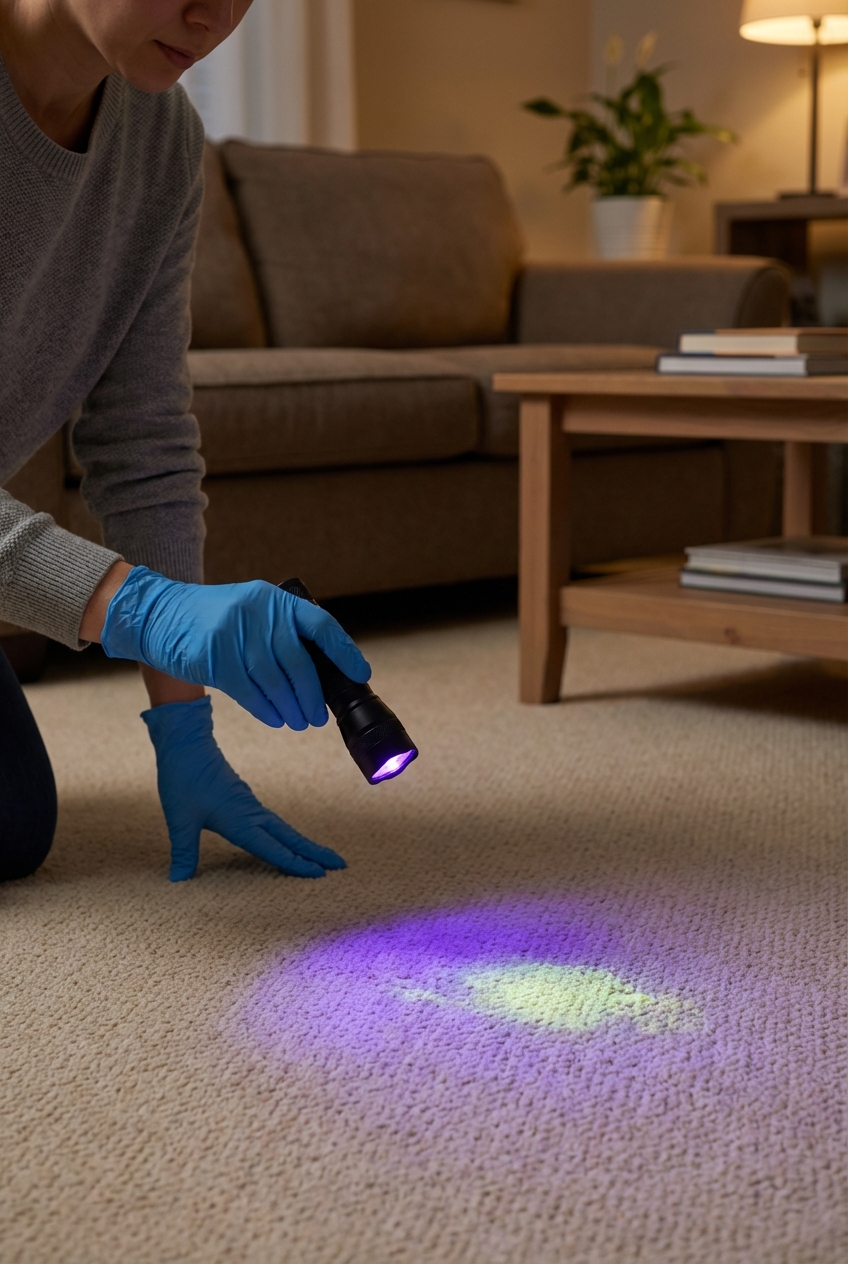
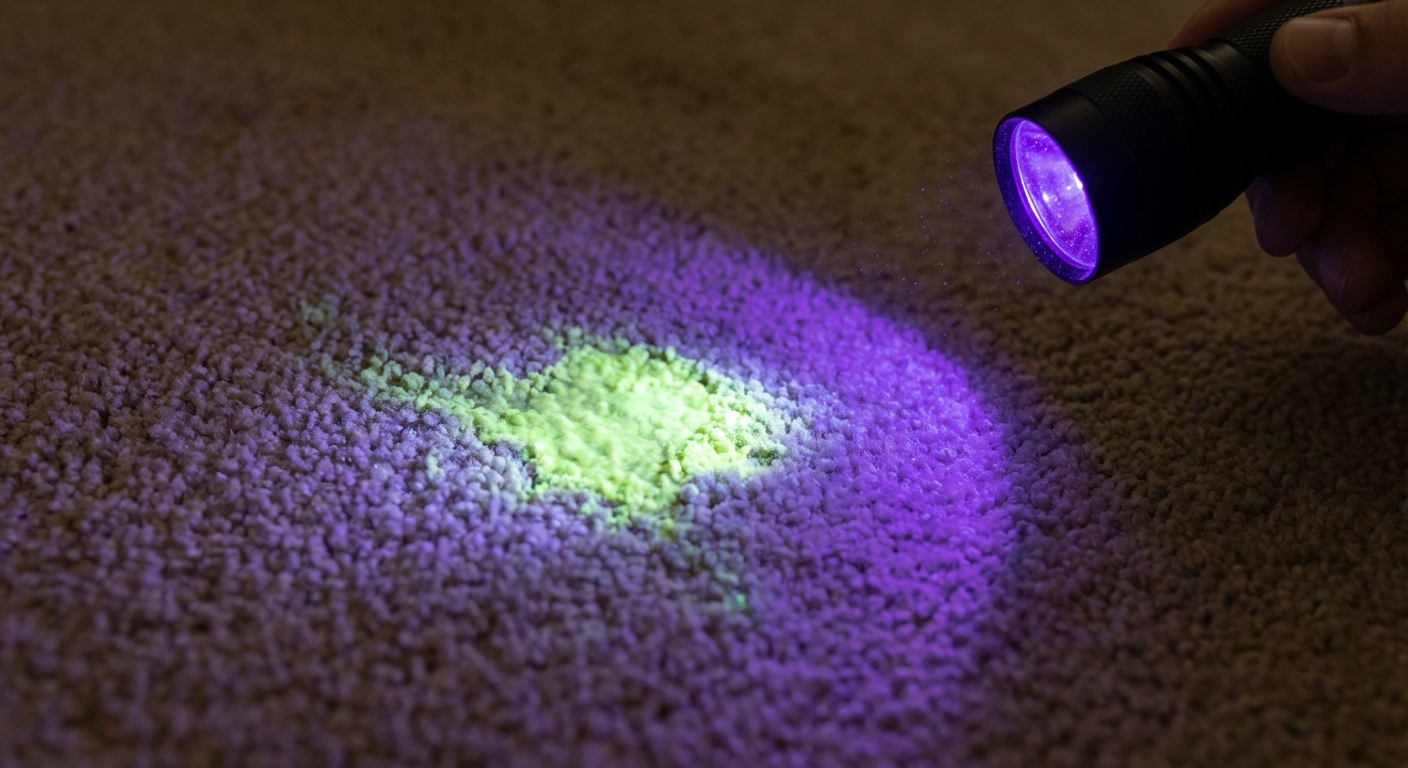
- Use a UV or blacklight at night: Turn off lights and scan slowly. Urine can fluoresce yellow-green, but so can detergents, cleaners, some fabrics, and even old spills. Use UV as a clue, not a verdict.
- Check common targets: Rugs, bath mats, laundry piles, couches, pet beds, closets, and around doors or windows (especially if outdoor cats are triggering marking).
Step 2: Blot fresh urine
If the urine is still wet, you have a huge advantage. Your goal is to pull out as much liquid as possible before it sinks deeper.
What to do
- Wear gloves.
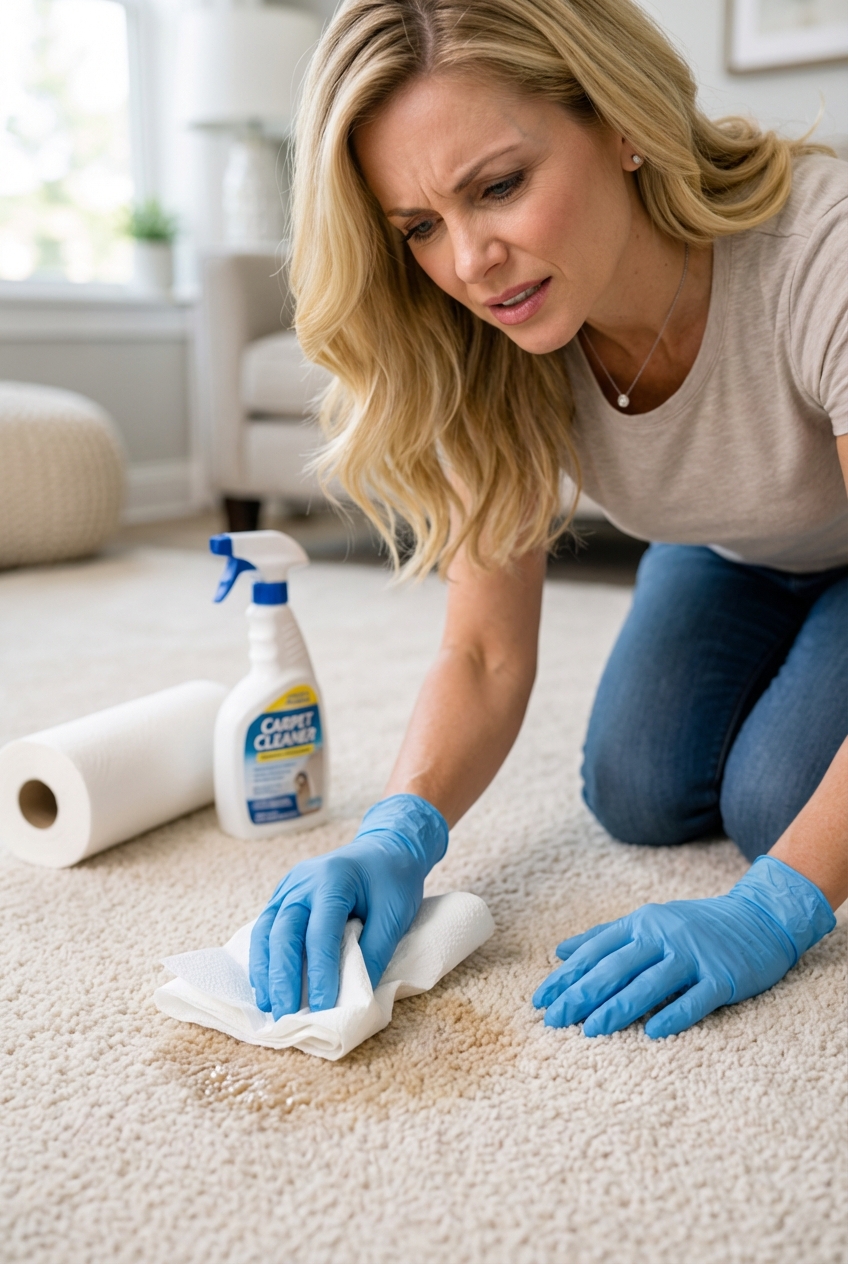
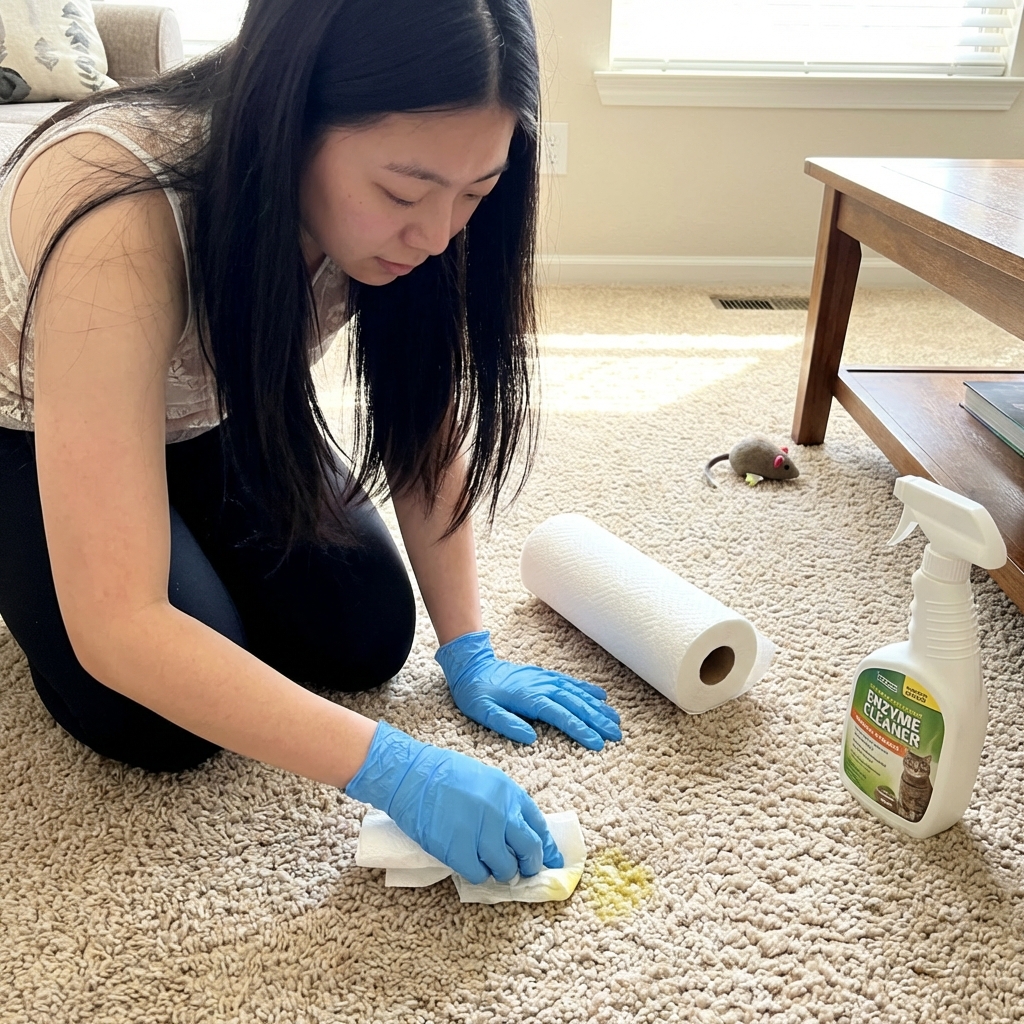
- Use paper towels or clean white cloths.
- Blot, do not rub. Press firmly and repeat with fresh towels until little moisture transfers.
- If it is on carpet, you can place a thick stack of clean towels with a heavy object on top for 10 to 20 minutes to draw out more (use a clean weight or clean shoes so you do not track dirt into the area).
What to avoid
- Steam cleaners: Heat can set urine odor and stain into carpet and upholstery.
- Ammonia-based cleaners: Urine already has an ammonia-like smell. Cleaning with ammonia can smell similar to urine to your cat and may increase interest in re-marking.
Step 3: Enzyme cleaner
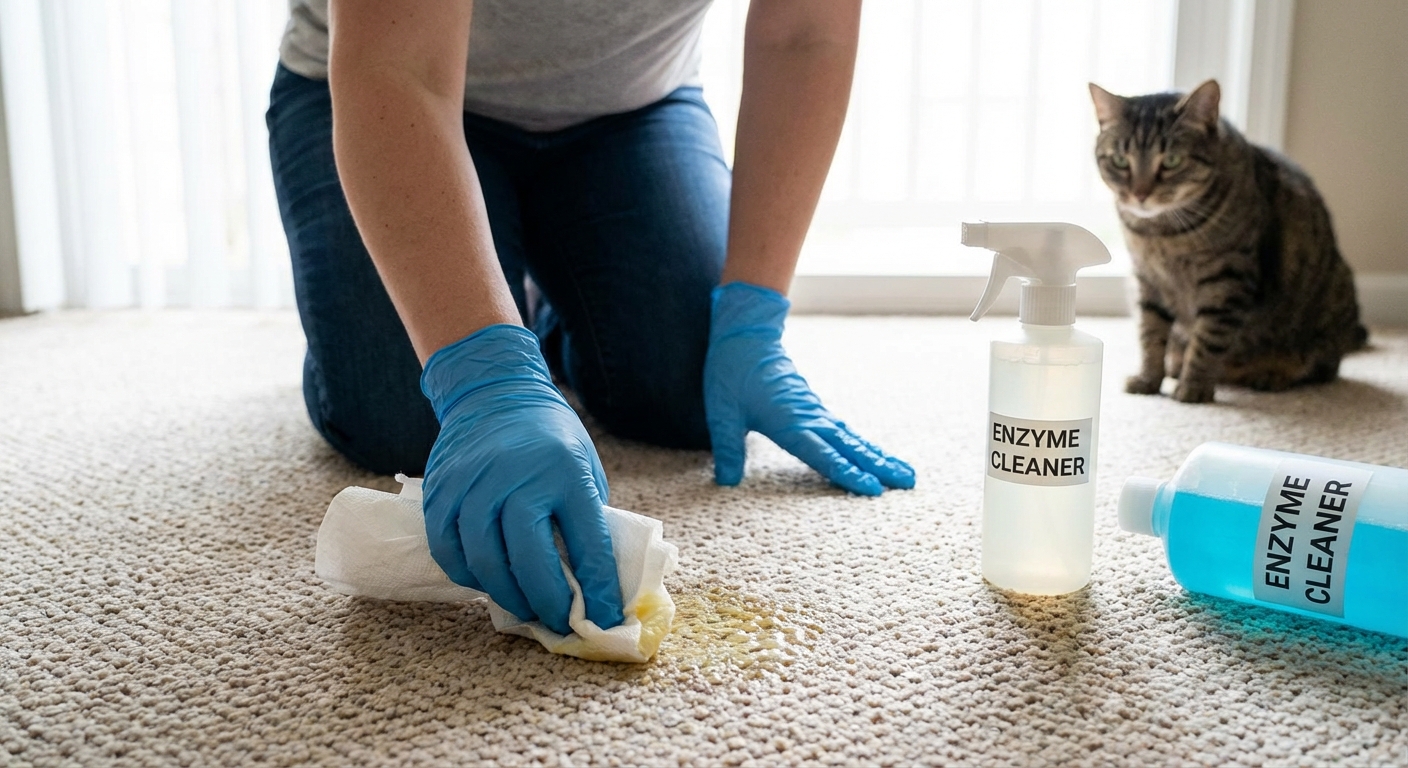
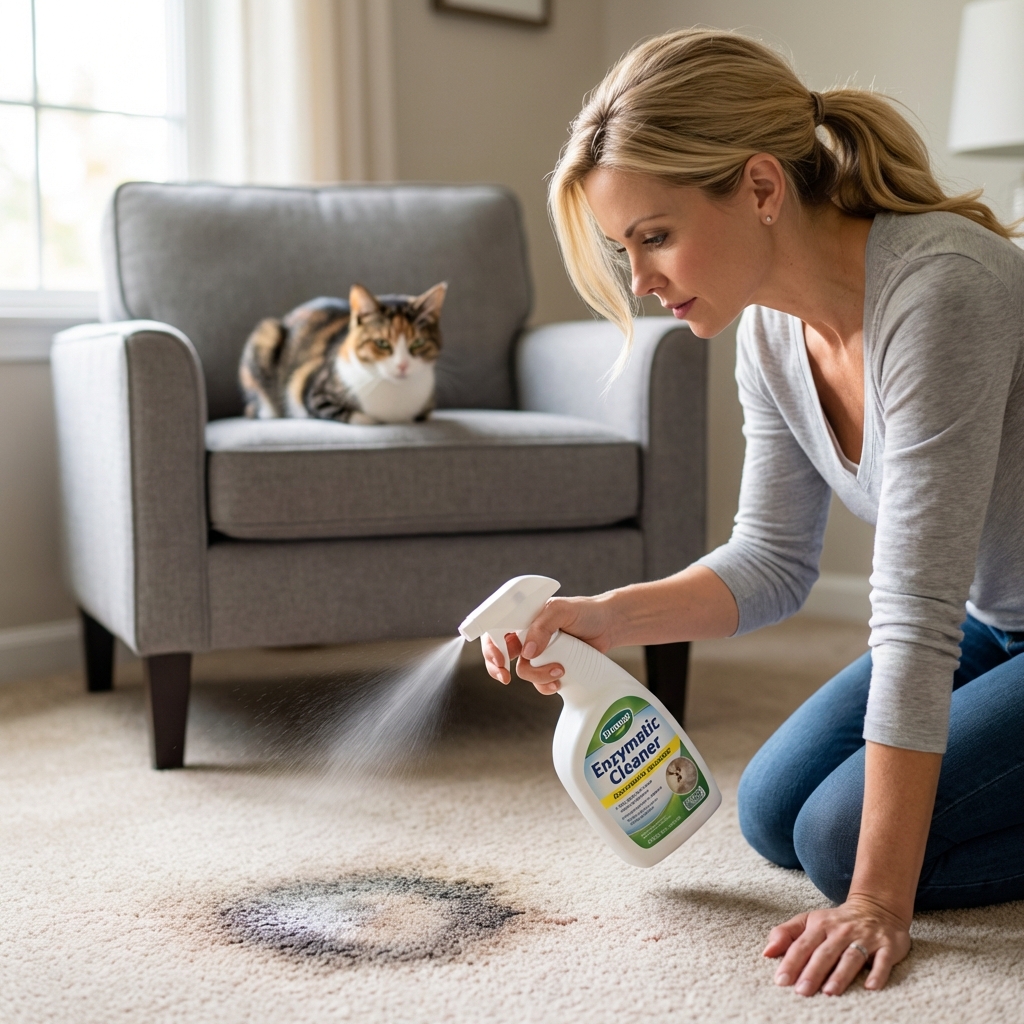
For most homes, a quality enzymatic cleaner is the most evidence-based solution because it targets the compounds that cause the persistent odor. Follow the product label carefully since dwell time and drying method matter.
How to apply enzyme cleaner
- Test first in an inconspicuous area (especially on wool rugs, leather, silk, or delicate fabrics).
- Saturate the area to the same depth as the urine. On carpet, that often means soaking beyond the visible stain because urine spreads.
- Follow the label for dwell time: Many products work best when the area stays damp long enough, then is allowed to air dry naturally. It is common for full drying to take 24 to 48 hours depending on humidity and how much you had to saturate.
- Blot excess if the label allows, then let it air dry completely.
- If odor returns as it dries, repeat. That usually means there is still urine deeper down.
If you can still smell it, your cat can definitely smell it. Be patient and repeat the enzyme step as needed.
Real-life tip from the clinic world: If the carpet pad is soaked, replacing the pad (and sometimes a small section of carpet) is often the only permanent fix. Enzymes can help, but padding can hold a lot of urine.
Step 4: Match the surface
Cat urine behaves differently depending on what it soaked into. Here is how to handle common surfaces.
Carpet and rug
- Use enzyme cleaner and saturate through the carpet fibers.
- If urine reached the pad, you may need multiple rounds, extraction, or pad replacement.
- For small rugs, if safe for the material, you can soak in an enzyme solution and air dry. If you use sunlight, be cautious because it can fade some dyes and damage delicate fibers.
Upholstery and mattresses
- Blot first, then apply enzyme cleaner.
- Use minimal extra moisture if the item is slow to dry, but still apply enough product to reach the urine.
- Promote drying with fans. Moisture trapped inside cushions can keep odors alive.
Hardwood floors
- Wipe up quickly and apply an enzyme cleaner labeled safe for sealed wood.
- Even sealed wood can have micro-gaps between boards, and too much liquid can damage finishes. Use enough cleaner to treat the urine, but do not flood the floor.
- If odor persists, urine may have seeped between boards or into the subfloor. In severe cases, sanding and resealing or replacing affected boards may be necessary.
Tile and grout
- Enzyme cleaner plus a soft brush for grout lines.
- Rinse lightly and dry thoroughly.
- If grout is porous, repeat applications may be needed.
Concrete (basements, garages)
- Concrete is very porous and can hold odor deep inside.
- Use enzyme cleaner generously and allow longer dwell time.
- After treatment, consider sealing. Look for a low-VOC sealer and follow manufacturer cure times before allowing pets back on the surface.
Step 5: Clear leftover odor
Once you have completed enzyme treatment and the area is dry, you may still have a “stale” smell. At this stage, odor absorbers can help, but they should not replace the enzyme step.
Options
- Baking soda: Sprinkle on dry carpet, let sit 8 to 12 hours, then vacuum thoroughly.
- Activated charcoal: Place near the area for a few days to absorb ambient odor.
- Vacuum and fresh air: While a HEPA vacuum does not remove odor molecules directly, it can help by removing dander, dust, and hair that can hold onto smells. Ventilation helps a lot.
Note: Vinegar is popular online, but it is not a complete solution for uric acid crystals. If you use it, treat it as a short-term deodorizer only, and do not mix it with other chemicals.
Safety reminder: Never mix cleaners. In particular, bleach plus ammonia (or bleach plus urine) can create dangerous fumes.
Step 6: Stop repeat peeing
Getting rid of the smell is only half the battle. The other half is figuring out why your cat peed outside the box and removing the triggers.
Quick note: pee vs spraying
This matters because the solution can differ. Peeing is usually a larger puddle on horizontal surfaces. Spraying (marking) is often smaller amounts on vertical surfaces like walls, furniture, or door frames. Stress, outside cats, and territorial conflict are common spraying triggers, and intact cats are at higher risk.
Litter box basics that matter
- Number of boxes: Aim for one box per cat, plus one extra.
- Location: Quiet, easy-to-access spots. Avoid loud laundry rooms or tight corners where a cat can feel trapped.
- Scooping: At least once daily for most households.
- Litter type: Many cats prefer unscented, fine-grain clumping litter.
- Box size: Bigger is usually better, especially for large cats.
Health reasons to rule out
If your cat is suddenly peeing outside the box, it is important to check with your veterinarian. Urinary issues can be painful and urgent.
- Urinary tract infection
- Feline lower urinary tract disease (FLUTD)
- Bladder stones or crystals
- Kidney disease
- Diabetes
- Arthritis (difficulty getting into a high-sided box)
Call your vet promptly if you see straining, frequent trips with little urine, crying in the box, blood in urine, or your cat cannot urinate. In male cats, urinary blockage can be life-threatening.
Mistakes that trap odor
- Using too little enzyme cleaner: If you only treat the surface, deeper urine continues to smell.
- Not letting it dwell and dry correctly: Enzymes need time, and many products work best with a slow air dry.
- Covering too soon: Putting a rug or furniture back before the area is fully dry can lock in odor.
- Masking with fragrance: Your home smells like perfume, but the urine source is still there.
- Heat: Steam cleaning or high heat drying can set the stain and odor.
- Over-wetting wood or upholstery: Too much liquid can spread urine deeper or damage finishes and padding.
When to call a pro
If you have repeated marking, a soaked carpet pad, or urine that reached subfloor or drywall, a professional can save you time and frustration.
- Professional carpet cleaning: Ask if they have pet urine treatment protocols and low-heat options for urine areas.
- Restoration services: For subfloor, drywall, or heavy contamination. Sometimes removal and replacement of pad, subfloor sections, or baseboards is the realistic solution.
- Behavior support: If medical issues are ruled out, a veterinary behaviorist or qualified cat behavior consultant can help address stress, territory conflicts, or anxiety.
Simple checklist
- Find all urine spots using a UV or blacklight, plus your nose.
- Blot fresh urine thoroughly.
- Saturate with enzyme cleaner and follow label dwell and dry instructions.
- Air dry completely, then reassess and repeat if needed.
- Use baking soda or charcoal for leftover ambient odor.
- Improve litter box setup and schedule a vet check if accidents are new.
You do not have to live with that smell. With the right cleaner, enough soak time, and a little detective work, most homes can be truly fresh again.